


×

Benin🇧🇯 | citiesCotonouUrban sprawl, Dantokpa market, Atlantic coastline | things to do and best time to go

Explore BohiconExplore Parakou

Backpacking in Cotonou
🏆 Top pickcity ranked #1
By Johan Kruseman 🇳🇱 | Updated July 30, 2026

Picture this: you’ve landed in Cotonou, Benin’s pulsing economic heart, and you’re staring down your first big choice—do you shell out for a private taxi straight to Fidjrossè Beach, or brave the zémidjan (motorbike taxi) chaos for a fraction of the price and a lot more adrenaline? This isn’t just about saving cash; it’s about how much sweat, time, and comfort you’re willing to trade for a story worth telling. Cotonou sits on the southern coast of Benin, wedged between the Atlantic and the sprawling Nokoué Lake, a crossroads for anyone moving through West Africa.

Cotonou is not a postcard city, but it’s alive in a way that sticks with you. The Dantokpa Market is a sensory overload—spices, fabrics, and the kind of bargaining that’ll sharpen your instincts. The Fondation Zinsou offers a rare window into contemporary African art, and the city’s nightlife is a wild, open-air affair where you’ll find more locals than tourists. It’s affordable, but not always easy; English is rare, and the infrastructure is rough around the edges. Safety is decent if you keep your wits about you, but it’s not as laid-back as Ouidah or as scenic as Porto-Novo. Cotonou is for travelers who want to feel the engine of Benin, not just admire the scenery. Meeting other backpackers is hit-or-miss, but if you’re game for a challenge, the city rewards you with authenticity and momentum.

Discover everything you want to know in the 📖 Benin Travel Guide.


Get your Benin guide
55 ranked highlights, routes & tips, works offline (230 pages)
Loading the map 🌍
CLICK TO FILTER
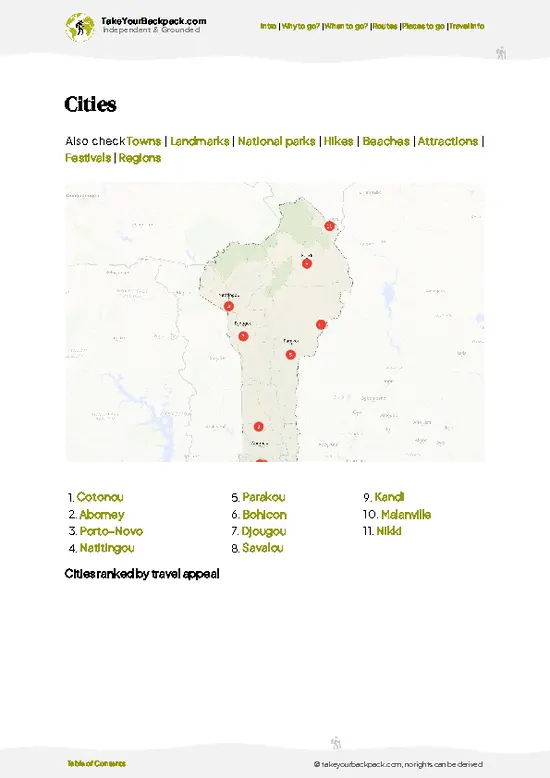
cities
towns
landmarks
national parks
hikes
beaches
attractions
festivals
regions
SHOW COUNTRY’S BESTSHOW ALL

✨ Why go?
Ranked #1 city in Benin
Why visitors keep coming back

Cotonou is a strategic hub for backpackers weaving through West Africa. It’s not just a stopover; it’s a place that offers a rich blend of highlights and activities that can easily fill a few days. The basecamp value here is solid. From Cotonou, you can launch into day trips to nearby attractions without the hassle of long travel times.

Hostels are plentiful and cater to various budgets, providing a great chance to meet fellow travelers. The food scene is vibrant, with street vendors serving up local dishes that won’t break the bank. You can grab a meal for a couple of bucks, leaving more cash for experiences.

Cotonou is also walkable, making it easy to explore on foot. You’ll find lively markets and local hangouts just a stroll away. When the sun sets, the nightlife kicks in, offering … read more 👉
Cotonou is a strategic hub for backpackers weaving through West Africa. It’s not just a stopover; it’s a place that offers a rich blend of highlights and activities that can easily fill a few days. The basecamp value here is solid. From Cotonou, you can launch into day trips to nearby attractions without the hassle of long travel times.

Hostels are plentiful and cater to various budgets, providing a great chance to meet fellow travelers. The food scene is vibrant, with street vendors serving up local dishes that won’t break the bank. You can grab a meal for a couple of bucks, leaving more cash for experiences.

Cotonou is also walkable, making it easy to explore on foot. You’ll find lively markets and local hangouts just a stroll away. When the sun sets, the nightlife kicks in, offering everything from laid-back bars to energetic dance spots.

Finally, onward travel is a breeze. Buses and shared taxis connect you to other destinations, making it a convenient link in your journey. If you’re looking for a place that balances comfort and value, Cotonou is worth your time.
Want to include Cotonou in your Benin route?
Create a personalized Benin itinerary that includes Cotonou and the places that fit your trip — based on your travel style, budget, and available time. Get your route in seconds.

Generate my trip

💡 HighlightsEssential experiences to have while visiting Cotonou

  1. Dantokpa Market — One of West Africa’s biggest open-air markets: chaotic, loud and brilliant for clothes, electronics, food and people-watching. Go with a small backpack, practice your bargaining and be ready for sensory overload — it’s the beating commercial heart of Cotonou.
  2. Marché aux Fétiches (Voodoo Market) — A compact, intense market selling charms, herbs and ritual objects. It’s not a museum: conversations with sellers and a guided walkthrough here give a real (and sometimes unsettling) window into everyday Vodoun practices.
  3. Fidjrossè Beach — A working beach where fishermen land catches, smokers dry fish and locals hang out. Swim with care, eat fresh grilled fish at the shacks, and watch the stilt fishermen at low tide — very local, very authentic.
  4. Port autonome de Cotonou (Port
read more 👉
  1. Dantokpa Market — One of West Africa’s biggest open-air markets: chaotic, loud and brilliant for clothes, electronics, food and people-watching. Go with a small backpack, practice your bargaining and be ready for sensory overload — it’s the beating commercial heart of Cotonou.
  2. Marché aux Fétiches (Voodoo Market) — A compact, intense market selling charms, herbs and ritual objects. It’s not a museum: conversations with sellers and a guided walkthrough here give a real (and sometimes unsettling) window into everyday Vodoun practices.
  3. Fidjrossè Beach — A working beach where fishermen land catches, smokers dry fish and locals hang out. Swim with care, eat fresh grilled fish at the shacks, and watch the stilt fishermen at low tide — very local, very authentic.
  4. Port autonome de Cotonou (Port of Cotonou) — Not glamorous, but excellent for seeing the country’s trade in action: container yards, pirogues, and lively quayside life. Best from the waterfront viewpoints rather than trying to enter restricted areas.
  5. Lake Nokoué shoreline and boat rides — The lakeshore in Cotonou is where everyday life meets water: small boat trips leave from the city and you can watch fishermen, reed islands and stilt-houses. It’s the practical gateway to Ganvié if you want to push further.
  6. Marche Artisanale (Craft Market) — A slightly calmer market than Dantokpa but full of woodcarving, textiles, batik and brass work. Good place to pick up souvenirs and watch artisans work without the full chaos of the main market.
  7. La Corniche / Boulevard de la Marina — The seaside boulevard for evening walks, street food and sunset views. Locals stroll here; it’s an easy, relaxed way to soak up the city rhythm and see fishermen and families winding down.
  8. Institut Français du Bénin (Cultural Center) — Small gallery and performance space with rotating exhibitions, film screenings and cultural events. Worth checking the schedule — great for contemporary art, music nights and meeting expat/artist crowds.
  9. Cathédrale Notre-Dame (Cotonou Cathedral) — A striking church in the city center whose architecture and neighborhood life make for a calm, photogenic stop between markets and beaches. It’s also a good landmark for navigating the downtown area.
  10. Stade de l’Amitié Général Mathieu Kérékou — The big national stadium where football matches, concerts and national events happen. Even if you don’t catch a game, the outside atmosphere on match day is worth experiencing — loud, passionate and full of local color.
For day trips outside Cotonou, head to Ganvié (the stilt village on Lake Nokoué), historic Ouidah with its Vodoun sites and slave-route museum, or Porto-Novo for the royal palaces and national museums — all reachable as full-day outings.
Spotted a mistake or missing something? Contact us.

Things to do in Cotonou

Ratings based on Tripadvisor reviews. When you book through this link, you support our work at no extra cost to you.

🏘️ NeighborhoodsUnderstanding the local layout

Cotonou is a vibrant hub that offers a mix of culture, commerce, and coastal charm. Here’s a breakdown of key neighborhoods to help you navigate your stay.

Centre Ville: This is the heart of Cotonou. Expect bustling markets and street vendors. It’s walkable, with plenty of cafes and shops. Nightlife is lively, but it quiets down by midnight. Ideal for short stays, as you can easily access transport to other parts of the city.

Ganhi: A bit more upscale, Ganhi is where you’ll find trendy boutiques and restaurants. The vibe is relaxed, making it suitable for longer stays. While it’s not as walkable as Centre Ville, taxis are readily available. Nightlife is more subdued, perfect for those who prefer a quieter evening.

Calavi: Just north of Cotonou, Calavi offers a more local experience. It’s … read more 👉
Cotonou is a vibrant hub that offers a mix of culture, commerce, and coastal charm. Here’s a breakdown of key neighborhoods to help you navigate your stay.

Centre Ville: This is the heart of Cotonou. Expect bustling markets and street vendors. It’s walkable, with plenty of cafes and shops. Nightlife is lively, but it quiets down by midnight. Ideal for short stays, as you can easily access transport to other parts of the city.

Ganhi: A bit more upscale, Ganhi is where you’ll find trendy boutiques and restaurants. The vibe is relaxed, making it suitable for longer stays. While it’s not as walkable as Centre Ville, taxis are readily available. Nightlife is more subdued, perfect for those who prefer a quieter evening.

Calavi: Just north of Cotonou, Calavi offers a more local experience. It’s less touristy, which means lower costs. The area is walkable, but you’ll need to rely on public transport or taxis for longer distances. Great for backpackers looking to immerse themselves in local life, but nightlife options are limited.

Ouidah: A short trip from Cotonou, Ouidah is rich in history and culture. It’s a quieter retreat, ideal for those wanting to escape the city buzz. While it’s not as walkable, the sights are worth the transport. Perfect for a day trip or a longer stay if you’re into cultural exploration.

Each neighborhood offers a unique flavor, allowing you to tailor your experience based on your priorities. Choose wisely, and you’ll maximize your adventure in Cotonou.

⌛️ 1 daySeeing the highlights in 24 hours

Cotonou, the bustling economic heart of Benin, is a vibrant mix of culture, commerce, and coastal charm. It’s a city where the rhythm of life pulses through its markets, streets, and beaches, offering a unique glimpse into West African life. You can spend a day here that balances exploration and relaxation, all while uncovering the city’s character.

Start your morning in the lively neighborhood of **Ganhi**. Grab a breakfast of fresh akassa (fermented corn dough) paired with spicy sauce at a local eatery. The aroma of street food fills the air, setting the tone for your adventure. After fueling up, head to the **Artisanal Center** nearby. Here, you can wander through stalls filled with handcrafted goods, from intricate wood carvings to vibrant textiles. It’s a fantastic way to support local … read more 👉
Cotonou, the bustling economic heart of Benin, is a vibrant mix of culture, commerce, and coastal charm. It’s a city where the rhythm of life pulses through its markets, streets, and beaches, offering a unique glimpse into West African life. You can spend a day here that balances exploration and relaxation, all while uncovering the city’s character.

Start your morning in the lively neighborhood of **Ganhi**. Grab a breakfast of fresh akassa (fermented corn dough) paired with spicy sauce at a local eatery. The aroma of street food fills the air, setting the tone for your adventure. After fueling up, head to the **Artisanal Center** nearby. Here, you can wander through stalls filled with handcrafted goods, from intricate wood carvings to vibrant textiles. It’s a fantastic way to support local artisans and snag a unique souvenir.

As the sun climbs higher, make your way to **Place des Martyrs**, a significant historical site. The square is a hub of activity, surrounded by palm trees and local vendors. Spend some time soaking in the atmosphere, then stroll over to the **Cotonou Cathedral**, an architectural gem that offers a moment of peace amidst the city’s hustle.

In the afternoon, venture to **Ouidah**, just a short drive away. While it’s technically a separate town, it’s worth the trip for its rich history and coastal views. Visit the **Ouidah Museum of History** to learn about the transatlantic slave trade and the local Vodun culture. This experience is often overlooked by tourists but provides profound insights into the region’s past.

As evening approaches, return to Cotonou and unwind at **Plage de Fidjrosse**. The beach is a local favorite, where you can sip on a cold drink while watching the sunset paint the sky. For dinner, indulge in fresh seafood at a beachside restaurant, where the sound of waves complements the flavors of your meal.

This day in Cotonou offers a blend of culture, history, and relaxation, making it a high-value experience that captures the essence of Benin.
Turn your Cotonou visit into an Benin adventure
Build a complete Benin route with Cotonou, hidden gems, must-see destinations, and realistic travel times included.

Generate my trip

🌤️ When to go?Weather, crowds, and seasonal trade-offs


  • Topic: Weather – Cotonou’s climate is tropical, with a wet season from April to July and a shorter rainy spell in September and October. Heavy rains can disrupt travel plans and make some trails muddy, so aim for the dry months from November to March for smoother trekking and city exploration.

  • Topic: Temperature – Expect highs around 30–32°C (86–90°F) year-round, with nights cooling to about 23°C (73°F). The dry season offers slightly more comfortable humidity levels, making outdoor activities less sticky and more enjoyable.

  • Topic: Daylight Hours – Near the equator, daylight is steady year-round, roughly 12 hours daily. This consistency means you don’t have to juggle short days or long nights, giving you reliable windows for adventure and rest.

  • Topic: Crowds – Tourist traffic peaks
read more 👉

  • Topic: Weather – Cotonou’s climate is tropical, with a wet season from April to July and a shorter rainy spell in September and October. Heavy rains can disrupt travel plans and make some trails muddy, so aim for the dry months from November to March for smoother trekking and city exploration.

  • Topic: Temperature – Expect highs around 30–32°C (86–90°F) year-round, with nights cooling to about 23°C (73°F). The dry season offers slightly more comfortable humidity levels, making outdoor activities less sticky and more enjoyable.

  • Topic: Daylight Hours – Near the equator, daylight is steady year-round, roughly 12 hours daily. This consistency means you don’t have to juggle short days or long nights, giving you reliable windows for adventure and rest.

  • Topic: Crowds – Tourist traffic peaks during the dry season, especially December and January, when international visitors escape colder climates. Visiting just before or after this peak can mean fewer crowds without sacrificing good weather.

  • Topic: Seasonal Activities – The dry season aligns with cultural festivals and markets, offering vibrant local experiences. The rainy season, while quieter, can provide lush landscapes and fewer tourists but at the cost of some outdoor limitations.

  • Topic: Price Fluctuations – Accommodation and flights tend to spike during the dry season’s peak months. Traveling in shoulder months like November or February can save money while still enjoying favorable conditions.


Pro-tip: Target the shoulder dry months—November or February—to balance weather, crowd size, and cost, turning your Cotonou trip into a strategic win rather than a weather gamble.


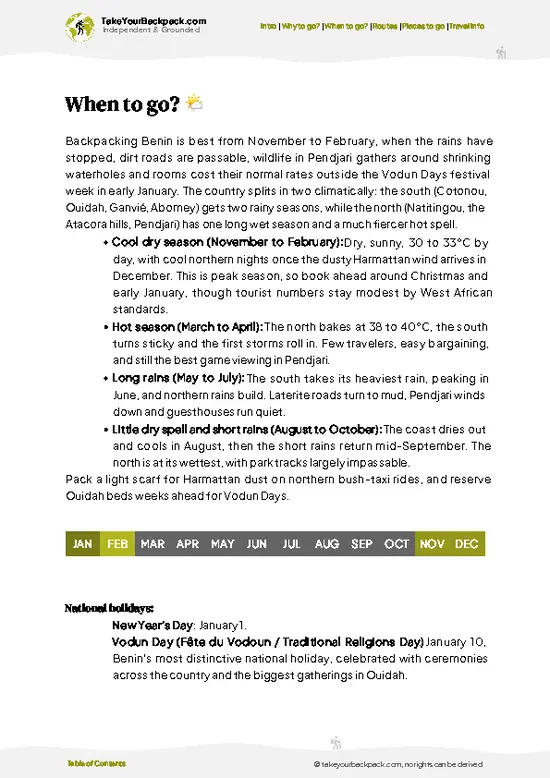
source: climatestotravel.comJANJanuary: highly recommended for travelingFEBFebruary: excellent for travelingMARMarch: highly recommended for travelingAPRApril: fair for travelingMAYMay: fair for travelingJUNJune: fair for travelingJULJuly: fair for travelingAUGAugust: good for travelingSEPSeptember: fair for travelingOCTOctober: fair for travelingNOVNovember: excellent for travelingDECDecember: highly recommended for traveling
when-to-go

✈️ The backpacker research shortcutBenin Travel Guide

An offline-friendly backpacking guide with optimized travel routes, ranked highlights, transport advice, and the best areas to stay.
example page 0 from our offline Travel Guide for Benin
example page 1 from our offline Travel Guide for Benin
example page 2 from our offline Travel Guide for Benin
example page 3 from our offline Travel Guide for Benin
example page 4 from our offline Travel Guide for Benin
example page 5 from our offline Travel Guide for Benin
example page 6 from our offline Travel Guide for Benin
example page 7 from our offline Travel Guide for Benin
The digital guide (230 pages) contains:
55 highlights, ranked by travel appeal
Optimized 5, 10 & 15-day travel routes
Cities, national parks, landmarks, beaches
How to get around
Offline-friendly for travel without Wi-Fi
👉 Click to see all 30+ guide features

📅 Plan smarter in minutes, not weeks
Month by month travel advice
Festivals & national holidays
Budget expectations

🗺️ Go to the right places, skip the overrated ones
Honest pros & cons of destinations
Top hikes, parks & viewpoints
Lesser-known places most travelers miss
Clear “worth it vs skip it” guidance

🛏️ Travel smoothly without rookie mistakes
Best areas to stay
Transport systems explained simply
Common scams & safety advice
SIM cards, money & practical tips

🌍 Understand the country, not just visit it
Culture & traditions
52 Essential phrases & customs
Festivals worth planning around
Traveler-friendly historical context
Insights that make places more meaningful

📱 Built for real travel conditions
Fully downloadable PDF
Works completely offline
Optimized for phone use
Useful in remote areas & buses
Everything in one place
Save weeks of stressful planning
Get instant access to your full guide. 30‑day money-back guarantee.


By proceeding you agree to our terms.
Sent to your inbox immediately after payment • 100% Secure Checkout
Best Backpacking Travel Advisor 2025 tourism awardBest Backpacking
Travel Advisor
2025
What others say about Take Your Backpack Guides:
⭐⭐⭐⭐⭐
Fantastic, amazing amount of information!
⭐⭐⭐⭐⭐
My goodness this is amazing, it's what I've been looking for hats off too you!
⭐⭐⭐⭐⭐
I think this is absolutely BRILLIANT
⭐⭐⭐⭐
Very complete and informative. It's still missing places, but I gotta to commend you
⭐⭐⭐⭐⭐
This is truly amazing, thank you, can't wait to explore it with my kids!
⭐⭐⭐⭐⭐
Awesome resource, thank you!
⭐⭐⭐⭐⭐
This is amazing! Can't wait to explore the ones I haven't seen
⭐⭐⭐⭐
I love this! Well done, great idea.
⭐⭐⭐⭐⭐
Thanks for taking the time to make this gem!
⭐⭐⭐⭐⭐
This might be the best website I've ever seen.
⭐⭐⭐⭐⭐
Congratulations, and thank you so much for your work; it's incredibly valuable.
⭐⭐⭐⭐
In all seriousness I think you did a great job pointing out the important spots
⭐⭐⭐⭐⭐
10/10 very good
⭐⭐⭐⭐⭐
As someone who's only just starting to visit regularly this is awesome, thank you.
⭐⭐⭐⭐
Thank you very much! I'm going to visit my dad, it's going to be very useful!
⭐⭐⭐⭐⭐
This is really cool! We'll be travelling for the first time and this definitely come in handy.
⭐⭐⭐⭐⭐
You are now our minister of culture, congratulations 👨‍💼
⭐⭐⭐⭐⭐
Just wanted to tell you that this is a pearl! Going to follow your recommendations.
⭐⭐⭐⭐⭐
This is so cool. I'll definitely be using the resource for my travels soon.
⭐⭐⭐⭐⭐
This is very impressive! Good work.
⭐⭐⭐⭐⭐
This is an amazing and informative site. Very well done!

🛏️ Where to stay?Best areas and accommodation options

Cotonou’s backpacker sweet spot is the Haie Vive neighborhood. It strikes a solid balance between safety, social buzz, and budget-friendly options. This area is known for its cluster of guesthouses and hostels that cater to solo travelers and those watching their wallets. You’ll find a mix of locals and expats here, which means it’s easier to connect, swap stories, and get insider tips without the usual tourist bubble.

Haie Vive’s streets are walkable and lively without feeling chaotic. It’s not the glitziest part of town, but that’s the point—it’s real, accessible, and low-key. Compared to the … read more 👉
Cotonou’s backpacker sweet spot is the Haie Vive neighborhood. It strikes a solid balance between safety, social buzz, and budget-friendly options. This area is known for its cluster of guesthouses and hostels that cater to solo travelers and those watching their wallets. You’ll find a mix of locals and expats here, which means it’s easier to connect, swap stories, and get insider tips without the usual tourist bubble.

Haie Vive’s streets are walkable and lively without feeling chaotic. It’s not the glitziest part of town, but that’s the point—it’s real, accessible, and low-key. Compared to the city center, which can be hectic and pricier, Haie Vive offers a quieter, more manageable pace. Plus, it’s close enough to markets, eateries, and transport hubs, so you’re not sacrificing convenience for comfort.

Other neighborhoods like Fidjrossè or Akpakpa might offer cheaper digs, but they tend to be less secure or lack the social vibe backpackers crave. Meanwhile, the upscale areas around the city center are out of reach for budget travelers and often feel disconnected from the authentic local rhythm.

In short, Haie Vive is where you get the most bang for your buck: safety, social energy, and easy access without the premium price tag or tourist overload. It’s the logical choice for backpackers who want to feel plugged in without losing their edge.

🚌 Getting aroundTransportation options and practical tips

Cotonou moves like a jazz solo—unpredictable, improvisational, and alive with a pulse that refuses to be boxed into neat schedules. Time here bends around the rhythm of the street vendors, the honking motos, and the ebb and flow of market crowds. It’s a city where the clock is a suggestion, not a rule, and your best bet is to read the vibe rather than rely on timetables. If you want to win at navigating Cotonou, you need to understand the trade-offs between speed, cost, and comfort—and how each mode of transit fits into that puzzle.


  • Walking: The ultimate budget choice and the best way to soak in the city’s texture. It costs nothing, but be ready for uneven sidewalks and the occasional dodge around street stalls. Walking is slow but unbeatable for short distances and spontaneous detours.
read more 👉
Cotonou moves like a jazz solo—unpredictable, improvisational, and alive with a pulse that refuses to be boxed into neat schedules. Time here bends around the rhythm of the street vendors, the honking motos, and the ebb and flow of market crowds. It’s a city where the clock is a suggestion, not a rule, and your best bet is to read the vibe rather than rely on timetables. If you want to win at navigating Cotonou, you need to understand the trade-offs between speed, cost, and comfort—and how each mode of transit fits into that puzzle.


  • Walking: The ultimate budget choice and the best way to soak in the city’s texture. It costs nothing, but be ready for uneven sidewalks and the occasional dodge around street stalls. Walking is slow but unbeatable for short distances and spontaneous detours. Peak heat can be brutal, so mornings and late afternoons are your sweet spots.


  • Zemidjan (Motorcycle Taxi): The heartbeat of Cotonou’s transit. These motos dart through traffic like they own the streets. Fares start around 200-500 CFA (about $0.30-$0.80), making them cheap but not free. They’re fast and flexible, perfect for weaving through congestion, but comfort is minimal and safety varies wildly. No fixed schedule—just flag one down and negotiate.


  • Minibus Taxis (Gbaka): The workhorse of public transport. Gbakas run on set routes but with no official timetable, so you catch them when they fill up. Fares hover around 150-300 CFA ($0.25-$0.50). They’re slower than motos but more comfortable and safer, with a bit of shade and seating. Expect frequent stops and a noisy, crowded ride—part of the local experience.


  • Regular Taxis: More expensive, usually 2000-3000 CFA ($3-$5) for typical city trips, but they offer door-to-door comfort and air conditioning if you’re lucky. They’re less common for budget travelers but worth considering if you’re carrying heavy gear or traveling late at night when other options thin out.


  • Buses (Intercity and Long-Distance): Not your go-to for inner-city travel, but essential if you’re heading out of Cotonou. They run on rough schedules, often departing when full rather than on time, with fares varying widely by destination. Comfort ranges from cramped to surprisingly decent, depending on the operator. Budget travelers should prepare for long waits and variable reliability.


Understanding Cotonou’s transit is about embracing its fluidity. You sacrifice strict timing for flexibility and cost savings. Comfort is often a trade-off for speed or price. Your smartest move is to mix and match: walk when you can, jump on a moto for quick hops, and save the gbaka for longer hauls. Master this flow, and you’re not just getting around—you’re playing the city’s game and winning.

👛 Costs (as of 30 July 2026)How expensive it really is

Backpacking in Cotonou, Benin, offers a clear trade-off between cost and comfort, and understanding the daily expenses lets you strategize your spending like a pro.
  • Dorm Accommodation (High Season): Expect to pay around €10 to €15 per night. High season pushes prices up due to demand, but you still get basic, clean dorms with essential amenities.
  • Dorm Accommodation (Off-Season): Prices drop to about €6 to €10 per night. Off-season means fewer travelers, so you can negotiate or find quieter spots without sacrificing safety.
  • Meals: Street food and local eateries dominate here. Budget €3 to €7 per day for three meals if you stick to local dishes like grilled fish or akara. Western-style meals or restaurants will push this higher, closer to €10 or more.
  • Local Transport: Shared taxis and motorcycle
read more 👉
Backpacking in Cotonou, Benin, offers a clear trade-off between cost and comfort, and understanding the daily expenses lets you strategize your spending like a pro.
  • Dorm Accommodation (High Season): Expect to pay around €10 to €15 per night. High season pushes prices up due to demand, but you still get basic, clean dorms with essential amenities.
  • Dorm Accommodation (Off-Season): Prices drop to about €6 to €10 per night. Off-season means fewer travelers, so you can negotiate or find quieter spots without sacrificing safety.
  • Meals: Street food and local eateries dominate here. Budget €3 to €7 per day for three meals if you stick to local dishes like grilled fish or akara. Western-style meals or restaurants will push this higher, closer to €10 or more.
  • Local Transport: Shared taxis and motorcycle taxis (zemidjans) are the norm. A typical ride costs between €0.30 and €1.00 depending on distance. Budget around €2 to €4 daily if you move around moderately.
  • City Transport Pass: Cotonou doesn’t have a formal city transport pass system. Instead, rely on daily cash for transport, which keeps your budget flexible but requires attention to fares.
  • Basic Activities/Entry Fees: Museums and cultural sites charge modest fees, usually between €1 and €3. Plan for about €2 to €5 daily if you want to explore a few spots.
  • Miscellaneous Expenses: This covers bottled water, snacks, occasional tips, and small purchases. Around €2 to €5 daily keeps you covered without surprises.

Total daily costs for backpacking in Cotonou typically range from €15 to €30, depending on how much you lean into comfort or local immersion. This range lets you balance spending smartly, choosing where to save and where to invest in your experience.
⚠️ Prices can change and everyone travels differently, so take this as a rough guide. Hope it helps you plan your adventure!

🚌 Day tripsShort trips worth adding

Cotonou is a fantastic launchpad for day trips that dive deep into Benin’s rich culture and stunning landscapes. Here are some standout options that are worth your time and energy.

Ouidah
Just a 90-minute ride from Cotonou, Ouidah is steeped in history. This coastal town was a key player in the slave trade, and you can feel its weight as you walk the Route des Esclaves, lined with poignant monuments. Don’t miss the Temple of Pythons, where you can see live snakes and learn about local Vodun practices. Expect to spend around $10 on transport and entry fees. The best time to visit is during the dry season, from November to March, when the weather is pleasant. A common mistake? Skipping the local market for souvenirs; it’s a treasure trove of unique crafts.
👉 Explore Ouidah

Ganvié
Known … read more 👉
Cotonou is a fantastic launchpad for day trips that dive deep into Benin’s rich culture and stunning landscapes. Here are some standout options that are worth your time and energy.

Ouidah
Just a 90-minute ride from Cotonou, Ouidah is steeped in history. This coastal town was a key player in the slave trade, and you can feel its weight as you walk the Route des Esclaves, lined with poignant monuments. Don’t miss the Temple of Pythons, where you can see live snakes and learn about local Vodun practices. Expect to spend around $10 on transport and entry fees. The best time to visit is during the dry season, from November to March, when the weather is pleasant. A common mistake? Skipping the local market for souvenirs; it’s a treasure trove of unique crafts.
👉 Explore Ouidah

Ganvié
Known as the ”Venice of Africa,” Ganvié is a stilt village about an hour from Cotonou. You’ll take a boat ride through the lagoon, where you can see colorful houses and local fishermen at work. The experience is surreal and offers a glimpse into the lives of the Tofinu people. Budget around $15 for the boat ride and snacks. The best time to go is early morning to avoid the heat and catch the village in action. Many first-timers forget to bring cash for local snacks and crafts, so plan ahead.


Abomey
A bit further afield, about two hours from Cotonou, Abomey is the historical heart of the Dahomey Kingdom. The Royal Palaces, now a UNESCO World Heritage Site, are a must-see. You’ll find fascinating artifacts and hear stories of kings and warriors that shaped the region. Total costs can be around $20, including transport and entry fees. Visit during the cooler months for a more comfortable experience. A common pitfall is rushing through the palaces; take your time to soak in the history.
👉 Explore Abomey

Lake Nokoué
Just under an hour from Cotonou, Lake Nokoué is perfect for a serene escape. You can kayak or take a boat tour to explore the rich birdlife and local fishing communities. It’s a peaceful contrast to the city hustle. Expect to spend about $10 for a boat rental. The best time to visit is during the dry season for clear skies. First-timers often overlook the chance to interact with local fishermen, which can add depth to your experience.


Porto-Novo
Only about 30 minutes away, Porto-Novo is the capital and offers a mix of colonial architecture and vibrant culture. The Ethnographic Museum is a highlight, showcasing the diverse traditions of Benin. You can easily get there for around $5. The dry season is ideal for exploring the city on foot. Many visitors miss out on the lively street food scene; don’t skip trying local dishes like akassa.
👉 Explore Porto-Novo
Want to know what more Benin offers?
The Benin Travel Guide describes 55 highlights, from cities to national parks, from beaches to hikes

Get the Travel Guide -

🍲 FoodWhat to Eat & Drink

In Cotonou, food is a vibrant tapestry of flavors that tells the story of its people. Dive into akara, those golden, crispy bean cakes, often served with a side of spicy pepper sauce. They’re a breakfast staple, best enjoyed from bustling street vendors who fry them fresh, filling the air with a mouthwatering aroma.

Don’t miss out on poulet braisé, grilled chicken marinated in a mix of local spices, served with a side of fufu or attiéké—a fermented cassava dish that’s light and slightly tangy. You’ll find these delights at casual eateries and markets, where the atmosphere buzzes with laughter and chatter.

As for drinks, try bissap, a refreshing hibiscus tea that’s both tart and sweet, perfect for cooling down after a day of exploration. Local bars serve it alongside palm wine, a traditional … read more 👉
In Cotonou, food is a vibrant tapestry of flavors that tells the story of its people. Dive into akara, those golden, crispy bean cakes, often served with a side of spicy pepper sauce. They’re a breakfast staple, best enjoyed from bustling street vendors who fry them fresh, filling the air with a mouthwatering aroma.

Don’t miss out on poulet braisé, grilled chicken marinated in a mix of local spices, served with a side of fufu or attiéké—a fermented cassava dish that’s light and slightly tangy. You’ll find these delights at casual eateries and markets, where the atmosphere buzzes with laughter and chatter.

As for drinks, try bissap, a refreshing hibiscus tea that’s both tart and sweet, perfect for cooling down after a day of exploration. Local bars serve it alongside palm wine, a traditional drink that’s often tapped fresh from the palm tree, offering a unique taste of the region’s culture.

Eating here is a communal affair. Expect to share plates and engage in lively conversations. It’s customary to greet vendors and fellow diners alike, creating a warm, inviting atmosphere. Embrace the chaos of the markets, where every bite is a chance to connect with the heart of Benin.

🛡️ SafetyScams, Hazards, and Annoyances

Cotonou is generally safe for backpackers, but a few smart moves can enhance your experience. Stay aware in crowded markets like Dantokpa; pickpockets can be a nuisance. Keep your valuables close and use a crossbody bag.

Solo travelers should be cautious at night. Stick to well-lit areas and avoid wandering too far from your accommodation after dark. Taxis are a reliable option; negotiate the fare beforehand to avoid surprises.

Scams can pop up, especially around tourist spots. Be wary of overly friendly locals offering unsolicited help or guiding you to shops where they earn a commission. Politely decline and trust your instincts.

Everyday annoyances include aggressive street vendors. A firm “no, thank you” usually does the trick. Remember, a calm demeanor goes a long way. By staying … read more 👉
Cotonou is generally safe for backpackers, but a few smart moves can enhance your experience. Stay aware in crowded markets like Dantokpa; pickpockets can be a nuisance. Keep your valuables close and use a crossbody bag.

Solo travelers should be cautious at night. Stick to well-lit areas and avoid wandering too far from your accommodation after dark. Taxis are a reliable option; negotiate the fare beforehand to avoid surprises.

Scams can pop up, especially around tourist spots. Be wary of overly friendly locals offering unsolicited help or guiding you to shops where they earn a commission. Politely decline and trust your instincts.

Everyday annoyances include aggressive street vendors. A firm “no, thank you” usually does the trick. Remember, a calm demeanor goes a long way. By staying aware and confident, you’ll navigate Cotonou with ease, turning potential pitfalls into mere bumps on your adventure.

Other Beninese cities near Cotonou

Explore more nearby:

  • Porto-Novo—Lagoon setting, Afro-Brazilian architecture, museums| 25 km away
  • Bohicon—Bustling market, transport hub, local crafts| 100 km away
  • Abomey—Royal palaces, earth-toned compounds, bas-relief art| 104 km away

💡 Not sure where to go next?
Create a personalized itinerary for Benin including Cotonou and the places that fit your trip.

Generate my itinerary

👉 Discover all cities

Or checkout all Benin has to offer (think cities, towns, villages, national parks, hikes, beaches, festivals)
Country photo of Benin

We 💚 feedbackParting advice and final tips

Cotonou has a pulse that’s hard to ignore. The bustling markets, especially Dantokpa, are a sensory overload in the best way—colors, sounds, and the smell of street food wafting through the air. The biggest surprise? The warmth of the locals; they’ll invite you into their world with open arms. Just a heads-up: traffic can be chaotic. Plan your outings accordingly, or you might find yourself stuck in a jam. Embrace the vibe, and you’ll leave with stories that linger long after you’ve returned home.

✍️ Help improve this page!
The information on this page is based on in-depth research, insights shared by experienced travelers, and feedback from the local travel community in Benin. While every effort is made to keep the information accurate and current, conditions can change — so if you spot anything incorrect or outdated, please get in touch.


🙋‍♂️ Give feedback

👋 Meet the founderWho’s Behind Take Your Backpack?

Johan, backpacker and founder of TakeYourBackpackHi, I’m Johan (Netherlands 🇳🇱), the creator of TakeYourBackpack. Over the past decade, I’ve backpacked through 80+ countries across six continents, gaining extensive experience with independent travel, long-term trips, and overland routes.

This site is built on a combination of firsthand travel experience and carefully curated insights from other backpackers. Many guides are based on places I’ve personally visited, while others bring together tips, observations, and practical advice shared by trusted travelers I’ve met along the way.

The goal is to provide realistic, experience-driven guidance — not generic itineraries — so you can explore destinations with better context, clearer expectations, and more confidence.

Get full Benin guide •
Instant download • 55 highlights • Full Offline guide