×

Benin🇧🇯 | attractionsMusée d’Histoire de OuidahPortuguese fort, shackles, Dahomey kings, Egungun costumes | things to do and best time to go

Explore Fondation ZinsouExplore Temple des Pythons de Ouidah

Backpacking in Musée d’Histoire de Ouidah
🏆 Top pickattraction ranked #2
By Johan Kruseman 🇳🇱 | Updated October 22, 2026

The museum occupies the restored Portuguese fort of São João Baptista de Ajudá, and the slave-route monuments people link to Ouidah stand elsewhere, on the sandy road toward the beach. Musée d’Histoire de Ouidah sits in the old center of the coastal town of Ouidah in southern Benin, west of Cotonou. Crowds are thin, usually a few small groups at a time, and the entry fee is low enough that a guide costs more than the ticket. The rooms are modest, the labels lean heavily on French, and the heat inside the whitewashed walls can make you hurry. Slow down anyway. Shutters let in slabs of white light, the stone floors stay cool underfoot, and the air smells of old timber and dust. The display of iron shackles and neck rings, worn smooth at the edges, is the detail that stays with you.

Discover everything you want to know in the 📖 Benin Travel Guide.


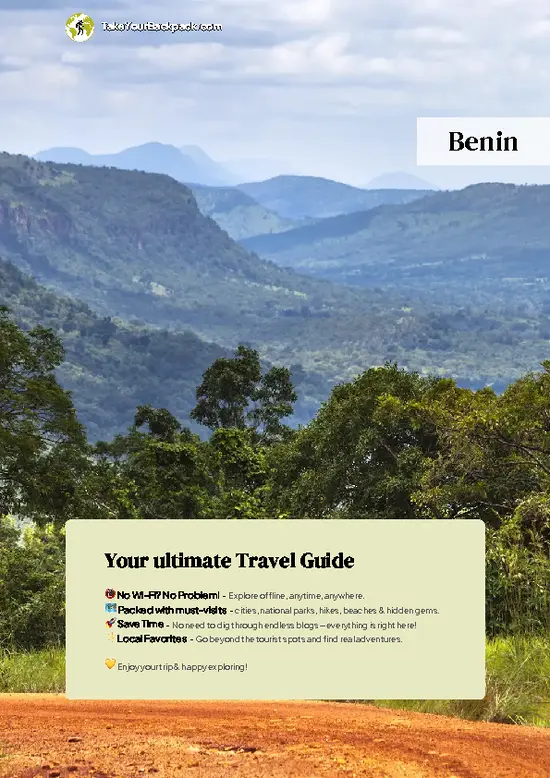
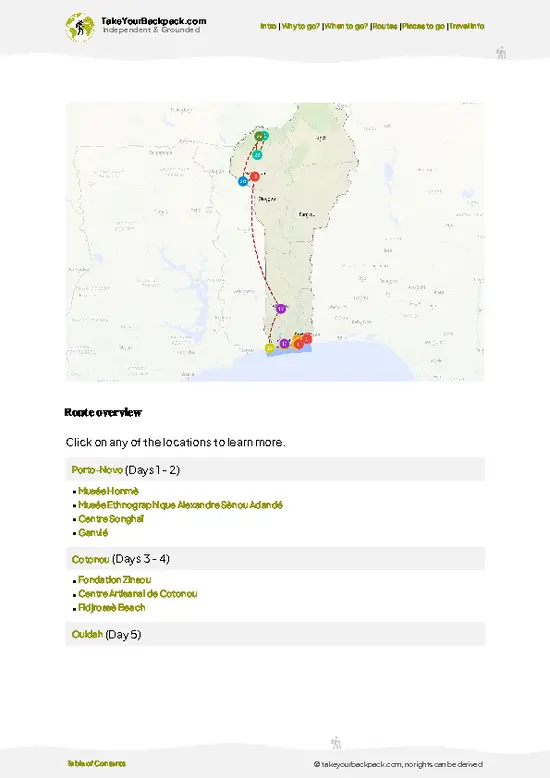
example page 0 from our offline Travel Guide for Benin
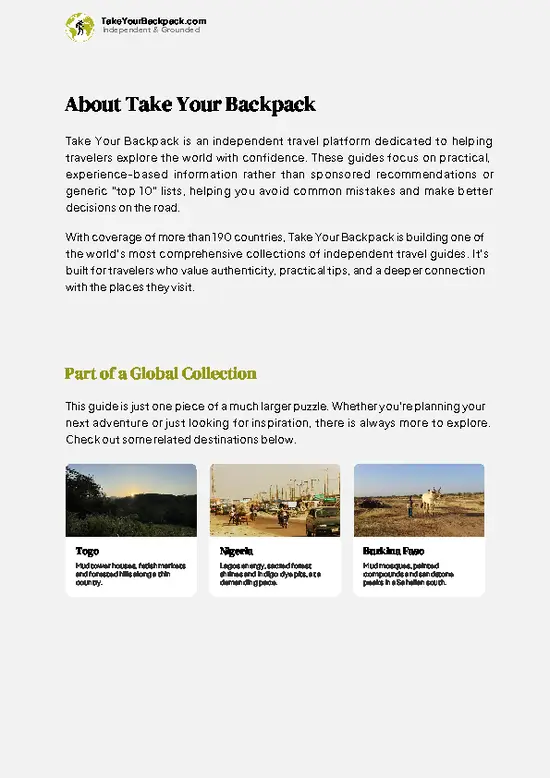
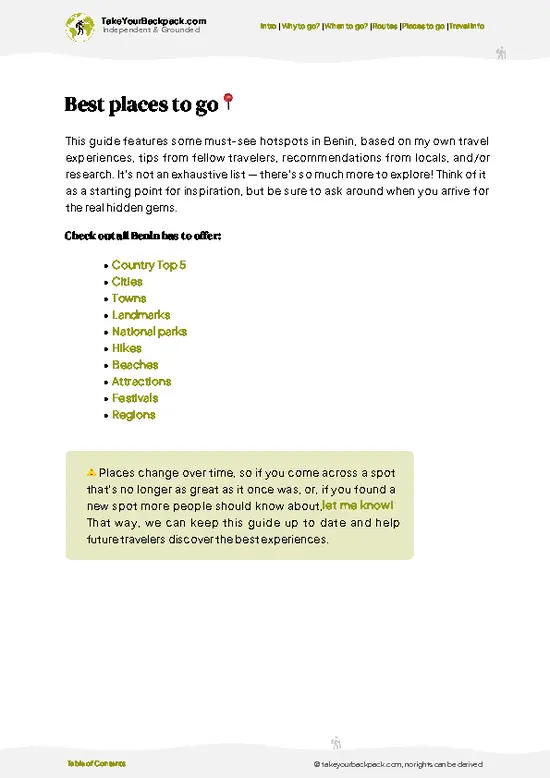
example page 1 from our offline Travel Guide for Benin
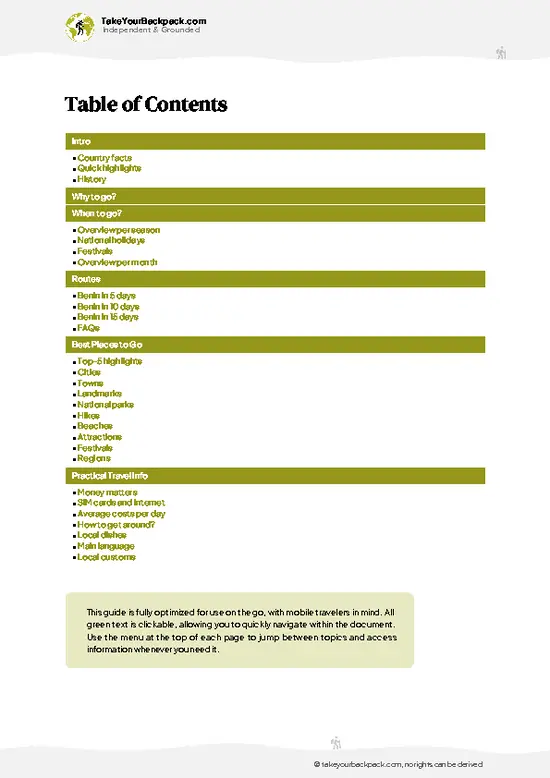
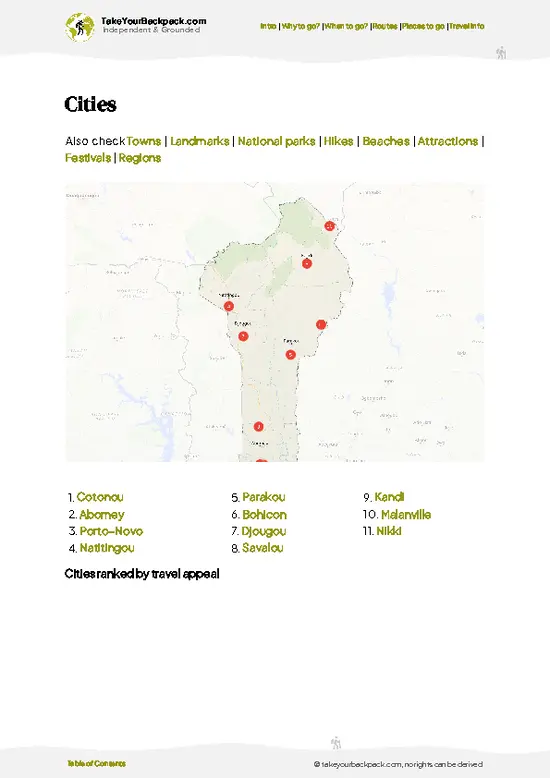
example page 2 from our offline Travel Guide for Benin
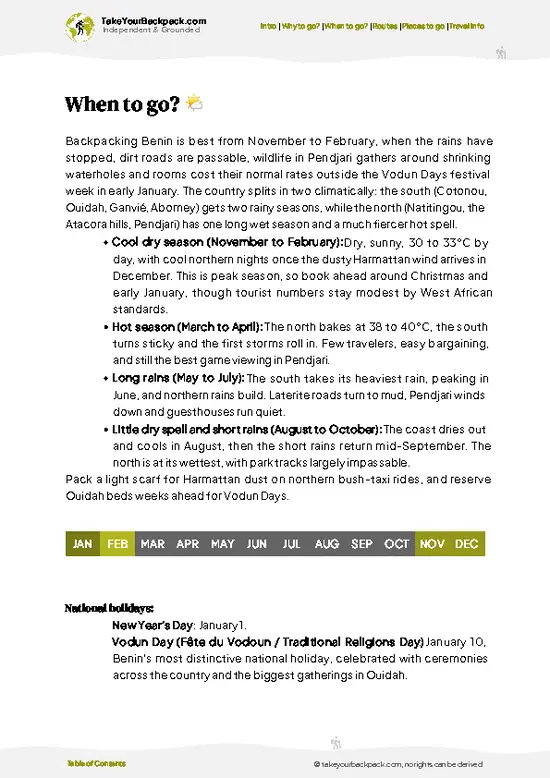
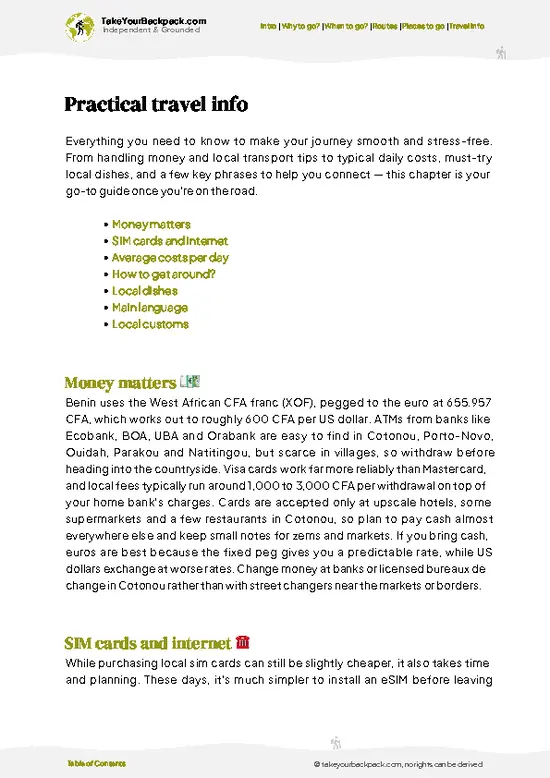
example page 3 from our offline Travel Guide for Benin
example page 4 from our offline Travel Guide for Benin
example page 5 from our offline Travel Guide for Benin
example page 6 from our offline Travel Guide for Benin
example page 7 from our offline Travel Guide for Benin
Loading the map 🌍
CLICK TO FILTER
cities
towns
landmarks
national parks
hikes
beaches
attractions
festivals
regions
SHOW COUNTRY’S BESTSHOW ALL

✨ Why go?
Ranked #2 attraction in Benin
What makes this attraction worth visiting

Musée d’Histoire de Ouidah gives you the clearest single-room explanation of how this coast became one of West Africa’s major departure points for the Atlantic slave trade. The exhibits trace the kingdom of Dahomey, the European trading posts and the human cost in plain, physical objects rather than slogans.

It also works as the right first stop before you walk the slave route to the beach. The museum puts names, dates and trade goods behind what would otherwise be a long, hot, silent walk. The Afro-Brazilian return stories are the part that surprises most backpackers: families who came back from Brazil in the 1800s shaped the pastel-colored houses and the cooking you will see around town.

The Portuguese fort walls add a layer you cannot get from a display case, because you are standing … read more 👉
Musée d’Histoire de Ouidah gives you the clearest single-room explanation of how this coast became one of West Africa’s major departure points for the Atlantic slave trade. The exhibits trace the kingdom of Dahomey, the European trading posts and the human cost in plain, physical objects rather than slogans.

It also works as the right first stop before you walk the slave route to the beach. The museum puts names, dates and trade goods behind what would otherwise be a long, hot, silent walk. The Afro-Brazilian return stories are the part that surprises most backpackers: families who came back from Brazil in the 1800s shaped the pastel-colored houses and the cooking you will see around town.

The Portuguese fort walls add a layer you cannot get from a display case, because you are standing inside the actual trading post. Pair it with the Python Temple across the square and you cover Ouidah’s colonial and Vodun sides in one morning. The Vodun masks and Egungun costumes make a useful counterpoint to the weighty history.

💡 HighlightsEssential experiences to have while visiting Musée d’Histoire de Ouidah

  1. The Fort São João Baptista de Ajudá complex: the whitewashed Portuguese fort is the main sight, with thick walls, a quiet courtyard and the former residence of the fort’s governor. Walking in through the gate is the moment the history gets physical.
  2. The slave trade galleries: iron shackles, neck rings and trade goods such as cloth, beads and alcohol explain how Dahomey and European traders operated. The display is small and sobering.
  3. Kingdom of Dahomey exhibits: royal objects and explanations of the kings who controlled Ouidah’s port show how power on the coast worked and who profited from it.
  4. Vodun objects and Egungun costumes: carved figures, masks and layered ceremonial fabrics introduce a religion that is still practiced daily in Ouidah. They are the visual high point of the museum.
  5. The Afro-Brazilian
… read more 👉
  1. The Fort São João Baptista de Ajudá complex: the whitewashed Portuguese fort is the main sight, with thick walls, a quiet courtyard and the former residence of the fort’s governor. Walking in through the gate is the moment the history gets physical.
  2. The slave trade galleries: iron shackles, neck rings and trade goods such as cloth, beads and alcohol explain how Dahomey and European traders operated. The display is small and sobering.
  3. Kingdom of Dahomey exhibits: royal objects and explanations of the kings who controlled Ouidah’s port show how power on the coast worked and who profited from it.
  4. Vodun objects and Egungun costumes: carved figures, masks and layered ceremonial fabrics introduce a religion that is still practiced daily in Ouidah. They are the visual high point of the museum.
  5. The Afro-Brazilian room: panels and photographs follow the freed people who returned from Brazil and built the so-called Brazilian quarter. You will recognize their influence in nearby architecture afterward.
  6. Portuguese colonial and trade displays: maps, ship models and period items show the European side of the port and how short-lived Portuguese control later became.
  7. The fort exterior and the square outside: step back from the gate and look at the walls against the palm-lined square. The late afternoon is pleasant here for photographs and for watching local life.
Musée d’Histoire de Ouidah costs roughly €2 to enter, and the fort’s outer walls and the square in front are free to see from outside.
Spotted a mistake or missing something? Contact us.

Things to do near Musée d’Histoire de Ouidah

Ratings based on Tripadvisor reviews. When you book through this link, you support our work at no extra cost to you.

🌤️ When to go?Seasonal considerations and timing

  • Main Dry Season (November to March): Ouidah gets its most comfortable weather, with days around 30 to 33°C (86 to 91°F) and nights near 23°C (73°F). Harmattan haze can dim the sky from December to February. Roads and the Route des Esclaves are easy to walk. Expect higher guesthouse prices and more visitors around the 10 January Vodun Festival.
  • Long Rains (April to July): Heavy downpours hit the coast, with humidity high and highs of 28 to 31°C (82 to 88°F). Sandy side streets turn muddy, but the museum's shaded rooms stay usable and the Fort's grounds are quiet. Rooms are easier to haggle down.
  • Short Dry Spell (August to September): Cloudy, cooler days of 26 to 28°C (79 to 82°F) with fewer showers. Crowds are thin and prices soft.
  • Short Rains (October to November): Brief storms, then sunshine.
… read more 👉
  • Main Dry Season (November to March): Ouidah gets its most comfortable weather, with days around 30 to 33°C (86 to 91°F) and nights near 23°C (73°F). Harmattan haze can dim the sky from December to February. Roads and the Route des Esclaves are easy to walk. Expect higher guesthouse prices and more visitors around the 10 January Vodun Festival.
  • Long Rains (April to July): Heavy downpours hit the coast, with humidity high and highs of 28 to 31°C (82 to 88°F). Sandy side streets turn muddy, but the museum's shaded rooms stay usable and the Fort's grounds are quiet. Rooms are easier to haggle down.
  • Short Dry Spell (August to September): Cloudy, cooler days of 26 to 28°C (79 to 82°F) with fewer showers. Crowds are thin and prices soft.
  • Short Rains (October to November): Brief storms, then sunshine. Daylight stays close to 12 hours year-round.
Arrive on a weekday morning, before tour groups and the midday heat reach the old Portuguese fort.


source: climatestotravel.comJANJanuary: highly recommended for travelingFEBFebruary: highly recommended for travelingMARMarch: highly recommended for travelingAPRApril: fair for travelingMAYMay: fair for travelingJUNJune: fair for travelingJULJuly: fair for travelingAUGAugust: fair for travelingSEPSeptember: fair for travelingOCTOctober: fair for travelingNOVNovember: excellent for travelingDECDecember: good for traveling
when-to-go

✈️ The backpacker research shortcutBenin Travel Guide

An offline-friendly backpacking guide with optimized travel routes, ranked highlights, transport advice, and the best areas to stay.
example page 0 from our offline Travel Guide for Benin
example page 1 from our offline Travel Guide for Benin
example page 2 from our offline Travel Guide for Benin
example page 3 from our offline Travel Guide for Benin
example page 4 from our offline Travel Guide for Benin
example page 5 from our offline Travel Guide for Benin
example page 6 from our offline Travel Guide for Benin
example page 7 from our offline Travel Guide for Benin
The digital guide (213 pages) contains:
✅ 48 highlights, ranked by travel appeal
✅ Optimized 5, 10 & 15-day travel routes
✅ Cities, national parks, landmarks, beaches
✅ How to get around
✅ Offline-friendly for travel without Wi-Fi
👉 Click to see all 30+ guide features

📅 Plan smarter in minutes, not weeks
✅ Month by month travel advice
✅ Festivals & national holidays
✅ Budget expectations

🗺️ Go to the right places, skip the overrated ones
✅ Honest pros & cons of destinations
✅ Top hikes, parks & viewpoints
✅ Lesser-known places most travelers miss
✅ Clear “worth it vs skip it” guidance

🛏️ Travel smoothly without rookie mistakes
✅ Best areas to stay
✅ Transport systems explained simply
✅ Common scams & safety advice
✅ SIM cards, money & practical tips

🌍 Understand the country, not just visit it
✅ Culture & traditions
✅ 52 Essential phrases & customs
✅ Festivals worth planning around
✅ Traveler-friendly historical context
✅ Insights that make places more meaningful

📱 Built for real travel conditions
✅ Fully downloadable PDF
✅ Works completely offline
✅ Optimized for phone use
✅ Useful in remote areas & buses
✅ Everything in one place
Stop searching, start planning
Get instant access to your full guide. 30‑day money-back guarantee.
+ Add another guide for just

By proceeding you agree to our terms.
Sent to your inbox immediately after payment • 100% Secure Checkout
Best Backpacking Travel Advisor 2025 tourism awardBest Backpacking
Travel Advisor
2025
What others say about Take Your Backpack Guides:
⭐⭐⭐⭐⭐
Fantastic, amazing amount of information!
⭐⭐⭐⭐⭐
My goodness this is amazing, it's what I've been looking for hats off too you!
⭐⭐⭐⭐⭐
I think this is absolutely BRILLIANT
⭐⭐⭐⭐
Very complete and informative. It's still missing places, but I gotta to commend you
⭐⭐⭐⭐⭐
This is truly amazing, thank you, can't wait to explore it with my kids!
⭐⭐⭐⭐⭐
Awesome resource, thank you!
⭐⭐⭐⭐⭐
This is amazing! Can't wait to explore the ones I haven't seen
⭐⭐⭐⭐
I love this! Well done, great idea.
⭐⭐⭐⭐⭐
Thanks for taking the time to make this gem!
⭐⭐⭐⭐⭐
This might be the best website I've ever seen.
⭐⭐⭐⭐⭐
Congratulations, and thank you so much for your work; it's incredibly valuable.
⭐⭐⭐⭐
In all seriousness I think you did a great job pointing out the important spots
⭐⭐⭐⭐⭐
10/10 very good
⭐⭐⭐⭐⭐
As someone who's only just starting to visit regularly this is awesome, thank you.
⭐⭐⭐⭐
Thank you very much! I'm going to visit my dad, it's going to be very useful!
⭐⭐⭐⭐⭐
This is really cool! We'll be travelling for the first time and this definitely come in handy.
⭐⭐⭐⭐⭐
You are now our minister of culture, congratulations 👨‍💼
⭐⭐⭐⭐⭐
Just wanted to tell you that this is a pearl! Going to follow your recommendations.
⭐⭐⭐⭐⭐
This is so cool. I'll definitely be using the resource for my travels soon.
⭐⭐⭐⭐⭐
This is very impressive! Good work.
⭐⭐⭐⭐⭐
This is an amazing and informative site. Very well done!

🛏️ Where to stay?Best areas to stay in Benin

The best base is central Ouidah, within walking distance of the Musée d’Histoire de Ouidah, which sits in the old Portuguese fort beside the main square. Staying here puts you near the Python Temple, the Basilica, the Sacred Forest and the start of the Route des Esclaves. Guesthouses and small family-run lodgings cluster around the town center and along the roads leading toward the beach, so you can walk to restaurants and the market in minutes, which matters after dark when streets are poorly lit.

The area near Place Chacha and the old Brazilian quarter is the most atmospheric. Colonial-era … read more 👉
The best base is central Ouidah, within walking distance of the Musée d’Histoire de Ouidah, which sits in the old Portuguese fort beside the main square. Staying here puts you near the Python Temple, the Basilica, the Sacred Forest and the start of the Route des Esclaves. Guesthouses and small family-run lodgings cluster around the town center and along the roads leading toward the beach, so you can walk to restaurants and the market in minutes, which matters after dark when streets are poorly lit.

The area near Place Chacha and the old Brazilian quarter is the most atmospheric. Colonial-era houses line the streets, you meet other travelers over meals, and moto-taxis are always at hand for trips to the sites that sit farther out. Solo travelers will feel comfortable here because the neighborhood is busy with locals until the evening.

The coastal stretch toward Pahou and the Route des Pêches suits you better if you want sea air, quiet beach guesthouses and a more relaxed pace. You trade walkability for a short moto-taxi ride into town, and the choice of places to eat is smaller. Many travelers also sleep in Cotonou and visit on a day trip, but that costs you the quiet early hours at the museum and the evening atmosphere.

👛 Costs (as of 22 October 2026)Travel costs and budget guide for Musée d’Histoire de Ouidah

Musée d’Histoire de Ouidah costs about €28 to 45 a day for a backpacker who pairs the visit with a night in town, and the ticket itself is a small part of that. The museum sits inside the old Portuguese fort of São João Baptista de Ajudá, and travelers pay in West African CFA francs.
CategoryBudget RangeLocal Reality
Museum entry€3 to 4Covers the exhibits on the slave trade, the Dahomey kingdom and Afro-Brazilian ties. Cash only.
Guide€0 to 5Often included or available for a small tip. Worth taking, since labels are limited.
Photo permission€0 to 2Some rooms restrict cameras; a small fee can apply.
Accommodation (high season)€10 to 18Simple guesthouse room with fan, or a dorm-style bed, in Ouidah. Prices ease off in the rainy months.
Local transport€1 to 4Zemidjan (moto-taxi) rides within town cost
… read more 👉
Musée d’Histoire de Ouidah costs about €28 to 45 a day for a backpacker who pairs the visit with a night in town, and the ticket itself is a small part of that. The museum sits inside the old Portuguese fort of São João Baptista de Ajudá, and travelers pay in West African CFA francs.
CategoryBudget RangeLocal Reality
Museum entry€3 to 4Covers the exhibits on the slave trade, the Dahomey kingdom and Afro-Brazilian ties. Cash only.
Guide€0 to 5Often included or available for a small tip. Worth taking, since labels are limited.
Photo permission€0 to 2Some rooms restrict cameras; a small fee can apply.
Accommodation (high season)€10 to 18Simple guesthouse room with fan, or a dorm-style bed, in Ouidah. Prices ease off in the rainy months.
Local transport€1 to 4Zemidjan (moto-taxi) rides within town cost less than €1 to 2. Shared taxis from Cotonou run about €2 to 3.
Food and water€6 to 10Street rice and fish plates cost €1.50 to 3; a sit-down meal runs €4 to 7.
Extras (Route des Esclaves, Python Temple)€2 to 4The Python Temple charges a small entry plus a guide tip; the Door of No Return is free to see.
Total Daily Budget€28 to 45Lower end with a shared taxi, street food and a basic room.


source: expresstourisme.com
⚠️ Prices can change and everyone travels differently, so take this as a rough guide. Hope it helps you plan your adventure!

FAQCommon questions from travelers

Plan on 1.5 to 2 hours inside the Musée d’Histoire de Ouidah, which fills the old Portuguese fort with rooms on the slave trade, Vodun and the Brazilian returnees. Add another half day to walk the Route des Esclaves (about 4 km) to the Gate of No Return on the beach. Most travelers combine the museum, the Python Temple and the Sacred Forest in one full day.
For most travelers, yes, because the Musée d’Histoire de Ouidah is the clearest introduction to the history of the Kingdom of Dahomey and the slave trade in this part of West Africa. Entry costs roughly € 3 to 5 and a guide adds about € 3 to 8. The collection is compact, so you finish in under two hours and still have time for the Route des Esclaves.
Ouidah lies about 40 km west of Cotonou, and the Musée d’Histoire de Ouidah stands in the fort next to the main square. Shared taxis and minibuses from Cotonou take about 1 to 1.5 hours and cost roughly € 1.50 to 3, depending on traffic. Once in town, a moto-taxi to the fort costs around € 0.50 to 1, or you can walk from most central guesthouses.
⚠️ Things can change over time, so always validate details locally before you go.

Other Beninese attractions near Musée d’Histoire de Ouidah

Explore more nearby:

  • Place Chacha—Old auction square, Route des Esclaves start, red laterite, Afro-Brazilian houses| 1 km away
  • Temple des Pythons de Ouidah—sacred snakes, Vodun rituals, religious sanctuary| 1 km away
  • Maison du Brésil—Afro-Brazilian heritage, cultural displays, historic residence| 2 km away

💡 Not sure where to go next?
Create a personalized itinerary for Benin including Musée d’Histoire de Ouidah and the places that fit your trip.

Generate my itinerary

👉 Discover all attractions

Or checkout all Benin has to offer (think cities, towns, villages, national parks, hikes, beaches, festivals)
Country photo of Benin

We 💚 feedbackIs it worth it?

Musée d’Histoire de Ouidah suits curious travelers who like history explained through real objects rather than polished multimedia. It is a small museum, so I would go first thing in the morning before the heat settles, hire a local guide at the entrance for the French labels, and then walk the slave route afterward.

✍️ Help improve this page!
The information on this page is based on in-depth research, insights shared by experienced travelers, and feedback from the local travel community in Benin. While every effort is made to keep the information accurate and current, conditions can change — so if you spot anything incorrect or outdated, please get in touch.


🙋‍♂️ Give feedback

👋 Meet the founderWho’s Behind Take Your Backpack?

Johan, backpacker and founder of TakeYourBackpackHi, I’m Johan (Netherlands 🇳🇱), the creator of TakeYourBackpack. Over the past 3 decades, I’ve backpacked through 90+ countries across six continents, gaining extensive experience with independent travel, long-term trips, and overland routes.

This site is built on a combination of firsthand travel experience and carefully curated insights from other backpackers. Many guides are based on places I’ve personally visited, while others bring together tips, observations, and practical advice shared by trusted travelers I’ve met along the way.

The goal is to provide realistic, experience-driven guidance — not generic itineraries — so you can explore destinations with better context, clearer expectations, and more confidence.