×

Bhutan🇧🇹 | regionsBumthang Valleyancient temples, apple orchards, sacred pilgrimage sites | things to do and best time to go

Explore Jomotsangkha Wildlife SanctuaryExplore Haa Valley

Backpacking in Bumthang Valley
🏆 Top pickregion ranked #1
By Johan Kruseman 🇳🇱 | Updated September 4, 2026

Most blogs sell Bumthang as a sleepy “spiritual heartland,” but here’s the twist: for backpackers, it’s actually one of the easiest places in Bhutan to feel like you’ve slipped behind the tourist curtain and into everyday village life. Bumthang Valley sits in central Bhutan, a long, high valley system roughly between Trongsa and Mongar, with Jakar as the main town.

You get layered monasteries on ridgelines, farmhouses smoking with buckwheat pancakes, and trails that start literally behind guesthouses. It’s calmer and more spread out than Paro or Thimphu, with fewer tour buses and more monks on motorbikes. Transport between villages is slow and a bit chaotic, so you trade convenience for that “I’m actually out here” feeling. Costs are slightly higher than western Bhutan for basics, but homestays and simple eateries keep it manageable. Compared with Punakha’s postcard-perfect dzong and Paro’s big-ticket sights, Bumthang is less about one jaw-drop moment and more about quiet, cumulative magic over a few unhurried days.

Discover everything you want to know in the 📖 Bhutan Travel Guide.


Get your Bhutan guide
54 ranked highlights, routes & tips, works offline (222 pages)
Loading the map 🌍
CLICK TO FILTER
cities
towns
villages
landmarks
national parks
hikes
attractions
festivals
regions
SHOW COUNTRY’S BESTSHOW ALL

✨ Why go?
Ranked #1 region in Bhutan
Why Bumthang Valley should be on your travel list

In the heart of Bhutan, Bumthang Valley is a backpacker’s playground, and here’s why savvy travelers linger. First off, the variety of landscapes is jaw-dropping. You’ve got lush valleys, rolling hills, and ancient temples all within a stone’s throw. It’s like nature’s buffet, and you can sample a bit of everything without the hassle of constant relocation.

Transport is a breeze here. You can hop on a local bus or rent a bike, giving you the flexibility to explore at your own pace. Want to spend an afternoon wandering through a traditional village? Go for it. Prefer to hike up to a sacred monastery? No problem.

What really sets Bumthang apart is the chance to mix nature and culture seamlessly. You can trek through stunning landscapes by day and dive into local festivals or try homemade … read more 👉
In the heart of Bhutan, Bumthang Valley is a backpacker’s playground, and here’s why savvy travelers linger. First off, the variety of landscapes is jaw-dropping. You’ve got lush valleys, rolling hills, and ancient temples all within a stone’s throw. It’s like nature’s buffet, and you can sample a bit of everything without the hassle of constant relocation.

Transport is a breeze here. You can hop on a local bus or rent a bike, giving you the flexibility to explore at your own pace. Want to spend an afternoon wandering through a traditional village? Go for it. Prefer to hike up to a sacred monastery? No problem.

What really sets Bumthang apart is the chance to mix nature and culture seamlessly. You can trek through stunning landscapes by day and dive into local festivals or try homemade cheese at night. This is slow travel at its finest, allowing you to soak in the essence of Bhutan without feeling rushed. So, if you’re looking for high-value experiences that blend adventure with authenticity, Bumthang is your spot.
Want to include Bumthang Valley in your Bhutan route?
Create a personalized Bhutan itinerary that includes Bumthang Valley and the places that fit your trip — based on your travel style, budget, and available time. Get your route in seconds.

Generate my trip

💡 HighlightsDon't-miss highlights and experiences

  • Kurjey Lhakhang — A three-temple complex in Chhoekhor where you can see the rock imprint said to be left by Guru Rinpoche; heavy on history and pilgrimage energy, and a must for anyone wanting the Bumthang spiritual story in one compact spot.
  • Jambay Lhakhang — One of Bhutan’s oldest temples (7th century), famous for its living rituals and the Jambay Drup festival; the wooden architecture and the old courtyard atmosphere feel genuinely ancient and local, not staged for visitors.
  • Tamshing Lhakhang — The ridgetop Nyingma monastery founded by Terton Pema Lingpa, with dense, colorful murals and texts; you get a real sense of the region’s tantric art tradition that you won’t easily find elsewhere.
  • Jakar Dzong — The “castle of the white bird” dominating Jakar town; it’s an easy climb with panoramic
read more 👉
  • Kurjey Lhakhang — A three-temple complex in Chhoekhor where you can see the rock imprint said to be left by Guru Rinpoche; heavy on history and pilgrimage energy, and a must for anyone wanting the Bumthang spiritual story in one compact spot.
  • Jambay Lhakhang — One of Bhutan’s oldest temples (7th century), famous for its living rituals and the Jambay Drup festival; the wooden architecture and the old courtyard atmosphere feel genuinely ancient and local, not staged for visitors.
  • Tamshing Lhakhang — The ridgetop Nyingma monastery founded by Terton Pema Lingpa, with dense, colorful murals and texts; you get a real sense of the region’s tantric art tradition that you won’t easily find elsewhere.
  • Jakar Dzong — The “castle of the white bird” dominating Jakar town; it’s an easy climb with panoramic views of the valley and a solid feel for how Bhutanese dzongs used to anchor both faith and daily life.
  • Mebar Tsho (Burning Lake) — Tang Valley’s sacred spring where Pema Lingpa famously found spiritual treasures; the walk down to the cliffside pool and the little shrine above it combine scenery with one of Bumthang’s best origin stories.
  • Ura Village and Ura Lhakhang — (Hidden gem) A high, quiet hamlet east of central Bumthang with timber houses, yak pastures and an intimate temple — great for wandering, meeting herders and seeing traditional life that most day-trippers miss.
  • Chhume Weaving Village — (Hidden gem) Short drive from Jakar: family-run looms, local dyes and the chance to watch and buy authentic Bumthang textiles straight from the makers — educational, hands-on, and genuinely local.
  • Swiss Farm / Riverside Orchard Stops — (Hidden gem) Small, family-run farms and cafés around the valley (the well-known Swiss Farm being the pick) where you can taste local butter tea, home-baked goods and sit by the Kuri Chhu; a relaxed counterpoint to temple hopping.
  • Kuri Chhu Riverside Walks & Trout Fishing — The river that threads the valley offers easy walks, picnic spots and seasonal trout fishing; it’s simple nature with great light and a real sense of place — an antidote to packed sightseeing.
  • Jakar Market & Local Cheese Stalls — The valley’s bustling market (especially on market days) where farmers sell yak and cow cheese, buckwheat, dried yak meat and local produce; perfect for tasting Bumthang flavors and chatting with vendors about daily life.
Spotted a mistake or missing something? Contact us.

Things to do around Bumthang Valley

Ratings based on Tripadvisor reviews. When you book through this link, you support our work at no extra cost to you.

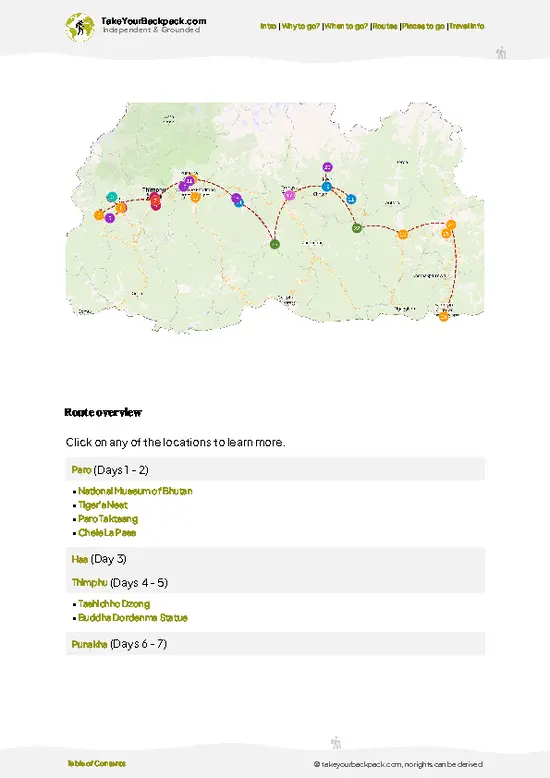
⌛️ 5 daysHow to make the most of Bumthang Valley

Day 1: Jakar
You’re diving into the heart of Bumthang Valley, and Jakar is your launchpad. The drive from Paro to Jakar is a winding adventure, taking about 8 hours. This isn’t just a commute; it’s a chance to soak in Bhutan’s stunning landscapes. The roads are bumpy, but the views are worth every jolt. Arriving in Jakar, you’ll feel the pulse of the valley. Settle in, explore the local market, and grab a bite of ema datshi. It’s the perfect way to kick off your journey.

Day 2: Jakar to Tang Valley
Today, you’ll venture into Tang Valley, about a 30-minute drive from Jakar. This leg is short but sweet, allowing you to savor the scenery without feeling rushed. Tang is less touristy, giving you a taste of local life. Visit the Mebar Tsho (Burning Lake) for a spiritual experience that’s both … read more 👉
Day 1: Jakar
You’re diving into the heart of Bumthang Valley, and Jakar is your launchpad. The drive from Paro to Jakar is a winding adventure, taking about 8 hours. This isn’t just a commute; it’s a chance to soak in Bhutan’s stunning landscapes. The roads are bumpy, but the views are worth every jolt. Arriving in Jakar, you’ll feel the pulse of the valley. Settle in, explore the local market, and grab a bite of ema datshi. It’s the perfect way to kick off your journey.

Day 2: Jakar to Tang Valley
Today, you’ll venture into Tang Valley, about a 30-minute drive from Jakar. This leg is short but sweet, allowing you to savor the scenery without feeling rushed. Tang is less touristy, giving you a taste of local life. Visit the Mebar Tsho (Burning Lake) for a spiritual experience that’s both serene and breathtaking. The hike to the lake is manageable, and the tranquility here is a refreshing contrast to Jakar’s buzz.

Day 3: Tang Valley to Ura
This day is all about the journey. The drive to Ura takes roughly 1.5 hours, but the winding roads and high-altitude views will keep you captivated. Ura is a quaint village that feels like stepping back in time. Spend the afternoon wandering through traditional houses and chatting with locals. The slower pace here allows you to absorb the culture deeply.

Day 4: Ura to Jakar
You’ll return to Jakar today, but don’t rush. Take your time on the road, stopping at small villages along the way. Each stop is a chance to connect with the locals and discover hidden stories. This is where the real magic happens.

Day 5: Jakar
This is your must-do day. Spend it exploring the Jakar Dzong and the surrounding monasteries. The architecture is stunning, and the history is rich. You’ll leave with a deeper appreciation for Bhutanese culture.

Off-Path Reward: Consider a detour to the Jakar Dzong early on Day 1. It’s a quick visit that adds depth to your understanding of the region and sets the tone for your adventure.

This itinerary balances time, money, and comfort, ensuring you experience the essence of Bumthang Valley without feeling rushed.
Turn your Bumthang Valley visit into an Bhutan adventure
Build a complete Bhutan route with Bumthang Valley, hidden gems, must-see destinations, and realistic travel times included.

Generate my trip

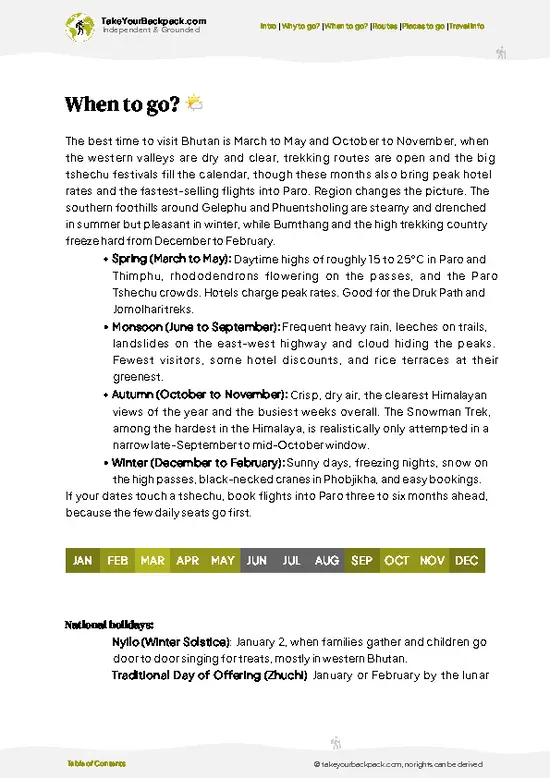
🌤️ When to go?Best time to visit Bumthang Valley


  • Weather: Spring (March to May) and autumn (September to November) are your sweet spots. Clear skies and dry trails make trekking a breeze. Avoid the monsoon months (June to August) when rain turns paths into mud traps and visibility tanks.

  • Temperature: Spring days hover around 15-20°C (59-68°F), perfect for hiking without overheating. Autumn is cooler, 10-18°C (50-64°F), so pack layers. Winter nights can dip below freezing, which is brutal if you’re camping.

  • Daylight Hours: Around 10-12 hours in spring and autumn, giving you ample time to cover ground without rushing. Winter days shrink, so plan shorter hikes or start early.

  • Crowds: Peak trekking seasons bring a handful of tourists but nothing like the crowds in Nepal or India. Still, spring festivals like Jakar Tshechu draw locals
read more 👉

  • Weather: Spring (March to May) and autumn (September to November) are your sweet spots. Clear skies and dry trails make trekking a breeze. Avoid the monsoon months (June to August) when rain turns paths into mud traps and visibility tanks.

  • Temperature: Spring days hover around 15-20°C (59-68°F), perfect for hiking without overheating. Autumn is cooler, 10-18°C (50-64°F), so pack layers. Winter nights can dip below freezing, which is brutal if you’re camping.

  • Daylight Hours: Around 10-12 hours in spring and autumn, giving you ample time to cover ground without rushing. Winter days shrink, so plan shorter hikes or start early.

  • Crowds: Peak trekking seasons bring a handful of tourists but nothing like the crowds in Nepal or India. Still, spring festivals like Jakar Tshechu draw locals and travelers alike, so book accommodations early.

  • Seasonal Activities: Spring bursts with rhododendrons and wildflowers, while autumn offers vibrant festivals and clear mountain views. Winter is quiet, great for solitude but limited in events.

  • Price Fluctuations: Expect higher prices during peak seasons due to demand. Off-season (winter and monsoon) sees discounts but sacrifices comfort and accessibility.


Pro-tip: Arrive just before a festival in spring or autumn to catch the buzz without paying peak prices or battling crowds.


source: climatestotravel.comJANJanuary: fair for travelingFEBFebruary: fair for travelingMARMarch: excellent for travelingAPRApril: excellent for travelingMAYMay: excellent for travelingJUNJune: below average for travelingJULJuly: below average for travelingAUGAugust: below average for travelingSEPSeptember: excellent for travelingOCTOctober: excellent for travelingNOVNovember: excellent for travelingDECDecember: fair for traveling
when-to-go

✈️ The backpacker research shortcutBhutan Travel Guide

An offline-friendly backpacking guide with optimized travel routes, ranked highlights, transport advice, and the best areas to stay.
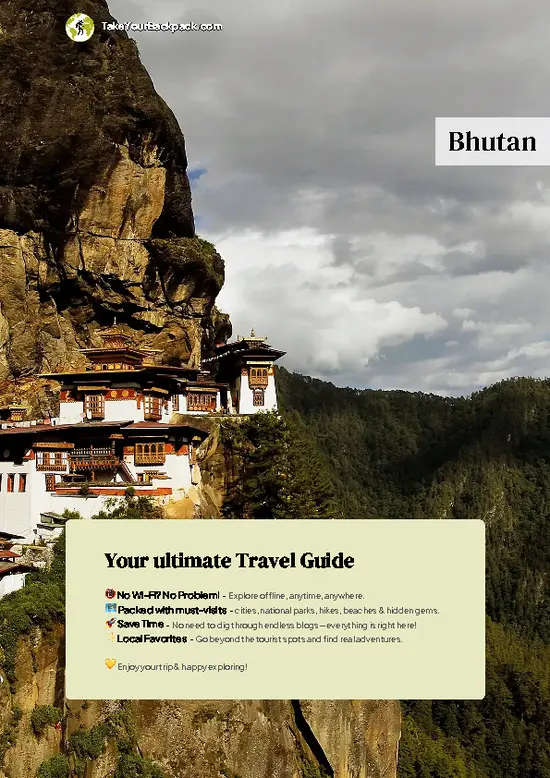
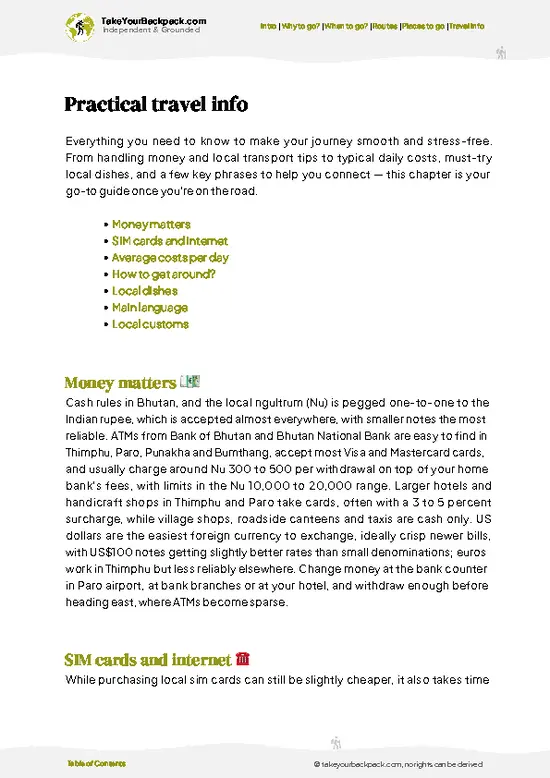
example page 0 from our offline Travel Guide for Bhutan
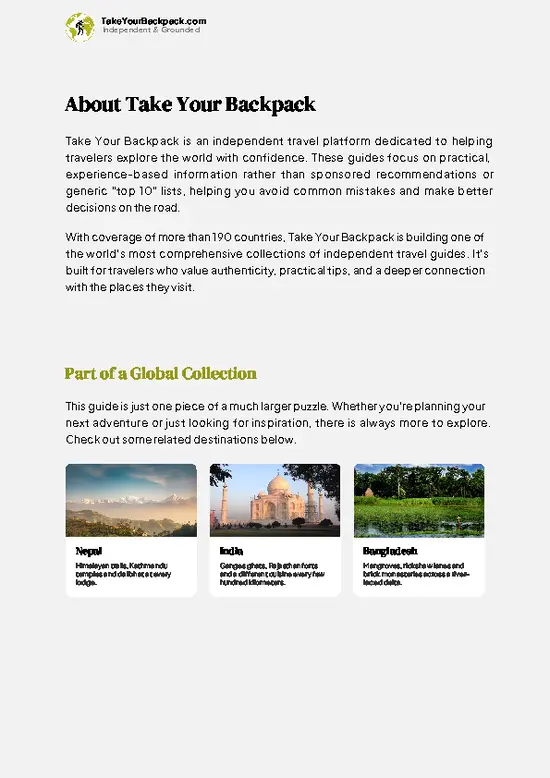
example page 1 from our offline Travel Guide for Bhutan
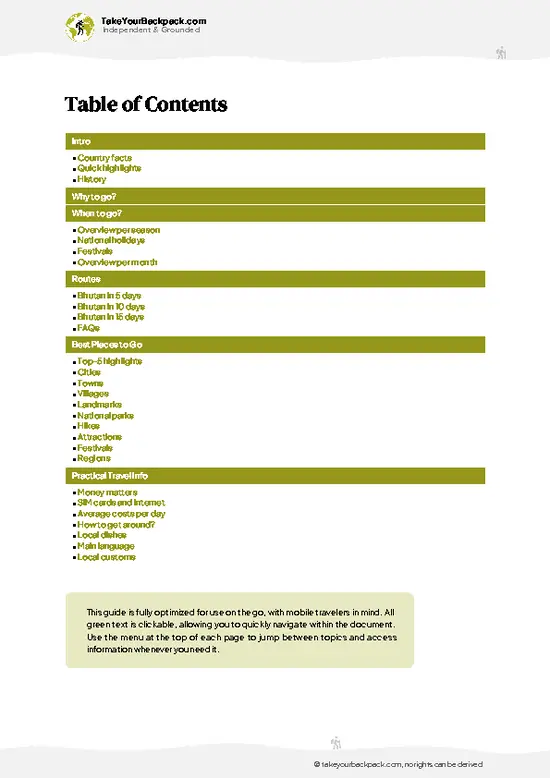
example page 2 from our offline Travel Guide for Bhutan
example page 3 from our offline Travel Guide for Bhutan
example page 4 from our offline Travel Guide for Bhutan
example page 5 from our offline Travel Guide for Bhutan
example page 6 from our offline Travel Guide for Bhutan
example page 7 from our offline Travel Guide for Bhutan
The digital guide (222 pages) contains:
54 highlights, ranked by travel appeal
Optimized 5, 10 & 15-day travel routes
Cities, national parks, landmarks, beaches
How to get around
Offline-friendly for travel without Wi-Fi
👉 Click to see all 30+ guide features

📅 Plan smarter in minutes, not weeks
Month by month travel advice
Festivals & national holidays
Budget expectations

🗺️ Go to the right places, skip the overrated ones
Honest pros & cons of destinations
Top hikes, parks & viewpoints
Lesser-known places most travelers miss
Clear “worth it vs skip it” guidance

🛏️ Travel smoothly without rookie mistakes
Best areas to stay
Transport systems explained simply
Common scams & safety advice
SIM cards, money & practical tips

🌍 Understand the country, not just visit it
Culture & traditions
52 Essential phrases & customs
Festivals worth planning around
Traveler-friendly historical context
Insights that make places more meaningful

📱 Built for real travel conditions
Fully downloadable PDF
Works completely offline
Optimized for phone use
Useful in remote areas & buses
Everything in one place
Save weeks of stressful planning
Get instant access to your full guide. 30‑day money-back guarantee.
+ Add another guide for just US$7.80

By proceeding you agree to our terms.
Sent to your inbox immediately after payment • 100% Secure Checkout
Best Backpacking Travel Advisor 2025 tourism awardBest Backpacking
Travel Advisor
2025
What others say about Take Your Backpack Guides:
⭐⭐⭐⭐⭐
Fantastic, amazing amount of information!
⭐⭐⭐⭐⭐
My goodness this is amazing, it's what I've been looking for hats off too you!
⭐⭐⭐⭐⭐
I think this is absolutely BRILLIANT
⭐⭐⭐⭐
Very complete and informative. It's still missing places, but I gotta to commend you
⭐⭐⭐⭐⭐
This is truly amazing, thank you, can't wait to explore it with my kids!
⭐⭐⭐⭐⭐
Awesome resource, thank you!
⭐⭐⭐⭐⭐
This is amazing! Can't wait to explore the ones I haven't seen
⭐⭐⭐⭐
I love this! Well done, great idea.
⭐⭐⭐⭐⭐
Thanks for taking the time to make this gem!
⭐⭐⭐⭐⭐
This might be the best website I've ever seen.
⭐⭐⭐⭐⭐
Congratulations, and thank you so much for your work; it's incredibly valuable.
⭐⭐⭐⭐
In all seriousness I think you did a great job pointing out the important spots
⭐⭐⭐⭐⭐
10/10 very good
⭐⭐⭐⭐⭐
As someone who's only just starting to visit regularly this is awesome, thank you.
⭐⭐⭐⭐
Thank you very much! I'm going to visit my dad, it's going to be very useful!
⭐⭐⭐⭐⭐
This is really cool! We'll be travelling for the first time and this definitely come in handy.
⭐⭐⭐⭐⭐
You are now our minister of culture, congratulations 👨‍💼
⭐⭐⭐⭐⭐
Just wanted to tell you that this is a pearl! Going to follow your recommendations.
⭐⭐⭐⭐⭐
This is so cool. I'll definitely be using the resource for my travels soon.
⭐⭐⭐⭐⭐
This is very impressive! Good work.
⭐⭐⭐⭐⭐
This is an amazing and informative site. Very well done!

🛏️ Where to stay?How to pick the right area

Bumthang Valley is a treasure trove for backpackers, and knowing where to stay can elevate your experience from good to legendary.

Start in Jakar, the valley’s main town. It’s a hub of activity, with a mix of locals and travelers. The atmosphere is friendly, and you’ll find plenty of cafes where you can swap stories over a cup of butter tea. Jakar’s central location makes it easy to access nearby temples and hiking trails.

Next, consider Chumey. This village offers a quieter vibe, perfect for those who want to escape the hustle. It’s known for its stunning landscapes and traditional Bhutanese … read more 👉
Bumthang Valley is a treasure trove for backpackers, and knowing where to stay can elevate your experience from good to legendary.

Start in Jakar, the valley’s main town. It’s a hub of activity, with a mix of locals and travelers. The atmosphere is friendly, and you’ll find plenty of cafes where you can swap stories over a cup of butter tea. Jakar’s central location makes it easy to access nearby temples and hiking trails.

Next, consider Chumey. This village offers a quieter vibe, perfect for those who want to escape the hustle. It’s known for its stunning landscapes and traditional Bhutanese culture. You’ll feel like you’ve stepped back in time, and the locals are welcoming. Plus, it’s a great base for exploring the surrounding countryside.

Then there’s Tang, a bit off the beaten path but worth it for the serenity. It’s less crowded, allowing for deeper connections with nature and the community. You can hike to the Tang Monastery, where the views are breathtaking.

Each of these spots has its own charm, and the choice between them boils down to what you value most: social buzz, cultural immersion, or tranquil solitude. Choose wisely, and you’ll unlock the true essence of Bumthang.

🚌 Getting aroundHow to get from A to B

Bumthang Valley is a realm where time feels elastic, bending to the whims of the landscape and the rhythm of local life. Here, schedules are more like suggestions than hard rules. You might find yourself waiting for a bus that’s running late, or you could stumble upon a shared taxi that’s just about to leave. The air is thick with the scent of pine and the sound of distant prayer flags flapping in the wind, creating a vibe that’s both tranquil and alive. This isn’t a place for the rigid planner; it’s for those who embrace the unexpected and savor the journey as much as the destination.


  • Local Buses: These are your budget-friendly lifelines. They run from early morning until around 5 PM, with fares typically under 100 Ngultrum. Expect a bumpy ride, but the views are worth it. Just be ready
read more 👉
Bumthang Valley is a realm where time feels elastic, bending to the whims of the landscape and the rhythm of local life. Here, schedules are more like suggestions than hard rules. You might find yourself waiting for a bus that’s running late, or you could stumble upon a shared taxi that’s just about to leave. The air is thick with the scent of pine and the sound of distant prayer flags flapping in the wind, creating a vibe that’s both tranquil and alive. This isn’t a place for the rigid planner; it’s for those who embrace the unexpected and savor the journey as much as the destination.


  • Local Buses: These are your budget-friendly lifelines. They run from early morning until around 5 PM, with fares typically under 100 Ngultrum. Expect a bumpy ride, but the views are worth it. Just be ready for a few stops along the way as locals hop on and off.


  • Shared Taxis: A faster option, these taxis can whisk you from one town to another for about 300-500 Ngultrum, depending on the distance. They usually leave when full, so you might have to wait a bit. Comfort is decent, and you’ll get to chat with locals, which is a bonus.


  • Private Taxis: If you’re feeling a bit splurgy, hiring a private taxi can cost around 2,000-3,000 Ngultrum for a day. You’ll have the freedom to explore at your own pace, but it’s a significant hit to the wallet. Still, it’s the most comfortable way to navigate the valley.


  • Bicycle Rentals: For the adventurous spirit, renting a bike can cost about 200 Ngultrum a day. It’s a fantastic way to soak in the scenery and get some exercise, but be prepared for some steep climbs. The freedom of pedaling through the valley is unmatched.


  • Walking: Don’t underestimate the power of your own two feet. Many of the valley’s treasures are best accessed on foot. It’s free, and you’ll connect with the landscape in a way that no vehicle can replicate. Just pack good shoes and plenty of water.


Master Tactical Tip: To maximize your time and minimize costs, aim to use local buses for longer distances and combine them with walking or biking for shorter jaunts. This way, you’ll experience the valley’s charm while keeping your budget intact. Embrace the flow, and let the journey unfold!

🍲 FoodLocal Flavors for Backpackers

In the Bumthang Valley, food is a celebration of local culture and flavors. You can’t miss ema datshi, a fiery chili and cheese dish that’s practically the national obsession. The heat hits you first, followed by the creamy richness of the cheese. Pair it with red rice, which has a nutty flavor and a chewy texture that complements the spice beautifully.

For a true local experience, head to the markets. The bustling stalls are filled with fresh produce and spices, where you can grab a quick bite of momos—steamed dumplings stuffed with meat or veggies. The aroma wafts through the air, drawing you in. Street vendors often serve thukpa, a hearty noodle soup that warms you up after a day of trekking.

When it comes to drinks, try ara, a traditional rice wine that packs a punch. Sipping it while … read more 👉
In the Bumthang Valley, food is a celebration of local culture and flavors. You can’t miss ema datshi, a fiery chili and cheese dish that’s practically the national obsession. The heat hits you first, followed by the creamy richness of the cheese. Pair it with red rice, which has a nutty flavor and a chewy texture that complements the spice beautifully.

For a true local experience, head to the markets. The bustling stalls are filled with fresh produce and spices, where you can grab a quick bite of momos—steamed dumplings stuffed with meat or veggies. The aroma wafts through the air, drawing you in. Street vendors often serve thukpa, a hearty noodle soup that warms you up after a day of trekking.

When it comes to drinks, try ara, a traditional rice wine that packs a punch. Sipping it while mingling with locals gives you a taste of their hospitality. Dining here is relaxed; don’t be surprised if you’re invited to share a meal. It’s common to eat with your hands, so embrace it! Just remember to use your right hand—it’s a sign of respect.

In Bumthang, every meal is a chance to connect, so savor the flavors and the company.

FAQCommon questions from travelers

3 to 4 days are sufficient to explore Bumthang Valley thoroughly. This allows time to visit key sites like Jakar Dzong, Kurje Lhakhang, and Tamshing Lhakhang, plus some hiking. The valley is compact, so travel between attractions is manageable within this timeframe.
You can get around Bumthang Valley without a car by using local taxis or hiring a motorbike. Walking is also feasible for short distances between nearby villages and monasteries. Public buses are limited, so arranging transport through guesthouses is common and practical.
Bumthang Valley is known for its rich cultural heritage and numerous ancient Buddhist temples and monasteries. It is considered the spiritual heartland of Bhutan, with sites dating back to the 7th century. The valley is also famous for its scenic landscapes and traditional Bhutanese festivals.
⚠️ Things can change over time, so always validate details locally before you go.

Other Bhutanese regions near Bumthang Valley

Explore more nearby:

  • Phobjikha Valley—glacial basin, black-necked cranes, dwarf bamboo meadows| 32 km away
  • Haa Valley—alpine forests, border villages, yak pastures| 104 km away

💡 Not sure where to go next?
Create a personalized itinerary for Bhutan including Bumthang Valley and the places that fit your trip.

Generate my itinerary

👉 Discover all regions

Or checkout all Bhutan has to offer (think cities, towns, villages, national parks, hikes, beaches, festivals)
Country photo of Bhutan

We 💚 feedbackKey takeaways before you go

Bumthang Valley is like stepping into a living postcard, but don’t let the serene vibe fool you. The best surprise? The local cheese. Seriously, it’s a game changer. Grab some with a cold beer at a village shop and soak in the atmosphere. Just a heads-up: the altitude can hit hard if you’re not acclimatized. Take it easy on the hikes at first. Trust me, you’ll want to enjoy every moment without gasping for air. This place has a rhythm that deserves your full attention.

✍️ Help improve this page!
The information on this page is based on in-depth research, insights shared by experienced travelers, and feedback from the local travel community in Bhutan. While every effort is made to keep the information accurate and current, conditions can change — so if you spot anything incorrect or outdated, please get in touch.


🙋‍♂️ Give feedback

👋 Meet the founderWho’s Behind Take Your Backpack?

Johan, backpacker and founder of TakeYourBackpackHi, I’m Johan (Netherlands 🇳🇱), the creator of TakeYourBackpack. Over the past decade, I’ve backpacked through 80+ countries across six continents, gaining extensive experience with independent travel, long-term trips, and overland routes.

This site is built on a combination of firsthand travel experience and carefully curated insights from other backpackers. Many guides are based on places I’ve personally visited, while others bring together tips, observations, and practical advice shared by trusted travelers I’ve met along the way.

The goal is to provide realistic, experience-driven guidance — not generic itineraries — so you can explore destinations with better context, clearer expectations, and more confidence.

Get full Bhutan guide •
Instant download • 54 highlights • Full Offline guide