×

Bhutan🇧🇹 | regionsHaa Valleyalpine forests, border villages, yak pastures | things to do and best time to go

Explore Bumthang ValleyExplore Phobjikha Valley

Backpacking in Haa Valley
👌 Worth visitingregion ranked #3
By Johan Kruseman 🇳🇱 | Updated September 4, 2026

Most blogs sell Haa Valley as “remote and untouched,” but the surprise is that it’s actually one of the easiest side trips from Paro and Thimphu, yet still feels like Bhutan before tourism rules kicked in.

Haa sits in western Bhutan, just west of Paro, tucked along the road that eventually heads toward the border with India. For backpackers, it’s the quiet cousin of Paro and Punakha: fewer hotels, fewer cafés, more farmhouses and army checkpoints. The valley is gorgeous in that big, open, high-pasture way, with pine forests, yak herders, and day hikes that start practically from the main road. Transport is the catch: shared taxis are irregular, and once you’re in Haa town you’ll mostly walk or hitch short rides. It’s cheaper and more low-key than Paro, but also sleepier; nightlife is a teahouse and an early bed, not a bar crawl. If you want monasteries plus mountain air without selfie-stick crowds, this is where you trade options for atmosphere.

Discover everything you want to know in the 📖 Bhutan Travel Guide.


Get your Bhutan guide
54 ranked highlights, routes & tips, works offline (222 pages)
Loading the map 🌍
CLICK TO FILTER
cities
towns
villages
landmarks
national parks
hikes
attractions
festivals
regions
SHOW COUNTRY’S BESTSHOW ALL

✨ Why go?
Ranked #3 region in Bhutan
Why Haa Valley should be on your travel list

Haa Valley is a backpacker’s dream for a reason. First off, the variety of landscapes is jaw-dropping. You’ve got lush valleys, towering mountains, and serene rivers all within a stone’s throw. It’s like nature’s buffet, and you can sample it all without the hassle of constant relocation.

Transport here is surprisingly flexible. You can hitch a ride with locals or rent a bike to explore at your own pace. This means you can dive deep into the culture without feeling rushed. Want to linger at a monastery? Go for it. Prefer to hike a hidden trail? No problem.

What really sets Haa apart is the chance to mix nature and culture seamlessly. You can trek through stunning scenery and then pop into a local festival or a traditional home. This kind of slow travel lets you soak in the essence of Bhutan, … read more 👉
Haa Valley is a backpacker’s dream for a reason. First off, the variety of landscapes is jaw-dropping. You’ve got lush valleys, towering mountains, and serene rivers all within a stone’s throw. It’s like nature’s buffet, and you can sample it all without the hassle of constant relocation.

Transport here is surprisingly flexible. You can hitch a ride with locals or rent a bike to explore at your own pace. This means you can dive deep into the culture without feeling rushed. Want to linger at a monastery? Go for it. Prefer to hike a hidden trail? No problem.

What really sets Haa apart is the chance to mix nature and culture seamlessly. You can trek through stunning scenery and then pop into a local festival or a traditional home. This kind of slow travel lets you soak in the essence of Bhutan, making every moment feel rich and rewarding.

So, if you’re looking for high-value experiences, Haa Valley is where you’ll find them—without breaking the bank or your back.
Want to include Haa Valley in your Bhutan route?
Create a personalized Bhutan itinerary that includes Haa Valley and the places that fit your trip — based on your travel style, budget, and available time. Get your route in seconds.

Generate my trip

💡 HighlightsDon't-miss highlights and experiences

  • Lhakhang Karpo (White Temple) — One of Haa’s signature temples sitting on the riverbank; steeped in the Songtsen Gampo legend, it’s worth visiting for its intimate whitewashed prayer halls, lively local worship, and the way light hits the valley in the late afternoon.
  • Lhakhang Nagpo (Black Temple) — The counterpart across the stream from Karpo, smaller and darker in tone, with old murals and a closely-knit monk community; visiting both Karpo and Nagpo gives a clear sense of the valley’s living spiritual history.
  • Haa Dzong (Ha Fort) — The traditional dzong that anchors Haa town, offering classic Bhutanese fortress architecture, prayer flags, and sweeping views down the valley; it’s a compact, photogenic example of how defensive architecture blends with daily life here.
  • Chele La Pass (Paro-Haa
read more 👉
  • Lhakhang Karpo (White Temple) — One of Haa’s signature temples sitting on the riverbank; steeped in the Songtsen Gampo legend, it’s worth visiting for its intimate whitewashed prayer halls, lively local worship, and the way light hits the valley in the late afternoon.
  • Lhakhang Nagpo (Black Temple) — The counterpart across the stream from Karpo, smaller and darker in tone, with old murals and a closely-knit monk community; visiting both Karpo and Nagpo gives a clear sense of the valley’s living spiritual history.
  • Haa Dzong (Ha Fort) — The traditional dzong that anchors Haa town, offering classic Bhutanese fortress architecture, prayer flags, and sweeping views down the valley; it’s a compact, photogenic example of how defensive architecture blends with daily life here.
  • Chele La Pass (Paro-Haa pass views) — The high pass on the road into Haa that gives the best panoramic read on the valley: jagged ridgelines, seasonal rhododendron slopes and, on clear days, great vistas toward Jomolhari and the deep bowl of Haa below.
  • Haa Summer Festival — A short seasonal window (usually August) when Haa’s villages pour into town for archery, mask dances, horse displays and community feasts; it’s the most concentrated way to experience local costume, music and rural ceremony that are unique to the valley.
  • Village walks to yak pastures and homestays — Low-impact day hikes from Haa town into traditional hamlets and summer yak grazing grounds where families keep centuries-old farming and weaving routines; staying in a simple homestay and walking to alpine meadows is the clearest, everyday Himalayan experience you can’t replicate in the cities.
Spotted a mistake or missing something? Contact us.

Things to do near Haa Valley

Ratings based on Tripadvisor reviews. When you book through this link, you support our work at no extra cost to you.

⌛️ 5 daysHow to make the most of Haa Valley

Day 1: Haa Valley

The journey kicks off in Haa Valley, a place that feels like a well-kept secret. You’ll arrive via a winding road from Paro, which is about 2.5 hours away. The drive itself is a treat, with views that make you feel like you’ve stepped into a postcard. This day is all about acclimatization and soaking in the local culture. Spend your afternoon wandering through the village, chatting with locals, and sampling homemade yak cheese. The slower pace today sets the tone for your adventure.

Day 2: Haa to Chhakhu

Today, you’ll trek from Haa to Chhakhu, a distance of about 10 kilometers. The trail is well-marked, but the terrain can be challenging, so take your time. This is where the region’s transport system shines; there are no buses or taxis here, just you and the path ahead. … read more 👉
Day 1: Haa Valley

The journey kicks off in Haa Valley, a place that feels like a well-kept secret. You’ll arrive via a winding road from Paro, which is about 2.5 hours away. The drive itself is a treat, with views that make you feel like you’ve stepped into a postcard. This day is all about acclimatization and soaking in the local culture. Spend your afternoon wandering through the village, chatting with locals, and sampling homemade yak cheese. The slower pace today sets the tone for your adventure.

Day 2: Haa to Chhakhu

Today, you’ll trek from Haa to Chhakhu, a distance of about 10 kilometers. The trail is well-marked, but the terrain can be challenging, so take your time. This is where the region’s transport system shines; there are no buses or taxis here, just you and the path ahead. The reward? Stunning views of the Himalayas and the chance to spot rare wildlife. You’ll feel like you’re in on a secret that few tourists ever discover.

Day 3: Chhakhu to Haa

You’ll return to Haa today, but take a detour to the ancient Lhakhang Karpo temple. This off-path reward is a slice of history that adds depth to your trip. The temple is serene, and the locals often gather here for festivals. It’s a perfect spot to reflect on your journey so far. The trek back will feel lighter, knowing you’ve experienced something special.

Day 4: Haa to Paro

On this day, you’ll head back to Paro, which is about an hour’s drive. This transition is crucial; it allows you to recharge and prepare for the next leg of your journey. Paro is bustling with energy, and you’ll want to explore the local market and perhaps grab a meal at a cozy eatery.

Day 5: Paro - The Must-Do Day

This is the day that justifies your entire trip. Hike to the iconic Tiger’s Nest Monastery. The trail is steep, but the views are worth every step. You’ll feel the weight of the world lift as you approach this sacred site. The experience is transformative, and you’ll leave Bhutan with a piece of its magic in your heart.
Turn your Haa Valley visit into an Bhutan adventure
Build a complete Bhutan route with Haa Valley, hidden gems, must-see destinations, and realistic travel times included.

Generate my trip

🌤️ When to go?Choosing the right time of year


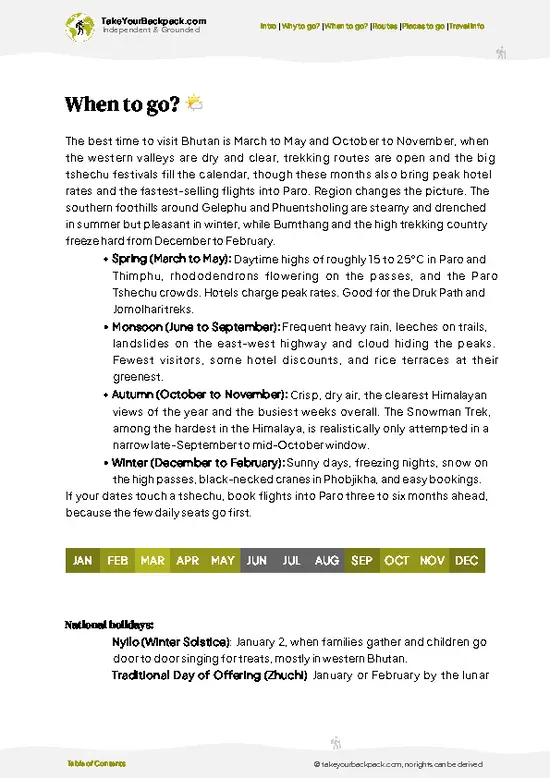
  • Weather: The best windows are spring (March to May) and autumn (September to November). Expect crisp, clear days perfect for trekking. Avoid the monsoon months (June to August) when trails turn muddy and visibility tanks.

  • Temperature: Spring highs hover around 15-20°C (59-68°F), dipping to chilly 5°C (41°F) at night. Autumn is similar but can get colder after sunset, especially above 3,000 meters. Pack layers—you’ll want warmth without bulk.

  • Daylight Hours: Around 10-12 hours of daylight in peak seasons, enough to hit the trails early and still enjoy a relaxed evening. Winter days shrink to 9-10 hours, which can cramp your hiking plans.

  • Crowds: Spring and autumn draw the most visitors, especially during local festivals. But Haa Valley remains low-key compared to Bhutan’s hotspots.
read more 👉

  • Weather: The best windows are spring (March to May) and autumn (September to November). Expect crisp, clear days perfect for trekking. Avoid the monsoon months (June to August) when trails turn muddy and visibility tanks.

  • Temperature: Spring highs hover around 15-20°C (59-68°F), dipping to chilly 5°C (41°F) at night. Autumn is similar but can get colder after sunset, especially above 3,000 meters. Pack layers—you’ll want warmth without bulk.

  • Daylight Hours: Around 10-12 hours of daylight in peak seasons, enough to hit the trails early and still enjoy a relaxed evening. Winter days shrink to 9-10 hours, which can cramp your hiking plans.

  • Crowds: Spring and autumn draw the most visitors, especially during local festivals. But Haa Valley remains low-key compared to Bhutan’s hotspots. Winter is quiet but cold, and summer’s monsoon keeps most away.

  • Seasonal Activities: Spring bursts with rhododendron blooms, a visual jackpot for nature lovers. Autumn offers clear skies and harvest festivals—prime time for cultural immersion. Winter’s harsh but rewards hardcore trekkers with solitude and snow-capped vistas.

  • Price Fluctuations: Peak seasons mean higher prices on permits and accommodation. Booking early can lock in better rates. Off-season travel slashes costs but demands flexibility and gear for wet or cold conditions.


Pro-tip: Arrive just before a festival in spring or autumn to catch the buzz without the full crowd—locals appreciate the respect, and you get insider access.


source: climatestotravel.comJANJanuary: fair for travelingFEBFebruary: fair for travelingMARMarch: excellent for travelingAPRApril: excellent for travelingMAYMay: excellent for travelingJUNJune: below average for travelingJULJuly: below average for travelingAUGAugust: below average for travelingSEPSeptember: excellent for travelingOCTOctober: excellent for travelingNOVNovember: excellent for travelingDECDecember: fair for traveling
when-to-go

✈️ The backpacker research shortcutBhutan Travel Guide

An offline-friendly backpacking guide with optimized travel routes, ranked highlights, transport advice, and the best areas to stay.
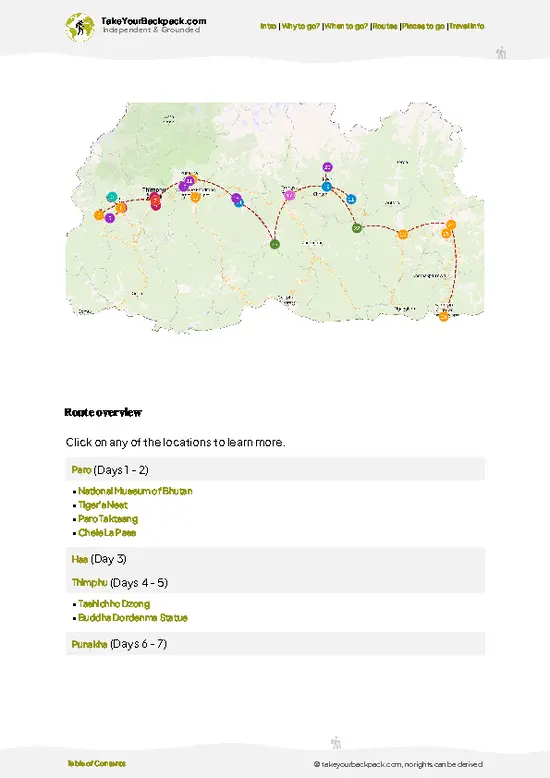
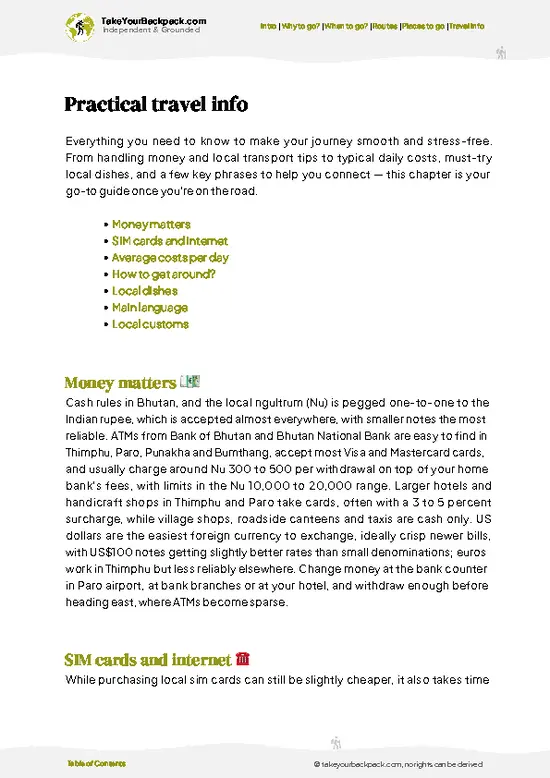
example page 0 from our offline Travel Guide for Bhutan
example page 1 from our offline Travel Guide for Bhutan
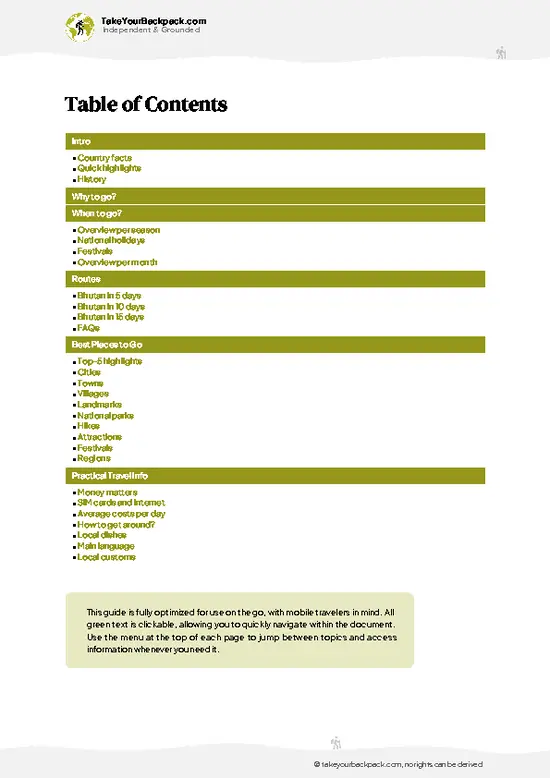
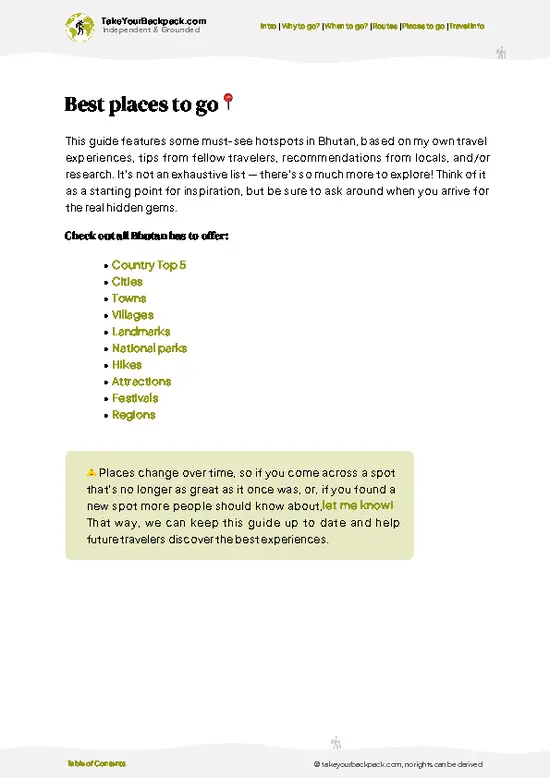
example page 2 from our offline Travel Guide for Bhutan
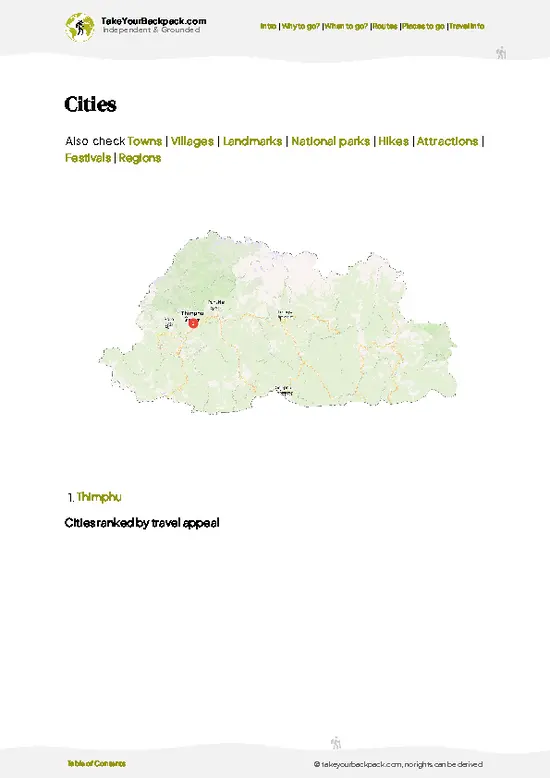
example page 3 from our offline Travel Guide for Bhutan
example page 4 from our offline Travel Guide for Bhutan
example page 5 from our offline Travel Guide for Bhutan
example page 6 from our offline Travel Guide for Bhutan
example page 7 from our offline Travel Guide for Bhutan
The digital guide (222 pages) contains:
54 highlights, ranked by travel appeal
Optimized 5, 10 & 15-day travel routes
Cities, national parks, landmarks, beaches
How to get around
Offline-friendly for travel without Wi-Fi
👉 Click to see all 30+ guide features

📅 Plan smarter in minutes, not weeks
Month by month travel advice
Festivals & national holidays
Budget expectations

🗺️ Go to the right places, skip the overrated ones
Honest pros & cons of destinations
Top hikes, parks & viewpoints
Lesser-known places most travelers miss
Clear “worth it vs skip it” guidance

🛏️ Travel smoothly without rookie mistakes
Best areas to stay
Transport systems explained simply
Common scams & safety advice
SIM cards, money & practical tips

🌍 Understand the country, not just visit it
Culture & traditions
52 Essential phrases & customs
Festivals worth planning around
Traveler-friendly historical context
Insights that make places more meaningful

📱 Built for real travel conditions
Fully downloadable PDF
Works completely offline
Optimized for phone use
Useful in remote areas & buses
Everything in one place
Save weeks of stressful planning
Get instant access to your full guide. 30‑day money-back guarantee.
+ Add another guide for just US$7.80

By proceeding you agree to our terms.
Sent to your inbox immediately after payment • 100% Secure Checkout
Best Backpacking Travel Advisor 2025 tourism awardBest Backpacking
Travel Advisor
2025
What others say about Take Your Backpack Guides:
⭐⭐⭐⭐⭐
Fantastic, amazing amount of information!
⭐⭐⭐⭐⭐
My goodness this is amazing, it's what I've been looking for hats off too you!
⭐⭐⭐⭐⭐
I think this is absolutely BRILLIANT
⭐⭐⭐⭐
Very complete and informative. It's still missing places, but I gotta to commend you
⭐⭐⭐⭐⭐
This is truly amazing, thank you, can't wait to explore it with my kids!
⭐⭐⭐⭐⭐
Awesome resource, thank you!
⭐⭐⭐⭐⭐
This is amazing! Can't wait to explore the ones I haven't seen
⭐⭐⭐⭐
I love this! Well done, great idea.
⭐⭐⭐⭐⭐
Thanks for taking the time to make this gem!
⭐⭐⭐⭐⭐
This might be the best website I've ever seen.
⭐⭐⭐⭐⭐
Congratulations, and thank you so much for your work; it's incredibly valuable.
⭐⭐⭐⭐
In all seriousness I think you did a great job pointing out the important spots
⭐⭐⭐⭐⭐
10/10 very good
⭐⭐⭐⭐⭐
As someone who's only just starting to visit regularly this is awesome, thank you.
⭐⭐⭐⭐
Thank you very much! I'm going to visit my dad, it's going to be very useful!
⭐⭐⭐⭐⭐
This is really cool! We'll be travelling for the first time and this definitely come in handy.
⭐⭐⭐⭐⭐
You are now our minister of culture, congratulations 👨‍💼
⭐⭐⭐⭐⭐
Just wanted to tell you that this is a pearl! Going to follow your recommendations.
⭐⭐⭐⭐⭐
This is so cool. I'll definitely be using the resource for my travels soon.
⭐⭐⭐⭐⭐
This is very impressive! Good work.
⭐⭐⭐⭐⭐
This is an amazing and informative site. Very well done!

🛏️ Where to stay?Choosing the right base

In Haa Valley, the charm lies in its small towns and villages, each offering a unique vibe for backpackers.

Start with Haa Town itself. It’s the main hub, where you’ll find a mix of locals and travelers. The atmosphere is relaxed, and you can easily strike up conversations over a cup of butter tea. The town’s layout makes it easy to explore on foot, and you’ll stumble upon local markets and cozy eateries.

Then there’s Bumthang, a bit further afield but worth the trek. It’s a cultural hotspot, known for its monasteries and festivals. The community is welcoming, and you’ll find plenty of opportunities … read more 👉
In Haa Valley, the charm lies in its small towns and villages, each offering a unique vibe for backpackers.

Start with Haa Town itself. It’s the main hub, where you’ll find a mix of locals and travelers. The atmosphere is relaxed, and you can easily strike up conversations over a cup of butter tea. The town’s layout makes it easy to explore on foot, and you’ll stumble upon local markets and cozy eateries.

Then there’s Bumthang, a bit further afield but worth the trek. It’s a cultural hotspot, known for its monasteries and festivals. The community is welcoming, and you’ll find plenty of opportunities to join in on local events. Staying here means you’ll soak up the rich traditions while meeting fellow adventurers.

Don’t overlook Chhukha, a quieter option. It’s perfect for those seeking solitude. The stunning landscapes will inspire you, and the fewer tourists mean you can connect more deeply with the locals.

Each spot offers a different slice of Haa Valley life. Choose based on what you crave: social buzz, cultural immersion, or peaceful retreat. You’ll leave with stories that resonate long after your trip.

🚌 Getting aroundHow to get around Haa Valley

Haa Valley is a realm where time seems to dance rather than march. Here, rigid schedules are more of a suggestion than a rule. You’ll find yourself swept up in the rhythm of the valley, where the air is crisp, and the mountains loom like ancient guardians. The locals move with a blend of purpose and ease, and you’ll quickly learn that flexibility is your best friend. Whether you’re hopping on a shared taxi or waiting for a bus that may or may not arrive on time, the journey becomes part of the adventure. Embrace the chaos, and you’ll discover the true pulse of Haa Valley.


  • Shared Taxis: These are your go-to for quick hops between towns. Expect to pay around 300-500 Ngultrum for a ride, depending on distance. They usually run from early morning until sunset, but don’t be surprised if you wait
read more 👉
Haa Valley is a realm where time seems to dance rather than march. Here, rigid schedules are more of a suggestion than a rule. You’ll find yourself swept up in the rhythm of the valley, where the air is crisp, and the mountains loom like ancient guardians. The locals move with a blend of purpose and ease, and you’ll quickly learn that flexibility is your best friend. Whether you’re hopping on a shared taxi or waiting for a bus that may or may not arrive on time, the journey becomes part of the adventure. Embrace the chaos, and you’ll discover the true pulse of Haa Valley.


  • Shared Taxis: These are your go-to for quick hops between towns. Expect to pay around 300-500 Ngultrum for a ride, depending on distance. They usually run from early morning until sunset, but don’t be surprised if you wait a bit for enough passengers to fill the car. Comfort is decent, but it’s a tight squeeze with locals and their goods.


  • Local Buses: The local bus system is a budget-friendly option, costing about 100-200 Ngultrum. Buses run a few times a day, typically starting around 7 AM and wrapping up by 4 PM. They’re slower, taking in the sights, but you’ll get a real taste of local life. Just be prepared for a bumpy ride and a few unexpected stops.


  • Motorbike Rentals: If you’re feeling adventurous, renting a motorbike can cost around 800-1,200 Ngultrum per day. This gives you the freedom to explore at your own pace. Just remember, the roads can be tricky, so a bit of experience is helpful. Rentals usually start around 8 AM, and you’ll want to return by sunset.


  • Private Drivers: For those willing to splurge a bit, hiring a private driver can range from 2,000-4,000 Ngultrum for a day. This option offers comfort and flexibility, allowing you to dictate your itinerary. Drivers are usually available from dawn until dusk, and they know the best spots to stop for photos or snacks.


Master Tactical Tip: Always negotiate your fare upfront, especially with shared taxis and private drivers. This not only saves you a headache later but also gives you a sense of control in a region where spontaneity reigns. Embrace the flow, but keep your wallet in check!

🍲 FoodEating & Drinking in Haa Valley

In the Haa Valley, food is a celebration of local culture and flavors. You can’t miss ema datshi, a fiery chili and cheese dish that’s practically the national obsession. The heat is intense, but it’s balanced by the creamy richness of the cheese. Pair it with red rice, which has a nutty flavor and a chewy texture that complements the spice perfectly.

For a true local experience, head to the vibrant markets. Here, you’ll find vendors selling fresh produce, homemade cheeses, and the occasional street food stall dishing out momos—steamed dumplings filled with meat or vegetables. The aroma of sizzling momos wafts through the air, drawing you in like a moth to a flame.

When it comes to drinks, try butter tea, a unique blend of tea, butter, and salt that warms you from the inside out. It’s a … read more 👉
In the Haa Valley, food is a celebration of local culture and flavors. You can’t miss ema datshi, a fiery chili and cheese dish that’s practically the national obsession. The heat is intense, but it’s balanced by the creamy richness of the cheese. Pair it with red rice, which has a nutty flavor and a chewy texture that complements the spice perfectly.

For a true local experience, head to the vibrant markets. Here, you’ll find vendors selling fresh produce, homemade cheeses, and the occasional street food stall dishing out momos—steamed dumplings filled with meat or vegetables. The aroma of sizzling momos wafts through the air, drawing you in like a moth to a flame.

When it comes to drinks, try butter tea, a unique blend of tea, butter, and salt that warms you from the inside out. It’s a staple in the region and a must-try for any backpacker.

Dining here is casual and communal. Expect to share dishes and engage in lively conversation. Don’t be surprised if you’re offered a second helping—refusing might be seen as impolite. Embrace the warmth of the locals and savor every bite; it’s all part of the experience.

FAQTraveler FAQ

2 to 3 days are sufficient to explore Haa Valley thoroughly. This allows time to visit key sites like Lhakhang Karpo and Lhakhang Nagpo temples, and enjoy short hikes around the valley. The best time to visit is from May to October when the weather is clear and mild.
You can get around Haa Valley without a car by hiring local taxis or using shared jeeps, which are common for short distances. Walking and cycling are also practical for exploring nearby villages and trails. Public transport options are limited, so arranging rides through your guesthouse is advisable.
Haa Valley is known for its pristine natural beauty, traditional Bhutanese culture, and ancient temples. It is famous for the annual Haa Summer Festival held in July, showcasing local customs, archery, and traditional dances. The valley is also noted for its remote, untouched landscapes and friendly rural communities.
⚠️ Things can change over time, so always validate details locally before you go.

Other Bhutanese regions near Haa Valley

Explore more nearby:

  • Phobjikha Valley—glacial basin, black-necked cranes, dwarf bamboo meadows| 73 km away
  • Bumthang Valley—ancient temples, apple orchards, sacred pilgrimage sites| 104 km away

💡 Not sure where to go next?
Create a personalized itinerary for Bhutan including Haa Valley and the places that fit your trip.

Generate my itinerary

👉 Discover all regions

Or checkout all Bhutan has to offer (think cities, towns, villages, national parks, hikes, beaches, festivals)
Country photo of Bhutan

We 💚 feedbackKey takeaways before you go

Haa Valley feels like Bhutan’s best-kept secret. The vibe is relaxed, with locals who genuinely smile and wave. Don’t miss the chance to explore the rice terraces at sunrise; the light transforms everything. The best surprise? The homemade cheese from village stalls—it’s a game changer. Just a heads-up: the roads can be bumpy, so brace yourself for a few jolts. But trust me, the journey is part of the charm. Embrace it, and you’ll leave with stories that linger long after you’re back home.

✍️ Help improve this page!
The information on this page is based on in-depth research, insights shared by experienced travelers, and feedback from the local travel community in Bhutan. While every effort is made to keep the information accurate and current, conditions can change — so if you spot anything incorrect or outdated, please get in touch.


🙋‍♂️ Give feedback

👋 Meet the founderWho’s Behind Take Your Backpack?

Johan, backpacker and founder of TakeYourBackpackHi, I’m Johan (Netherlands 🇳🇱), the creator of TakeYourBackpack. Over the past decade, I’ve backpacked through 80+ countries across six continents, gaining extensive experience with independent travel, long-term trips, and overland routes.

This site is built on a combination of firsthand travel experience and carefully curated insights from other backpackers. Many guides are based on places I’ve personally visited, while others bring together tips, observations, and practical advice shared by trusted travelers I’ve met along the way.

The goal is to provide realistic, experience-driven guidance — not generic itineraries — so you can explore destinations with better context, clearer expectations, and more confidence.

Get full Bhutan guide •
Instant download • 54 highlights • Full Offline guide