×

Bhutan🇧🇹 | attractionsTashichho Dzongriverbank fortress, administrative seat, monastic quarters | things to do and best time to go

Explore Paro TaktsangExplore Trongsa Dzong

Backpacking in Tashichho Dzong
🌟 Highlightattraction ranked #3
By Johan Kruseman 🇳🇱 | Updated September 4, 2026

Forget the Instagram fantasy: Tashichho Dzong isn’t some untouched fortress where you’ll meditate alone at sunrise. It’s the administrative heart of Bhutan, smack in the north of Thimphu, and it’s busy—government officials, monks, and a steady stream of camera-toting visitors all jostling for space. Here’s the real deal: the Dzong is a powerhouse of Bhutanese history and politics, not a quiet spiritual retreat. The architecture is jaw-dropping up close, especially when the late afternoon sun hits those whitewashed walls and gold roofs, but you’ll share that view with tour groups and the occasional diplomatic motorcade. Backpackers will feel the pinch—entry is only with a guide, and the fees add up fast compared to the free-spirited hikes or rural monasteries elsewhere in Bhutan. Still, if you want to feel the pulse of modern Bhutan—where tradition and bureaucracy collide—this is the place. Just don’t expect solitude or bargain-basement prices.

Discover everything you want to know in the 📖 Bhutan Travel Guide.


Get your Bhutan guide
54 ranked highlights, routes & tips, works offline (222 pages)
Loading the map 🌍
CLICK TO FILTER
cities
towns
villages
landmarks
national parks
hikes
attractions
festivals
regions
SHOW COUNTRY’S BESTSHOW ALL

✨ Why go?
Ranked #3 attraction in Bhutan
What makes this attraction worth visiting

Tashichho Dzong is not just another pretty building to tick off your Bhutan itinerary. Yes, it’s iconic—towering over Thimphu with its fortress walls and golden roofs—but the real draw is its role as the beating heart of Bhutanese governance and spirituality. This isn’t a museum frozen in time; it’s a living, breathing symbol of the country’s unique blend of monarchy and Buddhism. Backpackers who make the trek here get more than a photo op; they get a front-row seat to centuries of history and culture that still shape daily life.

Sure, it can feel crowded during festivals or official ceremonies, and the entrance isn’t free, but the payoff is huge. You’re stepping into a place where kings once strategized, monks chant in ancient halls, and the architecture tells stories of resilience and … read more 👉
Tashichho Dzong is not just another pretty building to tick off your Bhutan itinerary. Yes, it’s iconic—towering over Thimphu with its fortress walls and golden roofs—but the real draw is its role as the beating heart of Bhutanese governance and spirituality. This isn’t a museum frozen in time; it’s a living, breathing symbol of the country’s unique blend of monarchy and Buddhism. Backpackers who make the trek here get more than a photo op; they get a front-row seat to centuries of history and culture that still shape daily life.

Sure, it can feel crowded during festivals or official ceremonies, and the entrance isn’t free, but the payoff is huge. You’re stepping into a place where kings once strategized, monks chant in ancient halls, and the architecture tells stories of resilience and faith. For anyone trekking through Bhutan, Tashichho Dzong is a milestone—a moment to pause, reflect, and connect with the country’s soul beyond the usual tourist gloss. It’s effort well spent, a rare mix of adrenaline and reverence that stays with you long after you leave.
Want to include Tashichho Dzong in your Bhutan route?
Create a personalized Bhutan itinerary that includes Tashichho Dzong and the places that fit your trip — based on your travel style, budget, and available time. Get your route in seconds.

Generate my trip

💡 HighlightsTop highlights of Tashichho Dzong

The Grand Courtyard at Dusk
Forget the postcard-perfect shots with nobody in them. By late afternoon, the courtyard is alive with the real Bhutan: crimson-robed monks on their phones, civil servants in gho and kira hurrying home, and the faint scent of incense mixing with the sharp bite of mountain air. The scale is jaw-dropping—this isn’t a dainty relic, it’s a working fortress-monastery that feels like the beating heart of Thimphu. If you want to feel the pulse of the country, stand here as the sun drops behind the pine-covered hills.


The Assembly Hall (Utse)
You won’t see the king here (unless you’re spectacularly lucky), but you will see the seat of Bhutan’s government and monastic body. The Assembly Hall is off-limits to casual tourists, but even glimpsing its golden roof and intricate … read more 👉
The Grand Courtyard at Dusk
Forget the postcard-perfect shots with nobody in them. By late afternoon, the courtyard is alive with the real Bhutan: crimson-robed monks on their phones, civil servants in gho and kira hurrying home, and the faint scent of incense mixing with the sharp bite of mountain air. The scale is jaw-dropping—this isn’t a dainty relic, it’s a working fortress-monastery that feels like the beating heart of Thimphu. If you want to feel the pulse of the country, stand here as the sun drops behind the pine-covered hills.


The Assembly Hall (Utse)
You won’t see the king here (unless you’re spectacularly lucky), but you will see the seat of Bhutan’s government and monastic body. The Assembly Hall is off-limits to casual tourists, but even glimpsing its golden roof and intricate woodwork from the outside is a reminder: this place isn’t a museum, it’s the engine room of a living Buddhist kingdom. The air hums with purpose, not nostalgia.


Monastic Rituals and Chanting
If you time it right, you’ll catch monks chanting in deep, resonant waves that vibrate through your chest. It’s not staged for tourists—this is the real deal, and it’s mesmerizing. The sound bounces off the whitewashed walls and painted pillars, making you feel like you’ve stumbled into a centuries-old secret. No headphones, no filters, just raw, spiritual energy.


The Annual Tsechu Festival
Here’s where the Instagram crowd gets it wrong: yes, the costumes are wild and the dances are hypnotic, but the real magic is in the crowd. Locals in their best dress, kids darting between legs, and an atmosphere that’s equal parts sacred and carnival. If you’re lucky enough to be here during Tsechu, you’ll see the Dzong transform from stately to electric. It’s not a performance for outsiders—it’s a living tradition, and you’re just a guest at the party.


The Architecture—Up Close
Photos flatten it; standing beneath the eaves, you see the hand-carved dragons, the riot of color, and the sheer audacity of building something this ornate in a Himalayan valley. The Dzong’s scale is intimidating, but the details are intimate—each painted beam and carved window tells a story. It’s not just pretty; it’s a masterclass in Bhutanese craftsmanship, built to last through earthquakes, invasions, and the daily grind of government.


The Riverside Setting
Most guides skip this, but walk the path along the Wang Chhu river at dawn or dusk. The Dzong glows gold above the water, prayer flags flutter, and the city’s noise fades to a hush. It’s the rare moment when you get the place almost to yourself, and the setting feels mythic—no filter needed, no crowd in sight. This is the Bhutan you came for: serene, grounded, and utterly itself.
Spotted a mistake or missing something? Contact us.

Things to do near Tashichho Dzong

Ratings based on Tripadvisor reviews. When you book through this link, you support our work at no extra cost to you.

🌤️ When to go?Best time to visit Tashichho Dzong


  • Weather: The best weather hits between March and May, and again from September to November. These months dodge the heavy monsoon rains that slam Bhutan from June through August, turning trails into mud pits and skies into endless gray. Winter (December to February) is dry but can be bitterly cold, especially at night.

  • Temperature: Spring and autumn days hover around 15-20°C (59-68°F), perfect for wandering without sweating buckets or freezing your fingers off. Winters dip below 0°C (32°F) at night, while summer can be humid and sticky, pushing 25°C (77°F).

  • Daylight Hours: Expect roughly 10-12 hours of daylight year-round, with longer days in summer. This gives you a decent window for exploring without rushing, but don’t bank on late sunsets like in Europe.

  • Crowds: Peak tourist season
read more 👉

  • Weather: The best weather hits between March and May, and again from September to November. These months dodge the heavy monsoon rains that slam Bhutan from June through August, turning trails into mud pits and skies into endless gray. Winter (December to February) is dry but can be bitterly cold, especially at night.

  • Temperature: Spring and autumn days hover around 15-20°C (59-68°F), perfect for wandering without sweating buckets or freezing your fingers off. Winters dip below 0°C (32°F) at night, while summer can be humid and sticky, pushing 25°C (77°F).

  • Daylight Hours: Expect roughly 10-12 hours of daylight year-round, with longer days in summer. This gives you a decent window for exploring without rushing, but don’t bank on late sunsets like in Europe.

  • Crowds: Peak tourist season aligns with the best weather—spring and autumn—so expect more visitors, especially around festival times. Winter and monsoon months see fewer tourists, offering a quieter, more intimate experience but with trade-offs in comfort.

  • Seasonal Activities: The biggest draw is the Thimphu Tshechu festival in September or October, held right near Tashichho Dzong. It’s a cultural spectacle but also a crowd magnet. Spring offers rhododendron blooms and clearer mountain views, which are worth the trek.

  • Price Fluctuations: Bhutan’s mandatory daily tariff means prices spike during peak seasons and festivals. Traveling off-peak can save you a few bucks and grant more flexibility, but expect fewer services and some closures.


Pro-tip: Aim for late March or early October—weather’s solid, crowds manageable, and you’ll catch the Dzong’s true spirit without the Instagram mob.


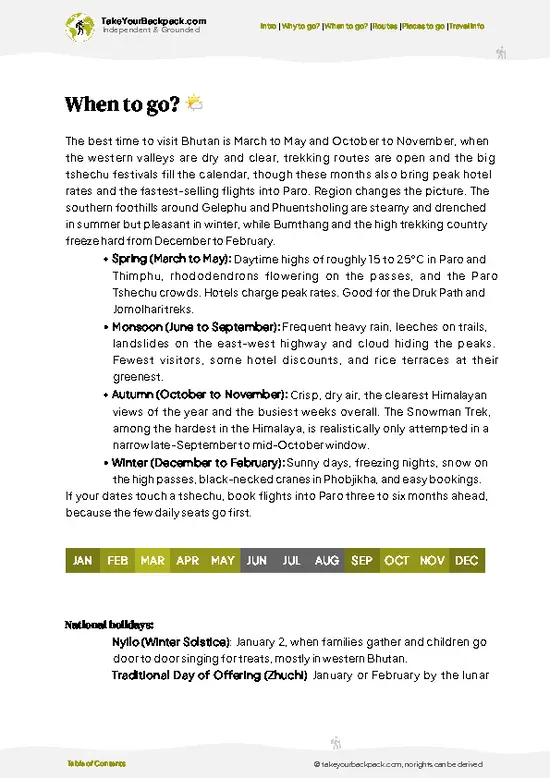
source: climatestotravel.comJANJanuary: fair for travelingFEBFebruary: fair for travelingMARMarch: excellent for travelingAPRApril: excellent for travelingMAYMay: highly recommended for travelingJUNJune: below average for travelingJULJuly: below average for travelingAUGAugust: below average for travelingSEPSeptember: excellent for travelingOCTOctober: excellent for travelingNOVNovember: highly recommended for travelingDECDecember: fair for traveling
when-to-go

✈️ The backpacker research shortcutBhutan Travel Guide

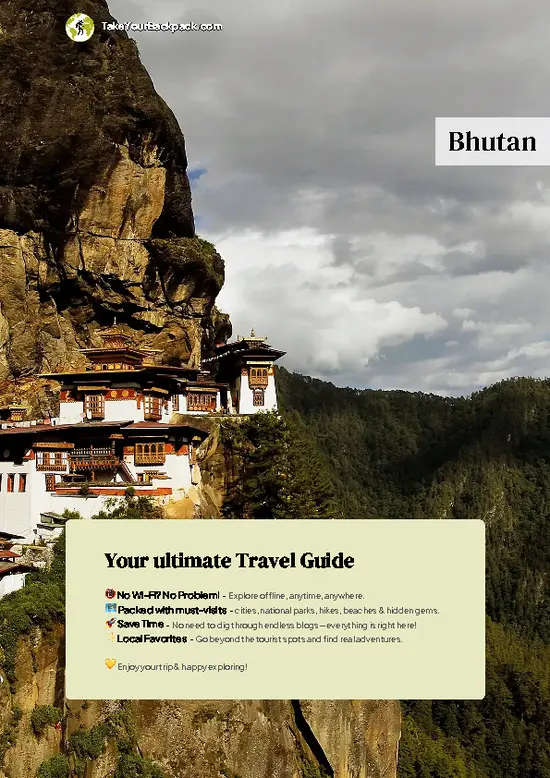
An offline-friendly backpacking guide with optimized travel routes, ranked highlights, transport advice, and the best areas to stay.
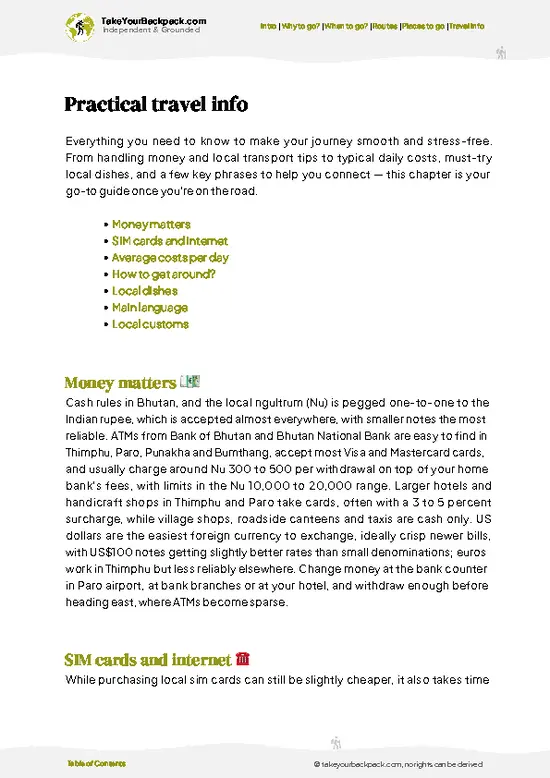
example page 0 from our offline Travel Guide for Bhutan
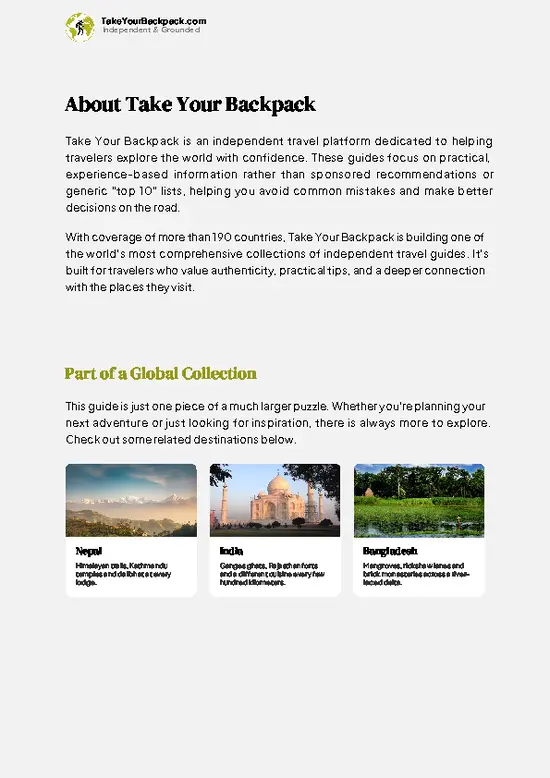
example page 1 from our offline Travel Guide for Bhutan
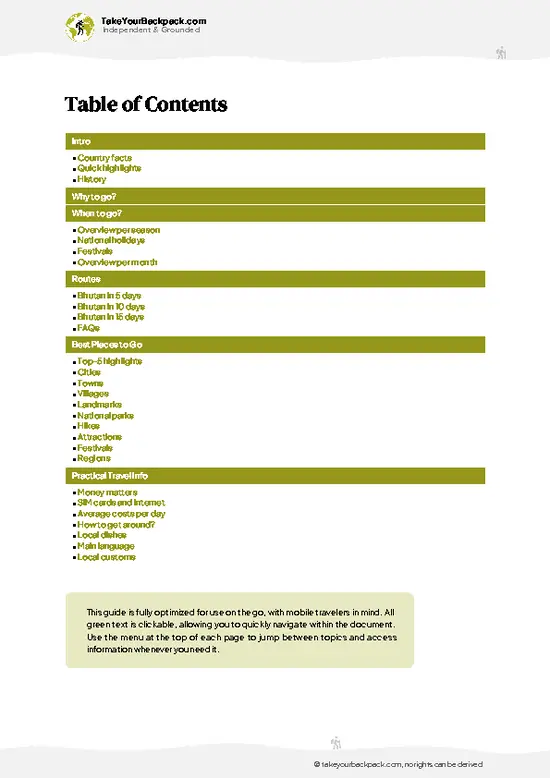
example page 2 from our offline Travel Guide for Bhutan
example page 3 from our offline Travel Guide for Bhutan
example page 4 from our offline Travel Guide for Bhutan
example page 5 from our offline Travel Guide for Bhutan
example page 6 from our offline Travel Guide for Bhutan
example page 7 from our offline Travel Guide for Bhutan
The digital guide (222 pages) contains:
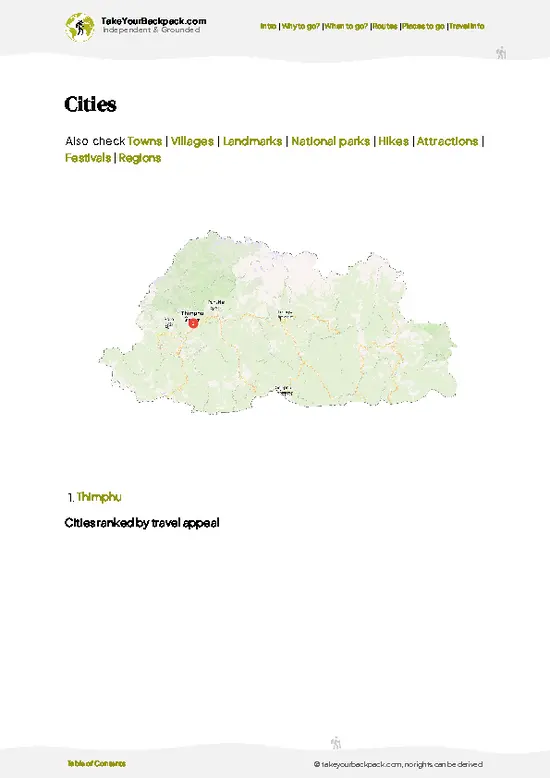
54 highlights, ranked by travel appeal
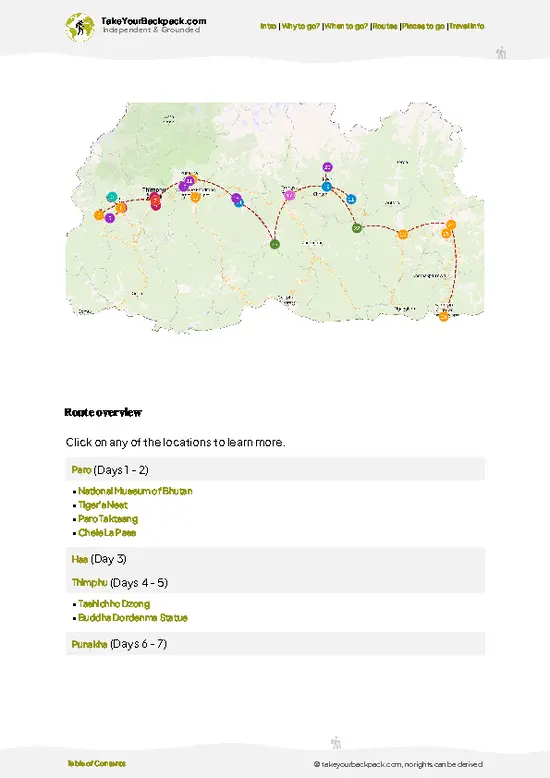
Optimized 5, 10 & 15-day travel routes
Cities, national parks, landmarks, beaches
How to get around
Offline-friendly for travel without Wi-Fi
👉 Click to see all 30+ guide features

📅 Plan smarter in minutes, not weeks
Month by month travel advice
Festivals & national holidays
Budget expectations

🗺️ Go to the right places, skip the overrated ones
Honest pros & cons of destinations
Top hikes, parks & viewpoints
Lesser-known places most travelers miss
Clear “worth it vs skip it” guidance

🛏️ Travel smoothly without rookie mistakes
Best areas to stay
Transport systems explained simply
Common scams & safety advice
SIM cards, money & practical tips

🌍 Understand the country, not just visit it
Culture & traditions
52 Essential phrases & customs
Festivals worth planning around
Traveler-friendly historical context
Insights that make places more meaningful

📱 Built for real travel conditions
Fully downloadable PDF
Works completely offline
Optimized for phone use
Useful in remote areas & buses
Everything in one place
Save weeks of stressful planning
Get instant access to your full guide. 30‑day money-back guarantee.
+ Add another guide for just US$7.80

By proceeding you agree to our terms.
Sent to your inbox immediately after payment • 100% Secure Checkout
Best Backpacking Travel Advisor 2025 tourism awardBest Backpacking
Travel Advisor
2025
What others say about Take Your Backpack Guides:
⭐⭐⭐⭐⭐
Fantastic, amazing amount of information!
⭐⭐⭐⭐⭐
My goodness this is amazing, it's what I've been looking for hats off too you!
⭐⭐⭐⭐⭐
I think this is absolutely BRILLIANT
⭐⭐⭐⭐
Very complete and informative. It's still missing places, but I gotta to commend you
⭐⭐⭐⭐⭐
This is truly amazing, thank you, can't wait to explore it with my kids!
⭐⭐⭐⭐⭐
Awesome resource, thank you!
⭐⭐⭐⭐⭐
This is amazing! Can't wait to explore the ones I haven't seen
⭐⭐⭐⭐
I love this! Well done, great idea.
⭐⭐⭐⭐⭐
Thanks for taking the time to make this gem!
⭐⭐⭐⭐⭐
This might be the best website I've ever seen.
⭐⭐⭐⭐⭐
Congratulations, and thank you so much for your work; it's incredibly valuable.
⭐⭐⭐⭐
In all seriousness I think you did a great job pointing out the important spots
⭐⭐⭐⭐⭐
10/10 very good
⭐⭐⭐⭐⭐
As someone who's only just starting to visit regularly this is awesome, thank you.
⭐⭐⭐⭐
Thank you very much! I'm going to visit my dad, it's going to be very useful!
⭐⭐⭐⭐⭐
This is really cool! We'll be travelling for the first time and this definitely come in handy.
⭐⭐⭐⭐⭐
You are now our minister of culture, congratulations 👨‍💼
⭐⭐⭐⭐⭐
Just wanted to tell you that this is a pearl! Going to follow your recommendations.
⭐⭐⭐⭐⭐
This is so cool. I'll definitely be using the resource for my travels soon.
⭐⭐⭐⭐⭐
This is very impressive! Good work.
⭐⭐⭐⭐⭐
This is an amazing and informative site. Very well done!

🛏️ Where to stay?Best areas to stay in Bhutan

Tashichho Dzong is the crown jewel of Thimphu, but let’s cut through the Instagram haze: it’s not a secret hideaway. The crowds aren’t overwhelming, but you’ll definitely bump into tourists and locals alike, especially during festivals or government events. The area around the Dzong is safe—Bhutan’s low crime rate isn’t a myth—but it’s also a bit formal, given the Dzong’s role as a government and monastic center. That means you won’t find wild party scenes or late-night hangouts right on the doorstep.

For backpackers, the real win is staying in the neighborhoods just a short walk away, where … read more 👉
Tashichho Dzong is the crown jewel of Thimphu, but let’s cut through the Instagram haze: it’s not a secret hideaway. The crowds aren’t overwhelming, but you’ll definitely bump into tourists and locals alike, especially during festivals or government events. The area around the Dzong is safe—Bhutan’s low crime rate isn’t a myth—but it’s also a bit formal, given the Dzong’s role as a government and monastic center. That means you won’t find wild party scenes or late-night hangouts right on the doorstep.

For backpackers, the real win is staying in the neighborhoods just a short walk away, where the vibe shifts. These areas offer a mix of guesthouses and small inns that attract solo travelers and budget adventurers. You’ll find a social atmosphere here, with common rooms and shared meals that make it easy to swap stories or plan your next trek. It’s where you get a genuine feel for Bhutanese hospitality without the polished tourist bubble.

The streets are lined with local eateries and markets, so you can eat well without blowing your budget. Plus, being close means you can catch the Dzong’s morning prayers or evening lights without the hassle of long transport. It’s the sweet spot: safe, social, and authentically Bhutanese.

👛 Costs (as of 4 September 2026)Money, prices, and spending tips

As of March 15, 2023, the entry fee for Tashichho Dzong is 500 Bhutanese Ngultrum (BTN) per adult, approximately €5. Children under 5 years old enter free of charge, while those between 6 and 18 years receive a 50% discount, paying 250 BTN (approximately €2.50). The online booking and payment system is accessible at the official Bhutan Department of Tourism website.
⚠️ Prices can change and everyone travels differently, so take this as a rough guide. Hope it helps you plan your adventure!

FAQFrequently asked questions about Tashichho Dzong

1 to 2 hours is sufficient to visit Tashichho Dzong. This allows time to explore the main courtyards, temples, and administrative buildings. Guided tours can extend the visit if you want detailed historical context.
Yes, Tashichho Dzong is worth the entrance fee, which is typically included in the Bhutanese daily tourist tariff rather than a separate charge. The Dzong is a significant cultural and religious site, offering unique architecture and insight into Bhutanese governance and Buddhism.
Tashichho Dzong is located in Thimphu, the capital of Bhutan, and is easily accessible by foot or taxi from most parts of the city. It is about a 10-minute drive from the main bus station or a 20-minute walk from the city center.
⚠️ Things can change over time, so always validate details locally before you go.

Other Bhutanese attractions near Tashichho Dzong

Explore more nearby:


💡 Not sure where to go next?
Create a personalized itinerary for Bhutan including Tashichho Dzong and the places that fit your trip.

Generate my itinerary

👉 Discover all attractions

Or checkout all Bhutan has to offer (think cities, towns, villages, national parks, hikes, beaches, festivals)
Country photo of Bhutan

We 💚 feedbackWhat to keep in mind

Tashichho Dzong isn’t some quiet, untouched relic—expect a steady stream of visitors, especially during festivals. But here’s the kicker: beyond the crowds, the place hums with a living history that’s hard to fake. The real magic hits when you catch the monks moving through the courtyards in their saffron robes, or when the afternoon light slices through the prayer flags. It’s not just a photo op; it’s a pulse of Bhutan’s soul, raw and unfiltered.

✍️ Help improve this page!
The information on this page is based on in-depth research, insights shared by experienced travelers, and feedback from the local travel community in Bhutan. While every effort is made to keep the information accurate and current, conditions can change — so if you spot anything incorrect or outdated, please get in touch.


🙋‍♂️ Give feedback

👋 Meet the founderWho’s Behind Take Your Backpack?

Johan, backpacker and founder of TakeYourBackpackHi, I’m Johan (Netherlands 🇳🇱), the creator of TakeYourBackpack. Over the past decade, I’ve backpacked through 80+ countries across six continents, gaining extensive experience with independent travel, long-term trips, and overland routes.

This site is built on a combination of firsthand travel experience and carefully curated insights from other backpackers. Many guides are based on places I’ve personally visited, while others bring together tips, observations, and practical advice shared by trusted travelers I’ve met along the way.

The goal is to provide realistic, experience-driven guidance — not generic itineraries — so you can explore destinations with better context, clearer expectations, and more confidence.

Get full Bhutan guide •
Instant download • 54 highlights • Full Offline guide