×

Bolivia🇧🇴 | townsChallapataaltiplano crossroads, livestock market, windswept plains | things to do and best time to go

Explore QuimeExplore San Javier

Backpacking in Challapata
👀 For curious travelerstown ranked #21
By Johan Kruseman 🇳🇱 | Updated June 4, 2026

Your first real decision in Challapata is whether to treat it as a quick junction stop or to actually stay a night; that choice matters because this dusty crossroads can either be a forgettable bus break or a surprisingly useful pause in the long haul between Oruro and Uyuni. Sitting on the altiplano in central Bolivia, Challapata is small, flat, and practical more than pretty, with cold, bright mornings and that dry, metallic smell of high-altitude streets after the sun hits. For backpackers it’s mainly a logistics town: a calm, walkable grid where you can switch buses, grab a cheap almuerzo, stock up at the market, and sleep without the chaos of Oruro or the tourist markup of Uyuni. There’s not much in the way of classic sights, but the Sunday market is a real local scene, and the lack of nightlife means early, quiet evenings under a big, hard sky. It’s easy to navigate on foot, basic rooms are cheap, and while you won’t find a hostel social bubble, you’ll feel the everyday Bolivia that most people speed past. Compared to Uyuni, Challapata is less scenic and far less touristic, but more authentic and functional, which is exactly why a deliberate overnight here can make the rest of your route feel smoother and less rushed.

Discover everything you want to know in the 📖 Bolivia Travel Guide.


Get your Bolivia guide
82 ranked highlights, routes & tips, works offline (350 pages)
Loading the map 🌍
CLICK TO FILTER
cities
towns
landmarks
national parks
hikes
beaches
attractions
festivals
regions
SHOW COUNTRY’S BESTSHOW ALL

✨ Why go?
Ranked #21 town in Bolivia
What makes this town worth visiting

Challapata serves as a gateway for backpackers heading to the Salar de Uyuni or the Laguna Colorada. Its small-scale hostels offer a cozy atmosphere, perfect for solo travelers or small groups seeking connection. The walkable streets are lined with local eateries where you can savor hearty Bolivian fare, like salteñas and api. Most travelers stay just a night or two, using it as a launchpad for nearby hikes and cultural sites. The vibe is friendly yet relaxed, making it ideal for those who appreciate a quiet stop before diving into more adventurous pursuits.
Want to include Challapata in your Bolivia route?
Create a personalized Bolivia itinerary that includes Challapata and the places that fit your trip — based on your travel style, budget, and available time. Get your route in seconds.

Generate my trip

💡 HighlightsThe experiences that define the visit

  1. Plaza Principal de Challapata: The town’s beating heart — a compact main square where locals gather, vendors set up, and you can read the rhythm of daily life while nursing a cheap drink on a bench.
  2. Iglesia Matriz (la parroquia local): The main parish church by the plaza — humble, often with colonial-era touches and local devotional art that shows how Catholic and Andean traditions mix here.
  3. Mercado Central de Challapata: Colorful, chaotic, and honest — fresh altiplano produce, dried llama meat, spices and snacks. Great for sampling local food and photogenic stalls without leaving town.
  4. Feria Ganadera (mercado de ganado): The livestock fair where locals trade sheep, llamas and cattle — an authentic slice of rural economy and a chance to see traditional bargaining and animal-handling up
read more 👉
  1. Plaza Principal de Challapata: The town’s beating heart — a compact main square where locals gather, vendors set up, and you can read the rhythm of daily life while nursing a cheap drink on a bench.
  2. Iglesia Matriz (la parroquia local): The main parish church by the plaza — humble, often with colonial-era touches and local devotional art that shows how Catholic and Andean traditions mix here.
  3. Mercado Central de Challapata: Colorful, chaotic, and honest — fresh altiplano produce, dried llama meat, spices and snacks. Great for sampling local food and photogenic stalls without leaving town.
  4. Feria Ganadera (mercado de ganado): The livestock fair where locals trade sheep, llamas and cattle — an authentic slice of rural economy and a chance to see traditional bargaining and animal-handling up close.
  5. Estación de Ferrocarril de Challapata: The town’s railway station and tracks, a tangible reminder of regional transport history. Good for photos and for watching freight and occasional passenger movements.
  6. Palacio Municipal / Alcaldía: The municipal building facing the plaza — not a museum, but the façade, flags and any notice-boards tell you a lot about local politics, festivals and community life.
  7. Casa de la Cultura / Centro Cultural: Small cultural center where local groups rehearse and exhibits appear; check the calendar — you might catch folkloric music, workshops or a local art show.
  8. Cementerio Municipal: More than a burial place — local tomb styles, offerings and epitaphs reveal family stories and syncretic beliefs. Quiet, respectful, and unexpectedly informative about community history.
  9. Estadio Municipal (cancha de fútbol): Where weekday routines pause and the town comes alive for matches. If there’s a game, go — it’s cheap, loud, and pure local atmosphere.
  10. Talleres y tiendas artesanales: Small workshops and shops selling woven textiles, leather goods and simple altiplano crafts — good for seeing local techniques and picking up real souvenirs made in town.
A few good day trips nearby are the Salar de Coipasa (my personal favorite), the city of Oruro for its museums and carnival culture, and the altiplano lagoons and small villages around the salt flats.
Spotted a mistake or missing something? Contact us.

🏘️ NeighborhoodsHow different areas shape the experience

Challapata is a crossroads of culture and adventure, where the air is thick with the scent of street food and the hum of local life. Here’s how to navigate its neighborhoods:

Centro: This is the heartbeat of Challapata. Bustling markets and local eateries line the streets. It’s walkable, with everything you need within reach. Perfect for short stays, the vibe is lively but not overwhelming.

San Pedro: A quieter area, ideal for those seeking a more laid-back atmosphere. It’s slightly removed from the hustle, making it great for longer stays. The transport access is decent, but you might need to walk a bit more.

La Paz Avenue: This area offers a mix of nightlife and convenience. Bars and cafes buzz in the evenings, while daytime is perfect for exploring. It’s a good spot for backpackers … read more 👉
Challapata is a crossroads of culture and adventure, where the air is thick with the scent of street food and the hum of local life. Here’s how to navigate its neighborhoods:

Centro: This is the heartbeat of Challapata. Bustling markets and local eateries line the streets. It’s walkable, with everything you need within reach. Perfect for short stays, the vibe is lively but not overwhelming.

San Pedro: A quieter area, ideal for those seeking a more laid-back atmosphere. It’s slightly removed from the hustle, making it great for longer stays. The transport access is decent, but you might need to walk a bit more.

La Paz Avenue: This area offers a mix of nightlife and convenience. Bars and cafes buzz in the evenings, while daytime is perfect for exploring. It’s a good spot for backpackers wanting a taste of local nightlife without straying too far from amenities.

⌛️ 1 dayA smart one-day plan

Challapata, Bolivia, is a charming town that feels like a well-kept secret. It’s a crossroads of culture and commerce, where the scent of fresh bread mingles with the earthy aroma of the Andes. Start your morning at the bustling market, where vendors sell everything from vibrant textiles to local produce. Grab a hearty breakfast of salteñas—savory pastries bursting with flavor—while soaking in the lively atmosphere.

In the afternoon, wander through the historic Plaza 10 de Noviembre. The sun casts a warm glow on the colonial architecture, and you can often catch locals playing chess or sharing stories. For a unique experience, head to the nearby village of Pucarani, just a short ride away. It’s not on the typical tourist path, but the stunning views of Lake Poopó and the friendly locals make … read more 👉
Challapata, Bolivia, is a charming town that feels like a well-kept secret. It’s a crossroads of culture and commerce, where the scent of fresh bread mingles with the earthy aroma of the Andes. Start your morning at the bustling market, where vendors sell everything from vibrant textiles to local produce. Grab a hearty breakfast of salteñas—savory pastries bursting with flavor—while soaking in the lively atmosphere.

In the afternoon, wander through the historic Plaza 10 de Noviembre. The sun casts a warm glow on the colonial architecture, and you can often catch locals playing chess or sharing stories. For a unique experience, head to the nearby village of Pucarani, just a short ride away. It’s not on the typical tourist path, but the stunning views of Lake Poopó and the friendly locals make it worthwhile.

As evening falls, return to Challapata and enjoy dinner at a local eatery. Try the llama steak; it’s tender and flavorful. The day wraps up with the soft sounds of laughter and conversation, a perfect end to a day well spent.
Turn your Challapata visit into an Bolivia adventure
Build a complete Bolivia route with Challapata, hidden gems, must-see destinations, and realistic travel times included.

Generate my trip

🌤️ When to go?Seasonal considerations and timing


  • Weather: Challapata sits high on the Altiplano, so expect dry, crisp air most of the year. The rainy season from December to March can turn trails muddy and skies gray, dulling the landscape’s sharp edges.

  • Temperature: Daytime highs hover around 15-20°C (59-68°F) in the dry season, dropping sharply at night to near freezing. Layering is essential to handle this swing without losing comfort.

  • Daylight Hours: Roughly 11 to 13 hours of daylight year-round, but the sun feels intense at altitude, so early starts maximize cool, clear light for trekking and photography.

  • Crowds: Challapata is off the beaten path, so crowds are minimal year-round. Visiting outside the rainy season means fewer locals tied to seasonal farming, offering a quieter, more authentic vibe.

  • Seasonal Activities: Dry
read more 👉

  • Weather: Challapata sits high on the Altiplano, so expect dry, crisp air most of the year. The rainy season from December to March can turn trails muddy and skies gray, dulling the landscape’s sharp edges.

  • Temperature: Daytime highs hover around 15-20°C (59-68°F) in the dry season, dropping sharply at night to near freezing. Layering is essential to handle this swing without losing comfort.

  • Daylight Hours: Roughly 11 to 13 hours of daylight year-round, but the sun feels intense at altitude, so early starts maximize cool, clear light for trekking and photography.

  • Crowds: Challapata is off the beaten path, so crowds are minimal year-round. Visiting outside the rainy season means fewer locals tied to seasonal farming, offering a quieter, more authentic vibe.

  • Seasonal Activities: Dry months bring festivals and market days alive with local color and music, while the wet season’s green hillsides reward those willing to brave the mud with lush views.

  • Price Fluctuations: Accommodation and transport costs dip slightly during the rainy season due to fewer visitors, but the trade-off is less reliable weather and trail conditions.


Pro-tip: Aim for May to October—dry, cool, and clear—when the light sharpens every ridge and the air smells of sun-baked earth, making every step feel earned and every view a reward.


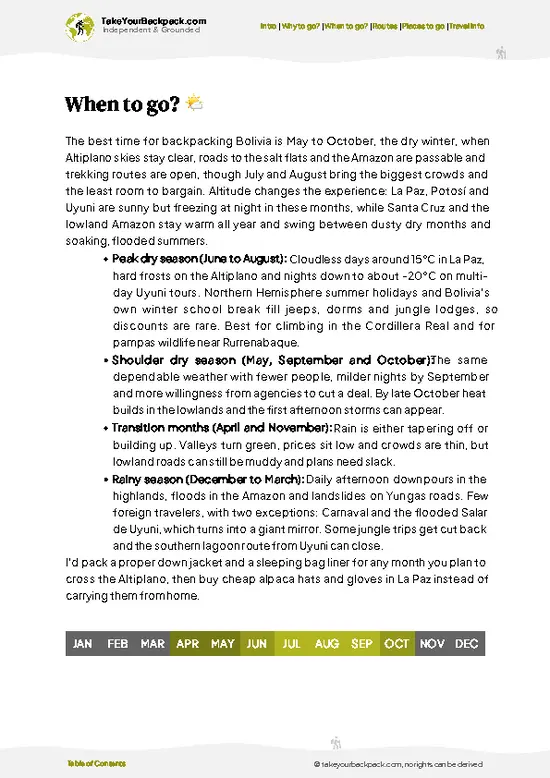
source: climatestotravel.comJANJanuary: fair for travelingFEBFebruary: fair for travelingMARMarch: fair for travelingAPRApril: good for travelingMAYMay: excellent for travelingJUNJune: excellent for travelingJULJuly: excellent for travelingAUGAugust: excellent for travelingSEPSeptember: excellent for travelingOCTOctober: excellent for travelingNOVNovember: good for travelingDECDecember: fair for traveling
when-to-go

✈️ The backpacker research shortcutBolivia Travel Guide

An offline-friendly backpacking guide with optimized travel routes, ranked highlights, transport advice, and the best areas to stay.
example page 0 from our offline Travel Guide for Bolivia
example page 1 from our offline Travel Guide for Bolivia
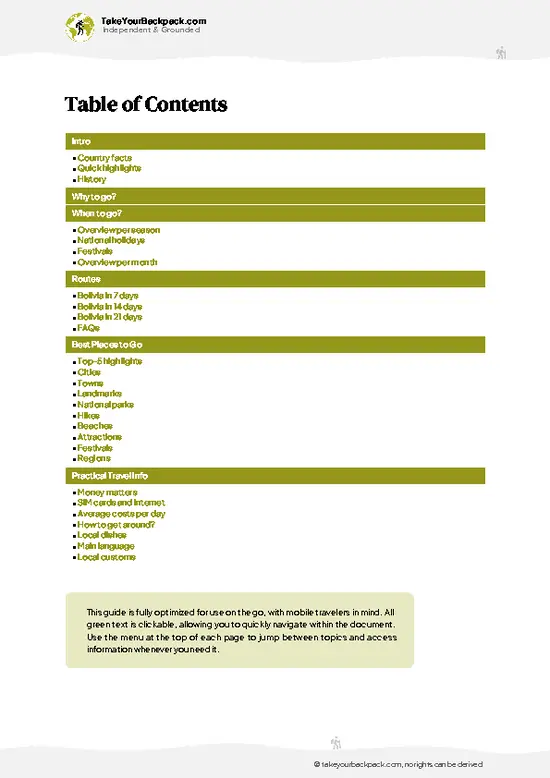
example page 2 from our offline Travel Guide for Bolivia
example page 3 from our offline Travel Guide for Bolivia
example page 4 from our offline Travel Guide for Bolivia
example page 5 from our offline Travel Guide for Bolivia
example page 6 from our offline Travel Guide for Bolivia
example page 7 from our offline Travel Guide for Bolivia
The digital guide (350 pages) contains:
82 highlights, ranked by travel appeal
Optimized 7, 14 & 21-day travel routes
Cities, national parks, landmarks, beaches
How to get around
Offline-friendly for travel without Wi-Fi
👉 Click to see all 30+ guide features

📅 Plan smarter in minutes, not weeks
Month by month travel advice
Festivals & national holidays
Budget expectations

🗺️ Go to the right places, skip the overrated ones
Honest pros & cons of destinations
Top hikes, parks & viewpoints
Lesser-known places most travelers miss
Clear “worth it vs skip it” guidance

🛏️ Travel smoothly without rookie mistakes
Best areas to stay
Transport systems explained simply
Common scams & safety advice
SIM cards, money & practical tips

🌍 Understand the country, not just visit it
Culture & traditions
52 Essential phrases & customs
Festivals worth planning around
Traveler-friendly historical context
Insights that make places more meaningful

📱 Built for real travel conditions
Fully downloadable PDF
Works completely offline
Optimized for phone use
Useful in remote areas & buses
Everything in one place
Save weeks of stressful planning
Get instant access to your full guide. 30‑day money-back guarantee.


By proceeding you agree to our terms.
Sent to your inbox immediately after payment • 100% Secure Checkout
Best Backpacking Travel Advisor 2025 tourism awardBest Backpacking
Travel Advisor
2025
What others say about Take Your Backpack Guides:
⭐⭐⭐⭐⭐
Fantastic, amazing amount of information!
⭐⭐⭐⭐⭐
My goodness this is amazing, it's what I've been looking for hats off too you!
⭐⭐⭐⭐⭐
I think this is absolutely BRILLIANT
⭐⭐⭐⭐
Very complete and informative. It's still missing places, but I gotta to commend you
⭐⭐⭐⭐⭐
This is truly amazing, thank you, can't wait to explore it with my kids!
⭐⭐⭐⭐⭐
Awesome resource, thank you!
⭐⭐⭐⭐⭐
This is amazing! Can't wait to explore the ones I haven't seen
⭐⭐⭐⭐
I love this! Well done, great idea.
⭐⭐⭐⭐⭐
Thanks for taking the time to make this gem!
⭐⭐⭐⭐⭐
This might be the best website I've ever seen.
⭐⭐⭐⭐⭐
Congratulations, and thank you so much for your work; it's incredibly valuable.
⭐⭐⭐⭐
In all seriousness I think you did a great job pointing out the important spots
⭐⭐⭐⭐⭐
10/10 very good
⭐⭐⭐⭐⭐
As someone who's only just starting to visit regularly this is awesome, thank you.
⭐⭐⭐⭐
Thank you very much! I'm going to visit my dad, it's going to be very useful!
⭐⭐⭐⭐⭐
This is really cool! We'll be travelling for the first time and this definitely come in handy.
⭐⭐⭐⭐⭐
You are now our minister of culture, congratulations 👨‍💼
⭐⭐⭐⭐⭐
Just wanted to tell you that this is a pearl! Going to follow your recommendations.
⭐⭐⭐⭐⭐
This is so cool. I'll definitely be using the resource for my travels soon.
⭐⭐⭐⭐⭐
This is very impressive! Good work.
⭐⭐⭐⭐⭐
This is an amazing and informative site. Very well done!

🛏️ Where to stay?Choosing the right base

Challapata’s town center is the heartbeat for backpackers—compact, safe, and buzzing just enough to feel alive without overwhelming. Streets here are lined with modest eateries and small markets where the scent of fresh bread and roasted coffee fills the air, making early mornings a sensory treat. This area hosts the bulk of budget accommodations, mostly simple hostels that attract solo travelers and groups alike, fostering a social vibe that’s easy to tap into. Compared to the quieter outskirts, staying here means you’re steps from the main plaza and transport hubs, cutting down on taxi rides … read more 👉
Challapata’s town center is the heartbeat for backpackers—compact, safe, and buzzing just enough to feel alive without overwhelming. Streets here are lined with modest eateries and small markets where the scent of fresh bread and roasted coffee fills the air, making early mornings a sensory treat. This area hosts the bulk of budget accommodations, mostly simple hostels that attract solo travelers and groups alike, fostering a social vibe that’s easy to tap into. Compared to the quieter outskirts, staying here means you’re steps from the main plaza and transport hubs, cutting down on taxi rides and giving you more time to soak in local rhythms. It’s the practical choice that keeps you connected and comfortable.

🚌 Getting aroundMoving around without the hassle

Challapata moves at its own rhythm—less a clock-driven town, more a place where the sun’s angle and the dusty wind set the pace. You’ll notice the slow shuffle of locals, the occasional burst of market chatter, and the way the light softens late afternoon, casting long shadows over the cracked pavement. It’s not about strict timetables here; it’s about reading the flow, catching the right moment when a colectivo rumbles by or when the bus finally fills enough to leave. This isn’t a place for rigid schedules but for tuned-in intuition, where patience rewards you with authentic encounters and a smoother ride.


  • Walking: The heart of Challapata is compact enough to explore on foot, especially the market and central plaza—expect dusty streets and uneven sidewalks, so sturdy shoes are a must.
read more 👉
Challapata moves at its own rhythm—less a clock-driven town, more a place where the sun’s angle and the dusty wind set the pace. You’ll notice the slow shuffle of locals, the occasional burst of market chatter, and the way the light softens late afternoon, casting long shadows over the cracked pavement. It’s not about strict timetables here; it’s about reading the flow, catching the right moment when a colectivo rumbles by or when the bus finally fills enough to leave. This isn’t a place for rigid schedules but for tuned-in intuition, where patience rewards you with authentic encounters and a smoother ride.


  • Walking: The heart of Challapata is compact enough to explore on foot, especially the market and central plaza—expect dusty streets and uneven sidewalks, so sturdy shoes are a must.

  • Colectivos: These shared minibuses run irregularly but frequently between Challapata and nearby towns; fares hover around 5-10 BOB, and they leave once full, so timing depends on crowd flow.

  • Intercity Buses: For longer hauls, buses to Oruro or Potosí depart mostly in the morning and early afternoon, costing about 20-30 BOB; they’re basic but reliable, with open windows letting in the dry highland air.

  • Motorcycle Taxis: Quick for short hops within town or to outskirts; fares are negotiable but cheap, around 3-5 BOB, perfect when you’re pressed for time or carrying gear.

👛 Costs (as of 25 February 2026)Typical daily expenses

Backpacking through Challapata, Bolivia, means stepping into a place where the air carries a dry, earthy scent and the streets hum with a slow, steady rhythm. Knowing the daily costs here helps you move through the town with confidence, turning every boliviano spent into a smoother, richer experience.
  • Dorm Accommodation: Expect to pay around $5 to $10 USD per night for a bed in a basic dormitory. The rooms are simple, often with shared bathrooms, but clean enough to rest well after a day exploring the high-altitude plains.
  • Meals: Local eateries serve up hearty, filling meals for about $2 to $5 USD. Think plates of rice, potatoes, and meat or beans, with fresh bread on the side. Street food snacks like salteñas or empanadas hover around $0.50 to $1.50 each, perfect for quick bites.
  • Local
read more 👉
Backpacking through Challapata, Bolivia, means stepping into a place where the air carries a dry, earthy scent and the streets hum with a slow, steady rhythm. Knowing the daily costs here helps you move through the town with confidence, turning every boliviano spent into a smoother, richer experience.
  • Dorm Accommodation: Expect to pay around $5 to $10 USD per night for a bed in a basic dormitory. The rooms are simple, often with shared bathrooms, but clean enough to rest well after a day exploring the high-altitude plains.
  • Meals: Local eateries serve up hearty, filling meals for about $2 to $5 USD. Think plates of rice, potatoes, and meat or beans, with fresh bread on the side. Street food snacks like salteñas or empanadas hover around $0.50 to $1.50 each, perfect for quick bites.
  • Local Transport: Getting around Challapata is cheap and straightforward. A short ride on a colectivo or local bus costs roughly $0.30 to $0.70 USD. Walking is often the best way to soak in the town’s atmosphere, but these rides are handy for longer hauls or when the sun dips low.
  • Basic Activities/Entry Fees: Most local attractions, like small museums or cultural sites, charge minimal fees—usually $1 to $3 USD. If you’re heading out for guided tours or more specialized experiences, budget closer to $10 to $15 USD, but these are optional and often booked outside the town.
  • Miscellaneous Expenses: This covers essentials like bottled water, snacks, or a SIM card top-up. Plan on spending around $1 to $3 USD daily here. Markets offer fresh fruit and local goods at low prices, so you can keep this cost down by shopping smart.

All told, a daily budget in Challapata ranges from about $10 to $25 USD, depending on how much comfort or convenience you want. The town’s quiet pace and modest prices mean your money stretches well, letting you focus on the subtle charms of life at altitude without constant worry about overspending.
⚠️ Prices can change and everyone travels differently, so take this as a rough guide. Hope it helps you plan your adventure!

🚌 Day tripsShort trips worth adding

Challapata is a backpacker’s dream base, offering easy access to stunning landscapes and cultural experiences without the hassle of long treks.

Laguna Colorada
This striking red lagoon is a feast for the eyes, especially at sunrise when the water reflects the fiery hues of the sky. The journey takes about 3 hours by shared taxi, costing around 30 BOB. The best time to visit is during the dry season (May to October) when the colors pop. A common mistake is underestimating the altitude; take it slow and hydrate to avoid altitude sickness.
👉 Explore Laguna Colorada

Chacaltaya
Once home to the world’s highest ski resort, Chacaltaya offers breathtaking views of the Andes. It’s a 2-hour drive from Challapata, costing about 25 BOB. Aim for early morning to catch the sunrise over the peaks. … read more 👉
Challapata is a backpacker’s dream base, offering easy access to stunning landscapes and cultural experiences without the hassle of long treks.

Laguna Colorada
This striking red lagoon is a feast for the eyes, especially at sunrise when the water reflects the fiery hues of the sky. The journey takes about 3 hours by shared taxi, costing around 30 BOB. The best time to visit is during the dry season (May to October) when the colors pop. A common mistake is underestimating the altitude; take it slow and hydrate to avoid altitude sickness.
👉 Explore Laguna Colorada

Chacaltaya
Once home to the world’s highest ski resort, Chacaltaya offers breathtaking views of the Andes. It’s a 2-hour drive from Challapata, costing about 25 BOB. Aim for early morning to catch the sunrise over the peaks. Many first-timers forget to dress in layers; the temperature can swing dramatically.


Tiwanaku
Explore the ancient ruins of Tiwanaku, a UNESCO World Heritage site, just 2.5 hours away. Entry is around 50 BOB. The best time to visit is in the morning when the site is less crowded. Don’t miss the local market for authentic snacks; many overlook this gem.
👉 Explore Tiwanaku

Isla del Sol
A day trip to Isla del Sol on Lake Titicaca is a must. The boat ride takes about 1.5 hours and costs around 50 BOB. Visit during the dry season for clearer skies. Many travelers skip the hike to the north side; it’s worth it for the panoramic views.
👉 Explore Isla del Sol
Want to know what more Bolivia offers?
The Bolivia Travel Guide describes 82 highlights, from cities to national parks, from beaches to hikes

Get the Travel Guide -

🛡️ SafetySafety Tips and Common Scams in Challapata

Challapata is generally safe, but a few practical tips can enhance your experience. Stay aware in crowded markets; pickpockets can be sneaky. If you’re solo, avoid wandering too far after dark—stick to well-lit areas and main streets.

Watch for common scams, like inflated taxi fares; always agree on a price beforehand. Locals are friendly, but be cautious with overly eager offers for help. Carry yourself confidently, and don’t flash valuables. A relaxed demeanor goes a long way in keeping your trip smooth.

Other Bolivian towns near Challapata

Explore more nearby:

  • Llallagua—mining center, windswept plateau, worker settlements| 57 km away
  • Uyuni—salt flats, train graveyard, gateway to desert| 174 km away
  • Quime—cloud forest edge, mining past, mountain views| 218 km away

💡 Not sure where to go next?
Create a personalized itinerary for Bolivia including Challapata and the places that fit your trip.

Generate my itinerary

👉 Discover all towns

Or checkout all Bolivia has to offer (think cities, towns, villages, national parks, hikes, beaches, festivals)
Country photo of Bolivia

We 💚 feedbackWhat to keep in mind

Challapata’s charm lies in its vibrant local markets, where the aroma of fresh empanadas mingles with the chatter of vendors. But be ready for altitude headaches; the thin air can hit hard. Embrace it, though. The payoff is a deeper connection to the land and its people.

✈️ When did I visit Bolivia?
Bolivia I visited during my half year trip through South and Central America back in 2003

✍️ Help improve this page!
The information on this page is based on my own backpacking experience in Bolivia, supplemented with up-to-date research and feedback from other travelers. Travel details can change, so if you notice anything outdated or incomplete, feel free to let me know.


🙋‍♂️ Give feedback

👋 Meet the founderWho’s Behind Take Your Backpack?

Johan, backpacker and founder of TakeYourBackpackHi, I’m Johan (Netherlands 🇳🇱), the creator of TakeYourBackpack. Over the past decade, I’ve backpacked through 80+ countries across six continents, gaining extensive experience with independent travel, long-term trips, and overland routes.

This site is built on a combination of firsthand travel experience and carefully curated insights from other backpackers. Many guides are based on places I’ve personally visited, while others bring together tips, observations, and practical advice shared by trusted travelers I’ve met along the way.

The goal is to provide realistic, experience-driven guidance — not generic itineraries — so you can explore destinations with better context, clearer expectations, and more confidence.

Get full Bolivia guide •
Instant download • 82 highlights • Full Offline guide