×

Bolivia🇧🇴 | national parksIñao National Park and Integrated Management Natural Areamontane forest, sandstone cliffs, endemic flora | things to do and best time to go

Explore Otuquis National Park and Integrated Management Natural AreaExplore Tucavaca Valley Municipal Reserve

Backpacking in Iñao and Integrated Management Natural Area
👀 For curious travelersnational park ranked #15
By Johan Kruseman 🇳🇱 | Updated April 21, 2026

Your boots slide on loose red dust, cicadas drilling the air while a pair of green parrots explode out of a ceibo tree just ahead; somewhere below, a river you can’t see keeps up a low, steady roar. That’s Iñao National Park and Integrated Management Natural Area, tucked in the hills of Chuquisaca, southeast Bolivia. It’s quieter and rougher than Torotoro or Amboró: fewer marked trails, more guesswork, almost no crowds. Hiking is excellent if you’re comfortable with vague signage and steep, eroded paths; scenery swings from dry forest to cloud-forest cliffs, with decent birdlife but elusive mammals. Access usually means bumpy roads and irregular transport, and entrance fees are low but not always clearly posted. Camping is basic, sometimes just a flat spot and a local family’s yard, with very limited budget hospedajes in nearby towns. The vibe is rural, conservative, and slow; if you want infrastructure and easy viewpoints, Amboró is kinder, but if you want space, silence, and a bit of uncertainty, Iñao rewards the effort.

Discover everything you want to know in the 📖 Bolivia Travel Guide.


Get your Bolivia guide
82 ranked highlights, routes & tips, works offline (350 pages)
Loading the map 🌍
CLICK TO FILTER
cities
towns
landmarks
national parks
hikes
beaches
attractions
festivals
regions
SHOW COUNTRY’S BESTSHOW ALL

✨ Why go?
Ranked #15 national park in Bolivia
The unique appeal for travelers

Iñao National Park and Integrated Management Natural Area attracts backpackers for several solid reasons. First, independent exploration is a major draw; the park’s trails are well-marked, allowing you to roam without a guide. This freedom means you can set your own pace and truly connect with the landscape.

Budget-conscious travelers appreciate the camping options and nearby hostels, which keep costs low while offering a chance to meet fellow adventurers. The variety of trails caters to different skill levels, from leisurely walks to more challenging hikes, ensuring everyone finds their fit.

Importantly, the park is well-suited for self-guided travelers. While tours are available, the real magic lies in navigating the terrain at your own rhythm, making every moment feel personal and rewarding.
Want to include Iñao National Park and Integrated Management Natural Area in your Bolivia route?
Create a personalized Bolivia itinerary that includes Iñao National Park and Integrated Management Natural Area and the places that fit your trip — based on your travel style, budget, and available time. Get your route in seconds.

Generate my trip

💡 HighlightsTop highlights of Iñao and Integrated Management Natural Area

  • Serranía de Iñao ridge (mirador) — a jagged spine of cloud-draped peaks and sweeping viewpoints where the Andes drop into the Yungas. The hikes are steep in places but the payoff is huge: layered valleys, sunrise/sunset color, and that feeling of being above the cloud sea. (Personal favorite — great early-morning light for photos and quiet.)
  • Montane cloud forest (Yungas) — dense, mossy forest full of epiphytes, hummingbirds, tanagers and other color-heavy birdlife. It’s the park’s biodiversity engine: lots to hear, some to see, and a haven for endemic frogs and insects if you poke around the leaf litter.
  • Waterfalls and cascades — a string of falls tucked into narrow ravines; perfect for short, refreshing side-hikes. Expect slippery rocks, cool pools, and good photo opportunities without
read more 👉
  • Serranía de Iñao ridge (mirador) — a jagged spine of cloud-draped peaks and sweeping viewpoints where the Andes drop into the Yungas. The hikes are steep in places but the payoff is huge: layered valleys, sunrise/sunset color, and that feeling of being above the cloud sea. (Personal favorite — great early-morning light for photos and quiet.)
  • Montane cloud forest (Yungas) — dense, mossy forest full of epiphytes, hummingbirds, tanagers and other color-heavy birdlife. It’s the park’s biodiversity engine: lots to hear, some to see, and a haven for endemic frogs and insects if you poke around the leaf litter.
  • Waterfalls and cascades — a string of falls tucked into narrow ravines; perfect for short, refreshing side-hikes. Expect slippery rocks, cool pools, and good photo opportunities without needing technical gear.
  • Polylepis groves and high-altitude pockets — scraggly, twisted Polylepis trees and puna grassland above the cloud forest. These islands of high-elevation woodland are rare in Bolivia and support birds and plants you won’t find down in the valleys.
  • Dry inter-Andean valleys and red cliffs — startling, drier landscapes that contrast sharply with the humid forest: red soils, exposed strata and hardy shrubs. Great for short treks and seeing how quickly the ecosystem changes with elevation.
  • River canyons and riparian corridors — shady river bottoms that concentrate wildlife: passerines, waders, amphibians and mammals that come to drink. Good for easy, low-impact wildlife watching along flatter trails.
  • Local trails and community homestays — small communities manage many of the best walking routes; hiring a local guide or staying in a homestay is cheap, supports conservation, and opens up hidden trails that aren’t on maps.
Spotted a mistake or missing something? Contact us.
🌤️ When to go?Seasonal considerations and timing


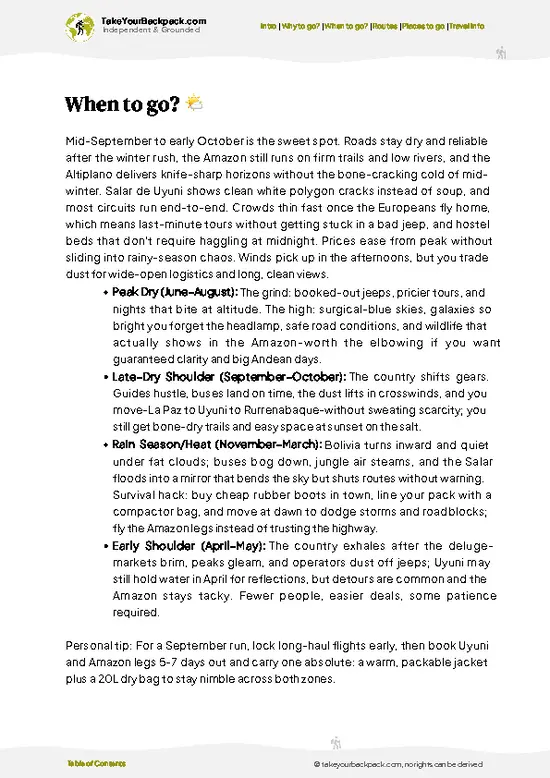
  • Weather: The dry season from May to October is your best bet. Expect mostly clear skies and minimal rain, which means trails won’t turn into mud traps. The wet season (November to April) brings heavy rains that can make paths slippery and river crossings risky.

  • Temperature: Daytime highs hover around 20-25°C (68-77°F) during the dry months, comfortable for hiking. Nights can dip to 5-10°C (41-50°F), so pack layers. The wet season tends to be warmer but more humid, which can sap your energy faster.

  • Daylight Hours: Roughly 11-12 hours of daylight year-round, but the dry season offers more consistent sunshine, making early starts and late finishes more reliable for longer treks.

  • Crowds: This park isn’t overrun, but the dry season sees a modest uptick in visitors. You’ll still find plenty
read more 👉

  • Weather: The dry season from May to October is your best bet. Expect mostly clear skies and minimal rain, which means trails won’t turn into mud traps. The wet season (November to April) brings heavy rains that can make paths slippery and river crossings risky.

  • Temperature: Daytime highs hover around 20-25°C (68-77°F) during the dry months, comfortable for hiking. Nights can dip to 5-10°C (41-50°F), so pack layers. The wet season tends to be warmer but more humid, which can sap your energy faster.

  • Daylight Hours: Roughly 11-12 hours of daylight year-round, but the dry season offers more consistent sunshine, making early starts and late finishes more reliable for longer treks.

  • Crowds: This park isn’t overrun, but the dry season sees a modest uptick in visitors. You’ll still find plenty of solitude compared to Bolivia’s more famous parks.

  • Seasonal Activities: Dry months are ideal for trekking and wildlife spotting. Wet season can offer lush landscapes but expect limited trail access and fewer clear views.

  • Price Fluctuations: Local guides and accommodations may charge a premium during the dry season’s peak months (July-August). Off-season rates drop, but so does accessibility.


Pro-tip: Aim for late May or early October—dry enough for solid hiking, fewer crowds, and better prices. It’s the sweet spot that keeps your energy and wallet intact.


source: climatestotravel.comJANJanuary: fair for travelingFEBFebruary: fair for travelingMARMarch: fair for travelingAPRApril: fair for travelingMAYMay: highly recommended for travelingJUNJune: excellent for travelingJULJuly: excellent for travelingAUGAugust: excellent for travelingSEPSeptember: excellent for travelingOCTOctober: highly recommended for travelingNOVNovember: fair for travelingDECDecember: fair for traveling
when-to-go

✈️ The backpacker research shortcutBolivia Travel Guide

An offline-friendly backpacking guide with optimized travel routes, ranked highlights, transport advice, and the best areas to stay.
example page 0 from our offline Travel Guide for Bolivia
example page 1 from our offline Travel Guide for Bolivia
example page 2 from our offline Travel Guide for Bolivia
example page 3 from our offline Travel Guide for Bolivia
example page 4 from our offline Travel Guide for Bolivia
example page 5 from our offline Travel Guide for Bolivia
example page 6 from our offline Travel Guide for Bolivia
example page 7 from our offline Travel Guide for Bolivia
The digital guide (350 pages) contains:
82 highlights, ranked by travel appeal
Optimized 7, 14 & 21-day travel routes
Cities, national parks, landmarks, beaches
How to get around
Offline-friendly for travel without Wi-Fi
👉 Click to see all 30+ guide features

📅 Plan smarter in minutes, not weeks
Month by month travel advice
Festivals & national holidays
Budget expectations

🗺️ Go to the right places, skip the overrated ones
Honest pros & cons of destinations
Top hikes, parks & viewpoints
Lesser-known places most travelers miss
Clear “worth it vs skip it” guidance

🛏️ Travel smoothly without rookie mistakes
Best areas to stay
Transport systems explained simply
Common scams & safety advice
SIM cards, money & practical tips

🌍 Understand the country, not just visit it
Culture & traditions
52 Essential phrases & customs
Festivals worth planning around
Traveler-friendly historical context
Insights that make places more meaningful

📱 Built for real travel conditions
Fully downloadable PDF
Works completely offline
Optimized for phone use
Useful in remote areas & buses
Everything in one place
Save weeks of stressful planning
Get instant access to your full guide. 30‑day money-back guarantee.


By proceeding you agree to our terms.
Sent to your inbox immediately after payment • 100% Secure Checkout
Best Backpacking Travel Advisor 2025 tourism awardBest Backpacking
Travel Advisor
2025
What others say about Take Your Backpack Guides:
⭐⭐⭐⭐⭐
Fantastic, amazing amount of information!
⭐⭐⭐⭐⭐
My goodness this is amazing, it's what I've been looking for hats off too you!
⭐⭐⭐⭐⭐
I think this is absolutely BRILLIANT
⭐⭐⭐⭐
Very complete and informative. It's still missing places, but I gotta to commend you
⭐⭐⭐⭐⭐
This is truly amazing, thank you, can't wait to explore it with my kids!
⭐⭐⭐⭐⭐
Awesome resource, thank you!
⭐⭐⭐⭐⭐
This is amazing! Can't wait to explore the ones I haven't seen
⭐⭐⭐⭐
I love this! Well done, great idea.
⭐⭐⭐⭐⭐
Thanks for taking the time to make this gem!
⭐⭐⭐⭐⭐
This might be the best website I've ever seen.
⭐⭐⭐⭐⭐
Congratulations, and thank you so much for your work; it's incredibly valuable.
⭐⭐⭐⭐
In all seriousness I think you did a great job pointing out the important spots
⭐⭐⭐⭐⭐
10/10 very good
⭐⭐⭐⭐⭐
As someone who's only just starting to visit regularly this is awesome, thank you.
⭐⭐⭐⭐
Thank you very much! I'm going to visit my dad, it's going to be very useful!
⭐⭐⭐⭐⭐
This is really cool! We'll be travelling for the first time and this definitely come in handy.
⭐⭐⭐⭐⭐
You are now our minister of culture, congratulations 👨‍💼
⭐⭐⭐⭐⭐
Just wanted to tell you that this is a pearl! Going to follow your recommendations.
⭐⭐⭐⭐⭐
This is so cool. I'll definitely be using the resource for my travels soon.
⭐⭐⭐⭐⭐
This is very impressive! Good work.
⭐⭐⭐⭐⭐
This is an amazing and informative site. Very well done!

🛏️ Where to stay?How to pick the right area

For backpackers heading to Iñao National Park, options are limited but solid. The park itself doesn’t have formal accommodations, so plan to stay in nearby towns.

Cochabamba is your best bet, about a two-hour drive away. It offers a range of hostels and budget hotels, like the popular “Hostal Casa de Campo,” which provides a cozy atmosphere without breaking the bank.

Alternatively, you can find basic lodgings in the small town of Iñao, closer to the park entrance. These are often family-run, giving you a taste of local hospitality.

Be mindful of transportation costs; public transport can … read more 👉
For backpackers heading to Iñao National Park, options are limited but solid. The park itself doesn’t have formal accommodations, so plan to stay in nearby towns.

Cochabamba is your best bet, about a two-hour drive away. It offers a range of hostels and budget hotels, like the popular “Hostal Casa de Campo,” which provides a cozy atmosphere without breaking the bank.

Alternatively, you can find basic lodgings in the small town of Iñao, closer to the park entrance. These are often family-run, giving you a taste of local hospitality.

Be mindful of transportation costs; public transport can be unreliable. Renting a car or arranging a ride can save you time and energy for the trails. Prioritize your budget here to enjoy the park’s natural beauty without the stress.

👛 Costs (as of 9 January 2026)What things cost and how to budget

Visiting Iñao National Park and Integrated Management Natural Area in Bolivia requires some financial planning. Entrance fees typically range from $5 to $10 USD for international visitors. This fee grants you access to the park’s diverse ecosystems and trails.

Guided tours are highly recommended for a deeper experience. Expect to pay between $30 and $100 USD, depending on the length and complexity of the tour. Some tours include transportation, meals, and equipment, while others may charge extra for these services.

Accommodation options vary widely. Basic lodges start around $15 to $30 USD per night. If you prefer more comfort, mid-range hotels can cost between $50 and $100 USD. Always check what amenities are included, as some places may charge extra for Wi-Fi or meals.

Transportation … read more 👉
Visiting Iñao National Park and Integrated Management Natural Area in Bolivia requires some financial planning. Entrance fees typically range from $5 to $10 USD for international visitors. This fee grants you access to the park’s diverse ecosystems and trails.

Guided tours are highly recommended for a deeper experience. Expect to pay between $30 and $100 USD, depending on the length and complexity of the tour. Some tours include transportation, meals, and equipment, while others may charge extra for these services.

Accommodation options vary widely. Basic lodges start around $15 to $30 USD per night. If you prefer more comfort, mid-range hotels can cost between $50 and $100 USD. Always check what amenities are included, as some places may charge extra for Wi-Fi or meals.

Transportation to the park can add to your costs. If you’re coming from nearby towns, local buses are the most economical option, usually costing around $2 to $5 USD. Private transfers can range from $30 to $60 USD, depending on the distance and vehicle type.

Keep in mind that additional costs may arise from activities like birdwatching or renting equipment for hiking. Budget an extra $10 to $50 USD for these experiences.

Planning ahead will help you avoid unexpected expenses and ensure you have the energy and funds for the moments that truly matter in this stunning natural area.
⚠️ Prices can change and everyone travels differently, so take this as a rough guide. Hope it helps you plan your adventure!

🥾 TrailsBest hikes in Iñao and Integrated Management Natural Area national park

Iñao National Park and Integrated Management Natural Area is a hidden gem in Bolivia, offering a mix of stunning landscapes and diverse wildlife. The park’s terrain ranges from lush valleys to rugged mountains, making it a fantastic spot for both seasoned hikers and those looking for a more leisurely stroll. You might catch glimpses of llamas, condors, and even the elusive jaguar if you’re lucky.

For those wanting a structured hike, check out the Pico de la Bandera Trail. Here are the details:
  • Length: 8 km
  • Estimated Duration: 4-5 hours
  • Difficulty Level: Moderate
  • Key Features: Stunning panoramic
read more 👉
Iñao National Park and Integrated Management Natural Area is a hidden gem in Bolivia, offering a mix of stunning landscapes and diverse wildlife. The park’s terrain ranges from lush valleys to rugged mountains, making it a fantastic spot for both seasoned hikers and those looking for a more leisurely stroll. You might catch glimpses of llamas, condors, and even the elusive jaguar if you’re lucky.

For those wanting a structured hike, check out the Pico de la Bandera Trail. Here are the details:
  • Length: 8 km
  • Estimated Duration: 4-5 hours
  • Difficulty Level: Moderate
  • Key Features: Stunning panoramic views, diverse flora, and fauna
  • Terrain: Rocky paths with some steep sections

Getting to the park isn’t too tricky; you can catch a bus from La Paz to nearby towns, and then it’s a short taxi ride to the entrance. Expect a bit of company on the trails, especially during weekends, but it’s not overly crowded. As for the entrance fee, it’s pretty budget-friendly, so you won’t break the bank just to soak in those breathtaking views. Just remember to pack enough water and snacks, and you’re good to go!
⚠️ Hiking info can sometimes be outdated or inaccurate. Before you hit the trail, check the latest conditions with locals. If you do spot anything that's off, I'd love to hear from you, so I can update it for fellow travelers.

🛡️ SafetySafety Tips and Common Scams in Iñao and Integrated Management Natural Area

Iñao National Park offers a manageable experience for backpackers, but a few realities can catch you off guard. Weather can shift quickly, so pack layers and a reliable rain jacket. The trails are generally well-marked, yet some sections can be steep or rocky, demanding good footwear and steady footing. Altitude can affect even seasoned hikers, so take it slow and stay hydrated. Wildlife encounters are rare, but if you spot anything, observe from a distance—don’t feed or approach animals. Lastly, be mindful of your timing; late afternoons can bring unexpected rains. Prepare well, and you’ll enjoy the park’s beauty without unnecessary stress.

Other Bolivian national parks near Iñao and Integrated Management Natural Area

Explore more nearby:


💡 Not sure where to go next?
Create a personalized itinerary for Bolivia including Iñao and Integrated Management Natural Area and the places that fit your trip.

Generate my itinerary

👉 Discover all national parks

Or checkout all Bolivia has to offer (think cities, towns, villages, national parks, hikes, beaches, festivals)
Country photo of Bolivia

We 💚 feedbackWhat to keep in mind

Iñao National Park is a treasure trove of biodiversity, where the vibrant ecosystems pulse with life. But be prepared: the altitude can hit hard, leaving you breathless if you’re not acclimatized. Take it slow, hydrate, and you’ll be rewarded with unforgettable views and a deeper connection to nature. It’s worth the effort.

✈️ When did I visit Bolivia?
Bolivia I visited during my half year trip through South and Central America back in 2003

✍️ Help improve this page!
The information on this page is based on my own backpacking experience in Bolivia, supplemented with up-to-date research and feedback from other travelers. Travel details can change, so if you notice anything outdated or incomplete, feel free to let me know.


🙋‍♂️ Give feedback

👋 Meet the founderWho’s Behind Take Your Backpack?

Johan, backpacker and founder of TakeYourBackpackHi, I’m Johan (Netherlands 🇳🇱), the creator of TakeYourBackpack. Over the past decade, I’ve backpacked through 80+ countries across six continents, gaining extensive experience with independent travel, long-term trips, and overland routes.

This site is built on a combination of firsthand travel experience and carefully curated insights from other backpackers. Many guides are based on places I’ve personally visited, while others bring together tips, observations, and practical advice shared by trusted travelers I’ve met along the way.

The goal is to provide realistic, experience-driven guidance — not generic itineraries — so you can explore destinations with better context, clearer expectations, and more confidence.

Get full Bolivia guide •
Instant download • 82 highlights • Full Offline guide