×

Bolivia🇧🇴 | attractionsMuseo de la Catedral de Sucresacred art, cathedral treasury, silverwork | things to do and best time to go

Explore Museo de CharcasExplore Teatro Municipal Alberto Saavedra Pérez

Backpacking in Museo de la Catedral de Sucre
👀 For curious travelersattraction ranked #13
By Johan Kruseman 🇳🇱 | Updated May 17, 2026

Everyone shows up at the Museo de la Catedral de Sucre for the rooftop view—those Instagram shots of red-tiled roofs and whitewashed domes. But if you’re only here for the panorama, you’re missing the real story. The real magic is inside: a labyrinth of creaking wooden floors, relics that survived centuries of colonial ambition, and a silence that feels heavier than the gold leaf on the altars. Sucre sits in the heart of Bolivia, a city that’s both the constitutional capital and a living museum in its own right. For backpackers, the cathedral museum is a curveball. It’s not cheap by Bolivian standards, and the guided tours can feel rigid. But the payoff is a raw, unvarnished look at the collision of Spanish and indigenous worlds—plus a chance to stand in rooms where history actually happened. It’s quieter than the Salar or La Paz, but if you want substance over spectacle, this is where Bolivia whispers its secrets.

Discover everything you want to know in the 📖 Bolivia Travel Guide.


Get your Bolivia guide
82 ranked highlights, routes & tips, works offline (350 pages)
Loading the map 🌍
CLICK TO FILTER
cities
towns
landmarks
national parks
hikes
beaches
attractions
festivals
regions
SHOW COUNTRY’S BESTSHOW ALL

✨ Why go?
Ranked #13 attraction in Bolivia
Reasons people choose to visit here

The Museo de la Catedral de Sucre isn’t just another dusty stop on Bolivia’s backpacker trail—it’s a checkpoint where history punches you in the gut and leaves you thinking. Sure, Sucre’s colonial charm is Instagram-ready, but this museum digs deeper than pretty facades. It’s housed inside the cathedral itself, a building that’s been the spiritual and political heart of Bolivia since the 16th century. You’re not just looking at relics; you’re stepping into the layers of a nation’s birth pains, revolutions, and religious fervor.

Backpackers make time here because it’s a rare spot where the effort-to-reward ratio is genuinely high. The entrance fee is modest, but the payoff is massive: original colonial art, intricate religious artifacts, and a palpable sense of history that no guidebook hype … read more 👉
The Museo de la Catedral de Sucre isn’t just another dusty stop on Bolivia’s backpacker trail—it’s a checkpoint where history punches you in the gut and leaves you thinking. Sure, Sucre’s colonial charm is Instagram-ready, but this museum digs deeper than pretty facades. It’s housed inside the cathedral itself, a building that’s been the spiritual and political heart of Bolivia since the 16th century. You’re not just looking at relics; you’re stepping into the layers of a nation’s birth pains, revolutions, and religious fervor.

Backpackers make time here because it’s a rare spot where the effort-to-reward ratio is genuinely high. The entrance fee is modest, but the payoff is massive: original colonial art, intricate religious artifacts, and a palpable sense of history that no guidebook hype can replicate. It’s a cultural anchor on the route through Bolivia, a place where you can pause and feel the weight of centuries in one room. If you’re racing through the country, this museum is a milestone that grounds you, reminding you why you’re here beyond the selfies and scenic views. It’s real, raw, and absolutely worth your time.
Want to include Museo de la Catedral de Sucre in your Bolivia route?
Create a personalized Bolivia itinerary that includes Museo de la Catedral de Sucre and the places that fit your trip — based on your travel style, budget, and available time. Get your route in seconds.

Generate my trip

💡 HighlightsMust-see experiences and standout moments

1. The Rooftop Walk (La Azotea)
Let’s cut through the Instagram haze: yes, everyone wants that shot of Sucre’s whitewashed skyline from the cathedral roof. But here’s the real story—this isn’t just a photo op. The rooftop walk is a full sensory experience. You’re climbing ancient, uneven steps, ducking through low arches, and suddenly you’re standing above the city, with the Andes rolling out in the distance and the terracotta tiles glowing in the high-altitude sun. The view is a knockout, but the real thrill is the feeling of standing where priests and bell-ringers have stood for centuries, wind in your face, city humming below. It’s not for the vertigo-prone, but if you want to feel the pulse of Sucre, this is where it happens. My personal favorite—nothing else in the city gives you this … read more 👉
1. The Rooftop Walk (La Azotea)
Let’s cut through the Instagram haze: yes, everyone wants that shot of Sucre’s whitewashed skyline from the cathedral roof. But here’s the real story—this isn’t just a photo op. The rooftop walk is a full sensory experience. You’re climbing ancient, uneven steps, ducking through low arches, and suddenly you’re standing above the city, with the Andes rolling out in the distance and the terracotta tiles glowing in the high-altitude sun. The view is a knockout, but the real thrill is the feeling of standing where priests and bell-ringers have stood for centuries, wind in your face, city humming below. It’s not for the vertigo-prone, but if you want to feel the pulse of Sucre, this is where it happens. My personal favorite—nothing else in the city gives you this sense of time travel and altitude-induced adrenaline.


2. The Bell Tower (El Campanario)
Forget the sanitized museum displays—climbing the bell tower is a hands-on, slightly nerve-wracking adventure. The bells are massive, battered, and still in use. You can see the wear from centuries of ringing out over Sucre. The climb is tight and steep, but the payoff is a panoramic view and the chance to touch history—literally. If you’re lucky, you’ll catch the bells in action, and the sound reverberates through your bones. This is not a polished, glassed-off exhibit; it’s raw, real, and a little bit wild.


3. The Treasury of Religious Art
If you’re expecting a dusty collection of generic saints, think again. The Museo’s treasury is a crash course in Bolivian colonial bling. Gold and silver chalices, embroidered vestments, and paintings that are equal parts faith and fever dream. The craftsmanship is outrageous—some pieces are so intricate you’ll wonder how anyone had the patience (or eyesight) for it. What makes it special isn’t just the opulence, but the way it tells the story of Sucre as a crossroads of indigenous and Spanish worlds. Look for the local touches in the iconography—this is Catholicism with a distinctly Andean twist.


4. The Crypts and Catacombs
Not for the faint of heart or the claustrophobic. The cathedral’s crypts are a stark reminder that this place has seen centuries of power, faith, and mortality. You’ll see tombs of bishops, faded inscriptions, and the kind of echoing silence that makes you lower your voice without thinking. It’s a sobering, atmospheric counterpoint to the glitter upstairs, and it grounds the whole experience in real human history—no filters, no soft lighting.


5. The Organ and Choir Loft
If you time your visit right, you might catch a rehearsal or even a service, and the sound of the cathedral’s historic organ filling the nave is pure goosebumps. The loft itself is a marvel—carved wood, worn smooth by centuries of use, and a vantage point that lets you appreciate the cathedral’s scale and acoustics. Even empty, it’s a space that hums with the memory of music and voices.
Spotted a mistake or missing something? Contact us.

Things to do around Museo de la Catedral de Sucre

Ratings based on Tripadvisor reviews. When you book through this link, you support our work at no extra cost to you.

🌤️ When to go?Seasonal considerations and timing


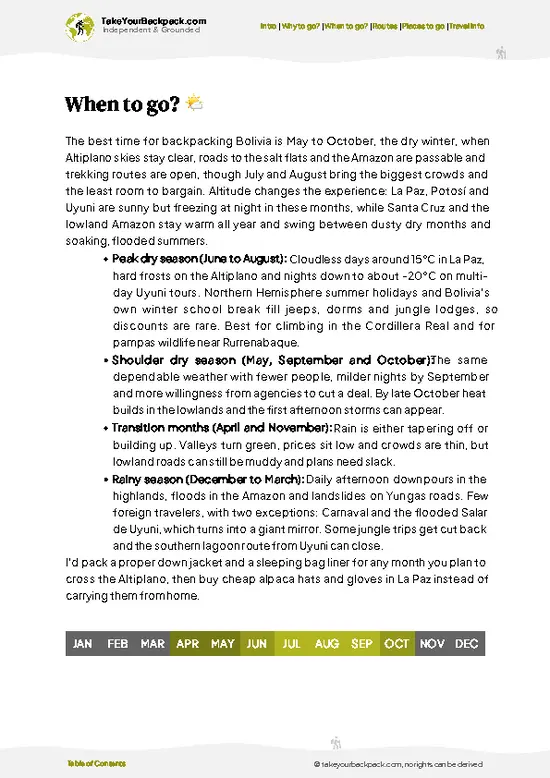
  • Weather: Sucre enjoys a mild climate year-round, but the dry season from May to October is your best bet. Expect clear skies and minimal rain, perfect for wandering the Museo de la Catedral without soggy shoes or dodging sudden downpours.

  • Temperature: Daytime temps hover around 18-22°C (64-72°F) during the dry months, comfortable for long museum visits. Nights can dip to 5-8°C (41-46°F), so pack a light jacket if you’re staying out late.

  • Daylight Hours: From May to August, daylight stretches about 11-12 hours, giving you ample time to explore the museum and nearby plazas without rushing.

  • Crowds: The peak tourist season aligns with the dry months, especially July and August, when international visitors flood in. The museum can get busy, so early mornings or late afternoons are your
read more 👉

  • Weather: Sucre enjoys a mild climate year-round, but the dry season from May to October is your best bet. Expect clear skies and minimal rain, perfect for wandering the Museo de la Catedral without soggy shoes or dodging sudden downpours.

  • Temperature: Daytime temps hover around 18-22°C (64-72°F) during the dry months, comfortable for long museum visits. Nights can dip to 5-8°C (41-46°F), so pack a light jacket if you’re staying out late.

  • Daylight Hours: From May to August, daylight stretches about 11-12 hours, giving you ample time to explore the museum and nearby plazas without rushing.

  • Crowds: The peak tourist season aligns with the dry months, especially July and August, when international visitors flood in. The museum can get busy, so early mornings or late afternoons are your best windows for a quieter experience.

  • Seasonal Activities: June and July bring local festivals that spill into the streets, adding a lively backdrop to your visit. While the museum itself stays calm, the surrounding city buzz can enhance your cultural immersion.

  • Price Fluctuations: Entry fees remain stable year-round, but accommodation and flights spike during the dry season and festival months. Booking ahead can save you a bundle.


Pro-tip: Visit just before the dry season peaks—in late April or early May—to dodge the crowds, enjoy decent weather, and snag better deals without sacrificing the museum’s charm.


source: climatestotravel.comJANJanuary: good for travelingFEBFebruary: good for travelingMARMarch: good for travelingAPRApril: highly recommended for travelingMAYMay: excellent for travelingJUNJune: excellent for travelingJULJuly: highly recommended for travelingAUGAugust: highly recommended for travelingSEPSeptember: excellent for travelingOCTOctober: excellent for travelingNOVNovember: good for travelingDECDecember: good for traveling
when-to-go

✈️ The backpacker research shortcutBolivia Travel Guide

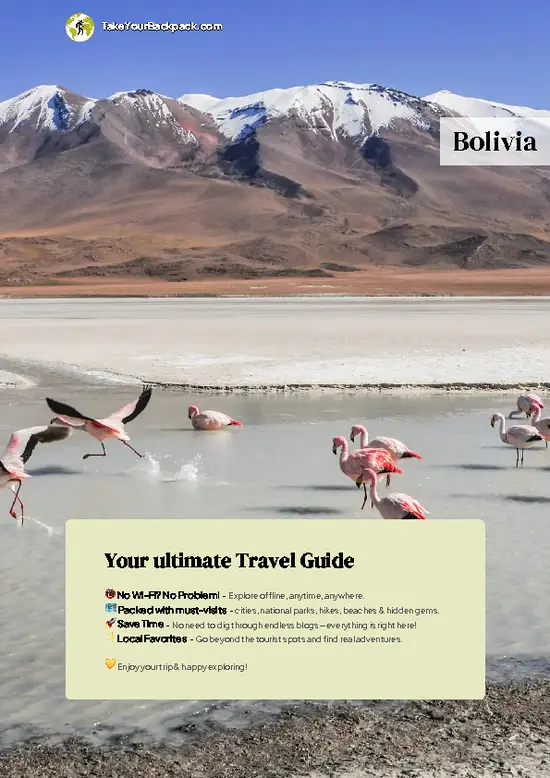
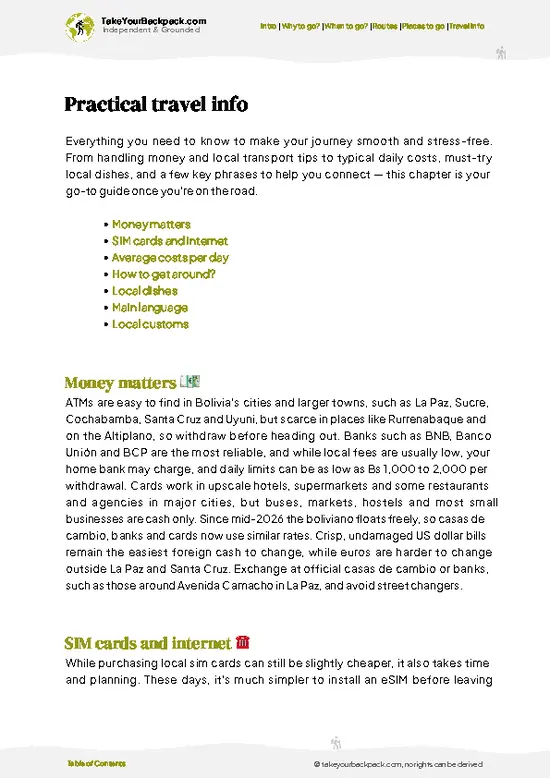
An offline-friendly backpacking guide with optimized travel routes, ranked highlights, transport advice, and the best areas to stay.
example page 0 from our offline Travel Guide for Bolivia
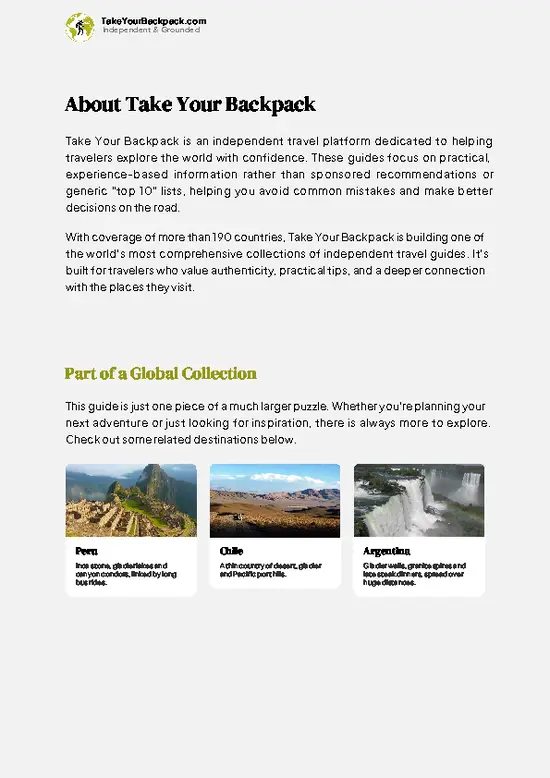
example page 1 from our offline Travel Guide for Bolivia
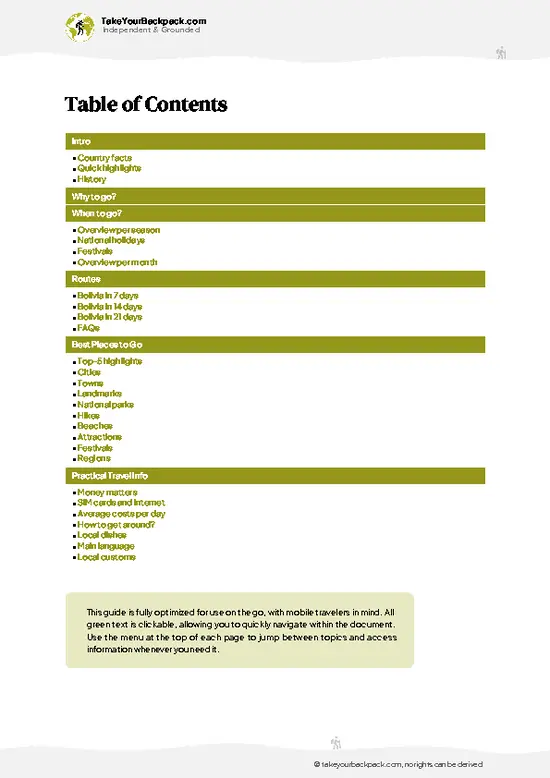
example page 2 from our offline Travel Guide for Bolivia
example page 3 from our offline Travel Guide for Bolivia
example page 4 from our offline Travel Guide for Bolivia
example page 5 from our offline Travel Guide for Bolivia
example page 6 from our offline Travel Guide for Bolivia
example page 7 from our offline Travel Guide for Bolivia
The digital guide (350 pages) contains:
82 highlights, ranked by travel appeal
Optimized 7, 14 & 21-day travel routes
Cities, national parks, landmarks, beaches
How to get around
Offline-friendly for travel without Wi-Fi
👉 Click to see all 30+ guide features

📅 Plan smarter in minutes, not weeks
Month by month travel advice
Festivals & national holidays
Budget expectations

🗺️ Go to the right places, skip the overrated ones
Honest pros & cons of destinations
Top hikes, parks & viewpoints
Lesser-known places most travelers miss
Clear “worth it vs skip it” guidance

🛏️ Travel smoothly without rookie mistakes
Best areas to stay
Transport systems explained simply
Common scams & safety advice
SIM cards, money & practical tips

🌍 Understand the country, not just visit it
Culture & traditions
52 Essential phrases & customs
Festivals worth planning around
Traveler-friendly historical context
Insights that make places more meaningful

📱 Built for real travel conditions
Fully downloadable PDF
Works completely offline
Optimized for phone use
Useful in remote areas & buses
Everything in one place
Save weeks of stressful planning
Get instant access to your full guide. 30‑day money-back guarantee.


By proceeding you agree to our terms.
Sent to your inbox immediately after payment • 100% Secure Checkout
Best Backpacking Travel Advisor 2025 tourism awardBest Backpacking
Travel Advisor
2025
What others say about Take Your Backpack Guides:
⭐⭐⭐⭐⭐
Fantastic, amazing amount of information!
⭐⭐⭐⭐⭐
My goodness this is amazing, it's what I've been looking for hats off too you!
⭐⭐⭐⭐⭐
I think this is absolutely BRILLIANT
⭐⭐⭐⭐
Very complete and informative. It's still missing places, but I gotta to commend you
⭐⭐⭐⭐⭐
This is truly amazing, thank you, can't wait to explore it with my kids!
⭐⭐⭐⭐⭐
Awesome resource, thank you!
⭐⭐⭐⭐⭐
This is amazing! Can't wait to explore the ones I haven't seen
⭐⭐⭐⭐
I love this! Well done, great idea.
⭐⭐⭐⭐⭐
Thanks for taking the time to make this gem!
⭐⭐⭐⭐⭐
This might be the best website I've ever seen.
⭐⭐⭐⭐⭐
Congratulations, and thank you so much for your work; it's incredibly valuable.
⭐⭐⭐⭐
In all seriousness I think you did a great job pointing out the important spots
⭐⭐⭐⭐⭐
10/10 very good
⭐⭐⭐⭐⭐
As someone who's only just starting to visit regularly this is awesome, thank you.
⭐⭐⭐⭐
Thank you very much! I'm going to visit my dad, it's going to be very useful!
⭐⭐⭐⭐⭐
This is really cool! We'll be travelling for the first time and this definitely come in handy.
⭐⭐⭐⭐⭐
You are now our minister of culture, congratulations 👨‍💼
⭐⭐⭐⭐⭐
Just wanted to tell you that this is a pearl! Going to follow your recommendations.
⭐⭐⭐⭐⭐
This is so cool. I'll definitely be using the resource for my travels soon.
⭐⭐⭐⭐⭐
This is very impressive! Good work.
⭐⭐⭐⭐⭐
This is an amazing and informative site. Very well done!

🛏️ Where to stay?Choosing the right base

The Museo de la Catedral de Sucre sits smack in the heart of Sucre’s historic center, and that’s exactly where you want to base yourself. This area is the beating pulse of the city—safe enough to wander at night, packed with cafés and plazas where locals and travelers mingle. It’s social without being overwhelming, which means you’ll find plenty of fellow backpackers without the chaos of a party district.

Staying here means you’re a short stroll from the museum and other colonial gems, so you can soak in the vibe without wasting time or money on taxis. The streets are lined with budget-friendly … read more 👉
The Museo de la Catedral de Sucre sits smack in the heart of Sucre’s historic center, and that’s exactly where you want to base yourself. This area is the beating pulse of the city—safe enough to wander at night, packed with cafés and plazas where locals and travelers mingle. It’s social without being overwhelming, which means you’ll find plenty of fellow backpackers without the chaos of a party district.

Staying here means you’re a short stroll from the museum and other colonial gems, so you can soak in the vibe without wasting time or money on taxis. The streets are lined with budget-friendly eateries and markets, perfect for stretching your bolivianos while tasting authentic flavors. Plus, the altitude and dry air can hit hard, so being close to amenities is a real plus. This neighborhood isn’t just a place to crash—it’s where you start feeling the real Sucre, beyond the postcard shots.

👛 Costs (as of 6 February 2026)Money, prices, and spending tips

The Museo de la Catedral de Sucre charges an entrance fee of 20 Bolivian Bolivianos (Bs) for general admission. An additional 15 Bs is required for the roof tour, which offers panoramic views of the city. Guided tours are available for an extra fee, though the exact amount may vary. Please note that these prices are subject to change, and it's advisable to check the latest information before your visit.

source: wanderlog.com
⚠️ Prices can change and everyone travels differently, so take this as a rough guide. Hope it helps you plan your adventure!

Other Bolivian attractions near Museo de la Catedral de Sucre

Explore more nearby:


💡 Not sure where to go next?
Create a personalized itinerary for Bolivia including Museo de la Catedral de Sucre and the places that fit your trip.

Generate my itinerary

👉 Discover all attractions

Or checkout all Bolivia has to offer (think cities, towns, villages, national parks, hikes, beaches, festivals)
Country photo of Bolivia

We 💚 feedbackKey takeaways before you go

The Museo de la Catedral de Sucre isn’t some polished, crowd-free shrine—it gets busy, especially midday, and the entry fee isn’t exactly pocket change for Bolivia. But here’s the kicker: the raw, centuries-old religious art and colonial relics hit different when you’re standing in the thick of Sucre’s history, away from the usual tourist gloss. It’s a gritty, real slice of culture that rewards patience and curiosity more than flash.

✈️ When did I visit Bolivia?
Bolivia I visited during my half year trip through South and Central America back in 2003

✍️ Help improve this page!
The information on this page is based on my own backpacking experience in Bolivia, supplemented with up-to-date research and feedback from other travelers. Travel details can change, so if you notice anything outdated or incomplete, feel free to let me know.


🙋‍♂️ Give feedback

👋 Meet the founderWho’s Behind Take Your Backpack?

Johan, backpacker and founder of TakeYourBackpackHi, I’m Johan (Netherlands 🇳🇱), the creator of TakeYourBackpack. Over the past decade, I’ve backpacked through 80+ countries across six continents, gaining extensive experience with independent travel, long-term trips, and overland routes.

This site is built on a combination of firsthand travel experience and carefully curated insights from other backpackers. Many guides are based on places I’ve personally visited, while others bring together tips, observations, and practical advice shared by trusted travelers I’ve met along the way.

The goal is to provide realistic, experience-driven guidance — not generic itineraries — so you can explore destinations with better context, clearer expectations, and more confidence.

Get full Bolivia guide •
Instant download • 82 highlights • Full Offline guide