×

Bolivia🇧🇴 | attractionsTeatro Gran Mariscal Sucreopera house, neoclassical façade, performance venue | things to do and best time to go

Explore Teatro Municipal Alberto Saavedra PérezExplore Copacabana Beach

Backpacking in Teatro Gran Mariscal Sucre
👀 For curious travelersattraction ranked #15
By Johan Kruseman 🇳🇱 | Updated September 4, 2026

Here’s what nobody tells you until you’re standing there: Teatro Gran Mariscal Sucre is one of the rare Bolivian landmarks where you can actually walk up and snag a ticket last minute—no weeks-ahead booking, no elbowing through selfie-stick mobs. You’ll find it in Sucre, the country’s constitutional capital, tucked into the city’s historic core where colonial facades and student energy collide. Backpackers usually skip it, chasing salt flats or jungle treks, but that’s their loss. The theater itself is a neoclassical stunner, sure, but the real punch comes when you’re inside—locals dressed up for a night out, the orchestra tuning up, and that electric, communal hush before the curtain rises. It’s not cheap by Bolivian standards, but it’s a fraction of what you’d pay for a similar night in Europe or North America. No, you won’t get Machu Picchu-level adrenaline, but you’ll get something rarer: a front-row seat to Bolivia’s living, breathing culture, minus the circus.

Discover everything you want to know in the 📖 Bolivia Travel Guide.


Get your Bolivia guide
82 ranked highlights, routes & tips, works offline (346 pages)
Loading the map 🌍
CLICK TO FILTER
cities
towns
landmarks
national parks
hikes
beaches
attractions
festivals
regions
SHOW COUNTRY’S BESTSHOW ALL

✨ Why go?
Ranked #15 attraction in Bolivia
The unique appeal for travelers

The Teatro Gran Mariscal Sucre in Bolivia isn’t just another pretty building to snap for your feed—it’s a heavyweight in the country’s cultural ring. Yes, it draws crowds, especially during performances, and the ticket prices can feel like a pinch compared to Bolivia’s usual backpacker budget. But here’s the kicker: this theater is a living, breathing monument to Bolivia’s artistic soul and political history. It’s named after Antonio José de Sucre, a key figure in South America’s fight for independence, so stepping inside feels like walking through a chapter of revolutionary grit.

Backpackers who make the detour aren’t just chasing aesthetics; they’re chasing a milestone. The theater’s architecture is a bold mix of neoclassical and local styles, a visual story of Bolivia’s layered identity. … read more 👉
The Teatro Gran Mariscal Sucre in Bolivia isn’t just another pretty building to snap for your feed—it’s a heavyweight in the country’s cultural ring. Yes, it draws crowds, especially during performances, and the ticket prices can feel like a pinch compared to Bolivia’s usual backpacker budget. But here’s the kicker: this theater is a living, breathing monument to Bolivia’s artistic soul and political history. It’s named after Antonio José de Sucre, a key figure in South America’s fight for independence, so stepping inside feels like walking through a chapter of revolutionary grit.

Backpackers who make the detour aren’t just chasing aesthetics; they’re chasing a milestone. The theater’s architecture is a bold mix of neoclassical and local styles, a visual story of Bolivia’s layered identity. Catching a show here means immersing yourself in a scene where traditional Andean music and contemporary theater collide—an adrenaline rush for anyone who craves authentic cultural exchange over tourist fluff. It’s a checkpoint on the Bolivia route that separates the casual visitor from the traveler who’s really paying attention. The effort to get a ticket and navigate the crowds pays off with an experience that’s raw, real, and deeply rooted in the country’s heartbeat.
Want to include Teatro Gran Mariscal Sucre in your Bolivia route?
Create a personalized Bolivia itinerary that includes Teatro Gran Mariscal Sucre and the places that fit your trip — based on your travel style, budget, and available time. Get your route in seconds.

Generate my trip

💡 HighlightsPlaces and moments you shouldn't skip

1. The Main Hall’s Acoustic Powerhouse
Let’s get real: most “historic theaters” are more about the Instagram marble than the actual show. Not here. The main hall of Teatro Gran Mariscal Sucre is a living, breathing acoustic beast. The sound doesn’t just reach you; it wraps around you, whether you’re in the front row or up in the gods. This isn’t just good for opera snobs—rock bands, folk ensembles, and even the odd political rally all sound like they’re happening in your own ribcage. If you’ve ever sat through a muffled concert in a “pretty” theater, you’ll know why this matters.


2. The Balcony Scene—Literally
Forget velvet ropes and “VIP” upcharges. The balconies here are democratic, and they’re where the real action is. You get a bird’s-eye view of the stage, but also of the audience—a … read more 👉
1. The Main Hall’s Acoustic Powerhouse
Let’s get real: most “historic theaters” are more about the Instagram marble than the actual show. Not here. The main hall of Teatro Gran Mariscal Sucre is a living, breathing acoustic beast. The sound doesn’t just reach you; it wraps around you, whether you’re in the front row or up in the gods. This isn’t just good for opera snobs—rock bands, folk ensembles, and even the odd political rally all sound like they’re happening in your own ribcage. If you’ve ever sat through a muffled concert in a “pretty” theater, you’ll know why this matters.


2. The Balcony Scene—Literally
Forget velvet ropes and “VIP” upcharges. The balconies here are democratic, and they’re where the real action is. You get a bird’s-eye view of the stage, but also of the audience—a cross-section of Sucre’s society, from suited officials to students in jeans. The energy up here is electric, especially during a packed festival night. If you want to feel the pulse of the city, skip the orchestra seats and head for the upper levels.


3. The Local Talent Showcases
This isn’t a museum for imported acts. The theater is a launchpad for Bolivian talent—think Andean fusion bands, indigenous dance troupes, and experimental theater that actually takes risks. You won’t get a sanitized “cultural show” here. You’ll get raw, sometimes chaotic, always passionate performances that say something about Bolivia right now. If you’re tired of tourist-bait folklore, this is your antidote.


4. The Pre-Show Street Buzz
Here’s the secret sauce: the theater is smack in the heart of Sucre, and the real show starts outside. Vendors hawk salteñas and fresh juice, musicians busk on the steps, and the crowd spills into the plaza. It’s a full-sensory warm-up act—smells, sounds, and people-watching that’s as entertaining as anything on the bill. Don’t rush in; linger outside and soak up the anticipation.


5. The Annual Festival Nights
If you can time your visit for one of the city’s big festivals—especially the Festival Internacional de la Cultura—you’re in for a marathon of performances that push the theater to its limits. The programming is ambitious, the crowds are wild, and the city feels like it’s running on pure adrenaline. It’s the one time when the hype matches the reality. This one’s my personal favorite—it’s the rare moment when a historic venue feels absolutely current.


6. The Architecture’s Honest Grandeur
No, it’s not Versailles. But the neoclassical façade and the horseshoe-shaped interior have a kind of unpretentious elegance. You feel the weight of history, but you’re not crushed by it. The details—faded murals, creaky wooden seats, the patina of a thousand performances—remind you this place is alive, not embalmed. It’s a theater that’s earned its scars, and that’s what gives it soul.
Spotted a mistake or missing something? Contact us.

Things to do around Teatro Gran Mariscal Sucre

Ratings based on Tripadvisor reviews. When you book through this link, you support our work at no extra cost to you.

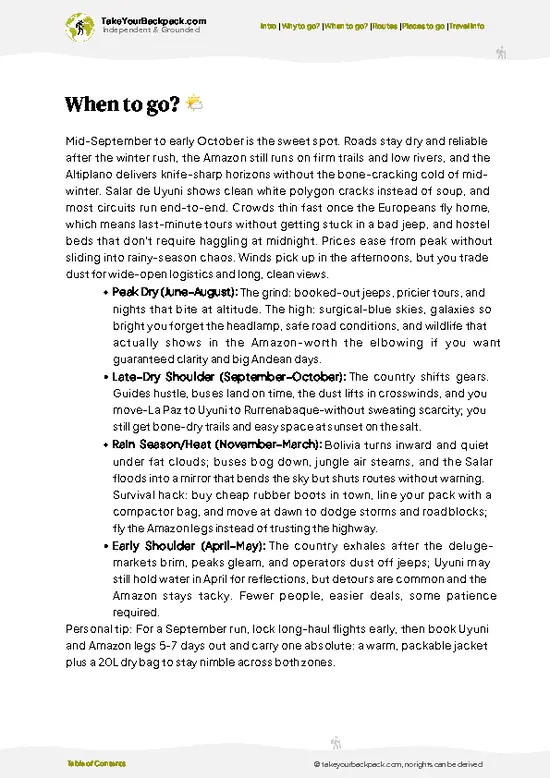
🌤️ When to go?Weather, crowds, and seasonal trade-offs


  • Topic: Weather – La Paz’s dry season from May to October offers the clearest skies and least rain, making it the best window for comfortable visits to Teatro Gran Mariscal Sucre. The wet season, November through March, brings frequent showers that can dampen your plans and the city’s vibe.

  • Topic: Temperature – Expect chilly mornings and evenings year-round. During the dry season, daytime highs hover around 15-18°C (59-64°F), dropping to near freezing at night. The wet season is slightly warmer but more humid, which can feel heavier on your energy.

  • Topic: Daylight Hours – From June to August, daylight is shortest, roughly 10 hours, so plan your theater visits and city explorations accordingly. Longer days in December and January stretch to about 13 hours, giving you more time to soak
read more 👉

  • Topic: Weather – La Paz’s dry season from May to October offers the clearest skies and least rain, making it the best window for comfortable visits to Teatro Gran Mariscal Sucre. The wet season, November through March, brings frequent showers that can dampen your plans and the city’s vibe.

  • Topic: Temperature – Expect chilly mornings and evenings year-round. During the dry season, daytime highs hover around 15-18°C (59-64°F), dropping to near freezing at night. The wet season is slightly warmer but more humid, which can feel heavier on your energy.

  • Topic: Daylight Hours – From June to August, daylight is shortest, roughly 10 hours, so plan your theater visits and city explorations accordingly. Longer days in December and January stretch to about 13 hours, giving you more time to soak in the surroundings.

  • Topic: Crowds – Tourist numbers peak during the dry season, especially July and August, when festivals and events fill the calendar. Expect more locals and travelers around the theater, which can add buzz but also means booking ahead is a must.

  • Topic: Seasonal Activities – The city’s cultural calendar peaks in June and July with events that spill into the theater, offering a richer experience if you time it right. Off-season visits miss some of this but gain quieter, more intimate access.

  • Topic: Price Fluctuations – Accommodation and flights spike during the dry season and festival months. Visiting in shoulder months like April or October can save you money without sacrificing too much on weather or experience.


Pro-tip: Aim for late April or early October to dodge crowds and high prices while still catching decent weather—perfect for soaking in Teatro Gran Mariscal Sucre without the tourist crush.


source: climatestotravel.comJANJanuary: fair for travelingFEBFebruary: fair for travelingMARMarch: fair for travelingAPRApril: highly recommended for travelingMAYMay: excellent for travelingJUNJune: excellent for travelingJULJuly: highly recommended for travelingAUGAugust: highly recommended for travelingSEPSeptember: excellent for travelingOCTOctober: highly recommended for travelingNOVNovember: fair for travelingDECDecember: fair for traveling
when-to-go

✈️ The backpacker research shortcutBolivia Travel Guide

An offline-friendly backpacking guide with optimized travel routes, ranked highlights, transport advice, and the best areas to stay.
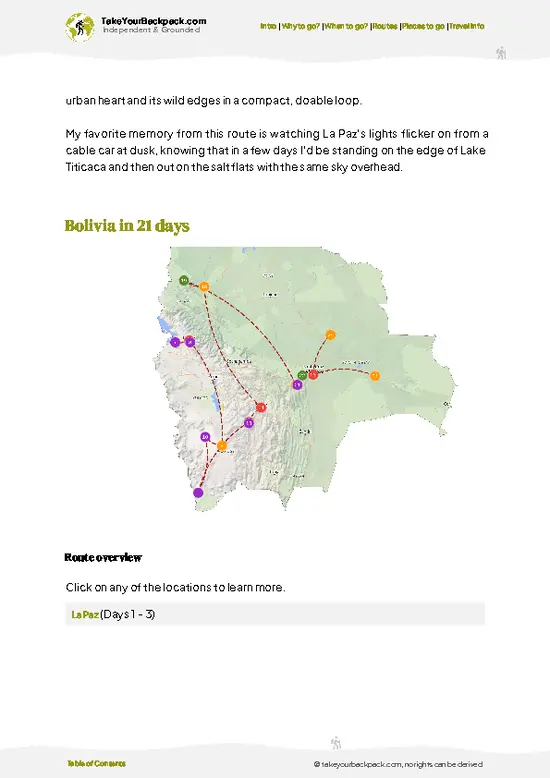
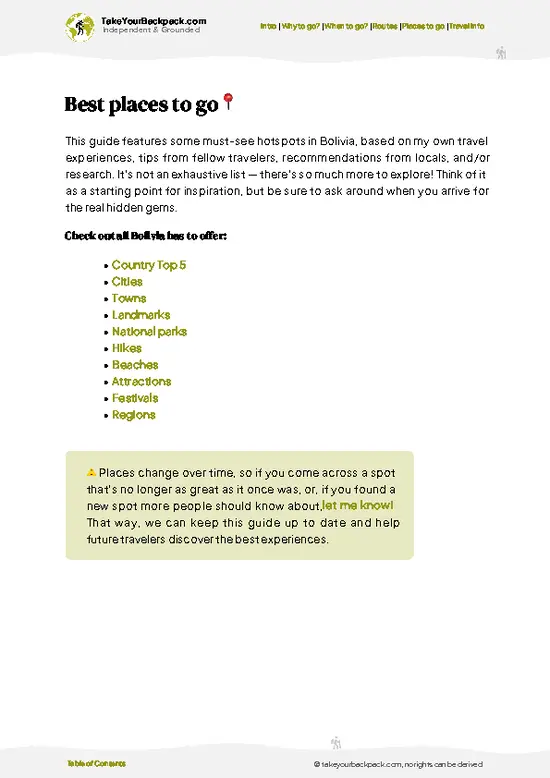
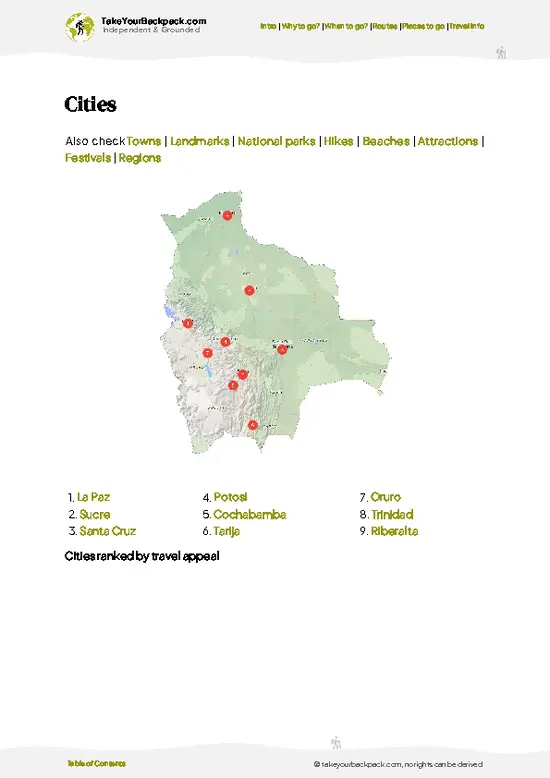
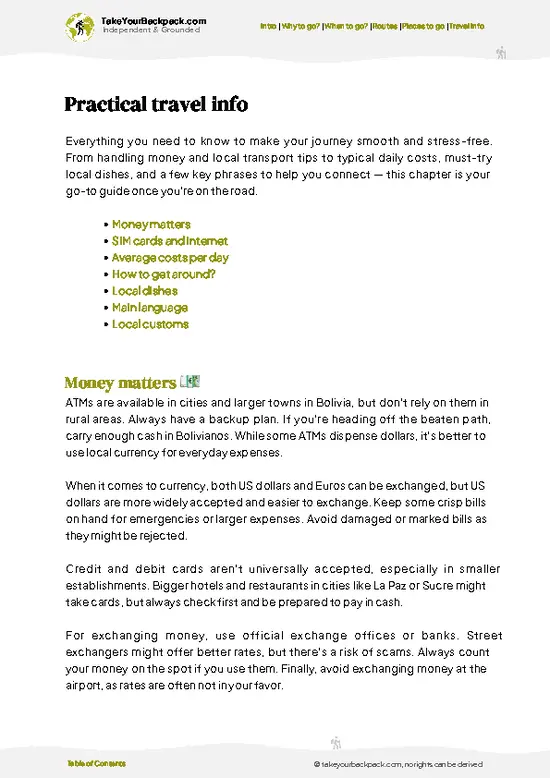
example page 0 from our offline Travel Guide for Bolivia
example page 1 from our offline Travel Guide for Bolivia
example page 2 from our offline Travel Guide for Bolivia
example page 3 from our offline Travel Guide for Bolivia
example page 4 from our offline Travel Guide for Bolivia
example page 5 from our offline Travel Guide for Bolivia
example page 6 from our offline Travel Guide for Bolivia
example page 7 from our offline Travel Guide for Bolivia
The digital guide (346 pages) contains:
82 highlights, ranked by travel appeal
Optimized 7, 14 & 21-day travel routes
Cities, national parks, landmarks, beaches
How to get around
Offline-friendly for travel without Wi-Fi
👉 Click to see all 30+ guide features

📅 Plan smarter in minutes, not weeks
Month by month travel advice
Festivals & national holidays
Budget expectations

🗺️ Go to the right places, skip the overrated ones
Honest pros & cons of destinations
Top hikes, parks & viewpoints
Lesser-known places most travelers miss
Clear “worth it vs skip it” guidance

🛏️ Travel smoothly without rookie mistakes
Best areas to stay
Transport systems explained simply
Common scams & safety advice
SIM cards, money & practical tips

🌍 Understand the country, not just visit it
Culture & traditions
52 Essential phrases & customs
Festivals worth planning around
Traveler-friendly historical context
Insights that make places more meaningful

📱 Built for real travel conditions
Fully downloadable PDF
Works completely offline
Optimized for phone use
Useful in remote areas & buses
Everything in one place
Save weeks of stressful planning
Get instant access to your full guide. 30‑day money-back guarantee.
+ Add another guide for just US$7.80

By proceeding you agree to our terms.
Sent to your inbox immediately after payment • 100% Secure Checkout
Best Backpacking Travel Advisor 2025 tourism awardBest Backpacking
Travel Advisor
2025
What others say about Take Your Backpack Guides:
⭐⭐⭐⭐⭐
Fantastic, amazing amount of information!
⭐⭐⭐⭐⭐
My goodness this is amazing, it's what I've been looking for hats off too you!
⭐⭐⭐⭐⭐
I think this is absolutely BRILLIANT
⭐⭐⭐⭐
Very complete and informative. It's still missing places, but I gotta to commend you
⭐⭐⭐⭐⭐
This is truly amazing, thank you, can't wait to explore it with my kids!
⭐⭐⭐⭐⭐
Awesome resource, thank you!
⭐⭐⭐⭐⭐
This is amazing! Can't wait to explore the ones I haven't seen
⭐⭐⭐⭐
I love this! Well done, great idea.
⭐⭐⭐⭐⭐
Thanks for taking the time to make this gem!
⭐⭐⭐⭐⭐
This might be the best website I've ever seen.
⭐⭐⭐⭐⭐
Congratulations, and thank you so much for your work; it's incredibly valuable.
⭐⭐⭐⭐
In all seriousness I think you did a great job pointing out the important spots
⭐⭐⭐⭐⭐
10/10 very good
⭐⭐⭐⭐⭐
As someone who's only just starting to visit regularly this is awesome, thank you.
⭐⭐⭐⭐
Thank you very much! I'm going to visit my dad, it's going to be very useful!
⭐⭐⭐⭐⭐
This is really cool! We'll be travelling for the first time and this definitely come in handy.
⭐⭐⭐⭐⭐
You are now our minister of culture, congratulations 👨‍💼
⭐⭐⭐⭐⭐
Just wanted to tell you that this is a pearl! Going to follow your recommendations.
⭐⭐⭐⭐⭐
This is so cool. I'll definitely be using the resource for my travels soon.
⭐⭐⭐⭐⭐
This is very impressive! Good work.
⭐⭐⭐⭐⭐
This is an amazing and informative site. Very well done!

🛏️ Where to stay?Best areas and accommodation options

The area around Teatro Gran Mariscal Sucre in La Paz is a magnet for backpackers who want to be in the thick of the city’s pulse without getting swallowed by chaos. The San Pedro neighborhood, just a few blocks away, is where you want to be. It’s safe enough to wander at night, packed with budget-friendly spots where solo travelers naturally gravitate. You’ll find a mix of lively cafés, street food stalls, and small plazas where locals and backpackers collide—perfect for striking up conversations or just soaking in the city’s raw vibe. It’s not polished or touristy, which means you get the real … read more 👉
The area around Teatro Gran Mariscal Sucre in La Paz is a magnet for backpackers who want to be in the thick of the city’s pulse without getting swallowed by chaos. The San Pedro neighborhood, just a few blocks away, is where you want to be. It’s safe enough to wander at night, packed with budget-friendly spots where solo travelers naturally gravitate. You’ll find a mix of lively cafés, street food stalls, and small plazas where locals and backpackers collide—perfect for striking up conversations or just soaking in the city’s raw vibe. It’s not polished or touristy, which means you get the real La Paz: gritty, vibrant, and full of character. Skip the overly commercial zones; here, you’re close enough to the theater and the action but far enough to avoid the tourist circus.

👛 Costs (as of 4 September 2026)What things cost and how to budget

Entradas para eventos en el Teatro Gran Mariscal Sucre suelen costar entre 30 y 40 bolivianos (aproximadamente €4 a €5).

source: superticket.bo
⚠️ Prices can change and everyone travels differently, so take this as a rough guide. Hope it helps you plan your adventure!

FAQTraveler FAQ

Visiting Teatro Gran Mariscal Sucre typically requires about 1 to 2 hours to fully explore the main auditorium, lobby, and any ongoing exhibitions or performances. Plan extra time if attending a show, which can last 1.5 to 3 hours.
Yes, Teatro Gran Mariscal Sucre is worth the entrance fee, which is usually around 20-30 Bolivianos. The theater offers a rich cultural experience with impressive architecture and regular performances showcasing Bolivian arts.
To get to Teatro Gran Mariscal Sucre, take local buses or taxis to the city center of Sucre, Bolivia. The theater is centrally located near Plaza 25 de Mayo, making it accessible by foot from most downtown accommodations.
⚠️ Things can change over time, so always validate details locally before you go.

Other Bolivian attractions near Teatro Gran Mariscal Sucre

Explore more nearby:


💡 Not sure where to go next?
Create a personalized itinerary for Bolivia including Teatro Gran Mariscal Sucre and the places that fit your trip.

Generate my itinerary

👉 Discover all attractions

Or checkout all Bolivia has to offer (think cities, towns, villages, national parks, hikes, beaches, festivals)
Country photo of Bolivia

We 💚 feedbackWhat to keep in mind

Teatro Gran Mariscal Sucre isn’t some polished tourist magnet—it’s a gritty slice of La Paz’s cultural heartbeat. The real draw? Catching a local performance here feels like stepping into the city’s soul, raw and unfiltered. But don’t expect luxury seating or English subtitles; the place can be cramped and the shows are mostly in Spanish. If you’re after authentic Bolivian theater and don’t mind rough edges, this spot delivers something you won’t find in guidebooks.

✈️ When did I visit Bolivia?
Bolivia I visited during my half year trip through South and Central America back in 2003

✍️ Help improve this page!
The information on this page is based on my own backpacking experience in Bolivia, supplemented with up-to-date research and feedback from other travelers. Travel details can change, so if you notice anything outdated or incomplete, feel free to let me know.


🙋‍♂️ Give feedback

👋 Meet the founderWho’s Behind Take Your Backpack?

Johan, backpacker and founder of TakeYourBackpackHi, I’m Johan (Netherlands 🇳🇱), the creator of TakeYourBackpack. Over the past decade, I’ve backpacked through 80+ countries across six continents, gaining extensive experience with independent travel, long-term trips, and overland routes.

This site is built on a combination of firsthand travel experience and carefully curated insights from other backpackers. Many guides are based on places I’ve personally visited, while others bring together tips, observations, and practical advice shared by trusted travelers I’ve met along the way.

The goal is to provide realistic, experience-driven guidance — not generic itineraries — so you can explore destinations with better context, clearer expectations, and more confidence.

Get full Bolivia guide •
Instant download • 82 highlights • Full Offline guide