×

Bolivia🇧🇴 | national parksPilón Lajas Biosphere ReserveBeni River boats, Tsimane villages, lodge stays, spider monkeys | things to do and best time to go

Explore Isiboro Sécure National ParkExplore Apolobamba Integrated Management Natural Area

Backpacking in Pilón Lajas Biosphere Reserve
👍 Recommendednational park ranked #10
By Johan Kruseman 🇳🇱 | Updated October 19, 2026

Most travelers weigh a cheap, self-arranged trip from Rurrenabaque against a community-run lodge package, and the lodge wins if you want to see anything beyond the river edge. Pilón Lajas Biosphere Reserve sits in the northwest of Bolivia, in the Beni and La Paz departments, upriver from Rurrenabaque. Forget road trails; boats are your highway, and the Beni River slides past forest walls with capybaras on the banks. Wildlife is the draw, though sightings take patience, and independent hiking is limited. I expected silence. Instead, at dusk, howler monkeys roared so loudly from the canopy that I thought a truck was idling nearby. Crowds are thin, the vibe is quiet and rustic. Your first day could mean a dugout canoe ride, a jungle walk with a Tsimane or Mosetén guide, and hammock time by nightfall.

Discover everything you want to know in the 📖 Bolivia Travel Guide.


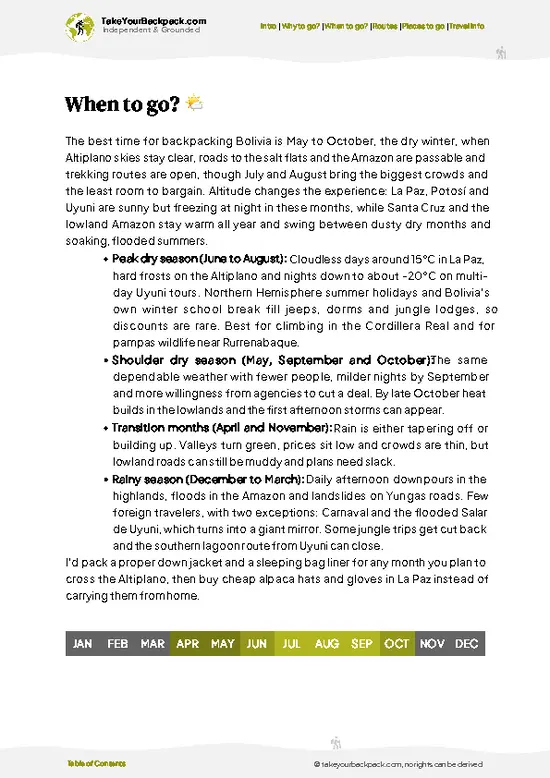
example page 0 from our offline Travel Guide for Bolivia
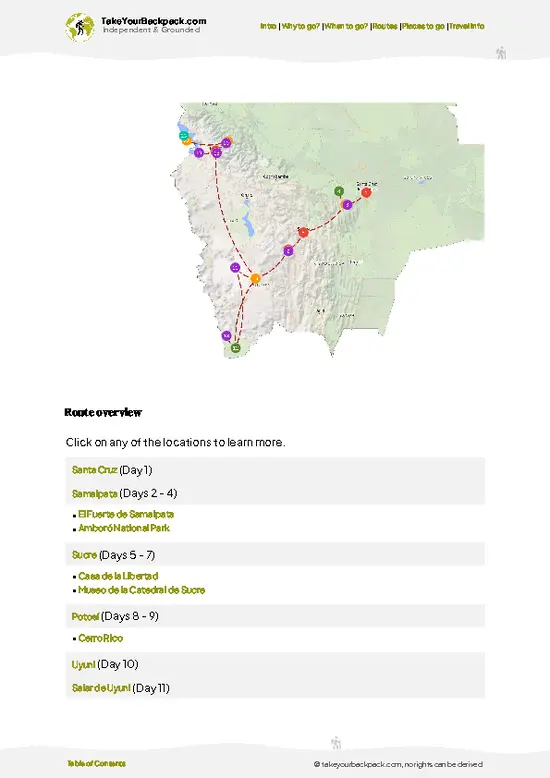
example page 1 from our offline Travel Guide for Bolivia
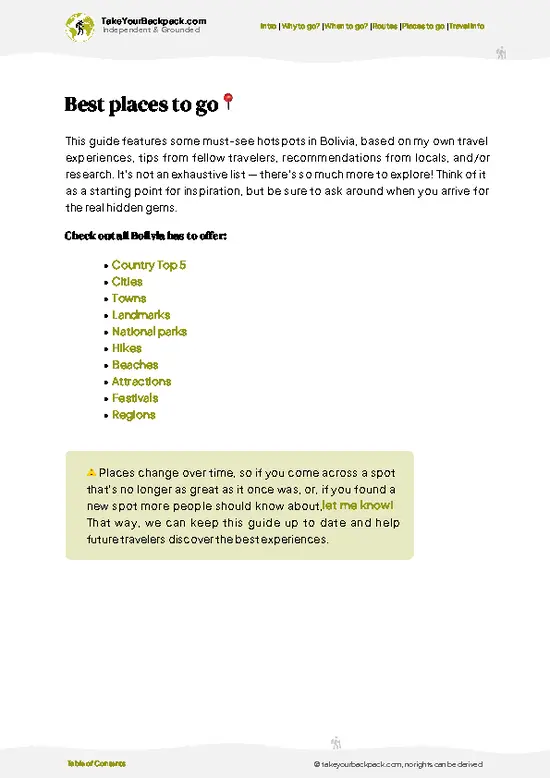
example page 2 from our offline Travel Guide for Bolivia
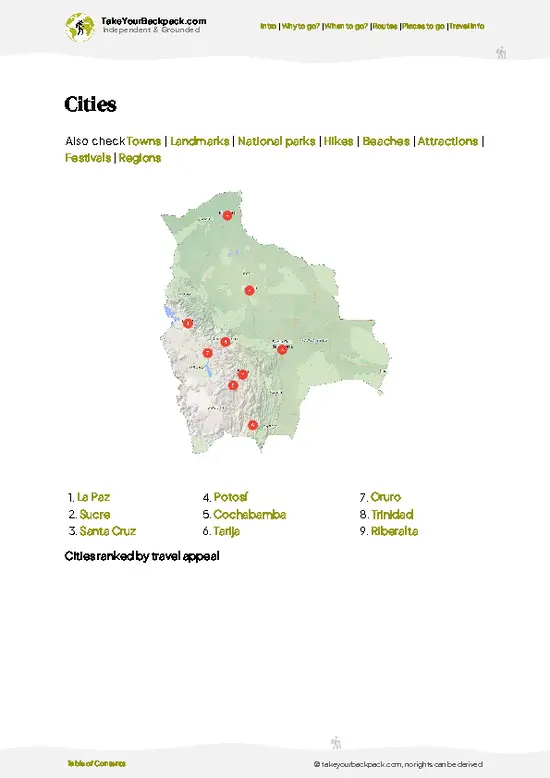
example page 3 from our offline Travel Guide for Bolivia
example page 4 from our offline Travel Guide for Bolivia
example page 5 from our offline Travel Guide for Bolivia
example page 6 from our offline Travel Guide for Bolivia
example page 7 from our offline Travel Guide for Bolivia
Loading the map 🌍
CLICK TO FILTER
cities
towns
landmarks
national parks
hikes
beaches
attractions
festivals
regions
SHOW COUNTRY’S BESTSHOW ALL

✨ Why go?
Ranked #10 national park in Bolivia
Why Pilón Lajas Biosphere Reserve should be on your travel list

Backpackers pick Pilón Lajas Biosphere Reserve because it gives the Amazon edge without the price and crowds of Madidi's most advertised routes. The reserve is the homeland of the Tsimane and Mosetén communities, and the best lodges are run by them, so your money lands with the people who live here. Guides read tracks, name medicinal plants and call out birds you would never spot alone. Walking solo is not really the model. This is a guided place, and that suits anyone who wants depth over mileage. The other pull is wildlife density: spider monkeys, tapirs, caimans and macaws share a protected forest that spans mountains to lowland rainforest. Add the slow canoe travel along the Quiquibey River, and you have an expedition feel that is still doable for first-timers.

💡 HighlightsEssential experiences to have while exploring Pilón Lajas Biosphere Reserve

  1. Beni River canoe trip: The main way in. Long wooden boats glide past sandbanks where capybaras, caimans and turtles sun themselves, with forested hills rising behind.
  2. Lodge forest walks: Guided trails through rainforest where guides point out strangler figs, tracks and medicinal plants. Early walks give the best chance of monkeys.
  3. Quiquibey River: A remote tributary with some of the reserve's quietest stretches and good odds for large mammals and river birds.
  4. Tsimane and Mosetén communities: Visit villages to see traditional crafts, palm-thatch building and how people use the forest. Go with a guide or lodge who arranges it respectfully.
  5. Macaw and parrot clay licks: Flocks gather on riverbank clay at dawn, a loud, colorful show worth a short early boat ride.
  6. Night walks and canoe spotting: After
… read more 👉
  1. Beni River canoe trip: The main way in. Long wooden boats glide past sandbanks where capybaras, caimans and turtles sun themselves, with forested hills rising behind.
  2. Lodge forest walks: Guided trails through rainforest where guides point out strangler figs, tracks and medicinal plants. Early walks give the best chance of monkeys.
  3. Quiquibey River: A remote tributary with some of the reserve's quietest stretches and good odds for large mammals and river birds.
  4. Tsimane and Mosetén communities: Visit villages to see traditional crafts, palm-thatch building and how people use the forest. Go with a guide or lodge who arranges it respectfully.
  5. Macaw and parrot clay licks: Flocks gather on riverbank clay at dawn, a loud, colorful show worth a short early boat ride.
  6. Night walks and canoe spotting: After dark, flashlights pick out caiman eyes, frogs, insects and sometimes nocturnal mammals.
  7. Spider and howler monkey troops: Heard before seen, they move through the canopy near lodges and offer the reserve's most reliable wildlife encounter.
Seeing all of this properly takes three to five days.
Spotted a mistake or missing something? Contact us.

Things to do near Pilón Lajas Biosphere Reserve

Ratings based on Tripadvisor reviews. When you book through this link, you support our work at no extra cost to you.

🌤️ When to go?When to go for the best experience

May to September is the window for Pilón Lajas, when river travel and forest walks are most dependable.
  • Dry Season (May to September): Days reach 26 to 32°C (79 to 90°F), nights can fall to 15 to 18°C (59 to 64°F) during cold fronts called surazos. Trails are firm and rivers are navigable. Prices for community lodge tours rise a little and Rurrenabaque fills up in July and August.
  • Wet Season (November to March): Expect heavy humidity, with highs around 30 to 34°C (86 to 93°F) and heavy afternoon downpours. Trails turn to mud, rivers run high and brown, and some community trips are cut short. Few travelers, so lodges are easy to book.
  • Shoulder Months (April, October): Rain is patchy and crowds thin. Daylight stays at roughly 11 to 13 hours all year.
Book river trips a few days ahead in July and August, and stay flexible after a surazo.

source: climatestotravel.comJANJanuary: fair for travelingFEBFebruary: fair for travelingMARMarch: fair for travelingAPRApril: fair for travelingMAYMay: highly recommended for travelingJUNJune: excellent for travelingJULJuly: excellent for travelingAUGAugust: excellent for travelingSEPSeptember: excellent for travelingOCTOctober: excellent for travelingNOVNovember: fair for travelingDECDecember: fair for traveling
when-to-go

✈️ The backpacker research shortcutBolivia Travel Guide

An offline-friendly backpacking guide with optimized travel routes, ranked highlights, transport advice, and the best areas to stay.
example page 0 from our offline Travel Guide for Bolivia
example page 1 from our offline Travel Guide for Bolivia
example page 2 from our offline Travel Guide for Bolivia
example page 3 from our offline Travel Guide for Bolivia
example page 4 from our offline Travel Guide for Bolivia
example page 5 from our offline Travel Guide for Bolivia
example page 6 from our offline Travel Guide for Bolivia
example page 7 from our offline Travel Guide for Bolivia
The digital guide (262 pages) contains:
✅ 76 highlights, ranked by travel appeal
✅ Optimized 7, 14 & 21-day travel routes
✅ Cities, national parks, landmarks, beaches
✅ How to get around
✅ Offline-friendly for travel without Wi-Fi
👉 Click to see all 30+ guide features

📅 Plan smarter in minutes, not weeks
✅ Month by month travel advice
✅ Festivals & national holidays
✅ Budget expectations

🗺️ Go to the right places, skip the overrated ones
✅ Honest pros & cons of destinations
✅ Top hikes, parks & viewpoints
✅ Lesser-known places most travelers miss
✅ Clear “worth it vs skip it” guidance

🛏️ Travel smoothly without rookie mistakes
✅ Best areas to stay
✅ Transport systems explained simply
✅ Common scams & safety advice
✅ SIM cards, money & practical tips

🌍 Understand the country, not just visit it
✅ Culture & traditions
✅ 52 Essential phrases & customs
✅ Festivals worth planning around
✅ Traveler-friendly historical context
✅ Insights that make places more meaningful

📱 Built for real travel conditions
✅ Fully downloadable PDF
✅ Works completely offline
✅ Optimized for phone use
✅ Useful in remote areas & buses
✅ Everything in one place
Stop searching, start planning
Get instant access to your full guide. 30‑day money-back guarantee.
+ Add another guide for just

By proceeding you agree to our terms.
Sent to your inbox immediately after payment • 100% Secure Checkout
Best Backpacking Travel Advisor 2025 tourism awardBest Backpacking
Travel Advisor
2025
What others say about Take Your Backpack Guides:
⭐⭐⭐⭐⭐
Fantastic, amazing amount of information!
⭐⭐⭐⭐⭐
My goodness this is amazing, it's what I've been looking for hats off too you!
⭐⭐⭐⭐⭐
I think this is absolutely BRILLIANT
⭐⭐⭐⭐
Very complete and informative. It's still missing places, but I gotta to commend you
⭐⭐⭐⭐⭐
This is truly amazing, thank you, can't wait to explore it with my kids!
⭐⭐⭐⭐⭐
Awesome resource, thank you!
⭐⭐⭐⭐⭐
This is amazing! Can't wait to explore the ones I haven't seen
⭐⭐⭐⭐
I love this! Well done, great idea.
⭐⭐⭐⭐⭐
Thanks for taking the time to make this gem!
⭐⭐⭐⭐⭐
This might be the best website I've ever seen.
⭐⭐⭐⭐⭐
Congratulations, and thank you so much for your work; it's incredibly valuable.
⭐⭐⭐⭐
In all seriousness I think you did a great job pointing out the important spots
⭐⭐⭐⭐⭐
10/10 very good
⭐⭐⭐⭐⭐
As someone who's only just starting to visit regularly this is awesome, thank you.
⭐⭐⭐⭐
Thank you very much! I'm going to visit my dad, it's going to be very useful!
⭐⭐⭐⭐⭐
This is really cool! We'll be travelling for the first time and this definitely come in handy.
⭐⭐⭐⭐⭐
You are now our minister of culture, congratulations 👨‍💼
⭐⭐⭐⭐⭐
Just wanted to tell you that this is a pearl! Going to follow your recommendations.
⭐⭐⭐⭐⭐
This is so cool. I'll definitely be using the resource for my travels soon.
⭐⭐⭐⭐⭐
This is very impressive! Good work.
⭐⭐⭐⭐⭐
This is an amazing and informative site. Very well done!

🛏️ Where to stay?Choosing the right base

Rurrenabaque, about 10 to 20 minutes by boat or road from the reserve edge, is where most backpackers sleep. Hostels run US$7 to 15 for a dorm bed, and many have hammocks, pools and tour desks. Private rooms with fan or air-conditioning cost US$20 to 40.
Inside the reserve, the choice is community-run ecolodges owned by the Tsimane and Mosetene people. Chalalán sits on Lake Chalalán in neighboring Madidi, so look instead at Mapajo and the Pilón Lajas community lodges reached by boat up the Beni and Quiquibey rivers. Expect US$40 to 80 per person per day with meals and guides. Basic cabins or hammocks … read more 👉
Rurrenabaque, about 10 to 20 minutes by boat or road from the reserve edge, is where most backpackers sleep. Hostels run US$7 to 15 for a dorm bed, and many have hammocks, pools and tour desks. Private rooms with fan or air-conditioning cost US$20 to 40.
Inside the reserve, the choice is community-run ecolodges owned by the Tsimane and Mosetene people. Chalalán sits on Lake Chalalán in neighboring Madidi, so look instead at Mapajo and the Pilón Lajas community lodges reached by boat up the Beni and Quiquibey rivers. Expect US$40 to 80 per person per day with meals and guides. Basic cabins or hammocks under a roof are the norm, with solar power and limited hot water.
San Borja, on the Yucumo road side, has simple lodging at US$8 to 15 and is useful if you arrive overland from La Paz. Most visitors, though, set out from Rurrenabaque on guided multi-day trips.

👛 Costs (as of 19 October 2026)Travel costs and budget guide for Pilón Lajas Biosphere Reserve

A realistic budget for Pilón Lajas is about US$63 to 118 per day when you join a guided trip from Rurrenabaque.
CategoryBudget RangeLocal Reality
Entrance and Community FeesUS$7 to 15Usually bundled into tour prices, paid in bolivianos.
Accommodation (high season)US$10 to 25Rurrenabaque hostel or basic community cabin.
Guided ToursUS$35 to 55Daily share of a multi-day jungle or river trip with guide and boat.
Local TransportUS$3 to 8Moto-taxis in town, shared boat or road transfers to put-in points.
Food and SuppliesUS$8 to 15Set lunches in town cost US$3 to 5; meals included on tours.
Total Daily BudgetUS$63 to 118Typical total sits near US$90 for most backpackers.
⚠️ Prices can change and everyone travels differently, so take this as a rough guide. Hope it helps you plan your adventure!

🥾 TrailsPlan your hike in Pilón Lajas Biosphere Reserve: routes, terrain, and sights

Pilón Lajas Biosphere Reserve has few marked, self-guided trails; most walking happens on lodge networks led by local guides. Terrain is flat to rolling rainforest, muddy after rain, with root tangles and small stream crossings.
  • Lodge forest loops: Short guided walks of one to three hours, easy to moderate, through primary forest with monkeys, birds and medicinal plants.
  • Full-day jungle treks: Five to seven hours, moderate, with humidity and insects as the main challenge. Expect creek crossings and slow, quiet tracking.
  • River-and-trail combinations: Boat in, hike inland, and return by canoe. This
… read more 👉
Pilón Lajas Biosphere Reserve has few marked, self-guided trails; most walking happens on lodge networks led by local guides. Terrain is flat to rolling rainforest, muddy after rain, with root tangles and small stream crossings.
  • Lodge forest loops: Short guided walks of one to three hours, easy to moderate, through primary forest with monkeys, birds and medicinal plants.
  • Full-day jungle treks: Five to seven hours, moderate, with humidity and insects as the main challenge. Expect creek crossings and slow, quiet tracking.
  • River-and-trail combinations: Boat in, hike inland, and return by canoe. This is the usual format for multi-day stays.
  • Night walks: One to two hours, easy, for frogs, spiders and the odd mammal.
  • Wildlife: Spider and howler monkeys, capybaras, caimans, tapirs, jaguars (rarely seen), macaws and hundreds of bird species.
Pilón Lajas Biosphere Reserve is reached from Rurrenabaque, the gateway town with flights from La Paz and long bus rides. From there, boats take you upriver to community lodges, and arranging a guide is standard. Crowds are minimal. Entry usually goes through a small reserve or community fee, paid in bolivianos, and often bundled into lodge or tour prices. Bring good boots, repellent and rain gear.
⚠️ Hiking info can sometimes be outdated or inaccurate. Before you hit the trail, check the latest conditions with locals. If you do spot anything that's off, I'd love to hear from you, so I can update it for fellow travelers.

🛡️ SafetyStaying Safe: What Travelers Should Know

Pilón Lajas is remote, humid forest, and the real risks are heat, mud, insects and distance from help. Go with a licensed guide or community escort, since trails are poorly marked and the canopy makes navigation hard. Footing is slippery in the wet months, so wear boots with grip and carry a rain shell. Drink treated water and bring electrolytes. Mosquitoes and sandflies are constant; use repellent and long sleeves, and check yellow fever vaccination requirements before you travel. Jaguars, peccaries and snakes live here but rarely bother hikers; stay in your group, watch where you put hands and feet, and never feed animals. River trips are by motorized canoe, so wear the life jacket when offered. Mobile signal disappears quickly.

FAQCommon questions from travelers

Plan on 3 to 4 days for Pilón Lajas, since boat travel up the Beni and Quiquibey rivers eats up time. A 2-day trip from Rurrenabaque gives a taste of forest walks and wildlife spotting. Longer 4-day trips reach deeper community lodges and give better odds of seeing monkeys, caimans and macaws.
Yes, but not independently, because Pilón Lajas has no public roads or trails into its core. You fly or take a bus to Rurrenabaque (about 18 to 20 hours by road from La Paz, or a 45-minute flight) and then join a guided boat trip. Tours run US$40 to 70 per person per day, with transport included.
Yes, visitors pay a protected-area and community fee, typically US$7 to 15 per person, usually included in tour packages. Independent entry is not practical, as access is arranged through the community-run lodges and agencies in Rurrenabaque. Bring cash in bolivianos and your passport, and confirm what the tour price covers.
⚠️ Things can change over time, so always validate details locally before you go.

Other Bolivian national parks near Pilón Lajas Biosphere Reserve

Explore more nearby:


💡 Not sure where to go next?
Create a personalized itinerary for Bolivia including Pilón Lajas Biosphere Reserve and the places that fit your trip.

Generate my itinerary

👉 Discover all national parks

Or checkout all Bolivia has to offer (think cities, towns, villages, national parks, hikes, beaches, festivals)
Country photo of Bolivia

We 💚 feedbackWhat to keep in mind

Pilón Lajas Biosphere Reserve is best in the dry months, roughly May through October, when rivers are navigable and tracks are firmer. Go for the first hours after dawn, when monkeys and macaws are loudest. I would book a guided multi-day stay and skip rushing it.

✈️ When did I visit Bolivia?
Bolivia I visited during my half year trip through South and Central America back in 2003

✍️ Help improve this page!
The information on this page is based on my own backpacking experience in Bolivia, supplemented with up-to-date research and feedback from other travelers. Travel details can change, so if you notice anything outdated or incomplete, feel free to let me know.


🙋‍♂️ Give feedback

👋 Meet the founderWho’s Behind Take Your Backpack?

Johan, backpacker and founder of TakeYourBackpackHi, I’m Johan (Netherlands 🇳🇱), the creator of TakeYourBackpack. Over the past 3 decades, I’ve backpacked through 90+ countries across six continents, gaining extensive experience with independent travel, long-term trips, and overland routes.

This site is built on a combination of firsthand travel experience and carefully curated insights from other backpackers. Many guides are based on places I’ve personally visited, while others bring together tips, observations, and practical advice shared by trusted travelers I’ve met along the way.

The goal is to provide realistic, experience-driven guidance — not generic itineraries — so you can explore destinations with better context, clearer expectations, and more confidence.