×

Bolivia🇧🇴 | national parksIsiboro Sécure National ParkTIPNIS territory, canoe rivers, river dolphins, Indigenous guides | things to do and best time to go

Explore Kaa-Iya del Gran Chaco National ParkExplore Pilón Lajas Biosphere Reserve

Backpacking in Isiboro Sécure
👍 Recommendednational park ranked #9
By Johan Kruseman 🇳🇱 | Updated October 19, 2026

Isiboro Sécure is a protected area and also an Indigenous territory (TIPNIS), so the Yuracaré, Mojeño-Trinitario and Chimane communities own the land you walk through and set the rules at their villages. The park sits in the center of Bolivia, in the lowlands north of Cochabamba, where the Andes drop into rainforest. Getting here is rough: river travel, rutted tracks, and almost no infrastructure. Crowds are nonexistent, and wildlife is the draw, with pink river dolphins, macaws, caimans and spectacled bears in the cloud forest. Trails are mostly community paths, not marked loops. I once drank a thermos of sweet coca tea from a village family on the Isiboro River for about US$1, and it kept me paddling. Plan a first day arriving at the edge of the park, meeting your community guide, and boarding a canoe at dawn.

Discover everything you want to know in the 📖 Bolivia Travel Guide.


example page 0 from our offline Travel Guide for Bolivia
example page 1 from our offline Travel Guide for Bolivia
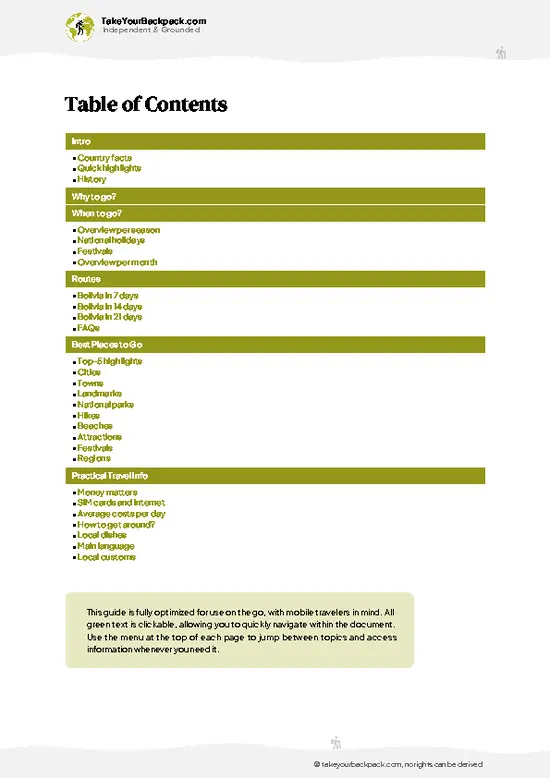
example page 2 from our offline Travel Guide for Bolivia
example page 3 from our offline Travel Guide for Bolivia
example page 4 from our offline Travel Guide for Bolivia
example page 5 from our offline Travel Guide for Bolivia
example page 6 from our offline Travel Guide for Bolivia
example page 7 from our offline Travel Guide for Bolivia
Loading the map 🌍
CLICK TO FILTER
cities
towns
landmarks
national parks
hikes
beaches
attractions
festivals
regions
SHOW COUNTRY’S BESTSHOW ALL

✨ Why go?
Ranked #9 national park in Bolivia
What makes it a must-see national park

Isiboro Sécure National Park suits backpackers who want a jungle with no turnstiles. The big reason is access to the Indigenous communities of the TIPNIS territory, where you arrange community-run canoe trips on the Isiboro and Sécure rivers directly with local guides instead of through a package operator. Paying them directly keeps your money in the villages. The second reason is the range of life packed into one park: cloud forest up to about 3,000 meters drops to lowland rainforest, so you can see Andean species and Amazonian ones in a single trip. Self-guided walking is not realistic, because paths are unmarked and the territory is community land, but you do not need an agency either. Expect slow, flexible plans, basic hammock or floor lodging, and a trip that depends on river levels and … read more 👉
Isiboro Sécure National Park suits backpackers who want a jungle with no turnstiles. The big reason is access to the Indigenous communities of the TIPNIS territory, where you arrange community-run canoe trips on the Isiboro and Sécure rivers directly with local guides instead of through a package operator. Paying them directly keeps your money in the villages. The second reason is the range of life packed into one park: cloud forest up to about 3,000 meters drops to lowland rainforest, so you can see Andean species and Amazonian ones in a single trip. Self-guided walking is not realistic, because paths are unmarked and the territory is community land, but you do not need an agency either. Expect slow, flexible plans, basic hammock or floor lodging, and a trip that depends on river levels and local meetings. If you want polish, go elsewhere. If you want something unscripted, this is it.

💡 HighlightsDon't-miss highlights and experiences

  1. Isiboro River canoe trips: The classic way in. Dugout and motor canoes slide past sandbanks where caimans and turtles sun themselves, with river dolphins surfacing in quieter bends.
  2. Sécure River: Wilder and more remote than the Isiboro, with long stretches of unbroken forest and few settlements. Birdlife is outstanding, including macaws.
  3. Cloud forest of the Cochabamba side: Mossy, steep, and dripping, this is where spectacled bears and many orchids live. Walking here is hard but quiet.
  4. Indigenous community visits: Yuracaré, Mojeño-Trinitario and Chimane villages host visitors with fish meals and stories about the territory. Bring respect and ask before photographing.
  5. Wildlife watching at dawn: Howler monkeys, capybaras, tapirs and giant otters are possible from a still boat before the heat builds.
… read more 👉
  1. Isiboro River canoe trips: The classic way in. Dugout and motor canoes slide past sandbanks where caimans and turtles sun themselves, with river dolphins surfacing in quieter bends.
  2. Sécure River: Wilder and more remote than the Isiboro, with long stretches of unbroken forest and few settlements. Birdlife is outstanding, including macaws.
  3. Cloud forest of the Cochabamba side: Mossy, steep, and dripping, this is where spectacled bears and many orchids live. Walking here is hard but quiet.
  4. Indigenous community visits: Yuracaré, Mojeño-Trinitario and Chimane villages host visitors with fish meals and stories about the territory. Bring respect and ask before photographing.
  5. Wildlife watching at dawn: Howler monkeys, capybaras, tapirs and giant otters are possible from a still boat before the heat builds.
  6. Jungle trails on the Villa Tunari side: Short forest walks reveal giant ferns, buttress-root trees, and loud insect life.
Skip the cloud forest hikes if time is short, since river trips give the widest wildlife return.
Spotted a mistake or missing something? Contact us.

🌤️ When to go?Seasonal considerations and timing

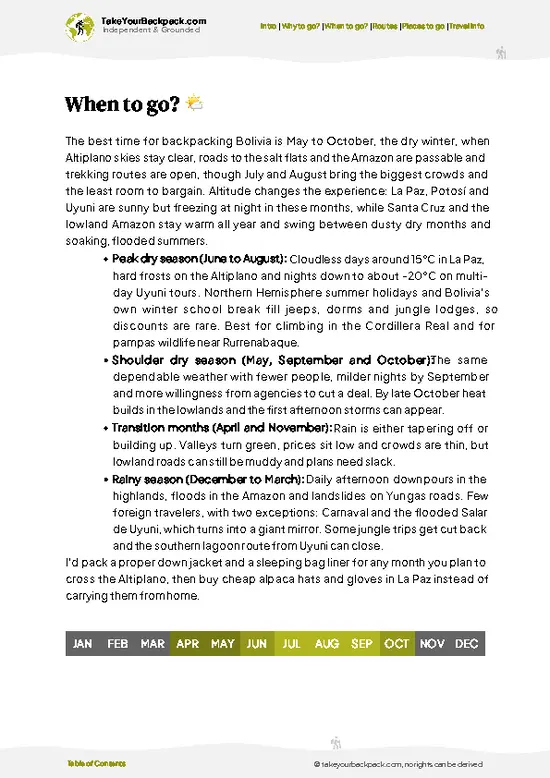
  • Dry Season (May to October): Trails and river routes are passable, days run 20 to 27°C (68 to 81°F) in the lowlands, and nights in the highland sections can fall to 0 to 5°C (32 to 41°F). Days are roughly 11 to 12 hours long.
  • Wet Season (November to April): Heavy rain turns tracks to mud and rivers rise, so access by boat or foot becomes slow. Lowland heat sits at 25 to 32°C (77 to 90°F) with high humidity.
  • Crowds and Prices: Visitors are few year-round. Community guides and boat operators charge a bit more in the dry months, when demand is highest.
  • Festivals: Indigenous communities hold gatherings that can affect local availability. Ask your guide.
Book guides and boats a few days ahead in June to August, and treat the wet months as a time for flexibility, not fixed schedules.

source: climatestotravel.comJANJanuary: fair for travelingFEBFebruary: fair for travelingMARMarch: fair for travelingAPRApril: fair for travelingMAYMay: excellent for travelingJUNJune: excellent for travelingJULJuly: excellent for travelingAUGAugust: excellent for travelingSEPSeptember: excellent for travelingOCTOctober: excellent for travelingNOVNovember: fair for travelingDECDecember: fair for traveling
bolivia-national-park-isiboro-secure-national-park
© Google |

✈️ The backpacker research shortcutBolivia Travel Guide

An offline-friendly backpacking guide with optimized travel routes, ranked highlights, transport advice, and the best areas to stay.
example page 0 from our offline Travel Guide for Bolivia
example page 1 from our offline Travel Guide for Bolivia
example page 2 from our offline Travel Guide for Bolivia
example page 3 from our offline Travel Guide for Bolivia
example page 4 from our offline Travel Guide for Bolivia
example page 5 from our offline Travel Guide for Bolivia
example page 6 from our offline Travel Guide for Bolivia
example page 7 from our offline Travel Guide for Bolivia
The digital guide (262 pages) contains:
✅ 76 highlights, ranked by travel appeal
✅ Optimized 7, 14 & 21-day travel routes
✅ Cities, national parks, landmarks, beaches
✅ How to get around
✅ Offline-friendly for travel without Wi-Fi
👉 Click to see all 30+ guide features

📅 Plan smarter in minutes, not weeks
✅ Month by month travel advice
✅ Festivals & national holidays
✅ Budget expectations

🗺️ Go to the right places, skip the overrated ones
✅ Honest pros & cons of destinations
✅ Top hikes, parks & viewpoints
✅ Lesser-known places most travelers miss
✅ Clear “worth it vs skip it” guidance

🛏️ Travel smoothly without rookie mistakes
✅ Best areas to stay
✅ Transport systems explained simply
✅ Common scams & safety advice
✅ SIM cards, money & practical tips

🌍 Understand the country, not just visit it
✅ Culture & traditions
✅ 52 Essential phrases & customs
✅ Festivals worth planning around
✅ Traveler-friendly historical context
✅ Insights that make places more meaningful

📱 Built for real travel conditions
✅ Fully downloadable PDF
✅ Works completely offline
✅ Optimized for phone use
✅ Useful in remote areas & buses
✅ Everything in one place
Stop searching, start planning
Get instant access to your full guide. 30‑day money-back guarantee.
+ Add another guide for just

By proceeding you agree to our terms.
Sent to your inbox immediately after payment • 100% Secure Checkout
Best Backpacking Travel Advisor 2025 tourism awardBest Backpacking
Travel Advisor
2025
What others say about Take Your Backpack Guides:
⭐⭐⭐⭐⭐
Fantastic, amazing amount of information!
⭐⭐⭐⭐⭐
My goodness this is amazing, it's what I've been looking for hats off too you!
⭐⭐⭐⭐⭐
I think this is absolutely BRILLIANT
⭐⭐⭐⭐
Very complete and informative. It's still missing places, but I gotta to commend you
⭐⭐⭐⭐⭐
This is truly amazing, thank you, can't wait to explore it with my kids!
⭐⭐⭐⭐⭐
Awesome resource, thank you!
⭐⭐⭐⭐⭐
This is amazing! Can't wait to explore the ones I haven't seen
⭐⭐⭐⭐
I love this! Well done, great idea.
⭐⭐⭐⭐⭐
Thanks for taking the time to make this gem!
⭐⭐⭐⭐⭐
This might be the best website I've ever seen.
⭐⭐⭐⭐⭐
Congratulations, and thank you so much for your work; it's incredibly valuable.
⭐⭐⭐⭐
In all seriousness I think you did a great job pointing out the important spots
⭐⭐⭐⭐⭐
10/10 very good
⭐⭐⭐⭐⭐
As someone who's only just starting to visit regularly this is awesome, thank you.
⭐⭐⭐⭐
Thank you very much! I'm going to visit my dad, it's going to be very useful!
⭐⭐⭐⭐⭐
This is really cool! We'll be travelling for the first time and this definitely come in handy.
⭐⭐⭐⭐⭐
You are now our minister of culture, congratulations 👨‍💼
⭐⭐⭐⭐⭐
Just wanted to tell you that this is a pearl! Going to follow your recommendations.
⭐⭐⭐⭐⭐
This is so cool. I'll definitely be using the resource for my travels soon.
⭐⭐⭐⭐⭐
This is very impressive! Good work.
⭐⭐⭐⭐⭐
This is an amazing and informative site. Very well done!

🛏️ Where to stay?Best areas and accommodation options

Cochabamba is the practical base, with no real lodging inside Isiboro Sécure National Park. Hostels there cost US$8 to 15 for a dorm bed, and private rooms run US$20 to 40. Most trips start from the city by bus to Villa Tunari (about 3 to 4 hours), a Chapare town with hostels and simple hotels at US$10 to 30 a night. From there you can arrange access toward the park’s southern edge. Inside the territory, accommodation means basic community stays in Indigenous villages such as those along the Isiboro and Sécure rivers, usually a bed or hammock for US$5 to 12, arranged through a local guide or the … read more 👉
Cochabamba is the practical base, with no real lodging inside Isiboro Sécure National Park. Hostels there cost US$8 to 15 for a dorm bed, and private rooms run US$20 to 40. Most trips start from the city by bus to Villa Tunari (about 3 to 4 hours), a Chapare town with hostels and simple hotels at US$10 to 30 a night. From there you can arrange access toward the park’s southern edge. Inside the territory, accommodation means basic community stays in Indigenous villages such as those along the Isiboro and Sécure rivers, usually a bed or hammock for US$5 to 12, arranged through a local guide or the community cabildo. San Ignacio de Moxos and Trinidad sit on the northern side and have simple guesthouses at US$12 to 30. Bring a sleeping bag, a mosquito net, and cash in small notes, because communities have no ATMs.

👛 Costs (as of 19 October 2026)Money, prices, and spending tips

Plan on roughly US$38 per day for a backpacker visiting Isiboro Sécure National Park, including a guide share and a high-season bed.
CategoryBudget RangeLocal Reality
Entrance/PermitsUS$0 to 6Community or guide fees vary and are paid in cash in bolivianos.
Accommodation (high season)US$5 to 15Community stays or hammocks in the park, hostels in Villa Tunari.
Local TransportUS$3 to 10Shared minibuses from Cochabamba cost a few dollars, river boats cost more.
Guide/Boat ShareUS$10 to 30Guides are essential here and costs drop when you split them.
Food/SuppliesUS$4 to 10Simple set meals in towns, limited supplies in villages, so bring snacks.
Total Daily BudgetUS$38Midpoint figure for one day in the dry season.
⚠️ Prices can change and everyone travels differently, so take this as a rough guide. Hope it helps you plan your adventure!

🥾 TrailsDiscover Isiboro Sécure's top trails and natural wonders

Isiboro Sécure National Park has no signed trail network, so walks follow community paths led by local guides. Distances are rough and depend on rain.
  • Forest walks from river villages: 1 to 4 hours, easy to moderate, flat to rolling ground with mud, roots, and stream crossings; you pass fruit trees, giant ferns and monkey troops.
  • Cloud forest approaches on the highland side: a full day or multi-day, hard, steep and slippery; mossy trees, orchids and the chance of spectacled bear sign.
  • River and trail combinations: 2 to 5 days, moderate, canoe by day and short walks to lagoons and salt licks where
… read more 👉
Isiboro Sécure National Park has no signed trail network, so walks follow community paths led by local guides. Distances are rough and depend on rain.
  • Forest walks from river villages: 1 to 4 hours, easy to moderate, flat to rolling ground with mud, roots, and stream crossings; you pass fruit trees, giant ferns and monkey troops.
  • Cloud forest approaches on the highland side: a full day or multi-day, hard, steep and slippery; mossy trees, orchids and the chance of spectacled bear sign.
  • River and trail combinations: 2 to 5 days, moderate, canoe by day and short walks to lagoons and salt licks where birds and mammals gather.
Reaching the park takes effort. Public transport gets you to towns on the Cochabamba side, then you continue by shared vehicle or boat toward community entry points. Services are thin, so carry cash in bolivianos. Crowds are essentially absent. Entry involves a community fee and guide payment negotiated locally, not a ticket office. Bring rain gear, insect repellent and water purification.
⚠️ Hiking info can sometimes be outdated or inaccurate. Before you hit the trail, check the latest conditions with locals. If you do spot anything that's off, I'd love to hear from you, so I can update it for fellow travelers.

🛡️ SafetySafety Tips and Common Scams in Isiboro Sécure

Isiboro Sécure National Park is remote, so your main risks are logistical rather than criminal. Humid lowland heat tires you fast, so walk early, drink plenty, and carry purification tablets or a filter. Rain can swell rivers within hours and make boat transport or crossings unreliable, so keep a flexible schedule. Mosquitoes, biting flies, and occasional snakes are the wildlife you will actually notice. Wear long sleeves, use repellent, and watch your footing. Jaguars and caimans exist but rarely trouble hikers. Go with a local guide, since trails are poorly marked and the park is Indigenous territory with its own rules. Ask permission before photographing people. Also, the area has had political tension over roads and coca, so check conditions in Cochabamba first. Carry a basic medical kit and yellow fever vaccination proof.

FAQCommon questions from travelers

Allow 3 to 5 days for Isiboro Sécure National Park if you want to reach beyond its edges. The journey from Cochabamba to Villa Tunari takes 3 to 4 hours, and river travel deeper in takes a day or more each way. A short 2 day trip only touches the southern fringe.
Visiting Isiboro Sécure National Park without a car is the normal way to do it, though not simple. Buses and shared minibuses run from Cochabamba to Villa Tunari for about US$3 to 5, and from there you arrange boats or walking routes with local guides. Deeper areas have no public transport.
Isiboro Sécure National Park has no standard ticket booth, but you should expect community or guide fees of roughly US$0 to 6 in cash. Access is governed by Indigenous communities, so ask permission through a local guide and the park authority SERNAP in Cochabamba. Bring your passport and small notes.
⚠️ Things can change over time, so always validate details locally before you go.

Other Bolivian national parks near Isiboro Sécure

Explore more nearby:


💡 Not sure where to go next?
Create a personalized itinerary for Bolivia including Isiboro Sécure and the places that fit your trip.

Generate my itinerary

👉 Discover all national parks

Or checkout all Bolivia has to offer (think cities, towns, villages, national parks, hikes, beaches, festivals)
Country photo of Bolivia

We 💚 feedbackSumming up the experience

Isiboro Sécure National Park is rarely done by first-timers because permissions are handled village by village, and that is exactly what makes it special. Spend an evening talking with your community host before you set out. I would bring small useful gifts like school supplies and plenty of patience for river timetables.

✈️ When did I visit Bolivia?
Bolivia I visited during my half year trip through South and Central America back in 2003

✍️ Help improve this page!
The information on this page is based on my own backpacking experience in Bolivia, supplemented with up-to-date research and feedback from other travelers. Travel details can change, so if you notice anything outdated or incomplete, feel free to let me know.


🙋‍♂️ Give feedback

👋 Meet the founderWho’s Behind Take Your Backpack?

Johan, backpacker and founder of TakeYourBackpackHi, I’m Johan (Netherlands 🇳🇱), the creator of TakeYourBackpack. Over the past 3 decades, I’ve backpacked through 90+ countries across six continents, gaining extensive experience with independent travel, long-term trips, and overland routes.

This site is built on a combination of firsthand travel experience and carefully curated insights from other backpackers. Many guides are based on places I’ve personally visited, while others bring together tips, observations, and practical advice shared by trusted travelers I’ve met along the way.

The goal is to provide realistic, experience-driven guidance — not generic itineraries — so you can explore destinations with better context, clearer expectations, and more confidence.