×

Bolivia🇧🇴 | townsPuerto Suárezwetland gateway, railhead, border town | things to do and best time to go

Explore GuayaramerínExplore Achacachi

Backpacking in Puerto Suárez
👍 Recommendedtown ranked #13
By Johan Kruseman 🇳🇱 | Updated June 6, 2026

Puerto Suárez is not for anyone chasing big-city nightlife, colonial architecture safaris, or Instagram-perfect plazas every ten steps. It’s a border town on Bolivia’s far eastern edge, pressed against Brazil near Corumbá, where the air turns heavy, smells like wet earth and exhaust, and the soundtrack is trucks, riverboats, and distant dogs. For backpackers, that grit is the point: it’s a practical springboard into the Pantanal and a key overland link between Santa Cruz and Brazil. The center is walkable, low-rise, a bit worn; evenings are slow, with cheap street food and a couple of basic hospedajes and hostels where overlanders and long-haul bus survivors swap intel more than party. Buses and the old “Death Train” line make it easy enough to reach, and moto-taxis fill the gaps. It’s cheaper and rougher than Santa Cruz, less charming than Corumbá, but safer and calmer than its reputation suggests if you stick to the core and treat it as what it is: a functional, slightly scruffy staging point that quietly rewards patient, route-focused travelers.

Discover everything you want to know in the 📖 Bolivia Travel Guide.


Get your Bolivia guide
82 ranked highlights, routes & tips, works offline (350 pages)
Loading the map 🌍
CLICK TO FILTER
cities
towns
landmarks
national parks
hikes
beaches
attractions
festivals
regions
SHOW COUNTRY’S BESTSHOW ALL

✨ Why go?
Ranked #13 town in Bolivia
Reasons people choose to visit here

Puerto Suárez serves as a gateway for backpackers heading to the Pantanal or Brazil, but it’s more than just a pit stop. The walkable streets are lined with small-scale hostels and guesthouses, offering a cozy atmosphere where you can easily strike up conversations with fellow travelers. The local food scene is a treat; savoring fresh fish dishes while soaking in the warm air is a must. Many travelers linger a few days, using the town as a base for hikes or day trips to nearby beaches. It’s a place that attracts slow travelers and solo adventurers, those who appreciate a friendly vibe over a bustling nightlife. Here, the beauty of the experience unfolds gradually, making every moment feel earned and meaningful.
Want to include Puerto Suárez in your Bolivia route?
Create a personalized Bolivia itinerary that includes Puerto Suárez and the places that fit your trip — based on your travel style, budget, and available time. Get your route in seconds.

Generate my trip

💡 HighlightsThe experiences that define the visit

  • Puerto Suárez river port (Puerto Fluvial) — The town grew around the river, and the port is where daily life, cargo barges and small passenger launches all meet. Great for watching boat traffic, catching a Pantanal-bound launch, and seeing how trade shapes the place.
  • Old railway station (Estación Ferroviaria) — The weathered station and railyard are a small slice of regional history: once a vital link with Corumbá (Brazil) and the interior. Even if trains are rare, the station tells stories in rust, timetables and old signage.
  • Plaza Principal / Parque Central — The social heart of town: benches, shade trees, street vendors and local chatter. Perfect for people-watching, informal events and getting a sense of daily rhythms in Puerto Suárez.
  • Mercado Municipal — Tight corridors, fresh fish,
read more 👉
  • Puerto Suárez river port (Puerto Fluvial) — The town grew around the river, and the port is where daily life, cargo barges and small passenger launches all meet. Great for watching boat traffic, catching a Pantanal-bound launch, and seeing how trade shapes the place.
  • Old railway station (Estación Ferroviaria) — The weathered station and railyard are a small slice of regional history: once a vital link with Corumbá (Brazil) and the interior. Even if trains are rare, the station tells stories in rust, timetables and old signage.
  • Plaza Principal / Parque Central — The social heart of town: benches, shade trees, street vendors and local chatter. Perfect for people-watching, informal events and getting a sense of daily rhythms in Puerto Suárez.
  • Mercado Municipal — Tight corridors, fresh fish, fruit from the floodplain and inexpensive street food. Visiting the market is the best way to taste local diets, barter with vendors and spot handmade goods that reflect regional culture.
  • Town parish church (Iglesia parroquial) — Whether you’re interested in religious architecture, local festivals or just calm shade, the church is where community rituals happen; check for mass times or a fiesta if you want the full experience.
  • Border zone and customs area (Zona de Frontera) — Puerto Suárez sits on a busy Bolivia-Brazil frontier. Walking the border area exposes you to cross-border trade, bilingual signage, small transit businesses and the peculiar energy of a town that exists because of the frontier.
  • Pantanal boat launches and local tour operators — Small, family-run operators base out of town; day trips into the Bolivian Pantanal for wildlife watching and boat safaris start here. It’s where logistics meet wildlife, and you can compare prices and local knowledge face-to-face.
  • Riverside malecón and fishing spots — A low-key, authentic spot for sunset, fishing with locals or watching cormorants and river traffic. Less polished than bigger tourist promenades, but far more real.
  • Cementerio Municipal — Cemeteries in small Bolivian towns are often unexpectedly rich in local history: family plots, carved epitaphs and stories of settlers and river families. It’s quiet, reflective and culturally telling.
  • Local cancha (football pitch) and community gatherings — Not a monument, but a living highlight: catch a local match, a weekend fiesta or an open-air market event. These informal gatherings reveal character better than any brochure.
A few real, visitable highlights just outside town that make easy day trips: Corumbá (Brazil) across the border for its riverside markets and streets, short Pantanal wildlife safaris into the surrounding wetlands, and nearby Laguna Cáceres for calm waterbird viewing — the Pantanal trips are my personal favorite.
Spotted a mistake or missing something? Contact us.

🏘️ NeighborhoodsKey areas and districts to know

Puerto Suárez is a gateway to the Pantanal and a hub for travelers seeking adventure. Each neighborhood offers a unique flavor, making it essential to choose wisely.

Centro: This is the heart of Puerto Suárez. The vibe is bustling, with local markets and street vendors filling the air with the scent of grilled meats and spices. It’s walkable, making it easy to explore shops and eateries. Costs are moderate, and you’ll find a mix of budget hostels and mid-range hotels. Perfect for short stays, but the nightlife is low-key, so don’t expect wild parties.

Zona Franca: Known for its duty-free shops, this area attracts both locals and tourists. The atmosphere is lively during the day but quiets down at night. It’s a bit more spread out, so having a bike or using local transport is handy. Ideal … read more 👉
Puerto Suárez is a gateway to the Pantanal and a hub for travelers seeking adventure. Each neighborhood offers a unique flavor, making it essential to choose wisely.

Centro: This is the heart of Puerto Suárez. The vibe is bustling, with local markets and street vendors filling the air with the scent of grilled meats and spices. It’s walkable, making it easy to explore shops and eateries. Costs are moderate, and you’ll find a mix of budget hostels and mid-range hotels. Perfect for short stays, but the nightlife is low-key, so don’t expect wild parties.

Zona Franca: Known for its duty-free shops, this area attracts both locals and tourists. The atmosphere is lively during the day but quiets down at night. It’s a bit more spread out, so having a bike or using local transport is handy. Ideal for longer stays if you enjoy shopping and want to experience local life without the tourist rush.

El Puerto: Close to the docks, this area is perfect for those planning to head into the Pantanal. The vibe is laid-back, with a few bars and restaurants catering to backpackers. Costs are lower here, and it’s a great spot for longer stays if you want to soak in the local culture before your next adventure.

⌛️ 1 day1-day itinerary for Puerto Suárez

Puerto Suárez, a small Bolivian town on the edge of the Pantanal, offers a unique blend of culture and nature. It’s a place where the air is thick with the scent of wet earth and the sounds of wildlife fill the morning. Start your day early at the bustling Mercado Central. The vibrant colors of fresh produce and the chatter of locals create an electric atmosphere. Grab a hearty breakfast of salteñas—savory pastries bursting with flavor.

After fueling up, take a stroll through the nearby Parque Nacional Noel Kempff Mercado. This isn’t just a park; it’s a gateway to the Amazon. The trails are often quiet, allowing you to soak in the sounds of rustling leaves and distant bird calls. Keep an eye out for capybaras lounging by the water.

In the afternoon, wander through the historic streets … read more 👉
Puerto Suárez, a small Bolivian town on the edge of the Pantanal, offers a unique blend of culture and nature. It’s a place where the air is thick with the scent of wet earth and the sounds of wildlife fill the morning. Start your day early at the bustling Mercado Central. The vibrant colors of fresh produce and the chatter of locals create an electric atmosphere. Grab a hearty breakfast of salteñas—savory pastries bursting with flavor.

After fueling up, take a stroll through the nearby Parque Nacional Noel Kempff Mercado. This isn’t just a park; it’s a gateway to the Amazon. The trails are often quiet, allowing you to soak in the sounds of rustling leaves and distant bird calls. Keep an eye out for capybaras lounging by the water.

In the afternoon, wander through the historic streets of the town center. The architecture tells stories of a bygone era, with colonial buildings standing proudly. Make sure to visit the lesser-known Museo de Historia Natural. It’s small but packed with fascinating exhibits on local flora and fauna, a perfect way to connect with the region’s biodiversity.

As evening falls, head to the waterfront. The sunset casts a golden glow over the river, creating a perfect backdrop for reflection. Grab dinner at a local eatery, where the flavors of the region come alive in every bite. This day in Puerto Suárez isn’t just about seeing; it’s about feeling the pulse of a place that thrives on simplicity and connection.
Turn your Puerto Suárez visit into an Bolivia adventure
Build a complete Bolivia route with Puerto Suárez, hidden gems, must-see destinations, and realistic travel times included.

Generate my trip

🌤️ When to go?Best time to visit Puerto Suárez


  • Weather: The dry season from May to September offers clear skies and minimal rain, making trails and roads easier to navigate. The wet season (October to April) brings heavy rains that can turn dirt paths into mud traps and swell rivers, complicating travel.

  • Temperature: Daytime highs hover around 28–32°C (82–90°F) year-round, but nights in the dry season can drop to a refreshing 15°C (59°F), while the wet season stays muggy and warm, which can sap your energy on hikes.

  • Daylight Hours: Near the equator, daylight is steady—about 12 hours year-round—so you won’t lose daylight time regardless of when you visit, but early mornings in the dry season feel crisp and energizing.

  • Crowds: Tourist traffic peaks during the dry season, especially July and August, when locals and international
read more 👉

  • Weather: The dry season from May to September offers clear skies and minimal rain, making trails and roads easier to navigate. The wet season (October to April) brings heavy rains that can turn dirt paths into mud traps and swell rivers, complicating travel.

  • Temperature: Daytime highs hover around 28–32°C (82–90°F) year-round, but nights in the dry season can drop to a refreshing 15°C (59°F), while the wet season stays muggy and warm, which can sap your energy on hikes.

  • Daylight Hours: Near the equator, daylight is steady—about 12 hours year-round—so you won’t lose daylight time regardless of when you visit, but early mornings in the dry season feel crisp and energizing.

  • Crowds: Tourist traffic peaks during the dry season, especially July and August, when locals and international visitors flock here. The wet season sees fewer travelers, offering solitude but less reliable conditions.

  • Seasonal Activities: Wildlife spotting and river excursions shine in the dry months when animals gather around shrinking water sources. The wet season’s lush greenery is a treat for photographers but can limit access to some remote spots.

  • Price Fluctuations: Accommodation and tour prices rise during the dry season’s peak months due to demand. Visiting shoulder months like May or September can snag better deals without sacrificing much on weather.


Pro-tip: Aim for late dry season—September—when the air is still dry, crowds thin, and prices start to dip, giving you the best balance of comfort and value.


source: climatestotravel.comJANJanuary: fair for travelingFEBFebruary: fair for travelingMARMarch: fair for travelingAPRApril: fair for travelingMAYMay: highly recommended for travelingJUNJune: excellent for travelingJULJuly: excellent for travelingAUGAugust: excellent for travelingSEPSeptember: highly recommended for travelingOCTOctober: fair for travelingNOVNovember: fair for travelingDECDecember: fair for traveling
when-to-go

✈️ The backpacker research shortcutBolivia Travel Guide

An offline-friendly backpacking guide with optimized travel routes, ranked highlights, transport advice, and the best areas to stay.
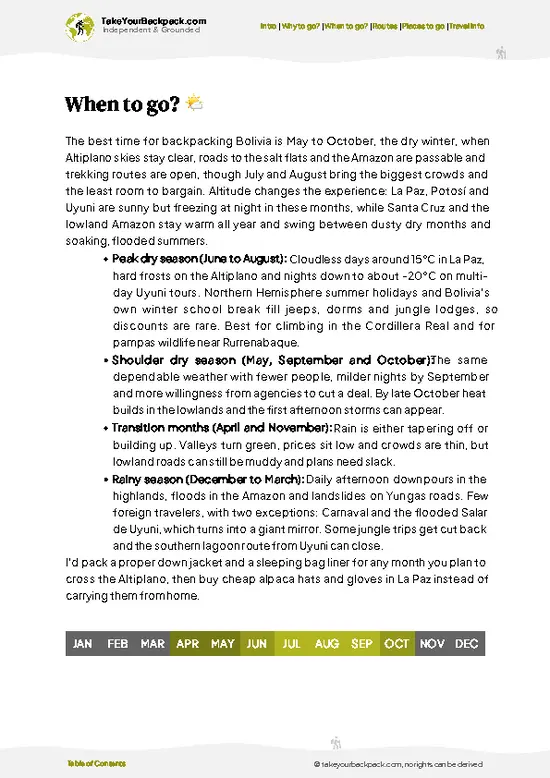
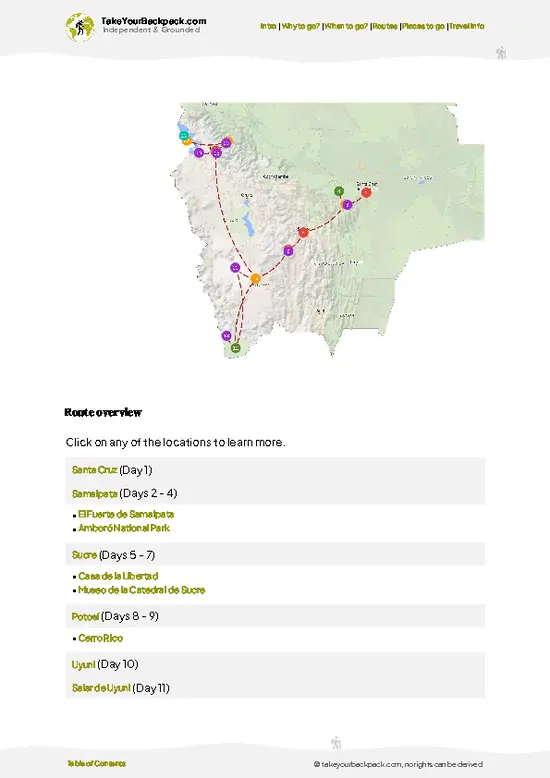
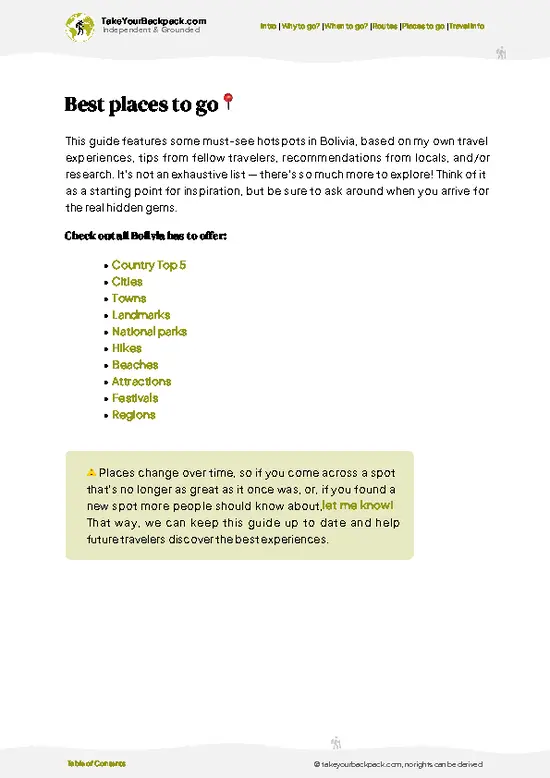
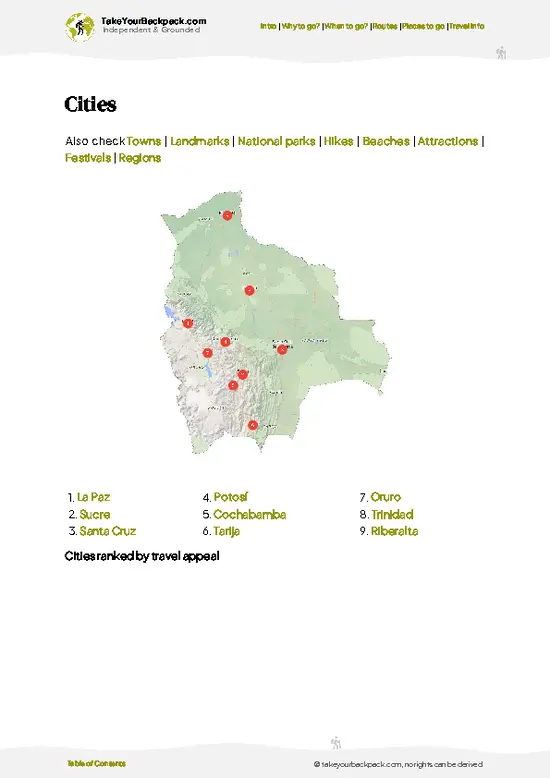
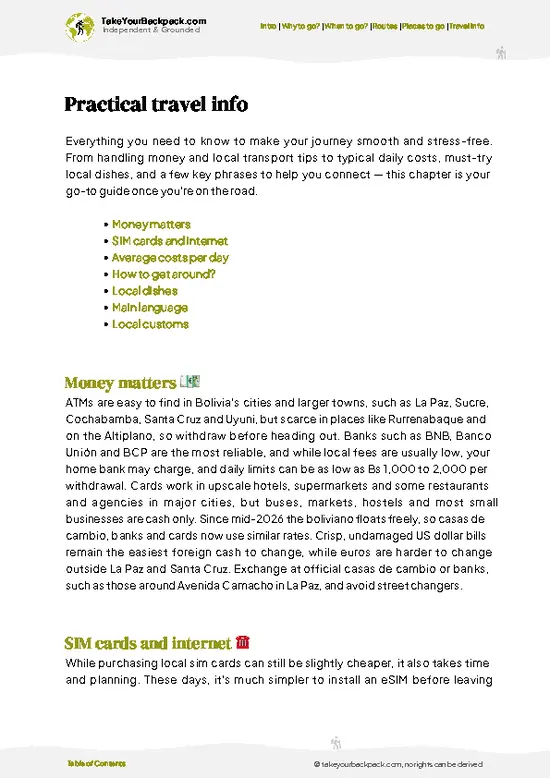
example page 0 from our offline Travel Guide for Bolivia
example page 1 from our offline Travel Guide for Bolivia
example page 2 from our offline Travel Guide for Bolivia
example page 3 from our offline Travel Guide for Bolivia
example page 4 from our offline Travel Guide for Bolivia
example page 5 from our offline Travel Guide for Bolivia
example page 6 from our offline Travel Guide for Bolivia
example page 7 from our offline Travel Guide for Bolivia
The digital guide (350 pages) contains:
82 highlights, ranked by travel appeal
Optimized 7, 14 & 21-day travel routes
Cities, national parks, landmarks, beaches
How to get around
Offline-friendly for travel without Wi-Fi
👉 Click to see all 30+ guide features

📅 Plan smarter in minutes, not weeks
Month by month travel advice
Festivals & national holidays
Budget expectations

🗺️ Go to the right places, skip the overrated ones
Honest pros & cons of destinations
Top hikes, parks & viewpoints
Lesser-known places most travelers miss
Clear “worth it vs skip it” guidance

🛏️ Travel smoothly without rookie mistakes
Best areas to stay
Transport systems explained simply
Common scams & safety advice
SIM cards, money & practical tips

🌍 Understand the country, not just visit it
Culture & traditions
52 Essential phrases & customs
Festivals worth planning around
Traveler-friendly historical context
Insights that make places more meaningful

📱 Built for real travel conditions
Fully downloadable PDF
Works completely offline
Optimized for phone use
Useful in remote areas & buses
Everything in one place
Save weeks of stressful planning
Get instant access to your full guide. 30‑day money-back guarantee.


By proceeding you agree to our terms.
Sent to your inbox immediately after payment • 100% Secure Checkout
Best Backpacking Travel Advisor 2025 tourism awardBest Backpacking
Travel Advisor
2025
What others say about Take Your Backpack Guides:
⭐⭐⭐⭐⭐
Fantastic, amazing amount of information!
⭐⭐⭐⭐⭐
My goodness this is amazing, it's what I've been looking for hats off too you!
⭐⭐⭐⭐⭐
I think this is absolutely BRILLIANT
⭐⭐⭐⭐
Very complete and informative. It's still missing places, but I gotta to commend you
⭐⭐⭐⭐⭐
This is truly amazing, thank you, can't wait to explore it with my kids!
⭐⭐⭐⭐⭐
Awesome resource, thank you!
⭐⭐⭐⭐⭐
This is amazing! Can't wait to explore the ones I haven't seen
⭐⭐⭐⭐
I love this! Well done, great idea.
⭐⭐⭐⭐⭐
Thanks for taking the time to make this gem!
⭐⭐⭐⭐⭐
This might be the best website I've ever seen.
⭐⭐⭐⭐⭐
Congratulations, and thank you so much for your work; it's incredibly valuable.
⭐⭐⭐⭐
In all seriousness I think you did a great job pointing out the important spots
⭐⭐⭐⭐⭐
10/10 very good
⭐⭐⭐⭐⭐
As someone who's only just starting to visit regularly this is awesome, thank you.
⭐⭐⭐⭐
Thank you very much! I'm going to visit my dad, it's going to be very useful!
⭐⭐⭐⭐⭐
This is really cool! We'll be travelling for the first time and this definitely come in handy.
⭐⭐⭐⭐⭐
You are now our minister of culture, congratulations 👨‍💼
⭐⭐⭐⭐⭐
Just wanted to tell you that this is a pearl! Going to follow your recommendations.
⭐⭐⭐⭐⭐
This is so cool. I'll definitely be using the resource for my travels soon.
⭐⭐⭐⭐⭐
This is very impressive! Good work.
⭐⭐⭐⭐⭐
This is an amazing and informative site. Very well done!

🛏️ Where to stay?Best areas to stay in Bolivia

In Puerto Suárez, the best spot for backpackers is the central district around Avenida 6 de Agosto. This area hums with local life—street vendors frying empanadas, the scent of fresh coffee mingling with tropical humidity. It’s where budget travelers cluster because it’s safe, walkable, and social without feeling touristy. Hostels here tend to be small, family-run joints with a laid-back vibe, perfect for swapping stories over a cold drink. Compared to the quieter residential zones on the outskirts, this neighborhood pulses with energy after dark, making it easier to meet fellow travelers and … read more 👉
In Puerto Suárez, the best spot for backpackers is the central district around Avenida 6 de Agosto. This area hums with local life—street vendors frying empanadas, the scent of fresh coffee mingling with tropical humidity. It’s where budget travelers cluster because it’s safe, walkable, and social without feeling touristy. Hostels here tend to be small, family-run joints with a laid-back vibe, perfect for swapping stories over a cold drink. Compared to the quieter residential zones on the outskirts, this neighborhood pulses with energy after dark, making it easier to meet fellow travelers and locals alike. The streets are lit enough to feel secure but still retain that raw, unpolished charm that makes you feel like you’re really somewhere off the beaten path. Staying here means you’re steps from markets and eateries, so you can dive into the local rhythm without the hassle of long commutes or sketchy side streets.

🚌 Getting aroundMoving around without the hassle

Puerto Suárez moves at its own rhythm—less a clockwork town and more a place where the day unfolds with the heat and dust, where schedules are suggestions and the scent of diesel and grilled meat lingers in the air. The streets pulse with a mix of trucks, motorbikes, and pedestrians, all weaving through a landscape that feels both raw and alive. This isn’t a place where you’ll find polished transit hubs or strict timetables. Instead, you navigate by the flow of people and the hum of engines, learning quickly that patience and a keen eye are your best travel companions here.


  • Walking: The heart of Puerto Suárez is compact enough to explore on foot, especially around the market and main street. Walking lets you soak in the gritty textures—the cracked sidewalks, the chatter of vendors, the
read more 👉
Puerto Suárez moves at its own rhythm—less a clockwork town and more a place where the day unfolds with the heat and dust, where schedules are suggestions and the scent of diesel and grilled meat lingers in the air. The streets pulse with a mix of trucks, motorbikes, and pedestrians, all weaving through a landscape that feels both raw and alive. This isn’t a place where you’ll find polished transit hubs or strict timetables. Instead, you navigate by the flow of people and the hum of engines, learning quickly that patience and a keen eye are your best travel companions here.


  • Walking: The heart of Puerto Suárez is compact enough to explore on foot, especially around the market and main street. Walking lets you soak in the gritty textures—the cracked sidewalks, the chatter of vendors, the sudden bursts of shade from mango trees. It’s free, flexible, and the best way to catch the town’s pulse up close.


  • Local Buses (Micros): These are the backbone of budget transit, running roughly from 6 a.m. to 8 p.m. Fares hover around 1-2 bolivianos. They’re slow and often packed, but they cover the main routes between neighborhoods and the bus terminal. Expect a bumpy ride with windows down, dust swirling in the dry air.


  • Motorbike Taxis: For a quick, cheap jump across town, motorbike taxis are everywhere. Prices vary but usually sit around 5-10 bolivianos depending on distance. They’re fast, nimble, and perfect when you’re short on time or want to dodge traffic jams, but hold on tight—the ride is as raw as the town itself.


  • Shared Taxis: These minibuses or vans run on flexible routes, often leaving when full rather than on a strict schedule. They’re a step up in comfort from buses, costing about 5-8 bolivianos. Ideal for longer hops or when you want to avoid the crush of micros but still keep costs low.


  • Intercity Buses: If you’re heading out of Puerto Suárez, the main bus terminal offers departures to Santa Cruz and border towns. Buses start early, around 5 a.m., with last departures mid-afternoon. Tickets range from 30 to 60 bolivianos depending on destination and class. These rides are longer and more structured, giving you a breather from the town’s chaotic pace.

👛 Costs (as of 22 February 2026)Travel costs and budget guide for Puerto Suárez

Backpacking in Puerto Suárez, Bolivia, is a raw, straightforward experience where your budget stretches further than in bigger cities, but the trade-off is fewer tourist comforts. Here’s how the daily costs typically break down for an independent traveler navigating this border town.
  • Dorm Accommodation: Expect to pay around $5 to $10 USD per night for a bed in a basic hostel dorm. These places are simple, often with shared bathrooms and minimal amenities, but clean enough to crash after a day of travel or border crossing.
  • Meals: Street food and local markets dominate the scene here. A hearty meal from a street vendor or small eatery will cost about $2 to $4 USD. If you opt for a sit-down meal at a modest restaurant, budget closer to $5 to $7 USD. The food is filling and straightforward—think
read more 👉
Backpacking in Puerto Suárez, Bolivia, is a raw, straightforward experience where your budget stretches further than in bigger cities, but the trade-off is fewer tourist comforts. Here’s how the daily costs typically break down for an independent traveler navigating this border town.
  • Dorm Accommodation: Expect to pay around $5 to $10 USD per night for a bed in a basic hostel dorm. These places are simple, often with shared bathrooms and minimal amenities, but clean enough to crash after a day of travel or border crossing.
  • Meals: Street food and local markets dominate the scene here. A hearty meal from a street vendor or small eatery will cost about $2 to $4 USD. If you opt for a sit-down meal at a modest restaurant, budget closer to $5 to $7 USD. The food is filling and straightforward—think rice, beans, grilled meat, and fresh fruit.
  • Local Transport: Public transport options are limited but cheap. A local bus or shared taxi ride within town will run you about $0.50 to $1 USD. For longer trips, such as crossing into Brazil or heading to nearby towns, expect to pay $3 to $7 USD depending on distance and negotiation skills.
  • Basic Activities/Entry Fees: Puerto Suárez isn’t packed with tourist attractions, so costs here are minimal. Visiting local markets or small cultural spots is usually free or under $1 USD. If you’re crossing the border or taking boat trips on nearby rivers, budget around $5 to $10 USD for permits or fees.
  • Miscellaneous Expenses: This covers essentials like bottled water, snacks, or phone credit. Plan for about $1 to $3 USD daily. Keep in mind that reliable Wi-Fi can be spotty, so extra SIM data might be worth the small splurge.

All told, you’re looking at roughly $10 to $25 USD per day to cover the basics in Puerto Suárez. It’s a place where every dollar counts, and the modest costs reflect the town’s no-frills vibe. The payoff is in the authentic, unpolished atmosphere—perfect for travelers who want to experience Bolivia’s border life without the tourist gloss.
⚠️ Prices can change and everyone travels differently, so take this as a rough guide. Hope it helps you plan your adventure!

🚌 Day tripsWhere to go beyond the main area

Puerto Suárez is a backpacker’s dream base, offering easy access to some of Bolivia’s most intriguing spots. The town itself buzzes with life, from the scent of street food wafting through the air to the vibrant chatter of locals. Here are some day trips that truly make the effort worthwhile.

1. The Pantanal
Just a short bus ride away, the Pantanal is a wildlife lover’s paradise. Spend the day spotting caimans, capybaras, and an array of exotic birds. The best time to visit is during the dry season from May to October when wildlife congregates around water sources. Expect to pay around $30 for a guided tour, which often includes transportation and lunch. A common mistake is underestimating the heat; bring plenty of water and sunscreen.


2. Quijarro
A quick trip to the border town of … read more 👉
Puerto Suárez is a backpacker’s dream base, offering easy access to some of Bolivia’s most intriguing spots. The town itself buzzes with life, from the scent of street food wafting through the air to the vibrant chatter of locals. Here are some day trips that truly make the effort worthwhile.

1. The Pantanal
Just a short bus ride away, the Pantanal is a wildlife lover’s paradise. Spend the day spotting caimans, capybaras, and an array of exotic birds. The best time to visit is during the dry season from May to October when wildlife congregates around water sources. Expect to pay around $30 for a guided tour, which often includes transportation and lunch. A common mistake is underestimating the heat; bring plenty of water and sunscreen.


2. Quijarro
A quick trip to the border town of Quijarro offers a unique glimpse into Brazilian culture. The journey takes about an hour by bus, costing around $2. Once there, stroll through the local markets and sample Brazilian snacks. The best time to go is early morning when the market is bustling. Many first-timers miss out on the vibrant street food scene; don’t skip the pastel de queijo!


3. Lagoons of Poopó
Head to the stunning Lagoons of Poopó, about two hours from Puerto Suárez. The surreal colors of the lagoons are best seen in the late afternoon light. A round trip will set you back roughly $15, including transport. The dry season is ideal for visiting, but be cautious of the muddy paths during the rainy season. First-timers often overlook the importance of sturdy footwear; you’ll want to be ready for some off-the-beaten-path exploration.


4. San Matías
San Matías, a small town about three hours away, offers a taste of rural Bolivian life. The bus fare is around $5, and the journey is filled with scenic views of the countryside. Spend the day hiking in the surrounding hills or visiting local farms. The best time to visit is during the dry season, but be mindful of local festivals that can lead to crowded buses. Many backpackers miss the chance to engage with locals; take the time to chat and learn about their way of life.
Want to know what more Bolivia offers?
The Bolivia Travel Guide describes 82 highlights, from cities to national parks, from beaches to hikes

Get the Travel Guide -

🛡️ SafetySafety Tips and Common Scams in Puerto Suárez

Puerto Suárez is generally safe, but a few practical tips can enhance your experience. Stay aware in crowded areas, especially near the train station and markets, where pickpockets might lurk. If you’re solo, avoid wandering too far after dark; the streets can feel deserted, and it’s best to stick to well-lit areas.

Common scams are rare, but be cautious with unofficial taxi services. Always opt for registered taxis or ask your accommodation to arrange transport. Annoyances like persistent street vendors can be managed with a polite but firm “no gracias.” Carry yourself confidently, and you’ll blend in seamlessly, enjoying the town’s charm without unnecessary stress.

Other Bolivian towns near Puerto Suárez

Explore more nearby:


💡 Not sure where to go next?
Create a personalized itinerary for Bolivia including Puerto Suárez and the places that fit your trip.

Generate my itinerary

👉 Discover all towns

Or checkout all Bolivia has to offer (think cities, towns, villages, national parks, hikes, beaches, festivals)
Country photo of Bolivia

We 💚 feedbackKey takeaways before you go

Puerto Suárez offers a raw glimpse into Bolivian life, where the air is thick with the scent of fresh fish and the chatter of locals fills the streets. But don’t expect luxury; the infrastructure can be rough around the edges. Embrace the chaos, and you’ll find a vibrant culture that rewards your patience with authentic experiences.

✈️ When did I visit Bolivia?
Bolivia I visited during my half year trip through South and Central America back in 2003

✍️ Help improve this page!
The information on this page is based on my own backpacking experience in Bolivia, supplemented with up-to-date research and feedback from other travelers. Travel details can change, so if you notice anything outdated or incomplete, feel free to let me know.


🙋‍♂️ Give feedback

👋 Meet the founderWho’s Behind Take Your Backpack?

Johan, backpacker and founder of TakeYourBackpackHi, I’m Johan (Netherlands 🇳🇱), the creator of TakeYourBackpack. Over the past decade, I’ve backpacked through 80+ countries across six continents, gaining extensive experience with independent travel, long-term trips, and overland routes.

This site is built on a combination of firsthand travel experience and carefully curated insights from other backpackers. Many guides are based on places I’ve personally visited, while others bring together tips, observations, and practical advice shared by trusted travelers I’ve met along the way.

The goal is to provide realistic, experience-driven guidance — not generic itineraries — so you can explore destinations with better context, clearer expectations, and more confidence.

Get full Bolivia guide •
Instant download • 82 highlights • Full Offline guide