×

Bolivia🇧🇴 | citiesTarijavineyards, mellow plazas, southern hills | things to do and best time to go

Explore SucreExplore Trinidad

Backpacking in Tarija
👍 Recommendedcity ranked #6
By Johan Kruseman 🇳🇱 | Updated September 4, 2026

Most people realize too late that Tarija is where their budget quietly stretches an extra week without feeling like they’re “roughing it.” It sits in Bolivia’s far south, near the Argentine border, in a mellow wine valley that feels like a different country compared to the high-altitude chaos up north. For backpackers, Tarija is low-drama: cheap rooms, safe streets, easy taxis, and a compact center around Plaza Luis de Fuentes where you can actually hear yourself think. You get leafy plazas, colonial facades, parrilladas, and bodega tours instead of big-ticket sights. The trade-off is fewer hostels and a thinner backpacker scene than Sucre or La Paz; you’ll meet some travelers, but not a circus. Nights can be lively with wine and peñas, but it’s more slow-burn charm than adrenaline. I treat it as a recovery and “live well for less” stop, not a headline destination.

Discover everything you want to know in the 📖 Bolivia Travel Guide.


Get your Bolivia guide
82 ranked highlights, routes & tips, works offline (346 pages)
Loading the map 🌍
CLICK TO FILTER
cities
towns
landmarks
national parks
hikes
beaches
attractions
festivals
regions
SHOW COUNTRY’S BESTSHOW ALL

✨ Why go?
Ranked #6 city in Bolivia
What sets this place apart

Tarija is a strategic stop for backpackers weaving through Bolivia. It’s not just about the highlights; it’s the basecamp value that makes it shine. You’ll find affordable hostels that cater to the backpacker vibe, offering a chance to connect with fellow travelers. The food scene is a delightful mix of local flavors and international options, perfect for refueling after a day of exploration.

The city is walkable, making it easy to soak in the atmosphere without the hassle of transport. When the sun sets, the nightlife kicks in, with lively bars and music that invite you to unwind. Plus, Tarija serves as a gateway for day trips to stunning landscapes and cultural experiences, allowing you to maximize your time without sacrificing comfort.

If you’re looking for a place that balances affordabilityread more 👉
Tarija is a strategic stop for backpackers weaving through Bolivia. It’s not just about the highlights; it’s the basecamp value that makes it shine. You’ll find affordable hostels that cater to the backpacker vibe, offering a chance to connect with fellow travelers. The food scene is a delightful mix of local flavors and international options, perfect for refueling after a day of exploration.

The city is walkable, making it easy to soak in the atmosphere without the hassle of transport. When the sun sets, the nightlife kicks in, with lively bars and music that invite you to unwind. Plus, Tarija serves as a gateway for day trips to stunning landscapes and cultural experiences, allowing you to maximize your time without sacrificing comfort.

If you’re looking for a place that balances affordability with authenticity, Tarija is more than just a stop; it’s a smart choice in your Bolivian adventure.
Want to include Tarija in your Bolivia route?
Create a personalized Bolivia itinerary that includes Tarija and the places that fit your trip — based on your travel style, budget, and available time. Get your route in seconds.

Generate my trip

💡 HighlightsMust-see experiences and standout moments

  • Plaza Luis de Fuentes y Vargas (Plaza Central) — The heart of Tarija: shady trees, street musicians, cafes spilling onto the pavement and a great spot to watch daily life and local fiestas. Perfect for a slow first afternoon in town.
  • Catedral de Tarija (Catedral de San Bernardo) — A compact but handsome cathedral on the main square with pleasant colonial lines and an interior that tells a bit of the city’s religious and civic history.
  • Casa Dorada (Museo Municipal) — A restored colonial house turned local-history museum. Good displays on Tarija’s founder, regional costumes, and the city’s development—small but satisfying for context.
  • Museo Paleontológico — A surprisingly neat collection of fossils and geological displays from the surrounding region; especially interesting if you’re into
read more 👉
  • Plaza Luis de Fuentes y Vargas (Plaza Central) — The heart of Tarija: shady trees, street musicians, cafes spilling onto the pavement and a great spot to watch daily life and local fiestas. Perfect for a slow first afternoon in town.
  • Catedral de Tarija (Catedral de San Bernardo) — A compact but handsome cathedral on the main square with pleasant colonial lines and an interior that tells a bit of the city’s religious and civic history.
  • Casa Dorada (Museo Municipal) — A restored colonial house turned local-history museum. Good displays on Tarija’s founder, regional costumes, and the city’s development—small but satisfying for context.
  • Museo Paleontológico — A surprisingly neat collection of fossils and geological displays from the surrounding region; especially interesting if you’re into natural history or curious why Tarija’s landscape looks the way it does.
  • Mercado Central — Real-life Tarija on a busy weekday: fresh fruit, local cheeses, beef cuts, empanadas and people who will happily point you to the best local snack. Eat here—cheap and memorable.
  • Wine tasting rooms and urban bodegas — Tarija is Bolivia’s wine country; you don’t have to leave the city to sample Torrontés and local reds. Small bodegas and tasting rooms in town give a quick, authentic introduction to the region’s viticulture.
  • Parque Bolívar — A pleasant green lung for a wander or a picnic. Locals walk dogs, kids play and there are benches and sculptures—nice if you want a low-key break from museums and plazas.
  • Mirador La Loma — A short climb/drive gives you a clean skyline view of Tarija, the valley and the patchwork of vineyards. Best near sunset for golden light and photos.
  • Colonial streets and arcades (around Calle Sucre/Bolívar) — Walkable blocks of painted facades, small artisan shops and cafés. It’s where the city’s architecture and everyday life mesh—great for wandering without a strict plan.
  • Casa de la Cultura / Centro cultural local — Rotating art exhibits, folk-music events and occasional workshops. It’s the best place to catch contemporary local culture and community performances without the tourist gloss.
A few nearby day trips worth the short drive: the vineyards and Valle de la Concepción for full winery tours, the highland landscapes of the Cordillera de Sama (Reserva de la Biosfera) for hiking and scenery, and the smaller nearby towns with local markets—my personal favorite for a day trip is the Cordillera de Sama reserve for the variety of landscapes and easy feel of getting out into nature.
Spotted a mistake or missing something? Contact us.

🏘️ NeighborhoodsUnderstanding the local layout

Tarija, Bolivia, is a charming city that offers a unique blend of culture, wine, and stunning landscapes. Here’s how to navigate its neighborhoods for the best backpacking experience.

Centro: This is the heart of Tarija, buzzing with energy. You’ll find affordable hostels, local eateries, and vibrant markets. It’s highly walkable, making it easy to explore. Nightlife is lively here, with bars and music spilling into the streets. Perfect for short stays where you want to soak up the local vibe.

San Lorenzo: A quieter area just outside the city center, San Lorenzo is ideal for those seeking a more relaxed atmosphere. It’s a bit pricier but offers beautiful views and a peaceful environment. Great for longer stays if you want to escape the hustle while still being close to the action. Public … read more 👉
Tarija, Bolivia, is a charming city that offers a unique blend of culture, wine, and stunning landscapes. Here’s how to navigate its neighborhoods for the best backpacking experience.

Centro: This is the heart of Tarija, buzzing with energy. You’ll find affordable hostels, local eateries, and vibrant markets. It’s highly walkable, making it easy to explore. Nightlife is lively here, with bars and music spilling into the streets. Perfect for short stays where you want to soak up the local vibe.

San Lorenzo: A quieter area just outside the city center, San Lorenzo is ideal for those seeking a more relaxed atmosphere. It’s a bit pricier but offers beautiful views and a peaceful environment. Great for longer stays if you want to escape the hustle while still being close to the action. Public transport is accessible, but walking is limited.

El Molino: Known for its local charm, El Molino is a hidden treasure. It’s less touristy, with authentic Bolivian experiences. Costs are lower here, and it’s walkable, though you might need to rely on taxis for longer distances. This area suits those looking for a longer immersion into local life.

Villa Fatima: A residential neighborhood that’s more off the beaten path. It’s quiet and budget-friendly, making it suitable for longer stays. Walkability is decent, but you’ll want to use public transport for city center access. Ideal for those who want to live like a local.

⌛️ 1 dayA smart one-day plan

Tarija, Bolivia, is a charming city known for its wine production, stunning landscapes, and a laid-back vibe that invites exploration. Nestled in a valley surrounded by mountains, it offers a unique blend of culture and nature, making it a perfect spot for a one-day adventure.

Start your morning in the historic center, where the Plaza Luis de la Torre buzzes with life. Grab a coffee at a local café and soak in the atmosphere. The colonial architecture is a feast for the eyes, and the nearby Catedral de San Francisco is worth a quick visit. It’s a great way to ease into the day while enjoying the local hustle.

As the sun climbs, head to the Mercado Central. This bustling market is a sensory overload, filled with vibrant colors and enticing aromas. Sample some fresh empanadas or a hearty salteña—trust … read more 👉
Tarija, Bolivia, is a charming city known for its wine production, stunning landscapes, and a laid-back vibe that invites exploration. Nestled in a valley surrounded by mountains, it offers a unique blend of culture and nature, making it a perfect spot for a one-day adventure.

Start your morning in the historic center, where the Plaza Luis de la Torre buzzes with life. Grab a coffee at a local café and soak in the atmosphere. The colonial architecture is a feast for the eyes, and the nearby Catedral de San Francisco is worth a quick visit. It’s a great way to ease into the day while enjoying the local hustle.

As the sun climbs, head to the Mercado Central. This bustling market is a sensory overload, filled with vibrant colors and enticing aromas. Sample some fresh empanadas or a hearty salteña—trust me, they’re a must. You’ll find locals chatting and bargaining, giving you a taste of everyday life in Tarija.

In the afternoon, make your way to the outskirts and visit the Valle de la Concepción. This area is often overlooked by tourists, but the rolling vineyards and breathtaking views are worth the trip. You can take a leisurely stroll through the vineyards or even join a wine tasting at a family-run bodega. The experience is intimate and personal, allowing you to connect with the local winemakers.

As evening approaches, return to the city and enjoy dinner at a traditional restaurant like La Casa del Vino. Savor local dishes paired with Tarija’s renowned wines. The ambiance is warm, and the food is a delightful reflection of the region’s flavors.

Wrap up your day with a stroll along the Río Guadalquivir. The sunset over the water is a perfect way to reflect on your day, feeling both accomplished and enriched by the experiences you’ve gathered. Tarija may be small, but it packs a punch, leaving you with memories that linger long after you’ve left.
Turn your Tarija visit into an Bolivia adventure
Build a complete Bolivia route with Tarija, hidden gems, must-see destinations, and realistic travel times included.

Generate my trip

🌤️ When to go?Seasonal considerations and timing


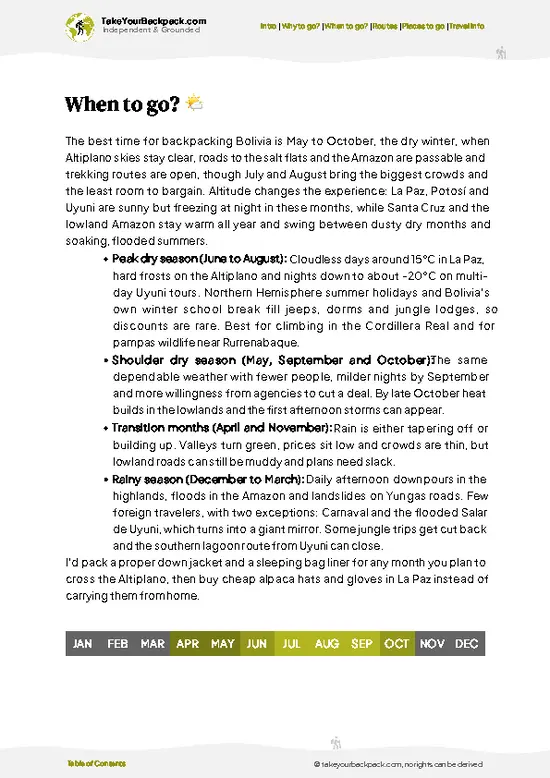
  • Weather: Tarija enjoys a mild, semi-arid climate. The dry season from May to October offers clear skies and minimal rain, perfect for trekking and vineyard visits. The wet season, November to April, brings sporadic showers that can muddy trails and limit outdoor plans.

  • Temperature: Daytime highs range from 20°C to 25°C (68°F to 77°F) during the dry season, cooling off to 10°C to 15°C (50°F to 59°F) at night. The wet season is warmer but more humid, with highs around 25°C to 28°C (77°F to 82°F).

  • Daylight Hours: Tarija’s daylight varies little year-round, averaging about 11 to 12 hours daily. This steady light window means you can plan hikes and activities without drastic shifts in available daylight.

  • Crowds: Peak tourist flow aligns with the dry season, especially July and August,
read more 👉

  • Weather: Tarija enjoys a mild, semi-arid climate. The dry season from May to October offers clear skies and minimal rain, perfect for trekking and vineyard visits. The wet season, November to April, brings sporadic showers that can muddy trails and limit outdoor plans.

  • Temperature: Daytime highs range from 20°C to 25°C (68°F to 77°F) during the dry season, cooling off to 10°C to 15°C (50°F to 59°F) at night. The wet season is warmer but more humid, with highs around 25°C to 28°C (77°F to 82°F).

  • Daylight Hours: Tarija’s daylight varies little year-round, averaging about 11 to 12 hours daily. This steady light window means you can plan hikes and activities without drastic shifts in available daylight.

  • Crowds: Peak tourist flow aligns with the dry season, especially July and August, when locals and visitors flock to festivals and vineyards. Expect more competition for accommodations and higher prices.

  • Seasonal Activities: The grape harvest festival in March is a highlight, but it coincides with the wet season, so weigh the trade-off between cultural immersion and weather challenges. Dry months favor outdoor adventures and wine tours.

  • Price Fluctuations: Accommodation and tours spike during the dry season and festival periods. Traveling in shoulder months like April or October can save money while still enjoying decent weather.


Pro-tip: Aim for late April or early October to balance pleasant weather, fewer crowds, and better prices—your smartest move for a high-value Tarija experience.


source: climatestotravel.comJANJanuary: fair for travelingFEBFebruary: fair for travelingMARMarch: good for travelingAPRApril: highly recommended for travelingMAYMay: excellent for travelingJUNJune: excellent for travelingJULJuly: highly recommended for travelingAUGAugust: highly recommended for travelingSEPSeptember: excellent for travelingOCTOctober: highly recommended for travelingNOVNovember: fair for travelingDECDecember: fair for traveling
bolivia-city-tarija
© Google |

✈️ The backpacker research shortcutBolivia Travel Guide

An offline-friendly backpacking guide with optimized travel routes, ranked highlights, transport advice, and the best areas to stay.
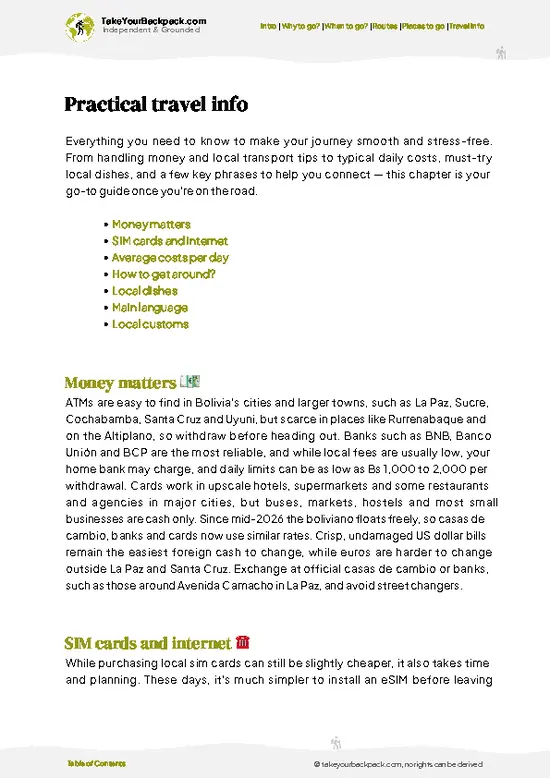
example page 0 from our offline Travel Guide for Bolivia
example page 1 from our offline Travel Guide for Bolivia
example page 2 from our offline Travel Guide for Bolivia
example page 3 from our offline Travel Guide for Bolivia
example page 4 from our offline Travel Guide for Bolivia
example page 5 from our offline Travel Guide for Bolivia
example page 6 from our offline Travel Guide for Bolivia
example page 7 from our offline Travel Guide for Bolivia
The digital guide (346 pages) contains:
82 highlights, ranked by travel appeal
Optimized 7, 14 & 21-day travel routes
Cities, national parks, landmarks, beaches
How to get around
Offline-friendly for travel without Wi-Fi
👉 Click to see all 30+ guide features

📅 Plan smarter in minutes, not weeks
Month by month travel advice
Festivals & national holidays
Budget expectations

🗺️ Go to the right places, skip the overrated ones
Honest pros & cons of destinations
Top hikes, parks & viewpoints
Lesser-known places most travelers miss
Clear “worth it vs skip it” guidance

🛏️ Travel smoothly without rookie mistakes
Best areas to stay
Transport systems explained simply
Common scams & safety advice
SIM cards, money & practical tips

🌍 Understand the country, not just visit it
Culture & traditions
52 Essential phrases & customs
Festivals worth planning around
Traveler-friendly historical context
Insights that make places more meaningful

📱 Built for real travel conditions
Fully downloadable PDF
Works completely offline
Optimized for phone use
Useful in remote areas & buses
Everything in one place
Save weeks of stressful planning
Get instant access to your full guide. 30‑day money-back guarantee.
+ Add another guide for just US$7.80

By proceeding you agree to our terms.
Sent to your inbox immediately after payment • 100% Secure Checkout
Best Backpacking Travel Advisor 2025 tourism awardBest Backpacking
Travel Advisor
2025
What others say about Take Your Backpack Guides:
⭐⭐⭐⭐⭐
Fantastic, amazing amount of information!
⭐⭐⭐⭐⭐
My goodness this is amazing, it's what I've been looking for hats off too you!
⭐⭐⭐⭐⭐
I think this is absolutely BRILLIANT
⭐⭐⭐⭐
Very complete and informative. It's still missing places, but I gotta to commend you
⭐⭐⭐⭐⭐
This is truly amazing, thank you, can't wait to explore it with my kids!
⭐⭐⭐⭐⭐
Awesome resource, thank you!
⭐⭐⭐⭐⭐
This is amazing! Can't wait to explore the ones I haven't seen
⭐⭐⭐⭐
I love this! Well done, great idea.
⭐⭐⭐⭐⭐
Thanks for taking the time to make this gem!
⭐⭐⭐⭐⭐
This might be the best website I've ever seen.
⭐⭐⭐⭐⭐
Congratulations, and thank you so much for your work; it's incredibly valuable.
⭐⭐⭐⭐
In all seriousness I think you did a great job pointing out the important spots
⭐⭐⭐⭐⭐
10/10 very good
⭐⭐⭐⭐⭐
As someone who's only just starting to visit regularly this is awesome, thank you.
⭐⭐⭐⭐
Thank you very much! I'm going to visit my dad, it's going to be very useful!
⭐⭐⭐⭐⭐
This is really cool! We'll be travelling for the first time and this definitely come in handy.
⭐⭐⭐⭐⭐
You are now our minister of culture, congratulations 👨‍💼
⭐⭐⭐⭐⭐
Just wanted to tell you that this is a pearl! Going to follow your recommendations.
⭐⭐⭐⭐⭐
This is so cool. I'll definitely be using the resource for my travels soon.
⭐⭐⭐⭐⭐
This is very impressive! Good work.
⭐⭐⭐⭐⭐
This is an amazing and informative site. Very well done!

🛏️ Where to stay?Best areas and accommodation options

In Tarija, the sweet spot for backpackers is the city center, especially around the Plaza Luis de Fuentes y Vargas. This area nails the balance between safety, social buzz, and budget options. You’re close enough to the main square to soak in the local rhythm—cafés spilling onto sidewalks, street vendors hawking fresh fruit, and a steady stream of locals and travelers mixing it up. Hostels here cater to solo adventurers and groups alike, offering communal spaces that make meeting people effortless without sacrificing security.

Compared to the quieter, more residential neighborhoods on the outskirts, … read more 👉
In Tarija, the sweet spot for backpackers is the city center, especially around the Plaza Luis de Fuentes y Vargas. This area nails the balance between safety, social buzz, and budget options. You’re close enough to the main square to soak in the local rhythm—cafés spilling onto sidewalks, street vendors hawking fresh fruit, and a steady stream of locals and travelers mixing it up. Hostels here cater to solo adventurers and groups alike, offering communal spaces that make meeting people effortless without sacrificing security.

Compared to the quieter, more residential neighborhoods on the outskirts, the city center keeps you plugged into Tarija’s pulse. It’s not just about convenience; it’s about the vibe. You get a sense of community without the touristy overload that can kill authenticity. Plus, the compact layout means you can walk everywhere—markets, bars, and even some cultural spots—saving time and money on transport.

If you stray too far from this hub, you’ll trade comfort and social ease for a quieter, less connected experience. For backpackers, that’s a trade-off that rarely pays off. Stick to the center, and you’re playing the game smart.

🚌 Getting aroundHow to get around Tarija

Tarija moves at a pace that’s part old-school Bolivian charm, part practical rhythm. It’s not a city where you’ll find strict timetables nailed to every corner, but neither is it a free-for-all chaos. Instead, it’s a dance between intuition and routine—locals know when the minibuses start rolling, but they’re flexible enough to wait a bit or haggle a fare. For a budget traveler, understanding this flow means you’re not just a passenger; you’re playing the game with insider knowledge. You’ll trade off time, money, and comfort, but with a clear sense of what you’re gaining and what you’re giving up.


  • Walking: The heart of Tarija is compact and walkable, making this the cheapest and most flexible option. You control the pace, see the city’s details up close, and spend zero bolivianos. It’s
read more 👉
Tarija moves at a pace that’s part old-school Bolivian charm, part practical rhythm. It’s not a city where you’ll find strict timetables nailed to every corner, but neither is it a free-for-all chaos. Instead, it’s a dance between intuition and routine—locals know when the minibuses start rolling, but they’re flexible enough to wait a bit or haggle a fare. For a budget traveler, understanding this flow means you’re not just a passenger; you’re playing the game with insider knowledge. You’ll trade off time, money, and comfort, but with a clear sense of what you’re gaining and what you’re giving up.


  • Walking: The heart of Tarija is compact and walkable, making this the cheapest and most flexible option. You control the pace, see the city’s details up close, and spend zero bolivianos. It’s slow but immersive, perfect for short hops or exploring neighborhoods.


  • Minibuses (Micros): These are the backbone of local transit, running roughly from 6:00 AM to 9:00 PM. Fares hover around 1-2 BOB, making them a steal. They’re slow and often packed, so comfort is minimal, but they cover most routes and give you a real slice of daily life. Expect stops on demand and a bit of a jostle during rush hours.


  • Taxi Colectivos: Shared taxis that run fixed routes, usually from early morning until late evening. They cost more than micros—about 3-5 BOB—but are faster and slightly more comfortable. You’ll sacrifice some budget but gain time, especially if you’re heading to the outskirts or less-served neighborhoods.


  • Private Taxis: Available 24/7, these offer the most comfort and speed but at a premium—expect to pay 15-30 BOB for typical city rides. They’re best for late-night returns or when you’re carrying heavy gear. Negotiation skills come in handy here, and apps are rare, so flagging one down on the street is standard.


  • Bicycle Rentals: A niche but growing option, especially for the adventurous. Rentals cost around 20-40 BOB per day. You get speed and freedom without the cost of taxis, but Tarija’s hilly terrain means this isn’t for the faint-hearted. It’s a trade-off between physical effort and independence.

👛 Costs (as of 4 September 2026)How expensive it really is

Backpacking in Tarija, Bolivia, offers a clear trade-off between cost and comfort, with daily expenses that reflect its laid-back vibe and modest tourist infrastructure.
  • Dorm Accommodation (High Season): Expect to pay around $8 to $12 per night. High season, typically May to September, sees a slight bump due to increased demand, but prices remain reasonable compared to bigger cities.
  • Dorm Accommodation (Off-Season): Dropping to about $5 to $8 per night, off-season rates are friendlier to tight budgets, with fewer travelers competing for beds.
  • Meals: Street food and local markets offer hearty meals for $2 to $4. Small restaurants or cafes might push that to $5-$7 for a full plate, especially if you opt for traditional dishes like pique macho or empanadas.
  • Local Transport: Short rides on
read more 👉
Backpacking in Tarija, Bolivia, offers a clear trade-off between cost and comfort, with daily expenses that reflect its laid-back vibe and modest tourist infrastructure.
  • Dorm Accommodation (High Season): Expect to pay around $8 to $12 per night. High season, typically May to September, sees a slight bump due to increased demand, but prices remain reasonable compared to bigger cities.
  • Dorm Accommodation (Off-Season): Dropping to about $5 to $8 per night, off-season rates are friendlier to tight budgets, with fewer travelers competing for beds.
  • Meals: Street food and local markets offer hearty meals for $2 to $4. Small restaurants or cafes might push that to $5-$7 for a full plate, especially if you opt for traditional dishes like pique macho or empanadas.
  • Local Transport: Short rides on minibuses or shared taxis cost roughly $0.30 to $0.50. These are the backbone of getting around town, though schedules can be loose and routes a bit chaotic.
  • City Transport Pass: Tarija doesn’t have a formal city transport pass system; daily transport expenses are usually paid per ride, so budgeting around $1.50 to $2 for multiple trips is wise.
  • Basic Activities/Entry Fees: Museums and cultural sites typically charge between $1 and $3. Outdoor activities like visiting nearby vineyards or natural parks might cost $5 to $10 if you hire a guide or pay entrance fees.
  • Miscellaneous Expenses: This covers bottled water, snacks, occasional coffee, or small souvenirs, generally around $1 to $3 daily.

All told, a backpacker in Tarija can expect to spend roughly $15 to $25 per day, depending on how much comfort they want and how often they eat out or explore paid attractions. This range keeps you comfortably independent without pushing into luxury, making it a smart choice for travelers who want to stretch their budget while still enjoying what the city offers.
⚠️ Prices can change and everyone travels differently, so take this as a rough guide. Hope it helps you plan your adventure!

🚌 Day tripsWhere to go beyond the main area

Tarija, Bolivia, is a backpacker’s dream base for day trips, offering a blend of culture, nature, and adventure. With its mild climate and stunning landscapes, you’ll find plenty to explore without the hassle of overnight stays.

Valle de la Concepción
Just a 30-minute drive from Tarija, Valle de la Concepción is a paradise for wine lovers and nature enthusiasts. The rolling vineyards are not just picturesque; they produce some of Bolivia’s best wines. Spend your day tasting local varietals and soaking in the breathtaking views. Budget around $10 for transport and tastings. The best time to visit is during the grape harvest in March and April. A common mistake? Skipping the small, family-run wineries for the larger, commercial ones. They often have the most character and flavor.


Cerro read more 👉
Tarija, Bolivia, is a backpacker’s dream base for day trips, offering a blend of culture, nature, and adventure. With its mild climate and stunning landscapes, you’ll find plenty to explore without the hassle of overnight stays.

Valle de la Concepción
Just a 30-minute drive from Tarija, Valle de la Concepción is a paradise for wine lovers and nature enthusiasts. The rolling vineyards are not just picturesque; they produce some of Bolivia’s best wines. Spend your day tasting local varietals and soaking in the breathtaking views. Budget around $10 for transport and tastings. The best time to visit is during the grape harvest in March and April. A common mistake? Skipping the small, family-run wineries for the larger, commercial ones. They often have the most character and flavor.


Cerro Pucara
About an hour from Tarija, Cerro Pucara offers a fascinating glimpse into pre-Columbian history. This ancient fortress, perched on a hill, provides panoramic views of the surrounding valleys. The hike up is invigorating, and the site itself is rich with archaeological significance. Expect to spend around $5 on transport and entry fees. The dry season, from May to October, is ideal for clear skies. Many first-timers underestimate the hike’s intensity; bring plenty of water and wear sturdy shoes.


La Laguna de los Patos
A little over an hour away, La Laguna de los Patos is a serene escape. This lagoon is perfect for a relaxing day of picnicking, birdwatching, or simply enjoying the tranquility. The round trip will cost you about $15 for transport and snacks. Visit during the dry season for the best experience, as the rainy season can muddy the trails. A common oversight is not checking the weather beforehand; a sunny day makes all the difference.


Chiquitos
Roughly two hours from Tarija, Chiquitos is a charming town known for its colonial architecture and vibrant culture. Spend your day wandering the streets, visiting local artisans, and enjoying traditional cuisine. Budget around $20 for transport and meals. The best time to go is during the annual music festival in August. First-timers often miss out on the local markets; they’re a treasure trove of unique crafts and flavors.
Want to know what more Bolivia offers?
The Bolivia Travel Guide describes 82 highlights, from cities to national parks, from beaches to hikes

Get the Travel Guide -

🍲 FoodLocal Flavors for Backpackers

In Tarija, food and drink are a vibrant part of the local culture, and you’ll want to dive right in. Start with empanadas, stuffed pastries that come with a variety of fillings, from savory meats to cheese. These are often sold at bustling street stalls where the aroma of frying dough fills the air. Pair them with a glass of chicha, a traditional fermented corn drink that’s both refreshing and a bit tangy.

Don’t miss out on asado, a barbecue tradition where locals gather to grill meats over an open flame. The social aspect is key; it’s not just about the food, but the camaraderie. You’ll find these gatherings in parks or at casual eateries, where the laughter and chatter create a lively atmosphere.

For a sweet treat, try salteñas, a type of baked pastry filled with juicy meat and spices. … read more 👉
In Tarija, food and drink are a vibrant part of the local culture, and you’ll want to dive right in. Start with empanadas, stuffed pastries that come with a variety of fillings, from savory meats to cheese. These are often sold at bustling street stalls where the aroma of frying dough fills the air. Pair them with a glass of chicha, a traditional fermented corn drink that’s both refreshing and a bit tangy.

Don’t miss out on asado, a barbecue tradition where locals gather to grill meats over an open flame. The social aspect is key; it’s not just about the food, but the camaraderie. You’ll find these gatherings in parks or at casual eateries, where the laughter and chatter create a lively atmosphere.

For a sweet treat, try salteñas, a type of baked pastry filled with juicy meat and spices. They’re best enjoyed in the morning, often accompanied by a cup of mate de coca, a soothing herbal tea that helps with altitude adjustment.

Eating in Tarija is about embracing the local rhythm. Don’t rush; savor each bite and soak in the communal spirit.

🛡️ SafetyStaying Safe: What Travelers Should Know

Tarija is generally safe, but like any city, it has its quirks. Stay alert in crowded markets, especially around the Plaza Principal, where pickpockets might lurk. If you’re solo, avoid wandering too far from the main streets after dark; stick to well-lit areas and keep your phone handy for navigation.

Scams are rare, but be cautious with street vendors who might inflate prices for tourists. Always ask for the price upfront, especially for food or drinks. A common annoyance is the occasional aggressive taxi driver; use a rideshare app when possible to sidestep haggling.

Carry yourself confidently. A relaxed demeanor can deter unwanted attention. Trust your instincts—if something feels off, it probably is. Enjoy the vibrant culture, but stay aware, and you’ll navigate Tarija like a pro.

FAQTraveler FAQ

2 to 3 days are sufficient to explore Tarija. This allows time to visit the main attractions like the Plaza Luis de Fuentes and the nearby vineyards. You can also enjoy local cuisine and the relaxed atmosphere without rushing.
Yes, Tarija is generally safe for solo backpackers. Standard precautions like avoiding poorly lit areas at night and keeping valuables secure are advised. The city has a low crime rate compared to larger Bolivian cities.
Tarija is known for its wine production and pleasant climate. It is Bolivia's main wine region, with vineyards producing varieties like Muscat and Torrontés. The city also has colonial architecture and vibrant local festivals.
⚠️ Things can change over time, so always validate details locally before you go.

Other Bolivian cities near Tarija

Explore more nearby:

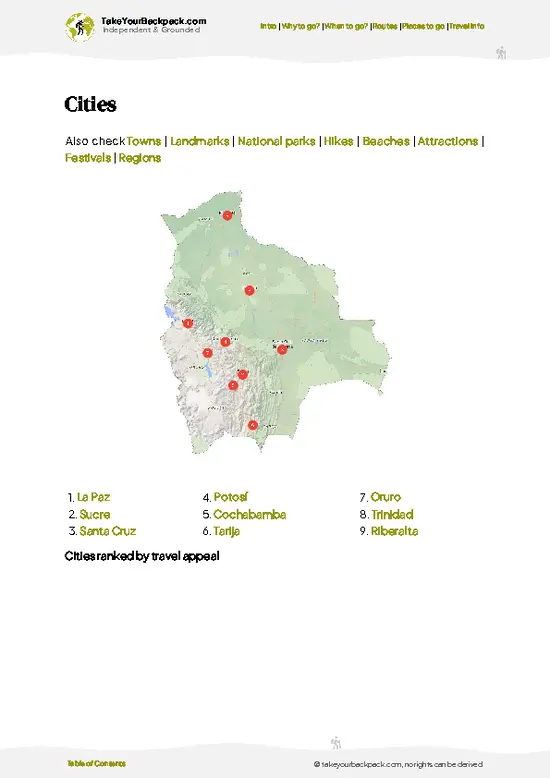
  • Potosi—silver mines, colonial facades, thin air| 241 km away
  • Sucre—whitewashed buildings, university town, gentle hills| 282 km away
  • Santa Cruz—tropical city, modern sprawl, nightlife districts| 444 km away

💡 Not sure where to go next?
Create a personalized itinerary for Bolivia including Tarija and the places that fit your trip.

Generate my itinerary

👉 Discover all cities

Or checkout all Bolivia has to offer (think cities, towns, villages, national parks, hikes, beaches, festivals)
Country photo of Bolivia

We 💚 feedbackFinal thoughts on visiting Tarija

Tarija is a treasure for wine lovers. The local vineyards offer tastings that rival those in more famous regions, all while soaking in the stunning Andean backdrop. But be ready for the altitude; it can hit hard if you’re not acclimated. Take it slow, sip your wine, and enjoy the laid-back vibe. It’s a trade-off worth making for those unforgettable flavors and views.

✈️ When did I visit Bolivia?
Bolivia I visited during my half year trip through South and Central America back in 2003

✍️ Help improve this page!
The information on this page is based on my own backpacking experience in Bolivia, supplemented with up-to-date research and feedback from other travelers. Travel details can change, so if you notice anything outdated or incomplete, feel free to let me know.


🙋‍♂️ Give feedback

👋 Meet the founderWho’s Behind Take Your Backpack?

Johan, backpacker and founder of TakeYourBackpackHi, I’m Johan (Netherlands 🇳🇱), the creator of TakeYourBackpack. Over the past decade, I’ve backpacked through 80+ countries across six continents, gaining extensive experience with independent travel, long-term trips, and overland routes.

This site is built on a combination of firsthand travel experience and carefully curated insights from other backpackers. Many guides are based on places I’ve personally visited, while others bring together tips, observations, and practical advice shared by trusted travelers I’ve met along the way.

The goal is to provide realistic, experience-driven guidance — not generic itineraries — so you can explore destinations with better context, clearer expectations, and more confidence.

Get full Bolivia guide •
Instant download • 82 highlights • Full Offline guide