×

Bolivia🇧🇴 | citiesSucrewhitewashed buildings, university town, gentle hills | things to do and best time to go

Explore Santa CruzExplore Tarija

Backpacking in Sucre
UNESCO World Heritage site
🏆 Top pickcity ranked #2
By Johan Kruseman 🇳🇱 | Updated June 9, 2026

Your spoon scrapes the last streak of maracuyá ice cream from a plastic cup while church bells clash with reggaeton from a passing taxi; exhaust, fresh bread, and eucalyptus leaves all hang in the same cool, thin air. White walls glow hard in the midday sun. A kid weaves through the plaza selling salteñas, and somewhere above, a rooftop bar blender screams into the blue.

Sucre sits in south-central Bolivia, high but gentler than the Andean bruisers like Potosí or La Paz. For backpackers, it’s the “exhale” city: cheap Spanish schools, long-term hostel deals, and enough colonial architecture and museums to feel cultured without working too hard. It’s safer and calmer than most Bolivian cities, but that also means nightlife is social rather than wild. You’ll meet other travelers easily, especially around language schools and Mercado Central lunches. I stay longer here than I plan, every time—and I’m rarely the only one.

Discover everything you want to know in the 📖 Bolivia Travel Guide.


Get your Bolivia guide
82 ranked highlights, routes & tips, works offline (350 pages)
Loading the map 🌍
CLICK TO FILTER
cities
towns
landmarks
national parks
hikes
beaches
attractions
festivals
regions
SHOW COUNTRY’S BESTSHOW ALL

✨ Why go?
Ranked #2 city in Bolivia
The unique appeal for travelers

Sucre is a backpacker’s haven that strikes a balance between affordability and experience. It’s not just a stopover; it’s a strategic basecamp for day trips to stunning landscapes and cultural sites. The walkability of the city makes it easy to explore on foot, allowing you to soak in the colonial architecture and vibrant street life without breaking a sweat.

Hostels here are not just places to crash; they’re social hubs where you can swap stories and tips with fellow travelers. The food scene is a delightful mix of local markets and cozy cafes, offering everything from hearty Bolivian fare to international options that won’t dent your budget.

Nightlife? It’s lively but laid-back, perfect for unwinding after a day of exploration. Plus, Sucre’s easy onward travel options mean you can seamlessly … read more 👉
Sucre is a backpacker’s haven that strikes a balance between affordability and experience. It’s not just a stopover; it’s a strategic basecamp for day trips to stunning landscapes and cultural sites. The walkability of the city makes it easy to explore on foot, allowing you to soak in the colonial architecture and vibrant street life without breaking a sweat.

Hostels here are not just places to crash; they’re social hubs where you can swap stories and tips with fellow travelers. The food scene is a delightful mix of local markets and cozy cafes, offering everything from hearty Bolivian fare to international options that won’t dent your budget.

Nightlife? It’s lively but laid-back, perfect for unwinding after a day of exploration. Plus, Sucre’s easy onward travel options mean you can seamlessly continue your journey, whether you’re heading to Potosí or the lush valleys of Tarija. This city isn’t just a pit stop; it’s a high-value experience that enriches your backpacking route.
Want to include Sucre in your Bolivia route?
Create a personalized Bolivia itinerary that includes Sucre and the places that fit your trip — based on your travel style, budget, and available time. Get your route in seconds.

Generate my trip

💡 HighlightsWhat this place is best known for

  • Plaza 25 de Mayo — The beating heart of Sucre: colonial facades, the cathedral, cafés and people-watching. Great place to orient yourself and feel the city’s rhythm, especially at dusk when locals spill onto the square.
  • Casa de la Libertad — The museum where Bolivia’s independence was debated and declared. Original documents, colonial rooms and guided tours that actually make the messy history click.
  • Convento de La Recoleta & Mirador — A calm monastery with a tiny museum and one of the best panoramic viewpoints over Sucre’s white roofs. Easy climb, great light for photos and a mellow craft market below.
  • Parque Cretácico (Cal Orck’o) — A dramatic vertical cliff of dinosaur tracks right at the city’s edge. Seeing fossilized footprints up close is oddly humbling and surprisingly accessible
read more 👉
  • Plaza 25 de Mayo — The beating heart of Sucre: colonial facades, the cathedral, cafés and people-watching. Great place to orient yourself and feel the city’s rhythm, especially at dusk when locals spill onto the square.
  • Casa de la Libertad — The museum where Bolivia’s independence was debated and declared. Original documents, colonial rooms and guided tours that actually make the messy history click.
  • Convento de La Recoleta & Mirador — A calm monastery with a tiny museum and one of the best panoramic viewpoints over Sucre’s white roofs. Easy climb, great light for photos and a mellow craft market below.
  • Parque Cretácico (Cal Orck’o) — A dramatic vertical cliff of dinosaur tracks right at the city’s edge. Seeing fossilized footprints up close is oddly humbling and surprisingly accessible — perfect for a short, geeky detour.
  • Calle Jaén — A perfectly preserved colonial street lined with small museums, historic houses and artisan shops. It’s compact, atmospheric and full of bite-sized museums you can hop through in an afternoon.
  • Museo de Arte Indígena ASUR — One of the best places in town to see Andean textiles, silverwork and indigenous art with context. The pieces are beautiful and the stories behind them give Sucre depth beyond the whitewash.
  • Catedral Metropolitana & Museo del Tesoro — The cathedral on the main square is elegant inside; the attached treasury/museum shows impressive colonial silver, liturgical art and local craftsmanship.
  • Mercado Central — Not glamorous, but vital. Fresh food stalls, cheap hearty lunches (try a salteña or sopa), colorful produce and real daily life — the place where you feel how people here eat and live.
  • Mirador Killi Killi — A lesser-known hilltop lookout with old fortifications and sweeping city views. Fewer tourists than Recoleta and a nice spot to watch the sunset or catch a local game below.
  • Iglesia y Convento de San Felipe Neri — A quieter colonial church and cloister with interesting architecture and calm courtyards. It’s a good pause from the busier tourist spots and often hosts local religious art exhibitions.
For day trips outside Sucre, people commonly visit the Tarabuco market (traditional weaving and strong local culture), the Maragua geological crater and viewpoint (striking rock formations and easy hikes); my personal favorite is Tarabuco for the colors, people and authentic market vibe.
Spotted a mistake or missing something? Contact us.

Things to do in Sucre

Ratings based on Tripadvisor reviews. When you book through this link, you support our work at no extra cost to you.

🏘️ NeighborhoodsUnderstanding the local layout

Sucre is a charming city that balances history and modernity, making it a backpacker’s delight. Here’s how its neighborhoods stack up:

Centro Histórico: This is the heart of Sucre. You’ll find colonial architecture, vibrant markets, and a plethora of cafes. It’s walkable, with most attractions within a 15-minute stroll. Costs are moderate; you can find budget hostels and mid-range hotels. Nightlife is lively but not overwhelming, perfect for a short stay.

San Francisco: A bit quieter, this area offers a more local vibe. It’s still close to the action but feels less touristy. Prices are slightly lower than in the Centro. Walkability is decent, though you might need to hike a bit to reach some attractions. Ideal for longer stays if you want to immerse yourself in local life.

La Recoleta: … read more 👉
Sucre is a charming city that balances history and modernity, making it a backpacker’s delight. Here’s how its neighborhoods stack up:

Centro Histórico: This is the heart of Sucre. You’ll find colonial architecture, vibrant markets, and a plethora of cafes. It’s walkable, with most attractions within a 15-minute stroll. Costs are moderate; you can find budget hostels and mid-range hotels. Nightlife is lively but not overwhelming, perfect for a short stay.

San Francisco: A bit quieter, this area offers a more local vibe. It’s still close to the action but feels less touristy. Prices are slightly lower than in the Centro. Walkability is decent, though you might need to hike a bit to reach some attractions. Ideal for longer stays if you want to immerse yourself in local life.

La Recoleta: Known for its stunning views and peaceful atmosphere, this neighborhood is a bit of a trek from the city center. It’s more upscale, with boutique hotels and cozy cafes. While it lacks vibrant nightlife, it’s perfect for those seeking tranquility. Great for longer stays, especially if you enjoy morning walks with a view.

El Tejar: This area is more residential and offers a glimpse into everyday life in Sucre. It’s budget-friendly, with hostels and local eateries. Walkability is moderate, and you’ll need to rely on public transport or taxis for longer distances. Best for those looking to stay longer and experience the local culture.

⌛️ 1 daySeeing the highlights in 24 hours

Sucre, Bolivia, is a charming city that feels like a living museum, with its whitewashed colonial buildings and vibrant local culture. It’s a place where history and modern life intertwine seamlessly, making it perfect for a one-day adventure.

Start your morning in the picturesque Plaza 25 de Mayo. Grab a coffee at a local café and soak in the atmosphere. The plaza is surrounded by stunning architecture, including the Cathedral and the Casa de la Libertad, where Bolivia’s independence was declared. Spend an hour wandering the cobblestone streets of the nearby neighborhood, San Felipe, where you can stumble upon artisan shops and local markets. Don’t miss the Mercado Central for a taste of fresh juices and local snacks—try the salteñas, a savory pastry that’s a must-have.

As the sun climbs … read more 👉
Sucre, Bolivia, is a charming city that feels like a living museum, with its whitewashed colonial buildings and vibrant local culture. It’s a place where history and modern life intertwine seamlessly, making it perfect for a one-day adventure.

Start your morning in the picturesque Plaza 25 de Mayo. Grab a coffee at a local café and soak in the atmosphere. The plaza is surrounded by stunning architecture, including the Cathedral and the Casa de la Libertad, where Bolivia’s independence was declared. Spend an hour wandering the cobblestone streets of the nearby neighborhood, San Felipe, where you can stumble upon artisan shops and local markets. Don’t miss the Mercado Central for a taste of fresh juices and local snacks—try the salteñas, a savory pastry that’s a must-have.

As the sun climbs higher, head to the Recoleta neighborhood. The viewpoint here offers a panoramic view of the city, perfect for snapping some photos. The Recoleta Monastery is also worth a visit; it’s quieter than the more touristy spots and gives you a glimpse into local religious life.

In the afternoon, make your way to the Parque Cretácico, a bit off the beaten path but fascinating. This outdoor museum showcases dinosaur footprints embedded in the rock, a unique slice of Bolivia’s prehistoric past. It’s a short taxi ride from the city center, and the experience is both educational and awe-inspiring.

As evening approaches, return to the city center and enjoy dinner at a local eatery. Try some traditional Bolivian dishes like pique a lo macho. Afterward, stroll through the lively streets, where you might catch a local dance performance or simply enjoy the ambiance.

By the end of the day, you’ll have experienced Sucre’s rich history, culture, and flavors, all while feeling like you’ve uncovered a few of its secrets.
Turn your Sucre visit into an Bolivia adventure
Build a complete Bolivia route with Sucre, hidden gems, must-see destinations, and realistic travel times included.

Generate my trip

🌤️ When to go?Best time to visit Sucre


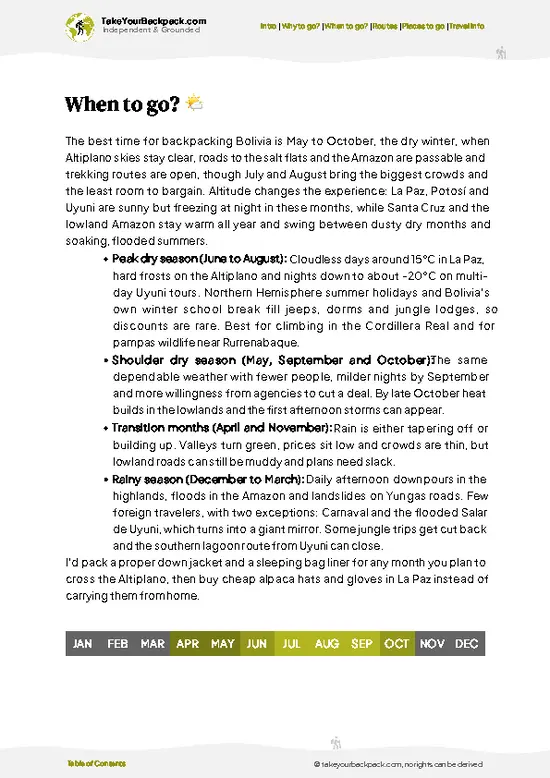
  • Weather: Sucre’s dry season runs May to October, offering clear skies and minimal rain—ideal for trekking and city strolls. The wet season, November to April, brings afternoon showers that can disrupt plans but also cool the air.

  • Temperature: Daytime highs hover around 20-22°C (68-72°F) year-round, but nights dip sharply, especially in the dry season, sometimes below 5°C (41°F). Pack layers to handle this swing.

  • Daylight Hours: Sucre enjoys roughly 11 to 12 hours of daylight year-round, with slightly longer days in December and January. This steady rhythm means you won’t lose precious daylight regardless of when you visit.

  • Crowds: Peak tourist influx aligns with the dry season and major festivals like Fiesta de la Virgen de Guadalupe in October. Expect more travelers and higher prices
read more 👉

  • Weather: Sucre’s dry season runs May to October, offering clear skies and minimal rain—ideal for trekking and city strolls. The wet season, November to April, brings afternoon showers that can disrupt plans but also cool the air.

  • Temperature: Daytime highs hover around 20-22°C (68-72°F) year-round, but nights dip sharply, especially in the dry season, sometimes below 5°C (41°F). Pack layers to handle this swing.

  • Daylight Hours: Sucre enjoys roughly 11 to 12 hours of daylight year-round, with slightly longer days in December and January. This steady rhythm means you won’t lose precious daylight regardless of when you visit.

  • Crowds: Peak tourist influx aligns with the dry season and major festivals like Fiesta de la Virgen de Guadalupe in October. Expect more travelers and higher prices during these times.

  • Seasonal Activities: The dry months are perfect for exploring nearby ruins and hiking. The wet season softens the landscape, making it lush but less accessible for outdoor adventures.

  • Price Fluctuations: Accommodation and tours spike in the dry season and festival periods. The wet season offers better deals but comes with the trade-off of unpredictable weather.


Pro-tip: Aim for shoulder months like April or October—weather is mostly dry, crowds thin, and prices moderate, giving you the best bang for your buck without sacrificing comfort or experience.


source: climatestotravel.comJANJanuary: fair for travelingFEBFebruary: fair for travelingMARMarch: fair for travelingAPRApril: highly recommended for travelingMAYMay: excellent for travelingJUNJune: excellent for travelingJULJuly: excellent for travelingAUGAugust: excellent for travelingSEPSeptember: excellent for travelingOCTOctober: highly recommended for travelingNOVNovember: fair for travelingDECDecember: fair for traveling
bolivia-city-sucre
© Google | Alby Set

✈️ The backpacker research shortcutBolivia Travel Guide

An offline-friendly backpacking guide with optimized travel routes, ranked highlights, transport advice, and the best areas to stay.
example page 0 from our offline Travel Guide for Bolivia
example page 1 from our offline Travel Guide for Bolivia
example page 2 from our offline Travel Guide for Bolivia
example page 3 from our offline Travel Guide for Bolivia
example page 4 from our offline Travel Guide for Bolivia
example page 5 from our offline Travel Guide for Bolivia
example page 6 from our offline Travel Guide for Bolivia
example page 7 from our offline Travel Guide for Bolivia
The digital guide (350 pages) contains:
82 highlights, ranked by travel appeal
Optimized 7, 14 & 21-day travel routes
Cities, national parks, landmarks, beaches
How to get around
Offline-friendly for travel without Wi-Fi
👉 Click to see all 30+ guide features

📅 Plan smarter in minutes, not weeks
Month by month travel advice
Festivals & national holidays
Budget expectations

🗺️ Go to the right places, skip the overrated ones
Honest pros & cons of destinations
Top hikes, parks & viewpoints
Lesser-known places most travelers miss
Clear “worth it vs skip it” guidance

🛏️ Travel smoothly without rookie mistakes
Best areas to stay
Transport systems explained simply
Common scams & safety advice
SIM cards, money & practical tips

🌍 Understand the country, not just visit it
Culture & traditions
52 Essential phrases & customs
Festivals worth planning around
Traveler-friendly historical context
Insights that make places more meaningful

📱 Built for real travel conditions
Fully downloadable PDF
Works completely offline
Optimized for phone use
Useful in remote areas & buses
Everything in one place
Save weeks of stressful planning
Get instant access to your full guide. 30‑day money-back guarantee.


By proceeding you agree to our terms.
Sent to your inbox immediately after payment • 100% Secure Checkout
Best Backpacking Travel Advisor 2025 tourism awardBest Backpacking
Travel Advisor
2025
What others say about Take Your Backpack Guides:
⭐⭐⭐⭐⭐
Fantastic, amazing amount of information!
⭐⭐⭐⭐⭐
My goodness this is amazing, it's what I've been looking for hats off too you!
⭐⭐⭐⭐⭐
I think this is absolutely BRILLIANT
⭐⭐⭐⭐
Very complete and informative. It's still missing places, but I gotta to commend you
⭐⭐⭐⭐⭐
This is truly amazing, thank you, can't wait to explore it with my kids!
⭐⭐⭐⭐⭐
Awesome resource, thank you!
⭐⭐⭐⭐⭐
This is amazing! Can't wait to explore the ones I haven't seen
⭐⭐⭐⭐
I love this! Well done, great idea.
⭐⭐⭐⭐⭐
Thanks for taking the time to make this gem!
⭐⭐⭐⭐⭐
This might be the best website I've ever seen.
⭐⭐⭐⭐⭐
Congratulations, and thank you so much for your work; it's incredibly valuable.
⭐⭐⭐⭐
In all seriousness I think you did a great job pointing out the important spots
⭐⭐⭐⭐⭐
10/10 very good
⭐⭐⭐⭐⭐
As someone who's only just starting to visit regularly this is awesome, thank you.
⭐⭐⭐⭐
Thank you very much! I'm going to visit my dad, it's going to be very useful!
⭐⭐⭐⭐⭐
This is really cool! We'll be travelling for the first time and this definitely come in handy.
⭐⭐⭐⭐⭐
You are now our minister of culture, congratulations 👨‍💼
⭐⭐⭐⭐⭐
Just wanted to tell you that this is a pearl! Going to follow your recommendations.
⭐⭐⭐⭐⭐
This is so cool. I'll definitely be using the resource for my travels soon.
⭐⭐⭐⭐⭐
This is very impressive! Good work.
⭐⭐⭐⭐⭐
This is an amazing and informative site. Very well done!

🛏️ Where to stay?Best areas and accommodation options

Sucre’s backpacker sweet spot is the area around the city center, especially near Plaza 25 de Mayo. This neighborhood nails the balance between safety, social buzz, and budget options. It’s where you’ll find a cluster of hostels packed with fellow travelers, making it easy to swap stories or find a hiking buddy. The streets here are lively but not chaotic, so you get that social vibe without feeling overwhelmed or unsafe.

Compared to the more residential or upscale parts of Sucre, the city center offers a practical advantage: everything’s walkable. Markets, cafes, and cultural spots are just … read more 👉
Sucre’s backpacker sweet spot is the area around the city center, especially near Plaza 25 de Mayo. This neighborhood nails the balance between safety, social buzz, and budget options. It’s where you’ll find a cluster of hostels packed with fellow travelers, making it easy to swap stories or find a hiking buddy. The streets here are lively but not chaotic, so you get that social vibe without feeling overwhelmed or unsafe.

Compared to the more residential or upscale parts of Sucre, the city center offers a practical advantage: everything’s walkable. Markets, cafes, and cultural spots are just steps away, which means you save time and money on transport. Plus, the hostels here tend to have communal spaces that encourage interaction—think shared kitchens and common rooms where plans form organically.

If you stray too far from this hub, you’ll find quieter, more local neighborhoods that might be safer but lack the social pulse and budget-friendly lodging backpackers crave. On the flip side, the outskirts can be cheaper but often require taxis or buses, eating into your time and comfort. So, for a backpacker, the city center isn’t just a place to crash; it’s the strategic base camp where you maximize your experience without unnecessary trade-offs.

🚌 Getting aroundMoving around without the hassle

Sucre moves at its own pace—somewhere between the deliberate calm of a colonial town and the unpredictable rhythm of a place where schedules are more suggestion than law. Here, time bends to the sun and the chatter of locals rather than strict timetables. You’ll find that the city’s flow rewards those who read the subtle cues: the moment a bus fills up, the pause before a taxi pulls away, the way pedestrians navigate narrow streets with practiced ease. Understanding this flow is your first win. It’s not about rushing; it’s about mastering the dance between time, money, and comfort to get where you want without losing the essence of Sucre.


  • Walking: Sucre’s compact center is a walker’s playground. No cost, full control over your pace, and the best way to soak in the city’s whitewashed charm
read more 👉
Sucre moves at its own pace—somewhere between the deliberate calm of a colonial town and the unpredictable rhythm of a place where schedules are more suggestion than law. Here, time bends to the sun and the chatter of locals rather than strict timetables. You’ll find that the city’s flow rewards those who read the subtle cues: the moment a bus fills up, the pause before a taxi pulls away, the way pedestrians navigate narrow streets with practiced ease. Understanding this flow is your first win. It’s not about rushing; it’s about mastering the dance between time, money, and comfort to get where you want without losing the essence of Sucre.


  • Walking: Sucre’s compact center is a walker’s playground. No cost, full control over your pace, and the best way to soak in the city’s whitewashed charm and vibrant street life. Expect to cover most key sights within 30-45 minutes on foot. Comfort depends on your shoes and the midday sun, which can be intense.


  • Microbuses: These minibuses are the backbone of local transit, dirt-cheap at around 1-2 BOB (Bolivianos) per ride. They run roughly from 6 a.m. to 9 p.m., but don’t expect a strict schedule—buses leave when full. They’re slow and crowded, but unbeatable for budget travelers who want to stretch their money and experience local life firsthand.


  • Colectivos: Shared taxis that operate on fixed routes but leave only when full. Slightly faster than microbuses and more comfortable, with fares around 3-5 BOB. They run from early morning until about 8 p.m. A good middle ground if you want to save time without paying for a private taxi.


  • Private Taxis: Readily available and negotiable, expect to pay 15-30 BOB for short trips within the city. They offer door-to-door comfort and flexibility but at a premium compared to public options. Best for late-night travel or when you’re hauling gear and want to skip the wait.


  • Bicycle Rentals: A growing option for the adventurous, costing about 20-30 BOB per day. Sucre’s hilly terrain demands some fitness, but cycling lets you cover more ground than walking while keeping costs low and maintaining control over your schedule. Not the fastest, but a solid balance of comfort and economy.


Mastering Sucre’s transit means balancing patience with strategic choices. Walk when you want to linger, hop microbuses to save cash, and call a taxi when time or comfort trumps budget. Each mode is a piece of the puzzle—knowing which to pick and when turns travel logistics into a game you’re winning.

👛 Costs (as of 2 March 2026)What things cost and how to budget

Backpacking in Sucre, Bolivia, offers a clear trade-off map between time, money, and comfort, with costs that reflect its status as a laid-back, affordable city for independent travelers.
  • Dorm Accommodation (High Season): Expect to pay around $8 to $12 per night in popular hostels during peak months (June to August). These dorms are basic but clean, often with included breakfast and a social vibe.
  • Dorm Accommodation (Off-Season): Prices drop to about $5 to $8 per night when the tourist flow slows, giving you more room to negotiate or score last-minute deals.
  • Meals: Street food and local markets are your best friends here, with meals ranging from $1.50 to $3.50. A sit-down meal at a modest restaurant might set you back $4 to $7, depending on the place and portion size.
  • Local Transport:
read more 👉
Backpacking in Sucre, Bolivia, offers a clear trade-off map between time, money, and comfort, with costs that reflect its status as a laid-back, affordable city for independent travelers.
  • Dorm Accommodation (High Season): Expect to pay around $8 to $12 per night in popular hostels during peak months (June to August). These dorms are basic but clean, often with included breakfast and a social vibe.
  • Dorm Accommodation (Off-Season): Prices drop to about $5 to $8 per night when the tourist flow slows, giving you more room to negotiate or score last-minute deals.
  • Meals: Street food and local markets are your best friends here, with meals ranging from $1.50 to $3.50. A sit-down meal at a modest restaurant might set you back $4 to $7, depending on the place and portion size.
  • Local Transport: Short rides on minibuses or shared taxis cost roughly $0.30 to $0.50. They’re frequent but can be crowded and slow, so factor in extra time if you’re on a tight schedule.
  • City Transport Pass: Sucre doesn’t have a formal city transport pass system like larger cities. Budget around $1 to $2 daily if you rely heavily on taxis or multiple bus rides.
  • Basic Activities/Entry Fees: Museums, parks, and cultural sites typically charge between $1 and $3. Some guided tours or special exhibits might push this to $5 or $7, but nothing here breaks the bank.
  • Miscellaneous Expenses: Think bottled water, snacks, occasional laundry, or a coffee—budget $2 to $4 daily. Sucre’s low prices mean you can afford small comforts without guilt.

All told, your daily budget in Sucre ranges from about $15 on a shoestring to $30 if you lean toward a bit more comfort and convenience. This city rewards those who balance patience with savvy spending—waiting for off-peak dorm deals or choosing local eateries can stretch your dollars far without sacrificing the experience.
⚠️ Prices can change and everyone travels differently, so take this as a rough guide. Hope it helps you plan your adventure!

🚌 Day tripsBest day trips from Sucre

Sucre is a backpacker’s dream base, offering a blend of culture, history, and stunning landscapes just a day trip away. Here’s how to maximize your time, money, and comfort while exploring the region.

Potosí
A trip to Potosí is like stepping into a living history book. Just a three-hour bus ride from Sucre, this former silver mining hub is rich in stories and stunning colonial architecture. You can explore the infamous Cerro Rico mountain, where miners still work under challenging conditions. Budget around $10 for the bus and a guided tour, which is worth every boliviano for the insight into the miners’ lives. The best time to visit is during the dry season (May to October) when the weather is more forgiving. A common mistake? Skipping the guided tour; going solo means missing the deeper … read more 👉
Sucre is a backpacker’s dream base, offering a blend of culture, history, and stunning landscapes just a day trip away. Here’s how to maximize your time, money, and comfort while exploring the region.

Potosí
A trip to Potosí is like stepping into a living history book. Just a three-hour bus ride from Sucre, this former silver mining hub is rich in stories and stunning colonial architecture. You can explore the infamous Cerro Rico mountain, where miners still work under challenging conditions. Budget around $10 for the bus and a guided tour, which is worth every boliviano for the insight into the miners’ lives. The best time to visit is during the dry season (May to October) when the weather is more forgiving. A common mistake? Skipping the guided tour; going solo means missing the deeper context of this fascinating place.


Tarabuco
Every Saturday, Tarabuco hosts a vibrant market that’s a feast for the senses. Just an hour’s bus ride from Sucre, this town is known for its indigenous culture and colorful textiles. You’ll find everything from handmade crafts to local foods. Bring about $5 for the bus and some cash for snacks and souvenirs. The market is best experienced early in the day to avoid the crowds. A rookie error is arriving too late and missing the best of the action.


La Laguna de los Cóndores
For a taste of nature, head to La Laguna de los Cóndores, about a two-hour journey from Sucre. This serene lake is surrounded by stunning mountains and is perfect for a day of hiking and picnicking. The round trip will cost you around $15, including transport and a packed lunch. The dry season is ideal for hiking, as trails can get muddy during the rainy months. Don’t forget to bring enough water; many first-timers underestimate the hike’s demands.


Cretaceous Park
Just a short 30-minute drive from Sucre, Cretaceous Park is a unique spot where you can see real dinosaur footprints. This quirky attraction is perfect for families and those curious about paleontology. Entry is about $5, and you can easily spend a few hours exploring the exhibits. The best time to visit is in the morning when it’s cooler. A common pitfall is not allowing enough time to fully explore the park; it’s more extensive than it looks.
Want to know what more Bolivia offers?
The Bolivia Travel Guide describes 82 highlights, from cities to national parks, from beaches to hikes

Get the Travel Guide -

🍲 FoodEating & Drinking in Sucre

In Sucre, food is a vibrant tapestry of flavors that tells the story of its rich culture. Start with salteñas, those golden, flaky pastries bursting with savory fillings—think spiced meats, potatoes, and a hint of sweetness. They’re a breakfast staple, best enjoyed fresh from a local vendor.

Don’t miss pique macho, a hearty dish of beef, sausage, and fries, topped with a spicy sauce. It’s a crowd-pleaser, often shared among friends at casual eateries. For a lighter option, try huminta, a sweet corn pudding wrapped in corn husks, perfect for a mid-afternoon snack.

When it comes to drinks, the local api—a warm, sweet corn beverage—is a must. It’s often served with a side of pastel, a sweet pastry that complements the drink beautifully.

Backpackers will find their culinary adventures in … read more 👉
In Sucre, food is a vibrant tapestry of flavors that tells the story of its rich culture. Start with salteñas, those golden, flaky pastries bursting with savory fillings—think spiced meats, potatoes, and a hint of sweetness. They’re a breakfast staple, best enjoyed fresh from a local vendor.

Don’t miss pique macho, a hearty dish of beef, sausage, and fries, topped with a spicy sauce. It’s a crowd-pleaser, often shared among friends at casual eateries. For a lighter option, try huminta, a sweet corn pudding wrapped in corn husks, perfect for a mid-afternoon snack.

When it comes to drinks, the local api—a warm, sweet corn beverage—is a must. It’s often served with a side of pastel, a sweet pastry that complements the drink beautifully.

Backpackers will find their culinary adventures in bustling markets and lively street stalls. Grab a seat at a communal table, where sharing is the norm. Don’t be shy about diving into conversations with locals; they’ll often invite you to join in their meals.

Etiquette is simple: enjoy your food, savor the moment, and embrace the communal spirit. In Sucre, every bite and sip is an invitation to connect.

🛡️ SafetyStaying Safe: What Travelers Should Know

Sucre is generally safe, but like any city, it has its quirks. Stay aware in crowded markets, especially around Plaza 25 de Mayo, where pickpockets might lurk. Keep your valuables close and consider using a money belt.

If you’re solo, avoid wandering too far from the main streets after dark. The city is small, and while locals are friendly, it’s wise to stick to well-lit areas.

Common scams include overly friendly locals offering unsolicited help or guiding you to shops where they get a cut. Politely decline and trust your instincts.

Annoyances can pop up, like aggressive street vendors or taxi drivers who might try to overcharge. Always agree on a fare before getting in a cab.

By staying alert and confident, you’ll navigate Sucre smoothly and enjoy its rich culture without unnecessary hassle.

Other Bolivian cities near Sucre

Explore more nearby:

  • Potosi—silver mines, colonial facades, thin air| 79 km away
  • Cochabamba—mountain valley, street food, bustling markets| 204 km away
  • Oruro—mining heritage, windswept plateau, festival city| 227 km away

💡 Not sure where to go next?
Create a personalized itinerary for Bolivia including Sucre and the places that fit your trip.

Generate my itinerary

👉 Discover all cities

Or checkout all Bolivia has to offer (think cities, towns, villages, national parks, hikes, beaches, festivals)
Country photo of Bolivia

We 💚 feedbackKey takeaways before you go

Sucre is a treasure trove of colonial charm, where every plaza invites you to linger. The vibrant markets pulse with life, offering a taste of local culture that’s hard to resist. But here’s the catch: altitude can be a sneaky foe. If you’re not acclimated, you might find yourself a bit breathless. Embrace the slow pace, sip some mate de coca, and let Sucre’s rhythm work its magic. It’s worth the effort.

✈️ When did I visit Bolivia?
Bolivia I visited during my half year trip through South and Central America back in 2003

✍️ Help improve this page!
The information on this page is based on my own backpacking experience in Bolivia, supplemented with up-to-date research and feedback from other travelers. Travel details can change, so if you notice anything outdated or incomplete, feel free to let me know.


🙋‍♂️ Give feedback

👋 Meet the founderWho’s Behind Take Your Backpack?

Johan, backpacker and founder of TakeYourBackpackHi, I’m Johan (Netherlands 🇳🇱), the creator of TakeYourBackpack. Over the past decade, I’ve backpacked through 80+ countries across six continents, gaining extensive experience with independent travel, long-term trips, and overland routes.

This site is built on a combination of firsthand travel experience and carefully curated insights from other backpackers. Many guides are based on places I’ve personally visited, while others bring together tips, observations, and practical advice shared by trusted travelers I’ve met along the way.

The goal is to provide realistic, experience-driven guidance — not generic itineraries — so you can explore destinations with better context, clearer expectations, and more confidence.

Get full Bolivia guide •
Instant download • 82 highlights • Full Offline guide