×

Botswana🇧🇼 | citiesGaboronegovernment district, modern malls, Kgale Hill, diplomatic quarter | things to do and best time to go

Explore FrancistownExplore Dithubaruba Cultural Festival

Backpacking in Gaborone
🏆 Top pickcity ranked #1
By Johan Kruseman 🇳🇱 | Updated June 15, 2026

A decade or two ago, Gaborone was the kind of capital where you’d hear more goats than car horns, and the backpacker scene was a rumor at best—just a handful of travelers swapping stories in dusty guesthouses. Fast-forward: Gaborone is still no Johannesburg, but it’s grown into a city that hums with quiet confidence. You’ll find it in Botswana’s southeast, close to the South African border—a crossroads city, not a showstopper, but a strategic launchpad. For backpackers, Gaborone is about trade-offs. The National Museum and Three Dikgosi Monument are genuinely worth a stop, and the Main Mall’s open-air markets offer a slice of daily life. Nightlife is low-key but friendly, with a few bars where expats and locals actually mingle. It’s safer and less chaotic than Francistown or Maun, but also less atmospheric. Costs are moderate, transport is easy, and meeting fellow travelers takes effort—this isn’t a hostel-heavy town. The vibe? Functional, relaxed, and quietly ambitious.

Discover everything you want to know in the 📖 Botswana Travel Guide.


Get your Botswana guide
58 ranked highlights, routes & tips, works offline (257 pages)
Loading the map 🌍
CLICK TO FILTER
cities
towns
villages
landmarks
national parks
hikes
attractions
festivals
regions
SHOW COUNTRY’S BESTSHOW ALL

✨ Why go?
Ranked #1 city in Botswana
Why visitors keep coming back

Gaborone is often a strategic stop for backpackers navigating Southern Africa. It’s not just a city; it’s a basecamp for exploring the region. The highlights here may not be world-renowned, but they offer a unique glimpse into Botswana’s culture and daily life. You’ll find affordable hostels that cater to budget travelers, making it easy to meet fellow adventurers.

The food scene is a delightful mix of local flavors and international options, perfect for refueling after a day of exploration. Gaborone is also walkable, allowing you to soak in the atmosphere without the hassle of public transport.

When the sun sets, the nightlife comes alive, with bars and local hangouts that provide a taste of the city’s social scene. Plus, it’s a breeze to plan day trips to nearby attractions, enhancing … read more 👉
Gaborone is often a strategic stop for backpackers navigating Southern Africa. It’s not just a city; it’s a basecamp for exploring the region. The highlights here may not be world-renowned, but they offer a unique glimpse into Botswana’s culture and daily life. You’ll find affordable hostels that cater to budget travelers, making it easy to meet fellow adventurers.

The food scene is a delightful mix of local flavors and international options, perfect for refueling after a day of exploration. Gaborone is also walkable, allowing you to soak in the atmosphere without the hassle of public transport.

When the sun sets, the nightlife comes alive, with bars and local hangouts that provide a taste of the city’s social scene. Plus, it’s a breeze to plan day trips to nearby attractions, enhancing your experience without the need for extensive travel.

In essence, Gaborone is a practical choice for those looking to balance time, money, and comfort. If you’re after a deeper understanding of Botswana while keeping your travel flexible, this city fits the bill.
Want to include Gaborone in your Botswana route?
Create a personalized Botswana itinerary that includes Gaborone and the places that fit your trip — based on your travel style, budget, and available time. Get your route in seconds.

Generate my trip

💡 HighlightsKey sights and experiences for travelers

  • Three Dikgosi Monument — The bronze statues of the three chiefs who negotiated with the British are an instantly recognisable Gaborone photo-op and a compact little history lesson; it’s right by the CBD so you can pair it with a walk around the civic core.
  • Kgale Hill — Short, steep hike with proper payoff: big panoramic views over the city, the dam and surrounding Kalahari scrub. Great at sunrise/sunset and popular with locals for an easy outdoor fix.
  • Botswana National Museum & Art Gallery — Small but sharp on cultural history and contemporary Botswana art; you’ll find ethnographic exhibits, rotating shows and occasional special displays that give real context to what you’re seeing in town.
  • Thapong Visual Arts Centre — A working artists’ space and gallery where you can see local painters,
read more 👉
  • Three Dikgosi Monument — The bronze statues of the three chiefs who negotiated with the British are an instantly recognisable Gaborone photo-op and a compact little history lesson; it’s right by the CBD so you can pair it with a walk around the civic core.
  • Kgale Hill — Short, steep hike with proper payoff: big panoramic views over the city, the dam and surrounding Kalahari scrub. Great at sunrise/sunset and popular with locals for an easy outdoor fix.
  • Botswana National Museum & Art Gallery — Small but sharp on cultural history and contemporary Botswana art; you’ll find ethnographic exhibits, rotating shows and occasional special displays that give real context to what you’re seeing in town.
  • Thapong Visual Arts Centre — A working artists’ space and gallery where you can see local painters, printmakers and sculptors at work, and buy original pieces without the usual tourist-shop markup.
  • Gaborone Game Reserve — A tiny, well-kept reserve inside the city offering easy wildlife viewing (impala, zebra, lots of birds) and gentle trails — ideal if you want a quick nature hit without leaving town.
  • Gaborone Dam & Yacht Club — The reservoir is a favourite for birding, peaceful walks and sunsets; the Yacht Club and nearby cafés make it a pleasant place to linger and watch the light on the water.
  • National Assembly (Parliament) Building — Architecturally distinctive and politically important; you can walk the grounds and sometimes sit in the public gallery to catch a session — good for understanding modern Botswana.
  • Main Mall & Craft Market — The pedestrian heart of the city where informal craft stalls, street food and small shops cluster; perfect for people-watching, picking up handmade souvenirs and trying local snacks.
  • National Library & Archives — More than a reading room: rotating exhibitions, historic photographs and archival material give grounded insight into Botswana’s recent past — useful if you want depth beyond the postcards.
  • University of Botswana campus & UB Art Gallery — A relaxed campus vibe with occasional student exhibitions, public talks and small galleries; great for catching emerging artists and seeing how local culture is being shaped today.
A few easy day trips from Gaborone: Mokolodi Nature Reserve for wilderness and rhino-spotting nearby, the Oodi Weavers co-op to see traditional weaving in a village setting, and (if you’ve got a longer day) Khama Rhino Sanctuary for close encounters with rescued rhinos.
Spotted a mistake or missing something? Contact us.

Things to do in Gaborone

Ratings based on Tripadvisor reviews. When you book through this link, you support our work at no extra cost to you.

🏘️ NeighborhoodsNeighborhood guide to Gaborone

Gaborone, the capital of Botswana, is a unique blend of urban life and natural beauty. Here’s how to navigate its neighborhoods for the best backpacking experience.

City Centre: This is the heartbeat of Gaborone. It’s bustling with shops, restaurants, and cultural sites. The vibe is energetic, perfect for those who thrive in a lively atmosphere. Costs are moderate, and you can easily walk to most attractions. Nightlife is decent, with bars and clubs catering to a younger crowd. Ideal for short stays, as you can soak up the city’s essence quickly.

Broadhurst: A bit quieter, Broadhurst offers a more local experience. It’s affordable and has a mix of markets and eateries. The area is walkable, but public transport is your best bet for longer distances. While nightlife is limited, you’ll find … read more 👉
Gaborone, the capital of Botswana, is a unique blend of urban life and natural beauty. Here’s how to navigate its neighborhoods for the best backpacking experience.

City Centre: This is the heartbeat of Gaborone. It’s bustling with shops, restaurants, and cultural sites. The vibe is energetic, perfect for those who thrive in a lively atmosphere. Costs are moderate, and you can easily walk to most attractions. Nightlife is decent, with bars and clubs catering to a younger crowd. Ideal for short stays, as you can soak up the city’s essence quickly.

Broadhurst: A bit quieter, Broadhurst offers a more local experience. It’s affordable and has a mix of markets and eateries. The area is walkable, but public transport is your best bet for longer distances. While nightlife is limited, you’ll find cozy spots to unwind. Great for longer stays if you want to immerse yourself in everyday life.

Gaborone West: This neighborhood is more residential, giving you a taste of local living. It’s less touristy, which means lower costs. Walkability can be tricky, so plan your transport. Nightlife is minimal, making it perfect for those seeking peace. Best suited for longer stays, especially if you want to escape the hustle.

Phakalane: A bit upscale, Phakalane is known for its golf courses and resorts. Costs are higher here, but the comfort level is excellent. It’s not very walkable, so you’ll need a vehicle or taxi. Nightlife is sparse, focusing more on dining experiences. Ideal for short luxury stays or if you’re looking to splurge a bit.

Each neighborhood offers a distinct flavor, allowing you to tailor your experience based on your priorities. Choose wisely, and you’ll unlock the best of Gaborone.

⌛️ 1 dayA smart one-day plan

Gaborone, Botswana’s capital, is a city that blends modernity with rich cultural heritage. It’s not just a stopover; it’s a place where you can feel the pulse of the nation. The city is compact, making it perfect for a day of exploration without the stress of long commutes.

Start your morning in the vibrant neighborhood of Main Mall. Grab a coffee at a local café, like the cozy Café Nescafé, where the aroma of freshly brewed coffee mingles with the chatter of locals. After fueling up, stroll through the mall, where you can find local crafts and art. Don’t miss the Botswana Craft, a spot that showcases traditional handicrafts. It’s a great way to support local artisans and pick up a unique souvenir.

As the sun climbs higher, head to the Gaborone Game Reserve. Just a short drive away, this … read more 👉
Gaborone, Botswana’s capital, is a city that blends modernity with rich cultural heritage. It’s not just a stopover; it’s a place where you can feel the pulse of the nation. The city is compact, making it perfect for a day of exploration without the stress of long commutes.

Start your morning in the vibrant neighborhood of Main Mall. Grab a coffee at a local café, like the cozy Café Nescafé, where the aroma of freshly brewed coffee mingles with the chatter of locals. After fueling up, stroll through the mall, where you can find local crafts and art. Don’t miss the Botswana Craft, a spot that showcases traditional handicrafts. It’s a great way to support local artisans and pick up a unique souvenir.

As the sun climbs higher, head to the Gaborone Game Reserve. Just a short drive away, this hidden gem offers a chance to see wildlife without leaving the city. Spend a couple of hours wandering the trails, keeping an eye out for impalas and ostriches. The park is less crowded than others, allowing for a peaceful experience in nature.

For lunch, make your way to the nearby Village area. Try a local dish at a restaurant like The Daily Grind, where you can savor a hearty meal while mingling with the friendly locals. The atmosphere is relaxed, perfect for recharging before your afternoon adventures.

In the afternoon, visit the National Museum and Art Gallery. It’s a treasure trove of Botswana’s history and culture, showcasing everything from traditional artifacts to contemporary art. This stop is often overlooked by tourists but offers deep insights into the country’s identity.

As evening approaches, head to the lively area of Broadhurst. Here, you can enjoy dinner at a local eatery like The Kraal, known for its delicious grilled meats. Afterward, take a leisurely walk through the neighborhood, soaking in the local vibe.

Gaborone may not be on everyone’s radar, but with a day spent in its heart, you’ll uncover layers of charm and authenticity that make it a worthy destination.
Turn your Gaborone visit into an Botswana adventure
Build a complete Botswana route with Gaborone, hidden gems, must-see destinations, and realistic travel times included.

Generate my trip

🌤️ When to go?Weather, crowds, and seasonal trade-offs


  • Weather: Gaborone’s climate swings between a hot, wet summer and a dry, cooler winter. The rainy season runs from November to March, bringing afternoon thunderstorms that can disrupt travel plans but also green the landscape beautifully.

  • Temperature: Summer highs hit around 32°C (90°F), with nights cooling to 20°C (68°F). Winter is more comfortable, with daytime temps around 22°C (72°F) and chilly nights dropping to 5°C (41°F). If you dislike heat or humidity, winter is your friend.

  • Daylight Hours: Daylight varies modestly, with about 13 hours in summer and 11 in winter. Longer days in the rainy season mean more time for exploration, but the afternoon rains often force a midday pause.

  • Crowds: Tourist numbers peak during the dry winter months (May to September), when wildlife viewing
read more 👉

  • Weather: Gaborone’s climate swings between a hot, wet summer and a dry, cooler winter. The rainy season runs from November to March, bringing afternoon thunderstorms that can disrupt travel plans but also green the landscape beautifully.

  • Temperature: Summer highs hit around 32°C (90°F), with nights cooling to 20°C (68°F). Winter is more comfortable, with daytime temps around 22°C (72°F) and chilly nights dropping to 5°C (41°F). If you dislike heat or humidity, winter is your friend.

  • Daylight Hours: Daylight varies modestly, with about 13 hours in summer and 11 in winter. Longer days in the rainy season mean more time for exploration, but the afternoon rains often force a midday pause.

  • Crowds: Tourist numbers peak during the dry winter months (May to September), when wildlife viewing is prime. This means more fellow travelers but also better chances to spot animals and join guided tours.

  • Seasonal Activities: The dry season is ideal for safaris and outdoor adventures, while the wet season offers birdwatching and lush scenery. Cultural festivals tend to cluster in the cooler months, adding local flavor to your visit.

  • Price Fluctuations: Expect higher prices during the dry season when demand spikes. The wet season sees lower accommodation and tour rates, but some lodges may close or limit services due to weather.


Pro-tip: Visit Gaborone in the shoulder months of April or October to balance fewer crowds, moderate weather, and better prices—your sweet spot for a savvy backpacker.


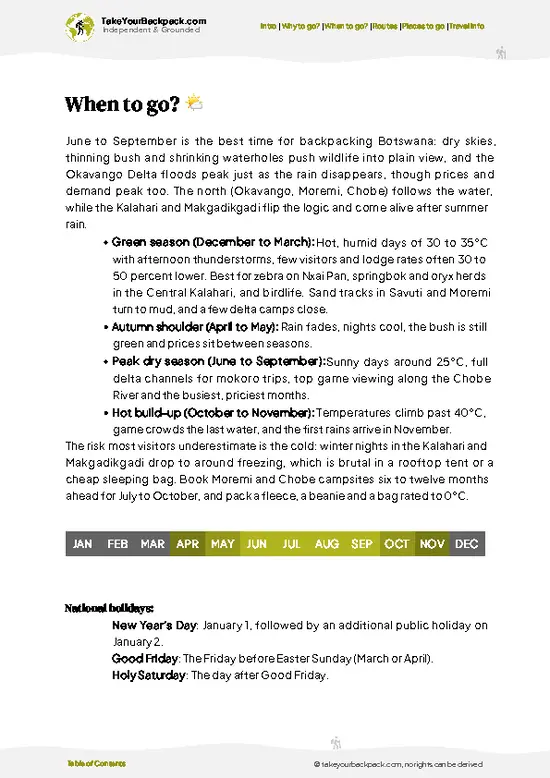
source: climatestotravel.comJANJanuary: good for travelingFEBFebruary: good for travelingMARMarch: good for travelingAPRApril: highly recommended for travelingMAYMay: excellent for travelingJUNJune: excellent for travelingJULJuly: excellent for travelingAUGAugust: excellent for travelingSEPSeptember: excellent for travelingOCTOctober: highly recommended for travelingNOVNovember: good for travelingDECDecember: good for traveling
when-to-go

✈️ The backpacker research shortcutBotswana Travel Guide

An offline-friendly backpacking guide with optimized travel routes, ranked highlights, transport advice, and the best areas to stay.
example page 0 from our offline Travel Guide for Botswana
example page 1 from our offline Travel Guide for Botswana
example page 2 from our offline Travel Guide for Botswana
example page 3 from our offline Travel Guide for Botswana
example page 4 from our offline Travel Guide for Botswana
example page 5 from our offline Travel Guide for Botswana
example page 6 from our offline Travel Guide for Botswana
example page 7 from our offline Travel Guide for Botswana
The digital guide (257 pages) contains:
58 highlights, ranked by travel appeal
Optimized 5, 10 & 15-day travel routes
Cities, national parks, landmarks, beaches
How to get around
Offline-friendly for travel without Wi-Fi
👉 Click to see all 30+ guide features

📅 Plan smarter in minutes, not weeks
Month by month travel advice
Festivals & national holidays
Budget expectations

🗺️ Go to the right places, skip the overrated ones
Honest pros & cons of destinations
Top hikes, parks & viewpoints
Lesser-known places most travelers miss
Clear “worth it vs skip it” guidance

🛏️ Travel smoothly without rookie mistakes
Best areas to stay
Transport systems explained simply
Common scams & safety advice
SIM cards, money & practical tips

🌍 Understand the country, not just visit it
Culture & traditions
52 Essential phrases & customs
Festivals worth planning around
Traveler-friendly historical context
Insights that make places more meaningful

📱 Built for real travel conditions
Fully downloadable PDF
Works completely offline
Optimized for phone use
Useful in remote areas & buses
Everything in one place
Save weeks of stressful planning
Get instant access to your full guide. 30‑day money-back guarantee.


By proceeding you agree to our terms.
Sent to your inbox immediately after payment • 100% Secure Checkout
Best Backpacking Travel Advisor 2025 tourism awardBest Backpacking
Travel Advisor
2025
What others say about Take Your Backpack Guides:
⭐⭐⭐⭐⭐
Fantastic, amazing amount of information!
⭐⭐⭐⭐⭐
My goodness this is amazing, it's what I've been looking for hats off too you!
⭐⭐⭐⭐⭐
I think this is absolutely BRILLIANT
⭐⭐⭐⭐
Very complete and informative. It's still missing places, but I gotta to commend you
⭐⭐⭐⭐⭐
This is truly amazing, thank you, can't wait to explore it with my kids!
⭐⭐⭐⭐⭐
Awesome resource, thank you!
⭐⭐⭐⭐⭐
This is amazing! Can't wait to explore the ones I haven't seen
⭐⭐⭐⭐
I love this! Well done, great idea.
⭐⭐⭐⭐⭐
Thanks for taking the time to make this gem!
⭐⭐⭐⭐⭐
This might be the best website I've ever seen.
⭐⭐⭐⭐⭐
Congratulations, and thank you so much for your work; it's incredibly valuable.
⭐⭐⭐⭐
In all seriousness I think you did a great job pointing out the important spots
⭐⭐⭐⭐⭐
10/10 very good
⭐⭐⭐⭐⭐
As someone who's only just starting to visit regularly this is awesome, thank you.
⭐⭐⭐⭐
Thank you very much! I'm going to visit my dad, it's going to be very useful!
⭐⭐⭐⭐⭐
This is really cool! We'll be travelling for the first time and this definitely come in handy.
⭐⭐⭐⭐⭐
You are now our minister of culture, congratulations 👨‍💼
⭐⭐⭐⭐⭐
Just wanted to tell you that this is a pearl! Going to follow your recommendations.
⭐⭐⭐⭐⭐
This is so cool. I'll definitely be using the resource for my travels soon.
⭐⭐⭐⭐⭐
This is very impressive! Good work.
⭐⭐⭐⭐⭐
This is an amazing and informative site. Very well done!

🛏️ Where to stay?Choosing the right base

In Gaborone, the backpacker sweet spot is the area around the city center, especially near the Main Mall and the Kgale Hill foothills. This zone nails the balance between safety, social buzz, and budget-friendly options. Staying here means you’re close to the pulse of the city—markets, eateries, and public transport hubs—without diving into the chaos of heavy traffic or sketchy neighborhoods.

Hostels and guesthouses cluster in this part, offering dorm-style and private rooms that cater to solo travelers and small groups. The vibe is casual but lively, with plenty of opportunities to meet fellow … read more 👉
In Gaborone, the backpacker sweet spot is the area around the city center, especially near the Main Mall and the Kgale Hill foothills. This zone nails the balance between safety, social buzz, and budget-friendly options. Staying here means you’re close to the pulse of the city—markets, eateries, and public transport hubs—without diving into the chaos of heavy traffic or sketchy neighborhoods.

Hostels and guesthouses cluster in this part, offering dorm-style and private rooms that cater to solo travelers and small groups. The vibe is casual but lively, with plenty of opportunities to meet fellow backpackers or locals who are open to sharing tips or a cold drink. It’s not a party district, but it’s social enough to avoid the isolation that can come with more residential or business-heavy areas.

Compare this to the northern suburbs or industrial zones, where safety and social life drop off sharply, or the affluent southern neighborhoods, which are quieter and pricier, lacking that backpacker energy. The city center area gives you a strategic launchpad for day trips and nightlife without sacrificing your wallet or peace of mind. It’s the smart choice for anyone who wants to maximize experience while minimizing hassle—a clear win on the trade-off map.

🚌 Getting aroundHow to get from A to B

Gaborone moves at its own rhythm—neither a frantic rush nor a laid-back drift. It’s a city where the pulse is set by a blend of formal timetables and the improvisational dance of daily life. You’ll find that while buses and taxis have schedules, the real flow depends on reading the street, catching the right minibus, and sometimes just knowing when to walk. Time, money, and comfort don’t line up neatly here; they’re a puzzle you solve with a mix of strategy and street smarts.


  • Walking: The most straightforward and cost-free way to navigate central Gaborone. Distances between key spots like the CBD, Main Mall, and riverfront are manageable on foot, giving you full control over your pace and timing. It’s slow but reliable, and you soak in the city’s textures—dusty sidewalks, street vendors,
read more 👉
Gaborone moves at its own rhythm—neither a frantic rush nor a laid-back drift. It’s a city where the pulse is set by a blend of formal timetables and the improvisational dance of daily life. You’ll find that while buses and taxis have schedules, the real flow depends on reading the street, catching the right minibus, and sometimes just knowing when to walk. Time, money, and comfort don’t line up neatly here; they’re a puzzle you solve with a mix of strategy and street smarts.


  • Walking: The most straightforward and cost-free way to navigate central Gaborone. Distances between key spots like the CBD, Main Mall, and riverfront are manageable on foot, giving you full control over your pace and timing. It’s slow but reliable, and you soak in the city’s textures—dusty sidewalks, street vendors, and the occasional stray dog—without missing a beat.


  • Minibus Taxis: The backbone of local transit, these shared vans run on semi-fixed routes but leave when full, not on a clock. Fares hover around 3 to 5 BWP (Botswana Pula), making them the cheapest motorized option. They’re fast when you catch one ready to roll but can mean waiting in the heat if you’re unlucky. Comfort is minimal—expect cramped seats and a lively, sometimes chaotic atmosphere.


  • Metered Taxis: More expensive, roughly 30 to 50 BWP for short trips within the city, but they offer door-to-door convenience and a predictable schedule—you call, they come. Ideal if you’re carrying gear or traveling late when minibuses thin out. Comfort is decent, with air conditioning in many vehicles, but the price jumps quickly compared to shared options.


  • City Buses: Operated by the Botswana Public Transport Corporation, these buses run fixed routes with set schedules, typically from early morning (around 6 AM) to early evening (around 6 PM). Tickets cost about 5 to 10 BWP. They strike a balance between cost and comfort, offering a more spacious ride than minibuses but less flexibility. Best for longer hauls across the city if you can align your plans with their timetable.


  • Car Rentals: Not a budget staple but worth mentioning for those who want full control over time and comfort. Daily rates start around 300 BWP, plus fuel. This option flips the trade-off entirely—pay more to save time and gain freedom, especially if you plan to explore beyond Gaborone’s limits. Parking and traffic are manageable, but driving here requires confidence in local road rules and conditions.


Understanding these options is like cracking the city’s code. You trade off waiting time for money, comfort for speed, or vice versa. Walking costs nothing but demands time and energy. Minibuses save cash but test your patience and personal space. Metered taxis buy you comfort and speed but at a premium. City buses offer a middle ground if you can sync with their schedule. Car rentals hand you the keys to freedom, but your wallet feels the weight. Your best move is to mix and match—walk where you can, jump on a minibus for the longer hauls, and save taxis or rentals for when time or comfort truly matters. That’s how you win Gaborone’s transit game.

👛 Costs (as of 10 April 2026)What things cost and how to budget

Backpacking in Gaborone, Botswana, offers a clear trade-off map between cost and comfort, with prices that reflect its status as a growing urban hub in Southern Africa. Here’s how your daily budget breaks down:
  • Dorm Accommodation (High Season): Expect to pay around $15 to $25 per night. High season sees a slight bump due to demand, but dorms remain a budget-friendly option with basic amenities.
  • Dorm Accommodation (Off-Season): Prices drop to about $10 to $18. Off-season travel rewards you with quieter hostels and better deals, perfect for stretching your budget without sacrificing safety or location.
  • Meals: Street food and local eateries will cost you roughly $5 to $10 per day. Opt for traditional dishes like seswaa or pap with relish to keep costs low and the experience authentic. Mid-range
read more 👉
Backpacking in Gaborone, Botswana, offers a clear trade-off map between cost and comfort, with prices that reflect its status as a growing urban hub in Southern Africa. Here’s how your daily budget breaks down:
  • Dorm Accommodation (High Season): Expect to pay around $15 to $25 per night. High season sees a slight bump due to demand, but dorms remain a budget-friendly option with basic amenities.
  • Dorm Accommodation (Off-Season): Prices drop to about $10 to $18. Off-season travel rewards you with quieter hostels and better deals, perfect for stretching your budget without sacrificing safety or location.
  • Meals: Street food and local eateries will cost you roughly $5 to $10 per day. Opt for traditional dishes like seswaa or pap with relish to keep costs low and the experience authentic. Mid-range restaurants push this up to $15 or more.
  • Local Transport: Minibus taxis are the backbone of city travel, costing about $0.50 to $1 per trip. They’re frequent but can be crowded and unpredictable, so factor in some time for waiting and navigating routes.
  • City Transport Pass: Gaborone doesn’t have a unified city transport pass system, so budgeting for individual minibus fares or occasional taxi rides is necessary. A daily transport budget of $3 to $5 is realistic for most travelers.
  • Basic Activities/Entry Fees: Museums, cultural centers, and parks typically charge between $2 and $7. These modest fees grant access to Botswana’s cultural heartbeat without breaking the bank.
  • Miscellaneous Expenses: This includes bottled water, snacks, occasional internet top-ups, or small souvenirs. Allocate around $3 to $7 daily to cover these incidental costs comfortably.

Summing it up, a backpacker in Gaborone can expect to spend between $25 and $50 per day, depending on season and lifestyle choices. This range balances the essentials of accommodation, food, transport, and activities, giving you control over where to tighten or loosen your budget for the best value experience.


source: botswanatourism.co.bw
⚠️ Prices can change and everyone travels differently, so take this as a rough guide. Hope it helps you plan your adventure!

🚌 Day tripsWhere to go beyond the main area

Gaborone, Botswana, serves as an excellent launchpad for day trips that blend adventure with cultural immersion. Here are some standout options that make the most of your time and budget.

Mokolodi Nature Reserve
Just a 30-minute drive from Gaborone, Mokolodi is a wildlife haven where you can spot rhinos, zebras, and giraffes. The entrance fee is around $10, making it a budget-friendly option. Spend your day hiking the trails or taking a guided game drive to maximize your wildlife sightings. The best time to visit is during the dry season from May to October when animals are easier to spot. A common mistake is underestimating the time needed; plan for at least half a day to fully enjoy the experience.


Gaborone Game Reserve
Only 15 minutes from the city center, this reserve is perfect … read more 👉
Gaborone, Botswana, serves as an excellent launchpad for day trips that blend adventure with cultural immersion. Here are some standout options that make the most of your time and budget.

Mokolodi Nature Reserve
Just a 30-minute drive from Gaborone, Mokolodi is a wildlife haven where you can spot rhinos, zebras, and giraffes. The entrance fee is around $10, making it a budget-friendly option. Spend your day hiking the trails or taking a guided game drive to maximize your wildlife sightings. The best time to visit is during the dry season from May to October when animals are easier to spot. A common mistake is underestimating the time needed; plan for at least half a day to fully enjoy the experience.


Gaborone Game Reserve
Only 15 minutes from the city center, this reserve is perfect for a quick escape. You can rent a bike for about $5 and explore the park at your own pace. Expect to see a variety of antelope and bird species. The park is open year-round, but early mornings are best for wildlife activity. Many first-timers miss the entrance, which is tucked away; keep an eye out for the sign.
👉 Explore Gaborone Game Reserve

Tsodilo Hills
A bit further afield, about a 4-hour drive, Tsodilo Hills is a UNESCO World Heritage site known for its ancient rock art. The entrance fee is around $5, and the experience is priceless. Plan for a full day to hike and absorb the spiritual significance of the area. The cooler months from May to September are ideal for hiking. First-timers often overlook the need for water and snacks; pack accordingly to stay energized.
👉 Explore Tsodilo Hills

Kgalagadi Transfrontier Park
While a bit ambitious at 5 hours away, this park offers stunning landscapes and a chance to see the Kalahari Desert’s wildlife. The entrance fee is about $20, but the experience is worth every pula. Aim for a long day trip, or consider an early start to catch the sunrise. The best time to visit is during the cooler months. Many backpackers underestimate the distance; ensure your vehicle is ready for the journey.
👉 Explore Kgalagadi Transfrontier Park

Gaborone’s Cultural Sites
If you prefer to stay close, explore the National Museum and Art Gallery, just a short walk from the city center. Admission is free, making it a perfect budget-friendly option. Spend a couple of hours learning about Botswana’s history and culture. The museum is open year-round, but weekdays are quieter. First-timers often miss the local art exhibits; don’t rush through!
Want to know what more Botswana offers?
The Botswana Travel Guide describes 58 highlights, from cities to national parks, from beaches to hikes

Get the Travel Guide -

🍲 FoodWhat to Eat & Drink

In Gaborone, food is a vibrant tapestry of flavors that reflects the heart of Botswana. You can’t visit without trying seswaa, a slow-cooked beef dish that melts in your mouth, often served with pap, a maize porridge that’s a staple here. The combination is simple yet satisfying, perfect after a long day of exploring.

Street food is where the real magic happens. Vendors line the streets with sizzling boerewors (a type of sausage) and vetkoek, a deep-fried bread that’s often stuffed with savory fillings. The aroma wafts through the air, drawing you in. Markets buzz with energy; grab a plate and eat while mingling with locals. It’s an experience that connects you to the culture.

When it comes to drinks, don’t miss out on chibuku, a traditional sorghum beer that’s both refreshing and a bit … read more 👉
In Gaborone, food is a vibrant tapestry of flavors that reflects the heart of Botswana. You can’t visit without trying seswaa, a slow-cooked beef dish that melts in your mouth, often served with pap, a maize porridge that’s a staple here. The combination is simple yet satisfying, perfect after a long day of exploring.

Street food is where the real magic happens. Vendors line the streets with sizzling boerewors (a type of sausage) and vetkoek, a deep-fried bread that’s often stuffed with savory fillings. The aroma wafts through the air, drawing you in. Markets buzz with energy; grab a plate and eat while mingling with locals. It’s an experience that connects you to the culture.

When it comes to drinks, don’t miss out on chibuku, a traditional sorghum beer that’s both refreshing and a bit of an acquired taste. It’s usually served in large containers, encouraging sharing and conversation.

Etiquette is relaxed; meals are often communal, and it’s common to see people enjoying food together, laughing and sharing stories. Embrace the local pace, savor each bite, and let the flavors of Gaborone linger long after you’ve left.

🛡️ SafetyScams, Hazards, and Annoyances

Gaborone is generally safe for backpackers, but a few smart strategies can enhance your experience. Stick to well-lit areas after dark, especially around the city center and popular spots like the Main Mall. Solo travelers should be mindful of their surroundings; while violent crime is rare, petty theft can occur in crowded places.

Be cautious when approached by strangers offering unsolicited help or overly friendly conversations. A common scam involves people asking for money for various reasons—just politely decline and keep moving.

Public transport is reliable, but always keep your belongings close. Use a crossbody bag or a money belt to deter pickpockets.

Annoyances can include aggressive vendors or taxi drivers who may try to negotiate inflated fares. Agree on a price before getting … read more 👉
Gaborone is generally safe for backpackers, but a few smart strategies can enhance your experience. Stick to well-lit areas after dark, especially around the city center and popular spots like the Main Mall. Solo travelers should be mindful of their surroundings; while violent crime is rare, petty theft can occur in crowded places.

Be cautious when approached by strangers offering unsolicited help or overly friendly conversations. A common scam involves people asking for money for various reasons—just politely decline and keep moving.

Public transport is reliable, but always keep your belongings close. Use a crossbody bag or a money belt to deter pickpockets.

Annoyances can include aggressive vendors or taxi drivers who may try to negotiate inflated fares. Agree on a price before getting in a taxi, and don’t hesitate to walk away if it feels off. By staying aware and confident, you’ll navigate Gaborone smoothly and enjoy its unique character.

More places to explore across Botswana

Gaborone isn’t the only highlight in Botswana. Explore all what Botswana has to offer.
Country photo of Botswana

We 💚 feedbackKey takeaways before you go

Gaborone has a laid-back vibe that’s refreshing. You’ll find a mix of modernity and tradition, which makes wandering the streets feel like a mini-adventure. The best surprise? The local markets bursting with colors and flavors—don’t skip the street food; it’s where the real taste of Botswana lives. Just a heads-up: public transport can be a bit chaotic, so plan your routes ahead. Embrace the spontaneity, but keep your wits about you. You’ll leave with stories that stick.

✍️ Help improve this page!
The information on this page is based on in-depth research, insights shared by experienced travelers, and feedback from the local travel community in Botswana. While every effort is made to keep the information accurate and current, conditions can change — so if you spot anything incorrect or outdated, please get in touch.


🙋‍♂️ Give feedback

👋 Meet the founderWho’s Behind Take Your Backpack?

Johan, backpacker and founder of TakeYourBackpackHi, I’m Johan (Netherlands 🇳🇱), the creator of TakeYourBackpack. Over the past decade, I’ve backpacked through 80+ countries across six continents, gaining extensive experience with independent travel, long-term trips, and overland routes.

This site is built on a combination of firsthand travel experience and carefully curated insights from other backpackers. Many guides are based on places I’ve personally visited, while others bring together tips, observations, and practical advice shared by trusted travelers I’ve met along the way.

The goal is to provide realistic, experience-driven guidance — not generic itineraries — so you can explore destinations with better context, clearer expectations, and more confidence.

Get full Botswana guide •
Instant download • 58 highlights • Full Offline guide