
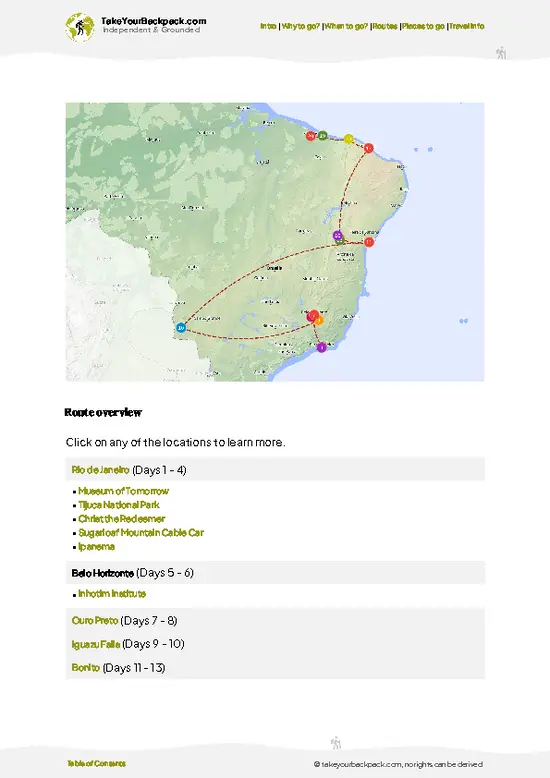
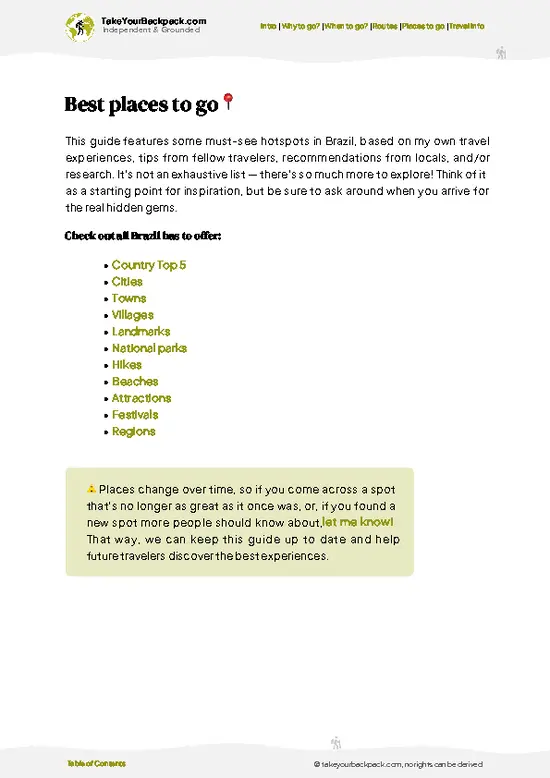
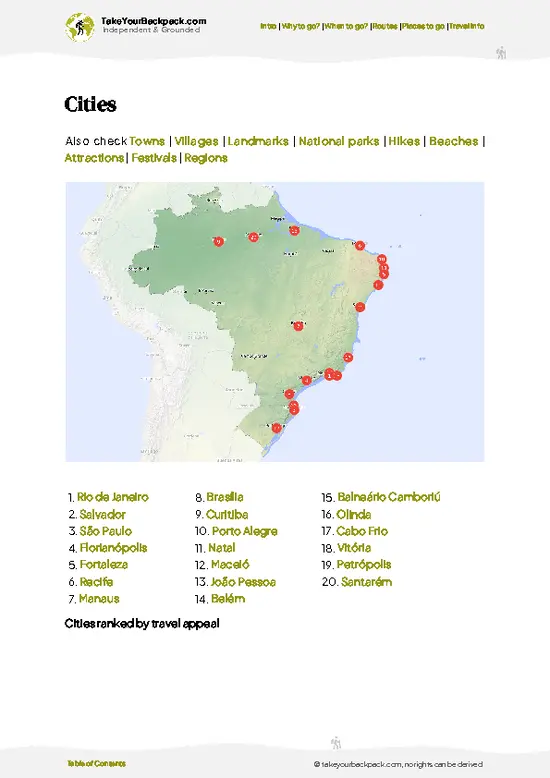
Ilha do Amor (Island of Love)
You step off the wooden boat and your feet sink into sand so white it almost glows under the Amazonian sun. Ilha do Amor is Alter do Chão’s poster child, but it earns its reputation. The sandbar appears and disappears with the river’s moods—come between August and December for the full crescent-moon effect. The water is warm, clear, and shallow enough to wade out for ages. Local vendors set up thatched-roof stalls, so you can order grilled tambaqui or a cold cupuaçu juice without leaving the shade. There’s no entrance fee, but a quick boat taxi from the main pier costs a few reais (about $1-2 USD). Plan for 2-4 hours, or lose track of time entirely. The real magic is late afternoon, when the sun drops behind the palm trees and the sky turns every shade of gold … read more 👉
Ilha do Amor (Island of Love)
You step off the wooden boat and your feet sink into sand so white it almost glows under the Amazonian sun. Ilha do Amor is Alter do Chão’s poster child, but it earns its reputation. The sandbar appears and disappears with the river’s moods—come between August and December for the full crescent-moon effect. The water is warm, clear, and shallow enough to wade out for ages. Local vendors set up thatched-roof stalls, so you can order grilled tambaqui or a cold cupuaçu juice without leaving the shade. There’s no entrance fee, but a quick boat taxi from the main pier costs a few reais (about $1-2 USD). Plan for 2-4 hours, or lose track of time entirely. The real magic is late afternoon, when the sun drops behind the palm trees and the sky turns every shade of gold and pink.
Praia do Cajueiro
If Ilha do Amor is the crowd-pleaser, Praia do Cajueiro is the local’s living room. This river beach sits right at the edge of town, where the Tapajós laps quietly against the sand and fishermen mend their nets in the shade. The cashew trees (cajueiros) give the place its name and its scent—sweet, earthy, unmistakably Amazonian. It’s free, and you can walk here in five minutes from the main square. Early morning is best, when the air is cool and the town is just waking up. Bring a hammock or just sit on the sand and watch the river traffic. One hour is enough for a taste, but linger if you want to feel the town’s daily rhythm.
Alter do Chão Village Square (Praça 7 de Setembro)
This is the social heart of the town, where you’ll find kids playing soccer, elders gossiping on benches, and the occasional impromptu forró dance as dusk falls. The square is ringed by pastel-colored colonial buildings and the whitewashed Igreja de Nossa Senhora da Saúde, a church that’s been watching over the town since the 19th century. The best time to visit is sunset, when the square fills with food carts selling tapioca pancakes and grilled cheese on a stick. Free, and worth at least an hour—more if you’re drawn into conversation or a street performance.
Casa de Cultura
Alter do Chão’s Casa de Cultura is a small but mighty community-run space that hosts art exhibits, music, and workshops on local traditions. The building itself is a slice of Amazonian history, with wooden shutters and a breezy veranda. Check the schedule—sometimes you’ll catch a live carimbó performance or a talk on indigenous crafts. Entry is often free or by donation (5-10 reais). Allow 30-60 minutes, or longer if you’re lucky enough to stumble into a festival.
Mercado Municipal
This is where Alter do Chão wakes up. The municipal market is a sensory overload: the sharp tang of tucupi, the earthy sweetness of açaí, the chatter of vendors hawking river fish and baskets of Brazil nuts. It’s not big, but it’s the best place to see what fuels the town. Go early (6-9am) for the freshest finds and the liveliest atmosphere. Free to enter, but bring cash for snacks or souvenirs. Thirty minutes is plenty unless you’re shopping for a riverside picnic.
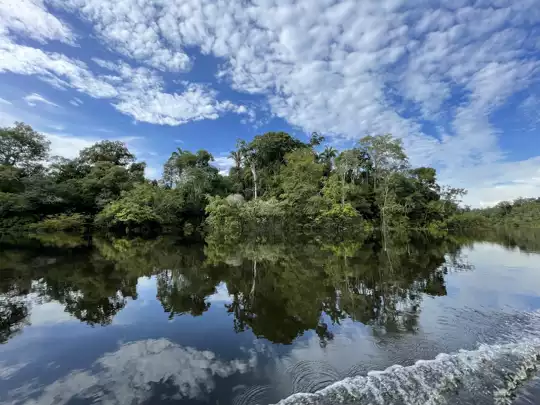
For day trips, the forested trails and crystalline waters of Lago Verde, the wild beaches of Ponta de Pedras, and the indigenous community of Jamaraquá are all within easy reach—Lago Verde is my personal favorite for its surreal, mirror-like reflections and the feeling that you’ve slipped into a different world.
You step off the wooden boat and your feet sink into sand so white it almost glows under the Amazonian sun. Ilha do Amor is Alter do Chão’s poster child, but it earns its reputation. The sandbar appears and disappears with the river’s moods—come between August and December for the full crescent-moon effect. The water is warm, clear, and shallow enough to wade out for ages. Local vendors set up thatched-roof stalls, so you can order grilled tambaqui or a cold cupuaçu juice without leaving the shade. There’s no entrance fee, but a quick boat taxi from the main pier costs a few reais (about $1-2 USD). Plan for 2-4 hours, or lose track of time entirely. The real magic is late afternoon, when the sun drops behind the palm trees and the sky turns every shade of gold and pink.
Praia do Cajueiro
If Ilha do Amor is the crowd-pleaser, Praia do Cajueiro is the local’s living room. This river beach sits right at the edge of town, where the Tapajós laps quietly against the sand and fishermen mend their nets in the shade. The cashew trees (cajueiros) give the place its name and its scent—sweet, earthy, unmistakably Amazonian. It’s free, and you can walk here in five minutes from the main square. Early morning is best, when the air is cool and the town is just waking up. Bring a hammock or just sit on the sand and watch the river traffic. One hour is enough for a taste, but linger if you want to feel the town’s daily rhythm.
Alter do Chão Village Square (Praça 7 de Setembro)
This is the social heart of the town, where you’ll find kids playing soccer, elders gossiping on benches, and the occasional impromptu forró dance as dusk falls. The square is ringed by pastel-colored colonial buildings and the whitewashed Igreja de Nossa Senhora da Saúde, a church that’s been watching over the town since the 19th century. The best time to visit is sunset, when the square fills with food carts selling tapioca pancakes and grilled cheese on a stick. Free, and worth at least an hour—more if you’re drawn into conversation or a street performance.
Casa de Cultura
Alter do Chão’s Casa de Cultura is a small but mighty community-run space that hosts art exhibits, music, and workshops on local traditions. The building itself is a slice of Amazonian history, with wooden shutters and a breezy veranda. Check the schedule—sometimes you’ll catch a live carimbó performance or a talk on indigenous crafts. Entry is often free or by donation (5-10 reais). Allow 30-60 minutes, or longer if you’re lucky enough to stumble into a festival.
Mercado Municipal
This is where Alter do Chão wakes up. The municipal market is a sensory overload: the sharp tang of tucupi, the earthy sweetness of açaí, the chatter of vendors hawking river fish and baskets of Brazil nuts. It’s not big, but it’s the best place to see what fuels the town. Go early (6-9am) for the freshest finds and the liveliest atmosphere. Free to enter, but bring cash for snacks or souvenirs. Thirty minutes is plenty unless you’re shopping for a riverside picnic.
For day trips, the forested trails and crystalline waters of Lago Verde, the wild beaches of Ponta de Pedras, and the indigenous community of Jamaraquá are all within easy reach—Lago Verde is my personal favorite for its surreal, mirror-like reflections and the feeling that you’ve slipped into a different world.
Spotted a mistake or missing something? Contact us.
v2.webp)


Best Backpacking
Hi, I’m Johan (Netherlands 🇳🇱), the creator of TakeYourBackpack. Over the past decade, I’ve backpacked through 80+ countries across six continents, gaining extensive experience with independent travel, long-term trips, and overland routes.