Short version: yes, Cabo Verde is very doable to backpack independently, as long as you’re flexible with ferries and domestic flights. The islands are safe by regional standards, people are used to visitors, and basic English or French is common in touristy spots, though a few words of Portuguese and a smile go a long way.
For budget travelers, the main constraint isn’t danger, it’s logistics. Inter-island connections can be irregular, schedules change, and ferries sometimes get canceled due to wind and swell. That means you plan your route around the transport, not the other way around. Build in buffer days when jumping islands, especially if you have a fixed flight home.
On the ground, backpacking is straightforward. You’ll find guesthouses, small hotels, and a growing number of hostels on the main islands (Santiago, São Vicente, Sal, Boa Vista, Santo Antão). Prices are higher than mainland West Africa but still manageable if you eat local (kilo restaurants, pastelarias, street snacks) and avoid imported goods.
Solo travelers generally feel comfortable walking around in the daytime in towns like Mindelo, Praia’s Plateau area, and Santa Maria on Sal. Normal city rules apply: avoid flashing valuables, use taxis at night in bigger towns, and keep your phone out of your back pocket in busy markets.
Hiking independently is one of the best parts. On Santo Antão and Fogo, many trails are well-trodden and pass through villages, so you’re rarely totally isolated. Still, offline maps (Maps.me, Organic Maps) are essential, and you should always carry more water than you think you need.
The main mindset shift: think “island time.” Things work, just not always on your schedule. If you can roll with that, Cabo Verde is an excellent independent backpacking destination.
If you only have 5–7 days, stick to 1 island, 2 at most. Cabo Verde is an archipelago, not a single hop-on-hop-off country, and rushing between islands eats time and money.
Good 1-week options:
- Sal only: Easy flights, beach base in Santa Maria, day trips for snorkeling, kite/windsurfing, and a quick look at Pedra de Lume salt crater. Low stress, more resorty, less cultural depth.
- Santiago + 1 day in Praia/Assomada: Focus on history, markets, and a couple of short hikes. This is the best “real life” snapshot if you want to see where most Cape Verdeans actually live.
With 10–14 days, you can do a classic backpacker loop:
- Santiago (2–3 days): Praia, Cidade Velha, a market day in Assomada.
- São Vicente (2–3 days): Mindelo for music, nightlife, and a day trip to beaches like São Pedro.
- Santo Antão (4–5 days): Base in Ponta do Sol or Ribeira Grande and hike your heart out: coastal trail Ponta do Sol–Cruzinha, Cova crater down to Paúl Valley, and shorter village walks.
With 3 weeks or more, you can add:
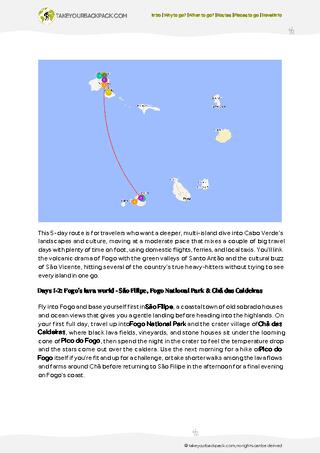
- Fogo (3–4 days): Hike the volcano, stay in Chã das Caldeiras, taste local wine.
- Sal or Boa Vista (3–4 days): End with lazy beach time and water sports.
For most backpackers, 12–16 days hits the sweet spot: enough time for a Santiago–São Vicente–Santo Antão combo plus either Fogo or a beach island, without feeling like you’re just collecting passport stamps between ferry terminals.
You can absolutely get around Cabo Verde without renting a car, and most budget travelers do exactly that. The system is a patchwork, but it works if you’re patient.
Between islands, you’ll use:
- Domestic flights: Faster but pricier, and routes don’t connect every island directly. Good for long hops (e.g., Santiago–São Vicente, Santiago–Sal).
- Ferries: Cheaper and more backpacker-friendly, especially between São Vicente–Santo Antão and some other nearby islands. They can be delayed or canceled in rough seas, so avoid tight connections with your international flight.
On each island, your main tools are:
- Aluguers (shared minibuses/pickups): These run between towns and villages, especially on Santiago, Santo Antão, and Fogo. They’re cheap, social, and leave when full, not on a strict timetable. Great for hikers and anyone with a flexible schedule.
- Taxis: More expensive but still reasonable for short hops or splitting with other travelers. In towns, agree the price before you get in. On some islands, you can negotiate a half-day or full-day rate to hit multiple spots.
- Walking and hitching: On Santo Antão and Fogo, it’s common to walk part of the way and flag down passing pickups or aluguers. It’s not “formal hitchhiking” in a Western sense; it’s just how locals move around. Always carry small bills.
A rental car only really makes sense if you’re in a group, short on time, and want to hit a lot of scattered viewpoints in one day on islands like Santiago or São Vicente. For a solo or couple on a budget, public transport plus the occasional taxi is the better value play.
For backpackers, the must-visits are less about ticking every island and more about mixing three things: hiking, local life, and at least a little beach time.
If you like mountains and villages:
- Santo Antão: This is the hiking capital. The coastal trail from Ponta do Sol to Cruzinha is one of the most memorable day hikes in the Atlantic, with stone paths clinging to cliffs and tiny villages tucked into ravines. The Cova crater down into Paúl Valley gives you volcanic scenery, terraced fields, and sugarcane grog distilleries in one go. Base yourself in Ponta do Sol, Ribeira Grande, or Paúl.
- Fogo: The island is dominated by its volcano. Staying in Chã das Caldeiras, inside the crater, feels otherworldly: black lava fields, stone houses, vineyards growing out of ash. The hike up Pico do Fogo is tough but doable for fit hikers and worth the early start.
If you want culture and everyday life:
- Santiago: Praia’s Plateau area has colonial architecture, street food, and a lived-in feel. Cidade Velha, a short trip away, is historically important and gives context to the whole archipelago. Assomada’s market days are chaotic in the best way and show you the rural side of the island.
- São Vicente (Mindelo): The cultural heart for many visitors. Mindelo has live music, bars, and a relaxed harbor-town feel. It’s a good place to meet other travelers, catch festivals if your timing is lucky, and use as a springboard to Santo Antão.
If you want easy beaches and water sports:
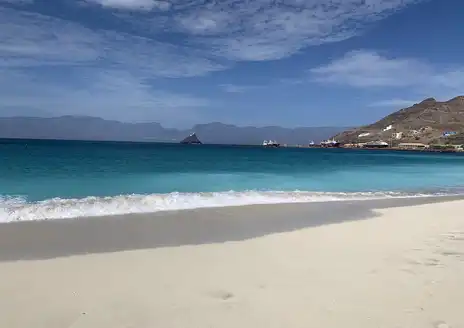
- Sal: Santa Maria is the main hub for kite/windsurfing, diving, and just zoning out on long sandy beaches. It’s more developed and touristy, but for a few days of sun and sea after hiking, it does the job.
For a first trip with a backpacker mindset and limited time, the strongest combo is: Santiago (context and markets) + São Vicente (music and city life) + Santo Antão (hiking). Add Fogo if you’re into volcanoes and can stretch your days.
If you’re short on time or money, you skip based on what you care about most, because trying to see everything in Cabo Verde is where backpackers burn cash and patience.
Easy skips for many budget travelers:
- Doing both Sal and Boa Vista: They’re different if you look closely, but for a time-crunched trip they fill the same role: flat, beachy, resort-heavy, focused on water sports and dune/4x4 tours. Pick one (usually Sal, for easier connections) and move on.
- Overlong stays in Praia: Praia is worth a couple of days for Plateau, markets, and a side trip to Cidade Velha, but it’s not where you want to sink a full week unless you have specific work or family reasons. After 2–3 days, most backpackers are happier heading to the mountains or another island.
Conditional skips depending on your style:
- Fogo, if you don’t care about hiking or volcanoes: The logistics (boat or flight, then transport up to Chã das Caldeiras) take effort. If you’re not excited about a big climb or staying in a crater village, that time is better spent on Santo Antão or exploring more of Santiago.
- Deep interior of Santiago, if you’re already doing Santo Antão: Santiago has good hikes, but if you’re limited to 10–12 days and already committed to Santo Antão, you can keep Santiago to 2–3 days around Praia, Cidade Velha, and maybe one inland excursion instead of trying to see every valley.
General rule for short trips:
- Skip extra island hops. Each new island costs you at least half a day in transfers and some extra cash. It’s better to really enjoy 2–3 islands than to rush through 4–5. For a week, stick to 1–2 islands. For two weeks, 3–4 is plenty.
If you’re a budget backpacker with 10–14 days, the most efficient move is usually to skip either Fogo or the pure beach island and focus on Santiago + São Vicente + Santo Antão, then add just one “bonus” island if your flights line up cleanly.
v2.webp)




 Best Backpacking

