×

Cameroon🇨🇲 | citiesBamendaNorthwest Highlands, English-speaking region, political activity, escarpment views | things to do and best time to go

Explore BafoussamExplore Buea

Backpacking in Bamenda
🌟 Highlightcity ranked #4
By Johan Kruseman 🇳🇱 | Updated June 8, 2026

If you crave polished infrastructure, seamless transport, or a backpacker scene buzzing with hostels and smoothie bowls, Bamenda will frustrate you. But if you’re the type who finds value in raw authenticity and the challenge of navigating a city that rarely makes the tourist circuit, Bamenda rewards you with a different kind of story. Tucked in Cameroon’s northwest highlands, Bamenda is a city of steep hills, misty mornings, and a pulse that’s more local than cosmopolitan. The main market is a sensory overload—think pungent spices, handwoven baskets, and the kind of bargaining that’s half sport, half social ritual. The colonial-era Commercial Avenue hints at the city’s layered history, while the surrounding hills offer hiking with panoramic views and the occasional monkey sighting. Safety is a mixed bag; daytime is generally fine, but political tensions mean you need to stay alert and flexible. Costs are low, but comfort is basic. You probably won’t meet many other travelers, but that’s exactly why Bamenda feels like a real adventure compared to Douala’s chaos or Yaoundé’s bureaucracy. The vibe? Gritty, unpredictable, and—if you’re game—deeply rewarding.

Discover everything you want to know in the 📖 Cameroon Travel Guide.


Get your Cameroon guide
95 ranked highlights, routes & tips, works offline (383 pages)
Loading the map 🌍
CLICK TO FILTER
cities
towns
landmarks
national parks
hikes
beaches
attractions
festivals
regions
SHOW COUNTRY’S BESTSHOW ALL

✨ Why go?
Ranked #4 city in Cameroon
What makes it a must-see city

Bamenda is a strategic hub for backpackers navigating Cameroon. It’s not just about the highlights; it’s the basecamp value that makes it shine. You can easily launch day trips to stunning landscapes and cultural experiences, all while returning to a city that feels alive. The hostels here are friendly and affordable, offering a great chance to meet fellow travelers and swap stories.

When it comes to food, Bamenda serves up local dishes that are both delicious and budget-friendly, fueling your adventures without breaking the bank. The city is walkable, allowing you to soak in the vibrant street life and interact with locals, which adds depth to your experience.

As for nightlife, it’s laid-back yet lively, with spots where you can unwind after a day of exploration. Plus, Bamenda’s easy read more 👉
Bamenda is a strategic hub for backpackers navigating Cameroon. It’s not just about the highlights; it’s the basecamp value that makes it shine. You can easily launch day trips to stunning landscapes and cultural experiences, all while returning to a city that feels alive. The hostels here are friendly and affordable, offering a great chance to meet fellow travelers and swap stories.

When it comes to food, Bamenda serves up local dishes that are both delicious and budget-friendly, fueling your adventures without breaking the bank. The city is walkable, allowing you to soak in the vibrant street life and interact with locals, which adds depth to your experience.

As for nightlife, it’s laid-back yet lively, with spots where you can unwind after a day of exploration. Plus, Bamenda’s easy onward travel options make it a breeze to continue your journey, whether you’re heading to the mountains or the coast. If you’re looking for a place that balances comfort and adventure, Bamenda is worth more than just a quick stop.
Want to include Bamenda in your Cameroon route?
Create a personalized Cameroon itinerary that includes Bamenda and the places that fit your trip — based on your travel style, budget, and available time. Get your route in seconds.

Generate my trip

💡 HighlightsKey sights and experiences for travelers

  • Mankon Fon’s Palace (Chefferie de Mankon) — A living royal compound where the Fon’s court still matters: traditional architecture, carved stools and regalia, and the chance to see ritual life or a public dance. One of the best places to feel the Ngemba political and cultural heartbeat.
  • Bamenda Central Market (Marché Central) — Chaotic, colorful and honest: produce stalls, smoked fish, fresh spices, and whole sections for textiles and household wares. Great for people-watching, bargaining, and sampling street food (be brave with the snacks).
  • Mankon Royal Museum / Cultural Exhibits — Small, locally run exhibits connected to the Mankon palace that preserve royal costumes, masks and histories. Not glossy, but authentic and best read in the company of a local guide who’ll tell the backstories.
read more 👉
  • Mankon Fon’s Palace (Chefferie de Mankon) — A living royal compound where the Fon’s court still matters: traditional architecture, carved stools and regalia, and the chance to see ritual life or a public dance. One of the best places to feel the Ngemba political and cultural heartbeat.
  • Bamenda Central Market (Marché Central) — Chaotic, colorful and honest: produce stalls, smoked fish, fresh spices, and whole sections for textiles and household wares. Great for people-watching, bargaining, and sampling street food (be brave with the snacks).
  • Mankon Royal Museum / Cultural Exhibits — Small, locally run exhibits connected to the Mankon palace that preserve royal costumes, masks and histories. Not glossy, but authentic and best read in the company of a local guide who’ll tell the backstories.
  • Woodcarvers’ and Handicraft Quarter — A short walk from the main market you’ll find workshops where sculptors carve stools, masks and figures in the Grassfields style. Watching a piece being made and chatting with the maker is the real value here.
  • Bamenda Cathedral (main Catholic cathedral) — An important religious and community anchor in the city; it’s a calm spot to observe local worship rhythms, architecture adapted to the hills, and the role of faith in daily Bamenda life.
  • City Hill Lookouts / Ring-Road Viewpoints — Bamenda is built on ridges and valleys; several hilltop points inside the city give sweeping views over terraces and rooftops at sunrise or sunset. Small hikes or short motorbike rides reward you with great photos and perspective on urban life.
  • Bamenda Municipal Stadium — Catch a local football match if you can: the crowds, drums and local chants show a side of community energy you won’t get in a museum. Match days are social life on full blast.
  • University of Bamenda (campus & student scene) — The campus area (Bambili/Bamenda suburbs) has vibrant cafés, impromptu music, book stalls and student-run cultural events. Good if you want to see contemporary youth culture and pick up inexpensive performances or crafts.
  • Traditional Quarter of Mankon / Neighborhood Walks — Wander winding lanes past chefferies, compound compounds, small shrines and community meeting places. The neighborhood walks are low-cost, rich in daily rhythms and introduce you to everyday Bamenda beyond formal attractions.
  • Local Food Streets & Nightlife Strips — Small clusters of eateries and bars where you can try ndolé-adjacent dishes, roasted maize, plantain snacks and local beers. Eating here is more about atmosphere and people than fine dining — and it’s how many visitors remember Bamenda.
A few excellent day trips just outside Bamenda: the historic Bafut Royal Palace and Museum, the cooler highlands and crater lakes around Mount Oku/Lake Oku, and the traditional kingdom of Bali-Nyonga — all reachable as rewarding excursions from the city.
Spotted a mistake or missing something? Contact us.
🏘️ NeighborhoodsHow different areas shape the experience

Bamenda is a vibrant city that offers a unique blend of culture, nature, and community. Here’s a breakdown of key neighborhoods to help you navigate your stay.

City Center: This is the heartbeat of Bamenda. It’s bustling with markets, shops, and local eateries. Costs are moderate, and you can easily walk to most attractions. Nightlife is lively, with bars and music venues nearby. Perfect for short stays, but the noise might wear on you if you linger too long.

Up Station: A quieter area, Up Station is ideal for those seeking a more laid-back vibe. Accommodation here tends to be cheaper, and it’s a short walk to the City Center. The transport links are solid, making it easy to explore further afield. Great for longer stays if you prefer peace over party.

Commercial Avenue: This area is a … read more 👉
Bamenda is a vibrant city that offers a unique blend of culture, nature, and community. Here’s a breakdown of key neighborhoods to help you navigate your stay.

City Center: This is the heartbeat of Bamenda. It’s bustling with markets, shops, and local eateries. Costs are moderate, and you can easily walk to most attractions. Nightlife is lively, with bars and music venues nearby. Perfect for short stays, but the noise might wear on you if you linger too long.

Up Station: A quieter area, Up Station is ideal for those seeking a more laid-back vibe. Accommodation here tends to be cheaper, and it’s a short walk to the City Center. The transport links are solid, making it easy to explore further afield. Great for longer stays if you prefer peace over party.

Commercial Avenue: This area is a mix of business and leisure. It’s slightly pricier but offers a range of dining options and shops. Walkability is decent, but you might need to rely on taxis for longer distances. Nightlife is subdued, making it suitable for those who want a balance between activity and relaxation.

Ntamulung: A residential neighborhood with a local feel. Costs are low, and you’ll find friendly faces and authentic experiences. It’s less walkable, so be prepared to use public transport. Ideal for longer stays if you want to immerse yourself in daily life.

⌛️ 1 day1-day itinerary for Bamenda

Bamenda, the capital of the Northwest Region of Cameroon, is a vibrant blend of culture, nature, and community spirit. Nestled in the lush hills, it offers a unique glimpse into the lives of the local people, making it a fascinating stop for any traveler.

Start your day in the lively neighborhood of Commercial Avenue. Grab a breakfast of akam and beans at a local eatery, where the aroma of spices fills the air. This hearty meal will fuel you for the adventures ahead. After breakfast, stroll through the bustling market. Here, you’ll find colorful fabrics, fresh produce, and the warm smiles of vendors eager to share their stories. This isn’t just shopping; it’s a chance to connect with the heartbeat of Bamenda.

As the sun climbs higher, head to the nearby Mankon Museum. This lesser-known … read more 👉
Bamenda, the capital of the Northwest Region of Cameroon, is a vibrant blend of culture, nature, and community spirit. Nestled in the lush hills, it offers a unique glimpse into the lives of the local people, making it a fascinating stop for any traveler.

Start your day in the lively neighborhood of Commercial Avenue. Grab a breakfast of akam and beans at a local eatery, where the aroma of spices fills the air. This hearty meal will fuel you for the adventures ahead. After breakfast, stroll through the bustling market. Here, you’ll find colorful fabrics, fresh produce, and the warm smiles of vendors eager to share their stories. This isn’t just shopping; it’s a chance to connect with the heartbeat of Bamenda.

As the sun climbs higher, head to the nearby Mankon Museum. This lesser-known spot offers a deep dive into the rich history and traditions of the region. The artifacts and exhibits are not just displays; they tell tales of the people who have shaped this land. Spend a couple of hours here, soaking in the culture and perhaps chatting with the curator for insider insights.

In the afternoon, make your way to the beautiful Lake Awing. It’s a short drive from the city center, and the serene views are worth every minute. Enjoy a leisurely walk around the lake, or if you’re feeling adventurous, rent a canoe. The tranquility of the water and the surrounding hills is a perfect contrast to the morning’s hustle.

As evening approaches, return to the city and explore the vibrant food scene. Head to a local restaurant in the Up Station area for dinner. Try the grilled fish or chicken, paired with plantains, while enjoying the lively atmosphere.

End your day with a stroll through the streets, where the sounds of laughter and music fill the air. Bamenda may not be on every tourist’s radar, but it’s a place that rewards those willing to explore its depths. You’ll leave with a richer understanding of Cameroon and memories that linger long after you’ve gone.
Turn your Bamenda visit into an Cameroon adventure
Build a complete Cameroon route with Bamenda, hidden gems, must-see destinations, and realistic travel times included.

Generate my trip

🌤️ When to go?Choosing the right time of year


  • Topic: Weather – Bamenda’s climate is tropical highland, meaning it’s cooler than much of Cameroon but still humid. The dry season from November to February offers the most reliable weather for trekking and exploring without the constant threat of rain soaking your gear.

  • Topic: Temperature – Expect daytime highs around 22-25°C (72-77°F) in the dry season, dropping to a crisp 12-15°C (54-59°F) at night. The rainy season (March to October) is warmer but wetter, with highs reaching 26-28°C (79-82°F) and nights rarely dipping below 16°C (61°F).

  • Topic: Daylight Hours – Near the equator, Bamenda enjoys roughly 12 hours of daylight year-round, so your hiking and sightseeing windows stay consistent. Early mornings and late afternoons are your best bets for cooler temperatures and softer light.
read more 👉

  • Topic: Weather – Bamenda’s climate is tropical highland, meaning it’s cooler than much of Cameroon but still humid. The dry season from November to February offers the most reliable weather for trekking and exploring without the constant threat of rain soaking your gear.

  • Topic: Temperature – Expect daytime highs around 22-25°C (72-77°F) in the dry season, dropping to a crisp 12-15°C (54-59°F) at night. The rainy season (March to October) is warmer but wetter, with highs reaching 26-28°C (79-82°F) and nights rarely dipping below 16°C (61°F).

  • Topic: Daylight Hours – Near the equator, Bamenda enjoys roughly 12 hours of daylight year-round, so your hiking and sightseeing windows stay consistent. Early mornings and late afternoons are your best bets for cooler temperatures and softer light.

  • Topic: Crowds – Bamenda isn’t a tourist hotspot, but local festivals and holidays can swell crowds. The dry season sees fewer visitors, making it easier to find authentic experiences without the buzz of tourist groups.

  • Topic: Seasonal Activities – Dry months are prime for trekking the Bamenda Highlands and visiting local markets. The rainy season brings lush landscapes but can limit outdoor plans and make roads tricky.

  • Topic: Price Fluctuations – Accommodation and transport costs dip during the rainy season due to lower demand, but you pay in comfort and accessibility. The dry season commands a slight premium but rewards you with smoother logistics and more reliable conditions.


Pro-tip: Aim for late November to February to maximize dry weather and cooler temps—your best bet for turning Bamenda’s rugged charm into a seamless adventure.


source: climatestotravel.comJANJanuary: excellent for travelingFEBFebruary: excellent for travelingMARMarch: good for travelingAPRApril: fair for travelingMAYMay: fair for travelingJUNJune: fair for travelingJULJuly: fair for travelingAUGAugust: fair for travelingSEPSeptember: fair for travelingOCTOctober: good for travelingNOVNovember: highly recommended for travelingDECDecember: excellent for traveling
when-to-go

✈️ The backpacker research shortcutCameroon Travel Guide

An offline-friendly backpacking guide with optimized travel routes, ranked highlights, transport advice, and the best areas to stay.
example page 0 from our offline Travel Guide for Cameroon
example page 1 from our offline Travel Guide for Cameroon
example page 2 from our offline Travel Guide for Cameroon
example page 3 from our offline Travel Guide for Cameroon
example page 4 from our offline Travel Guide for Cameroon
example page 5 from our offline Travel Guide for Cameroon
example page 6 from our offline Travel Guide for Cameroon
example page 7 from our offline Travel Guide for Cameroon
The digital guide (383 pages) contains:
95 highlights, ranked by travel appeal
Optimized 7, 14 & 21-day travel routes
Cities, national parks, landmarks, beaches
How to get around
Offline-friendly for travel without Wi-Fi
👉 Click to see all 30+ guide features

📅 Plan smarter in minutes, not weeks
Month by month travel advice
Festivals & national holidays
Budget expectations

🗺️ Go to the right places, skip the overrated ones
Honest pros & cons of destinations
Top hikes, parks & viewpoints
Lesser-known places most travelers miss
Clear “worth it vs skip it” guidance

🛏️ Travel smoothly without rookie mistakes
Best areas to stay
Transport systems explained simply
Common scams & safety advice
SIM cards, money & practical tips

🌍 Understand the country, not just visit it
Culture & traditions
52 Essential phrases & customs
Festivals worth planning around
Traveler-friendly historical context
Insights that make places more meaningful

📱 Built for real travel conditions
Fully downloadable PDF
Works completely offline
Optimized for phone use
Useful in remote areas & buses
Everything in one place
Save weeks of stressful planning
Get instant access to your full guide. 30‑day money-back guarantee.


By proceeding you agree to our terms.
Sent to your inbox immediately after payment • 100% Secure Checkout
Best Backpacking Travel Advisor 2025 tourism awardBest Backpacking
Travel Advisor
2025
What others say about Take Your Backpack Guides:
⭐⭐⭐⭐⭐
Fantastic, amazing amount of information!
⭐⭐⭐⭐⭐
My goodness this is amazing, it's what I've been looking for hats off too you!
⭐⭐⭐⭐⭐
I think this is absolutely BRILLIANT
⭐⭐⭐⭐
Very complete and informative. It's still missing places, but I gotta to commend you
⭐⭐⭐⭐⭐
This is truly amazing, thank you, can't wait to explore it with my kids!
⭐⭐⭐⭐⭐
Awesome resource, thank you!
⭐⭐⭐⭐⭐
This is amazing! Can't wait to explore the ones I haven't seen
⭐⭐⭐⭐
I love this! Well done, great idea.
⭐⭐⭐⭐⭐
Thanks for taking the time to make this gem!
⭐⭐⭐⭐⭐
This might be the best website I've ever seen.
⭐⭐⭐⭐⭐
Congratulations, and thank you so much for your work; it's incredibly valuable.
⭐⭐⭐⭐
In all seriousness I think you did a great job pointing out the important spots
⭐⭐⭐⭐⭐
10/10 very good
⭐⭐⭐⭐⭐
As someone who's only just starting to visit regularly this is awesome, thank you.
⭐⭐⭐⭐
Thank you very much! I'm going to visit my dad, it's going to be very useful!
⭐⭐⭐⭐⭐
This is really cool! We'll be travelling for the first time and this definitely come in handy.
⭐⭐⭐⭐⭐
You are now our minister of culture, congratulations 👨‍💼
⭐⭐⭐⭐⭐
Just wanted to tell you that this is a pearl! Going to follow your recommendations.
⭐⭐⭐⭐⭐
This is so cool. I'll definitely be using the resource for my travels soon.
⭐⭐⭐⭐⭐
This is very impressive! Good work.
⭐⭐⭐⭐⭐
This is an amazing and informative site. Very well done!

🛏️ Where to stay?Best areas to stay in Cameroon

Bamenda’s best backpacker zones cluster around the city center and the Nkwen area. These neighborhoods strike a smart balance between safety, social buzz, and budget-friendly options—key for solo travelers who want to plug into local life without burning cash or risking comfort.

The city center is where you’ll find the pulse of Bamenda: markets, street food stalls, and a steady flow of locals and travelers crossing paths. It’s not posh, but it’s lively and accessible. Hostels here tend to be basic but reliable, offering a chance to meet other backpackers and share stories over a cold drink. The … read more 👉
Bamenda’s best backpacker zones cluster around the city center and the Nkwen area. These neighborhoods strike a smart balance between safety, social buzz, and budget-friendly options—key for solo travelers who want to plug into local life without burning cash or risking comfort.

The city center is where you’ll find the pulse of Bamenda: markets, street food stalls, and a steady flow of locals and travelers crossing paths. It’s not posh, but it’s lively and accessible. Hostels here tend to be basic but reliable, offering a chance to meet other backpackers and share stories over a cold drink. The trade-off is a bit of noise and hustle, but that’s part of the charm if you want to feel the city’s rhythm.

Nkwen, just a short ride out, offers a quieter, more residential vibe with a growing number of guesthouses and hostels catering to budget travelers. It’s safer and calmer, perfect if you want to recharge after a day of exploring. The social scene is smaller but tight-knit, often centered around local eateries and small bars where you can connect with both locals and fellow travelers.

Compared to the outskirts or less central districts, these areas minimize transit time and maximize your exposure to Bamenda’s character without sacrificing safety or social opportunities. You’re choosing between the energetic heart of the city and a more laid-back, community feel—both solid bets for backpackers who want value and vibe in equal measure.

🚌 Getting aroundGetting around like a local

Bamenda moves at its own rhythm—somewhere between the pulse of a bustling market and the laid-back chatter of a neighborhood café. It’s not a city where you’ll find strict timetables etched in stone. Instead, expect a dance of improvisation, where shared taxis and minibuses leave when full, and schedules are more like suggestions. This fluidity can feel chaotic if you’re used to rigid systems, but once you tune in, it’s a game of reading the flow, spotting the right moment to jump in, and knowing when to wait it out. Your choices here boil down to a trade-off between time, money, and comfort—each transit option carving out a different slice of that triangle.


  • Walking: The most straightforward and free option. Bamenda’s central neighborhoods are compact enough to explore on foot, especially
read more 👉
Bamenda moves at its own rhythm—somewhere between the pulse of a bustling market and the laid-back chatter of a neighborhood café. It’s not a city where you’ll find strict timetables etched in stone. Instead, expect a dance of improvisation, where shared taxis and minibuses leave when full, and schedules are more like suggestions. This fluidity can feel chaotic if you’re used to rigid systems, but once you tune in, it’s a game of reading the flow, spotting the right moment to jump in, and knowing when to wait it out. Your choices here boil down to a trade-off between time, money, and comfort—each transit option carving out a different slice of that triangle.


  • Walking: The most straightforward and free option. Bamenda’s central neighborhoods are compact enough to explore on foot, especially if you’re not hauling heavy gear. Walking lets you soak in street life at your own pace, but it’s slow and can be tiring under the midday sun.


  • Shared Taxis (Yellow Taxis): These are the city’s workhorses—cheap, frequent, and flexible. They don’t run on a strict schedule but leave once full, which means you might wait a bit during off-peak hours. Fares hover around 100-200 XAF per trip, making them a budget-friendly choice. Comfort is basic: expect tight seating and a lively atmosphere. Speed depends on traffic and how quickly the taxi fills up.


  • Motorcycle Taxis (Benskins): If you’re short on time and willing to spend a bit more, benskins zip through traffic with ease. They’re fast and can navigate narrow streets that cars can’t. Prices vary but generally start around 200-300 XAF for short hops. Comfort is minimal, and safety standards vary, so buckle up mentally for a bumpy ride.


  • Minibuses: These operate on fixed routes connecting Bamenda to surrounding towns and suburbs. They run from early morning (around 6 AM) until early evening (6-7 PM). Fares are low, usually under 500 XAF, but they can get crowded and slow during rush hours. If you’re heading out of the city or to less central areas, minibuses are your best bet for balancing cost and reach.


  • Private Car Hire: For those who prioritize comfort and speed, hiring a private car or taxi is an option. It’s significantly pricier—expect to pay several thousand XAF per day—but you gain control over your schedule and a smoother ride. This is the choice if you’re on a tight timeline or traveling with a group.


Understanding Bamenda’s transit is about spotting where you want to invest your resources. Want to save money and don’t mind a slower pace? Walk or hop on a shared taxi. Need to get somewhere fast and don’t mind a little discomfort? Benskins are your go-to. Planning to explore beyond the city center? Minibuses offer a reliable, budget-friendly route. And if time is your most precious commodity, private hire lets you cut through the chaos with ease. Master this trade-off map, and you’re not just getting around—you’re playing the city’s rhythm like a pro.

👛 Costs (as of 3 April 2025)Money, prices, and spending tips

Bamenda’s backpacking costs reflect its status as a regional hub in Cameroon, balancing affordability with the occasional price bump during high season.
  • Dorm Accommodation (High Season): Expect to pay around €10-€15 per night. High season drives prices up due to demand from regional visitors and expats, so spots fill fast and rates climb accordingly.
  • Dorm Accommodation (Off-Season): Dropping to about €6-€10 per night, off-season offers more bargaining power and quieter hostels, perfect for flexible travelers who don’t mind a little unpredictability in availability.
  • Meals: Street food and local eateries dominate the scene, with meals typically costing €1.50-€3.50. You’ll find hearty plates of Ndolé or grilled fish that fill you up without emptying your wallet.
  • Local Transport: Short rides
read more 👉
Bamenda’s backpacking costs reflect its status as a regional hub in Cameroon, balancing affordability with the occasional price bump during high season.
  • Dorm Accommodation (High Season): Expect to pay around €10-€15 per night. High season drives prices up due to demand from regional visitors and expats, so spots fill fast and rates climb accordingly.
  • Dorm Accommodation (Off-Season): Dropping to about €6-€10 per night, off-season offers more bargaining power and quieter hostels, perfect for flexible travelers who don’t mind a little unpredictability in availability.
  • Meals: Street food and local eateries dominate the scene, with meals typically costing €1.50-€3.50. You’ll find hearty plates of Ndolé or grilled fish that fill you up without emptying your wallet.
  • Local Transport: Short rides on motorbike taxis or minibuses usually run €0.30-€0.70. It’s a fast, no-frills way to navigate the city, but be ready to negotiate and hold on tight.
  • City Transport Pass: Bamenda doesn’t have a formal city transport pass system. Instead, budgeting for daily local transport costs is more practical, averaging around €1.50-€2.50 depending on your itinerary.
  • Basic Activities/Entry Fees: Cultural sites and small museums charge modest fees, generally €1-€3. Outdoor excursions or guided tours can push this higher, but casual exploration stays light on the budget.
  • Miscellaneous Expenses: Think phone credit, bottled water, or occasional snacks—set aside about €1-€2 daily. These small costs add up but remain manageable with a bit of planning.

Summing it up, a savvy backpacker in Bamenda can expect to spend roughly €15-€25 per day. The trade-off here is clear: you save money by embracing local transport and street food but might sacrifice some comfort and convenience. Knowing these numbers lets you decide where to tighten the belt and where to splurge for a smoother experience.
⚠️ Prices can change and everyone travels differently, so take this as a rough guide. Hope it helps you plan your adventure!

🚌 Day tripsEasy escapes and nearby places

Bamenda, Cameroon, is a fantastic launchpad for day trips that dive deep into the region’s culture and natural beauty. Here’s how to make the most of your time, money, and comfort while exploring.

Mount Oku
A trek up Mount Oku is a must for any backpacker. The journey takes about two hours from Bamenda, and the views from the summit are nothing short of breathtaking. Expect to pay around 2,000 CFA for transport and a small fee for the guide. The best time to go is during the dry season, from November to March, when the trails are less muddy. A common mistake is underestimating the hike; it’s not just a stroll, so bring good shoes and plenty of water.


Bafut Palace
Just a short ride from Bamenda, the Bafut Palace offers a glimpse into the rich history of the Bafut Kingdom. The trip … read more 👉
Bamenda, Cameroon, is a fantastic launchpad for day trips that dive deep into the region’s culture and natural beauty. Here’s how to make the most of your time, money, and comfort while exploring.

Mount Oku
A trek up Mount Oku is a must for any backpacker. The journey takes about two hours from Bamenda, and the views from the summit are nothing short of breathtaking. Expect to pay around 2,000 CFA for transport and a small fee for the guide. The best time to go is during the dry season, from November to March, when the trails are less muddy. A common mistake is underestimating the hike; it’s not just a stroll, so bring good shoes and plenty of water.


Bafut Palace
Just a short ride from Bamenda, the Bafut Palace offers a glimpse into the rich history of the Bafut Kingdom. The trip takes about 30 minutes and costs around 1,500 CFA for transport. Entry fees are minimal, making it a budget-friendly option. Visiting in the morning allows you to soak in the atmosphere before the crowds arrive. Many first-timers overlook the local guides who can share fascinating stories; don’t skip this opportunity.
👉 Explore Bafut Palace

Nkwen Waterfall
For a refreshing escape, head to Nkwen Waterfall, about 45 minutes from Bamenda. The journey costs around 1,000 CFA, and the entrance fee is negligible. The best time to visit is after the rains, when the waterfall is at its most powerful. Bring a picnic to enjoy by the water, but be cautious of slippery rocks. A common pitfall is not checking the weather beforehand; a sudden downpour can turn the trail into a muddy challenge.


Limbe Beach
While a bit farther at about two hours, Limbe Beach is worth the trip for those craving a coastal vibe. Expect to spend around 5,000 CFA on transport. The beach is free, but you might want to splurge on fresh seafood from local vendors. The dry season is ideal for beach lounging. Many backpackers miss out on the vibrant local market nearby; make sure to explore it for unique souvenirs.
👉 Explore Limbe Beach

Mankon Village
A visit to Mankon Village, just 30 minutes away, immerses you in local culture. The transport cost is around 1,200 CFA, and you can often join a community tour for a small fee. The best time to visit is during cultural festivals, which happen throughout the year. First-timers often overlook the chance to interact with locals; don’t be shy—ask questions and engage.
Want to know what more Cameroon offers?
The Cameroon Travel Guide describes 95 highlights, from cities to national parks, from beaches to hikes

Get the Travel Guide -

🍲 FoodWhat to Eat & Drink

In Bamenda, food is a vibrant tapestry of flavors and communal experiences. Dive into the local staple, fufu, a starchy delight made from cassava or corn, often paired with ndole, a rich stew of bitter leaves, groundnuts, and fish or meat. The combination is a must-try, offering a taste of the region’s agricultural bounty.

Street food is where the magic happens. Vendors line the bustling markets, serving up suya, spicy skewers of grilled meat, and akara, crispy bean cakes that are perfect for a quick snack. The aroma wafts through the air, drawing you in. Grab a plate and eat standing up, as locals do, embracing the lively atmosphere.

For drinks, you can’t miss the local palm wine. It’s sweet, slightly effervescent, and best enjoyed fresh from the tap. Sharing a calabash with new friends … read more 👉
In Bamenda, food is a vibrant tapestry of flavors and communal experiences. Dive into the local staple, fufu, a starchy delight made from cassava or corn, often paired with ndole, a rich stew of bitter leaves, groundnuts, and fish or meat. The combination is a must-try, offering a taste of the region’s agricultural bounty.

Street food is where the magic happens. Vendors line the bustling markets, serving up suya, spicy skewers of grilled meat, and akara, crispy bean cakes that are perfect for a quick snack. The aroma wafts through the air, drawing you in. Grab a plate and eat standing up, as locals do, embracing the lively atmosphere.

For drinks, you can’t miss the local palm wine. It’s sweet, slightly effervescent, and best enjoyed fresh from the tap. Sharing a calabash with new friends is a rite of passage here, fostering connections over laughter and stories.

Etiquette is simple: eat with your hands, savor every bite, and don’t rush. Meals are a communal affair, so take your time and soak in the camaraderie. In Bamenda, food is more than sustenance; it’s a celebration of life.

🛡️ SafetySafety Tips and Common Scams in Bamenda

Bamenda is generally safe, but like any city, it has its quirks. Stay alert in crowded markets, especially around the main bus station. Pickpocketing can happen, so keep your belongings close and avoid flashy displays of wealth.

If you’re traveling solo, be mindful of your surroundings, especially at night. Stick to well-lit areas and avoid wandering too far off the beaten path after dark. The locals are friendly, but it’s wise to trust your instincts.

Scams are rare, but some taxi drivers might try to overcharge. Always agree on a fare before getting in. Everyday annoyances include the occasional street vendor who won’t take no for an answer. A polite but firm “no, thank you” usually does the trick.

Overall, approach Bamenda with a sense of curiosity and awareness, and you’ll find it a welcoming place.

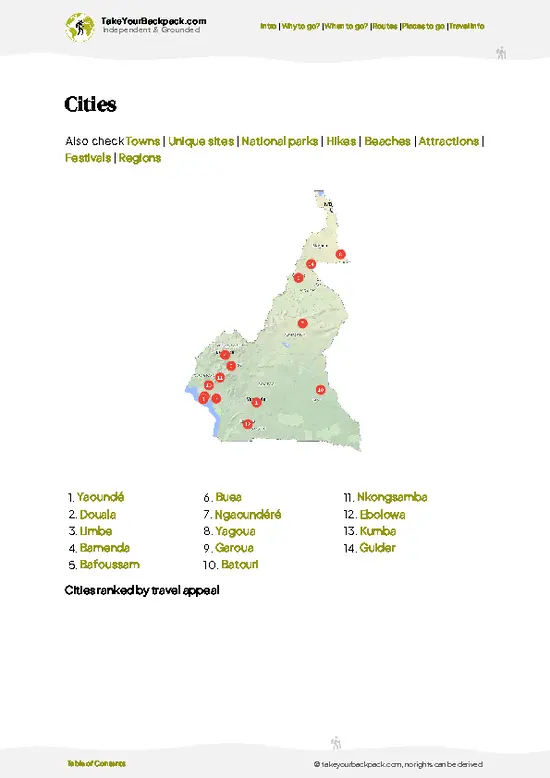
Other Cameroonian cities near Bamenda

Explore more nearby:

  • Bafoussam—Bamileke heartland, coffee production, hilly terrain, regional capital| 61 km away
  • Nkongsamba—Manengouba Mountains, agricultural basin, railway terminus| 113 km away
  • Kumba—Lake Barombi Mbo, trading hub, Southwest crossroads| 168 km away

💡 Not sure where to go next?
Create a personalized itinerary for Cameroon including Bamenda and the places that fit your trip.

Generate my itinerary

👉 Discover all cities

Or checkout all Cameroon has to offer (think cities, towns, villages, national parks, hikes, beaches, festivals)
Country photo of Cameroon

We 💚 feedbackWhat to keep in mind

Bamenda has a raw energy that’s hard to shake off. The locals are warm, and the markets buzz with life. Don’t miss the chance to try the street food—especially the spicy grilled plantains; they’re a delightful surprise. Just a heads-up: the roads can be bumpy, so brace yourself for some jolting rides. But that’s part of the charm. Embrace the unpredictability, and you’ll find moments that stick with you long after you leave.

✍️ Help improve this page!
The information on this page is based on in-depth research, insights shared by experienced travelers, and feedback from the local travel community in Cameroon. While every effort is made to keep the information accurate and current, conditions can change — so if you spot anything incorrect or outdated, please get in touch.


🙋‍♂️ Give feedback

👋 Meet the founderWho’s Behind Take Your Backpack?

Johan, backpacker and founder of TakeYourBackpackHi, I’m Johan (Netherlands 🇳🇱), the creator of TakeYourBackpack. Over the past decade, I’ve backpacked through 80+ countries across six continents, gaining extensive experience with independent travel, long-term trips, and overland routes.

This site is built on a combination of firsthand travel experience and carefully curated insights from other backpackers. Many guides are based on places I’ve personally visited, while others bring together tips, observations, and practical advice shared by trusted travelers I’ve met along the way.

The goal is to provide realistic, experience-driven guidance — not generic itineraries — so you can explore destinations with better context, clearer expectations, and more confidence.

Get full Cameroon guide •
Instant download • 95 highlights • Full Offline guide