×

Cameroon🇨🇲 | best citiesThe Must-See 10 cities in Cameroon

In Cameroon, cities pulse with a unique blend of cultural richness and local vibe that varies dramatically from one region to another. The bustling capital, Yaoundé, offers a vibrant nightlife and a maze of transport connections, making it a prime hub for backpacking adventures. In contrast, Douala, the economic powerhouse, showcases a gritty urban landscape with a more commercial atmosphere, ideal for those seeking a taste of local life amid the hustle.

Smaller urban centers like Bamenda and Bafoussam provide a different flavor, with a slower pace and deeper cultural immersion. Here, you can experience the warmth of local communities and the stunning backdrop of the surrounding mountains. Seasonal nuances also play a role; the rainy season can affect travel ease and safety, while dry months often bring more vibrant street life. Choosing the right city impacts your budget, safety, and overall experience, making it essential for independent travelers to consider these factors carefully.

By Johan Kruseman 🇳🇱 | Updated June 8, 2026
Explore the best towns in Cameroon

Why go?Key Factors That Shape the Experience

Cameroon’s cities pulse with a cultural diversity that sets them apart in Africa. Each urban center reflects a mosaic of ethnic groups, languages, and traditions, creating a vibrant tapestry of daily life. This diversity is not just a backdrop; it shapes the urban experience, from bustling markets filled with local crafts to street vendors offering a taste of regional cuisine. The historical depth of these cities adds layers to their identity, with colonial influences mingling with indigenous heritage, creating a unique narrative that unfolds in every corner.

Geographically, Cameroon is a land of contrasts, from coastal plains to mountainous regions. This variety influences the climatic conditions across its cities, affecting everything from daily routines to architectural styles. Travelers … read more 👉
Cameroon’s cities pulse with a cultural diversity that sets them apart in Africa. Each urban center reflects a mosaic of ethnic groups, languages, and traditions, creating a vibrant tapestry of daily life. This diversity is not just a backdrop; it shapes the urban experience, from bustling markets filled with local crafts to street vendors offering a taste of regional cuisine. The historical depth of these cities adds layers to their identity, with colonial influences mingling with indigenous heritage, creating a unique narrative that unfolds in every corner.

Geographically, Cameroon is a land of contrasts, from coastal plains to mountainous regions. This variety influences the climatic conditions across its cities, affecting everything from daily routines to architectural styles. Travelers should be prepared for the heat and humidity in coastal areas, while the northern cities can offer a more arid climate. Such differences can impact travel plans, as accessibility varies widely. Some cities are well-connected by transport networks, making them easier to reach, while others may require more effort to explore, rewarding those who venture off the beaten path with richer, more immersive experiences.

However, this accessibility comes with trade-offs. The more remote cities may demand longer travel times, but they offer a deeper understanding of local life and culture. Conversely, urban centers with better infrastructure can sometimes feel less authentic, catering more to tourists than to the local populace. Understanding these dynamics is crucial for travelers seeking to balance depth of exploration with convenience. Cameroon’s cities matter not just for what they offer, but for how they challenge and enrich the travel experience, making every moment spent there a meaningful part of the journey.
How the List Was Created
The list of best cities in Cameroon is created based on culture, vibe, attractions, transport ease, and local charm. If you feel a city is missing in this list, please let us know.

When to go?When to Plan Your Trip

Seasonality shapes the experience of cities in Cameroon. The country has a tropical climate, with distinct wet and dry seasons that influence both weather and local life. The dry season, typically from November to February, brings lower humidity and more comfortable temperatures. This period is ideal for exploring urban areas, as the streets are less crowded and the air is clearer. However, this is also when many travelers flock to the country, leading to higher prices and busier attractions.

March to May marks the onset of the rainy season. Expect heavy downpours, especially in the afternoons. While this may deter some visitors, the rain revitalizes the landscape, making it lush and vibrant. Crowds thin out, and prices drop, offering a more intimate experience. Cultural events often take … read more 👉
Seasonality shapes the experience of cities in Cameroon. The country has a tropical climate, with distinct wet and dry seasons that influence both weather and local life. The dry season, typically from November to February, brings lower humidity and more comfortable temperatures. This period is ideal for exploring urban areas, as the streets are less crowded and the air is clearer. However, this is also when many travelers flock to the country, leading to higher prices and busier attractions.

March to May marks the onset of the rainy season. Expect heavy downpours, especially in the afternoons. While this may deter some visitors, the rain revitalizes the landscape, making it lush and vibrant. Crowds thin out, and prices drop, offering a more intimate experience. Cultural events often take place during this time, showcasing local traditions and celebrations. However, navigating the streets can be challenging due to mud and occasional flooding.

June to October sees a mix of weather patterns. The rains continue, but there are also dry spells. This shoulder season can be a double-edged sword. Travelers may enjoy fewer tourists and lower costs, but they risk missing out on key cultural festivals that often occur in the dry months. The atmosphere is electric during these events, with music, dance, and food filling the air.

Understanding these seasonal rhythms is crucial. The best time to visit depends on personal priorities: whether to embrace the vibrant chaos of festivals or to seek quieter streets and lower costs. Each season offers a unique lens through which to experience the heart of Cameroon’s urban life.

city hoppingHow to Combine cities Into One Trip

Transport Networks and Regional Clustering
Cameroon’s cities are best explored through a strategic approach that clusters regions. Start in Douala, the economic hub, then head north to Yaoundé, the political capital. This route sets a logical flow, minimizing backtracking. From Yaoundé, consider branching out to cities like Bafoussam or Dschang in the West, known for their lush landscapes and cultural richness.

Time Management
Allocate at least two to three days per major city. This pacing allows for immersion in local culture, cuisine, and sights. Rushing through cities can lead to missed experiences, like savoring street food in Douala or exploring the vibrant markets in Yaoundé.

Common Planning Mistakes
Travelers often underestimate travel times between cities. While distances may … read more 👉
Transport Networks and Regional Clustering
Cameroon’s cities are best explored through a strategic approach that clusters regions. Start in Douala, the economic hub, then head north to Yaoundé, the political capital. This route sets a logical flow, minimizing backtracking. From Yaoundé, consider branching out to cities like Bafoussam or Dschang in the West, known for their lush landscapes and cultural richness.

Time Management
Allocate at least two to three days per major city. This pacing allows for immersion in local culture, cuisine, and sights. Rushing through cities can lead to missed experiences, like savoring street food in Douala or exploring the vibrant markets in Yaoundé.

Common Planning Mistakes
Travelers often underestimate travel times between cities. While distances may seem short on a map, road conditions can slow progress. Expect several hours of travel, especially when venturing into the less urbanized areas. Avoid cramming too many stops into a tight schedule; it can lead to exhaustion and frustration.

Trade-offs and Constraints
Balancing speed with depth is crucial. Quick visits may save time but often leave travelers feeling unsatisfied. Conversely, taking the time to delve into fewer cities can yield richer experiences. Budget considerations also play a role; while public transport is economical, it may sacrifice comfort. Private transport offers convenience but can strain finances.

Flexibility and Strategic Planning
Maintain flexibility in your itinerary. Weather, local events, or personal interests can shift priorities. Embrace the unexpected; sometimes, the best experiences arise from unplanned detours. Prioritize what matters most—whether it’s cultural immersion or scenic beauty—and adjust your route accordingly.

The ListMust-Visit cities in Cameroon

1 Yaoundé

hilly capital, government district, embassies, cultural institutions

Move through a capital city built on hills, where government, international presence, and museums shape the urban experience.

2 Douala

Atlantic port, economic center, industrial zones, urban sprawl

Navigate a sprawling port city where commerce, industry, and constant movement define the urban landscape and daily experience.

3 Limbe

Atlantic beaches, botanical gardens, volcanic black sand, oil refinery

Relax in a coastal city with black sand beaches, lush gardens, and a working port set against the backdrop of volcanic hills.

4 Bamenda

Northwest Highlands, English-speaking region, political activity, escarpment views

Explore a highland city known for its English-speaking culture, political energy, and dramatic escarpment scenery.

5 Bafoussam

Bamileke heartland, coffee production, hilly terrain, regional capital

Experience a regional center set among hills, where coffee farms and Bamileke traditions shape the city’s daily life.

6 Buea

Mount Cameroon, colonial relics, university campus, cool breezes

Climb into a city at the foot of Mount Cameroon, where mountain air, academic life, and colonial traces blend together.

7 Ngaoundéré

Adamawa Plateau, Fulani culture, cattle trade, volcanic hills

Travel through a city where Fulani heritage, cattle markets, and volcanic landscapes meet at the crossroads of Cameroon’s highlands.

8 Yagoua

Logone River, floodplain villages, fishing economy

Follow the river’s course through a town shaped by seasonal waters, traditional fishing, and the rhythms of the floodplain.

9 Garoua

Benue River, northern markets, Sahelian climate, cotton industry

Experience daily life along the Benue River, where open-air markets and a dry climate shape the rhythms of this northern city.

10 Batouri

logging routes, forest edge, gold mining

Venture into a frontier town where dense forests give way to mining camps and the economy revolves around timber and minerals.

cameroon-city-batouri v1
© Google |

11 Nkongsamba

Manengouba Mountains, agricultural basin, railway terminus

Venture into a city framed by mountains and fertile valleys, where agriculture and rail connections define the local experience.

cameroon-city-nkongsamba
© Google |

12 Ebolowa

South Region forests, cocoa plantations, colonial architecture

Discover a city surrounded by dense forests and cocoa farms, with traces of colonial-era buildings and a relaxed southern pace.

13 Kumba

Lake Barombi Mbo, trading hub, Southwest crossroads

Navigate a commercial center built around a volcanic lake, where regional trade routes converge in the heart of the Southwest.

14 Guider

cotton fields, arid climate, northern gateway

Travel north through a town where cotton farming and dry landscapes mark the transition to Cameroon’s Sahelian zone.

Think you know Cameroon?

Prove you’re a true local — uncover 4 lesser-known cities in Cameroon that locals tend to keep to themselves.
Loading the map 🌍

Expert viewWhat You Should Know

Transport Hubs

Cameroon’s transport hubs are the arteries of its urban life, pulsing with energy and chaos. Major cities like Douala and Yaoundé serve as the primary gateways, with Douala’s international airport buzzing with activity. Expect a mix of modernity and grit; the airport is a blend of sleek terminals and the occasional power outage. Once you step outside, the cacophony of taxi drivers vying for your attention hits you like a wave.

Local transport options are plentiful but can be a mixed bag. Buses and shared taxis are the lifeblood of intercity travel, offering a budget-friendly way to hop between cities. However, be prepared for delays and cramped conditions. The roads can be rough, and travel times are often longer than expected. If you’re short on time, consider flying between … read more 👉

Transport Hubs

Cameroon’s transport hubs are the arteries of its urban life, pulsing with energy and chaos. Major cities like Douala and Yaoundé serve as the primary gateways, with Douala’s international airport buzzing with activity. Expect a mix of modernity and grit; the airport is a blend of sleek terminals and the occasional power outage. Once you step outside, the cacophony of taxi drivers vying for your attention hits you like a wave.

Local transport options are plentiful but can be a mixed bag. Buses and shared taxis are the lifeblood of intercity travel, offering a budget-friendly way to hop between cities. However, be prepared for delays and cramped conditions. The roads can be rough, and travel times are often longer than expected. If you’re short on time, consider flying between major cities, but this comes at a higher cost. The trade-off is clear: save time and energy, but lose the chance to experience the vibrant roadside culture that unfolds during a bus journey.

Urban Pacing

The pace of life in Cameroonian cities varies significantly. Douala is a bustling commercial hub, where the rhythm is fast and frenetic. You’ll find street vendors selling everything from grilled plantains to handmade crafts, and the air is thick with the scent of spices and diesel. In contrast, Yaoundé offers a more laid-back vibe, with its rolling hills and green spaces. Here, you can take a leisurely stroll through the markets or sip a coffee while watching the world go by.

When planning your itinerary, consider how much you want to immerse yourself in local life versus how many cities you want to check off your list. If you’re keen on deepening your experience, allocate more time to fewer cities. Spend a few days in each, absorbing the local customs, trying street food, and engaging with residents. If your goal is to see as much as possible, you might rush through, but you’ll miss the nuances that make each city unique.

Local Costs

Budgeting in Cameroon can be tricky. Costs vary widely depending on where you are and how you choose to travel. Street food is incredibly affordable, often costing less than a dollar for a filling meal. However, dining in restaurants can quickly add up, especially in touristy areas. Accommodation ranges from budget hostels to mid-range hotels, but expect to pay more in larger cities.

Keep in mind that while public transport is cheap, it can be time-consuming. If you’re on a tight schedule, consider splurging on a private taxi or a domestic flight. This will allow you to maximize your time but at the expense of your budget. The key is to find a balance that suits your travel style and objectives.

Exploring More Cities vs. Deeper Immersion

The allure of visiting multiple cities in Cameroon is strong, but it comes with its own set of challenges. You could feasibly visit three to five cities in a week, but this often means spending more time in transit than actually experiencing the local culture. Each city has its own character, shaped by its history, geography, and people.

If you choose to explore more cities quickly, you’ll get a taste of the diversity Cameroon offers, but you might miss the chance to connect with locals or participate in cultural events. On the other hand, if you opt for deeper immersion, you’ll forge meaningful connections and gain insights that a whirlwind tour simply can’t provide.

Consider your priorities. If you’re a first-time visitor, focusing on two or three cities might be more rewarding. Spend time in local markets, attend community events, and engage with residents. This approach not only enriches your experience but also allows you to navigate the complexities of urban life in Cameroon more comfortably.

Safety & Cultural Considerations

Safety is a crucial aspect to consider while navigating urban areas in Cameroon. Petty crime can occur, particularly in crowded markets or transport hubs. Keep your belongings secure and stay aware of your surroundings. Engaging with locals can enhance your experience, but be respectful of cultural norms. Dress modestly, especially in more conservative areas, and learn a few phrases in French or local dialects to break the ice.

Cultural sensitivity goes a long way. Cameroonians are generally warm and welcoming, but understanding local customs can help you avoid unintentional faux pas. For instance, greetings are important; taking the time to say hello can open doors and foster connections.

In summary, the urban landscape of Cameroon is rich and varied, offering a blend of experiences that can be both exhilarating and challenging. Whether you choose to dive deep into a few cities or skim the surface of many, the key is to remain flexible and open to the unexpected. Embrace the grit, savor the moments, and let the journey unfold.

✈️ The backpacker research shortcutCameroon Travel Guide

An offline-friendly backpacking guide with optimized travel routes, ranked highlights, transport advice, and the best areas to stay.
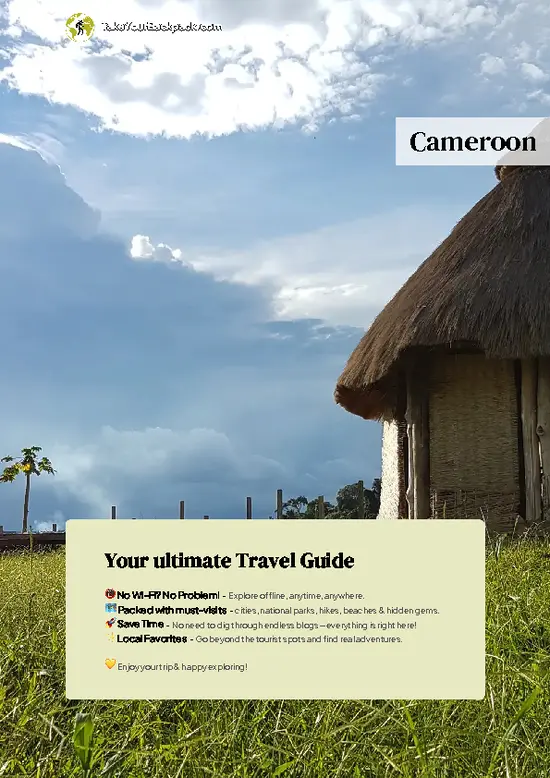
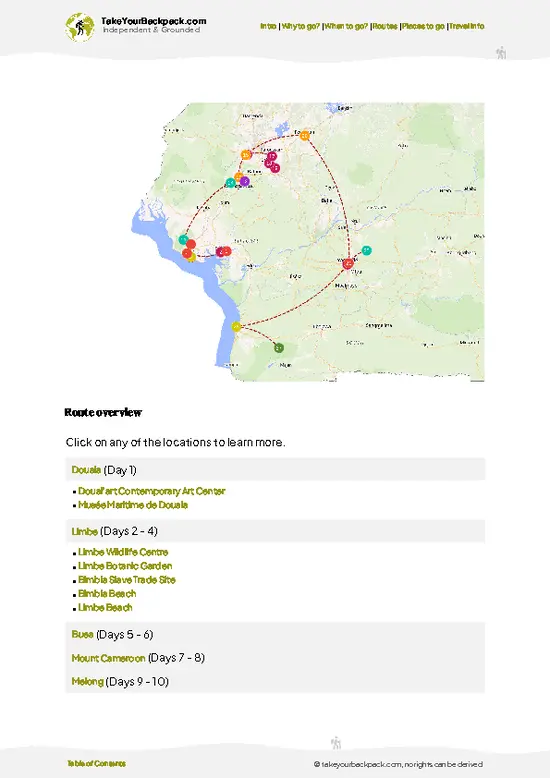
example page 0 from our offline Travel Guide for Cameroon
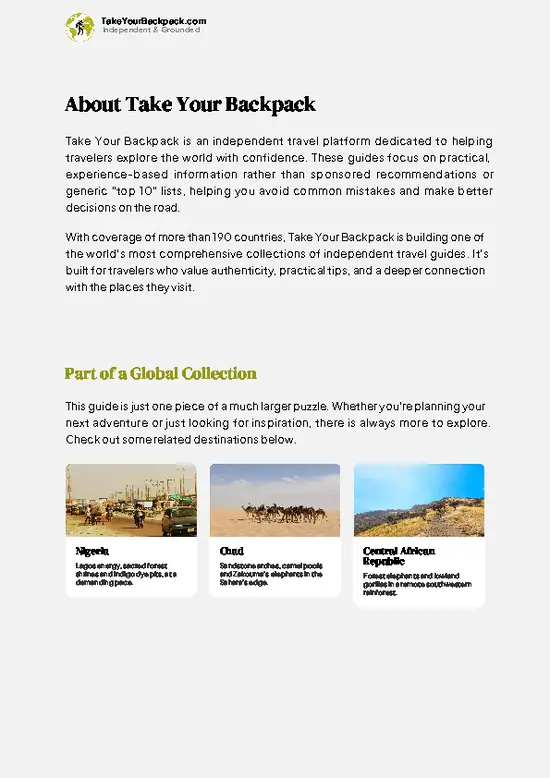
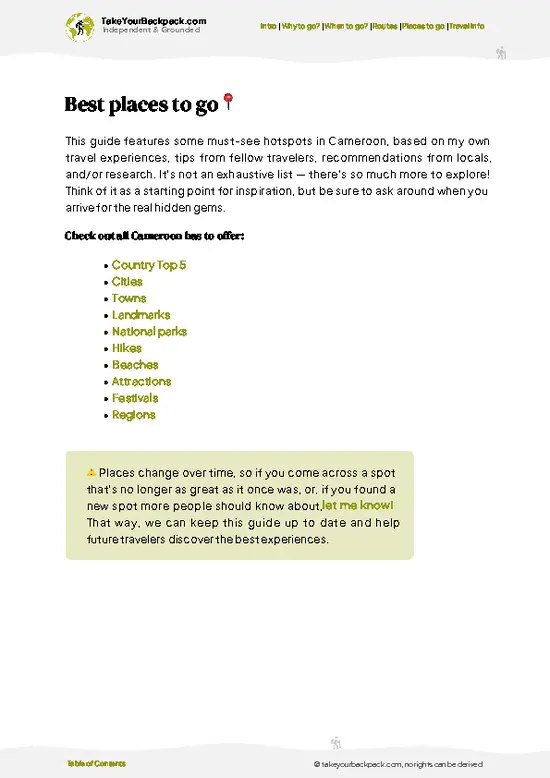
example page 1 from our offline Travel Guide for Cameroon
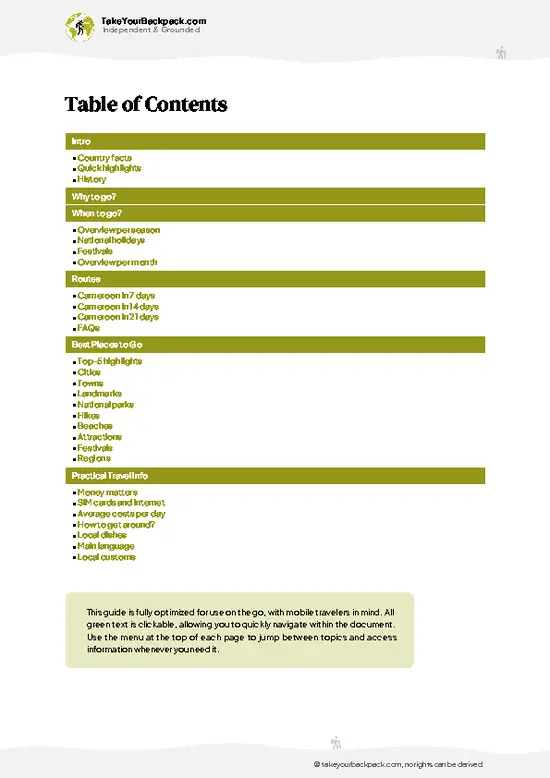
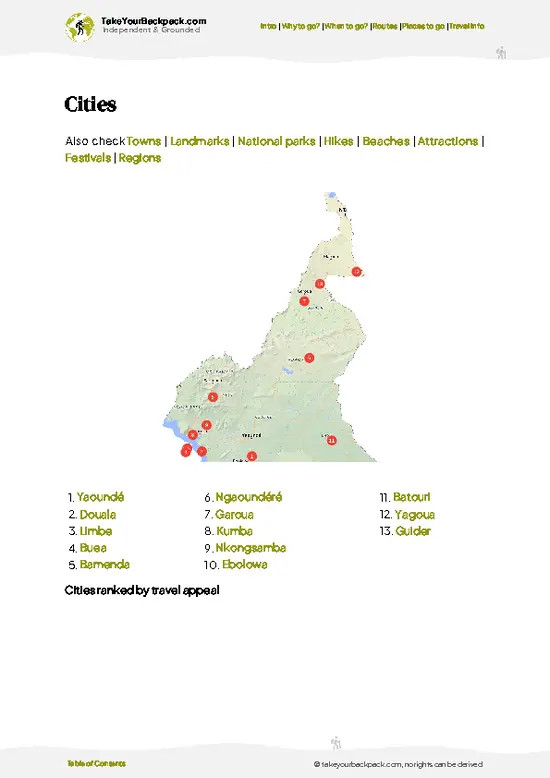
example page 2 from our offline Travel Guide for Cameroon
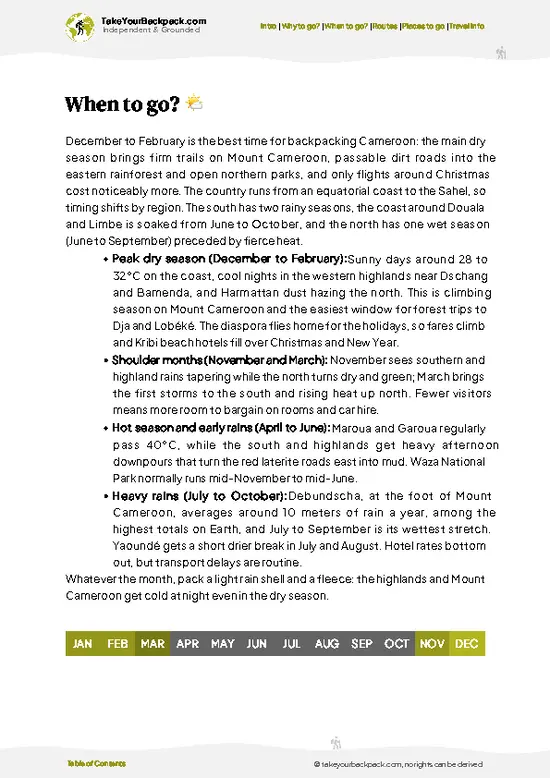
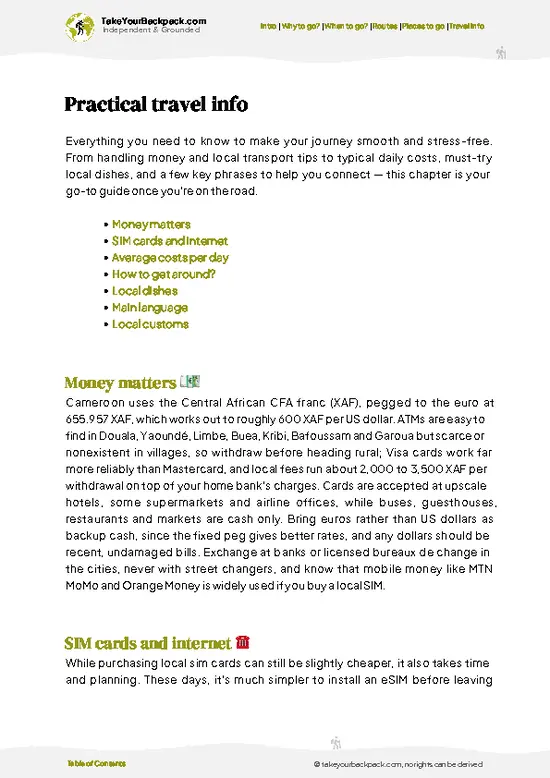
example page 3 from our offline Travel Guide for Cameroon
example page 4 from our offline Travel Guide for Cameroon
example page 5 from our offline Travel Guide for Cameroon
example page 6 from our offline Travel Guide for Cameroon
example page 7 from our offline Travel Guide for Cameroon
The digital guide (383 pages) contains:
95 highlights, ranked by travel appeal
Optimized 7, 14 & 21-day travel routes
Cities, national parks, landmarks, beaches
How to get around
Offline-friendly for travel without Wi-Fi
👉 Click to see all 30+ guide features

📅 Plan smarter in minutes, not weeks
Month by month travel advice
Festivals & national holidays
Budget expectations

🗺️ Go to the right places, skip the overrated ones
Honest pros & cons of destinations
Top hikes, parks & viewpoints
Lesser-known places most travelers miss
Clear “worth it vs skip it” guidance

🛏️ Travel smoothly without rookie mistakes
Best areas to stay
Transport systems explained simply
Common scams & safety advice
SIM cards, money & practical tips

🌍 Understand the country, not just visit it
Culture & traditions
52 Essential phrases & customs
Festivals worth planning around
Traveler-friendly historical context
Insights that make places more meaningful

📱 Built for real travel conditions
Fully downloadable PDF
Works completely offline
Optimized for phone use
Useful in remote areas & buses
Everything in one place
Save weeks of stressful planning
Get instant access to your full guide. 30‑day money-back guarantee.


By proceeding you agree to our terms.
Sent to your inbox immediately after payment • 100% Secure Checkout
Best Backpacking Travel Advisor 2025 tourism awardBest Backpacking
Travel Advisor
2025
What others say about Take Your Backpack Guides:
⭐⭐⭐⭐⭐
Fantastic, amazing amount of information!
⭐⭐⭐⭐⭐
My goodness this is amazing, it's what I've been looking for hats off too you!
⭐⭐⭐⭐⭐
I think this is absolutely BRILLIANT
⭐⭐⭐⭐
Very complete and informative. It's still missing places, but I gotta to commend you
⭐⭐⭐⭐⭐
This is truly amazing, thank you, can't wait to explore it with my kids!
⭐⭐⭐⭐⭐
Awesome resource, thank you!
⭐⭐⭐⭐⭐
This is amazing! Can't wait to explore the ones I haven't seen
⭐⭐⭐⭐
I love this! Well done, great idea.
⭐⭐⭐⭐⭐
Thanks for taking the time to make this gem!
⭐⭐⭐⭐⭐
This might be the best website I've ever seen.
⭐⭐⭐⭐⭐
Congratulations, and thank you so much for your work; it's incredibly valuable.
⭐⭐⭐⭐
In all seriousness I think you did a great job pointing out the important spots
⭐⭐⭐⭐⭐
10/10 very good
⭐⭐⭐⭐⭐
As someone who's only just starting to visit regularly this is awesome, thank you.
⭐⭐⭐⭐
Thank you very much! I'm going to visit my dad, it's going to be very useful!
⭐⭐⭐⭐⭐
This is really cool! We'll be travelling for the first time and this definitely come in handy.
⭐⭐⭐⭐⭐
You are now our minister of culture, congratulations 👨‍💼
⭐⭐⭐⭐⭐
Just wanted to tell you that this is a pearl! Going to follow your recommendations.
⭐⭐⭐⭐⭐
This is so cool. I'll definitely be using the resource for my travels soon.
⭐⭐⭐⭐⭐
This is very impressive! Good work.
⭐⭐⭐⭐⭐
This is an amazing and informative site. Very well done!

🛏️ Where to stay?Top Places to Consider Staying

Yes — hostels, budget guesthouses and low‑cost hotels are available in Cameroon’s main cities and tourist hubs for backpackers, but they concentrate in Douala, Yaoundé and a few regional towns so expect far fewer options in rural or highland areas and plan accordingly.
In Douala, Akwa offers the widest choice and nightlife with good transport links but only moderate nighttime security; Deïdo is cheapest and closest to markets and bus hubs yet busy and basic with lower safety after dark; Bonapriso gives quieter, safer stays at higher prices.
In Yaoundé, Bastos has safer, quieter expat‑style lodgings that cost more; Mokolo is the cheapest and most central near markets and buses but noisy and … read more 👉
Yes — hostels, budget guesthouses and low‑cost hotels are available in Cameroon’s main cities and tourist hubs for backpackers, but they concentrate in Douala, Yaoundé and a few regional towns so expect far fewer options in rural or highland areas and plan accordingly.
In Douala, Akwa offers the widest choice and nightlife with good transport links but only moderate nighttime security; Deïdo is cheapest and closest to markets and bus hubs yet busy and basic with lower safety after dark; Bonapriso gives quieter, safer stays at higher prices.
In Yaoundé, Bastos has safer, quieter expat‑style lodgings that cost more; Mokolo is the cheapest and most central near markets and buses but noisy and spartan; university areas (Ngoa‑Eké/Melen) host wallet‑friendly guesthouses and lively street food while being noisy and occasionally inconsistent on services.

If you enjoy meeting fellow travelers, consider choosing hostels with high ratings for atmosphere. On the other hand, if you prefer having your own space, a hotel might be a better option.

CameroonMore Places Across Cameroon

👋 Meet the founderWho’s Behind Take Your Backpack?

Johan, backpacker and founder of TakeYourBackpackHi, I’m Johan (Netherlands 🇳🇱), the creator of TakeYourBackpack. Over the past decade, I’ve backpacked through 80+ countries across six continents, gaining extensive experience with independent travel, long-term trips, and overland routes.

This site is built on a combination of firsthand travel experience and carefully curated insights from other backpackers. Many guides are based on places I’ve personally visited, while others bring together tips, observations, and practical advice shared by trusted travelers I’ve met along the way.

The goal is to provide realistic, experience-driven guidance — not generic itineraries — so you can explore destinations with better context, clearer expectations, and more confidence.

Get full Cameroon guide •
Instant download • 95 highlights • Full Offline guide