×

Cameroon🇨🇲 | citiesNkongsambaManengouba Mountains, agricultural basin, railway terminus | things to do and best time to go

Explore KumbaExplore Batouri

Backpacking in Nkongsamba
👌 Worth visitingcity ranked #12
By Johan Kruseman 🇳🇱 | Updated June 3, 2026

Forget the idea that Nkongsamba is just a sleepy agricultural stopover—this city, perched at the foot of Mount Manengouba in western Cameroon, is a crossroads where old German colonial architecture, lively markets, and the scent of roasting coffee beans collide. Backpackers find a place that’s gritty but genuine: the main square pulses with moto-taxis and street food, while the faded grandeur of the train station hints at a busier past. It’s cheaper and less polished than Douala, with fewer travelers but more chances to connect with locals over grilled fish or palm wine. Safety is decent if you keep your wits; nightlife is low-key, but the mountain hikes and raw energy make up for it.

Discover everything you want to know in the 📖 Cameroon Travel Guide.


Get your Cameroon guide
95 ranked highlights, routes & tips, works offline (383 pages)
Loading the map 🌍
CLICK TO FILTER
cities
towns
landmarks
national parks
hikes
beaches
attractions
festivals
regions
SHOW COUNTRY’S BESTSHOW ALL

✨ Why go?
Ranked #12 city in Cameroon
Reasons people choose to visit here

Nkongsamba is a strategic stop for backpackers weaving through Cameroon. It’s not just a place to pass through; it’s a basecamp for day trips into the lush landscapes beyond. The city offers a mix of affordable hostels and local eateries that serve up hearty meals without breaking the bank. You’ll find the streets walkable, making it easy to explore the local vibe and meet fellow travelers.

While Nkongsamba may not be the flashiest destination, it’s rich in authentic experiences that resonate with those seeking a deeper connection to the culture. The nightlife is laid-back yet lively, perfect for unwinding after a day of adventure. Plus, its proximity to major transport routes means you can easily hop on to your next destination. If you’re after a blend of comfort and value, Nkongsamba is worth more than just a fleeting visit.
Want to include Nkongsamba in your Cameroon route?
Create a personalized Cameroon itinerary that includes Nkongsamba and the places that fit your trip — based on your travel style, budget, and available time. Get your route in seconds.

Generate my trip

💡 HighlightsPlaces and moments you shouldn't skip

  • Marché Central (the main market) — the city’s beating heart: mountains of plantains and bananas, sacks of coffee beans, lively bargaining, and the best street food for a cheap, honest meal and people-watching.
  • Old Railway Station (Gare de Nkongsamba) — the weathered terminus of the colonial rail era; great for photos and for getting a feel for Nkongsamba’s role in the region’s banana/coffee trade history.
  • Mairie (Town Hall) and the central square — where local politics and daily life intersect; the square is a good place to sit, watch vendors, and see the town’s colonial-era civic architecture up close.
  • Stade Municipal — catch a local football match on a weekend to see real community spirit and noisy, friendly support for the home team.
  • Main Catholic parish (central church) — more than
read more 👉
  • Marché Central (the main market) — the city’s beating heart: mountains of plantains and bananas, sacks of coffee beans, lively bargaining, and the best street food for a cheap, honest meal and people-watching.
  • Old Railway Station (Gare de Nkongsamba) — the weathered terminus of the colonial rail era; great for photos and for getting a feel for Nkongsamba’s role in the region’s banana/coffee trade history.
  • Mairie (Town Hall) and the central square — where local politics and daily life intersect; the square is a good place to sit, watch vendors, and see the town’s colonial-era civic architecture up close.
  • Stade Municipal — catch a local football match on a weekend to see real community spirit and noisy, friendly support for the home team.
  • Main Catholic parish (central church) — more than a building: morning masses bring out choirs and neighborhood gatherings that reveal local rhythms and hospitality.
  • Artisan quarter and market stalls — a cluster of woodcarvers, basket weavers and small craft stalls where you can buy handmade souvenirs and watch makers at work.
  • Gare Routière (bus/taxi hub) — chaotic, noisy, essential: the transport hub is perfect for observing regional life, catching rides to nearby villages, and seeing Nkongsamba’s daily connections to the countryside.
  • Small coffee-roasting spots and cafés — informal roasters and roadside cafés where local beans are roasted and brewed; an intimate way to learn about Nkongsamba’s coffee culture without a tour.
  • Palm-wine squares and street-food lanes — evening social spots where locals gather to drink, snack, and trade stories; a cultural experience that’s loud, friendly, and authentic.
  • Town viewpoints and short hill walks — modest walks up the small hills around the town give panoramic views over the plain and, on a clear day, a glimpse of Mount Manengouba looming in the distance—an easy slice of nature without leaving the city.
A few great day trips just outside Nkongsamba: Mount Manengouba with its twin crater lakes, the waterfalls and forest trails in the surrounding highlands, and nearby plantation-and-village routes (coffee/banana) that show how the region’s produce is grown and moved to market.
Spotted a mistake or missing something? Contact us.

🏘️ NeighborhoodsUnderstanding the local layout

Nkongsamba is a vibrant hub in Cameroon, offering a mix of local culture and accessibility for backpackers. Here’s a breakdown of key neighborhoods to help you navigate your stay.

Centre Ville: This is the heart of Nkongsamba. Expect a lively atmosphere with bustling markets and street vendors. Costs are moderate, making it budget-friendly. The area is walkable, with plenty of cafes and shops. Nightlife is active, but you can find quieter spots if you venture a bit off the main streets. Ideal for short stays, as everything is within reach.

Ngombé: A quieter residential area, Ngombé offers a more laid-back vibe. It’s less touristy, which means lower prices on accommodations and food. Walkability is decent, but you might need to rely on taxis for longer distances. Perfect for longer stays … read more 👉
Nkongsamba is a vibrant hub in Cameroon, offering a mix of local culture and accessibility for backpackers. Here’s a breakdown of key neighborhoods to help you navigate your stay.

Centre Ville: This is the heart of Nkongsamba. Expect a lively atmosphere with bustling markets and street vendors. Costs are moderate, making it budget-friendly. The area is walkable, with plenty of cafes and shops. Nightlife is active, but you can find quieter spots if you venture a bit off the main streets. Ideal for short stays, as everything is within reach.

Ngombé: A quieter residential area, Ngombé offers a more laid-back vibe. It’s less touristy, which means lower prices on accommodations and food. Walkability is decent, but you might need to rely on taxis for longer distances. Perfect for longer stays if you want to immerse yourself in local life without the hustle.

Bonakouamouang: This area is known for its scenic views and is slightly more upscale. Prices can be higher, especially for lodging with a view. It’s less walkable, so public transport or taxis are necessary. The nightlife is subdued, making it suitable for those seeking peace after a day of exploration. Great for both short and longer stays if you appreciate a quieter environment.

⌛️ 1 daySeeing the highlights in 24 hours

Nkongsamba, a vibrant hub in Cameroon, is a delightful mix of culture and nature. Nestled in the lush hills of the Littoral region, it’s known for its coffee plantations and the stunning landscapes that surround it. This city offers a taste of authentic Cameroonian life, away from the usual tourist trails.

Start your morning at the bustling Marché de Nkongsamba. The aroma of fresh produce fills the air as you weave through stalls brimming with colorful fruits and spices. Grab a local breakfast of akam (fermented corn porridge) from a vendor. It’s a simple yet hearty way to fuel up for the day ahead.

In the afternoon, head to the nearby Mount Manengouba. This isn’t just a hike; it’s a journey through the heart of nature. The trails are well-marked, and the views from the summit are breathtaking. … read more 👉
Nkongsamba, a vibrant hub in Cameroon, is a delightful mix of culture and nature. Nestled in the lush hills of the Littoral region, it’s known for its coffee plantations and the stunning landscapes that surround it. This city offers a taste of authentic Cameroonian life, away from the usual tourist trails.

Start your morning at the bustling Marché de Nkongsamba. The aroma of fresh produce fills the air as you weave through stalls brimming with colorful fruits and spices. Grab a local breakfast of akam (fermented corn porridge) from a vendor. It’s a simple yet hearty way to fuel up for the day ahead.

In the afternoon, head to the nearby Mount Manengouba. This isn’t just a hike; it’s a journey through the heart of nature. The trails are well-marked, and the views from the summit are breathtaking. You’ll encounter local flora and fauna, and if you’re lucky, spot a few friendly villagers along the way. This experience is often overlooked by tourists, but it’s a chance to connect with the land and its people.

As the sun begins to set, return to Nkongsamba and explore the lively neighborhood of Bafang. Here, you can unwind at a local eatery, savoring dishes like ndolé (bitter leaf stew) while listening to the sounds of the city. The warmth of the locals and the vibrant atmosphere will make your evening memorable.

This day in Nkongsamba isn’t just about ticking boxes; it’s about immersing yourself in a unique blend of culture, nature, and community.
Turn your Nkongsamba visit into an Cameroon adventure
Build a complete Cameroon route with Nkongsamba, hidden gems, must-see destinations, and realistic travel times included.

Generate my trip

🌤️ When to go?Choosing the right time of year


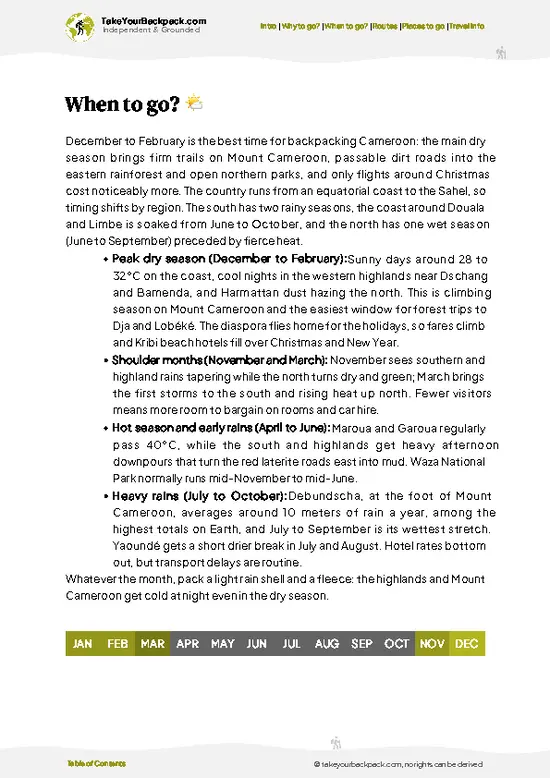
  • Topic: Weather and Temperature – Nkongsamba’s best window is during the dry season from November to February. Expect daytime highs around 28°C (82°F) and cooler nights near 18°C (64°F). The wet season, March to October, brings heavy rains and humidity, making trails slippery and gear soggy.

  • Topic: Daylight Hours – Near the equator, daylight is steady year-round, roughly 12 hours daily. This consistency means you won’t lose precious hiking time to short days, so plan your outings without worrying about early sunsets.

  • Topic: Crowds – Tourist traffic peaks during the dry season, especially December and January. If you prefer solitude, shoulder months like November or February offer quieter trails without sacrificing good weather.

  • Topic: Seasonal Activities – Dry months favor trekking
read more 👉

  • Topic: Weather and Temperature – Nkongsamba’s best window is during the dry season from November to February. Expect daytime highs around 28°C (82°F) and cooler nights near 18°C (64°F). The wet season, March to October, brings heavy rains and humidity, making trails slippery and gear soggy.

  • Topic: Daylight Hours – Near the equator, daylight is steady year-round, roughly 12 hours daily. This consistency means you won’t lose precious hiking time to short days, so plan your outings without worrying about early sunsets.

  • Topic: Crowds – Tourist traffic peaks during the dry season, especially December and January. If you prefer solitude, shoulder months like November or February offer quieter trails without sacrificing good weather.

  • Topic: Seasonal Activities – Dry months favor trekking Mount Manengouba and exploring local markets. The wet season limits outdoor activities but brings lush greenery and fewer tourists, which can appeal if you’re after a different vibe.

  • Topic: Price Fluctuations – Accommodation and transport costs rise during the dry season’s peak. Booking in shoulder months can save money while still delivering solid weather and access.


Pro-tip: Aim for November or February to balance good weather, manageable crowds, and better prices—turning timing into your secret weapon for a high-value Nkongsamba trip.


source: climatestotravel.comJANJanuary: excellent for travelingFEBFebruary: highly recommended for travelingMARMarch: fair for travelingAPRApril: fair for travelingMAYMay: fair for travelingJUNJune: fair for travelingJULJuly: fair for travelingAUGAugust: fair for travelingSEPSeptember: fair for travelingOCTOctober: fair for travelingNOVNovember: highly recommended for travelingDECDecember: excellent for traveling
cameroon-city-nkongsamba
© Google |

✈️ The backpacker research shortcutCameroon Travel Guide

An offline-friendly backpacking guide with optimized travel routes, ranked highlights, transport advice, and the best areas to stay.
example page 0 from our offline Travel Guide for Cameroon
example page 1 from our offline Travel Guide for Cameroon
example page 2 from our offline Travel Guide for Cameroon
example page 3 from our offline Travel Guide for Cameroon
example page 4 from our offline Travel Guide for Cameroon
example page 5 from our offline Travel Guide for Cameroon
example page 6 from our offline Travel Guide for Cameroon
example page 7 from our offline Travel Guide for Cameroon
The digital guide (383 pages) contains:
95 highlights, ranked by travel appeal
Optimized 7, 14 & 21-day travel routes
Cities, national parks, landmarks, beaches
How to get around
Offline-friendly for travel without Wi-Fi
👉 Click to see all 30+ guide features

📅 Plan smarter in minutes, not weeks
Month by month travel advice
Festivals & national holidays
Budget expectations

🗺️ Go to the right places, skip the overrated ones
Honest pros & cons of destinations
Top hikes, parks & viewpoints
Lesser-known places most travelers miss
Clear “worth it vs skip it” guidance

🛏️ Travel smoothly without rookie mistakes
Best areas to stay
Transport systems explained simply
Common scams & safety advice
SIM cards, money & practical tips

🌍 Understand the country, not just visit it
Culture & traditions
52 Essential phrases & customs
Festivals worth planning around
Traveler-friendly historical context
Insights that make places more meaningful

📱 Built for real travel conditions
Fully downloadable PDF
Works completely offline
Optimized for phone use
Useful in remote areas & buses
Everything in one place
Save weeks of stressful planning
Get instant access to your full guide. 30‑day money-back guarantee.


By proceeding you agree to our terms.
Sent to your inbox immediately after payment • 100% Secure Checkout
Best Backpacking Travel Advisor 2025 tourism awardBest Backpacking
Travel Advisor
2025
What others say about Take Your Backpack Guides:
⭐⭐⭐⭐⭐
Fantastic, amazing amount of information!
⭐⭐⭐⭐⭐
My goodness this is amazing, it's what I've been looking for hats off too you!
⭐⭐⭐⭐⭐
I think this is absolutely BRILLIANT
⭐⭐⭐⭐
Very complete and informative. It's still missing places, but I gotta to commend you
⭐⭐⭐⭐⭐
This is truly amazing, thank you, can't wait to explore it with my kids!
⭐⭐⭐⭐⭐
Awesome resource, thank you!
⭐⭐⭐⭐⭐
This is amazing! Can't wait to explore the ones I haven't seen
⭐⭐⭐⭐
I love this! Well done, great idea.
⭐⭐⭐⭐⭐
Thanks for taking the time to make this gem!
⭐⭐⭐⭐⭐
This might be the best website I've ever seen.
⭐⭐⭐⭐⭐
Congratulations, and thank you so much for your work; it's incredibly valuable.
⭐⭐⭐⭐
In all seriousness I think you did a great job pointing out the important spots
⭐⭐⭐⭐⭐
10/10 very good
⭐⭐⭐⭐⭐
As someone who's only just starting to visit regularly this is awesome, thank you.
⭐⭐⭐⭐
Thank you very much! I'm going to visit my dad, it's going to be very useful!
⭐⭐⭐⭐⭐
This is really cool! We'll be travelling for the first time and this definitely come in handy.
⭐⭐⭐⭐⭐
You are now our minister of culture, congratulations 👨‍💼
⭐⭐⭐⭐⭐
Just wanted to tell you that this is a pearl! Going to follow your recommendations.
⭐⭐⭐⭐⭐
This is so cool. I'll definitely be using the resource for my travels soon.
⭐⭐⭐⭐⭐
This is very impressive! Good work.
⭐⭐⭐⭐⭐
This is an amazing and informative site. Very well done!

🛏️ Where to stay?Best areas and accommodation options

In Nkongsamba, the best area for backpackers to base themselves is around the city center, particularly near the market district. This zone strikes a rare balance: it’s safe enough for solo travelers and lively enough to keep you socially plugged in without feeling overwhelmed. You’ll find a handful of budget hostels here, which means you’re not just paying less—you’re also stepping into a community of like-minded travelers and locals. The vibe is practical and grounded, with easy access to street food stalls, local transport, and informal hangouts where conversations flow naturally.

Compared … read more 👉
In Nkongsamba, the best area for backpackers to base themselves is around the city center, particularly near the market district. This zone strikes a rare balance: it’s safe enough for solo travelers and lively enough to keep you socially plugged in without feeling overwhelmed. You’ll find a handful of budget hostels here, which means you’re not just paying less—you’re also stepping into a community of like-minded travelers and locals. The vibe is practical and grounded, with easy access to street food stalls, local transport, and informal hangouts where conversations flow naturally.

Compared to the quieter, more residential outskirts, the city center’s energy is a trade-off worth making. You sacrifice a bit of peace and quiet for convenience and connection. On the flip side, the more upscale neighborhoods offer comfort but at a cost that doesn’t align with backpacker budgets or the desire to meet fellow adventurers. In Nkongsamba, choosing the central market area means you’re playing the logistics game smart: maximizing social opportunities and safety while keeping expenses lean.

🚌 Getting aroundMoving around without the hassle

Nkongsamba moves at its own rhythm—neither strictly by the clock nor by chaos, but a blend that rewards patience and street smarts. The city’s pulse is set by the ebb and flow of people hustling between markets, buses, and the occasional moto taxi darting through traffic. Here, time is flexible, and comfort is a negotiable luxury. Your choices boil down to what you value most: saving cash, shaving minutes off your journey, or riding with a bit more ease. Understanding this trade-off map is your secret weapon to mastering Nkongsamba’s transit game.


  • Walking: The cheapest and most reliable way to navigate the city center. Expect to cover 2-3 kilometers in 30-45 minutes. No schedules, no fares, just your own pace and the chance to soak in street life up close.

  • Shared Minibus (Taxi-Brousse):
read more 👉
Nkongsamba moves at its own rhythm—neither strictly by the clock nor by chaos, but a blend that rewards patience and street smarts. The city’s pulse is set by the ebb and flow of people hustling between markets, buses, and the occasional moto taxi darting through traffic. Here, time is flexible, and comfort is a negotiable luxury. Your choices boil down to what you value most: saving cash, shaving minutes off your journey, or riding with a bit more ease. Understanding this trade-off map is your secret weapon to mastering Nkongsamba’s transit game.


  • Walking: The cheapest and most reliable way to navigate the city center. Expect to cover 2-3 kilometers in 30-45 minutes. No schedules, no fares, just your own pace and the chance to soak in street life up close.

  • Shared Minibus (Taxi-Brousse): Runs roughly from 6 AM to 6 PM, fares around 300-500 XAF for short hops. These minibuses are slow and often packed, but they connect major points like the market and bus station. Comfort is minimal, but the price and frequency make them a budget staple.

  • Moto Taxi: Available all day and night, fares start at 200 XAF for short rides. Fast and nimble, motos cut through traffic jams but offer zero protection from weather or bumps. Ideal if you’re in a hurry and traveling light.

  • Private Taxi: More expensive, usually 2000-3000 XAF per trip, but offers door-to-door service and relative comfort. Best for early mornings or late nights when other options dwindle, or if you’re carrying heavy gear.


Each option forces a trade-off: walk and save money but spend time; hop on a moto and gain speed but sacrifice comfort and safety; or pick a minibus and accept crowding for a middle ground. Your mission is to read these signals, choose your battles, and turn Nkongsamba’s transit into a strategic advantage, not a headache.

👛 Costs (as of 31 March 2025)Typical daily expenses

Backpacking in Nkongsamba, Cameroon, demands a clear-eyed view of where your money goes, so you can play the budget game smartly and avoid surprises.
  • Dorm Accommodation (High Season): Expect to pay around €8 to €12 per night. High season drives prices up due to demand, but the quality remains basic—think simple beds, shared bathrooms, and limited amenities.
  • Dorm Accommodation (Off-Season): Prices drop to about €5 to €8 per night. Fewer travelers mean better bargaining power, but some places might close or reduce services.
  • Meals: Local street food and small eateries offer meals for €1.50 to €3.50. You’ll find filling dishes like grilled fish or plantains, but avoid anything that looks too fancy or imported if you want to keep costs low.
  • Local Transport: Short rides on motorbike taxis (okadas)
read more 👉
Backpacking in Nkongsamba, Cameroon, demands a clear-eyed view of where your money goes, so you can play the budget game smartly and avoid surprises.
  • Dorm Accommodation (High Season): Expect to pay around €8 to €12 per night. High season drives prices up due to demand, but the quality remains basic—think simple beds, shared bathrooms, and limited amenities.
  • Dorm Accommodation (Off-Season): Prices drop to about €5 to €8 per night. Fewer travelers mean better bargaining power, but some places might close or reduce services.
  • Meals: Local street food and small eateries offer meals for €1.50 to €3.50. You’ll find filling dishes like grilled fish or plantains, but avoid anything that looks too fancy or imported if you want to keep costs low.
  • Local Transport: Short rides on motorbike taxis (okadas) or minibuses cost roughly €0.30 to €0.70. These are the lifeblood of getting around quickly but can be bumpy and crowded.
  • City Transport Pass: Nkongsamba doesn’t have a formal city transport pass system. Budget for individual rides instead, as bulk or daily passes aren’t available.
  • Basic Activities/Entry Fees: Most local attractions, like markets or natural sites, charge minimal or no entry—budget around €1 to €3 for any small fees or guided tours.
  • Miscellaneous Expenses: Factor in about €1 to €2 daily for essentials like bottled water, snacks, or phone credit. These small costs add up but are manageable with a bit of planning.

Total daily costs for backpacking in Nkongsamba typically range between €10 and €20. This range balances the essentials without sacrificing comfort or local experience, letting you stretch your budget while still engaging fully with the city.
⚠️ Prices can change and everyone travels differently, so take this as a rough guide. Hope it helps you plan your adventure!

🚌 Day tripsEasy escapes and nearby places

Nkongsamba is a fantastic launchpad for day trips that reveal the heart of Cameroon’s landscapes and cultures. Here are some top picks that pack a punch without draining your wallet.

Mount Manengouba
A trek up Mount Manengouba is a must for those craving a mix of adventure and stunning views. The hike takes about 3-4 hours, and the panoramic vistas at the summit are worth every drop of sweat. Expect to spend around $5 on transport and snacks. The best time to go is during the dry season, from November to February. A common mistake? Underestimating the trail’s difficulty; bring plenty of water and wear sturdy shoes.
👉 Explore Mount Manengouba

Limbe Beach
Just a couple of hours from Nkongsamba, Limbe offers a refreshing coastal escape. You can lounge on the black sand, grab some grilled … read more 👉
Nkongsamba is a fantastic launchpad for day trips that reveal the heart of Cameroon’s landscapes and cultures. Here are some top picks that pack a punch without draining your wallet.

Mount Manengouba
A trek up Mount Manengouba is a must for those craving a mix of adventure and stunning views. The hike takes about 3-4 hours, and the panoramic vistas at the summit are worth every drop of sweat. Expect to spend around $5 on transport and snacks. The best time to go is during the dry season, from November to February. A common mistake? Underestimating the trail’s difficulty; bring plenty of water and wear sturdy shoes.
👉 Explore Mount Manengouba

Limbe Beach
Just a couple of hours from Nkongsamba, Limbe offers a refreshing coastal escape. You can lounge on the black sand, grab some grilled fish from local vendors, and soak in the vibrant atmosphere. Total costs hover around $10 for transport and food. The dry season is ideal, but be prepared for a lively crowd on weekends. Many first-timers miss the chance to explore the nearby botanical gardens, which are a delightful addition to your beach day.
👉 Explore Limbe Beach

Buea and the Volcanoes
A trip to Buea, the gateway to Mount Cameroon, is perfect for those interested in volcanic landscapes. The journey takes about 1.5 hours, and you can explore the town’s colonial architecture and local markets. Budget around $8 for transport and snacks. The best time to visit is during the dry season, but avoid the peak climbing season if you’re not planning to hike. A common oversight is not checking local guides for the best routes and insights.
👉 Explore Buea

Dja Faunal Reserve
For wildlife enthusiasts, a day trip to Dja Faunal Reserve is a treasure. It’s a bit of a trek, taking around 3 hours, but the chance to see unique wildlife makes it worthwhile. Expect to spend about $15 on transport and park fees. The dry season is best for spotting animals. First-timers often overlook the need for a guide; having one can enhance your experience significantly.
👉 Explore Dja Faunal Reserve
Want to know what more Cameroon offers?
The Cameroon Travel Guide describes 95 highlights, from cities to national parks, from beaches to hikes

Get the Travel Guide -

🍲 FoodEating & Drinking in Nkongsamba

In Nkongsamba, food is a vibrant tapestry of flavors that tells the story of its people. Dive into ndolé, a rich stew made with bitter leaves, groundnuts, and fish or meat. The aroma wafts through the streets, drawing you in. Pair it with plantains or fufu, and you’ve got a meal that’s both hearty and satisfying.

Street food is where the magic happens. Vendors line the bustling markets, serving up grilled meat skewers and spicy pepper soup that packs a punch. Don’t miss the chance to sip on palm wine—a local favorite that’s sweet and slightly effervescent. It’s often shared among friends, so grab a cup and join the circle.

Eating here is a communal affair. Expect to share dishes and stories, breaking bread with locals who are eager to welcome you. Just remember, it’s polite to greet before … read more 👉
In Nkongsamba, food is a vibrant tapestry of flavors that tells the story of its people. Dive into ndolé, a rich stew made with bitter leaves, groundnuts, and fish or meat. The aroma wafts through the streets, drawing you in. Pair it with plantains or fufu, and you’ve got a meal that’s both hearty and satisfying.

Street food is where the magic happens. Vendors line the bustling markets, serving up grilled meat skewers and spicy pepper soup that packs a punch. Don’t miss the chance to sip on palm wine—a local favorite that’s sweet and slightly effervescent. It’s often shared among friends, so grab a cup and join the circle.

Eating here is a communal affair. Expect to share dishes and stories, breaking bread with locals who are eager to welcome you. Just remember, it’s polite to greet before you dig in. Embrace the chaos and savor every bite; this is where Nkongsamba’s heart truly beats.

🛡️ SafetyTraveler Safety Guide

Nkongsamba is generally safe for travelers, but a few common-sense strategies can enhance your experience. Stick to well-lit areas at night, especially around the market and bus stations, where activity can dwindle after dark. Solo travelers should be aware of their surroundings; a confident demeanor goes a long way.

Watch out for the occasional taxi scam—always agree on a fare before getting in. Street vendors can be persistent, but a polite “no, thank you” usually does the trick. Keep your belongings close, especially in crowded places.

Overall, with a little awareness and a friendly attitude, you can navigate Nkongsamba smoothly while enjoying its vibrant local culture.

Other Cameroonian cities near Nkongsamba

Explore more nearby:

  • Kumba—Lake Barombi Mbo, trading hub, Southwest crossroads| 66 km away
  • Bafoussam—Bamileke heartland, coffee production, hilly terrain, regional capital| 78 km away
  • Douala—Atlantic port, economic center, industrial zones, urban sprawl| 104 km away

💡 Not sure where to go next?
Create a personalized itinerary for Cameroon including Nkongsamba and the places that fit your trip.

Generate my itinerary

👉 Discover all cities

Or checkout all Cameroon has to offer (think cities, towns, villages, national parks, hikes, beaches, festivals)
Country photo of Cameroon

We 💚 feedbackWhat to keep in mind

Nkongsamba has a raw, electric vibe that pulses with life. The best surprise? The local markets—colors, scents, and flavors collide in a way that feels like a celebration. But a heads-up: the roads can be tricky, so don’t rush. Embrace the slower pace; it’s part of the charm. You’ll find that the moments spent waiting often lead to the most memorable experiences. Enjoy the ride!

✍️ Help improve this page!
The information on this page is based on in-depth research, insights shared by experienced travelers, and feedback from the local travel community in Cameroon. While every effort is made to keep the information accurate and current, conditions can change — so if you spot anything incorrect or outdated, please get in touch.


🙋‍♂️ Give feedback

👋 Meet the founderWho’s Behind Take Your Backpack?

Johan, backpacker and founder of TakeYourBackpackHi, I’m Johan (Netherlands 🇳🇱), the creator of TakeYourBackpack. Over the past decade, I’ve backpacked through 80+ countries across six continents, gaining extensive experience with independent travel, long-term trips, and overland routes.

This site is built on a combination of firsthand travel experience and carefully curated insights from other backpackers. Many guides are based on places I’ve personally visited, while others bring together tips, observations, and practical advice shared by trusted travelers I’ve met along the way.

The goal is to provide realistic, experience-driven guidance — not generic itineraries — so you can explore destinations with better context, clearer expectations, and more confidence.

Get full Cameroon guide •
Instant download • 95 highlights • Full Offline guide