×

Cameroon🇨🇲 | citiesDoualaAtlantic port, economic center, industrial zones, urban sprawl | things to do and best time to go

Explore BueaExplore Limbe

Backpacking in Douala
🏆 Top pickcity ranked #2
By Johan Kruseman 🇳🇱 | Updated June 5, 2026

Here’s the curveball: Douala, Cameroon’s economic engine, is actually more of a street-food paradise than a nightlife hotspot—despite what most travel blogs claim. Wedged on the Atlantic coast in the humid heart of Cameroon’s Littoral region, Douala is the country’s biggest city and its loudest, sweatiest crossroads. For backpackers, Douala is a sensory jolt: colonial-era buildings crumble beside neon-lit bars, and the Marché Central is a living, breathing lesson in organized chaos. You’ll find the Maritime Museum surprisingly well-curated, and Bonanjo’s faded grandeur hints at a complicated past. But Douala is not a place for lazy strolls or easy camaraderie with fellow travelers; the city is sprawling, traffic-choked, and English is rarely spoken outside expat circles. Costs are moderate—cheaper than Yaoundé, pricier than Buea—but safety demands street smarts, especially after dark. Douala’s vibe is kinetic, raw, and unapologetically real. If you want comfort, look elsewhere. If you want character, you’re in the right place.

Discover everything you want to know in the 📖 Cameroon Travel Guide.


Get your Cameroon guide
95 ranked highlights, routes & tips, works offline (383 pages)
Loading the map 🌍
CLICK TO FILTER
cities
towns
landmarks
national parks
hikes
beaches
attractions
festivals
regions
SHOW COUNTRY’S BESTSHOW ALL

✨ Why go?
Ranked #2 city in Cameroon
Why Douala should be on your travel list

Douala is a strategic hub for backpackers navigating Cameroon. It’s not just a stopover; it’s a basecamp that offers a mix of highlights and day trip potential. The city pulses with life, making it a great place to soak in the local culture. You’ll find affordable hostels that cater to budget travelers, providing a chance to meet fellow adventurers.

The food scene is vibrant, with street vendors serving up everything from spicy grilled meats to fresh tropical fruits. If you’re into walkability, Douala’s neighborhoods invite exploration, allowing you to stumble upon local markets and hidden cafés.

When the sun sets, the nightlife kicks in, with bars and clubs that reflect the city’s energy. Plus, Douala’s transport links make onward travel easy, whether you’re heading to the mountains or … read more 👉
Douala is a strategic hub for backpackers navigating Cameroon. It’s not just a stopover; it’s a basecamp that offers a mix of highlights and day trip potential. The city pulses with life, making it a great place to soak in the local culture. You’ll find affordable hostels that cater to budget travelers, providing a chance to meet fellow adventurers.

The food scene is vibrant, with street vendors serving up everything from spicy grilled meats to fresh tropical fruits. If you’re into walkability, Douala’s neighborhoods invite exploration, allowing you to stumble upon local markets and hidden cafés.

When the sun sets, the nightlife kicks in, with bars and clubs that reflect the city’s energy. Plus, Douala’s transport links make onward travel easy, whether you’re heading to the mountains or the coast.

In short, Douala offers a blend of comfort and convenience without breaking the bank. It’s a place where you can recharge before diving deeper into Cameroon’s wonders, making it a worthy stop on your backpacking journey.
Want to include Douala in your Cameroon route?
Create a personalized Cameroon itinerary that includes Douala and the places that fit your trip — based on your travel style, budget, and available time. Get your route in seconds.

Generate my trip

💡 HighlightsMust-see experiences and standout moments

  1. La Nouvelle Liberté — the giant scrap-metal sculpture at a busy roundabout; it’s Douala’s unofficial emblem and an absurdly photogenic snapshot of the city’s creativity and grit.
  2. Doual’art — a small but influential contemporary art center that runs exhibitions, archives and a public-art program; great place to learn about the city’s recent cultural shifts and pick up a local artist’s zine.
  3. Marché Central (Central Market) — chaotic, noisy and essential: spices, fabrics, tools, grilled fish and daily Douala life all in one place. Best for people-watching and bargaining practice.
  4. Youpwe fishing village — a short boat hop from the city centre to a cluster of stilt houses and crab stalls; it’s where river life, pirogues and fresh seafood meet authentic local rhythms.
  5. Bonabéri waterfront and
read more 👉
  1. La Nouvelle Liberté — the giant scrap-metal sculpture at a busy roundabout; it’s Douala’s unofficial emblem and an absurdly photogenic snapshot of the city’s creativity and grit.
  2. Doual’art — a small but influential contemporary art center that runs exhibitions, archives and a public-art program; great place to learn about the city’s recent cultural shifts and pick up a local artist’s zine.
  3. Marché Central (Central Market) — chaotic, noisy and essential: spices, fabrics, tools, grilled fish and daily Douala life all in one place. Best for people-watching and bargaining practice.
  4. Youpwe fishing village — a short boat hop from the city centre to a cluster of stilt houses and crab stalls; it’s where river life, pirogues and fresh seafood meet authentic local rhythms.
  5. Bonabéri waterfront and markets — across the Wouri River, accessible by ferry; less polished than the centre, with lively markets, boat activity and a genuine working-port atmosphere.
  6. Wouri Riverfront and the port viewing points — watch container ships, pirogues and the daily ebb of the river. The riverfront is where Douala’s trading history and present-day hustle are most visible.
  7. Stade de la Réunification — catch a local football match if you can; the stadium is a real civic pulse point and a perfect way to soak in local energy and noisy, passionate support.
  8. Bonanjo (colonial administrative quarter) — a walking area of old banks, colonial-era facades and government buildings; good for a low-key architecture stroll and a sense of Douala’s layered past.
  9. Cathédrale Saint-Pierre-et-Paul (Douala Cathedral) — an accessible piece of religious architecture and community life; attend a service or simply observe the churchyard activity for a slice of local culture.
  10. Akwa/Bonapriso street-food and evening scene — not a single monument, but these neighbourhoods are where you’ll find roadside grills, brochettes, fried plantains and the informal night life that tells you how locals eat and unwind.
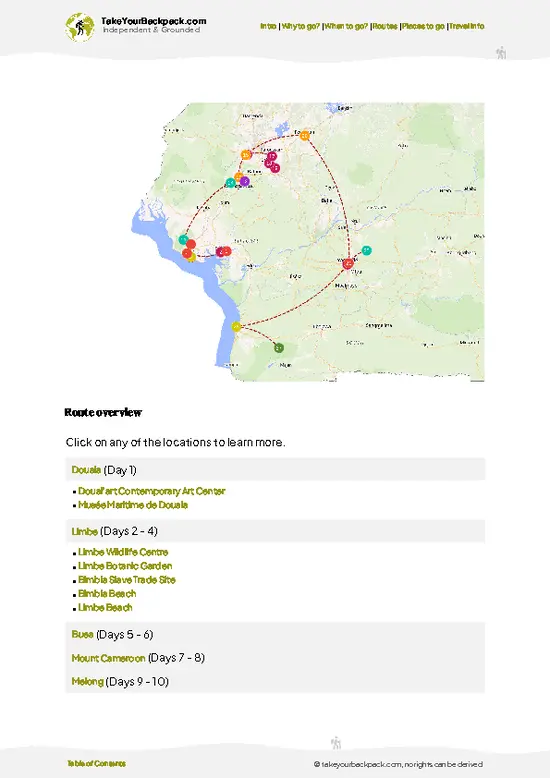
A few worthwhile day trips from Douala: Limbe (botanical garden and coastal beaches), Kribi (seafront and the Lobe waterfall where the river meets the ocean), and the Buea/Mount Cameroon area for mountain scenery and cooler highland villages.
Spotted a mistake or missing something? Contact us.

Things to do in Douala

Ratings based on Tripadvisor reviews. When you book through this link, you support our work at no extra cost to you.

🏘️ NeighborhoodsKey areas and districts to know

Douala is a bustling hub that offers a mix of urban energy and cultural richness. Here’s how to navigate its neighborhoods for the best backpacking experience.

Bonanjo: This is the administrative heart of Douala, where you’ll find government buildings and business centers. The vibe is lively but can feel a bit corporate. It’s walkable during the day, but nightlife options are limited. Ideal for short stays if you’re here for business or quick sightseeing. Transport is easy, with taxis readily available.

Akwa: Known for its vibrant street life, Akwa is where you’ll find markets, shops, and local eateries. The atmosphere is energetic, making it a great spot for those who want to soak in the local culture. It’s a bit more affordable than Bonanjo, and you can easily walk to most attractions. … read more 👉
Douala is a bustling hub that offers a mix of urban energy and cultural richness. Here’s how to navigate its neighborhoods for the best backpacking experience.

Bonanjo: This is the administrative heart of Douala, where you’ll find government buildings and business centers. The vibe is lively but can feel a bit corporate. It’s walkable during the day, but nightlife options are limited. Ideal for short stays if you’re here for business or quick sightseeing. Transport is easy, with taxis readily available.

Akwa: Known for its vibrant street life, Akwa is where you’ll find markets, shops, and local eateries. The atmosphere is energetic, making it a great spot for those who want to soak in the local culture. It’s a bit more affordable than Bonanjo, and you can easily walk to most attractions. Nightlife is more active here, with bars and music venues. Perfect for both short and longer stays.

Makepe: This residential area offers a quieter experience, making it suitable for longer stays. It’s less touristy, giving you a chance to connect with locals. While it’s not as walkable, public transport is accessible. You’ll find a mix of local restaurants and shops, but nightlife is minimal. Ideal for those seeking a more laid-back vibe.

Douala Maritime: Close to the port, this area has a unique industrial charm. It’s not the most walkable, but it’s fascinating for those interested in the shipping industry. Costs can vary, but it’s generally budget-friendly. Nightlife is sparse, making it better for short stays focused on exploration rather than partying.

⌛️ 1 dayHow to make the most of one day

Douala, Cameroon’s bustling economic hub, is a vibrant mix of cultures, flavors, and rhythms. It’s a city where the pulse of commerce meets the warmth of local life. You’ll find lively markets, street food that dances on your taste buds, and a coastal vibe that invites exploration.

Start your day in the Bonanjo neighborhood, where you can sip a strong cup of local coffee at a café while watching the city wake up. After your caffeine fix, stroll over to the Cathedral of Saint Peter and Paul. Its striking architecture is a testament to Douala’s colonial past, and the peaceful atmosphere offers a moment of reflection amidst the urban buzz.

As the sun climbs higher, head to the Marché de la Liberté. This market is a sensory overload in the best way—colorful fabrics, fresh produce, and the tantalizing … read more 👉
Douala, Cameroon’s bustling economic hub, is a vibrant mix of cultures, flavors, and rhythms. It’s a city where the pulse of commerce meets the warmth of local life. You’ll find lively markets, street food that dances on your taste buds, and a coastal vibe that invites exploration.

Start your day in the Bonanjo neighborhood, where you can sip a strong cup of local coffee at a café while watching the city wake up. After your caffeine fix, stroll over to the Cathedral of Saint Peter and Paul. Its striking architecture is a testament to Douala’s colonial past, and the peaceful atmosphere offers a moment of reflection amidst the urban buzz.

As the sun climbs higher, head to the Marché de la Liberté. This market is a sensory overload in the best way—colorful fabrics, fresh produce, and the tantalizing aroma of grilled fish fill the air. Engage with local vendors; they often have stories to share that go beyond the usual tourist chatter. This is where you can snag some unique souvenirs, like handmade crafts that reflect the local culture.

In the afternoon, make your way to the seaside at La Nouvelle Liberté, a striking sculpture that embodies the spirit of Douala. It’s a great spot to relax and take in the ocean breeze. If you’re feeling adventurous, consider a quick boat ride to explore the nearby mangroves, a lesser-known experience that offers a glimpse into the region’s natural beauty.

As evening approaches, dive into the culinary scene at a local eatery in the Akwa district. Try some Ndole, a traditional dish made with bitter leaves and peanuts, paired with plantains. The atmosphere is lively, often filled with music and laughter, making it the perfect way to wrap up your day.

Douala may not be on every traveler’s radar, but its charm lies in the everyday experiences that reveal the heart of Cameroon. Embrace the rhythm of the city, and you’ll leave with memories that linger long after your visit.
Turn your Douala visit into an Cameroon adventure
Build a complete Cameroon route with Douala, hidden gems, must-see destinations, and realistic travel times included.

Generate my trip

🌤️ When to go?Weather, crowds, and seasonal trade-offs


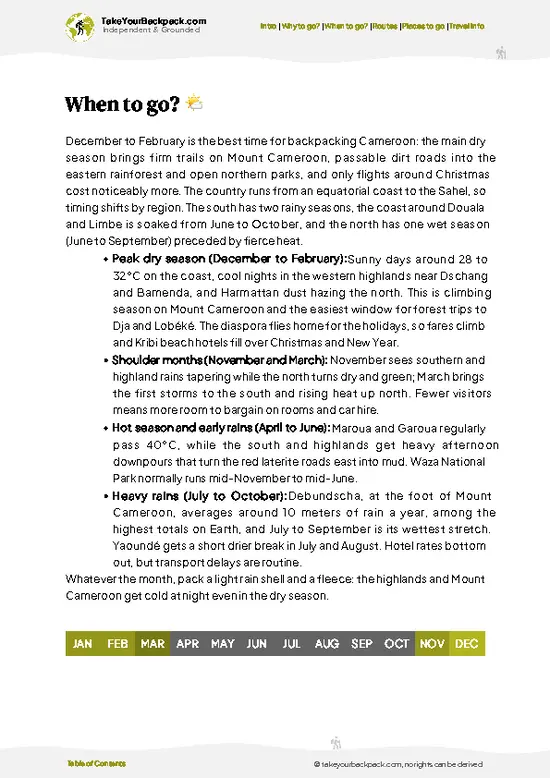
  • Topic: Weather and Temperature – Douala’s climate is equatorial, meaning it’s hot and humid year-round. Expect temperatures between 24°C and 32°C (75°F to 90°F). The dry season from December to February offers slightly cooler, less sticky days, making it easier to move around without feeling drained.

  • Topic: Rainfall and Humidity – The heavy rains hit from March to November, peaking around June and September. This means muddy trails and frequent downpours that can slow you down and soak your gear. If you want to avoid the soggy slog, aim for the dry months.

  • Topic: Daylight Hours – Near the equator, Douala enjoys consistent daylight, roughly 12 hours year-round. Sunrise hovers around 6:00 AM, sunset near 6:00 PM, giving you a reliable window for exploration every day.

  • Topic: Crowds and Local
read more 👉

  • Topic: Weather and Temperature – Douala’s climate is equatorial, meaning it’s hot and humid year-round. Expect temperatures between 24°C and 32°C (75°F to 90°F). The dry season from December to February offers slightly cooler, less sticky days, making it easier to move around without feeling drained.

  • Topic: Rainfall and Humidity – The heavy rains hit from March to November, peaking around June and September. This means muddy trails and frequent downpours that can slow you down and soak your gear. If you want to avoid the soggy slog, aim for the dry months.

  • Topic: Daylight Hours – Near the equator, Douala enjoys consistent daylight, roughly 12 hours year-round. Sunrise hovers around 6:00 AM, sunset near 6:00 PM, giving you a reliable window for exploration every day.

  • Topic: Crowds and Local Life – Tourist traffic is low year-round, but local festivals and markets burst with energy during the dry season. Visiting then means vibrant street scenes without the hassle of tourist crowds.

  • Topic: Price Fluctuations – Accommodation and flights tend to be pricier during the dry season, especially December and January, when demand peaks. The rainy season offers better deals but comes with the trade-off of less comfortable travel conditions.


Pro-tip: Target the shoulder months of December and February for a sweet spot—manageable weather, lively local culture, and fewer price spikes.


source: climatestotravel.comJANJanuary: excellent for travelingFEBFebruary: highly recommended for travelingMARMarch: fair for travelingAPRApril: fair for travelingMAYMay: fair for travelingJUNJune: below average for travelingJULJuly: fair for travelingAUGAugust: fair for travelingSEPSeptember: below average for travelingOCTOctober: fair for travelingNOVNovember: fair for travelingDECDecember: excellent for traveling
when-to-go

✈️ The backpacker research shortcutCameroon Travel Guide

An offline-friendly backpacking guide with optimized travel routes, ranked highlights, transport advice, and the best areas to stay.
example page 0 from our offline Travel Guide for Cameroonexample page 1 from our offline Travel Guide for Cameroonexample page 2 from our offline Travel Guide for Cameroonexample page 3 from our offline Travel Guide for Cameroonexample page 4 from our offline Travel Guide for Cameroonexample page 5 from our offline Travel Guide for Cameroonexample page 6 from our offline Travel Guide for Cameroonexample page 7 from our offline Travel Guide for Cameroon
The digital guide (383 pages) contains:
95 highlights, ranked by travel appeal
Optimized 7, 14 & 21-day travel routes
Cities, national parks, landmarks, beaches
How to get around
Offline-friendly for travel without Wi-Fi
👉 Click to see all 30+ guide features

📅 Plan smarter in minutes, not weeks
Month by month travel advice
Festivals & national holidays
Budget expectations

🗺️ Go to the right places, skip the overrated ones
Honest pros & cons of destinations
Top hikes, parks & viewpoints
Lesser-known places most travelers miss
Clear “worth it vs skip it” guidance

🛏️ Travel smoothly without rookie mistakes
Best areas to stay
Transport systems explained simply
Common scams & safety advice
SIM cards, money & practical tips

🌍 Understand the country, not just visit it
Culture & traditions
52 Essential phrases & customs
Festivals worth planning around
Traveler-friendly historical context
Insights that make places more meaningful

📱 Built for real travel conditions
Fully downloadable PDF
Works completely offline
Optimized for phone use
Useful in remote areas & buses
Everything in one place
Save weeks of stressful planning
Get instant access to your full guide. 30‑day money-back guarantee.


By proceeding you agree to our terms.
Sent to your inbox immediately after payment • 100% Secure Checkout
Best Backpacking Travel Advisor 2025 tourism awardBest Backpacking
Travel Advisor
2025
What others say about Take Your Backpack Guides:
⭐⭐⭐⭐⭐
Fantastic, amazing amount of information!
⭐⭐⭐⭐⭐
My goodness this is amazing, it's what I've been looking for hats off too you!
⭐⭐⭐⭐⭐
I think this is absolutely BRILLIANT
⭐⭐⭐⭐
Very complete and informative. It's still missing places, but I gotta to commend you
⭐⭐⭐⭐⭐
This is truly amazing, thank you, can't wait to explore it with my kids!
⭐⭐⭐⭐⭐
Awesome resource, thank you!
⭐⭐⭐⭐⭐
This is amazing! Can't wait to explore the ones I haven't seen
⭐⭐⭐⭐
I love this! Well done, great idea.
⭐⭐⭐⭐⭐
Thanks for taking the time to make this gem!
⭐⭐⭐⭐⭐
This might be the best website I've ever seen.
⭐⭐⭐⭐⭐
Congratulations, and thank you so much for your work; it's incredibly valuable.
⭐⭐⭐⭐
In all seriousness I think you did a great job pointing out the important spots
⭐⭐⭐⭐⭐
10/10 very good
⭐⭐⭐⭐⭐
As someone who's only just starting to visit regularly this is awesome, thank you.
⭐⭐⭐⭐
Thank you very much! I'm going to visit my dad, it's going to be very useful!
⭐⭐⭐⭐⭐
This is really cool! We'll be travelling for the first time and this definitely come in handy.
⭐⭐⭐⭐⭐
You are now our minister of culture, congratulations 👨‍💼
⭐⭐⭐⭐⭐
Just wanted to tell you that this is a pearl! Going to follow your recommendations.
⭐⭐⭐⭐⭐
This is so cool. I'll definitely be using the resource for my travels soon.
⭐⭐⭐⭐⭐
This is very impressive! Good work.
⭐⭐⭐⭐⭐
This is an amazing and informative site. Very well done!

🛏️ Where to stay?Where staying makes the most sense

In Douala, the backpacker’s sweet spot lies primarily in the Bonanjo and Akwa neighborhoods. These areas strike a rare balance between safety, social buzz, and budget-friendly options, making them the logical choice for solo travelers who want to plug into the city without getting lost in its sprawling chaos.

Bonanjo is the administrative heart, so it’s cleaner and more orderly than other parts of Douala. It’s where you’ll find a handful of hostels and guesthouses that cater to budget travelers, offering a basic but reliable comfort level. The vibe here is more businesslike during the day, but … read more 👉
In Douala, the backpacker’s sweet spot lies primarily in the Bonanjo and Akwa neighborhoods. These areas strike a rare balance between safety, social buzz, and budget-friendly options, making them the logical choice for solo travelers who want to plug into the city without getting lost in its sprawling chaos.

Bonanjo is the administrative heart, so it’s cleaner and more orderly than other parts of Douala. It’s where you’ll find a handful of hostels and guesthouses that cater to budget travelers, offering a basic but reliable comfort level. The vibe here is more businesslike during the day, but evenings bring a quieter, safer atmosphere—perfect for those who want to recharge without sacrificing security.

Akwa, on the other hand, pulses with local life. It’s a commercial hub with markets, street food, and a more authentic urban rhythm. Hostels here tend to be more social, attracting backpackers who want to meet others and dive into the city’s street culture. The trade-off is a bit more noise and hustle, but that’s part of the charm if you’re after immersion over isolation.

Other neighborhoods might offer cheaper stays, but they often come with higher risks or less social infrastructure. Bonanjo and Akwa give you a strategic advantage: safety, social opportunities, and enough budget options to keep your wallet intact. It’s a smart base camp for exploring Douala’s complex, vibrant layers.

🚌 Getting aroundMoving around without the hassle

Douala moves at its own rhythm—less a clockwork machine and more a pulse you feel in the streets. Forget rigid timetables; here, intuition and improvisation rule. The city’s flow is a blend of honking motos darting through traffic, vendors calling out deals, and the occasional lull when the midday heat forces a collective pause. Time bends to the city’s energy, not the other way around. If you want to master Douala’s transit, you need to think less about schedules and more about reading the moment—when a bus fills up, when a taxi driver decides to take a shortcut, or when a shared ride finally pulls away. It’s a game of balancing patience, speed, and cost, and knowing what you’re willing to trade off.


  • Walking: The purest way to absorb Douala’s chaotic charm. Free, obviously, but expect
read more 👉
Douala moves at its own rhythm—less a clockwork machine and more a pulse you feel in the streets. Forget rigid timetables; here, intuition and improvisation rule. The city’s flow is a blend of honking motos darting through traffic, vendors calling out deals, and the occasional lull when the midday heat forces a collective pause. Time bends to the city’s energy, not the other way around. If you want to master Douala’s transit, you need to think less about schedules and more about reading the moment—when a bus fills up, when a taxi driver decides to take a shortcut, or when a shared ride finally pulls away. It’s a game of balancing patience, speed, and cost, and knowing what you’re willing to trade off.


  • Walking: The purest way to absorb Douala’s chaotic charm. Free, obviously, but expect to move slowly through dense traffic and uneven sidewalks. Best for short distances or exploring neighborhoods where you want to soak in the street life. Not a comfort zone for midday heat or long hauls, but unbeatable for immersion.


  • Shared Taxis (Taxi Collectifs): These are the backbone of Douala’s budget transit. They run on a first-come, first-served basis, leaving only when full. Prices hover around 200-500 CFA francs depending on distance, making them cheap but unpredictable in timing. Comfort is minimal—expect cramped seats and a fast, sometimes aggressive driving style. Speed varies wildly with traffic, but they’re often faster than buses during peak hours.


  • City Buses (Bus Urbain): Scheduled but loosely. Buses run from early morning (around 6 AM) until early evening (6-7 PM), with fares typically under 300 CFA francs. They offer more space than shared taxis but can be slow, stopping frequently and getting stuck in traffic jams. Comfort is basic, and air conditioning is nonexistent. Ideal if you want a balance between cost and a bit more breathing room.


  • Motorcycle Taxis (Motos): The quickest way through Douala’s traffic snarls, especially during rush hour. Prices start at about 300 CFA francs for short trips but can climb quickly. They’re fast and flexible but come with a trade-off in safety and comfort—no doors, no suspension, and exposure to dust and noise. Perfect if you’re in a hurry and willing to sacrifice calm for speed.


  • Private Taxis: The most comfortable and reliable option, but also the priciest. Expect to pay 2,000 CFA francs or more for short rides. They run 24/7 and offer air conditioning and door-to-door service. If your priority is comfort and time over money, this is your go-to. Otherwise, it’s a splurge that eats into your budget quickly.


Understanding Douala’s transit is about recognizing the trade-offs: you can save money but wait longer and endure discomfort, or pay more to slice through the chaos with ease. The city rewards those who read its flow and pick their battles wisely. Your choice between time, money, and comfort isn’t just logistical—it’s the key to unlocking Douala’s real rhythm.

👛 Costs (as of 4 April 2025)What things cost and how to budget

Backpacking in Douala, Cameroon, demands a clear-eyed view of where your money goes, so you can play the budget game smartly and avoid surprises.
  • Dorm Accommodation (High Season): Expect to pay around €10 to €15 per night for a bed in a basic dorm. High season pushes prices up due to demand, so spots fill fast and rates climb accordingly.
  • Dorm Accommodation (Off-Season): Drop to about €6 to €10 per night. Fewer tourists mean better deals, but quality and availability can vary more widely.
  • Meals: Street food and local eateries dominate the scene. Budget roughly €3 to €6 per day if you stick to staples like grilled fish, plantains, and fresh fruit. Western-style meals or dining in tourist spots can double that cost.
  • Local Transport: Minibuses and shared taxis are the norm. A typical ride
read more 👉
Backpacking in Douala, Cameroon, demands a clear-eyed view of where your money goes, so you can play the budget game smartly and avoid surprises.
  • Dorm Accommodation (High Season): Expect to pay around €10 to €15 per night for a bed in a basic dorm. High season pushes prices up due to demand, so spots fill fast and rates climb accordingly.
  • Dorm Accommodation (Off-Season): Drop to about €6 to €10 per night. Fewer tourists mean better deals, but quality and availability can vary more widely.
  • Meals: Street food and local eateries dominate the scene. Budget roughly €3 to €6 per day if you stick to staples like grilled fish, plantains, and fresh fruit. Western-style meals or dining in tourist spots can double that cost.
  • Local Transport: Minibuses and shared taxis are the norm. A typical ride costs between €0.30 and €0.70. Budget around €1.50 to €3 daily if you’re hopping between neighborhoods frequently.
  • City Transport Pass: Douala doesn’t have a formal city transport pass system for tourists, so individual fares add up. No bulk pass means you pay per ride, which can be a minor hassle but keeps things flexible.
  • Basic Activities/Entry Fees: Museums, markets, and cultural sites usually charge €1 to €3. Plan for €2 to €5 daily if you’re exploring actively but skipping pricey tours.
  • Miscellaneous Expenses: Think bottled water, occasional snacks, phone credit, and small tips. Around €2 to €4 daily covers these essentials without stretching your budget.

Add it all up, and you’re looking at a daily spend between €15 and €30 for a no-frills but genuine Douala experience. The trade-off is clear: spend less on comfort and convenience, and you gain more time and money to dive into the city’s pulse. Choose wisely, and you’re not just surviving the trip—you’re mastering it.
⚠️ Prices can change and everyone travels differently, so take this as a rough guide. Hope it helps you plan your adventure!

🚌 Day tripsShort trips worth adding

Douala, Cameroon, is a vibrant hub that serves as an excellent launchpad for day trips, blending urban energy with the natural beauty of the region. Here are some standout options to consider.

Bamenda
Just a few hours north of Douala, Bamenda offers a refreshing escape into the lush hills of the Northwest Region. The journey takes about 4-5 hours by bus, and the ride itself is a scenic adventure. Once there, explore the local markets, where the colors and sounds pulse with life. Don’t miss the chance to hike to the nearby waterfalls, which are a local favorite. Budget around $10 for transport and a few dollars for food. The rainy season can make trails slippery, so aim for the dry months from November to February. A common mistake is underestimating the bus schedules; they can be unpredictable, … read more 👉
Douala, Cameroon, is a vibrant hub that serves as an excellent launchpad for day trips, blending urban energy with the natural beauty of the region. Here are some standout options to consider.

Bamenda
Just a few hours north of Douala, Bamenda offers a refreshing escape into the lush hills of the Northwest Region. The journey takes about 4-5 hours by bus, and the ride itself is a scenic adventure. Once there, explore the local markets, where the colors and sounds pulse with life. Don’t miss the chance to hike to the nearby waterfalls, which are a local favorite. Budget around $10 for transport and a few dollars for food. The rainy season can make trails slippery, so aim for the dry months from November to February. A common mistake is underestimating the bus schedules; they can be unpredictable, so plan accordingly.
👉 Explore Bamenda

Mount Cameroon
For those seeking a bit of adrenaline, a day trip to Mount Cameroon is a must. Located about 30 kilometers from Douala, it’s a 1-2 hour drive, depending on traffic. This active volcano offers various trails, from easy walks to challenging hikes. The views from the summit are breathtaking, showcasing the coastline and surrounding landscape. Expect to spend around $15 for transport and a small fee for park entry. The best time to hike is during the dry season, from November to March. First-timers often overlook the need for proper footwear; don’t skimp on sturdy shoes.
👉 Explore Mount Cameroon

Limbe
Only about an hour from Douala, Limbe is a coastal town that’s perfect for a relaxing day by the beach. You can soak up the sun, visit the Limbe Wildlife Centre, or explore the botanical gardens. The total cost for a day here can be as low as $20, including transport and a meal. The best time to visit is during the dry season, when the weather is pleasant. A common pitfall is spending too much time at the beach and missing out on the wildlife center, which is both educational and impactful.
👉 Explore Limbe

Kribi
If you’re craving pristine beaches and fresh seafood, Kribi is your go-to spot. It’s about a 2-3 hour drive from Douala. The beaches here are less crowded, and the atmosphere is laid-back. You can enjoy a delicious meal of grilled fish for around $5. The ideal time to visit is during the dry season, from November to March. Many first-timers miss the nearby Lobe Waterfalls, which are just a short taxi ride away—don’t skip this stunning natural feature.
Want to know what more Cameroon offers?
The Cameroon Travel Guide describes 95 highlights, from cities to national parks, from beaches to hikes

Get the Travel Guide -

🍲 FoodLocal Flavors for Backpackers

In Douala, food is a vibrant tapestry of flavors that tells the story of its people. Start with ndolé, a rich stew made from bitter leaves, groundnuts, and fish or meat. It’s a local staple that embodies the heart of Cameroonian cuisine. Pair it with plantains or fufu, and you’re in for a treat.

Street food is where the magic happens. Vendors line the bustling streets, serving up suya, spicy grilled meat skewers that sizzle with flavor. The aroma wafts through the air, drawing you in. Don’t miss the biscuit de mer, a savory seafood pastry that’s crispy on the outside and soft inside. It’s a perfect snack while you explore.

When it comes to drinks, try palm wine, a traditional beverage that’s sweet and slightly effervescent. It’s often served in communal settings, fostering a sense of camaraderie. … read more 👉
In Douala, food is a vibrant tapestry of flavors that tells the story of its people. Start with ndolé, a rich stew made from bitter leaves, groundnuts, and fish or meat. It’s a local staple that embodies the heart of Cameroonian cuisine. Pair it with plantains or fufu, and you’re in for a treat.

Street food is where the magic happens. Vendors line the bustling streets, serving up suya, spicy grilled meat skewers that sizzle with flavor. The aroma wafts through the air, drawing you in. Don’t miss the biscuit de mer, a savory seafood pastry that’s crispy on the outside and soft inside. It’s a perfect snack while you explore.

When it comes to drinks, try palm wine, a traditional beverage that’s sweet and slightly effervescent. It’s often served in communal settings, fostering a sense of camaraderie. You’ll find locals sipping it in casual bars or at roadside stalls, where the atmosphere is lively and welcoming.

Etiquette is simple: share your food and drink. It’s a sign of respect and friendship. Embrace the local customs, and you’ll find that every bite and sip is a connection to the vibrant culture of Douala.

🛡️ SafetySafety Tips and Common Scams in Douala

Douala is generally safe for backpackers, but a few situational awareness tips can enhance your experience. Stick to well-lit areas at night, especially around the bustling markets and waterfront. While solo travel is doable, consider teaming up with fellow travelers for evening outings.

Scams are rare but can pop up. Be cautious with taxi drivers; agree on a fare before getting in. Some may try to overcharge, especially if they sense you’re new. Keep your belongings close in crowded areas, as pickpocketing can happen, particularly in busy markets like Marché Central.

Everyday annoyances include the occasional street vendor who won’t take no for an answer. A polite but firm “no, thank you” usually does the trick. Embrace the local pace; patience is key. By staying aware and confident, … read more 👉
Douala is generally safe for backpackers, but a few situational awareness tips can enhance your experience. Stick to well-lit areas at night, especially around the bustling markets and waterfront. While solo travel is doable, consider teaming up with fellow travelers for evening outings.

Scams are rare but can pop up. Be cautious with taxi drivers; agree on a fare before getting in. Some may try to overcharge, especially if they sense you’re new. Keep your belongings close in crowded areas, as pickpocketing can happen, particularly in busy markets like Marché Central.

Everyday annoyances include the occasional street vendor who won’t take no for an answer. A polite but firm “no, thank you” usually does the trick. Embrace the local pace; patience is key. By staying aware and confident, you’ll navigate Douala like a pro, turning potential pitfalls into mere bumps on your adventure.

Other Cameroonian cities near Douala

Explore more nearby:

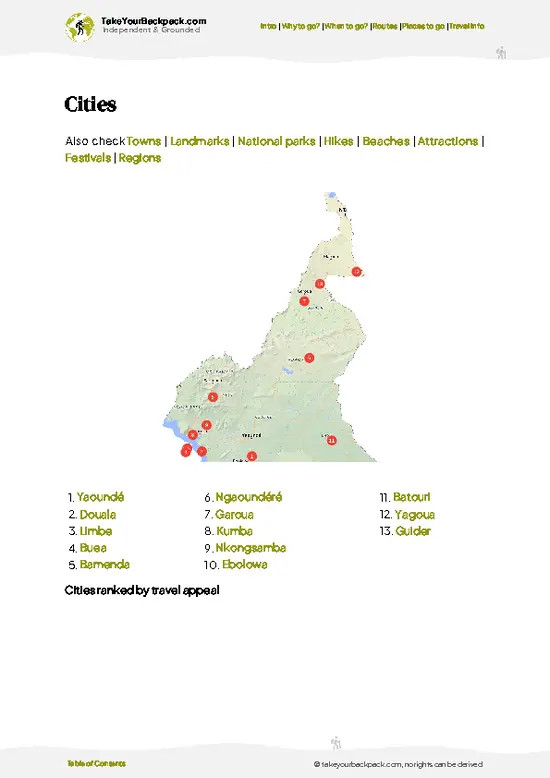
  • Buea—Mount Cameroon, colonial relics, university campus, cool breezes| 58 km away
  • Limbe—Atlantic beaches, botanical gardens, volcanic black sand, oil refinery| 64 km away
  • Kumba—Lake Barombi Mbo, trading hub, Southwest crossroads| 74 km away

💡 Not sure where to go next?
Create a personalized itinerary for Cameroon including Douala and the places that fit your trip.

Generate my itinerary

👉 Discover all cities

Or checkout all Cameroon has to offer (think cities, towns, villages, national parks, hikes, beaches, festivals)
Country photo of Cameroon

We 💚 feedbackFinal thoughts on visiting Douala

Douala is a whirlwind of energy and chaos, but that’s where its charm lies. The street food scene? A delightful surprise—try the grilled fish at the local markets; it’s a flavor explosion. Just be ready for the hustle; the city doesn’t slow down for anyone. A heads-up: traffic can be a nightmare, so plan your outings wisely. Embrace the chaos, and you’ll find Douala’s heart beats in rhythm with its vibrant streets and warm people.

✍️ Help improve this page!
The information on this page is based on in-depth research, insights shared by experienced travelers, and feedback from the local travel community in Cameroon. While every effort is made to keep the information accurate and current, conditions can change — so if you spot anything incorrect or outdated, please get in touch.


🙋‍♂️ Give feedback

👋 Meet the founderWho’s Behind Take Your Backpack?

Johan, backpacker and founder of TakeYourBackpackHi, I’m Johan (Netherlands 🇳🇱), the creator of TakeYourBackpack. Over the past decade, I’ve backpacked through 80+ countries across six continents, gaining extensive experience with independent travel, long-term trips, and overland routes.

This site is built on a combination of firsthand travel experience and carefully curated insights from other backpackers. Many guides are based on places I’ve personally visited, while others bring together tips, observations, and practical advice shared by trusted travelers I’ve met along the way.

The goal is to provide realistic, experience-driven guidance — not generic itineraries — so you can explore destinations with better context, clearer expectations, and more confidence.

Get full Cameroon guide •
Instant download • 95 highlights • Full Offline guide