×

Cameroon🇨🇲 | townsMoraGranite domes, Monday livestock market, leather quarter | things to do and best time to go

Explore PoliExplore Mokolo

Backpacking in Mora
🏆 Top picktown ranked #5
By Johan Kruseman 🇳🇱 | Updated October 22, 2026

Mora sits in the Mandara Mountains foothills, and the road from Maroua passes through a landscape of granite domes that look like giant stone loaves, a view most people only expect in the Mandara range proper. The town lies in the Far North of Cameroon, about 60 km north of Maroua, near the Nigerian border. Mornings smell of woodsmoke and millet beer, and the harmattan haze turns the light flat and pale. The big Monday market is the one thing that deserves your time, with its livestock, indigo cloth and leather goods. The rest of the town is dusty and low-key, so skip lingering. Hostels are essentially nonexistent, guesthouses are basic, and meeting other travelers is rare outside the market. Arrange security information and an escort in Maroua before you head up, since the Far North needs checking.

Discover everything you want to know in the 📖 Cameroon Travel Guide.


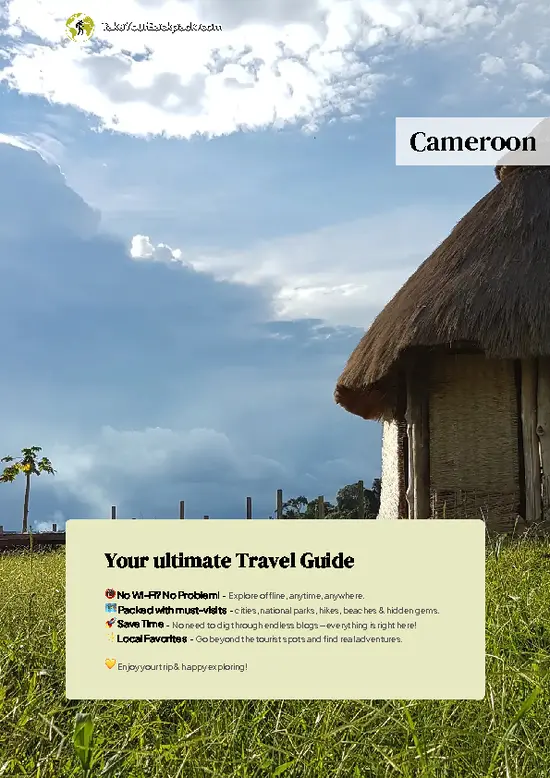
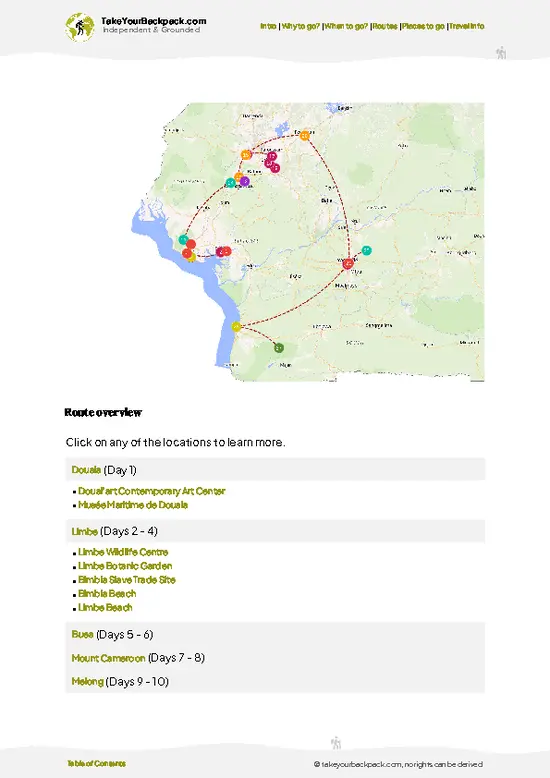
example page 0 from our offline Travel Guide for Cameroon
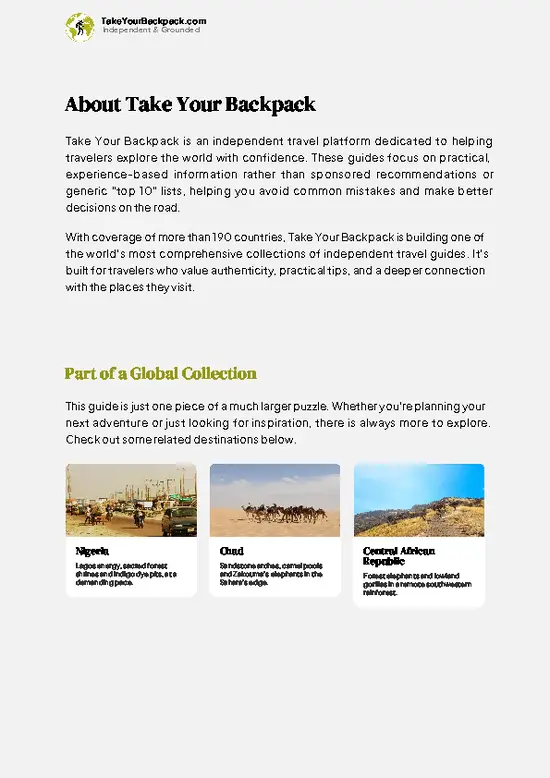
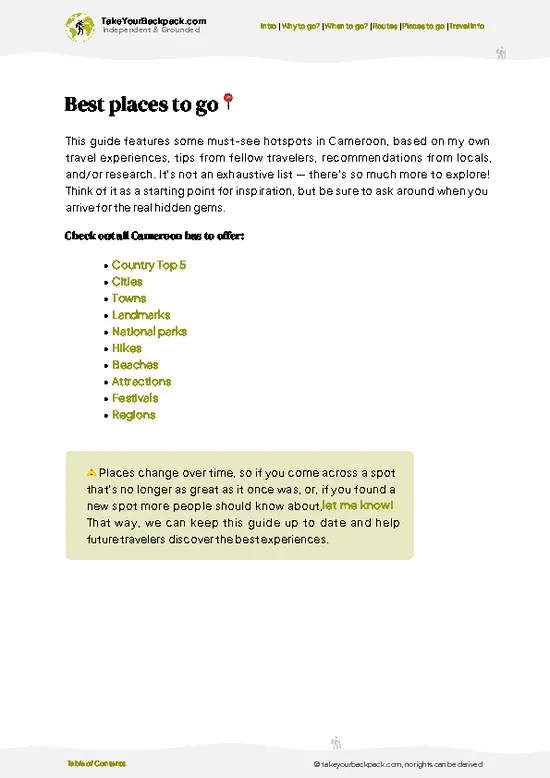
example page 1 from our offline Travel Guide for Cameroon
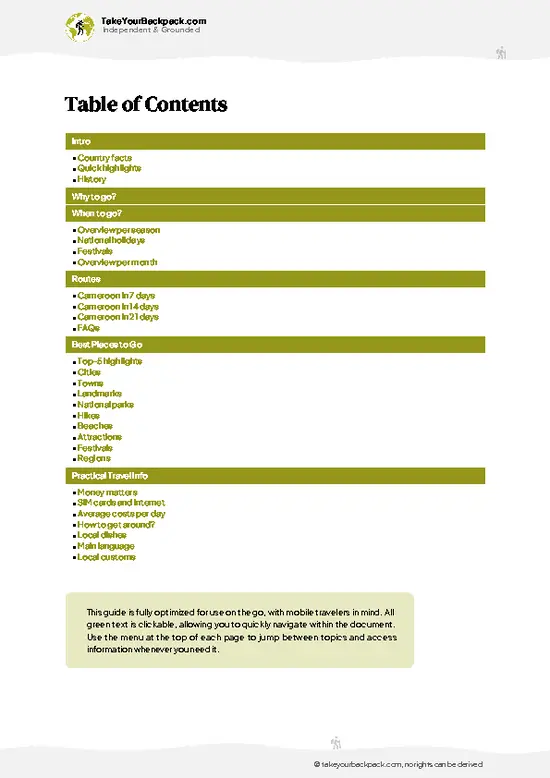
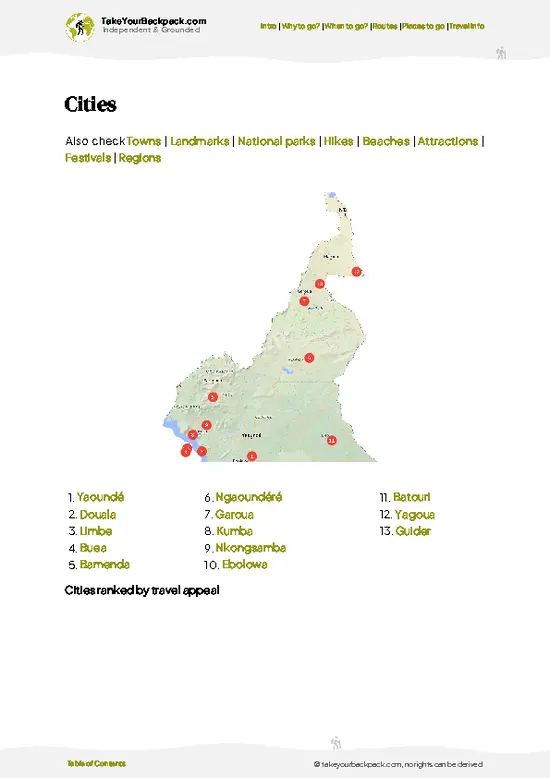
example page 2 from our offline Travel Guide for Cameroon
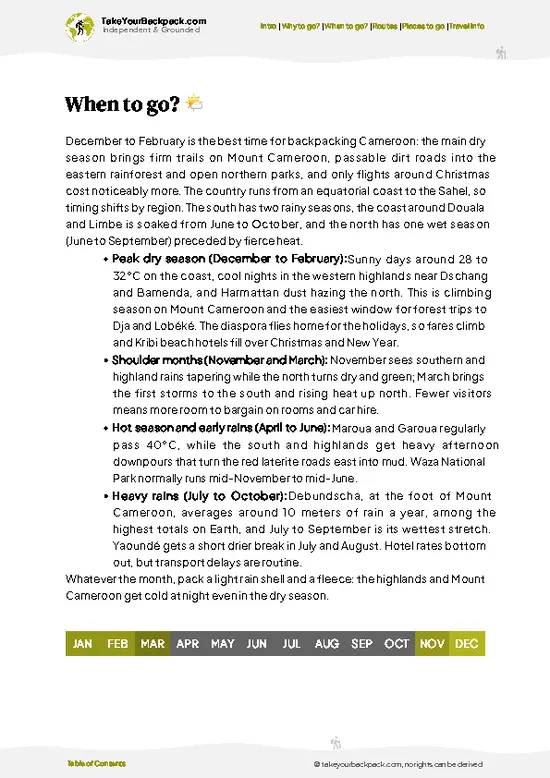
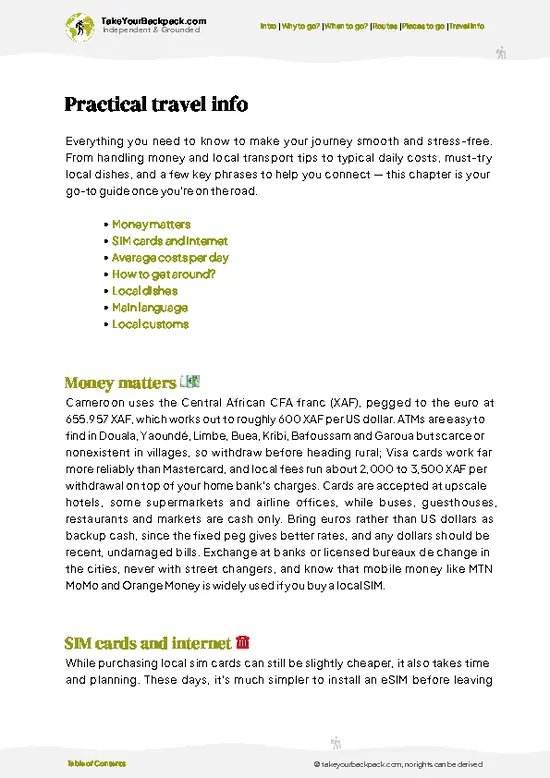
example page 3 from our offline Travel Guide for Cameroon
example page 4 from our offline Travel Guide for Cameroon
example page 5 from our offline Travel Guide for Cameroon
example page 6 from our offline Travel Guide for Cameroon
example page 7 from our offline Travel Guide for Cameroon
Loading the map 🌍
CLICK TO FILTER
cities
towns
landmarks
national parks
hikes
beaches
attractions
festivals
regions
SHOW COUNTRY’S BESTSHOW ALL

✨ Why go?
Ranked #5 town in Cameroon
The unique appeal for travelers

Mora works for backpackers who want the Mandara Mountains without the crowds, and it suits slow, adaptable travelers more than anyone chasing comforts. The town is the gateway to the Mandara Mountains hiking country, where villages sit between granite spires and farmers terrace the slopes. The Monday market is the main event in town: Kanuri, Mandara and Fulani traders bring goats, grain, calabashes and dyed cloth, and you can wander for hours without being hassled much. Most visitors stay one night, two at most, because the town itself is small and the draw lies outside it. It is quiet in the evenings, with a few simple eateries serving grilled meat and rice, and few other foreigners around. Solo travelers get plenty of curiosity and friendliness from locals, but you will need patience, a … read more 👉
Mora works for backpackers who want the Mandara Mountains without the crowds, and it suits slow, adaptable travelers more than anyone chasing comforts. The town is the gateway to the Mandara Mountains hiking country, where villages sit between granite spires and farmers terrace the slopes. The Monday market is the main event in town: Kanuri, Mandara and Fulani traders bring goats, grain, calabashes and dyed cloth, and you can wander for hours without being hassled much. Most visitors stay one night, two at most, because the town itself is small and the draw lies outside it. It is quiet in the evenings, with a few simple eateries serving grilled meat and rice, and few other foreigners around. Solo travelers get plenty of curiosity and friendliness from locals, but you will need patience, a flexible plan and local advice on conditions before going further out.

💡 HighlightsTop highlights of Mora

  1. Mora Monday Market: The town’s best-known draw, packed with livestock traders, millet sellers, leatherworkers and indigo cloth stalls. Go early, from about 7 am, before the heat builds. Entry is free and you will want 2 to 3 hours.
  2. Mora Mountain Viewpoints: Granite domes rise straight above the roofs, and a short walk to the edge of town gives wide views over the plain. Late afternoon is best for the softer light. Free, about 1 hour.
  3. Leather and Craft Quarter: Artisans work leather sandals, bags and sheaths, and you can watch the process and bargain directly. Mornings are busiest. Expect small purchases from about €2 to 15, and 30 to 60 minutes.
  4. Palace of the Lamido of Mora: The traditional chief’s residence is a reminder that local authority still follows older Mandara and Kanuri structures.
… read more 👉
  1. Mora Monday Market: The town’s best-known draw, packed with livestock traders, millet sellers, leatherworkers and indigo cloth stalls. Go early, from about 7 am, before the heat builds. Entry is free and you will want 2 to 3 hours.
  2. Mora Mountain Viewpoints: Granite domes rise straight above the roofs, and a short walk to the edge of town gives wide views over the plain. Late afternoon is best for the softer light. Free, about 1 hour.
  3. Leather and Craft Quarter: Artisans work leather sandals, bags and sheaths, and you can watch the process and bargain directly. Mornings are busiest. Expect small purchases from about €2 to 15, and 30 to 60 minutes.
  4. Palace of the Lamido of Mora: The traditional chief’s residence is a reminder that local authority still follows older Mandara and Kanuri structures. Visits depend on permission and a respectful approach, and a small gift or fee of about €2 to 5 is customary. Allow 30 minutes.
  5. Local Grill Stalls: Evening stalls near the market sell grilled beef and goat with onions, peppers and bread, eaten on benches in lamplight. A plate costs about €1.50 to 3, and an hour is plenty.
From Mora, day trips can reach the Mandara Mountains villages, the viewpoints around Kolofata and the Waza National Park region, depending on current conditions. All five stops fit together in roughly one full day.
Spotted a mistake or missing something? Contact us.

🏘️ NeighborhoodsWhere things are and how it's laid out

Mora is small enough to cover on foot in an afternoon, and the Mandara Mountains behind it shape everything you see. Dust and harmattan haze soften the light for much of the year.
  • Central Market and Main Road: This is where you spend your time. Stalls of millet, dried fish, onions, peppers and secondhand clothes crowd the dirt lanes, motorbike taxis whine past, and grilled meat smoke hangs low. Market day is the liveliest, so plan around it. Everything is walkable, but the midday sun is fierce.
  • Lamidat (Lamido’s Palace) area: Mora is the seat of a Muslim chiefdom, and the traditional palace quarter, with its mud-brick walls and compounds, is worth a respectful visit. Ask permission before photographing anyone. It is quiet, shaded in patches and a short walk from the center.
  • Mountain-edge quarters:
… read more 👉
Mora is small enough to cover on foot in an afternoon, and the Mandara Mountains behind it shape everything you see. Dust and harmattan haze soften the light for much of the year.
  • Central Market and Main Road: This is where you spend your time. Stalls of millet, dried fish, onions, peppers and secondhand clothes crowd the dirt lanes, motorbike taxis whine past, and grilled meat smoke hangs low. Market day is the liveliest, so plan around it. Everything is walkable, but the midday sun is fierce.
  • Lamidat (Lamido’s Palace) area: Mora is the seat of a Muslim chiefdom, and the traditional palace quarter, with its mud-brick walls and compounds, is worth a respectful visit. Ask permission before photographing anyone. It is quiet, shaded in patches and a short walk from the center.
  • Mountain-edge quarters: Heading toward the Mandara foothills, tracks narrow, goats scatter and granite outcrops rise right above the rooftops. These are good for an easy sunrise-to-breakfast stroll. There is little to eat and no nightlife.
  • Roadside strip near the transport yard: Loud, diesel-scented and cluttered with bush taxis and tea stands. Skip it except to catch a ride or grab a quick omelet sandwich.
Nights are early and dark, with mosque calls and a few bar speakers the only noise.

⌛️ 1 day1-day itinerary for Mora

7:00 AM: Mora Monday Market. Start at the livestock area while it is cool, then work through the grain and cloth stalls. Buy tea and fried dough from a vendor, and keep your bag close in the crowds.
10:00 AM: Leather and Craft Quarter. Walk a few minutes to the artisans, watch sandals and bags being cut and stitched, and bargain politely for something small.
12:00 PM: Local lunch. Find a simple eatery for rice with sauce or grilled meat, and rest out of the midday sun.
2:00 PM: Palace of the Lamido. Ask for permission to visit, greet respectfully, and learn how local chiefs still matter. This is usually quiet and often missed.
4:00 PM: Edge-of-town mountain viewpoint. Walk out to the base of the granite domes and climb a short way for the view across the plain as the heat fades. Go with a local … read more 👉
7:00 AM: Mora Monday Market. Start at the livestock area while it is cool, then work through the grain and cloth stalls. Buy tea and fried dough from a vendor, and keep your bag close in the crowds.
10:00 AM: Leather and Craft Quarter. Walk a few minutes to the artisans, watch sandals and bags being cut and stitched, and bargain politely for something small.
12:00 PM: Local lunch. Find a simple eatery for rice with sauce or grilled meat, and rest out of the midday sun.
2:00 PM: Palace of the Lamido. Ask for permission to visit, greet respectfully, and learn how local chiefs still matter. This is usually quiet and often missed.
4:00 PM: Edge-of-town mountain viewpoint. Walk out to the base of the granite domes and climb a short way for the view across the plain as the heat fades. Go with a local if possible.
6:30 PM: Evening grill stalls. Finish with grilled meat and bread, and plan your onward move before dark.

🌤️ When to go?Best time to visit Mora

Mora is best from November to February, when it is dry and the air is cooler by Sahel standards.
  • Cool Dry Season (November to February): Days reach 30 to 34°C (86 to 93°F), nights drop to 15 to 20°C (59 to 68°F). Harmattan dust hazes the mountains, but hiking is comfortable. Daylight lasts roughly 11.5 hours. Prices stay stable.
  • Hot Season (March to May): Brutal, with 38 to 43°C (100 to 109°F) common by afternoon. Walk at dawn and rest midday.
  • Rainy Season (June to September): Showers bring 28 to 33°C (82 to 91°F), green hills and muddy tracks. Some roads toward remote villages become slow, and transport fares can rise.
  • Market Days: The weekly market draws farmers from the hills and is the liveliest time to see the town.
Arrive on a market morning and book onward travel early, since shared taxis leave only when full.

source: climatestotravel.comJANJanuary: excellent for travelingFEBFebruary: excellent for travelingMARMarch: highly recommended for travelingAPRApril: good for travelingMAYMay: fair for travelingJUNJune: fair for travelingJULJuly: fair for travelingAUGAugust: fair for travelingSEPSeptember: fair for travelingOCTOctober: good for travelingNOVNovember: highly recommended for travelingDECDecember: excellent for traveling
when-to-go

✈️ The backpacker research shortcutCameroon Travel Guide

An offline-friendly backpacking guide with optimized travel routes, ranked highlights, transport advice, and the best areas to stay.
example page 0 from our offline Travel Guide for Cameroon
example page 1 from our offline Travel Guide for Cameroon
example page 2 from our offline Travel Guide for Cameroon
example page 3 from our offline Travel Guide for Cameroon
example page 4 from our offline Travel Guide for Cameroon
example page 5 from our offline Travel Guide for Cameroon
example page 6 from our offline Travel Guide for Cameroon
example page 7 from our offline Travel Guide for Cameroon
The digital guide (351 pages) contains:
✅ 84 highlights, ranked by travel appeal
✅ Optimized 7, 14 & 21-day travel routes
✅ Cities, national parks, landmarks, beaches
✅ How to get around
✅ Offline-friendly for travel without Wi-Fi
👉 Click to see all 30+ guide features

📅 Plan smarter in minutes, not weeks
✅ Month by month travel advice
✅ Festivals & national holidays
✅ Budget expectations

🗺️ Go to the right places, skip the overrated ones
✅ Honest pros & cons of destinations
✅ Top hikes, parks & viewpoints
✅ Lesser-known places most travelers miss
✅ Clear “worth it vs skip it” guidance

🛏️ Travel smoothly without rookie mistakes
✅ Best areas to stay
✅ Transport systems explained simply
✅ Common scams & safety advice
✅ SIM cards, money & practical tips

🌍 Understand the country, not just visit it
✅ Culture & traditions
✅ 52 Essential phrases & customs
✅ Festivals worth planning around
✅ Traveler-friendly historical context
✅ Insights that make places more meaningful

📱 Built for real travel conditions
✅ Fully downloadable PDF
✅ Works completely offline
✅ Optimized for phone use
✅ Useful in remote areas & buses
✅ Everything in one place
Stop searching, start planning
Get instant access to your full guide. 30‑day money-back guarantee.
+ Add another guide for just

By proceeding you agree to our terms.
Sent to your inbox immediately after payment • 100% Secure Checkout
Best Backpacking Travel Advisor 2025 tourism awardBest Backpacking
Travel Advisor
2025
What others say about Take Your Backpack Guides:
⭐⭐⭐⭐⭐
Fantastic, amazing amount of information!
⭐⭐⭐⭐⭐
My goodness this is amazing, it's what I've been looking for hats off too you!
⭐⭐⭐⭐⭐
I think this is absolutely BRILLIANT
⭐⭐⭐⭐
Very complete and informative. It's still missing places, but I gotta to commend you
⭐⭐⭐⭐⭐
This is truly amazing, thank you, can't wait to explore it with my kids!
⭐⭐⭐⭐⭐
Awesome resource, thank you!
⭐⭐⭐⭐⭐
This is amazing! Can't wait to explore the ones I haven't seen
⭐⭐⭐⭐
I love this! Well done, great idea.
⭐⭐⭐⭐⭐
Thanks for taking the time to make this gem!
⭐⭐⭐⭐⭐
This might be the best website I've ever seen.
⭐⭐⭐⭐⭐
Congratulations, and thank you so much for your work; it's incredibly valuable.
⭐⭐⭐⭐
In all seriousness I think you did a great job pointing out the important spots
⭐⭐⭐⭐⭐
10/10 very good
⭐⭐⭐⭐⭐
As someone who's only just starting to visit regularly this is awesome, thank you.
⭐⭐⭐⭐
Thank you very much! I'm going to visit my dad, it's going to be very useful!
⭐⭐⭐⭐⭐
This is really cool! We'll be travelling for the first time and this definitely come in handy.
⭐⭐⭐⭐⭐
You are now our minister of culture, congratulations 👨‍💼
⭐⭐⭐⭐⭐
Just wanted to tell you that this is a pearl! Going to follow your recommendations.
⭐⭐⭐⭐⭐
This is so cool. I'll definitely be using the resource for my travels soon.
⭐⭐⭐⭐⭐
This is very impressive! Good work.
⭐⭐⭐⭐⭐
This is an amazing and informative site. Very well done!

🛏️ Where to stay?Where staying makes the most sense

The best area to sleep in Mora is the central district near the main road and market, where the few budget guesthouses and simple auberges cluster. Dorm beds barely exist, so expect basic private rooms with a fan or air-conditioning at roughly €8 to 20 a night. Rooms with a shared bathroom are cheapest, and electricity can cut out, so a headlamp is useful.

The center works because you can walk to food stalls, money changers and the taxi yard, and the streets are watched by shopkeepers until late. Noise is the downside, with early calls to prayer, roosters and motorbikes from dawn, so bring earplugs. … read more 👉
The best area to sleep in Mora is the central district near the main road and market, where the few budget guesthouses and simple auberges cluster. Dorm beds barely exist, so expect basic private rooms with a fan or air-conditioning at roughly €8 to 20 a night. Rooms with a shared bathroom are cheapest, and electricity can cut out, so a headlamp is useful.

The center works because you can walk to food stalls, money changers and the taxi yard, and the streets are watched by shopkeepers until late. Noise is the downside, with early calls to prayer, roosters and motorbikes from dawn, so bring earplugs.

A second option is the quieter edge of town toward the mountain foothills. It is calmer and cooler at night, with less traffic, but you are further from restaurants and have to walk or take a moto after dark. Choose this if you want sleep over convenience and plan to hike early.

Book ahead around major events or holidays, since rooms are limited. Check that the room has a working mosquito net or screens, and pay in cash, as cards are rarely accepted.

🚌 Getting aroundTransportation options and practical tips

Mora is walkable, and the costliest mistake is boarding a bush taxi without agreeing the fare and your seat first, then paying extra for luggage or waiting hours for the car to fill. Roads around town are dusty and shared by motorbikes, goats and overloaded pickups. Public transport is informal, with no timetables, so plan for waiting.
  • Walking: Free, and the right choice for the market, the palace quarter and the foothills. The sun is hard from mid-morning, so carry water and wear a hat.
  • Motorbike taxis: The everyday local option, usually €0.20 to 0.60 within town. Agree the price before climbing on. The ride is fast, dusty and loud, and helmets are rare, so go slowly if you can.
  • Shared taxis and minibuses to Maroua: The main link to the regional capital, about 60 km away, taking 1.5 to 2 hours
… read more 👉
Mora is walkable, and the costliest mistake is boarding a bush taxi without agreeing the fare and your seat first, then paying extra for luggage or waiting hours for the car to fill. Roads around town are dusty and shared by motorbikes, goats and overloaded pickups. Public transport is informal, with no timetables, so plan for waiting.
  • Walking: Free, and the right choice for the market, the palace quarter and the foothills. The sun is hard from mid-morning, so carry water and wear a hat.
  • Motorbike taxis: The everyday local option, usually €0.20 to 0.60 within town. Agree the price before climbing on. The ride is fast, dusty and loud, and helmets are rare, so go slowly if you can.
  • Shared taxis and minibuses to Maroua: The main link to the regional capital, about 60 km away, taking 1.5 to 2 hours and costing roughly €2 to 4. Cars leave when full, mostly in the morning. Last departures tend to be mid-afternoon, so do not count on an evening ride.
  • Hired motorbike or car with driver: The practical way to reach villages and viewpoints in the Mandara Mountains. Expect about €10 to 20 for a half day by motorbike and €30 to 60 for a car, depending on distance and road condition.
Nearby border areas can involve military checkpoints, so carry your passport and a photocopy. In the rainy season, tracks soften and journeys stretch, so add a buffer. Keep small bills for fares, since drivers rarely have change.

👛 Costs (as of 22 October 2026)How expensive it really is

Mora costs about €8 to 20 a day for a backpacker, with the total daily budget around €45 in high season. Prices are paid in cash, and a few items such as guides rise on market days.
CategoryBudget RangeLocal Reality
Dorm accommodation€8 to 20No true dorms. Basic private rooms with fan, and shared bathrooms at the low end.
Meals€5 to 10Grilled meat, rice, beans, millet dishes and omelet sandwiches at stalls and small restaurants.
Local transport€2 to 6Motorbike taxis for short hops, shared taxis for longer routes.
Basic activities/entry fees€4 to 12Local guide for hill walks, small tips for palace visits.
Miscellaneous expenses€3 to 5Water, phone credit and small tips.
Total Daily Budget€22 to 53About €45 a day in high season.
Buy water and snacks at the market rather than from roadside stalls near … read more 👉
Mora costs about €8 to 20 a day for a backpacker, with the total daily budget around €45 in high season. Prices are paid in cash, and a few items such as guides rise on market days.
CategoryBudget RangeLocal Reality
Dorm accommodation€8 to 20No true dorms. Basic private rooms with fan, and shared bathrooms at the low end.
Meals€5 to 10Grilled meat, rice, beans, millet dishes and omelet sandwiches at stalls and small restaurants.
Local transport€2 to 6Motorbike taxis for short hops, shared taxis for longer routes.
Basic activities/entry fees€4 to 12Local guide for hill walks, small tips for palace visits.
Miscellaneous expenses€3 to 5Water, phone credit and small tips.
Total Daily Budget€22 to 53About €45 a day in high season.
Buy water and snacks at the market rather than from roadside stalls near the taxi yard, and share motorbike or car hires with other travelers to cut costs.
⚠️ Prices can change and everyone travels differently, so take this as a rough guide. Hope it helps you plan your adventure!

🚌 Day tripsWhere to go beyond the main area

Mora works well as a base for short outings into the Mandara Mountains and the Sahel plains, though most rides depend on shared taxis or hired motorbikes, so start early.
Mandara Mountains Villages:
The granite peaks above town hide terraced farms and small hill villages reachable by foot or motorbike. Allow a full day, with a hired moto around €10 to 20 and a local guide at roughly €8 to 15. Go between November and February for cooler walking, and carry plenty of water because shade is sparse.

Waza National Park:
Waza is the region’s classic wildlife stop, with elephants, giraffes and antelope best seen in the dry months of February to April when animals gather at waterholes. The drive from Mora takes about 1.5 to 2 hours each way, and a private vehicle, entry and guide add up to roughly … read more 👉
Mora works well as a base for short outings into the Mandara Mountains and the Sahel plains, though most rides depend on shared taxis or hired motorbikes, so start early.
Mandara Mountains Villages:
The granite peaks above town hide terraced farms and small hill villages reachable by foot or motorbike. Allow a full day, with a hired moto around €10 to 20 and a local guide at roughly €8 to 15. Go between November and February for cooler walking, and carry plenty of water because shade is sparse.

Waza National Park:
Waza is the region’s classic wildlife stop, with elephants, giraffes and antelope best seen in the dry months of February to April when animals gather at waterholes. The drive from Mora takes about 1.5 to 2 hours each way, and a private vehicle, entry and guide add up to roughly €60 to 110 for a day. First-timers often arrive too late. Be at the gate early.
👉 Explore Waza National Park
Maroua:
The regional capital has a lively craft market, a leather quarter and a palace. Shared taxis take 1.5 to 2 hours and cost about €2 to 4 each way, so a round trip with lunch costs under €15. Leave in the morning, since afternoon cars run short.

Rhumsiki:
Rhumsiki is known for dramatic volcanic plugs and Kapsiki blacksmith villages. It is about a 2 hour drive away. Expect roughly €25 to 50 by hired vehicle for a day, with a village guide a small extra. Late afternoon gives the best color on the rock spires.

🛡️ SafetyTraveler Safety Guide

Mora is generally calm, and most problems are small ones such as overcharging or being hassled to pay for photos. The Far North region has seen security concerns linked to Boko Haram near the Nigerian border, so check current government travel advisories before going and stay on main roads. Avoid remote border areas and travel in daylight, as night roads have checkpoints and little lighting.

Solo travelers, including women, should dress modestly in this largely Muslim area and keep to central streets after dark. Markets are crowded, so keep your phone and wallet in a front pocket. Agree prices for motos and guides in advance. Ask permission before photographing people, soldiers or official buildings, since that causes more trouble than theft. Be polite at checkpoints and carry your passport.

FAQTraveler FAQ

Mora is worth a stop of its own for travelers who want the Mandara Mountains and a working Sahel market town. The weekly market, the chief’s palace quarter and the granite peaks right above the rooftops are all within walking distance. Hikers and photographers get the most from it, while those wanting nightlife or beaches will find little.
Mora rewards two days: one for the market, palace quarter and a morning walk in the foothills, and one for a hired-moto trip into the mountain villages. Add a third day if you plan to visit Rhumsiki or Waza National Park, each about 1.5 to 2 hours away. A budget of €30 to 50 a day covers most of this.
Mora can be done as a day trip from Maroua, about 60 km away, with shared taxis taking roughly 1.5 to 2 hours and costing €2 to 4 each way. Leave early, because cars run mainly in the morning and return seats thin out by mid-afternoon. A day gives time for the market and a short walk, but not the mountain villages, so staying one night is better.
⚠️ Things can change over time, so always validate details locally before you go.

Other Cameroonian towns near Mora

Explore more nearby:

  • Mokolo—Monday market, Mafa compounds, blacksmith forges| 50 km away
  • Maraoua—Sahelian city, craft markets, Islamic architecture| 54 km away
  • Kousseri—Logone river, Chad border, pirogue crossings| 150 km away

💡 Not sure where to go next?
Create a personalized itinerary for Cameroon including Mora and the places that fit your trip.

Generate my itinerary

👉 Discover all towns

Or checkout all Cameroon has to offer (think cities, towns, villages, national parks, hikes, beaches, festivals)
Country photo of Cameroon

We 💚 feedbackKey takeaways before you go

Mora is best on a Monday morning, when the market is loud, dusty and fully alive, and the cool early hours are the most pleasant. I would arrive the evening before, sleep nearby and walk in at dawn. Bring small bills, a scarf against dust, and respect for local rules.

✍️ Help improve this page!
The information on this page is based on in-depth research, insights shared by experienced travelers, and feedback from the local travel community in Cameroon. While every effort is made to keep the information accurate and current, conditions can change — so if you spot anything incorrect or outdated, please get in touch.


🙋‍♂️ Give feedback

👋 Meet the founderWho’s Behind Take Your Backpack?

Johan, backpacker and founder of TakeYourBackpackHi, I’m Johan (Netherlands 🇳🇱), the creator of TakeYourBackpack. Over the past 3 decades, I’ve backpacked through 90+ countries across six continents, gaining extensive experience with independent travel, long-term trips, and overland routes.

This site is built on a combination of firsthand travel experience and carefully curated insights from other backpackers. Many guides are based on places I’ve personally visited, while others bring together tips, observations, and practical advice shared by trusted travelers I’ve met along the way.

The goal is to provide realistic, experience-driven guidance — not generic itineraries — so you can explore destinations with better context, clearer expectations, and more confidence.