×

Cameroon🇨🇲 | townsKousseriLogone river, Chad border, pirogue crossings | things to do and best time to go

Explore MeigangaExplore Wum

Backpacking in Kousseri
🏆 Top picktown ranked #3
By Johan Kruseman 🇳🇱 | Updated October 22, 2026

Kousseri is best known as the Cameroonian twin of N'Djamena, separated from Chad's capital only by the brown width of the Logone River. It sits at the far northern tip of Cameroon, in the Far North region, and the air carries woodsmoke, diesel, river mud and grilled meat from roadside stalls. Pirogues cross the water, and French, Arabic and Kotoko mix in the market lanes. The town has no polished old center and no museum worth planning around, so skip the idea of ticking sights. The riverbank and the Grand Marché deserve your time, and the evening call to prayer drifting over flat, dusty streets is the soundtrack. Getting here is straightforward from Chad and slow from the rest of Cameroon. Guesthouses are few and evenings are quiet, so meeting other backpackers is unlikely. Overlanders, cross-border market watchers and slow, curious travelers will like it most. Anyone wanting hostels, hikes or nightlife will not.

Discover everything you want to know in the 📖 Cameroon Travel Guide.


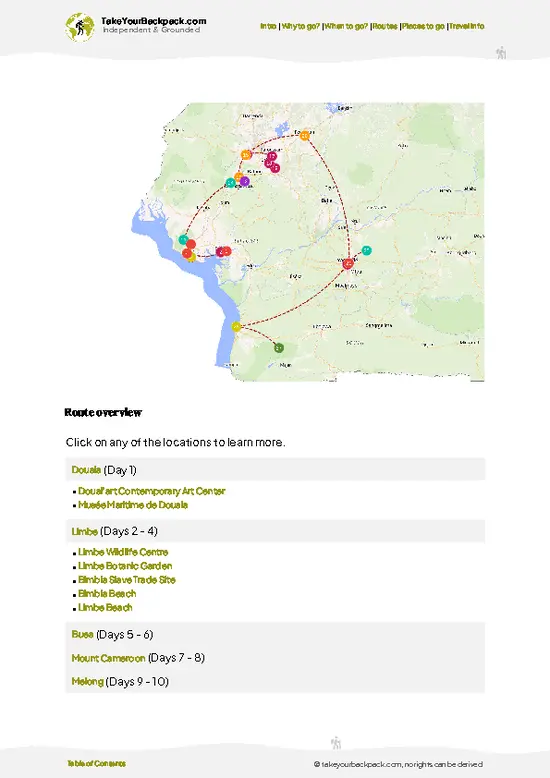
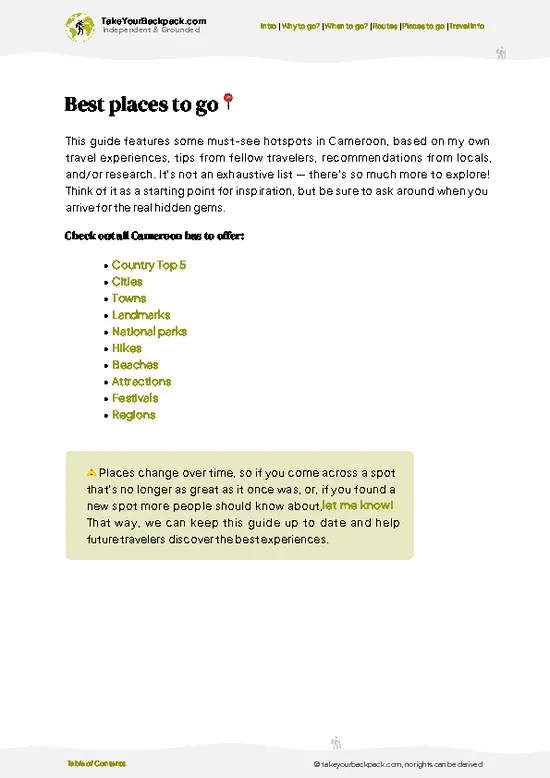
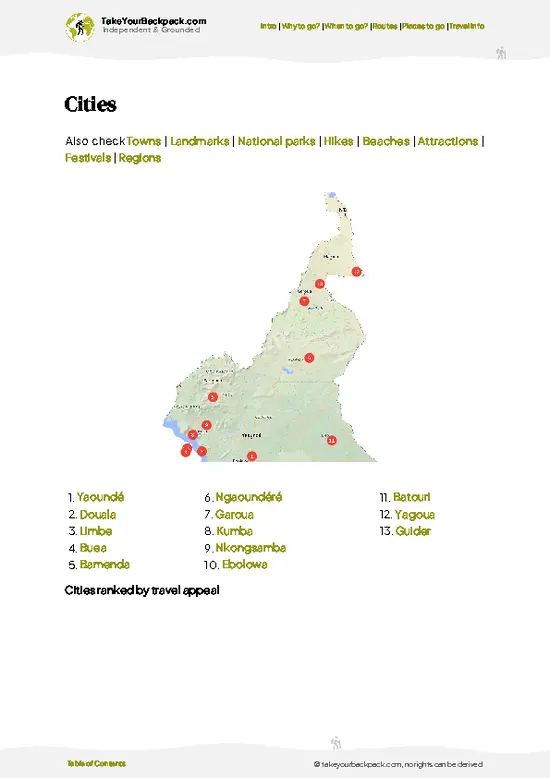
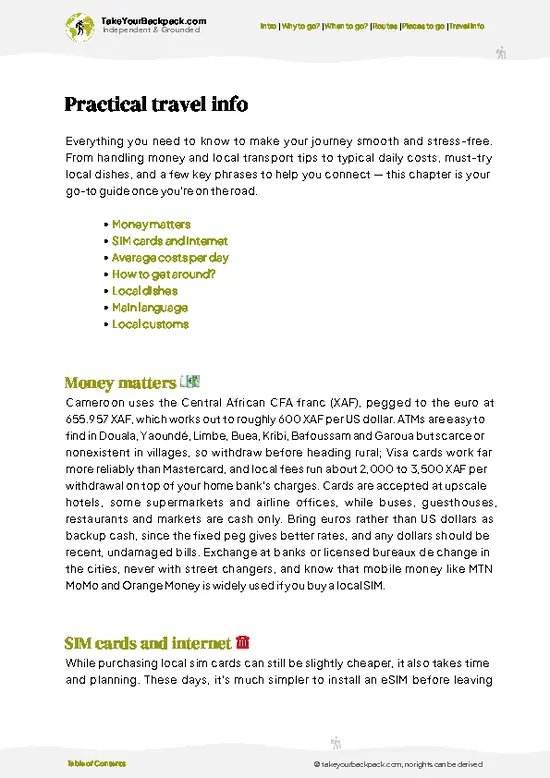
example page 0 from our offline Travel Guide for Cameroon
example page 1 from our offline Travel Guide for Cameroon
example page 2 from our offline Travel Guide for Cameroon
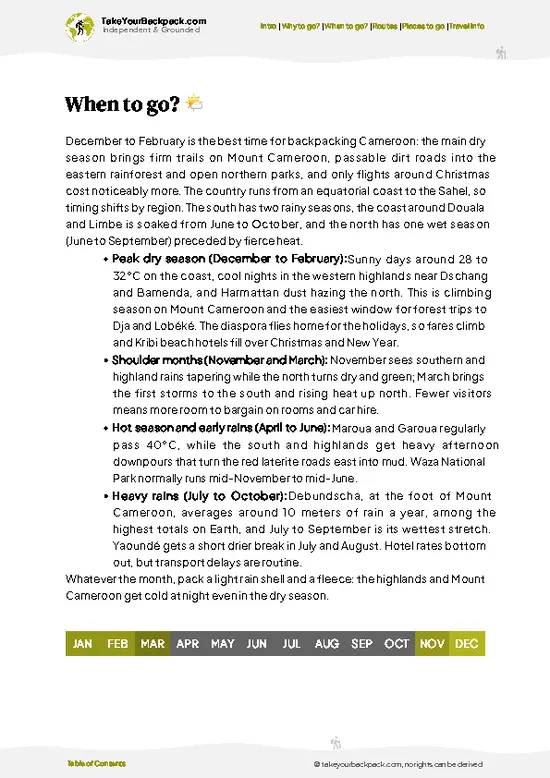
example page 3 from our offline Travel Guide for Cameroon
example page 4 from our offline Travel Guide for Cameroon
example page 5 from our offline Travel Guide for Cameroon
example page 6 from our offline Travel Guide for Cameroon
example page 7 from our offline Travel Guide for Cameroon
Loading the map 🌍
CLICK TO FILTER
cities
towns
landmarks
national parks
hikes
beaches
attractions
festivals
regions
SHOW COUNTRY’S BESTSHOW ALL

✨ Why go?
Ranked #3 town in Cameroon
What sets this place apart

Kousseri earns a stop because it is one of the few places where you can feel two countries pressed against each other. The Logone River is the border, and daily life hums across it: traders, fishermen, students and goods move in both directions. For travelers on a Sahel overland route, it is a practical gateway and a calm place to reset before or after the Chad crossing. Most people stay a night or two. That is enough to wander the Grand Marché, sit by the water and eat grilled fish and millet dishes in modest local eateries. The social scene is small and mostly local, so you will chat with shopkeepers and boatmen rather than other backpackers. Solo travelers who are comfortable with basic lodging and a slow pace will do well, as will anyone interested in the Kotoko and Arab Choa cultures … read more 👉
Kousseri earns a stop because it is one of the few places where you can feel two countries pressed against each other. The Logone River is the border, and daily life hums across it: traders, fishermen, students and goods move in both directions. For travelers on a Sahel overland route, it is a practical gateway and a calm place to reset before or after the Chad crossing. Most people stay a night or two. That is enough to wander the Grand Marché, sit by the water and eat grilled fish and millet dishes in modest local eateries. The social scene is small and mostly local, so you will chat with shopkeepers and boatmen rather than other backpackers. Solo travelers who are comfortable with basic lodging and a slow pace will do well, as will anyone interested in the Kotoko and Arab Choa cultures of the Lake Chad basin. Hikers, beach seekers and party people should look elsewhere.

💡 HighlightsEssential experiences to have while visiting Kousseri

  1. Logone Riverbank: This is the town's defining sight. Fishermen pull in nets, women wash clothes and wooden pirogues load up while N'Djamena's skyline sits on the far shore. Go early in the morning or late afternoon when it is cooler and the activity peaks. Free, and 1 to 2 hours is plenty.
  2. Grand Marché de Kousseri: A dense market of fabrics, spices, dried fish, sandals, household goods and goods that cross the river. Mornings are liveliest, and by midday the heat flattens the crowd. Entry is free, spending is a few euros if you buy snacks or small souvenirs, and allow 1 to 2 hours. Ask before photographing people.
  3. Logone Bridge Approach: The road bridge to N'Djamena is the town's artery, and the approach shows the border at work, with trucks, motorbike taxis, money changers and officials. It
… read more 👉
  1. Logone Riverbank: This is the town's defining sight. Fishermen pull in nets, women wash clothes and wooden pirogues load up while N'Djamena's skyline sits on the far shore. Go early in the morning or late afternoon when it is cooler and the activity peaks. Free, and 1 to 2 hours is plenty.
  2. Grand Marché de Kousseri: A dense market of fabrics, spices, dried fish, sandals, household goods and goods that cross the river. Mornings are liveliest, and by midday the heat flattens the crowd. Entry is free, spending is a few euros if you buy snacks or small souvenirs, and allow 1 to 2 hours. Ask before photographing people.
  3. Logone Bridge Approach: The road bridge to N'Djamena is the town's artery, and the approach shows the border at work, with trucks, motorbike taxis, money changers and officials. It is best watched from a distance in daylight. Free, around 30 minutes.
  4. Central Mosque and Old Quarter Lanes: The main mosque anchors a district of low mud-brick and concrete compounds, where you can see everyday Kotoko and Arab Choa life. Visit outside prayer times, dress modestly and ask permission before going near the entrance. Free, about 45 minutes.
Around Kousseri, the Kotoko towns of Makary and Goulfey, and the flat shores of the Logone floodplain, make good outings with a local driver. A full circuit of everything in town fits comfortably into half a day, and a relaxed pace stretches it to a full one.
Spotted a mistake or missing something? Contact us.

🏘️ NeighborhoodsWhere things are and how it's laid out

Kousseri is small enough to read in an afternoon on foot, and its character changes sharply between the river, the market and the roads leading to the border bridge.
  • Riverfront along the Logone: The best place to spend your time. Fishermen haul in nets from pirogues, women wash clothes on the muddy banks, and the air smells of wet silt and woodsmoke. Come in the cooler late afternoon, when the light flattens and goats wander the bank. Walkable, but the paths are uneven and slick after rain.
  • Central Market area: Loud, dusty and worth a morning. Sellers stack onions, dried fish, millet and bright wax-print cloth under tarps, motorbike horns cut through the haggling, and grilled meat smoke hangs over the stalls. You can eat well here from skewers and fried dough. Keep your bag in front of you in
… read more 👉
Kousseri is small enough to read in an afternoon on foot, and its character changes sharply between the river, the market and the roads leading to the border bridge.
  • Riverfront along the Logone: The best place to spend your time. Fishermen haul in nets from pirogues, women wash clothes on the muddy banks, and the air smells of wet silt and woodsmoke. Come in the cooler late afternoon, when the light flattens and goats wander the bank. Walkable, but the paths are uneven and slick after rain.
  • Central Market area: Loud, dusty and worth a morning. Sellers stack onions, dried fish, millet and bright wax-print cloth under tarps, motorbike horns cut through the haggling, and grilled meat smoke hangs over the stalls. You can eat well here from skewers and fried dough. Keep your bag in front of you in the crush.
  • Bridge and border zone: Skip it unless you are crossing. Trucks, money changers and customs queues crowd a hot, fume-filled strip leading to Ndjamena in Chad. Nothing to see, and it is tiring on foot.
  • Residential quarters near the Grand Mosque: Quiet lanes of mud-brick and concrete compounds, the call to prayer drifting over low roofs, and children playing on sandy streets. A short wander here shows daily Sahelian life better than any sight. Few places sell food, so eat before you go.

⌛️ 1 dayWhat you can realistically do in a day

7:00 AM, Logone Riverbank: Start at the water, where the light is soft and the day's first pirogues leave. Watch the fishermen untangle nets and the river crossings begin, then walk along the bank toward town for about 20 minutes. This is the one place in Kousseri that tells you where you are.
9:00 AM, Grand Marché: Browse while the stalls are fresh and the heat is still bearable. Look for dried fish, spices, fabric and sandals, and have a sweet tea or fried snack from a stand. Spend about 90 minutes, then walk to the nearby mosque.
11:00 AM, Central Mosque and old lanes: Admire the exterior from outside, then wander the surrounding lanes with their mud-walled compounds and playing children. Greet people first, and ask before taking photos.
12:30 PM, Lunch: Find a simple local eatery for grilled … read more 👉
7:00 AM, Logone Riverbank: Start at the water, where the light is soft and the day's first pirogues leave. Watch the fishermen untangle nets and the river crossings begin, then walk along the bank toward town for about 20 minutes. This is the one place in Kousseri that tells you where you are.
9:00 AM, Grand Marché: Browse while the stalls are fresh and the heat is still bearable. Look for dried fish, spices, fabric and sandals, and have a sweet tea or fried snack from a stand. Spend about 90 minutes, then walk to the nearby mosque.
11:00 AM, Central Mosque and old lanes: Admire the exterior from outside, then wander the surrounding lanes with their mud-walled compounds and playing children. Greet people first, and ask before taking photos.
12:30 PM, Lunch: Find a simple local eatery for grilled meat or fish with rice or millet, and rest through the hottest hours.
3:30 PM, Bridge approach: Stroll to the road leading to N'Djamena and watch trucks, motorbikes and traders cross. Stay on the Cameroon side and keep your camera discreet.
5:00 PM, Fishing landing, upstream bank: Walk a little away from the main crossing to a quieter stretch of the river. Few visitors come here, but families bathe, boats are repaired and cattle drink at dusk. It is a relaxed place to end the day.

🌤️ When to go?Choosing the right time of year

November to February is the most comfortable window for Kousseri, with dry air and cooler mornings.
  • Cool Dry Season (Nov to Feb): Days reach about 30 to 35°C (86 to 95°F), nights drop to roughly 15 to 20°C (59 to 68°F), and the harmattan haze can dull the sky. Daylight lasts about 11.5 hours. Prices stay steady, and crowds are minimal anyway.
  • Hot Season (Mar to May): Brutal heat of 38 to 44°C (100 to 111°F) makes midday walking miserable. Plan around dawn and dusk.
  • Rainy Season (Jun to Sep): Highs of 30 to 35°C (86 to 95°F), humid air and downpours that turn dirt streets to mud. The Logone swells and can flood low areas, and road transport slows. Fares may creep up.
  • Early Rains Shoulder (Oct): Rains fade, the countryside is green and heat eases.
Book onward travel a day ahead around Muslim holidays, when transport fills up.

source: climatestotravel.comJANJanuary: excellent for travelingFEBFebruary: excellent for travelingMARMarch: highly recommended for travelingAPRApril: good for travelingMAYMay: good for travelingJUNJune: fair for travelingJULJuly: fair for travelingAUGAugust: fair for travelingSEPSeptember: fair for travelingOCTOctober: highly recommended for travelingNOVNovember: highly recommended for travelingDECDecember: excellent for traveling
when-to-go

✈️ The backpacker research shortcutCameroon Travel Guide

An offline-friendly backpacking guide with optimized travel routes, ranked highlights, transport advice, and the best areas to stay.
example page 0 from our offline Travel Guide for Cameroon
example page 1 from our offline Travel Guide for Cameroon
example page 2 from our offline Travel Guide for Cameroon
example page 3 from our offline Travel Guide for Cameroon
example page 4 from our offline Travel Guide for Cameroon
example page 5 from our offline Travel Guide for Cameroon
example page 6 from our offline Travel Guide for Cameroon
example page 7 from our offline Travel Guide for Cameroon
The digital guide (351 pages) contains:
✅ 84 highlights, ranked by travel appeal
✅ Optimized 7, 14 & 21-day travel routes
✅ Cities, national parks, landmarks, beaches
✅ How to get around
✅ Offline-friendly for travel without Wi-Fi
👉 Click to see all 30+ guide features

📅 Plan smarter in minutes, not weeks
✅ Month by month travel advice
✅ Festivals & national holidays
✅ Budget expectations

🗺️ Go to the right places, skip the overrated ones
✅ Honest pros & cons of destinations
✅ Top hikes, parks & viewpoints
✅ Lesser-known places most travelers miss
✅ Clear “worth it vs skip it” guidance

🛏️ Travel smoothly without rookie mistakes
✅ Best areas to stay
✅ Transport systems explained simply
✅ Common scams & safety advice
✅ SIM cards, money & practical tips

🌍 Understand the country, not just visit it
✅ Culture & traditions
✅ 52 Essential phrases & customs
✅ Festivals worth planning around
✅ Traveler-friendly historical context
✅ Insights that make places more meaningful

📱 Built for real travel conditions
✅ Fully downloadable PDF
✅ Works completely offline
✅ Optimized for phone use
✅ Useful in remote areas & buses
✅ Everything in one place
Stop searching, start planning
Get instant access to your full guide. 30‑day money-back guarantee.
+ Add another guide for just

By proceeding you agree to our terms.
Sent to your inbox immediately after payment • 100% Secure Checkout
Best Backpacking Travel Advisor 2025 tourism awardBest Backpacking
Travel Advisor
2025
What others say about Take Your Backpack Guides:
⭐⭐⭐⭐⭐
Fantastic, amazing amount of information!
⭐⭐⭐⭐⭐
My goodness this is amazing, it's what I've been looking for hats off too you!
⭐⭐⭐⭐⭐
I think this is absolutely BRILLIANT
⭐⭐⭐⭐
Very complete and informative. It's still missing places, but I gotta to commend you
⭐⭐⭐⭐⭐
This is truly amazing, thank you, can't wait to explore it with my kids!
⭐⭐⭐⭐⭐
Awesome resource, thank you!
⭐⭐⭐⭐⭐
This is amazing! Can't wait to explore the ones I haven't seen
⭐⭐⭐⭐
I love this! Well done, great idea.
⭐⭐⭐⭐⭐
Thanks for taking the time to make this gem!
⭐⭐⭐⭐⭐
This might be the best website I've ever seen.
⭐⭐⭐⭐⭐
Congratulations, and thank you so much for your work; it's incredibly valuable.
⭐⭐⭐⭐
In all seriousness I think you did a great job pointing out the important spots
⭐⭐⭐⭐⭐
10/10 very good
⭐⭐⭐⭐⭐
As someone who's only just starting to visit regularly this is awesome, thank you.
⭐⭐⭐⭐
Thank you very much! I'm going to visit my dad, it's going to be very useful!
⭐⭐⭐⭐⭐
This is really cool! We'll be travelling for the first time and this definitely come in handy.
⭐⭐⭐⭐⭐
You are now our minister of culture, congratulations 👨‍💼
⭐⭐⭐⭐⭐
Just wanted to tell you that this is a pearl! Going to follow your recommendations.
⭐⭐⭐⭐⭐
This is so cool. I'll definitely be using the resource for my travels soon.
⭐⭐⭐⭐⭐
This is very impressive! Good work.
⭐⭐⭐⭐⭐
This is an amazing and informative site. Very well done!

🛏️ Where to stay?Best areas and accommodation options

The area around the central market is the best choice for a budget bed in Kousseri, with the quiet residential streets near the Grand Mosque as the second option. Accommodation in town is limited to simple guesthouses and small auberges, not dedicated hostels, so expect basic private rooms with a fan, often a shared or bucket-style bathroom, at roughly €8 to 20 a night. Dorm beds are essentially absent.

The market district puts you within a short walk of food stalls, moto-taxis and the stops for vehicles heading out of town. That convenience comes with early noise: engines, calls from vendors … read more 👉
The area around the central market is the best choice for a budget bed in Kousseri, with the quiet residential streets near the Grand Mosque as the second option. Accommodation in town is limited to simple guesthouses and small auberges, not dedicated hostels, so expect basic private rooms with a fan, often a shared or bucket-style bathroom, at roughly €8 to 20 a night. Dorm beds are essentially absent.

The market district puts you within a short walk of food stalls, moto-taxis and the stops for vehicles heading out of town. That convenience comes with early noise: engines, calls from vendors and music begin at dawn. Ask for a room at the back, away from the street.

The mosque quarter is calmer at night and feels more private, though choices are fewer and you will rely on a moto-taxi for dinner after dark. Streets are poorly lit in both areas, so arrive before evening if you can. Book nothing far in advance; just walk in and look at the room first, checking the fan, the mosquito net and whether electricity runs through the night. Avoid sleeping right at the bridge and border strip, which is loud with trucks and has little to recommend it.

🚌 Getting aroundGetting around like a local

From the main bus stop near the market, the center is a five to ten minute walk, or a quick motorbike hop for about €0.20 to 0.40. Kousseri is flat, dusty and compact, so you rarely need more than your feet and a helmetless ride on the back of a bike. Public transport barely exists, and everything runs on informal arrangements.
  • Walking: The best option for the market, the riverfront and the mosque quarter. Sand and dust cover the streets, so wear closed shoes, and go early or late because the midday sun is punishing, especially from March to May.
  • Moto-taxis: The everyday workhorse. Short hops cost about €0.20 to 0.60, and longer rides across town up to about €1. Agree the price before climbing on. They run from early morning until roughly 9 or 10 pm, thinning out after dark. Expect fumes, potholes
… read more 👉
From the main bus stop near the market, the center is a five to ten minute walk, or a quick motorbike hop for about €0.20 to 0.40. Kousseri is flat, dusty and compact, so you rarely need more than your feet and a helmetless ride on the back of a bike. Public transport barely exists, and everything runs on informal arrangements.
  • Walking: The best option for the market, the riverfront and the mosque quarter. Sand and dust cover the streets, so wear closed shoes, and go early or late because the midday sun is punishing, especially from March to May.
  • Moto-taxis: The everyday workhorse. Short hops cost about €0.20 to 0.60, and longer rides across town up to about €1. Agree the price before climbing on. They run from early morning until roughly 9 or 10 pm, thinning out after dark. Expect fumes, potholes and a close view of traffic.
  • Shared taxis: Battered cars that run set routes and fill with several passengers before leaving. A seat costs about €0.30 to 1 in town, and more for regional runs. They are cramped, but cheaper than hiring a whole car and a good way to meet locals.
  • Minibuses and buses to Maroua and Ndjamena: Agencies near the market send vehicles toward Maroua (about three to four hours by road, roughly €6 to 10) and across the bridge to Ndjamena, Chad (short, but border formalities add time). Leave in the morning, since departures tail off by afternoon and vehicles leave when full.
Carry small change, because drivers rarely have any. The border strip is not worth walking; take a moto-taxi through it and keep your documents handy, since checkpoints are frequent around Kousseri.

👛 Costs (as of 22 October 2026)Typical daily expenses

Kousseri costs roughly €17 to 37 a day for a backpacker, with a day totaling about €38 at high-season rates.
CategoryBudget RangeLocal Reality
Dorm accommodation€8 to 15 (high season)No true dorms exist, so you pay for a basic private room with a fan. Rates dip slightly in the rains.
Meals€5 to 10Grilled meat skewers, rice with sauce, fried dough and fish from market stalls are cheap. Sit-down meals cost more.
Local transport€1 to 3Moto-taxis and shared taxis cover most trips. Fares rise after dark.
Basic activities/entry fees€0 to 3Walking the market and riverbank is free. Small tips may be expected for guides.
Miscellaneous expenses€3 to 6Bottled water, phone credit and small tips add up fast in the heat.
Total Daily Budget€17 to 37About €38 on a comfortable day with transfers included.
Carry plenty … read more 👉
Kousseri costs roughly €17 to 37 a day for a backpacker, with a day totaling about €38 at high-season rates.
CategoryBudget RangeLocal Reality
Dorm accommodation€8 to 15 (high season)No true dorms exist, so you pay for a basic private room with a fan. Rates dip slightly in the rains.
Meals€5 to 10Grilled meat skewers, rice with sauce, fried dough and fish from market stalls are cheap. Sit-down meals cost more.
Local transport€1 to 3Moto-taxis and shared taxis cover most trips. Fares rise after dark.
Basic activities/entry fees€0 to 3Walking the market and riverbank is free. Small tips may be expected for guides.
Miscellaneous expenses€3 to 6Bottled water, phone credit and small tips add up fast in the heat.
Total Daily Budget€17 to 37About €38 on a comfortable day with transfers included.
Carry plenty of small notes in local currency, since change is scarce, and eat where locals do to keep meals near the bottom of the range.
⚠️ Prices can change and everyone travels differently, so take this as a rough guide. Hope it helps you plan your adventure!

🚌 Day tripsWhere to go beyond the main area

Kousseri works as a base for a few short outings, though transport is informal and choices are narrow, so leave early and carry cash.
Ndjamena, Chad:
The Chadian capital sits just across the Logone, a short ride from town. It is worth it for its big central market and riverside views, but you need a valid Chad visa before crossing, and border queues can eat an hour. Expect about €5 to 15 for transport and food. First-timers often arrive without the visa and get turned back. Go in the cooler months.

Logone River Banks and Fishing Villages:
A moto-taxi south or north along the river takes you to small villages where fishermen work from wooden pirogues and dry catch on racks. Budget around €3 to 8 including the ride and a meal of grilled fish. The best light is late afternoon from November to … read more 👉
Kousseri works as a base for a few short outings, though transport is informal and choices are narrow, so leave early and carry cash.
Ndjamena, Chad:
The Chadian capital sits just across the Logone, a short ride from town. It is worth it for its big central market and riverside views, but you need a valid Chad visa before crossing, and border queues can eat an hour. Expect about €5 to 15 for transport and food. First-timers often arrive without the visa and get turned back. Go in the cooler months.

Logone River Banks and Fishing Villages:
A moto-taxi south or north along the river takes you to small villages where fishermen work from wooden pirogues and dry catch on racks. Budget around €3 to 8 including the ride and a meal of grilled fish. The best light is late afternoon from November to February, when the mud is firm. In the rains, tracks turn slick, so confirm your driver can return.

Waza National Park:
About three hours by road to the south-west, this is the nearest wildlife area, with elephants, giraffes and antelope around waterholes. It is a long day, and getting around inside needs a vehicle and guide, so plan about €50 to 100 per person if you share a hired car. February to May is best, when animals gather at water. Many people try without a vehicle and get stuck at the gate.
👉 Explore Waza National Park

🛡️ SafetyStaying Safe: What Travelers Should Know

Kousseri is manageable for careful travelers, but its position on the Chad border and in the Far North region means extra awareness is justified. Check current government advice before going, as armed groups have been active in the region and security conditions can change. Stay in town, avoid remote countryside, and do not travel at night. Checkpoints are frequent, so carry your passport and keep photocopies handy. Soldiers and police may ask for papers; stay polite and patient. Photography near the bridge, military posts or officials is a quick route to trouble, so ask first. The market is crowded, and pickpocketing and bag snatching happen there, so keep valuables close. Moto-taxi drivers may inflate fares for foreigners, which is solved by agreeing the price first. Streets are dark after … read more 👉
Kousseri is manageable for careful travelers, but its position on the Chad border and in the Far North region means extra awareness is justified. Check current government advice before going, as armed groups have been active in the region and security conditions can change. Stay in town, avoid remote countryside, and do not travel at night. Checkpoints are frequent, so carry your passport and keep photocopies handy. Soldiers and police may ask for papers; stay polite and patient. Photography near the bridge, military posts or officials is a quick route to trouble, so ask first. The market is crowded, and pickpocketing and bag snatching happen there, so keep valuables close. Moto-taxi drivers may inflate fares for foreigners, which is solved by agreeing the price first. Streets are dark after sunset, and solo women should expect persistent attention and should dress modestly. Drink only bottled or treated water.

FAQCommon questions from travelers

Kousseri is mainly a stopover for most people, though it rewards a short stay if you like working markets and river life. The Logone riverbank at late afternoon and the central market are the main draws, and the town sits right beside Ndjamena in Chad. Few facilities cater to tourists, so expect basic rooms from about €8 to 20 a night.
Kousseri needs one full day, or two if you want to include the riverbank villages and a market morning. A single day covers the market, the Grand Mosque quarter and the riverfront at dusk. Add a second day for a moto-taxi trip along the Logone, budgeting about €3 to 8.
Kousseri is a feasible day trip from Ndjamena, Chad, since the Logone bridge sits only a short ride away, though you need the correct visas and border formalities can take an hour. From Maroua it is a long journey of about three to four hours each way, so a day trip is tiring. Staying one night in Kousseri makes more sense for travelers coming from Maroua.
⚠️ Things can change over time, so always validate details locally before you go.

Other Cameroonian towns near Kousseri

Explore more nearby:

  • Mora—Granite domes, Monday livestock market, leather quarter| 150 km away
  • Maraoua—Sahelian city, craft markets, Islamic architecture| 183 km away
  • Mokolo—Monday market, Mafa compounds, blacksmith forges| 199 km away

💡 Not sure where to go next?
Create a personalized itinerary for Cameroon including Kousseri and the places that fit your trip.

Generate my itinerary

👉 Discover all towns

Or checkout all Cameroon has to offer (think cities, towns, villages, national parks, hikes, beaches, festivals)
Country photo of Cameroon

We 💚 feedbackSumming up the experience

Kousseri is best in the early morning, ideally between November and February, when the air is cooler and the river is busy with boats and traders. By midday the heat and harmattan dust flatten everything. I would be at the water by first light, shop at the market before the crowds thicken, and carry plenty of small bills.

✍️ Help improve this page!
The information on this page is based on in-depth research, insights shared by experienced travelers, and feedback from the local travel community in Cameroon. While every effort is made to keep the information accurate and current, conditions can change — so if you spot anything incorrect or outdated, please get in touch.


🙋‍♂️ Give feedback

👋 Meet the founderWho’s Behind Take Your Backpack?

Johan, backpacker and founder of TakeYourBackpackHi, I’m Johan (Netherlands 🇳🇱), the creator of TakeYourBackpack. Over the past 3 decades, I’ve backpacked through 90+ countries across six continents, gaining extensive experience with independent travel, long-term trips, and overland routes.

This site is built on a combination of firsthand travel experience and carefully curated insights from other backpackers. Many guides are based on places I’ve personally visited, while others bring together tips, observations, and practical advice shared by trusted travelers I’ve met along the way.

The goal is to provide realistic, experience-driven guidance — not generic itineraries — so you can explore destinations with better context, clearer expectations, and more confidence.