v2.webp)
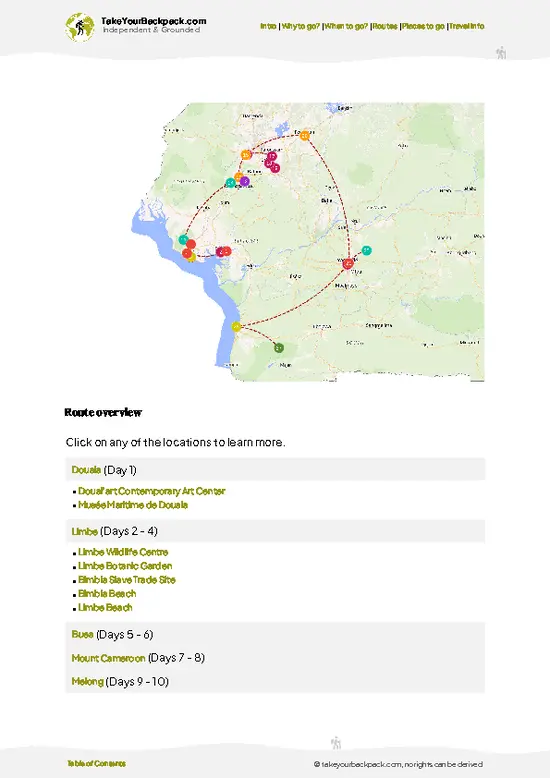
- Lamido’s Palace (Lamidat de Ngaoundéré): The seat of the Fulani traditional ruler is the town’s best-known sight. Walk the entrance courtyard and, with permission, meet guides who explain the chiefdom’s history. Go in the morning; expect a small tip or fee of about €2 to 5 and 45 minutes to 1 hour.
- Grand Marché: A dense market of spices, dried fish, leather goods, kola nuts and bright fabrics. Morning is liveliest. Entry is free; allow 1 to 2 hours.
- Central Mosque: Next to the palace, this is the spiritual center of the Muslim community. View it from outside respectfully, especially around prayer times. Free, 15 to 20 minutes.
- Ngaoundéré Railway Station: Trains from the south unload here, and the platform scene at arrival is a spectacle of porters, traders and taxi drivers. Early morning is best.
- Lamido’s Palace (Lamidat de Ngaoundéré): The seat of the Fulani traditional ruler is the town’s best-known sight. Walk the entrance courtyard and, with permission, meet guides who explain the chiefdom’s history. Go in the morning; expect a small tip or fee of about €2 to 5 and 45 minutes to 1 hour.
- Grand Marché: A dense market of spices, dried fish, leather goods, kola nuts and bright fabrics. Morning is liveliest. Entry is free; allow 1 to 2 hours.
- Central Mosque: Next to the palace, this is the spiritual center of the Muslim community. View it from outside respectfully, especially around prayer times. Free, 15 to 20 minutes.
- Ngaoundéré Railway Station: Trains from the south unload here, and the platform scene at arrival is a spectacle of porters, traders and taxi drivers. Early morning is best. Free, 30 minutes.
- Cattle Market (Marché à bétail): Fulani herders sell zebu cattle in noisy, dusty bargaining. Mornings are best, and it is usually free to watch, taking about 1 hour.
- Lake Tison viewpoint: A crater lake outside the center, surrounded by hills, calm for a picnic or a quiet walk. Late afternoon is pleasant. Free or a small tip of up to €2, and 1 to 2 hours including the ride.
- Tanneries and leather workshops: Artisans cure and dye hides for sandals and bags. You can watch and buy directly. Mornings, free, about 45 minutes.
Spotted a mistake or missing something? Contact us.

 Best Backpacking
.jpg) Hi, I’m Johan (Netherlands 🇳🇱), the creator of TakeYourBackpack. Over the past 3 decades, I’ve backpacked through 90+ countries across six continents, gaining extensive experience with independent travel, long-term trips, and overland routes.
Hi, I’m Johan (Netherlands 🇳🇱), the creator of TakeYourBackpack. Over the past 3 decades, I’ve backpacked through 90+ countries across six continents, gaining extensive experience with independent travel, long-term trips, and overland routes.