×

Cameroon🇨🇲 | citiesGarouaBenue riverbank, Fulani lamidat, leather workshops, Sahelian heat | things to do and best time to go

Explore YaoundéExplore Ngaoundéré

Backpacking in Garoua
👍 Recommendedcity ranked #7
By Johan Kruseman 🇳🇱 | Updated October 22, 2026

Garoua was once a river port where cotton barges and groundnut traders defined the working week; today it is the dusty, sun-baked hub of the north that most travelers cross on the way to somewhere wilder. The city sits in the north of Cameroon, on the banks of the Benue River. Expect a Sahelian haze, the smell of grilled meat and diesel, motorbike taxis whining through red-dirt streets and the call to prayer over sand-colored roofs. It suits travelers heading to the northern parks and the Sahel who want a real regional town. It does not suit anyone craving sights or nightlife. Heat is the hard part. Flying in saves a day of rough road, but the bus costs far less in money and gives you the landscape, so I would take the bus if you have time. Carry cash, since cards are rarely accepted.

Discover everything you want to know in the 📖 Cameroon Travel Guide.


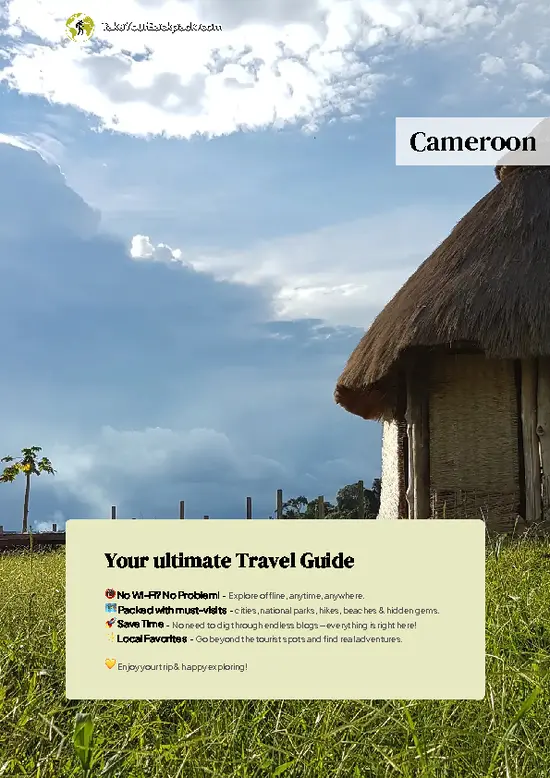
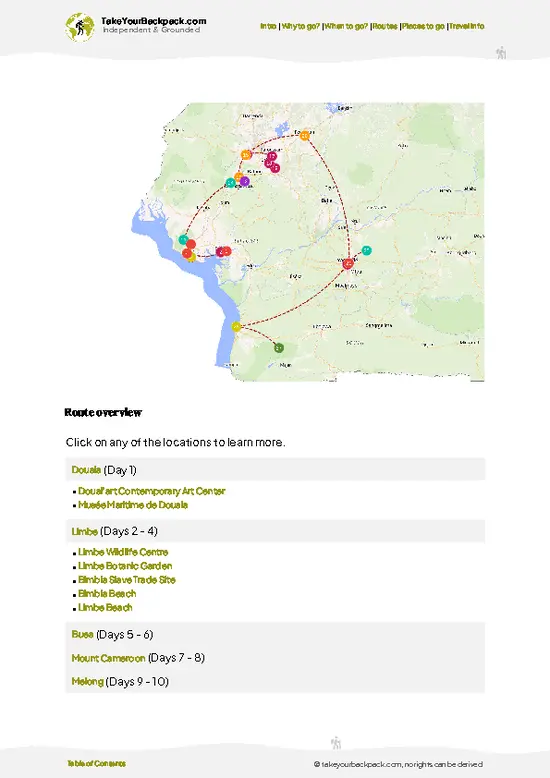
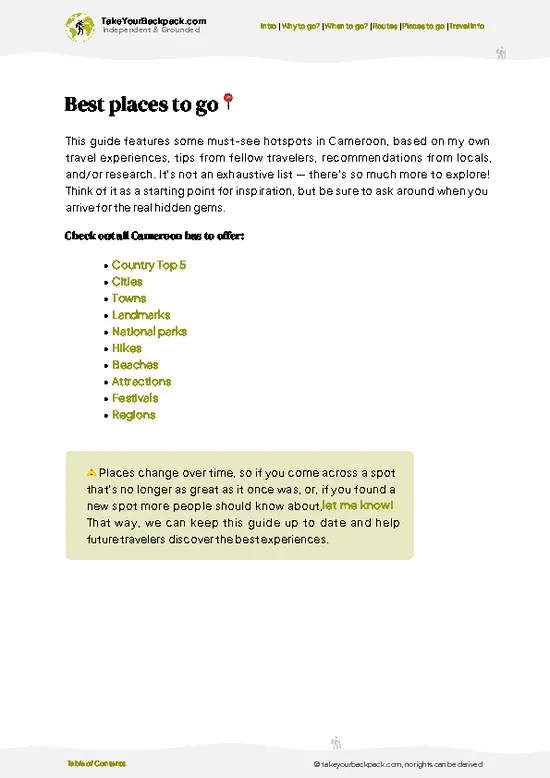
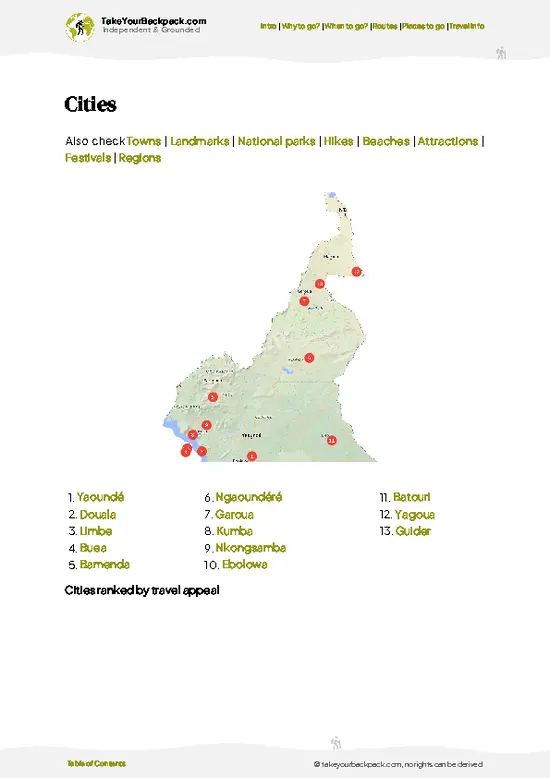
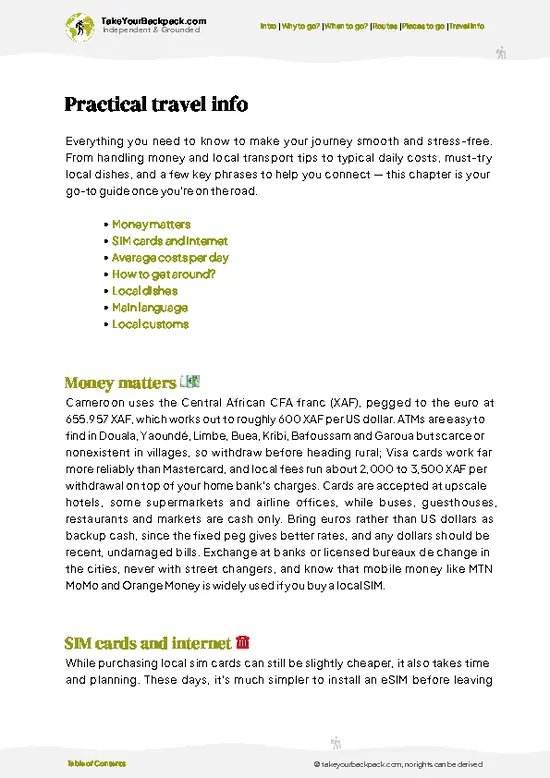
example page 0 from our offline Travel Guide for Cameroon
example page 1 from our offline Travel Guide for Cameroon
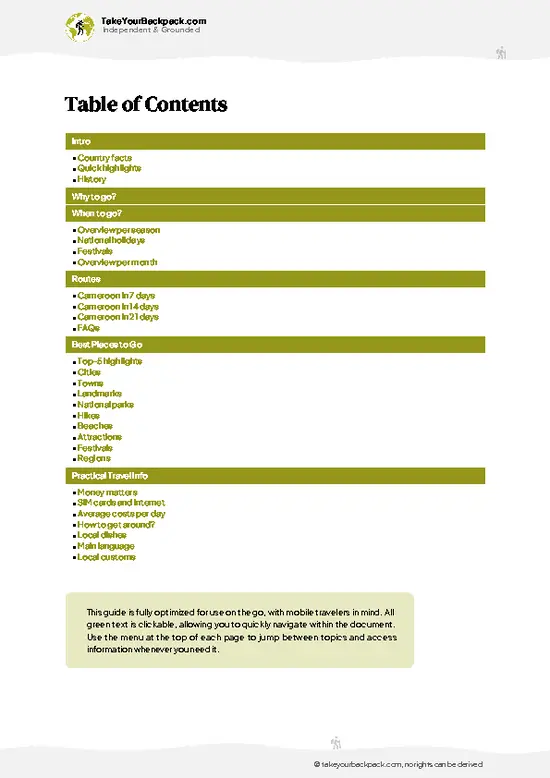
example page 2 from our offline Travel Guide for Cameroon
example page 3 from our offline Travel Guide for Cameroon
example page 4 from our offline Travel Guide for Cameroon
example page 5 from our offline Travel Guide for Cameroon
example page 6 from our offline Travel Guide for Cameroon
example page 7 from our offline Travel Guide for Cameroon
Loading the map 🌍
CLICK TO FILTER
cities
towns
landmarks
national parks
hikes
beaches
attractions
festivals
regions
SHOW COUNTRY’S BESTSHOW ALL

✨ Why go?
Ranked #7 city in Cameroon
What makes this city worth visiting

Garoua earns its place on a route as the gateway to the northern wildlife country, and that is the main reason to come. The city is a practical staging post: you can sort out onward transport, stock up on supplies and arrange park logistics in one place. The second draw is the atmosphere of a working Sahelian trading city. Markets sell leather, cloth and spices, the Benue River still shapes daily life, and the Fulani and Hausa influence is strong in food, dress and manners. Grilled suya-style beef at roadside stalls beats most restaurant meals. Accommodation is limited and basic, so do not expect a hostel scene. It is best as a one or two night stop rather than a place to linger. If you want sights and social travelers, push on. If you want to see the north as locals live it, stay a little longer.

💡 HighlightsThe experiences that define the visit

  1. Benue River banks: The river is the city's lifeblood, with fishermen, pirogues and women washing clothes at the shore. Go in the late afternoon when the heat eases. Free, 1 hour.
  2. Grand Marché de Garoua: The main market is a maze of stalls selling cloth, leather goods, spices and dried fish. Morning is busiest and coolest. Free entry, 1 to 2 hours.
  3. Grande Mosquée de Garoua: The central mosque shows the strong Islamic character of the city. Visit outside prayer times and dress modestly. Free or a small donation, 30 minutes.
  4. Lamidat de Garoua: The traditional palace of the Lamido, the Fulani chief, is a window into northern chiefdom culture. Visits need permission and a respectful approach, so ask a local guide to help. Small gift expected, around €2 to 5, 30 to 45 minutes.
  5. Artisan quarter and leather
… read more 👉
  1. Benue River banks: The river is the city's lifeblood, with fishermen, pirogues and women washing clothes at the shore. Go in the late afternoon when the heat eases. Free, 1 hour.
  2. Grand Marché de Garoua: The main market is a maze of stalls selling cloth, leather goods, spices and dried fish. Morning is busiest and coolest. Free entry, 1 to 2 hours.
  3. Grande Mosquée de Garoua: The central mosque shows the strong Islamic character of the city. Visit outside prayer times and dress modestly. Free or a small donation, 30 minutes.
  4. Lamidat de Garoua: The traditional palace of the Lamido, the Fulani chief, is a window into northern chiefdom culture. Visits need permission and a respectful approach, so ask a local guide to help. Small gift expected, around €2 to 5, 30 to 45 minutes.
  5. Artisan quarter and leather workshops: Craftsmen make sandals, bags and saddles by hand, and you can watch them work. Mornings are best. Free to look, 1 hour.
  6. Garoua Regional Museum: A modest museum of northern Cameroon's cultural heritage with tools, textiles and masks. Open weekday mornings. Around €1 to 2, 1 hour.
  7. Roadside grill stalls: At dusk the smoke rises and the beef comes off the fire, sold by weight with onions and pepper. Around €1 to 3, 45 minutes.
Garoua sits close to the northern parks, so Benoué National Park and Bouba Njida National Park are the best day trips or short excursions from here. The sights above take about one full day together.
Spotted a mistake or missing something? Contact us.

🏘️ NeighborhoodsUnderstanding the local layout

Garoua sprawls along the Benue River, and the useful parts for a backpacker fit into a handful of districts. Mototaxis connect them cheaply, so the real choice is how much heat you want to walk through.
  • Centre ville and the Grand Marché: The dusty core, where cloth sellers, spice sacks and the smell of grilled meat crowd the lanes. You can cover it on foot in a morning before the sun gets serious, and it gives the best value of any district for food and atmosphere.
  • Port and riverfront: Fishing pirogues, sand-colored banks and the slow brown Benue. Walk it at dawn or late afternoon when it is cooler. Free, quiet and rewarding, though the ground is loose and shadeless.
  • Lopéré and the old quarter near the Lamidat: Mud-brick compounds, goat bleats and the call to prayer from nearby mosques. The traditional
… read more 👉
Garoua sprawls along the Benue River, and the useful parts for a backpacker fit into a handful of districts. Mototaxis connect them cheaply, so the real choice is how much heat you want to walk through.
  • Centre ville and the Grand Marché: The dusty core, where cloth sellers, spice sacks and the smell of grilled meat crowd the lanes. You can cover it on foot in a morning before the sun gets serious, and it gives the best value of any district for food and atmosphere.
  • Port and riverfront: Fishing pirogues, sand-colored banks and the slow brown Benue. Walk it at dawn or late afternoon when it is cooler. Free, quiet and rewarding, though the ground is loose and shadeless.
  • Lopéré and the old quarter near the Lamidat: Mud-brick compounds, goat bleats and the call to prayer from nearby mosques. The traditional chief’s palace area is compact and walkable, and a short mototaxi ride saves your legs.
  • Roumdé Adjia and the northern edge: Wide roads, bars and open-air grills that come alive after dark. Spread out, so a mototaxi (about €0.30 to 0.60) beats walking. It is the best pick for a cold beer and loud music.

⌛️ 1 daySeeing the highlights in 24 hours

7:30 AM: Grand Marché Start here before the heat builds. Stalls of cloth, spices and leather are at their liveliest, and a quick breakfast of beignets and coffee fuels the walk. Wander for about two hours, then take a moto taxi to the next stop.
10:00 AM: Artisan quarter Watch leatherworkers cut and stitch sandals and bags. This corner is easy to miss and has little tourist traffic, so you can talk to makers directly. Buy a small item if you like it.
11:30 AM: Grande Mosquée Admire the exterior and, if welcomed, a quick look inside, dressed modestly. Then shelter from the midday sun.
1:00 PM: Lunch Find a local restaurant for rice, sauce and grilled fish or chicken, and rest through the hottest hours.
3:30 PM: Regional Museum A cooler indoor hour with northern crafts, tools and textiles.
5:00 PM: … read more 👉
7:30 AM: Grand Marché Start here before the heat builds. Stalls of cloth, spices and leather are at their liveliest, and a quick breakfast of beignets and coffee fuels the walk. Wander for about two hours, then take a moto taxi to the next stop.
10:00 AM: Artisan quarter Watch leatherworkers cut and stitch sandals and bags. This corner is easy to miss and has little tourist traffic, so you can talk to makers directly. Buy a small item if you like it.
11:30 AM: Grande Mosquée Admire the exterior and, if welcomed, a quick look inside, dressed modestly. Then shelter from the midday sun.
1:00 PM: Lunch Find a local restaurant for rice, sauce and grilled fish or chicken, and rest through the hottest hours.
3:30 PM: Regional Museum A cooler indoor hour with northern crafts, tools and textiles.
5:00 PM: Benue River banks Walk the shore as boats come in and the air cools. Fishermen and children make the scene.
6:30 PM: Grill stalls Finish with smoky grilled beef eaten with your fingers.

🌤️ When to go?When to go for the best experience

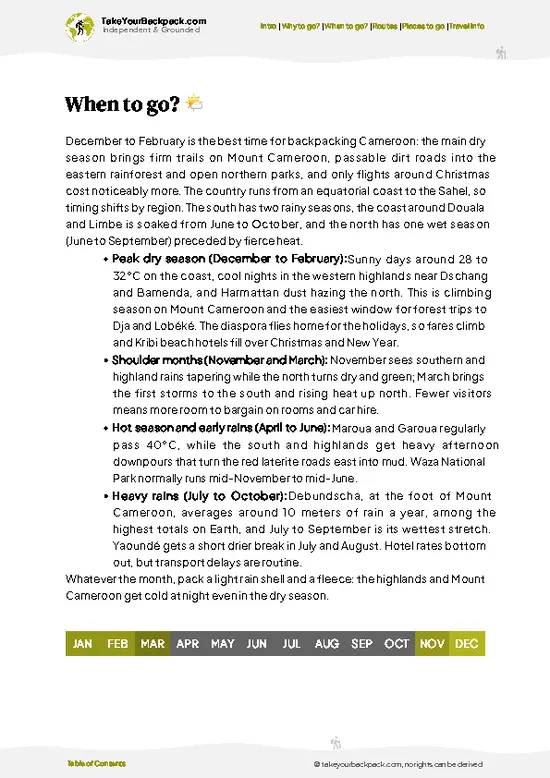
November to February is the most comfortable window, with dry air, cool mornings near 18°C (64°F) and afternoons around 33°C (91°F).
  • Cool Dry Season (Nov to Feb): Harmattan dust softens the sky, nights are pleasant, and roads are fully passable. Prices stay steady, and crowds are thin anyway.
  • Hot Season (Mar to May): Afternoons reach 40 to 45°C (104 to 113°F). Sightseeing works only at dawn and dusk, and transport slows through midday.
  • Rainy Season (Jun to Oct): Highs of 30 to 35°C (86 to 95°F), with downpours that flood dirt roads and cut access to Bénoué National Park. Wildlife viewing is poor then, though the landscape turns green and rooms are easiest to find.
Plan park visits for December to April, when animals gather at waterholes.

source: climatestotravel.comJANJanuary: excellent for travelingFEBFebruary: excellent for travelingMARMarch: excellent for travelingAPRApril: fair for travelingMAYMay: fair for travelingJUNJune: fair for travelingJULJuly: fair for travelingAUGAugust: fair for travelingSEPSeptember: fair for travelingOCTOctober: good for travelingNOVNovember: highly recommended for travelingDECDecember: excellent for traveling
when-to-go

✈️ The backpacker research shortcutCameroon Travel Guide

An offline-friendly backpacking guide with optimized travel routes, ranked highlights, transport advice, and the best areas to stay.
example page 0 from our offline Travel Guide for Cameroon
example page 1 from our offline Travel Guide for Cameroon
example page 2 from our offline Travel Guide for Cameroon
example page 3 from our offline Travel Guide for Cameroon
example page 4 from our offline Travel Guide for Cameroon
example page 5 from our offline Travel Guide for Cameroon
example page 6 from our offline Travel Guide for Cameroon
example page 7 from our offline Travel Guide for Cameroon
The digital guide (351 pages) contains:
✅ 84 highlights, ranked by travel appeal
✅ Optimized 7, 14 & 21-day travel routes
✅ Cities, national parks, landmarks, beaches
✅ How to get around
✅ Offline-friendly for travel without Wi-Fi
👉 Click to see all 30+ guide features

📅 Plan smarter in minutes, not weeks
✅ Month by month travel advice
✅ Festivals & national holidays
✅ Budget expectations

🗺️ Go to the right places, skip the overrated ones
✅ Honest pros & cons of destinations
✅ Top hikes, parks & viewpoints
✅ Lesser-known places most travelers miss
✅ Clear “worth it vs skip it” guidance

🛏️ Travel smoothly without rookie mistakes
✅ Best areas to stay
✅ Transport systems explained simply
✅ Common scams & safety advice
✅ SIM cards, money & practical tips

🌍 Understand the country, not just visit it
✅ Culture & traditions
✅ 52 Essential phrases & customs
✅ Festivals worth planning around
✅ Traveler-friendly historical context
✅ Insights that make places more meaningful

📱 Built for real travel conditions
✅ Fully downloadable PDF
✅ Works completely offline
✅ Optimized for phone use
✅ Useful in remote areas & buses
✅ Everything in one place
Stop searching, start planning
Get instant access to your full guide. 30‑day money-back guarantee.
+ Add another guide for just

By proceeding you agree to our terms.
Sent to your inbox immediately after payment • 100% Secure Checkout
Best Backpacking Travel Advisor 2025 tourism awardBest Backpacking
Travel Advisor
2025
What others say about Take Your Backpack Guides:
⭐⭐⭐⭐⭐
Fantastic, amazing amount of information!
⭐⭐⭐⭐⭐
My goodness this is amazing, it's what I've been looking for hats off too you!
⭐⭐⭐⭐⭐
I think this is absolutely BRILLIANT
⭐⭐⭐⭐
Very complete and informative. It's still missing places, but I gotta to commend you
⭐⭐⭐⭐⭐
This is truly amazing, thank you, can't wait to explore it with my kids!
⭐⭐⭐⭐⭐
Awesome resource, thank you!
⭐⭐⭐⭐⭐
This is amazing! Can't wait to explore the ones I haven't seen
⭐⭐⭐⭐
I love this! Well done, great idea.
⭐⭐⭐⭐⭐
Thanks for taking the time to make this gem!
⭐⭐⭐⭐⭐
This might be the best website I've ever seen.
⭐⭐⭐⭐⭐
Congratulations, and thank you so much for your work; it's incredibly valuable.
⭐⭐⭐⭐
In all seriousness I think you did a great job pointing out the important spots
⭐⭐⭐⭐⭐
10/10 very good
⭐⭐⭐⭐⭐
As someone who's only just starting to visit regularly this is awesome, thank you.
⭐⭐⭐⭐
Thank you very much! I'm going to visit my dad, it's going to be very useful!
⭐⭐⭐⭐⭐
This is really cool! We'll be travelling for the first time and this definitely come in handy.
⭐⭐⭐⭐⭐
You are now our minister of culture, congratulations 👨‍💼
⭐⭐⭐⭐⭐
Just wanted to tell you that this is a pearl! Going to follow your recommendations.
⭐⭐⭐⭐⭐
This is so cool. I'll definitely be using the resource for my travels soon.
⭐⭐⭐⭐⭐
This is very impressive! Good work.
⭐⭐⭐⭐⭐
This is an amazing and informative site. Very well done!

🛏️ Where to stay?Where staying makes the most sense

The centre ville area around the Grand Marché is the best base for budget travelers, with the widest choice of cheap guesthouses and basic rooms for roughly €10 to 20. Garoua has no real hostel scene, so expect simple private rooms rather than dorms. The market area is noisy from dawn with traders and motorbikes, but it keeps food stalls, money changers and mototaxis within a few minutes.
The second option is the Roumdé Adjia side toward the north, where rooms tend to be a little quieter and slightly more comfortable, often with air conditioning for €15 to 30. Nightlife there means music from open-air … read more 👉
The centre ville area around the Grand Marché is the best base for budget travelers, with the widest choice of cheap guesthouses and basic rooms for roughly €10 to 20. Garoua has no real hostel scene, so expect simple private rooms rather than dorms. The market area is noisy from dawn with traders and motorbikes, but it keeps food stalls, money changers and mototaxis within a few minutes.
The second option is the Roumdé Adjia side toward the north, where rooms tend to be a little quieter and slightly more comfortable, often with air conditioning for €15 to 30. Nightlife there means music from open-air bars until late, so ask for a room away from the road. Getting back after dark is easiest by mototaxi, and streets there are less lit than in the center.
Book ahead around major holidays or when conferences fill rooms. Fans or air conditioning are worth paying for from March to May.

🚌 Getting aroundHow to get around Garoua

Garoua’s center is flat and walkable in the cool early morning, but the town is spread out and walking stops making sense beyond the market, port and Lamidat cluster. Distances to the northern bar districts and the bus stations are too long in 38°C (100°F) heat. Traffic is dominated by motorbikes, and there is no real public bus system.
  • Walking: Free and the best way to take in the market, with its dust, diesel and frying oil smells. Go before 10 am, as the afternoon sun is punishing and sidewalks are patchy.
  • Mototaxi (bendskin): The backpacker’s default at roughly €0.25 to 0.60 per ride in town. Fast and cheap, though you inhale dust and sit without a helmet unless you ask. Agree on the fare first, and carry small coins.
  • Shared taxi: Yellow cars run fixed routes along main roads for about €0.
… read more 👉
Garoua’s center is flat and walkable in the cool early morning, but the town is spread out and walking stops making sense beyond the market, port and Lamidat cluster. Distances to the northern bar districts and the bus stations are too long in 38°C (100°F) heat. Traffic is dominated by motorbikes, and there is no real public bus system.
  • Walking: Free and the best way to take in the market, with its dust, diesel and frying oil smells. Go before 10 am, as the afternoon sun is punishing and sidewalks are patchy.
  • Mototaxi (bendskin): The backpacker’s default at roughly €0.25 to 0.60 per ride in town. Fast and cheap, though you inhale dust and sit without a helmet unless you ask. Agree on the fare first, and carry small coins.
  • Shared taxi: Yellow cars run fixed routes along main roads for about €0.30 to 0.50 per seat. They are cramped, with four passengers in the back, but cooler than a bike in rain and cheaper than a private run.
  • Private taxi: A charter within town costs about €1.50 to 3, more at night or with luggage. Worth it for the airport or a late arrival, since bikes struggle with big bags.
  • Intercity buses and minibuses: Departing from agency yards for Ngaoundéré, Maroua and Yaoundé, with fares from about €6 to 25 depending on distance. Buses leave early, often before 7 am, so buy your ticket the day before.
For most days, mototaxis give a backpacker the best value, and shared taxis win when it rains.

👛 Costs (as of 22 October 2026)Typical daily expenses

A backpacker in Garoua can live on about €33 to 38 a day, with the biggest variable being a room with air conditioning.
CategoryBudget RangeLocal Reality
Dorm accommodation (high season)€12 to 18No true dorms; a basic private room with a fan.
Dorm accommodation (off-season)€9 to 14Rooms are easier to bargain in the rains.
Meals€5 to 9Grilled meat, rice or couscous plates at stalls and local eateries.
Local transport€1.50 to 3Mototaxis and shared taxis for a few rides a day.
City transport passNot availableNo pass exists; you pay per ride in cash.
Basic activities/entry fees€2 to 6Lamidat visits and market wandering cost little; Bénoué park is extra.
Miscellaneous expenses€2 to 4Water, SIM data and small tips.
Total Daily Budget€33 to 38Based on high-season accommodation.
Eating where the locals eat, … read more 👉
A backpacker in Garoua can live on about €33 to 38 a day, with the biggest variable being a room with air conditioning.
CategoryBudget RangeLocal Reality
Dorm accommodation (high season)€12 to 18No true dorms; a basic private room with a fan.
Dorm accommodation (off-season)€9 to 14Rooms are easier to bargain in the rains.
Meals€5 to 9Grilled meat, rice or couscous plates at stalls and local eateries.
Local transport€1.50 to 3Mototaxis and shared taxis for a few rides a day.
City transport passNot availableNo pass exists; you pay per ride in cash.
Basic activities/entry fees€2 to 6Lamidat visits and market wandering cost little; Bénoué park is extra.
Miscellaneous expenses€2 to 4Water, SIM data and small tips.
Total Daily Budget€33 to 38Based on high-season accommodation.
Eating where the locals eat, at grill stalls rather than hotel restaurants, cuts your food bill by half.


source: campusfrance.org
⚠️ Prices can change and everyone travels differently, so take this as a rough guide. Hope it helps you plan your adventure!

🚌 Day tripsBest day trips from Garoua

Garoua works well as a base for a few wildlife and village outings, though most need an early start and a hired vehicle or bike.Bénoué National Park: Savanna reserve with hippos, elephants and antelope, about 1.5 to 2 hours by road. Entry is around €5 to 10 plus a guide, and a shared vehicle or charter runs €40 to 80 split between passengers. Go December to April, since rain closes tracks. First-timers often leave too late and miss the cool morning animal activity.
👉 Explore Bénoué National ParkLagdo Lake and Dam: A reservoir on the Benue about an hour south, with fishing villages and pirogues. Shared minibuses cost around €2 to 4 each way, and a boat ride adds a few euros. It is a calm, shaded break from the heat, best in the dry months when roads are firm.
Rhumsiki: Probably too far for a … read more 👉
Garoua works well as a base for a few wildlife and village outings, though most need an early start and a hired vehicle or bike.Bénoué National Park: Savanna reserve with hippos, elephants and antelope, about 1.5 to 2 hours by road. Entry is around €5 to 10 plus a guide, and a shared vehicle or charter runs €40 to 80 split between passengers. Go December to April, since rain closes tracks. First-timers often leave too late and miss the cool morning animal activity.
👉 Explore Bénoué National ParkLagdo Lake and Dam: A reservoir on the Benue about an hour south, with fishing villages and pirogues. Shared minibuses cost around €2 to 4 each way, and a boat ride adds a few euros. It is a calm, shaded break from the heat, best in the dry months when roads are firm.
Rhumsiki: Probably too far for a single day, so skip it unless you start at dawn. Better is a rural trip to Guider, about 1.5 hours north by minibus for €3 to 5, with a lively Sunday-area market and Fulani herders.
👉 Explore Guider

🍲 FoodWhat to Eat & Drink

Northern Cameroon cooking centers on grilled meat, and Garoua does it best with soya, skewers of spiced beef sliced and dusted with peppery yaji-style powder, sold at roadside fires in the evening. Try kilishi, thin dried and spiced beef, and fura or millet porridge, rare in the south. Couscous de mil or sorghum with okra or leaf sauce is the everyday plate. River fish, especially capitaine from the Benue, is grilled whole.
Cheap eating happens at market stalls and open-air grills near the Grand Marché and Roumdé Adjia, with plates around €1.50 to 4. Skewers cost under €1. Being a Muslim-majority area, alcohol is less visible, but bars in Roumdé Adjia serve cold local lager from about €1.20. Eat with your right hand when sharing a bowl, and expect the smell of woodsmoke and charred fat to follow you through the evenings.

🛡️ SafetyStaying Safe: What Travelers Should Know

Garoua is broadly safe for travelers who use ordinary city sense, and most problems are petty. Pickpocketing in the Grand Marché crowd is the main annoyance, so carry a small amount of cash and keep your phone out of back pockets. Police and gendarmes run checkpoints on main roads, and keeping a passport copy handy, plus the original in your bag, saves time and the occasional request for a small payment. Solo travelers, women especially, should take mototaxis rather than walk after dark, as many streets are unlit. Agree on fares before riding to avoid tourist pricing. The far north of Cameroon has had security issues near the Nigerian border, so check current advice before heading toward Maroua or Lake Chad, though Garoua itself is generally calm.

FAQFrequently asked questions about Garoua

Two full days cover Garoua, with one for the Grand Marché, Lamidat area and Benue riverfront, and another for a quieter pace and evening grills. Add a third day if you want Bénoué National Park, about 1.5 to 2 hours away. Dry season from December to April is when the park is worth the trip.
Garoua is generally safe for solo backpackers who stick to mototaxis after dark and watch their pockets in the Grand Marché. Petty theft is the main risk, and police checkpoints are routine, so carry a passport copy. Solo women will get attention but mostly polite curiosity, and the far north border zones need a current security check.
Garoua is known as the main city of northern Cameroon, sitting on the Benue River with a large cotton trade and a strong Fulani and Muslim cultural influence. Visitors come for the Grand Marché, the Lamidat chief’s palace area and the gateway to Bénoué National Park. It is also famous for grilled soya skewers and sweltering heat, often topping 40°C (104°F) in April.
⚠️ Things can change over time, so always validate details locally before you go.

Other Cameroonian cities near Garoua

Explore more nearby:

  • Guider—Granite domes, Fulbe lamido, millet market, Mayo Louti| 90 km away
  • Ngaoundéré—Adamawa plateau, Lamido’s palace, zebu cattle market, kola trade| 221 km away
  • Yagoua—Logone floodplain, Massa mud huts, grain and livestock market, Chad border| 232 km away

💡 Not sure where to go next?
Create a personalized itinerary for Cameroon including Garoua and the places that fit your trip.

Generate my itinerary

👉 Discover all cities

Or checkout all Cameroon has to offer (think cities, towns, villages, national parks, hikes, beaches, festivals)
Country photo of Cameroon

We 💚 feedbackWhat to keep in mind

Garoua trips up travelers who arrive without enough cash or plans, assuming cards and last-minute bookings will work. Withdraw money before you come, and arrange park transport a day ahead. Skip midday walking, since the heat is fierce, and save your energy for the river at dusk and the grill stalls after dark.

✍️ Help improve this page!
The information on this page is based on in-depth research, insights shared by experienced travelers, and feedback from the local travel community in Cameroon. While every effort is made to keep the information accurate and current, conditions can change — so if you spot anything incorrect or outdated, please get in touch.


🙋‍♂️ Give feedback

👋 Meet the founderWho’s Behind Take Your Backpack?

Johan, backpacker and founder of TakeYourBackpackHi, I’m Johan (Netherlands 🇳🇱), the creator of TakeYourBackpack. Over the past 3 decades, I’ve backpacked through 90+ countries across six continents, gaining extensive experience with independent travel, long-term trips, and overland routes.

This site is built on a combination of firsthand travel experience and carefully curated insights from other backpackers. Many guides are based on places I’ve personally visited, while others bring together tips, observations, and practical advice shared by trusted travelers I’ve met along the way.

The goal is to provide realistic, experience-driven guidance — not generic itineraries — so you can explore destinations with better context, clearer expectations, and more confidence.