v2.webp)
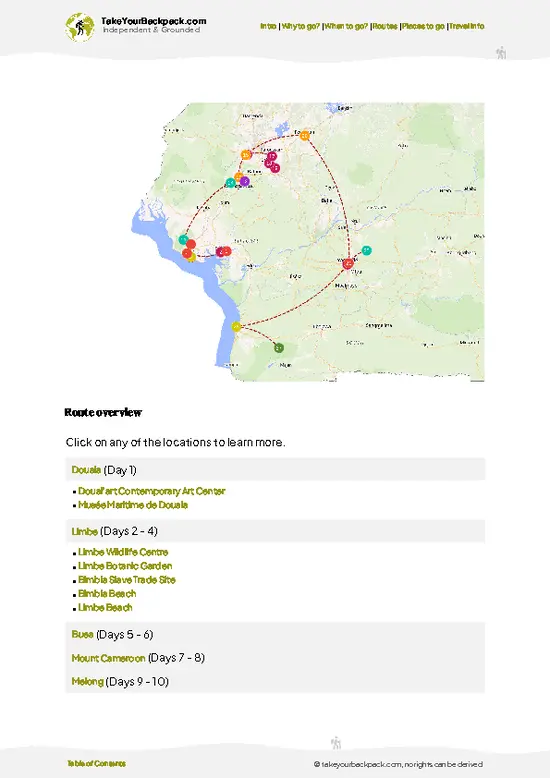
- Central Market: The town’s main draw is the daily market, where smoked fish, cassava, forest leaves, palm oil and secondhand clothes are sold. Go in the morning when stalls are fullest. Entry is free; allow 1 to 2 hours.
- Boumba-et-Ngoko Conservation Offices: Park and forestry offices here handle information for the nearby reserves. Visit on weekday mornings to ask about guided trips. Visiting is free, though guides and permits cost extra; allow about an hour.
- Dja Loud River Bridge Viewpoint: The Ngoko river area outside the center offers a quiet look at pirogues and riverbank life. Late afternoon is calmest. It is free and takes about 45 minutes.
- Roadside Fish Grills: Evening grills serve river fish with plantain and pepper sauce. Expect about €2 to 4 a plate and an hour of unhurried eating.
- Local
- Central Market: The town’s main draw is the daily market, where smoked fish, cassava, forest leaves, palm oil and secondhand clothes are sold. Go in the morning when stalls are fullest. Entry is free; allow 1 to 2 hours.
- Boumba-et-Ngoko Conservation Offices: Park and forestry offices here handle information for the nearby reserves. Visit on weekday mornings to ask about guided trips. Visiting is free, though guides and permits cost extra; allow about an hour.
- Dja Loud River Bridge Viewpoint: The Ngoko river area outside the center offers a quiet look at pirogues and riverbank life. Late afternoon is calmest. It is free and takes about 45 minutes.
- Roadside Fish Grills: Evening grills serve river fish with plantain and pepper sauce. Expect about €2 to 4 a plate and an hour of unhurried eating.
- Local Catholic Mission Area: A modest mission quarter gives a calm look at everyday town life, especially on Sunday mornings when services spill out singing. It is free; allow 30 to 45 minutes.
Spotted a mistake or missing something? Contact us.

 Best Backpacking
.jpg) Hi, I’m Johan (Netherlands 🇳🇱), the creator of TakeYourBackpack. Over the past 3 decades, I’ve backpacked through 90+ countries across six continents, gaining extensive experience with independent travel, long-term trips, and overland routes.
Hi, I’m Johan (Netherlands 🇳🇱), the creator of TakeYourBackpack. Over the past 3 decades, I’ve backpacked through 90+ countries across six continents, gaining extensive experience with independent travel, long-term trips, and overland routes.