×

Canada🇨🇦 | townsChurchillTundra buggies, beluga boats, Inuit carvings, no road access | things to do and best time to go

Explore Dawson CityExplore Rimouski

Backpacking in Churchill
🌟 Highlighttown ranked #6
By Johan Kruseman 🇳🇱 | Updated October 23, 2026

Churchill was once a grain port and military outpost where few outsiders came, and today it is a small town of roughly 900 people where polar bear season brings visitors from around the globe. It sits on the western shore of Hudson Bay in northern Manitoba, Canada, and no road reaches it. The upside is bears, belugas and auroras on your doorstep. The downside is cost and a short season, plus gravel streets, boarded windows and a bear alert siren. Evenings are quiet, with a few pubs and tour-group dinners, though meeting other travelers is easy over shared tables. In a small bakery in town, I paid about US$6 for a cinnamon bun and coffee, and the bun was warm, sticky and bigger than my fist. Outside, ravens argued over the gravel lot beside a rusted tundra buggy.

Discover everything you want to know in the 📖 Canada Travel Guide.


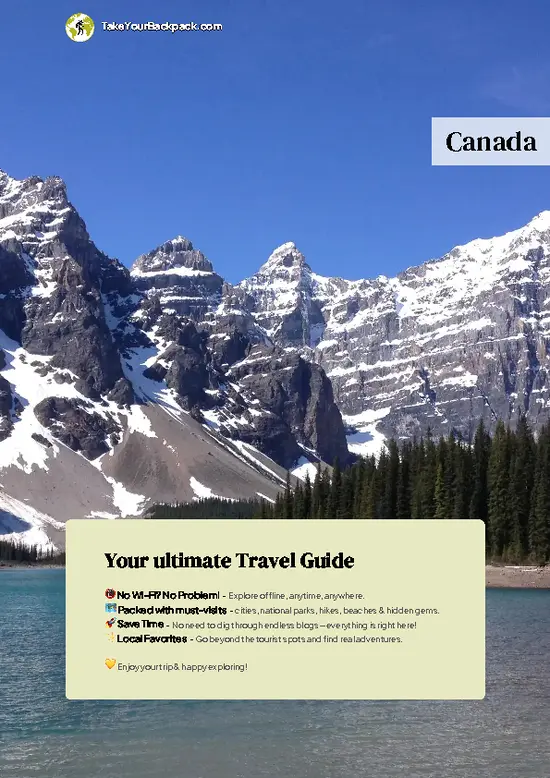
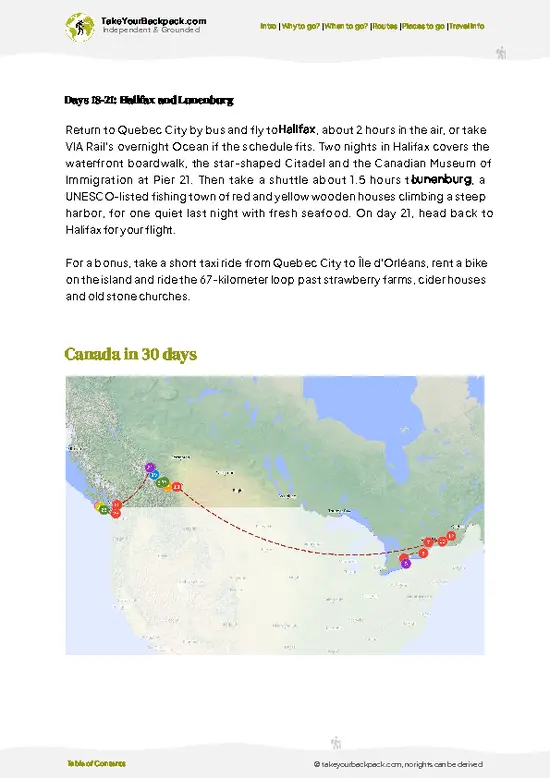
example page 0 from our offline Travel Guide for Canada
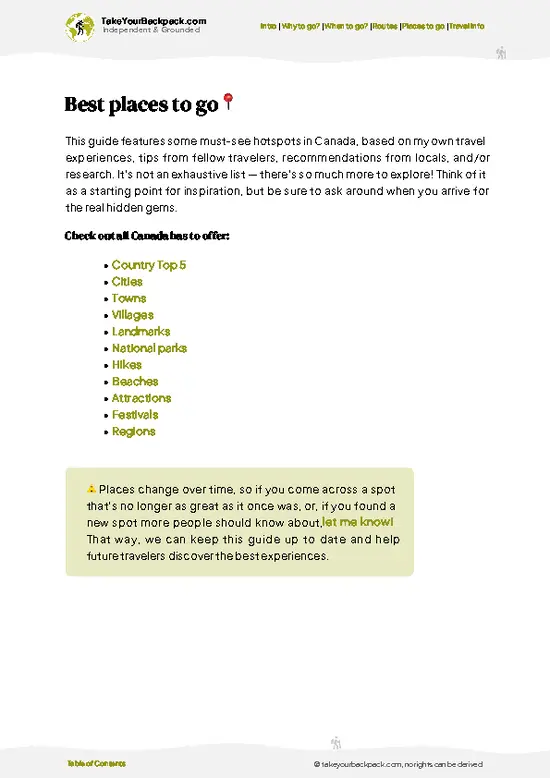
example page 1 from our offline Travel Guide for Canada
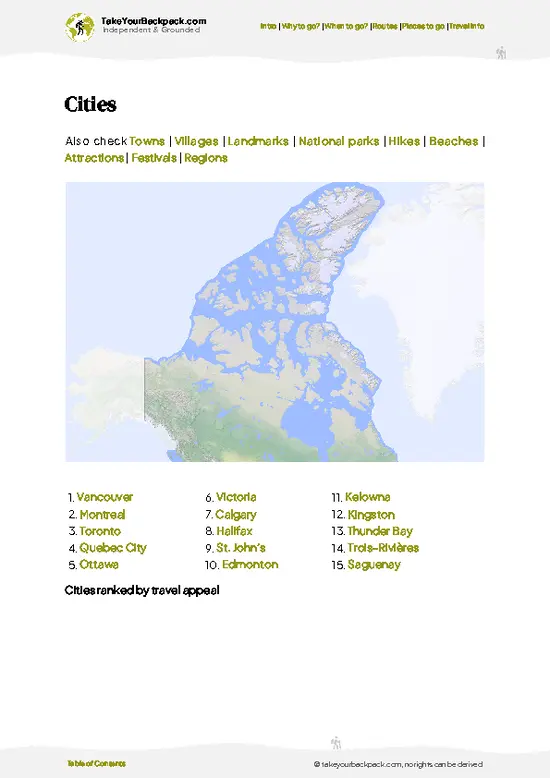
example page 2 from our offline Travel Guide for Canada
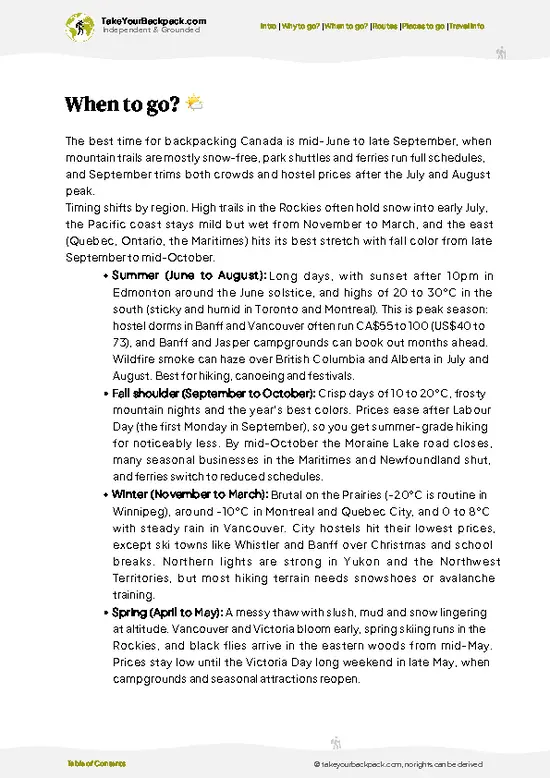
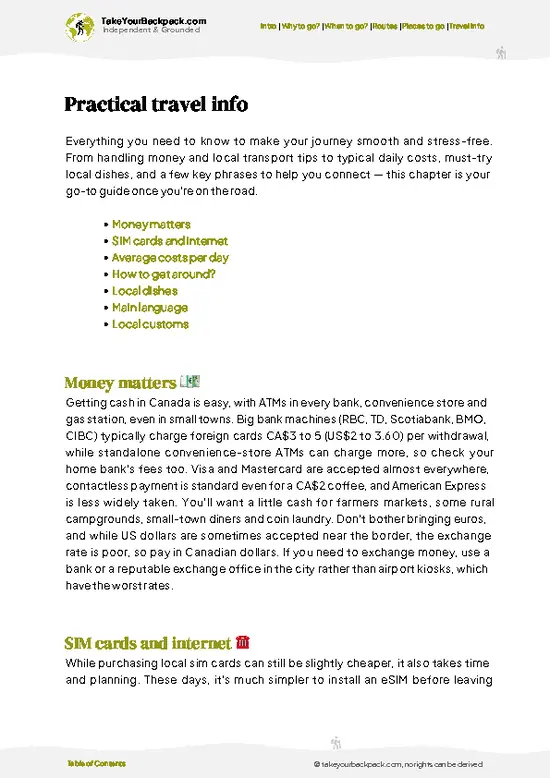
example page 3 from our offline Travel Guide for Canada
example page 4 from our offline Travel Guide for Canada
example page 5 from our offline Travel Guide for Canada
example page 6 from our offline Travel Guide for Canada
example page 7 from our offline Travel Guide for Canada
Loading the map 🌍
CLICK TO FILTER
cities
towns
villages
landmarks
national parks
hikes
beaches
attractions
festivals
regions
SHOW COUNTRY’S BESTSHOW ALL

✨ Why go?
Ranked #6 town in Canada
Reasons people choose to visit here

Churchill earns its place on a route because three wildlife events overlap here with almost nothing else around. Polar bears gather along the bay in October and November, waiting for the ice to form. In July and August, thousands of belugas enter the Churchill River estuary, and you can paddle or snorkel among them. In winter, the town sits under the auroral oval, so clear nights often bring green curtains overhead. Most travelers stay three to five days, since tours fill the daylight and the town itself is small. It suits wildlife-minded travelers, photographers and solo visitors who like group outings, because tour vans and lodges make friends quickly. It is a poor fit if you want to wander freely, since the polar bear alert rules limit walking at the edges of town. Budget travelers should … read more 👉
Churchill earns its place on a route because three wildlife events overlap here with almost nothing else around. Polar bears gather along the bay in October and November, waiting for the ice to form. In July and August, thousands of belugas enter the Churchill River estuary, and you can paddle or snorkel among them. In winter, the town sits under the auroral oval, so clear nights often bring green curtains overhead. Most travelers stay three to five days, since tours fill the daylight and the town itself is small. It suits wildlife-minded travelers, photographers and solo visitors who like group outings, because tour vans and lodges make friends quickly. It is a poor fit if you want to wander freely, since the polar bear alert rules limit walking at the edges of town. Budget travelers should plan carefully, because this is a splurge stop, but it can be reached on the VIA Rail train from Winnipeg, which is a trip in itself.

💡 HighlightsPlaces and moments you shouldn't skip

  1. Polar Bear Viewing by Tundra Buggy: This is what Churchill is known for. Oversized buggies with raised decks drive out over the tundra to the coastal habitat where bears gather. Late October to mid-November is best. Day tours run roughly US$450 to 650 for a full day of 6 to 8 hours, and multi-day lodge stays cost far more.
  2. Beluga Whale Boat Tour on the Churchill River: From July to August, white belugas gather at the river mouth, and the boats get close enough to hear them chirp. Two-hour tours cost around US$100 to 140. Some operators add Zodiac or snorkel options for more. Aim for calm mornings, when the water is flatter and sightings are easier.
  3. Itsanitaq Museum: The Itsanitaq Museum holds a notable collection of Inuit carvings and tools, along with Arctic artifacts. Visits take about 45
… read more 👉
  1. Polar Bear Viewing by Tundra Buggy: This is what Churchill is known for. Oversized buggies with raised decks drive out over the tundra to the coastal habitat where bears gather. Late October to mid-November is best. Day tours run roughly US$450 to 650 for a full day of 6 to 8 hours, and multi-day lodge stays cost far more.
  2. Beluga Whale Boat Tour on the Churchill River: From July to August, white belugas gather at the river mouth, and the boats get close enough to hear them chirp. Two-hour tours cost around US$100 to 140. Some operators add Zodiac or snorkel options for more. Aim for calm mornings, when the water is flatter and sightings are easier.
  3. Itsanitaq Museum: The Itsanitaq Museum holds a notable collection of Inuit carvings and tools, along with Arctic artifacts. Visits take about 45 minutes and entry is free, with donations welcome, with seasonal hours that are best checked locally. Come in the afternoon, between tours, when the rooms are quiet and you can read the labels slowly.
Beyond town, day trips include the ruined Prince of Wales Fort across the river, the Cape Merry battery and the rocky Hudson Bay shoreline, plus Wapusk National Park by guided trip. The tundra buggy tours and beluga boats need booking well ahead, often months before bear season.
Spotted a mistake or missing something? Contact us.

🏘️ NeighborhoodsKey areas and districts to know

Churchill is small enough to cover on foot in an afternoon, and each pocket has its own texture, from diesel-scented main street to wind-scoured shoreline.
  • Kelsey Boulevard (Main Street): The short commercial strip holds the grocery store, the gift shops, a few cafes and the visitor center. Boots crunch on gravel and trucks idle at the curb. You come away with a hot coffee, a bag of local souvenirs and a sense of how thin this town’s supply lines are.
  • Hudson Bay Waterfront: Walk the Launch Road and the rocky shore, where wind rattles the dry grass and the bay smells of salt and cold stone. Belugas surface here in summer, and in autumn the ice forms in gray plates. The payoff is open horizon in every direction.
  • Itsanitaq Museum and the town center: A compact museum of Inuit carvings and tools,
… read more 👉
Churchill is small enough to cover on foot in an afternoon, and each pocket has its own texture, from diesel-scented main street to wind-scoured shoreline.
  • Kelsey Boulevard (Main Street): The short commercial strip holds the grocery store, the gift shops, a few cafes and the visitor center. Boots crunch on gravel and trucks idle at the curb. You come away with a hot coffee, a bag of local souvenirs and a sense of how thin this town’s supply lines are.
  • Hudson Bay Waterfront: Walk the Launch Road and the rocky shore, where wind rattles the dry grass and the bay smells of salt and cold stone. Belugas surface here in summer, and in autumn the ice forms in gray plates. The payoff is open horizon in every direction.
  • Itsanitaq Museum and the town center: A compact museum of Inuit carvings and tools, free with donations welcome. Inside it is dim and quiet, a relief from the wind, and the ivory and bone pieces are worth lingering over.
  • Cape Merry and the Prince of Wales area: East of town, a rough road and trails lead to old stone fortifications. Mosquitoes and black flies are fierce in summer, so cover up. At the cape you get long views across the river mouth, with whales in season.
  • Port and rail yard: Grain elevators loom over the tracks at the edge of town. It is industrial, loud and not meant for wandering, but the silhouette against pink northern skies is worth a look from a distance.

⌛️ 1 daySeeing the highlights in 24 hours

This is a shoreline-and-museum day, built around Hudson Bay and a town small enough to cross on foot.
8:00 AM: Gordon Street breakfast
Start with coffee and a hot breakfast at one of the few cafés along the main drag. Gordon Avenue is short, so you will have your bearings within ten minutes. Dress in layers, since the wind off the bay cuts through cotton.
9:30 AM: Parks Canada Visitor Centre and the train station
Walk to the old railway station, where the exhibits explain the Hudson Bay line, the port and the bay’s wildlife. Allow an hour. The building sits at the end of the tracks, which tells you plenty about how remote this place is.
11:00 AM: Itsanitaq Museum
A short walk away, this free museum (donations welcome) holds a deep collection of Inuit carvings and tools, plus archaeological pieces … read more 👉
This is a shoreline-and-museum day, built around Hudson Bay and a town small enough to cross on foot.
8:00 AM: Gordon Street breakfast
Start with coffee and a hot breakfast at one of the few cafés along the main drag. Gordon Avenue is short, so you will have your bearings within ten minutes. Dress in layers, since the wind off the bay cuts through cotton.
9:30 AM: Parks Canada Visitor Centre and the train station
Walk to the old railway station, where the exhibits explain the Hudson Bay line, the port and the bay’s wildlife. Allow an hour. The building sits at the end of the tracks, which tells you plenty about how remote this place is.
11:00 AM: Itsanitaq Museum
A short walk away, this free museum (donations welcome) holds a deep collection of Inuit carvings and tools, plus archaeological pieces from the region. Give it 45 minutes to an hour and look closely at the small stone carvings.
12:30 PM: Lunch at the Seaport or a local diner
Eat something warm. Options are limited, which keeps things simple. Ask what is freshest that day.
2:00 PM: Cape Merry and the Prince of Wales area
Head along the shore road toward the river mouth for the old battery at Cape Merry, which looks across to the stone fort on the far side. This stretch sees fewer visitors than the town center. Watch the water for beluga whales in summer, and keep your eyes open for wildlife, staying alert and never walking alone outside town.
4:30 PM: Inukshuk Point and the rocky shore
Walk the low, flat rocks along the bay, where the horizon is empty and the Arctic light lingers. Photographers like this hour for the soft angle across the water.
6:30 PM: Dinner in town
Finish with a hearty meal, then stroll back with the sky still glowing, and check the sky for aurora if the season is right.

🌤️ When to go?Best time to visit Churchill

Polar bear season, mid-October to mid-November, is the main reason to come, and rooms and tours book out a year ahead.
  • Polar Bear Season (Oct to mid-Nov): Daytime highs run about -5 to 3°C (23 to 37°F). Bears gather on the Hudson Bay shore waiting for ice. Prices peak, and daylight shrinks from roughly 10 hours to 8.
  • Beluga Season (July to August): Highs reach 12 to 20°C (54 to 68°F), with daylight past 16 hours. Thousands of belugas fill the Churchill River estuary, and kayaking and snorkeling tours run. Mosquitoes and blackflies are thick.
  • Aurora Season (Jan to March): Highs sit around -25 to -15°C (-13 to 5°F). Clear nights bring strong northern lights. Rates are lower than bear season, but the cold is serious.
  • Shoulder Months (April to June, Sept): Quiet, with fewer tours running and the best
… read more 👉
Polar bear season, mid-October to mid-November, is the main reason to come, and rooms and tours book out a year ahead.
  • Polar Bear Season (Oct to mid-Nov): Daytime highs run about -5 to 3°C (23 to 37°F). Bears gather on the Hudson Bay shore waiting for ice. Prices peak, and daylight shrinks from roughly 10 hours to 8.
  • Beluga Season (July to August): Highs reach 12 to 20°C (54 to 68°F), with daylight past 16 hours. Thousands of belugas fill the Churchill River estuary, and kayaking and snorkeling tours run. Mosquitoes and blackflies are thick.
  • Aurora Season (Jan to March): Highs sit around -25 to -15°C (-13 to 5°F). Clear nights bring strong northern lights. Rates are lower than bear season, but the cold is serious.
  • Shoulder Months (April to June, Sept): Quiet, with fewer tours running and the best bargains. Ice lingers into June.
For the best value, pick late July for belugas over October for bears.


source: climatestotravel.comJANJanuary: below average for travelingFEBFebruary: below average for travelingMARMarch: fair for travelingAPRApril: fair for travelingMAYMay: highly recommended for travelingJUNJune: excellent for travelingJULJuly: highly recommended for travelingAUGAugust: good for travelingSEPSeptember: good for travelingOCTOctober: excellent for travelingNOVNovember: excellent for travelingDECDecember: fair for traveling
when-to-go

✈️ The backpacker research shortcutCanada Travel Guide

An offline-friendly backpacking guide with optimized travel routes, ranked highlights, transport advice, and the best areas to stay.
example page 0 from our offline Travel Guide for Canada
example page 1 from our offline Travel Guide for Canada
example page 2 from our offline Travel Guide for Canada
example page 3 from our offline Travel Guide for Canada
example page 4 from our offline Travel Guide for Canada
example page 5 from our offline Travel Guide for Canada
example page 6 from our offline Travel Guide for Canada
example page 7 from our offline Travel Guide for Canada
The digital guide (385 pages) contains:
✅ 125 highlights, ranked by travel appeal
✅ Optimized 14, 21 & 30-day travel routes
✅ Cities, national parks, landmarks, beaches
✅ How to get around
✅ Offline-friendly for travel without Wi-Fi
👉 Click to see all 30+ guide features

📅 Plan smarter in minutes, not weeks
✅ Month by month travel advice
✅ Festivals & national holidays
✅ Budget expectations

🗺️ Go to the right places, skip the overrated ones
✅ Honest pros & cons of destinations
✅ Top hikes, parks & viewpoints
✅ Lesser-known places most travelers miss
✅ Clear “worth it vs skip it” guidance

🛏️ Travel smoothly without rookie mistakes
✅ Best areas to stay
✅ Transport systems explained simply
✅ Common scams & safety advice
✅ SIM cards, money & practical tips

🌍 Understand the country, not just visit it
✅ Culture & traditions
✅ Local customs
✅ Festivals worth planning around
✅ Traveler-friendly historical context
✅ Insights that make places more meaningful

📱 Built for real travel conditions
✅ Fully downloadable PDF
✅ Works completely offline
✅ Optimized for phone use
✅ Useful in remote areas & buses
✅ Everything in one place
Stop searching, start planning
Get instant access to your full guide. 30‑day money-back guarantee.
+ Add another guide for just

By proceeding you agree to our terms.
Sent to your inbox immediately after payment • 100% Secure Checkout
Best Backpacking Travel Advisor 2025 tourism awardBest Backpacking
Travel Advisor
2025
What others say about Take Your Backpack Guides:
⭐⭐⭐⭐⭐
Fantastic, amazing amount of information!
⭐⭐⭐⭐⭐
My goodness this is amazing, it's what I've been looking for hats off too you!
⭐⭐⭐⭐⭐
I think this is absolutely BRILLIANT
⭐⭐⭐⭐
Very complete and informative. It's still missing places, but I gotta to commend you
⭐⭐⭐⭐⭐
This is truly amazing, thank you, can't wait to explore it with my kids!
⭐⭐⭐⭐⭐
Awesome resource, thank you!
⭐⭐⭐⭐⭐
This is amazing! Can't wait to explore the ones I haven't seen
⭐⭐⭐⭐
I love this! Well done, great idea.
⭐⭐⭐⭐⭐
Thanks for taking the time to make this gem!
⭐⭐⭐⭐⭐
This might be the best website I've ever seen.
⭐⭐⭐⭐⭐
Congratulations, and thank you so much for your work; it's incredibly valuable.
⭐⭐⭐⭐
In all seriousness I think you did a great job pointing out the important spots
⭐⭐⭐⭐⭐
10/10 very good
⭐⭐⭐⭐⭐
As someone who's only just starting to visit regularly this is awesome, thank you.
⭐⭐⭐⭐
Thank you very much! I'm going to visit my dad, it's going to be very useful!
⭐⭐⭐⭐⭐
This is really cool! We'll be travelling for the first time and this definitely come in handy.
⭐⭐⭐⭐⭐
You are now our minister of culture, congratulations 👨‍💼
⭐⭐⭐⭐⭐
Just wanted to tell you that this is a pearl! Going to follow your recommendations.
⭐⭐⭐⭐⭐
This is so cool. I'll definitely be using the resource for my travels soon.
⭐⭐⭐⭐⭐
This is very impressive! Good work.
⭐⭐⭐⭐⭐
This is an amazing and informative site. Very well done!

🛏️ Where to stay?How to pick the right area

Churchill has only a handful of lodgings, so book a small guesthouse or inn months ahead. Backpackers have few choices, and nothing here is dorm-cheap by usual standards.
The closest thing to a hostel is a bunk-style option run by the local tour community, with dorm beds around US$50 to 90 a night in summer and more in bear season. Shared kitchens are a major perk, because restaurant meals in town are pricey.
Small inns and B&Bs in the townsite charge about US$130 to 250 for a private room. Several have shared bathrooms at the lower end. The Seaport Hotel and Tundra Inn are the larger, central options, … read more 👉
Churchill has only a handful of lodgings, so book a small guesthouse or inn months ahead. Backpackers have few choices, and nothing here is dorm-cheap by usual standards.
The closest thing to a hostel is a bunk-style option run by the local tour community, with dorm beds around US$50 to 90 a night in summer and more in bear season. Shared kitchens are a major perk, because restaurant meals in town are pricey.
Small inns and B&Bs in the townsite charge about US$130 to 250 for a private room. Several have shared bathrooms at the lower end. The Seaport Hotel and Tundra Inn are the larger, central options, with rooms from about US$180 to 300 in peak season.
Everything sits within a 15-minute walk of the train station and the main street, Kelsey Boulevard, so location barely matters. I would pick a place with a kitchen, and buy groceries at the Northern store before settling in. Bear season prices can double, so travelers on a tight budget should aim for July or the quiet shoulder months.

🚌 Getting aroundGetting around like a local

Assuming you can rent a car in Churchill and drive out to the polar bear country or the beluga estuary is the mistake that burns the most cash, because the road network ends a few dozen kilometers out of town and no highway connects Churchill to the rest of Canada. Town itself is tiny, about 15 blocks of flat, wind-scoured streets, and you can cross it on foot in 20 minutes. Getting out to the wildlife is where the money goes, and almost all of it runs through tour operators.
  • Walking. Free, flat and quick, with the Hudson Bay shoreline never far off. Gravel crunches underfoot, the wind carries salt and diesel, and in summer you can watch belugas from the Cape Merry and Port of Churchill shoreline areas. In bear season (October and November) locals leave vehicles unlocked and ask you not to
… read more 👉
Assuming you can rent a car in Churchill and drive out to the polar bear country or the beluga estuary is the mistake that burns the most cash, because the road network ends a few dozen kilometers out of town and no highway connects Churchill to the rest of Canada. Town itself is tiny, about 15 blocks of flat, wind-scoured streets, and you can cross it on foot in 20 minutes. Getting out to the wildlife is where the money goes, and almost all of it runs through tour operators.
  • Walking. Free, flat and quick, with the Hudson Bay shoreline never far off. Gravel crunches underfoot, the wind carries salt and diesel, and in summer you can watch belugas from the Cape Merry and Port of Churchill shoreline areas. In bear season (October and November) locals leave vehicles unlocked and ask you not to walk at night, and a bear patrol sets the rules, so follow them.
  • Taxis. A handful of local cabs cover town and the airport, usually US$8 to 15 for a hop across Churchill and a bit more to the Churchill Northern Studies Centre area. They are the sensible choice after dark or in a blizzard, when a ten-minute walk turns into a face-stinging slog.
  • Guided tundra vehicles and tours. Tundra buggies and rover vehicles carry you over rutted, frozen tracks to see polar bears, and boat trips put you beside belugas in July and August. Day tours run roughly US$100 to 250 in summer, while multi-day bear packages cost far more. The ride is bouncy, heated and loud with engine noise, and the reward is a bear padding past the window at arm’s length.
  • Train and flight. VIA Rail runs from Winnipeg, typically a two-night journey of about 40 hours, with fares around US$250 to 600 depending on seat or sleeper. Flights from Winnipeg take about 2 to 3 hours, costing roughly US$450 to 900 return. The train rattles slowly through spruce and muskeg, and you wake to a pale, wide northern sky.
  • Rental vehicles. A few local outfits rent trucks for short local use, around US$100 to 150 a day. They suit the short gravel run toward Cape Merry and the Bay, but off-road driving and wildlife areas are restricted, so a vehicle never replaces a tour.

👛 Costs (as of 23 October 2026)How expensive it really is

Churchill costs about US$160 to 260 a day for a backpacker in high season, and that is before big tours. Supplies arrive by rail or air, so food and lodging run well above southern Canada. Payments are made in Canadian dollars, and cards are widely accepted.
CategoryBudget RangeLocal Reality
Dorm accommodationUS$50 to 80Few true dorms exist, so expect basic shared rooms or a cheap private room at the high end. Book months ahead in bear season.
MealsUS$45 to 65Groceries are pricey. Diner meals run US$15 to 25, and self-catering cuts costs.
Local transportUS$10 to 20Short taxi rides cover most needs, with walking for the rest.
Basic activities/entry feesUS$40 to 70The Itsanitaq Museum is free with donations welcome. Cape Merry and the waterfront cost nothing, while a basic beluga or day tour costs
… read more 👉
Churchill costs about US$160 to 260 a day for a backpacker in high season, and that is before big tours. Supplies arrive by rail or air, so food and lodging run well above southern Canada. Payments are made in Canadian dollars, and cards are widely accepted.
CategoryBudget RangeLocal Reality
Dorm accommodationUS$50 to 80Few true dorms exist, so expect basic shared rooms or a cheap private room at the high end. Book months ahead in bear season.
MealsUS$45 to 65Groceries are pricey. Diner meals run US$15 to 25, and self-catering cuts costs.
Local transportUS$10 to 20Short taxi rides cover most needs, with walking for the rest.
Basic activities/entry feesUS$40 to 70The Itsanitaq Museum is free with donations welcome. Cape Merry and the waterfront cost nothing, while a basic beluga or day tour costs more.
Miscellaneous expensesUS$15 to 25Bug spray, snacks, gloves and laundry add up.
Total Daily BudgetUS$160 to 260Around US$195 to 260 in high season.
Buy groceries at the local store and cook at a place with a kitchen to save US$20 or more a day.


source: travelmanitoba.com
⚠️ Prices can change and everyone travels differently, so take this as a rough guide. Hope it helps you plan your adventure!

🚌 Day tripsWhere to go beyond the main area

Churchill works well as a base because most of the best excursions leave from town by tour vehicle or boat, though almost nothing is cheap.
Churchill River Beluga Boat Tour:
Zodiac or larger boats leave from the harbor in July and August, and belugas often swim right up to the hull. Expect about 2 to 3 hours on the water and US$100 to 130. Dress in more layers than seems sensible, since river wind is cold even in summer.

Cape Merry and the Prince of Wales Fort:
The fort is a stone star-shaped ruin from the 1700s across the river, reached by Parks Canada boat in summer. Allow half a day and about US$60 to 100. Cape Merry itself is a short drive or a hike west of town and free, good for seals and birds. First-timers often skip booking the fort boat, which fills in peak weeks.

Tundra Buggy Day … read more 👉
Churchill works well as a base because most of the best excursions leave from town by tour vehicle or boat, though almost nothing is cheap.
Churchill River Beluga Boat Tour:
Zodiac or larger boats leave from the harbor in July and August, and belugas often swim right up to the hull. Expect about 2 to 3 hours on the water and US$100 to 130. Dress in more layers than seems sensible, since river wind is cold even in summer.

Cape Merry and the Prince of Wales Fort:
The fort is a stone star-shaped ruin from the 1700s across the river, reached by Parks Canada boat in summer. Allow half a day and about US$60 to 100. Cape Merry itself is a short drive or a hike west of town and free, good for seals and birds. First-timers often skip booking the fort boat, which fills in peak weeks.

Tundra Buggy Day Tour:
High-wheeled vehicles drive out across the tundra to see polar bears in October and November, a full day of about 8 to 9 hours. Plan on US$400 to 500, which is the splurge here, and it is worth it for bears at eye level. Book far ahead.

Dene Village and Twin Lakes Hiking:
In summer, guided tundra walks and drives take you to boreal edges and wildflower flats, about 3 to 5 hours for US$80 to 150. The mistake is going without bug nets from July.

🛡️ SafetySafety Tips and Common Scams in Churchill

Churchill is safe from people, and the real risk is polar bears. They wander through town, especially from October to November, and the town runs a polar bear alert program with a hotline and a holding facility for problem animals. Never walk after dark outside the core, and avoid the waterfront and rocky shoreline at dusk. If you see a bear, go indoors or into a vehicle, and do not run. Carry no food in your pockets when exploring. Solo travelers do fine in the center, but outside town, go with a guide or group. Petty theft is rare, though locking your room is sensible. Black flies and mosquitoes are the main annoyance in summer, so bring a head net and repellent. Cold exposure matters too: bring proper layers even in summer.

FAQCommon questions from travelers

Churchill has no road link to the rest of Canada, so you arrive by train or plane. VIA Rail runs from Winnipeg in about 40 to 48 hours, and fares start around US$250 to 450 for a seat. Calm Air flights from Winnipeg take about 2 to 3 hours and cost roughly US$500 to 900 return.
Churchill is worth the trip if you want polar bears, belugas, or northern lights, since few places offer all three in one town. Plan 3 to 4 days minimum and a budget of US$200 to 400 a day, with October to mid-November and July to August being the best windows. Skip it if you want a cheap, easy backpacking stop.
Churchill cannot realistically be done as a day trip, because the nearest large city, Winnipeg, is a 2 to 3 hour flight away. Most flights and trains arrive at times that do not allow a same-day return, and tours are best over two or three days. Plan at least two nights and book tours before you arrive.
⚠️ Things can change over time, so always validate details locally before you go.

Other Canadian towns near Churchill

Explore more nearby:

  • Fort Smith—Slave River rapids, nesting pelicans, Wood Buffalo gateway| 1009 km away
  • Yellowknife—Aurora tours, floatplane Old Town, houseboats, Great Slave Lake| 1170 km away
  • Iqaluit—Nunavut assembly, Baffin tundra, Inuit carvings, Frobisher Bay| 1467 km away

💡 Not sure where to go next?
Create a personalized itinerary for Canada including Churchill and the places that fit your trip.

Generate my itinerary

👉 Discover all towns

Or checkout all Canada has to offer (think cities, towns, villages, national parks, hikes, beaches, festivals)
Country photo of Canada

We 💚 feedbackFinal thoughts on visiting Churchill

Churchill works best as the climax of a longer Manitoba trip, so ride the train up from Winnipeg and book your tours first. I would pair it with a few days on the prairies or in Winnipeg, and bring a warm layer even in July, since the bay wind bites.

✈️ When did I visit Canada?
As part of my 1.5 year travel around the world trip, I visited Canada in 2016.

✍️ Help improve this page!
The information on this page is based on my own backpacking experience in Canada, supplemented with up-to-date research and feedback from other travelers. Travel details can change, so if you notice anything outdated or incomplete, feel free to let me know.


🙋‍♂️ Give feedback

👋 Meet the founderWho’s Behind Take Your Backpack?

Johan, backpacker and founder of TakeYourBackpackHi, I’m Johan (Netherlands 🇳🇱), the creator of TakeYourBackpack. Over the past 3 decades, I’ve backpacked through 90+ countries across six continents, gaining extensive experience with independent travel, long-term trips, and overland routes.

This site is built on a combination of firsthand travel experience and carefully curated insights from other backpackers. Many guides are based on places I’ve personally visited, while others bring together tips, observations, and practical advice shared by trusted travelers I’ve met along the way.

The goal is to provide realistic, experience-driven guidance — not generic itineraries — so you can explore destinations with better context, clearer expectations, and more confidence.