×

Canada🇨🇦 | townsWhitehorseSternwheeler Klondike, Miles Canyon, Beringia mammoths, salmon fishway | things to do and best time to go

Explore WhistlerExplore Yellowknife

Backpacking in Whitehorse
🏆 Top picktown ranked #6
By Johan Kruseman 🇳🇱 | Updated October 22, 2026

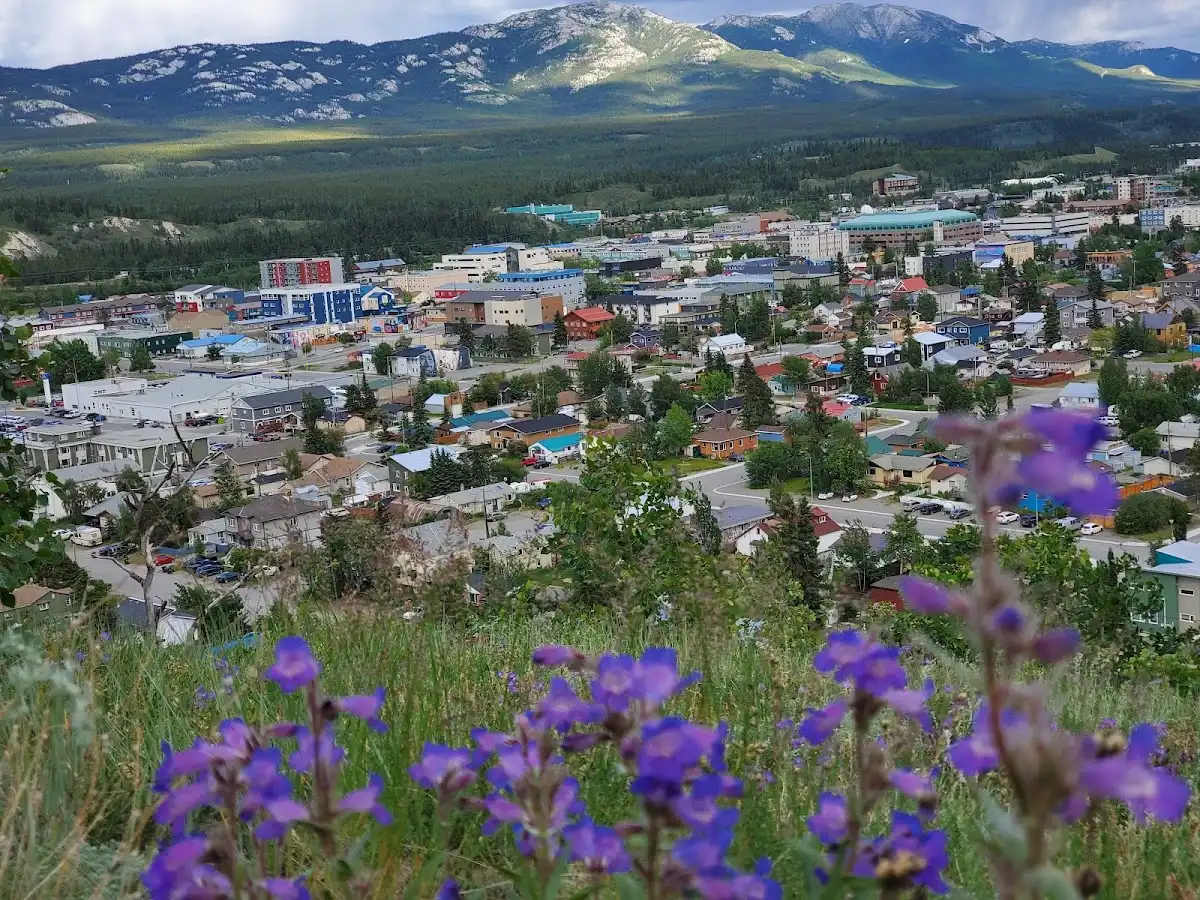
Whitehorse is the easiest place in the Yukon to get yourself organized, with outfitters, grocery stores and an airport all within a few blocks of each other. It sits in the north of Canada, on the Yukon River, in a valley with pale cliffs and spruce smoke in the air. The town is modest: a walkable core, a riverfront trail, a few good cafés, and not much nightlife beyond a couple of loud pubs. Worth your time are the river, the SS Klondike and a night of aurora in season. Skip any plan to linger over shopping. Hostels keep things social, and meeting other travelers is easy over shared car rentals. Getting here, I would take the Alaska Highway and stop at the Teslin bridge, where the long steel span over the lake rattles under trucks. Book a vehicle early, because everything beyond town depends on one.

Discover everything you want to know in the 📖 Canada Travel Guide.


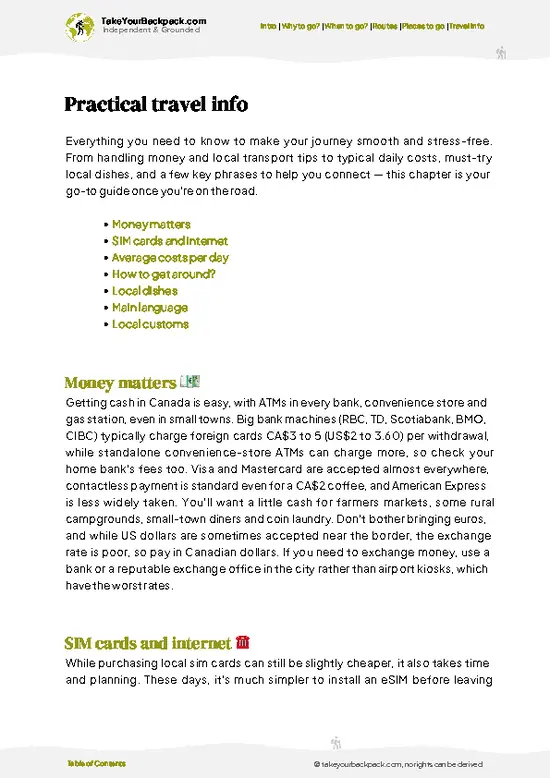
example page 0 from our offline Travel Guide for Canada
example page 1 from our offline Travel Guide for Canada
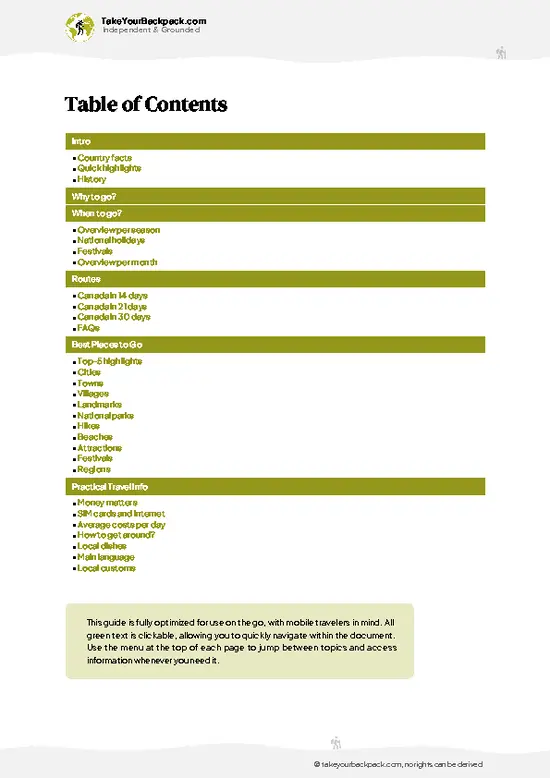
example page 2 from our offline Travel Guide for Canada
example page 3 from our offline Travel Guide for Canada
example page 4 from our offline Travel Guide for Canada
example page 5 from our offline Travel Guide for Canada
example page 6 from our offline Travel Guide for Canada
example page 7 from our offline Travel Guide for Canada
Loading the map 🌍
CLICK TO FILTER
cities
towns
villages
landmarks
national parks
hikes
beaches
attractions
festivals
regions
SHOW COUNTRY’S BESTSHOW ALL

✨ Why go?
Ranked #6 town in Canada
The unique appeal for travelers

Whitehorse works because it is the Yukon’s supply depot, and most backpackers pass through twice, once to gear up and once to recover. Stay two or three nights. The Yukon River runs right past downtown, and the Millennium Trail loops along it, so a morning run or walk starts at your hostel door. Hikers get Grey Mountain and the trails of Miles Canyon within easy reach, while paddlers can rent canoes for the river downstream. Evenings are quiet and friendly: the hostels have shared kitchens, the cafés fill with people comparing road plans, and it is simple to find someone to split a rental car or a campervan. Solo travelers and small groups will do best here, particularly if they like outdoor logistics and slow dinners. If you want big-city energy or museums every hour, this is a short stop, not a destination to settle into.

💡 HighlightsTop highlights of Whitehorse

  1. SS Klondike National Historic Site: The sternwheeler on the riverbank is the town’s signature sight. The boat is closed for long-term rehabilitation in 2026, but the grounds stay open with interpretive panels and a self-guided tour app. Free, allow 30 minutes.
  2. Miles Canyon: A basalt gorge of green water, crossed by a suspension footbridge. Short trails lead along the rim and down to the water. Free, 1 to 2 hours, best in the evening when the cliffs warm.
  3. Yukon Beringia Interpretive Centre: Life-size mammoth and giant beaver skeletons explain the Ice Age land bridge. Entry about US$8 to 10, 1 to 1.5 hours. A good rainy-day pick.
  4. MacBride Museum of Yukon History: Gold rush relics, a trapper’s cabin and Sam McGee’s cabin sit in one compound. Entry about US$10 to 13, 1.5 to 2 hours, best in the afternoon.
… read more 👉
  1. SS Klondike National Historic Site: The sternwheeler on the riverbank is the town’s signature sight. The boat is closed for long-term rehabilitation in 2026, but the grounds stay open with interpretive panels and a self-guided tour app. Free, allow 30 minutes.
  2. Miles Canyon: A basalt gorge of green water, crossed by a suspension footbridge. Short trails lead along the rim and down to the water. Free, 1 to 2 hours, best in the evening when the cliffs warm.
  3. Yukon Beringia Interpretive Centre: Life-size mammoth and giant beaver skeletons explain the Ice Age land bridge. Entry about US$8 to 10, 1 to 1.5 hours. A good rainy-day pick.
  4. MacBride Museum of Yukon History: Gold rush relics, a trapper’s cabin and Sam McGee’s cabin sit in one compound. Entry about US$10 to 13, 1.5 to 2 hours, best in the afternoon.
  5. Whitehorse Fishway: The world’s longest wooden fish ladder, with windows to watch Chinook salmon climb. Summer only, July and August are best for the run. Entry is by small donation at most, 30 to 45 minutes.
Whitehorse visitors can reach Emerald Lake, Carcross Desert, Kluane National Park and Haines Junction as day trips or overnight add-ons. Miles Canyon costs nothing to visit, making it the cheapest of the lot.
Spotted a mistake or missing something? Contact us.

Things to do around Whitehorse

Ratings based on Tripadvisor reviews. When you book through this link, you support our work at no extra cost to you.

🏘️ NeighborhoodsUnderstanding the local layout

Whitehorse is compact, and the three areas worth your time sit within a few kilometers of each other along the Yukon River.
  • Downtown: A tidy grid of about a dozen blocks, flat and easy on foot. Wooden storefronts, murals, sourdough smells from the cafes and live music in a couple of bars after 9 pm. Spend an evening here, not a whole day. Main Street is where you will eat and drink best.
  • Waterfront: A gravel trail runs along the Yukon River, with the SS Klondike sternwheeler, old log buildings and the hiss of the current under the pedestrian bridge. Wind off the water is cold even in July. Worth a slow morning walk, and the best free thing in town.
  • Riverdale: Residential across the river, with the Millennium Trail loop, spruce-scented forest paths and the fish ladder in summer. Quiet, no nightlife,
… read more 👉
Whitehorse is compact, and the three areas worth your time sit within a few kilometers of each other along the Yukon River.
  • Downtown: A tidy grid of about a dozen blocks, flat and easy on foot. Wooden storefronts, murals, sourdough smells from the cafes and live music in a couple of bars after 9 pm. Spend an evening here, not a whole day. Main Street is where you will eat and drink best.
  • Waterfront: A gravel trail runs along the Yukon River, with the SS Klondike sternwheeler, old log buildings and the hiss of the current under the pedestrian bridge. Wind off the water is cold even in July. Worth a slow morning walk, and the best free thing in town.
  • Riverdale: Residential across the river, with the Millennium Trail loop, spruce-scented forest paths and the fish ladder in summer. Quiet, no nightlife, and a pleasant 30 minute walk or short bike ride from downtown.
  • Marsh Lake Road and Airport strip: Big-box stores, gas stations and highway noise. Skip it unless you need groceries, outdoor gear or a rental car pickup.

⌛️ 1 dayWhat you can realistically do in a day

8:00 AM, Yukon River waterfront: Start by the water, where the early light is soft and the café doors open. Grab coffee and a pastry at a downtown bakery, then walk the Millennium Trail beside the river to loosen up.
9:30 AM, SS Klondike: Walk a few minutes to the sternwheeler and look around the grounds, where panels and a self-guided app tell its story while the boat itself is closed for rehabilitation.
11:00 AM, MacBride Museum: Head into downtown on foot. Spend an hour on gold rush stories and the cabin displays.
12:30 PM, Lunch downtown: Pick a casual café and eat something hot. Then take a taxi or bus toward Miles Canyon.
2:00 PM, Miles Canyon: Cross the suspension bridge and follow the rim trail. The water is an odd, bright green, and the basalt walls are pocked with swallow nests.
4:00 … read more 👉
8:00 AM, Yukon River waterfront: Start by the water, where the early light is soft and the café doors open. Grab coffee and a pastry at a downtown bakery, then walk the Millennium Trail beside the river to loosen up.
9:30 AM, SS Klondike: Walk a few minutes to the sternwheeler and look around the grounds, where panels and a self-guided app tell its story while the boat itself is closed for rehabilitation.
11:00 AM, MacBride Museum: Head into downtown on foot. Spend an hour on gold rush stories and the cabin displays.
12:30 PM, Lunch downtown: Pick a casual café and eat something hot. Then take a taxi or bus toward Miles Canyon.
2:00 PM, Miles Canyon: Cross the suspension bridge and follow the rim trail. The water is an odd, bright green, and the basalt walls are pocked with swallow nests.
4:00 PM, Whitehorse Fishway: In summer, watch salmon move up the ladder through the viewing windows. It is rarely crowded and it is off the usual circuit.
5:30 PM, Beringia Centre: Spend an hour among the mammoth skeletons before closing, and learn why this region stayed ice-free.
7:30 PM, Riverfront dinner: Finish with a relaxed meal and a walk back along the river as the sky stays pale.

🌤️ When to go?Choosing the right time of year

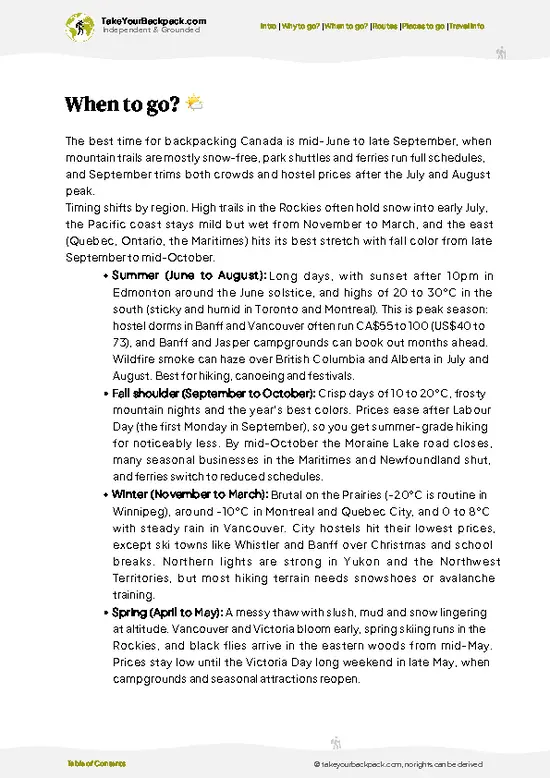
June through August is the easiest window, with daytime highs around 17 to 22°C (63 to 72°F) and near-endless daylight around the solstice.
  • Summer (June to August): Long evenings, paddling, hiking and festivals. Hostel and car rental prices peak and book out early.
  • Fall (September): Aspen turn yellow, highs of 8 to 13°C (46 to 55°F), fewer crowds, and the first northern lights on dark nights. Some tours close by mid-month.
  • Winter (November to March): Highs of -15 to -25°C (5 to -13°F) and short days. Aurora viewing, dog sledding and cheap rooms, but you need serious layers.
  • Spring (April to May): Muddy, thawing and quiet, with highs of 0 to 10°C (32 to 50°F). Many seasonal operators have not opened.
For northern lights with fewer people, aim for late August to mid-September.

source: climatestotravel.comJANJanuary: below average for travelingFEBFebruary: below average for travelingMARMarch: fair for travelingAPRApril: fair for travelingMAYMay: highly recommended for travelingJUNJune: excellent for travelingJULJuly: excellent for travelingAUGAugust: excellent for travelingSEPSeptember: highly recommended for travelingOCTOctober: good for travelingNOVNovember: fair for travelingDECDecember: below average for traveling
canada-city-whitehorse v1
© Google |

✈️ The backpacker research shortcutCanada Travel Guide

An offline-friendly backpacking guide with optimized travel routes, ranked highlights, transport advice, and the best areas to stay.
example page 0 from our offline Travel Guide for Canada
example page 1 from our offline Travel Guide for Canada
example page 2 from our offline Travel Guide for Canada
example page 3 from our offline Travel Guide for Canada
example page 4 from our offline Travel Guide for Canada
example page 5 from our offline Travel Guide for Canada
example page 6 from our offline Travel Guide for Canada
example page 7 from our offline Travel Guide for Canada
The digital guide (385 pages) contains:
✅ 125 highlights, ranked by travel appeal
✅ Optimized 14, 21 & 30-day travel routes
✅ Cities, national parks, landmarks, beaches
✅ How to get around
✅ Offline-friendly for travel without Wi-Fi
👉 Click to see all 30+ guide features

📅 Plan smarter in minutes, not weeks
✅ Month by month travel advice
✅ Festivals & national holidays
✅ Budget expectations

🗺️ Go to the right places, skip the overrated ones
✅ Honest pros & cons of destinations
✅ Top hikes, parks & viewpoints
✅ Lesser-known places most travelers miss
✅ Clear “worth it vs skip it” guidance

🛏️ Travel smoothly without rookie mistakes
✅ Best areas to stay
✅ Transport systems explained simply
✅ Common scams & safety advice
✅ SIM cards, money & practical tips

🌍 Understand the country, not just visit it
✅ Culture & traditions
✅ Local customs
✅ Festivals worth planning around
✅ Traveler-friendly historical context
✅ Insights that make places more meaningful

📱 Built for real travel conditions
✅ Fully downloadable PDF
✅ Works completely offline
✅ Optimized for phone use
✅ Useful in remote areas & buses
✅ Everything in one place
Stop searching, start planning
Get instant access to your full guide. 30‑day money-back guarantee.
+ Add another guide for just

By proceeding you agree to our terms.
Sent to your inbox immediately after payment • 100% Secure Checkout
Best Backpacking Travel Advisor 2025 tourism awardBest Backpacking
Travel Advisor
2025
What others say about Take Your Backpack Guides:
⭐⭐⭐⭐⭐
Fantastic, amazing amount of information!
⭐⭐⭐⭐⭐
My goodness this is amazing, it's what I've been looking for hats off too you!
⭐⭐⭐⭐⭐
I think this is absolutely BRILLIANT
⭐⭐⭐⭐
Very complete and informative. It's still missing places, but I gotta to commend you
⭐⭐⭐⭐⭐
This is truly amazing, thank you, can't wait to explore it with my kids!
⭐⭐⭐⭐⭐
Awesome resource, thank you!
⭐⭐⭐⭐⭐
This is amazing! Can't wait to explore the ones I haven't seen
⭐⭐⭐⭐
I love this! Well done, great idea.
⭐⭐⭐⭐⭐
Thanks for taking the time to make this gem!
⭐⭐⭐⭐⭐
This might be the best website I've ever seen.
⭐⭐⭐⭐⭐
Congratulations, and thank you so much for your work; it's incredibly valuable.
⭐⭐⭐⭐
In all seriousness I think you did a great job pointing out the important spots
⭐⭐⭐⭐⭐
10/10 very good
⭐⭐⭐⭐⭐
As someone who's only just starting to visit regularly this is awesome, thank you.
⭐⭐⭐⭐
Thank you very much! I'm going to visit my dad, it's going to be very useful!
⭐⭐⭐⭐⭐
This is really cool! We'll be travelling for the first time and this definitely come in handy.
⭐⭐⭐⭐⭐
You are now our minister of culture, congratulations 👨‍💼
⭐⭐⭐⭐⭐
Just wanted to tell you that this is a pearl! Going to follow your recommendations.
⭐⭐⭐⭐⭐
This is so cool. I'll definitely be using the resource for my travels soon.
⭐⭐⭐⭐⭐
This is very impressive! Good work.
⭐⭐⭐⭐⭐
This is an amazing and informative site. Very well done!

🛏️ Where to stay?How to pick the right area

Downtown is the best area for a budget bed, with hostels and cheap motels within 10 minutes on foot of the bus stops, bars and restaurants. Dorm beds are limited in number, so summer reservations a few weeks ahead save you from paying double at a motel. Expect dorms around US$30 to 45 and basic private rooms from US$70 to 110.
The streets here are well lit and calm at night, though Main Street bars can be loud on Friday and Saturday until closing. Ask for a room away from the street if you sleep lightly.
The second option is along Fourth Avenue and the Alaska Highway edge, where motels and campgrounds … read more 👉
Downtown is the best area for a budget bed, with hostels and cheap motels within 10 minutes on foot of the bus stops, bars and restaurants. Dorm beds are limited in number, so summer reservations a few weeks ahead save you from paying double at a motel. Expect dorms around US$30 to 45 and basic private rooms from US$70 to 110.
The streets here are well lit and calm at night, though Main Street bars can be loud on Friday and Saturday until closing. Ask for a room away from the street if you sleep lightly.
The second option is along Fourth Avenue and the Alaska Highway edge, where motels and campgrounds sit a short bus or taxi ride from the center. It is quieter at night but means traffic hum and more reliance on transit. Campers should look at sites by Robert Service or along the river, roughly US$15 to 25 a night, which suit travelers with a tent or van in summer.

🚌 Getting aroundGetting around like a local

Visitors lose the most money by renting a car for days they spend only in town, when the core is walkable and a vehicle sits idle at US$60 to 100 a day. Save the rental for the highway trips out of Whitehorse. Downtown is flat, small and quiet, and the traffic only thickens along Two Mile Hill and the Alaska Highway.
  • Walking: The best choice downtown and along the river trail. Allow 10 minutes between most downtown sights. Winter sidewalks glaze with ice, so wear real boots.
  • Whitehorse Transit: Diesel buses cost about US$2 per ride, with day passes around US$5. They run roughly 6 am to 8 pm on weekdays, with thinner Saturday service and almost nothing on Sunday. Good for the airport side and Riverdale, but not for evenings.
  • Bicycle: Worth it in summer. The Millennium Trail and river paths are
… read more 👉
Visitors lose the most money by renting a car for days they spend only in town, when the core is walkable and a vehicle sits idle at US$60 to 100 a day. Save the rental for the highway trips out of Whitehorse. Downtown is flat, small and quiet, and the traffic only thickens along Two Mile Hill and the Alaska Highway.
  • Walking: The best choice downtown and along the river trail. Allow 10 minutes between most downtown sights. Winter sidewalks glaze with ice, so wear real boots.
  • Whitehorse Transit: Diesel buses cost about US$2 per ride, with day passes around US$5. They run roughly 6 am to 8 pm on weekdays, with thinner Saturday service and almost nothing on Sunday. Good for the airport side and Riverdale, but not for evenings.
  • Bicycle: Worth it in summer. The Millennium Trail and river paths are smooth and shaded by spruce. Rentals run about US$30 to 45 a day.
  • Taxi and rideshare: Taxis cost about US$10 to 15 across town and US$20 to 25 from the airport. They are the sane choice late at night when buses have stopped, and in deep winter cold.
  • Rental car or campervan: Needed for Carcross, Kluane and Miles Canyon outings beyond the trail. Expect US$60 to 100 a day plus fuel, and gas prices run high. Book months ahead for July.

👛 Costs (as of 22 October 2026)Travel costs and budget guide for Whitehorse

Whitehorse costs about US$135 per day for a backpacker in high season, with accommodation and food taking the largest share.
CategoryBudget RangeLocal Reality
Dorm accommodationUS$30 to 45Few hostels, so summer beds sell out. Camping is US$15 to 25.
MealsUS$35 to 50Groceries and cafe lunches stretch the budget, while dinners at restaurants run US$18 to 30.
Local transportUS$5 to 15Buses are about US$2 a ride. Taxis are US$10 to 15.
Basic activities/entry feesUS$10 to 25Trails and Miles Canyon are free. Museums cost roughly US$8 to 15.
Miscellaneous expensesUS$10 to 15Laundry, bear spray, snacks and bug repellent.
Total Daily BudgetUS$90 to 150About US$135 at the upper side using a dorm in July.
Cook in the hostel kitchen and buy groceries at the supermarket to cut food costs by half. Travelers pay in Canadian dollars.
⚠️ Prices can change and everyone travels differently, so take this as a rough guide. Hope it helps you plan your adventure!

🚌 Day tripsWhere to go beyond the main area

Whitehorse works well as a base because several of the region’s best sights lie within 30 minutes to 2 hours by road, though you need a car or a tour seat.
Miles Canyon:
Basalt walls drop to green-blue water, and a suspension bridge crosses the gorge. It is 10 minutes by car or a 4 km walk from downtown, and free. Go in the morning when the light hits the cliffs, and bring bug spray in June and July.

Carcross and the Carcross Desert:
A small village about 1 hour south, with a tiny dune patch, a historic train depot and local carvers. A rental or shuttle costs US$20 to 40 for the round trip, or share fuel. Come in summer or September, and do not arrive without checking the sand is open to walk, since people often stay on the road.

Emerald Lake and Spirit Lake:
On the way to Carcross, Emerald … read more 👉
Whitehorse works well as a base because several of the region’s best sights lie within 30 minutes to 2 hours by road, though you need a car or a tour seat.
Miles Canyon:
Basalt walls drop to green-blue water, and a suspension bridge crosses the gorge. It is 10 minutes by car or a 4 km walk from downtown, and free. Go in the morning when the light hits the cliffs, and bring bug spray in June and July.

Carcross and the Carcross Desert:
A small village about 1 hour south, with a tiny dune patch, a historic train depot and local carvers. A rental or shuttle costs US$20 to 40 for the round trip, or share fuel. Come in summer or September, and do not arrive without checking the sand is open to walk, since people often stay on the road.

Emerald Lake and Spirit Lake:
On the way to Carcross, Emerald Lake glows jade over white marl, and it takes 45 minutes each way. Stop for 20 minutes only, since it is a roadside view and the surroundings are limited. It is free, and best on a bright midday.

Fish Lake and Grey Mountain:
A 20 minute drive brings you to trailheads for ridge hikes with sweeping views of the valley. Plan 3 to 5 hours, pack water, and go between June and September. Many first-timers underestimate the exposed wind.

🛡️ SafetyTraveler Safety Guide

Whitehorse is calm, and most problems come from weather and wildlife, not crime. Solo travelers, including women, walk downtown at night without much concern, though stay alert near Main Street bars at closing time and around the Fourth Avenue area late, where public intoxication and occasional panhandling occur. Keep valuables out of parked cars at trailheads, since break-ins happen. Scams are rare. On trails, carry bear spray (about US$40 to 50 at outdoor shops), make noise, and store food properly. In winter, frostbite and icy roads are the real hazards, so dress in layers, tell someone your route and keep your phone warm. Hitchhiking is common along the highway but I would take a shuttle or taxi instead.

FAQCommon questions from travelers

Whitehorse is worth two or three days, particularly in summer or aurora season, though many travelers treat it as a gateway to the Yukon. The SS Klondike sternwheeler (grounds only while the boat is under rehabilitation), the Yukon River fish ladder at the hydro dam and the Miles Canyon suspension bridge are all close to downtown. Hiking at Grey Mountain, paddling the Yukon River and soaking at Eclipse Nordic Hot Springs (the former Takhini Hot Springs), about 30 minutes by car, fill extra days easily.
Whitehorse needs two to three days to cover downtown, Miles Canyon, the SS Klondike and the Yukon Wildlife Preserve. Add a fourth day if you want a hot springs soak at Eclipse Nordic Hot Springs or a hike up Grey Mountain. Winter aurora viewing works best over two or three nights, since clear skies cannot be guaranteed on any single evening.
Whitehorse is the hub rather than a day trip, since the nearest other cities are far away: Skagway, Alaska is roughly 2.5 to 3 hours by road and Dawson City is about 6 to 7 hours. Day-tripping into Whitehorse from Skagway is possible by tour or rental car, but it leaves only a few hours on the ground and requires a passport for the border crossing. Staying a night or two lets you see the Yukon River sights, the waterfront trail and the local brewery scene at an easy pace.
⚠️ Things can change over time, so always validate details locally before you go.

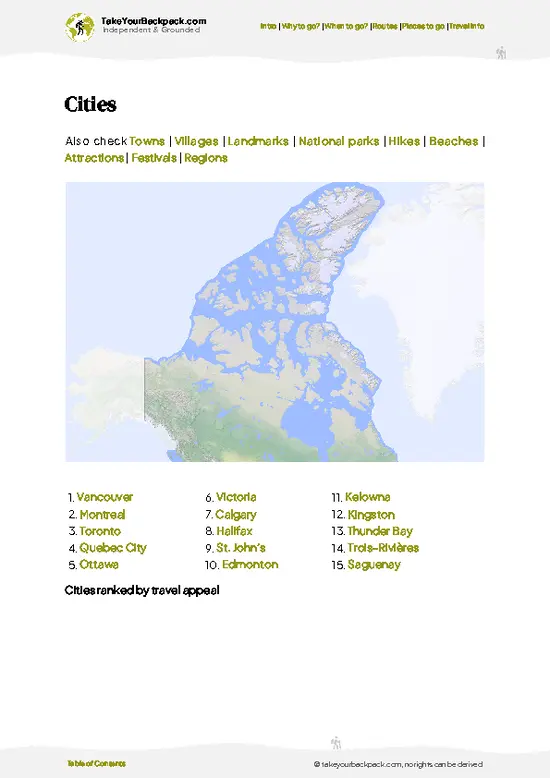
Other Canadian towns near Whitehorse

Explore more nearby:

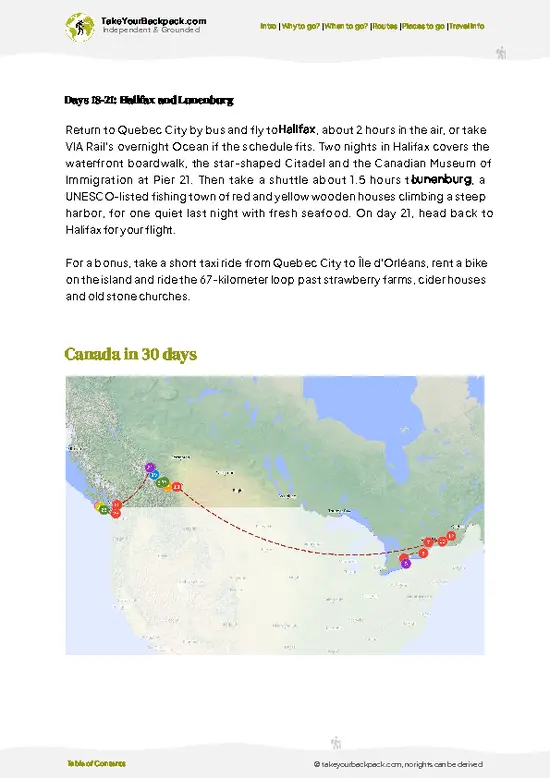
  • Dawson City—Midnight Dome, boardwalk saloons, can-can casino, poetry cabins| 435 km away
  • Prince Rupert—Tsimshian carvings, Cow Bay, cannery boardwalks, tidal rapids| 766 km away
  • Inuvik—Igloo church, Arctic greenhouse, Inuvialuit crafts, delta boardwalks| 852 km away

💡 Not sure where to go next?
Create a personalized itinerary for Canada including Whitehorse and the places that fit your trip.

Generate my itinerary

👉 Discover all towns

Or checkout all Canada has to offer (think cities, towns, villages, national parks, hikes, beaches, festivals)
Country photo of Canada

We 💚 feedbackFinal thoughts on visiting Whitehorse

Whitehorse suits self-sufficient travelers who like to plan a route, rent a car and head outward, and who are fine with a calm town in between. If that is you, spend two nights, stock up well, and leave early for the highway. Skip it if you only want city nightlife.

✈️ When did I visit Canada?
As part of my 1.5 year travel around the world trip, I visited Canada in 2016.

✍️ Help improve this page!
The information on this page is based on my own backpacking experience in Canada, supplemented with up-to-date research and feedback from other travelers. Travel details can change, so if you notice anything outdated or incomplete, feel free to let me know.


🙋‍♂️ Give feedback

👋 Meet the founderWho’s Behind Take Your Backpack?

Johan, backpacker and founder of TakeYourBackpackHi, I’m Johan (Netherlands 🇳🇱), the creator of TakeYourBackpack. Over the past 3 decades, I’ve backpacked through 90+ countries across six continents, gaining extensive experience with independent travel, long-term trips, and overland routes.

This site is built on a combination of firsthand travel experience and carefully curated insights from other backpackers. Many guides are based on places I’ve personally visited, while others bring together tips, observations, and practical advice shared by trusted travelers I’ve met along the way.

The goal is to provide realistic, experience-driven guidance — not generic itineraries — so you can explore destinations with better context, clearer expectations, and more confidence.