×

Central African Republic🇨🇫 | townsBodadiamond trade, local crafts, central crossroads | things to do and best time to go

Explore BambariExplore Bossangoa

Backpacking in Boda
👌 Worth visitingtown ranked #18
By Johan Kruseman 🇳🇱 | Updated September 3, 2026

You’re standing in Boda’s early morning haze, the air thick with woodsmoke and the distant thump of a market radio. Boda sits in the southwest of the Central African Republic, a long, red-dust drive from Bangui. For backpackers, Boda is less a destination than a crossroads—practical for resupply, a meal of grilled goat, or a pause before heading deeper into the bush. It’s quieter than Berbérati, less tense than some border towns, but don’t expect hostels or a café scene. You’ll find a few basic guesthouses, a market that wakes with the sun, and a pace that slows to a crawl by dusk. Costs are low, but so is comfort. Safety can shift with the political winds, so check before you linger. Boda’s charm is subtle: the rhythm of daily life, the honesty of a place that isn’t trying to impress you—just letting you pass through.

Discover everything you want to know in the 📖 Central African Republic Travel Guide.
Safety warning

The current risk level for Central African Republic is high. Check the advice before going.


Get your Central African Republic guide
51 ranked highlights, routes & tips, works offline (229 pages)
Loading the map 🌍
CLICK TO FILTER
cities
towns
landmarks
national parks
hikes
attractions
festivals
regions
SHOW COUNTRY’S BESTSHOW ALL

✨ Why go?
Ranked #18 town in Central African Republic
The unique appeal for travelers

Backpackers flock to Boda for its strategic location as a gateway to the stunning landscapes of the Central African Republic. It’s a convenient base for nearby hikes in the lush Mokoko Forest, where the air is thick with the scent of damp earth and wildflowers. The town’s walkable streets make it easy to explore local markets, where you can savor street food like grilled plantains and spicy stews, immersing yourself in the vibrant culture.

Accommodations range from small-scale hostels to cozy guesthouses, fostering a friendly social atmosphere. Travelers often linger a few days, sharing stories over meals and planning their next adventures. This isn’t a party town; it’s for slow travelers, hikers, and solo adventurers seeking connection and authenticity. If you’re looking for a place to recharge … read more 👉
Backpackers flock to Boda for its strategic location as a gateway to the stunning landscapes of the Central African Republic. It’s a convenient base for nearby hikes in the lush Mokoko Forest, where the air is thick with the scent of damp earth and wildflowers. The town’s walkable streets make it easy to explore local markets, where you can savor street food like grilled plantains and spicy stews, immersing yourself in the vibrant culture.

Accommodations range from small-scale hostels to cozy guesthouses, fostering a friendly social atmosphere. Travelers often linger a few days, sharing stories over meals and planning their next adventures. This isn’t a party town; it’s for slow travelers, hikers, and solo adventurers seeking connection and authenticity. If you’re looking for a place to recharge before diving deeper into the wild, Boda is your spot.
Want to include Boda in your Central African Republic route?
Create a personalized Central African Republic itinerary that includes Boda and the places that fit your trip — based on your travel style, budget, and available time. Get your route in seconds.

Generate my trip

💡 HighlightsThe experiences that define the visit

  • Boda Central Market — The town’s busiest public space: dozens of stalls selling fresh produce, charcoal, secondhand clothing and locally made goods, excellent for people-watching, cheap street food and picking up basic travel supplies.
  • Main Catholic Church (Parish of Boda) — The principal place of worship and community gathering spot; simple but important for experiencing local religious life, Sunday services, and observing community ceremonies.
  • Sub-prefecture / Town Hall — The administrative heart of Boda where locals handle official business; visiting shows practical everyday life, lets you see colonial-era municipal architecture, and often provides a good place to ask about local events and markets.
Nearby day trips that are realistically visitable from Boda include Mbaïki and the surrounding … read more 👉
  • Boda Central Market — The town’s busiest public space: dozens of stalls selling fresh produce, charcoal, secondhand clothing and locally made goods, excellent for people-watching, cheap street food and picking up basic travel supplies.
  • Main Catholic Church (Parish of Boda) — The principal place of worship and community gathering spot; simple but important for experiencing local religious life, Sunday services, and observing community ceremonies.
  • Sub-prefecture / Town Hall — The administrative heart of Boda where locals handle official business; visiting shows practical everyday life, lets you see colonial-era municipal architecture, and often provides a good place to ask about local events and markets.
Nearby day trips that are realistically visitable from Boda include Mbaïki and the surrounding Lobaye forest areas with visits to Mbaka/Pygmy communities, and Berbérati for a larger regional market and craft scene.
Spotted a mistake or missing something? Contact us.

🏘️ NeighborhoodsWhere things are and how it's laid out

Boda, a small town in the Central African Republic, offers a unique blend of culture and adventure. Here’s how to navigate its neighborhoods for a rewarding experience.

Centre Ville: This is the heart of Boda, where the pulse of local life beats strongest. You’ll find bustling markets and street vendors serving up local dishes. The vibe is lively, making it ideal for short stays. Walkability is high, but be cautious of uneven paths. Nightlife is minimal, so expect quiet evenings. Transport options are available, but they can be sporadic.

Quartier des Jeunes: A bit more laid-back, this area is popular among younger locals. It’s a great spot for mingling and soaking in the local culture. Prices are reasonable, and you can find cozy guesthouses. The atmosphere is relaxed, perfect for longer … read more 👉
Boda, a small town in the Central African Republic, offers a unique blend of culture and adventure. Here’s how to navigate its neighborhoods for a rewarding experience.

Centre Ville: This is the heart of Boda, where the pulse of local life beats strongest. You’ll find bustling markets and street vendors serving up local dishes. The vibe is lively, making it ideal for short stays. Walkability is high, but be cautious of uneven paths. Nightlife is minimal, so expect quiet evenings. Transport options are available, but they can be sporadic.

Quartier des Jeunes: A bit more laid-back, this area is popular among younger locals. It’s a great spot for mingling and soaking in the local culture. Prices are reasonable, and you can find cozy guesthouses. The atmosphere is relaxed, perfect for longer stays. Walkability is decent, but you might want to use a bike for longer distances. Nightlife is more vibrant here, with occasional music events.

Zone Agricole: This neighborhood is where you’ll see the agricultural side of Boda. It’s quieter and less touristy, making it ideal for those seeking a deeper connection with the local lifestyle. Accommodations are basic but affordable. Walkability is limited, so plan for some transport. This area is best for longer stays, as it allows for immersion in daily life.

⌛️ 1 dayWhat you can realistically do in a day

Boda, a small town in the Central African Republic, offers a unique blend of local culture and natural beauty. It’s a place where the rhythm of daily life unfolds against a backdrop of lush greenery and vibrant community spirit.

Start your day early at the bustling local market. The air is thick with the scent of fresh produce and spices. Engage with vendors selling everything from ripe mangoes to handmade crafts. This isn’t just shopping; it’s a chance to connect with the heart of Boda. Grab a few snacks for later, like roasted peanuts or cassava chips, and soak in the lively atmosphere.

Afterward, head to the nearby Ngoko River. The walk there is a sensory delight, with birds chirping and the sun filtering through the trees. Spend some time by the riverbank, perhaps even dipping your … read more 👉
Boda, a small town in the Central African Republic, offers a unique blend of local culture and natural beauty. It’s a place where the rhythm of daily life unfolds against a backdrop of lush greenery and vibrant community spirit.

Start your day early at the bustling local market. The air is thick with the scent of fresh produce and spices. Engage with vendors selling everything from ripe mangoes to handmade crafts. This isn’t just shopping; it’s a chance to connect with the heart of Boda. Grab a few snacks for later, like roasted peanuts or cassava chips, and soak in the lively atmosphere.

Afterward, head to the nearby Ngoko River. The walk there is a sensory delight, with birds chirping and the sun filtering through the trees. Spend some time by the riverbank, perhaps even dipping your toes in the cool water. This spot is often overlooked by tourists, but it’s a perfect place to relax and reflect.

In the afternoon, explore the local neighborhoods. Visit the artisans creating traditional crafts. Watch them work, and maybe even try your hand at weaving or pottery. This hands-on experience gives you a deeper appreciation for the culture.

As evening approaches, find a local eatery. Savor a plate of grilled fish or chicken, seasoned with spices that dance on your palate. The warm, communal vibe of the place will make you feel right at home.

Boda may not be on every travel itinerary, but its charm lies in the connections you make and the stories you gather.
Turn your Boda visit into an Central African Republic adventure
Build a complete Central African Republic route with Boda, hidden gems, must-see destinations, and realistic travel times included.

Generate my trip

🌤️ When to go?Choosing the right time of year


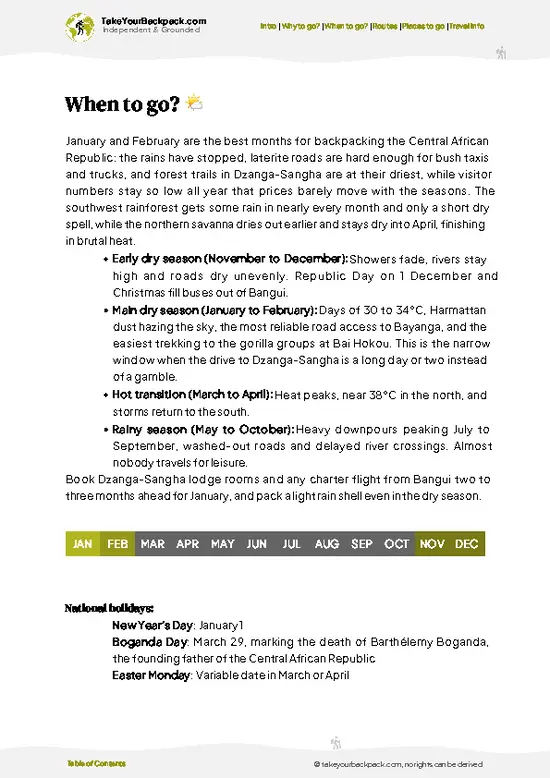
  • Weather: The dry season from November to February offers clear skies and manageable humidity, making trekking and exploring easier. The wet season (May to October) brings heavy rains that can turn trails into mud traps and rivers into barriers.

  • Temperature: Daytime highs hover around 28-32°C (82-90°F) in the dry season, cooling to 20-25°C (68-77°F) at night. The wet season feels hotter and stickier, with highs often pushing 33°C (91°F).

  • Daylight Hours: Consistent year-round at about 12 hours, but the dry season’s clearer skies mean more usable daylight for hiking and photography.

  • Crowds: Boda sees few tourists year-round, but the dry season attracts more regional visitors, adding a bit of local buzz without overwhelming the town.

  • Seasonal Activities: Dry months are best for wildlife
read more 👉

  • Weather: The dry season from November to February offers clear skies and manageable humidity, making trekking and exploring easier. The wet season (May to October) brings heavy rains that can turn trails into mud traps and rivers into barriers.

  • Temperature: Daytime highs hover around 28-32°C (82-90°F) in the dry season, cooling to 20-25°C (68-77°F) at night. The wet season feels hotter and stickier, with highs often pushing 33°C (91°F).

  • Daylight Hours: Consistent year-round at about 12 hours, but the dry season’s clearer skies mean more usable daylight for hiking and photography.

  • Crowds: Boda sees few tourists year-round, but the dry season attracts more regional visitors, adding a bit of local buzz without overwhelming the town.

  • Seasonal Activities: Dry months are best for wildlife spotting and village visits, while the wet season brings lush greenery but limits access to remote spots.

  • Price Fluctuations: Accommodation and transport costs rise slightly in the dry season due to demand, but the trade-off is smoother logistics and better conditions.


Pro-tip: Aim for late November or early December—when the air is crisp, the trails firm up, and the town hums quietly with local life before the peak dry rush.


source: climatestotravel.comJANJanuary: excellent for travelingFEBFebruary: excellent for travelingMARMarch: good for travelingAPRApril: fair for travelingMAYMay: fair for travelingJUNJune: below average for travelingJULJuly: below average for travelingAUGAugust: below average for travelingSEPSeptember: fair for travelingOCTOctober: fair for travelingNOVNovember: highly recommended for travelingDECDecember: excellent for traveling
when-to-go

✈️ The backpacker research shortcutCentral African Republic Travel Guide

An offline-friendly backpacking guide with optimized travel routes, ranked highlights, transport advice, and the best areas to stay.
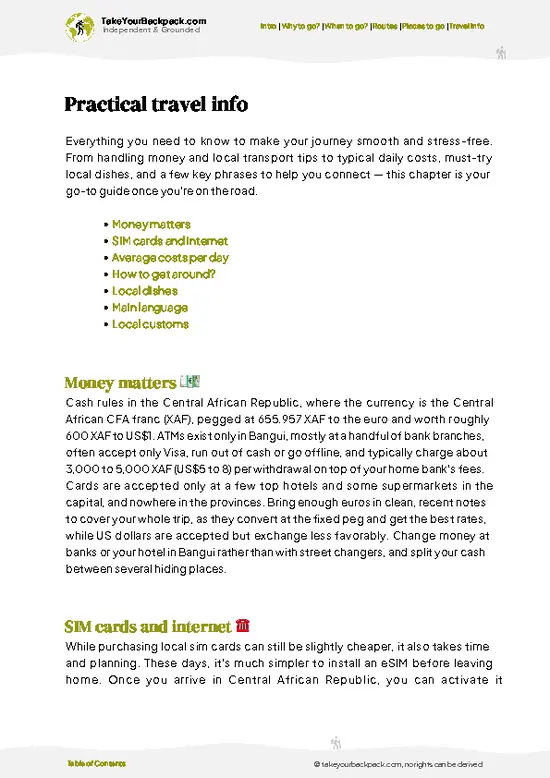
example page 0 from our offline Travel Guide for Central African Republic
example page 1 from our offline Travel Guide for Central African Republic
example page 2 from our offline Travel Guide for Central African Republic
example page 3 from our offline Travel Guide for Central African Republic
example page 4 from our offline Travel Guide for Central African Republic
example page 5 from our offline Travel Guide for Central African Republic
example page 6 from our offline Travel Guide for Central African Republic
example page 7 from our offline Travel Guide for Central African Republic
The digital guide (229 pages) contains:
51 highlights, ranked by travel appeal
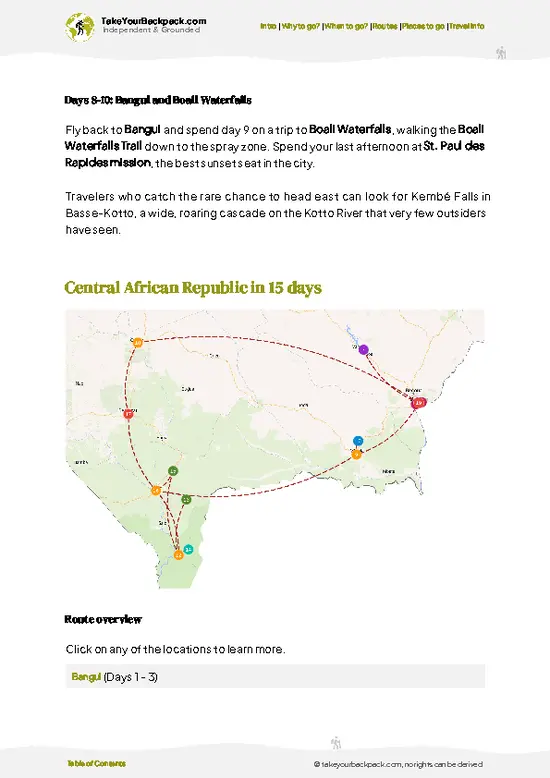
Optimized 5, 10 & 15-day travel routes
Cities, national parks, landmarks, beaches
How to get around
Offline-friendly for travel without Wi-Fi
👉 Click to see all 30+ guide features

📅 Plan smarter in minutes, not weeks
Month by month travel advice
Festivals & national holidays
Budget expectations

🗺️ Go to the right places, skip the overrated ones
Honest pros & cons of destinations
Top hikes, parks & viewpoints
Lesser-known places most travelers miss
Clear “worth it vs skip it” guidance

🛏️ Travel smoothly without rookie mistakes
Best areas to stay
Transport systems explained simply
Common scams & safety advice
SIM cards, money & practical tips

🌍 Understand the country, not just visit it
Culture & traditions
52 Essential phrases & customs
Festivals worth planning around
Traveler-friendly historical context
Insights that make places more meaningful

📱 Built for real travel conditions
Fully downloadable PDF
Works completely offline
Optimized for phone use
Useful in remote areas & buses
Everything in one place
Save weeks of stressful planning
Get instant access to your full guide. 30‑day money-back guarantee.
+ Add another guide for just US$7.80

By proceeding you agree to our terms.
Sent to your inbox immediately after payment • 100% Secure Checkout
Best Backpacking Travel Advisor 2025 tourism awardBest Backpacking
Travel Advisor
2025
What others say about Take Your Backpack Guides:
⭐⭐⭐⭐⭐
Fantastic, amazing amount of information!
⭐⭐⭐⭐⭐
My goodness this is amazing, it's what I've been looking for hats off too you!
⭐⭐⭐⭐⭐
I think this is absolutely BRILLIANT
⭐⭐⭐⭐
Very complete and informative. It's still missing places, but I gotta to commend you
⭐⭐⭐⭐⭐
This is truly amazing, thank you, can't wait to explore it with my kids!
⭐⭐⭐⭐⭐
Awesome resource, thank you!
⭐⭐⭐⭐⭐
This is amazing! Can't wait to explore the ones I haven't seen
⭐⭐⭐⭐
I love this! Well done, great idea.
⭐⭐⭐⭐⭐
Thanks for taking the time to make this gem!
⭐⭐⭐⭐⭐
This might be the best website I've ever seen.
⭐⭐⭐⭐⭐
Congratulations, and thank you so much for your work; it's incredibly valuable.
⭐⭐⭐⭐
In all seriousness I think you did a great job pointing out the important spots
⭐⭐⭐⭐⭐
10/10 very good
⭐⭐⭐⭐⭐
As someone who's only just starting to visit regularly this is awesome, thank you.
⭐⭐⭐⭐
Thank you very much! I'm going to visit my dad, it's going to be very useful!
⭐⭐⭐⭐⭐
This is really cool! We'll be travelling for the first time and this definitely come in handy.
⭐⭐⭐⭐⭐
You are now our minister of culture, congratulations 👨‍💼
⭐⭐⭐⭐⭐
Just wanted to tell you that this is a pearl! Going to follow your recommendations.
⭐⭐⭐⭐⭐
This is so cool. I'll definitely be using the resource for my travels soon.
⭐⭐⭐⭐⭐
This is very impressive! Good work.
⭐⭐⭐⭐⭐
This is an amazing and informative site. Very well done!

🛏️ Where to stay?How to pick the right area

In Boda, the heart of backpacker life pulses strongest around the central market district. This area hums with activity from dawn, the air thick with the scent of fresh cassava and grilled fish, making it a natural gathering spot for travelers and locals alike. Staying here means you’re steps away from lively street vendors and informal cafés where you can swap stories with fellow adventurers. The vibe is raw and unpolished but safe enough during daylight, with a watchful community presence that keeps trouble at bay. Hostels here are basic but social hubs, perfect for solo travelers craving connection … read more 👉
In Boda, the heart of backpacker life pulses strongest around the central market district. This area hums with activity from dawn, the air thick with the scent of fresh cassava and grilled fish, making it a natural gathering spot for travelers and locals alike. Staying here means you’re steps away from lively street vendors and informal cafés where you can swap stories with fellow adventurers. The vibe is raw and unpolished but safe enough during daylight, with a watchful community presence that keeps trouble at bay. Hostels here are basic but social hubs, perfect for solo travelers craving connection without the pretense. Venturing beyond this core, the streets grow quieter and less welcoming, making the market district the clear choice for a backpacker’s base.

🚌 Getting aroundMoving around without the hassle

Boda moves at its own rhythm—less a strict timetable, more a pulse you catch by watching the locals. The sun slants low in the afternoon, casting long shadows on dusty streets where vendors shout over the hum of engines and the occasional bleat of livestock. It’s not a place where buses leave on the dot or taxis line up neatly; instead, you’ll find a blend of improvisation and routine, where knowing when to jump on a ride means reading the crowd and the light. The air carries a mix of earth and exhaust, and the pace can feel both languid and urgent, depending on the hour. Mastering Boda’s flow means embracing a bit of chaos with a sharp eye—your best moves come from timing your steps to the town’s natural ebb.


  • Walking: The heart of Boda is compact enough to explore on foot, with most markets,
read more 👉
Boda moves at its own rhythm—less a strict timetable, more a pulse you catch by watching the locals. The sun slants low in the afternoon, casting long shadows on dusty streets where vendors shout over the hum of engines and the occasional bleat of livestock. It’s not a place where buses leave on the dot or taxis line up neatly; instead, you’ll find a blend of improvisation and routine, where knowing when to jump on a ride means reading the crowd and the light. The air carries a mix of earth and exhaust, and the pace can feel both languid and urgent, depending on the hour. Mastering Boda’s flow means embracing a bit of chaos with a sharp eye—your best moves come from timing your steps to the town’s natural ebb.


  • Walking: The heart of Boda is compact enough to explore on foot, with most markets, eateries, and landmarks within a 20-30 minute stroll. Walking lets you soak in the scents of street food and the texture of cracked pavement, plus it’s free and flexible.

  • Shared Minibuses: These run roughly from 6 a.m. to 7 p.m., cost a few local currency units, and follow semi-fixed routes. They’re cramped but fast, weaving through traffic with a local’s savvy—perfect if you want to cover longer distances without breaking the bank.

  • Motorcycle Taxis (Boda-bodas): Available almost 24/7, these dart through narrow alleys and congested streets, charging by distance but always negotiable. They’re the quickest way to get around when time is tight, though hold on tight—the ride is bumpy and open to the elements.

  • Regular Taxis: Less common and pricier, taxis offer a smoother, more private ride. They’re best for early mornings or late nights when other options thin out, but always agree on the fare before you hop in.

👛 Costs (as of 3 September 2026)Typical daily expenses

Backpacking in Boda, Central African Republic, demands a practical approach to budgeting, reflecting the town’s limited infrastructure and local economy. Here’s what you can expect to spend on a typical day:
  • Dorm Accommodation: Options are scarce and basic, often guesthouses rather than formal hostels. Expect to pay around €5 to €10 per night for a simple bed in a shared room or a basic private room. Facilities may be minimal, so bring your own essentials.
  • Meals: Food is straightforward and local. Street food or small eateries offer meals for about €2 to €4. A typical meal might be rice or cassava with a sauce, sometimes with fish or chicken. Western-style food is rare and more expensive.
  • Local Transport: Transport is mostly informal—shared taxis or minibuses. Short rides within town cost
read more 👉
Backpacking in Boda, Central African Republic, demands a practical approach to budgeting, reflecting the town’s limited infrastructure and local economy. Here’s what you can expect to spend on a typical day:
  • Dorm Accommodation: Options are scarce and basic, often guesthouses rather than formal hostels. Expect to pay around €5 to €10 per night for a simple bed in a shared room or a basic private room. Facilities may be minimal, so bring your own essentials.
  • Meals: Food is straightforward and local. Street food or small eateries offer meals for about €2 to €4. A typical meal might be rice or cassava with a sauce, sometimes with fish or chicken. Western-style food is rare and more expensive.
  • Local Transport: Transport is mostly informal—shared taxis or minibuses. Short rides within town cost roughly €0.50 to €1. For longer trips or private hires, prices can rise quickly, so budget accordingly if you plan to explore beyond Boda.
  • Basic Activities/Entry Fees: Tourist infrastructure is minimal. Entry fees to local sites, if any, are usually under €2. Most activities revolve around exploring the town and nearby nature independently, which keeps costs low.
  • Miscellaneous Expenses: This includes water, snacks, phone credit, and small tips. Budget around €1 to €3 daily. Bottled water is essential due to limited safe drinking water options.

Overall, a realistic daily budget for backpacking in Boda ranges from about €10 to €20. This covers the essentials without luxury, reflecting the town’s raw, off-the-beaten-path character. Planning for a bit of flexibility helps, especially if you want to hire transport or buy extra supplies.
⚠️ Prices can change and everyone travels differently, so take this as a rough guide. Hope it helps you plan your adventure!

🚌 Day tripsBest day trips from Boda

Boda, Central African Republic, is a backpacker’s dream base for day trips, offering a blend of adventure and cultural immersion. The vibrant atmosphere of the town, with its bustling markets and the scent of grilled plantains wafting through the air, sets the stage for exploration.

Trip to the Dzanga-Sangha National Park
A visit to Dzanga-Sangha National Park is a must. Just a couple of hours from Boda, this park is a wildlife haven. You’ll likely spot forest elephants and a variety of primates. The entrance fee is around $10, and hiring a local guide is essential for a richer experience—budget about $30 for that. The best time to go is during the dry season, from December to March, when wildlife is more active. A common mistake? Underestimating the park’s size; plan for a full day to … read more 👉
Boda, Central African Republic, is a backpacker’s dream base for day trips, offering a blend of adventure and cultural immersion. The vibrant atmosphere of the town, with its bustling markets and the scent of grilled plantains wafting through the air, sets the stage for exploration.

Trip to the Dzanga-Sangha National Park
A visit to Dzanga-Sangha National Park is a must. Just a couple of hours from Boda, this park is a wildlife haven. You’ll likely spot forest elephants and a variety of primates. The entrance fee is around $10, and hiring a local guide is essential for a richer experience—budget about $30 for that. The best time to go is during the dry season, from December to March, when wildlife is more active. A common mistake? Underestimating the park’s size; plan for a full day to soak it all in.
👉 Explore Dzanga-Sangha National Park

Trip to the Bayanga Village
Bayanga, a short ride from Boda, offers a glimpse into local life. The village is known for its friendly inhabitants and traditional crafts. You can spend a few hours wandering the streets, chatting with locals, and picking up handmade souvenirs. Expect to spend around $5 on transport and maybe $10 for snacks. The best time to visit is early morning when the village is waking up. Many first-timers miss the chance to engage with the community—don’t just pass through; take the time to connect.


Trip to the Sangha River
The Sangha River is another gem. A boat ride along the river reveals stunning landscapes and the chance to see wildlife along the banks. It takes about an hour to reach the launch point, and a round trip on the boat will cost around $15. The late afternoon is perfect for this trip, as the light casts a golden hue over the water. A common mistake is not bringing enough water; it can get hot, and staying hydrated is key.
Want to know what more Central African Republic offers?
The Central African Republic Travel Guide describes 51 highlights, from cities to national parks, from beaches to hikes

Get the Travel Guide -

🛡️ SafetyScams, Hazards, and Annoyances

Boda, in the Central African Republic, is generally safe, but staying aware enhances your experience. The market area can get crowded; keep your belongings close and be mindful of your surroundings. Solo travelers should avoid wandering alone after dark. The streets can feel different at night, so consider moving in groups or using a local guide.

Common scams are rare, but a few vendors might inflate prices for tourists. Always negotiate, and don’t hesitate to walk away if a deal feels off. Everyday annoyances include occasional power outages and limited internet access, which can test your patience. Embrace the slower pace; it’s part of Boda’s charm. Carry yourself confidently, and you’ll blend in seamlessly.

FAQCommon questions from travelers

Boda is primarily a stopover rather than a destination for extended visits, as it offers limited tourist attractions and infrastructure. It serves as a practical rest point for travelers moving through the region, especially on routes connecting larger towns.
One day is generally sufficient to spend in Boda, mainly to rest and resupply. There are few activities or sights that require more time, so a short stay of 24 hours is adequate.
Yes, Boda can be visited as a day trip from nearby towns like Carnot, which is about 70 kilometers away. Travel times vary due to road conditions, but a day trip is feasible for those with reliable transport.
⚠️ Things can change over time, so always validate details locally before you go.

Other Central African towns near Boda

Explore more nearby:

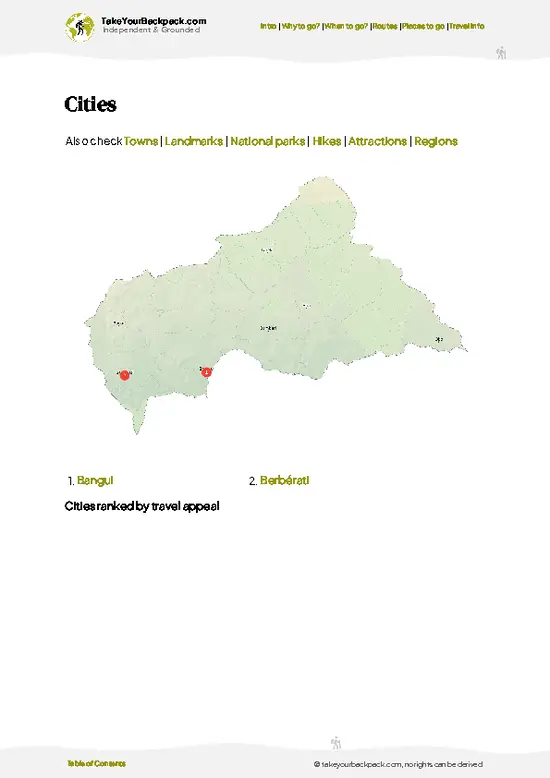
  • Mbaïki—timber industry, coffee plantations, Lobaye region| 77 km away
  • Yaloke—hilly terrain, cattle markets, Fulani communities| 118 km away
  • Mongoumba—Ubangi River, riverine villages, fishing communities| 146 km away

💡 Not sure where to go next?
Create a personalized itinerary for Central African Republic including Boda and the places that fit your trip.

Generate my itinerary

👉 Discover all towns

Or checkout all Central African Republic has to offer (think cities, towns, villages, national parks, hikes, beaches, festivals)
Country photo of Central African Republic

We 💚 feedbackParting advice and final tips

Boda has a raw, unfiltered vibe that pulls you in. The scent of wood smoke mingles with the chatter of locals, creating a rhythm that feels alive. Don’t miss the market; it’s a sensory overload—colors, sounds, and flavors collide. Just be mindful of the heat; hydration is key. Embrace the hustle, and you’ll find a warmth in the people that makes every challenge worthwhile.

✍️ Help improve this page!
The information on this page is based on in-depth research, insights shared by experienced travelers, and feedback from the local travel community in Central African Republic. While every effort is made to keep the information accurate and current, conditions can change — so if you spot anything incorrect or outdated, please get in touch.


🙋‍♂️ Give feedback

👋 Meet the founderWho’s Behind Take Your Backpack?

Johan, backpacker and founder of TakeYourBackpackHi, I’m Johan (Netherlands 🇳🇱), the creator of TakeYourBackpack. Over the past decade, I’ve backpacked through 80+ countries across six continents, gaining extensive experience with independent travel, long-term trips, and overland routes.

This site is built on a combination of firsthand travel experience and carefully curated insights from other backpackers. Many guides are based on places I’ve personally visited, while others bring together tips, observations, and practical advice shared by trusted travelers I’ve met along the way.

The goal is to provide realistic, experience-driven guidance — not generic itineraries — so you can explore destinations with better context, clearer expectations, and more confidence.

Get full country guide •
Instant download • 51 highlights • Full Offline guide