×

Central African Republic🇨🇫 | townsMongoumbaAka and Bantu fishers, smoking racks, Ubangi canoes, Congo border channels | things to do and best time to go

Explore MokoloExplore Ndélé

Backpacking in Mongoumba
👀 For curious travelerstown ranked #19
By Johan Kruseman 🇳🇱 | Updated October 22, 2026

Mongoumba is known for the Ubangi River, where Aka and Bantu fishing communities still work the water from dugout canoes, and that is the reason to come. What matters just as much is that this is a remote border area with almost no tourist services, so you carry cash and supplies and arrange lodging through the church mission or a local contact. Mongoumba sits in the southwest of the Central African Republic, on the Ubangi near the Congo border. Skip hunting for sights. Spend your time on the river and at the market. Unlike busier Mbaïki, it has no road-trade bustle.

Discover everything you want to know in the 📖 Central African Republic Travel Guide.
Safety warning

The current risk level for Central African Republic is high. Check the advice before going.


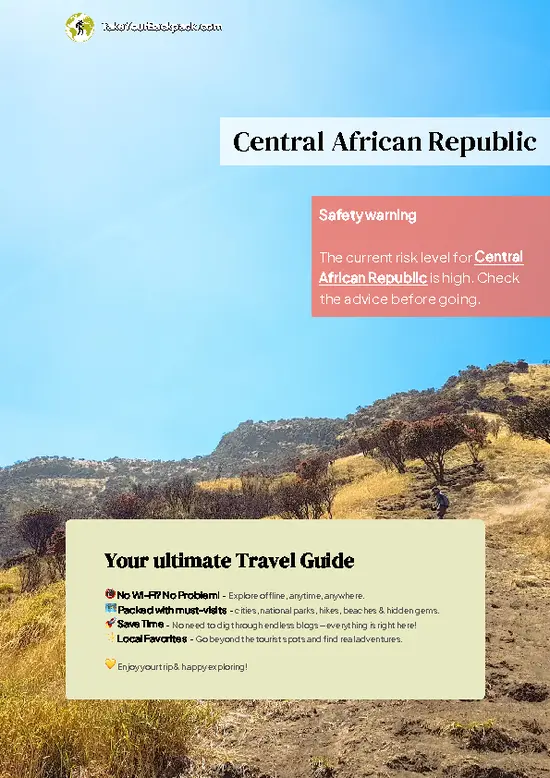
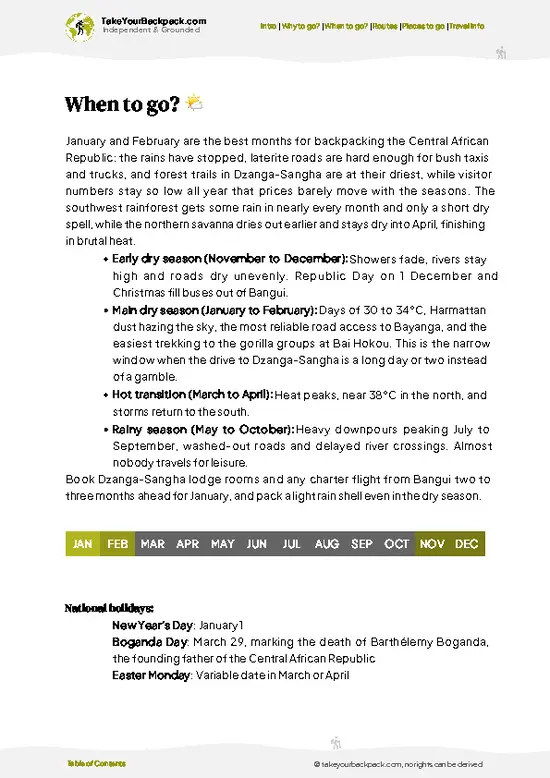
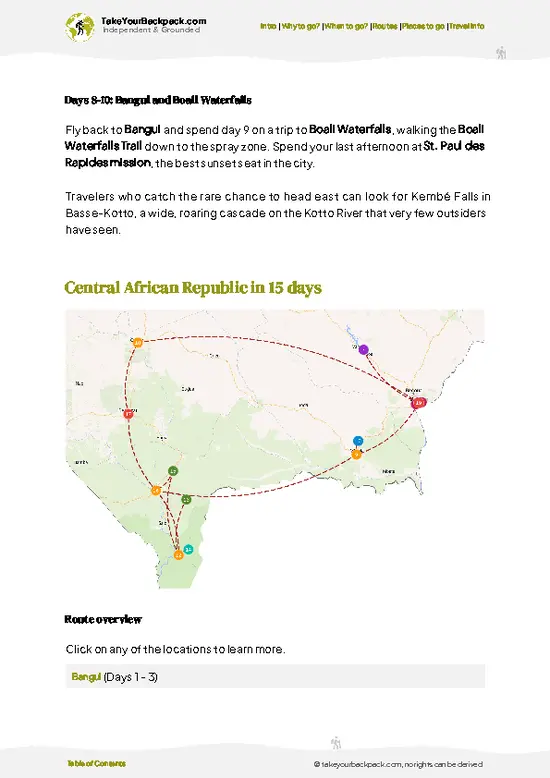
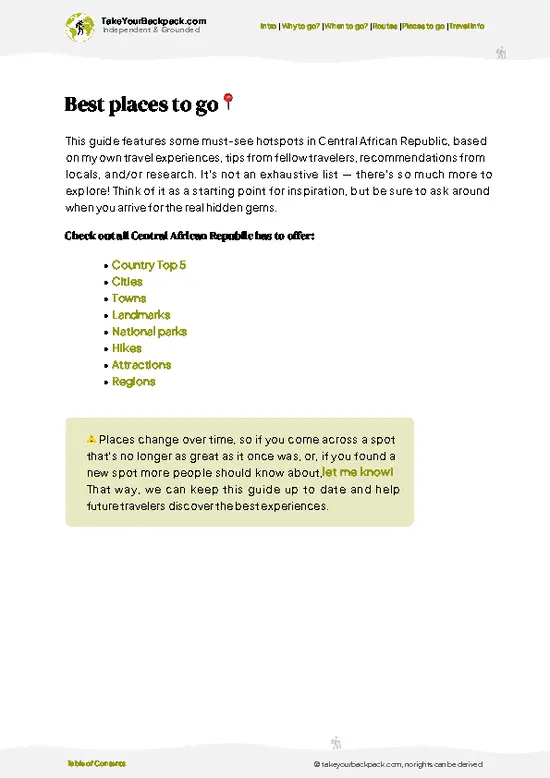
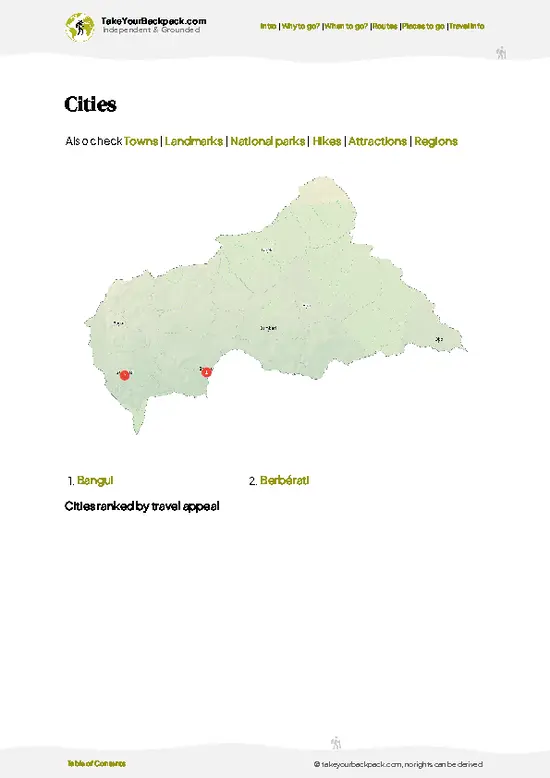
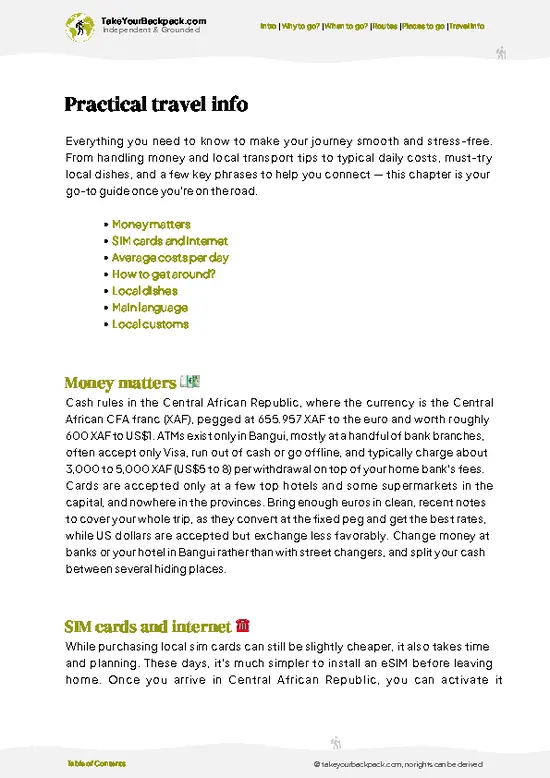
example page 0 from our offline Travel Guide for Central African Republic
example page 1 from our offline Travel Guide for Central African Republic
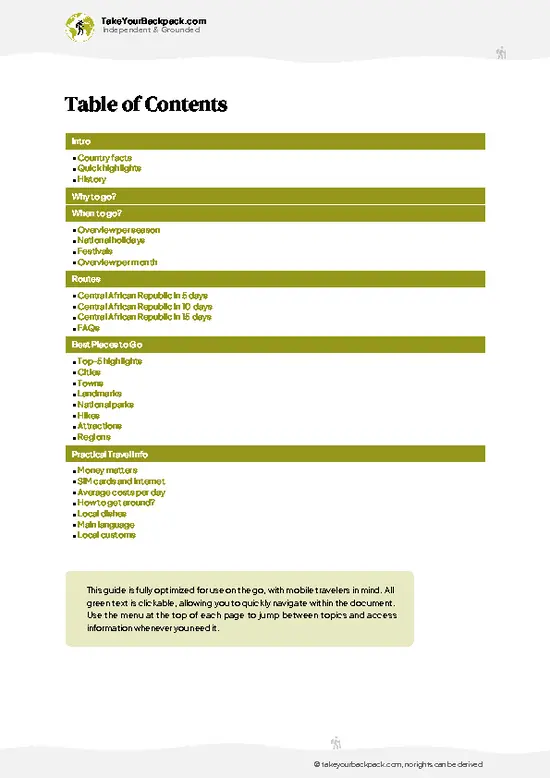
example page 2 from our offline Travel Guide for Central African Republic
example page 3 from our offline Travel Guide for Central African Republic
example page 4 from our offline Travel Guide for Central African Republic
example page 5 from our offline Travel Guide for Central African Republic
example page 6 from our offline Travel Guide for Central African Republic
example page 7 from our offline Travel Guide for Central African Republic
Loading the map 🌍
CLICK TO FILTER
cities
towns
landmarks
national parks
hikes
attractions
regions
SHOW COUNTRY’S BESTSHOW ALL

✨ Why go?
Ranked #19 town in Central African Republic
Why visitors keep coming back

Mongoumba suits the traveler who wants river life without any packaging. You come for the Ubangi, for canoe fishermen at dawn, and for a market where forest and river goods change hands. Beds are scarce and simple, so you stay a night or two, not a week. Evenings are quiet, with talk on the riverbank and little else. It works for experienced, self-sufficient solo travelers who are comfortable arranging everything on arrival, and for no one who needs a schedule. Pair it with the Ubangi River and the Aka forest communities nearby.

💡 HighlightsThe experiences that define the visit

  1. Ubangi River bank: The town’s main sight, with fishing canoes, laundry and traders along the water. Go at early morning or late afternoon. Free, 1 to 2 hours.
  2. Mongoumba market: Smoked fish, cassava, forest produce and basic goods. Mornings are liveliest. Entry is free, and you spend perhaps €1 to 5. Allow 1 hour.
  3. Fishing landing sites: Watch catches come in and get smoked on racks. Early morning is best. Free, about 1 hour, and ask permission before photographing people.
  4. Catholic mission: A quiet compound that anchors local community life and is often the contact point for visitors. Daytime visits only. Free, a donation is welcome, 30 minutes.
  5. Canoe crossing viewpoint: Local boatmen ferry people across to the Congo side channels, giving a view of the river’s width. Late afternoon is best. Arranged
… read more 👉
  1. Ubangi River bank: The town’s main sight, with fishing canoes, laundry and traders along the water. Go at early morning or late afternoon. Free, 1 to 2 hours.
  2. Mongoumba market: Smoked fish, cassava, forest produce and basic goods. Mornings are liveliest. Entry is free, and you spend perhaps €1 to 5. Allow 1 hour.
  3. Fishing landing sites: Watch catches come in and get smoked on racks. Early morning is best. Free, about 1 hour, and ask permission before photographing people.
  4. Catholic mission: A quiet compound that anchors local community life and is often the contact point for visitors. Daytime visits only. Free, a donation is welcome, 30 minutes.
  5. Canoe crossing viewpoint: Local boatmen ferry people across to the Congo side channels, giving a view of the river’s width. Late afternoon is best. Arranged locally, roughly €2 to 5, about 1 hour.
Mongoumba’s forest edge and Aka camps can be reached nearby, and the Lobaye forest region lies close enough for guided outings. Start at the river bank at dawn, because fishing and trading peak then and everything else follows.
Spotted a mistake or missing something? Contact us.

🏘️ NeighborhoodsHow different areas shape the experience

Mongoumba is a small Ubangi River town in the Lobaye prefecture, so you will cover all of it on foot in an hour or two. Pick your areas by what they do, not by their names.
  • Riverfront and landing: This is where the pirogues dock and the fish is sold fresh, so go early in the morning when the catch arrives. It is the best place to see the town working, and the only part worth lingering in. Bring small bills, since vendors rarely have change.
  • Central market area: A modest cluster of stalls selling cassava, smoked fish, bushmeat and basics. Eat here, because there are no restaurants to speak of, and cooked cassava with fish sauce is cheap and filling.
  • Residential quarters: Quiet lanes of mud-brick and tin-roof homes, with nothing to see. Skip them unless you have a local host, because wandering draws attention without any payoff.

⌛️ 1 day1-day itinerary for Mongoumba

6:00 AM, Ubangi River bank: Do not skip the dawn river. Walk down as canoes return, watch nets being emptied and ask before taking photos. Stay about an hour and a half.
8:00 AM, Fishing landing and smoking racks: Follow the catch a short walk along the bank to where fish are smoked. Buy breakfast from a vendor.
10:00 AM, Mongoumba market: Browse forest produce, cassava and fish while it is busiest. Bargain gently.
12:30 PM, Catholic mission: Rest in the shade and talk with locals about arranging a guide.
3:00 PM, Aka camp outskirts: The least visited stop. Go only with a local guide and permission, and bring salt or soap as a gift. Walk back by the forest edge.
5:30 PM, Riverbank: Finish with canoe traffic and evening cooking fires.

🌤️ When to go?When to go for the best experience

The dry months from December to February are the easiest for reaching Mongoumba, because the dirt tracks harden and the Ubangi runs lower. Days reach 30 to 33°C (86 to 91°F), with cooler nights near 20°C (68°F). From March to November rain softens roads, humidity builds and travel slows. Daylight stays close to 12 hours all year, so plan to finish moves by mid-afternoon. Prices for fuel and river passage climb when roads are bad.
  • Dry Season (December to February): Firm roads, lowest river, fewer delays.
  • Wet Season (March to November): Heavy storms, muddy tracks, higher transport costs.
Book your onward movement a few days ahead, because departures depend on the vehicle filling.

source: climatestotravel.comJANJanuary: excellent for travelingFEBFebruary: excellent for travelingMARMarch: fair for travelingAPRApril: below average for travelingMAYMay: below average for travelingJUNJune: below average for travelingJULJuly: below average for travelingAUGAugust: below average for travelingSEPSeptember: fair for travelingOCTOctober: good for travelingNOVNovember: excellent for travelingDECDecember: excellent for traveling
when-to-go

✈️ The backpacker research shortcutCentral African Republic Travel Guide

An offline-friendly backpacking guide with optimized travel routes, ranked highlights, transport advice, and the best areas to stay.
example page 0 from our offline Travel Guide for Central African Republic
example page 1 from our offline Travel Guide for Central African Republic
example page 2 from our offline Travel Guide for Central African Republic
example page 3 from our offline Travel Guide for Central African Republic
example page 4 from our offline Travel Guide for Central African Republic
example page 5 from our offline Travel Guide for Central African Republic
example page 6 from our offline Travel Guide for Central African Republic
example page 7 from our offline Travel Guide for Central African Republic
The digital guide (210 pages) contains:
✅ 42 highlights, ranked by travel appeal
✅ Optimized 5, 10 & 15-day travel routes
✅ Cities, national parks, landmarks, beaches
✅ How to get around
✅ Offline-friendly for travel without Wi-Fi
👉 Click to see all 30+ guide features

📅 Plan smarter in minutes, not weeks
✅ Month by month travel advice
✅ Festivals & national holidays
✅ Budget expectations

🗺️ Go to the right places, skip the overrated ones
✅ Honest pros & cons of destinations
✅ Top hikes, parks & viewpoints
✅ Lesser-known places most travelers miss
✅ Clear “worth it vs skip it” guidance

🛏️ Travel smoothly without rookie mistakes
✅ Best areas to stay
✅ Transport systems explained simply
✅ Common scams & safety advice
✅ SIM cards, money & practical tips

🌍 Understand the country, not just visit it
✅ Culture & traditions
✅ 52 Essential phrases & customs
✅ Festivals worth planning around
✅ Traveler-friendly historical context
✅ Insights that make places more meaningful

📱 Built for real travel conditions
✅ Fully downloadable PDF
✅ Works completely offline
✅ Optimized for phone use
✅ Useful in remote areas & buses
✅ Everything in one place
Stop searching, start planning
Get instant access to your full guide. 30‑day money-back guarantee.
+ Add another guide for just

By proceeding you agree to our terms.
Sent to your inbox immediately after payment • 100% Secure Checkout
Best Backpacking Travel Advisor 2025 tourism awardBest Backpacking
Travel Advisor
2025
What others say about Take Your Backpack Guides:
⭐⭐⭐⭐⭐
Fantastic, amazing amount of information!
⭐⭐⭐⭐⭐
My goodness this is amazing, it's what I've been looking for hats off too you!
⭐⭐⭐⭐⭐
I think this is absolutely BRILLIANT
⭐⭐⭐⭐
Very complete and informative. It's still missing places, but I gotta to commend you
⭐⭐⭐⭐⭐
This is truly amazing, thank you, can't wait to explore it with my kids!
⭐⭐⭐⭐⭐
Awesome resource, thank you!
⭐⭐⭐⭐⭐
This is amazing! Can't wait to explore the ones I haven't seen
⭐⭐⭐⭐
I love this! Well done, great idea.
⭐⭐⭐⭐⭐
Thanks for taking the time to make this gem!
⭐⭐⭐⭐⭐
This might be the best website I've ever seen.
⭐⭐⭐⭐⭐
Congratulations, and thank you so much for your work; it's incredibly valuable.
⭐⭐⭐⭐
In all seriousness I think you did a great job pointing out the important spots
⭐⭐⭐⭐⭐
10/10 very good
⭐⭐⭐⭐⭐
As someone who's only just starting to visit regularly this is awesome, thank you.
⭐⭐⭐⭐
Thank you very much! I'm going to visit my dad, it's going to be very useful!
⭐⭐⭐⭐⭐
This is really cool! We'll be travelling for the first time and this definitely come in handy.
⭐⭐⭐⭐⭐
You are now our minister of culture, congratulations 👨‍💼
⭐⭐⭐⭐⭐
Just wanted to tell you that this is a pearl! Going to follow your recommendations.
⭐⭐⭐⭐⭐
This is so cool. I'll definitely be using the resource for my travels soon.
⭐⭐⭐⭐⭐
This is very impressive! Good work.
⭐⭐⭐⭐⭐
This is an amazing and informative site. Very well done!

🛏️ Where to stay?How to pick the right area

Stay in the central area near the market and landing, because that is where the few guesthouses and basic rooms in Mongoumba cluster. Expect simple private rooms rather than dorms, usually €5 to 15 a night, often with bucket washing and unreliable power. Lanes stay lit by voices more than lights after dark, and a central bed means short walks home. The riverfront is livelier at dawn with boat engines, so bring earplugs. The outer residential quarters have fewer options and no transport links, so there is little reason to sleep there. Ask a local contact or the mission or town officials for a recommendation, then pay in cash on arrival.

🚌 Getting aroundGetting around like a local

Mongoumba is small enough that you walk everywhere, and walking stops making sense only when you leave town along the dirt tracks, where distances stretch and shade is rare. There is no formal public transport, traffic is a handful of motorbikes, and everything moving between villages runs on demand. Expect to wait for vehicles to fill.
  • Walking: Free and the right choice for the market, landing and any errands. Go in the morning, since midday heat sits around 32°C (90°F).
  • Motorbike taxi: The standard way to reach outlying villages, usually €1 to 5 depending on distance and road condition. Agree the price first and wear a helmet if offered. Rides are rough in the rains, so ask the rider about the track.
  • Pirogue on the Ubangi: Dugout canoes link riverside settlements, typically €2 to 10 per seat
… read more 👉
Mongoumba is small enough that you walk everywhere, and walking stops making sense only when you leave town along the dirt tracks, where distances stretch and shade is rare. There is no formal public transport, traffic is a handful of motorbikes, and everything moving between villages runs on demand. Expect to wait for vehicles to fill.
  • Walking: Free and the right choice for the market, landing and any errands. Go in the morning, since midday heat sits around 32°C (90°F).
  • Motorbike taxi: The standard way to reach outlying villages, usually €1 to 5 depending on distance and road condition. Agree the price first and wear a helmet if offered. Rides are rough in the rains, so ask the rider about the track.
  • Pirogue on the Ubangi: Dugout canoes link riverside settlements, typically €2 to 10 per seat for a few hours. They leave when full, usually early morning, and a life jacket is rarely provided, so keep your bag in a waterproof liner.
  • Shared trucks and pickups: The only road option toward Mbaïki and Bangui, taking a long day or more for roughly €15 to 30. Not worth it in the rains, when breakdowns are common.

👛 Costs (as of 22 October 2026)Typical daily expenses

Mongoumba costs a backpacker about €26 to 50 a day, with a total of €36 in high season. Everything is cash, and prices are higher than the town's size suggests because goods arrive by rough road.
CategoryBudget RangeLocal Reality
Dorm accommodation€5 to 15Private basic rooms only, no dorms
Meals€4 to 8Cassava, fish and rice at market stalls
Local transport€1 to 5Motorbike taxis and walking
Basic activities/entry fees€5 to 10Boat hire or a local guide
Miscellaneous expenses€2 to 5Water, phone credit, small gifts
Total Daily Budget€36Cash only
Buy fish straight from the canoes at the landing, since it costs less than at the market.

source: worldbank.org
⚠️ Prices can change and everyone travels differently, so take this as a rough guide. Hope it helps you plan your adventure!

🚌 Day tripsBest day trips from Mongoumba

Mongoumba works as a base for short river and village outings, though everything depends on finding a boat or motorbike and returning before dark.Ubangi River Pirogue Ride: Hire a paddler for a half day to drift past fishing camps and sandbars on the Ubangi. It costs about €8 to 20 for the boat, and early morning is best, when the water is calm and mist lifts. First-timers often forget water and sun cover.
Fishing Villages Along the Bank: Motorbike taxis reach nearby villages in under an hour for €3 to 8 return. You see smoked fish racks and canoe building, and the dry season keeps tracks passable. The common mistake is arriving without a greeting to the village chief, so ask your driver to introduce you.
Forest Edge Walk: The Congo Basin forest begins close to town, and a local guide can take … read more 👉
Mongoumba works as a base for short river and village outings, though everything depends on finding a boat or motorbike and returning before dark.Ubangi River Pirogue Ride: Hire a paddler for a half day to drift past fishing camps and sandbars on the Ubangi. It costs about €8 to 20 for the boat, and early morning is best, when the water is calm and mist lifts. First-timers often forget water and sun cover.
Fishing Villages Along the Bank: Motorbike taxis reach nearby villages in under an hour for €3 to 8 return. You see smoked fish racks and canoe building, and the dry season keeps tracks passable. The common mistake is arriving without a greeting to the village chief, so ask your driver to introduce you.
Forest Edge Walk: The Congo Basin forest begins close to town, and a local guide can take you in for a few hours for around €5 to 10. Go in the dry months, wear long sleeves against insects, and do not wander without a guide.

🛡️ SafetyScams, Hazards, and Annoyances

Mongoumba is a quiet town, but the Central African Republic has unstable security outside Bangui, so check current conditions with locals and the town authorities before you arrive. Daytime life along the market and landing is calm. Avoid walking after dark and stay out of the outer tracks alone. Carry a copy of your passport and keep your camera discreet, since photographing officials or soldiers causes trouble. Expect informal checkpoints and small requests for payment, which are best handled with patience and polite refusal. Solo travelers should arrange a local host.

FAQCommon questions from travelers

Mongoumba is worth visiting only if you want a remote Ubangi River experience, since there are no formal sights. You get the fishing landing, the small market and forest edges within an hour's walk or ride. Facilities are basic, rooms cost about €5 to 15, and the Central African Republic's security situation needs checking first.
Mongoumba needs one to two days. One day covers the market, riverfront and a pirogue ride costing about €8 to 20. A second day adds a nearby fishing village or a guided forest walk, and extra time mostly goes on waiting for transport.
Mongoumba is not realistic as a day trip from Bangui, which lies hundreds of kilometers away over poor roads and takes a long day or more each way. Shared trucks cost roughly €15 to 30, and breakdowns are common in the rains. Plan to stay at least one night, and use Mbaïki as the nearer staging point.
⚠️ Things can change over time, so always validate details locally before you go.

Other Central African towns near Mongoumba

Explore more nearby:

  • Mbaïki—timber industry, coffee plantations, Lobaye region| 72 km away
  • Boda—diamond trade, local crafts, central crossroads| 146 km away
  • Kouango—Ubangi Riverbank, fishing villages, river transport| 216 km away

💡 Not sure where to go next?
Create a personalized itinerary for Central African Republic including Mongoumba and the places that fit your trip.

Generate my itinerary

👉 Discover all towns

Or checkout all Central African Republic has to offer (think cities, towns, villages, national parks, hikes, beaches, festivals)
Country photo of Central African Republic

We 💚 feedbackFinal thoughts on visiting Mongoumba

Mongoumba deserves two nights, no more. One night gets you the dawn river and market, the second lets you arrange an Aka visit properly. Bring cash, water purification and small gifts, and settle your guide before you go.

✍️ Help improve this page!
The information on this page is based on in-depth research, insights shared by experienced travelers, and feedback from the local travel community in Central African Republic. While every effort is made to keep the information accurate and current, conditions can change — so if you spot anything incorrect or outdated, please get in touch.


🙋‍♂️ Give feedback

👋 Meet the founderWho’s Behind Take Your Backpack?

Johan, backpacker and founder of TakeYourBackpackHi, I’m Johan (Netherlands 🇳🇱), the creator of TakeYourBackpack. Over the past 3 decades, I’ve backpacked through 90+ countries across six continents, gaining extensive experience with independent travel, long-term trips, and overland routes.

This site is built on a combination of firsthand travel experience and carefully curated insights from other backpackers. Many guides are based on places I’ve personally visited, while others bring together tips, observations, and practical advice shared by trusted travelers I’ve met along the way.

The goal is to provide realistic, experience-driven guidance — not generic itineraries — so you can explore destinations with better context, clearer expectations, and more confidence.