×

Central African Republic🇨🇫 | townsMokoloremote location, border proximity, river crossing | things to do and best time to go

Explore MbaïkiExplore Mongoumba

Backpacking in Mokolo
By Johan Kruseman 🇳🇱 | Updated September 3, 2026

Forget the idea that Mokolo is a lively hub—most travelers expect bustle, but what you get is a slow-breathing town tucked in the north of Central African Republic, not far from the Cameroon border. Mokolo is more crossroads than destination: a place where the red dust settles on your boots and the market’s earthy smells linger longer than the conversations. It’s practical for resupplying or catching your breath between wilder stretches, but nightlife is a rumor and hostels are rare. Compared to Bangui’s chaos or Bouar’s colonial leftovers, Mokolo feels stripped down—less scenic, more functional, and best used as a staging post for deeper forays into the bush. Transport is patchy, mostly bush taxis, and you’ll walk more than you ride. Costs are low, but so is comfort. Safety is about staying alert, not anxious. If you want connection, you’ll need to make the first move; backpackers here are few, but the ones you meet are usually in it for the long haul.

Discover everything you want to know in the 📖 Central African Republic Travel Guide.
Safety warning

The current risk level for Central African Republic is high. Check the advice before going.


Get your Central African Republic guide
51 ranked highlights, routes & tips, works offline (229 pages)
Loading the map 🌍
CLICK TO FILTER
cities
towns
landmarks
national parks
hikes
attractions
festivals
regions
SHOW COUNTRY’S BESTSHOW ALL

✨ Why go?
Ranked #99 town in Central African Republic
The unique appeal for travelers

Mokolo serves as a gateway for backpackers exploring the Central African Republic, perfectly positioned for those seeking adventure and cultural immersion. The town’s walkable streets make it easy to navigate, allowing you to soak in the local atmosphere without feeling rushed. You’ll find small-scale guesthouses and hostels that offer a cozy vibe, ideal for solo travelers or small groups looking to connect.

Mokolo is a launchpad for nearby hikes and cultural sites, making it a strategic stop for those wanting to explore the surrounding wilderness or engage with local communities. The local food scene is a treat, with street vendors serving up authentic dishes that reflect the region’s flavors.

Most travelers tend to stay a few days, enjoying the friendly social atmosphere while planning … read more 👉
Mokolo serves as a gateway for backpackers exploring the Central African Republic, perfectly positioned for those seeking adventure and cultural immersion. The town’s walkable streets make it easy to navigate, allowing you to soak in the local atmosphere without feeling rushed. You’ll find small-scale guesthouses and hostels that offer a cozy vibe, ideal for solo travelers or small groups looking to connect.

Mokolo is a launchpad for nearby hikes and cultural sites, making it a strategic stop for those wanting to explore the surrounding wilderness or engage with local communities. The local food scene is a treat, with street vendors serving up authentic dishes that reflect the region’s flavors.

Most travelers tend to stay a few days, enjoying the friendly social atmosphere while planning their next move. It’s not a party town, but it’s not quiet either—just the right balance for those who appreciate a slower pace. If you’re after a genuine experience, Mokolo is a place to linger, not just pass through.
Want to include Mokolo in your Central African Republic route?
Create a personalized Central African Republic itinerary that includes Mokolo and the places that fit your trip — based on your travel style, budget, and available time. Get your route in seconds.

Generate my trip

💡 HighlightsEssential experiences to have while visiting Mokolo

  • Mokolo Central Market — The town’s heartbeat: a chaotic, colorful market where you’ll find fresh millet, smoked fish, spices, shea butter and local crafts. Great for people-watching and buying cheap, hand-made souvenirs.
  • Traditional Mafa Quarter — Cluster of mud-brick houses with painted facades and low courtyards that showcase the architectural style and daily life of the Mafa people. Walking these lanes gives a real feel for local community rhythms.
  • Livestock/Cattle Market — A lively market day scene where herders trade cattle, goats and poultry. It’s noisy, dusty and intensely visual—an authentic look at rural Sahel commerce and bargaining culture.
  • Main Mosque and Mosque Square — The mosque and its adjoining square act as a social hub, especially on Friday. Visiting gives insight into
read more 👉
  • Mokolo Central Market — The town’s heartbeat: a chaotic, colorful market where you’ll find fresh millet, smoked fish, spices, shea butter and local crafts. Great for people-watching and buying cheap, hand-made souvenirs.
  • Traditional Mafa Quarter — Cluster of mud-brick houses with painted facades and low courtyards that showcase the architectural style and daily life of the Mafa people. Walking these lanes gives a real feel for local community rhythms.
  • Livestock/Cattle Market — A lively market day scene where herders trade cattle, goats and poultry. It’s noisy, dusty and intensely visual—an authentic look at rural Sahel commerce and bargaining culture.
  • Main Mosque and Mosque Square — The mosque and its adjoining square act as a social hub, especially on Friday. Visiting gives insight into local religious life and the town’s communal gatherings.
  • Hill Viewpoint above Town — Short walk up a nearby rise rewards you with sweeping views over Mokolo and the foothills of the Mandara Mountains—best at sunrise or late afternoon for photography and orientation.
  • Pottery and Weaving Workshops — Small, family-run workshops where women shape and fire clay pots or weave mats and baskets. Watching the process and buying directly supports local artisans and gets you unique, usable souvenirs.
  • Trailheads to Mandara Foothill Villages — Mokolo is a practical starting point for short day walks to nearby Mandara villages. The footpaths pass terraced fields, carved rock outcrops and offer close-up encounters with rural mountain life.
A few real, visitable highlights outside town that work well as day trips: the village of Rhumsiki (Mandara mountain scenery and volcanic plugs), hiking deeper into the Mandara Mountains to Hildi-style villages, and wildlife/park excursions north toward Waza National Park.
Spotted a mistake or missing something? Contact us.

🏘️ NeighborhoodsNeighborhood guide to Mokolo

Mokolo is a vibrant hub in the Central African Republic, offering a unique blend of local culture and backpacker-friendly experiences. Here’s how to navigate its neighborhoods for an enriching stay.

Centre Ville: This is the heart of Mokolo. You’ll find bustling markets, street vendors, and a lively atmosphere. It’s walkable, with plenty of affordable guesthouses. The nightlife here is modest but charming, with local bars where you can sip on palm wine. Perfect for short stays, as you can easily explore on foot.

Banguia: A quieter area, Banguia is ideal for those seeking a more laid-back vibe. The streets are lined with trees, and you can catch the scent of local cuisine wafting through the air. Accommodation is slightly pricier but offers a more comfortable experience. It’s less walkable, … read more 👉
Mokolo is a vibrant hub in the Central African Republic, offering a unique blend of local culture and backpacker-friendly experiences. Here’s how to navigate its neighborhoods for an enriching stay.

Centre Ville: This is the heart of Mokolo. You’ll find bustling markets, street vendors, and a lively atmosphere. It’s walkable, with plenty of affordable guesthouses. The nightlife here is modest but charming, with local bars where you can sip on palm wine. Perfect for short stays, as you can easily explore on foot.

Banguia: A quieter area, Banguia is ideal for those seeking a more laid-back vibe. The streets are lined with trees, and you can catch the scent of local cuisine wafting through the air. Accommodation is slightly pricier but offers a more comfortable experience. It’s less walkable, so consider renting a bike or using local transport. Great for longer stays if you want to immerse yourself in the community.

Mokolo Market District: This area is a sensory overload, filled with colors and sounds. It’s a great place to grab a cheap meal or pick up local crafts. While it can be chaotic, the energy is infectious. Transport access is excellent, making it easy to venture out. Ideal for short visits, but the hustle can be overwhelming for longer stays.

Each neighborhood in Mokolo has its own character, allowing you to tailor your experience to your travel style.

⌛️ 1 dayHow to make the most of one day

Mokolo, a vibrant town in the Central African Republic, pulses with life and authenticity. It’s a place where the scent of grilled meat wafts through the air, mingling with the earthy aroma of the surrounding savannah. Here, you can experience the rhythm of daily life, far from the typical tourist trails.

Start your morning at the bustling local market. The sun casts a warm glow on colorful stalls filled with fresh produce, spices, and handmade crafts. Engage with the vendors; their smiles are as bright as the fruits they sell. Try a local breakfast of “fufu” paired with a spicy sauce. The flavors will awaken your senses and prepare you for the day ahead.

After fueling up, take a stroll through the nearby neighborhood of Bimbo. This area, often overlooked by tourists, showcases traditional … read more 👉
Mokolo, a vibrant town in the Central African Republic, pulses with life and authenticity. It’s a place where the scent of grilled meat wafts through the air, mingling with the earthy aroma of the surrounding savannah. Here, you can experience the rhythm of daily life, far from the typical tourist trails.

Start your morning at the bustling local market. The sun casts a warm glow on colorful stalls filled with fresh produce, spices, and handmade crafts. Engage with the vendors; their smiles are as bright as the fruits they sell. Try a local breakfast of “fufu” paired with a spicy sauce. The flavors will awaken your senses and prepare you for the day ahead.

After fueling up, take a stroll through the nearby neighborhood of Bimbo. This area, often overlooked by tourists, showcases traditional architecture and offers a glimpse into local life. The streets are alive with children playing and artisans crafting their goods. Stop by a small workshop where you might catch a glimpse of a skilled craftsman carving intricate designs into wood. It’s a rewarding experience that connects you to the heart of Mokolo.

As the afternoon sun begins to dip, head to the iconic Mokolo River. The banks are perfect for a leisurely walk, where you can soak in the serene atmosphere. Watch as fishermen cast their nets, their silhouettes framed against the shimmering water. This is a moment to reflect and appreciate the beauty of simplicity.

As evening falls, find a local eatery for dinner. The grilled fish here is a must-try, seasoned perfectly and served with a side of plantains. Enjoy your meal while listening to the sounds of laughter and conversation around you. This is Mokolo—a place where every moment feels like a story waiting to be told.
Turn your Mokolo visit into an Central African Republic adventure
Build a complete Central African Republic route with Mokolo, hidden gems, must-see destinations, and realistic travel times included.

Generate my trip

🌤️ When to go?Best time to visit Mokolo


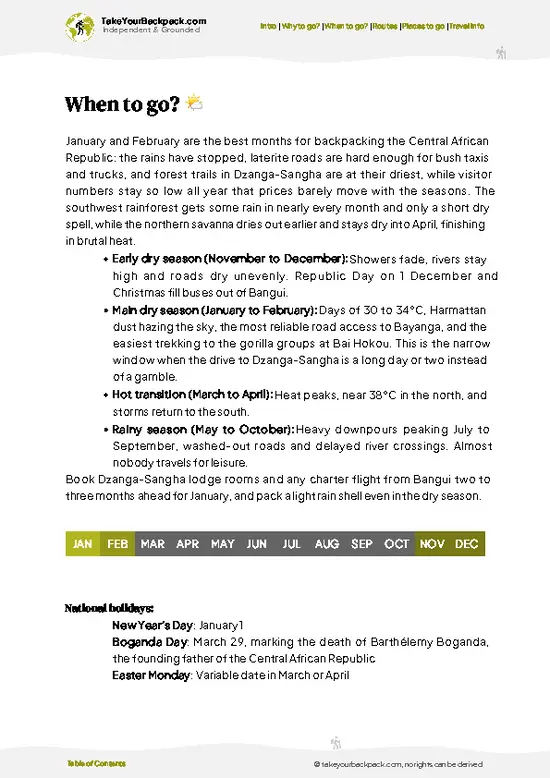
  • Topic: Weather – The dry season from November to March offers clear skies and dust-sweetened air, perfect for trekking without the oppressive humidity that saturates the rainy months.

  • Topic: Temperature – Expect highs around 30°C (86°F) during the day, cooling to a comfortable 18°C (64°F) at night, making early mornings and evenings ideal for exploring without overheating.

  • Topic: Daylight Hours – With roughly 12 hours of daylight year-round, you get consistent light to plan your hikes and village visits, but the dry season’s crisp mornings feel especially alive.

  • Topic: Crowds – Mokolo sees few tourists year-round, but the dry season draws local festivals and markets, adding vibrant energy without overwhelming the quiet charm.

  • Topic: Seasonal Activities – Dry months unlock access
read more 👉

  • Topic: Weather – The dry season from November to March offers clear skies and dust-sweetened air, perfect for trekking without the oppressive humidity that saturates the rainy months.

  • Topic: Temperature – Expect highs around 30°C (86°F) during the day, cooling to a comfortable 18°C (64°F) at night, making early mornings and evenings ideal for exploring without overheating.

  • Topic: Daylight Hours – With roughly 12 hours of daylight year-round, you get consistent light to plan your hikes and village visits, but the dry season’s crisp mornings feel especially alive.

  • Topic: Crowds – Mokolo sees few tourists year-round, but the dry season draws local festivals and markets, adding vibrant energy without overwhelming the quiet charm.

  • Topic: Seasonal Activities – Dry months unlock access to remote trails and cultural events, while the rainy season often turns paths to mud and limits movement.

  • Topic: Price Fluctuations – Accommodation and guides are slightly pricier in the dry season due to demand, but the smoother logistics and safer trails justify the premium.


Pro-tip: Aim for late dry season visits—when the air is still dry but the landscape starts to hint at green—to catch Mokolo’s raw beauty without the mud slog.


source: climatestotravel.comJANJanuary: excellent for travelingFEBFebruary: excellent for travelingMARMarch: excellent for travelingAPRApril: fair for travelingMAYMay: fair for travelingJUNJune: below average for travelingJULJuly: below average for travelingAUGAugust: below average for travelingSEPSeptember: fair for travelingOCTOctober: good for travelingNOVNovember: highly recommended for travelingDECDecember: excellent for traveling
when-to-go

✈️ The backpacker research shortcutCentral African Republic Travel Guide

An offline-friendly backpacking guide with optimized travel routes, ranked highlights, transport advice, and the best areas to stay.
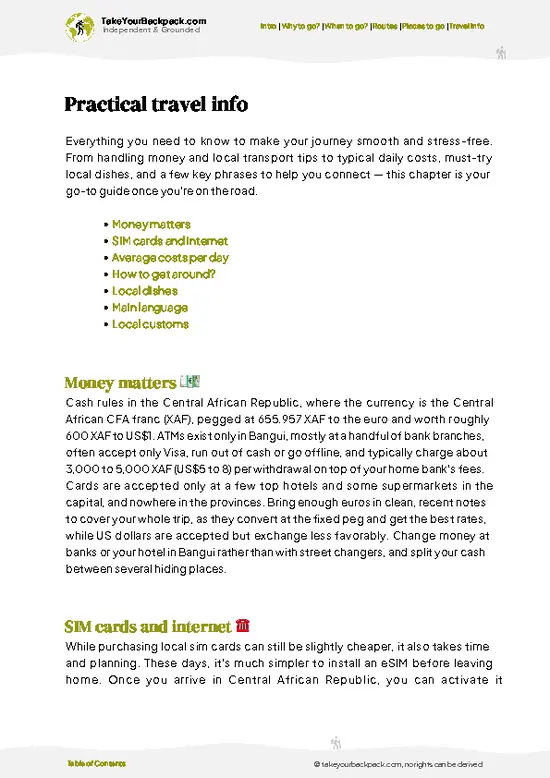
example page 0 from our offline Travel Guide for Central African Republic
example page 1 from our offline Travel Guide for Central African Republic
example page 2 from our offline Travel Guide for Central African Republic
example page 3 from our offline Travel Guide for Central African Republic
example page 4 from our offline Travel Guide for Central African Republic
example page 5 from our offline Travel Guide for Central African Republic
example page 6 from our offline Travel Guide for Central African Republic
example page 7 from our offline Travel Guide for Central African Republic
The digital guide (229 pages) contains:
51 highlights, ranked by travel appeal
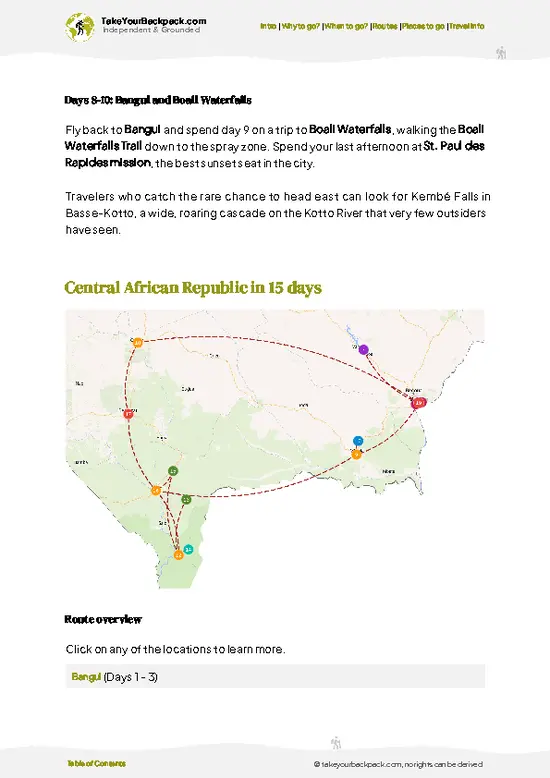
Optimized 5, 10 & 15-day travel routes
Cities, national parks, landmarks, beaches
How to get around
Offline-friendly for travel without Wi-Fi
👉 Click to see all 30+ guide features

📅 Plan smarter in minutes, not weeks
Month by month travel advice
Festivals & national holidays
Budget expectations

🗺️ Go to the right places, skip the overrated ones
Honest pros & cons of destinations
Top hikes, parks & viewpoints
Lesser-known places most travelers miss
Clear “worth it vs skip it” guidance

🛏️ Travel smoothly without rookie mistakes
Best areas to stay
Transport systems explained simply
Common scams & safety advice
SIM cards, money & practical tips

🌍 Understand the country, not just visit it
Culture & traditions
52 Essential phrases & customs
Festivals worth planning around
Traveler-friendly historical context
Insights that make places more meaningful

📱 Built for real travel conditions
Fully downloadable PDF
Works completely offline
Optimized for phone use
Useful in remote areas & buses
Everything in one place
Save weeks of stressful planning
Get instant access to your full guide. 30‑day money-back guarantee.
+ Add another guide for just US$7.80

By proceeding you agree to our terms.
Sent to your inbox immediately after payment • 100% Secure Checkout
Best Backpacking Travel Advisor 2025 tourism awardBest Backpacking
Travel Advisor
2025
What others say about Take Your Backpack Guides:
⭐⭐⭐⭐⭐
Fantastic, amazing amount of information!
⭐⭐⭐⭐⭐
My goodness this is amazing, it's what I've been looking for hats off too you!
⭐⭐⭐⭐⭐
I think this is absolutely BRILLIANT
⭐⭐⭐⭐
Very complete and informative. It's still missing places, but I gotta to commend you
⭐⭐⭐⭐⭐
This is truly amazing, thank you, can't wait to explore it with my kids!
⭐⭐⭐⭐⭐
Awesome resource, thank you!
⭐⭐⭐⭐⭐
This is amazing! Can't wait to explore the ones I haven't seen
⭐⭐⭐⭐
I love this! Well done, great idea.
⭐⭐⭐⭐⭐
Thanks for taking the time to make this gem!
⭐⭐⭐⭐⭐
This might be the best website I've ever seen.
⭐⭐⭐⭐⭐
Congratulations, and thank you so much for your work; it's incredibly valuable.
⭐⭐⭐⭐
In all seriousness I think you did a great job pointing out the important spots
⭐⭐⭐⭐⭐
10/10 very good
⭐⭐⭐⭐⭐
As someone who's only just starting to visit regularly this is awesome, thank you.
⭐⭐⭐⭐
Thank you very much! I'm going to visit my dad, it's going to be very useful!
⭐⭐⭐⭐⭐
This is really cool! We'll be travelling for the first time and this definitely come in handy.
⭐⭐⭐⭐⭐
You are now our minister of culture, congratulations 👨‍💼
⭐⭐⭐⭐⭐
Just wanted to tell you that this is a pearl! Going to follow your recommendations.
⭐⭐⭐⭐⭐
This is so cool. I'll definitely be using the resource for my travels soon.
⭐⭐⭐⭐⭐
This is very impressive! Good work.
⭐⭐⭐⭐⭐
This is an amazing and informative site. Very well done!

🛏️ Where to stay?How to pick the right area

In Mokolo, the best spot for backpackers is the central district near the market and main square. This area hums with life—vendors shouting, spices scenting the air, and locals gathering in the late afternoon glow. It’s where you’ll find the few budget guesthouses and informal hostels that cater to solo travelers, offering a chance to connect over shared meals or stories. Compared to the quieter, more residential outskirts, staying here means safety in numbers and easy access to transport and food stalls. The vibe is raw and unpolished but authentic, perfect for those who want to feel the pulse … read more 👉
In Mokolo, the best spot for backpackers is the central district near the market and main square. This area hums with life—vendors shouting, spices scenting the air, and locals gathering in the late afternoon glow. It’s where you’ll find the few budget guesthouses and informal hostels that cater to solo travelers, offering a chance to connect over shared meals or stories. Compared to the quieter, more residential outskirts, staying here means safety in numbers and easy access to transport and food stalls. The vibe is raw and unpolished but authentic, perfect for those who want to feel the pulse of the town without wandering into less secure neighborhoods.

🚌 Getting aroundHow to get around Mokolo

Mokolo moves at its own rhythm—neither frantic nor strictly regimented. The sun casts long shadows over dusty streets where time feels elastic, bending around the chatter of market vendors and the occasional honk of a shared taxi. Here, schedules are more of a suggestion than a rule, and the scent of grilled meat mingles with the dry earth, grounding you in the moment. Navigating Mokolo means embracing a blend of patience and streetwise savvy, where the best rides come from reading the flow rather than relying on timetables.


  • Walking: The heart of Mokolo is compact enough to explore on foot. Walking lets you soak in the textures—the cracked pavement, the hum of daily life, and the unexpected bursts of laughter. It’s free, flexible, and the best way to catch the town’s pulse.

  • Shared Taxis
read more 👉
Mokolo moves at its own rhythm—neither frantic nor strictly regimented. The sun casts long shadows over dusty streets where time feels elastic, bending around the chatter of market vendors and the occasional honk of a shared taxi. Here, schedules are more of a suggestion than a rule, and the scent of grilled meat mingles with the dry earth, grounding you in the moment. Navigating Mokolo means embracing a blend of patience and streetwise savvy, where the best rides come from reading the flow rather than relying on timetables.


  • Walking: The heart of Mokolo is compact enough to explore on foot. Walking lets you soak in the textures—the cracked pavement, the hum of daily life, and the unexpected bursts of laughter. It’s free, flexible, and the best way to catch the town’s pulse.

  • Shared Taxis (Taxi-Brousse): These minibuses are the lifeline between neighborhoods and nearby towns. They don’t run on a strict schedule—departures happen when full, so timing is fluid. Fares are low, but expect a tight squeeze and a lively atmosphere.

  • Motorcycle Taxis (Boda-Boda): Perfect for quick hops or dodging Mokolo’s uneven roads. They’re affordable and fast but always negotiate the fare upfront. Helmets aren’t guaranteed, so hold on tight and keep your wits about you.

  • Local Buses: Less common but available on main routes, these buses run roughly from early morning until late afternoon. They’re cheap and offer a chance to travel like a local, though comfort varies widely.

👛 Costs (as of 3 September 2026)How expensive it really is

Backpacking in Mokolo, Central African Republic, demands a practical approach to budgeting, grounded in the town’s modest infrastructure and local economy. Here’s how the daily costs typically break down for an independent traveler navigating this off-the-beaten-path spot.
  • Dorm Accommodation: Options are extremely limited, with basic guesthouses or shared rooms costing around €5 to €10 per night. Expect simple setups—think mosquito nets, hard beds, and minimal amenities. This is not a luxury stop but a functional base to rest.
  • Meals: Local eateries serve hearty, staple meals like rice, beans, and grilled meat for about €2 to €4 per meal. Street food can be even cheaper, but hygiene standards vary. Budget around €6 to €10 daily if you stick to local fare, which is filling and straightforward.
read more 👉
Backpacking in Mokolo, Central African Republic, demands a practical approach to budgeting, grounded in the town’s modest infrastructure and local economy. Here’s how the daily costs typically break down for an independent traveler navigating this off-the-beaten-path spot.
  • Dorm Accommodation: Options are extremely limited, with basic guesthouses or shared rooms costing around €5 to €10 per night. Expect simple setups—think mosquito nets, hard beds, and minimal amenities. This is not a luxury stop but a functional base to rest.
  • Meals: Local eateries serve hearty, staple meals like rice, beans, and grilled meat for about €2 to €4 per meal. Street food can be even cheaper, but hygiene standards vary. Budget around €6 to €10 daily if you stick to local fare, which is filling and straightforward.
  • Local Transport: Transport options are sparse and informal—shared taxis or motorbike rides cost roughly €1 to €3 per trip within town. Walking is often the best way to get around, saving money and letting you soak in the dusty, sunlit streets.
  • Basic Activities/Entry Fees: Mokolo’s attractions are mostly natural and cultural, with minimal or no entry fees. Budget around €1 to €3 for any guided visits or small local fees, though many experiences come down to exploring on your own.
  • Miscellaneous Expenses: This covers essentials like bottled water, snacks, or phone credit. Expect to spend about €2 to €5 daily, especially since clean water isn’t always guaranteed from taps.

All told, a realistic daily budget for backpacking in Mokolo hovers between €15 and €30. This range reflects the town’s raw, unpolished vibe—where the payoff is in the authentic, unvarnished experience rather than comfort or convenience. Planning with this in mind means you’re set to navigate the practical challenges smoothly and appreciate the place on its own terms.
⚠️ Prices can change and everyone travels differently, so take this as a rough guide. Hope it helps you plan your adventure!

🚌 Day tripsEasy escapes and nearby places

Mokolo is a fantastic base for exploring the Central African Republic, offering a blend of adventure and cultural immersion. The surrounding landscapes and communities provide rich experiences that are both accessible and rewarding.

Trip to the Bamingui-Bangoran National Park
This park is a wild escape, where the air is thick with the scent of earth and foliage. Just a few hours from Mokolo, you can spot elephants and various antelope species roaming freely. The journey takes about three hours by shared taxi-brousse, costing around $10. The best time to visit is during the dry season, from November to April, when wildlife is more active. A common mistake is underestimating the park’s size; plan for a full day to truly soak in its beauty.
👉 Explore Bamingui-Bangoran National Park

Trip read more 👉
Mokolo is a fantastic base for exploring the Central African Republic, offering a blend of adventure and cultural immersion. The surrounding landscapes and communities provide rich experiences that are both accessible and rewarding.

Trip to the Bamingui-Bangoran National Park
This park is a wild escape, where the air is thick with the scent of earth and foliage. Just a few hours from Mokolo, you can spot elephants and various antelope species roaming freely. The journey takes about three hours by shared taxi-brousse, costing around $10. The best time to visit is during the dry season, from November to April, when wildlife is more active. A common mistake is underestimating the park’s size; plan for a full day to truly soak in its beauty.
👉 Explore Bamingui-Bangoran National Park

Trip to the Village of Boda
A short ride of about an hour will take you to Boda, where you can immerse yourself in local culture. The vibrant markets burst with colors and the aroma of spices fills the air. Expect to spend around $5 on transport. This trip is best during the cooler mornings, as the heat can be intense later in the day. First-timers often miss the chance to engage with locals; don’t hesitate to ask questions and share stories.
👉 Explore Boda

Trip to the Sangha River
The Sangha River is a serene spot for a day of relaxation and exploration. It’s about a two-hour journey from Mokolo, costing around $8. The riverbanks are perfect for a picnic, and you might even catch glimpses of hippos. The best time to go is early morning, when the mist rises off the water, creating a magical atmosphere. Many overlook the importance of bringing enough water and snacks; don’t let hunger cut your adventure short.


Trip to the Mbomou River
A visit to the Mbomou River offers a different perspective on the region’s natural beauty. It’s a three-hour trek, costing about $12. The river is lined with lush vegetation, and the sound of water flowing is incredibly soothing. Late afternoon is ideal for this trip, as the setting sun casts a golden hue over the landscape. A common pitfall is not bringing a camera; the views are breathtaking and worth capturing.
Want to know what more Central African Republic offers?
The Central African Republic Travel Guide describes 51 highlights, from cities to national parks, from beaches to hikes

Get the Travel Guide -

🛡️ SafetyScams, Hazards, and Annoyances

Mokolo is generally safe, but a few practical tips can enhance your experience. The market area can get busy, so keep your belongings close. A crossbody bag or a money belt works wonders.

If you’re traveling solo, be mindful after dark. Streets can be dimly lit, and while locals are friendly, it’s wise to stick to well-populated areas.

Scams are rare, but some vendors may inflate prices for tourists. A friendly smile and a bit of haggling can help you navigate this.

Annoyances like persistent street vendors can be managed with a polite but firm “no, thank you.” Carry yourself confidently; a relaxed demeanor often disarms potential issues. Embrace the rhythm of the town, and you’ll find that the small challenges only add to the adventure.

FAQCommon questions from travelers

Mokolo is primarily a stopover rather than a destination for extended visits due to limited tourist infrastructure and attractions. It serves as a practical rest point for travelers moving through the region. The town offers basic amenities but few cultural or natural sights to explore extensively.
One day is generally sufficient to cover Mokolo, mainly for rest and resupply. If you plan to explore the surrounding area or local markets, two days might be needed, but beyond that, there is little to justify a longer stay.
Yes, Mokolo can be visited as a day trip from nearby towns like Garoua, which is about 150 kilometers away. The journey by road takes around 3 to 4 hours each way, making a day trip feasible but long, so overnight stays are often more comfortable.
⚠️ Things can change over time, so always validate details locally before you go.

Other Central African towns near Mokolo

Explore more nearby:

  • Carnot—diamond mining, colonial-era buildings, forest edge| 92 km away
  • Nola—Sangha River confluence, timber transport, river port| 157 km away
  • Bouar—megalithic sites, highland plateau, transport hub| 158 km away

💡 Not sure where to go next?
Create a personalized itinerary for Central African Republic including Mokolo and the places that fit your trip.

Generate my itinerary

👉 Discover all towns

Or checkout all Central African Republic has to offer (think cities, towns, villages, national parks, hikes, beaches, festivals)
Country photo of Central African Republic

We 💚 feedbackIs it worth it?

Mokolo is a place where the air hums with life. The vibrant market is a sensory overload—spices, laughter, and the occasional goat bleating. You’ll be surprised by the warmth of the locals; they’ll share stories that make you feel at home. Just be mindful of the heat; hydration is key. Embrace the slower pace, and let the rhythm of the village seep into your bones. It’s not just a destination; it’s an experience that lingers long after you leave.

✍️ Help improve this page!
The information on this page is based on in-depth research, insights shared by experienced travelers, and feedback from the local travel community in Central African Republic. While every effort is made to keep the information accurate and current, conditions can change — so if you spot anything incorrect or outdated, please get in touch.


🙋‍♂️ Give feedback

👋 Meet the founderWho’s Behind Take Your Backpack?

Johan, backpacker and founder of TakeYourBackpackHi, I’m Johan (Netherlands 🇳🇱), the creator of TakeYourBackpack. Over the past decade, I’ve backpacked through 80+ countries across six continents, gaining extensive experience with independent travel, long-term trips, and overland routes.

This site is built on a combination of firsthand travel experience and carefully curated insights from other backpackers. Many guides are based on places I’ve personally visited, while others bring together tips, observations, and practical advice shared by trusted travelers I’ve met along the way.

The goal is to provide realistic, experience-driven guidance — not generic itineraries — so you can explore destinations with better context, clearer expectations, and more confidence.

Get full country guide •
Instant download • 51 highlights • Full Offline guide