×

Central African Republic🇨🇫 | townsNolaSangha River confluence, timber transport, river port | things to do and best time to go

Explore NdeleExplore Birao

Backpacking in Nola
🏆 Top picktown ranked #3
By Johan Kruseman 🇳🇱 | Updated September 3, 2026

You’re standing in the early morning haze, the air thick with woodsmoke and the low, earthy scent of the Sangha River. Nola, tucked into the far southwest corner of the Central African Republic, is where the red dirt road finally gives way to a slow, looping river and the jungle presses in close. This isn’t a town that tries to charm you; it’s a practical outpost, a crossroads for traders and travelers heading toward Cameroon or the Dzanga-Sangha Reserve. For backpackers, Nola is more staging ground than destination—basic, but real. The market is lively, but don’t expect a food scene; you’ll find grilled fish and plantains, not espresso bars. Getting here is a test of patience—buses are infrequent, roads are rough, and you’ll need to negotiate for a moto or shared taxi to get anywhere interesting. It’s quieter than Bayanga, less scenic than the reserves, but you’ll meet the occasional traveler swapping stories over warm beer. Costs are low, but so is comfort. Safety is manageable with street sense, though nights are best kept low-key. Nola is for those who want the journey to feel raw, not curated.

Discover everything you want to know in the 📖 Central African Republic Travel Guide.
Safety warning

The current risk level for Central African Republic is high. Check the advice before going.


Get your Central African Republic guide
51 ranked highlights, routes & tips, works offline (229 pages)
Loading the map 🌍
CLICK TO FILTER
cities
towns
landmarks
national parks
hikes
attractions
festivals
regions
SHOW COUNTRY’S BESTSHOW ALL

✨ Why go?
Ranked #3 town in Central African Republic
The unique appeal for travelers

Nola serves as a gateway for backpackers exploring the Central African Republic. Its proximity to stunning hikes and local cultural sites makes it a strategic stop. You can easily access the lush trails of the surrounding hills or the tranquil beaches along the river, perfect for unwinding after a day of adventure. The small-scale hostels and guesthouses here offer a cozy atmosphere, often run by locals eager to share their stories and meals. You’ll find the aroma of street food wafting through the air, with vendors serving up delicious local dishes that are both affordable and satisfying.

The streets are walkable, encouraging you to soak in the vibrant community vibe. Most travelers tend to linger a few days, especially those who enjoy a slow travel pace or are solo adventurers looking to … read more 👉
Nola serves as a gateway for backpackers exploring the Central African Republic. Its proximity to stunning hikes and local cultural sites makes it a strategic stop. You can easily access the lush trails of the surrounding hills or the tranquil beaches along the river, perfect for unwinding after a day of adventure. The small-scale hostels and guesthouses here offer a cozy atmosphere, often run by locals eager to share their stories and meals. You’ll find the aroma of street food wafting through the air, with vendors serving up delicious local dishes that are both affordable and satisfying.

The streets are walkable, encouraging you to soak in the vibrant community vibe. Most travelers tend to linger a few days, especially those who enjoy a slow travel pace or are solo adventurers looking to connect with others. Nola isn’t about nightlife; it’s about authentic experiences and the camaraderie of fellow backpackers. If you’re seeking a blend of adventure and cultural immersion, this town is a perfect fit.
Want to include Nola in your Central African Republic route?
Create a personalized Central African Republic itinerary that includes Nola and the places that fit your trip — based on your travel style, budget, and available time. Get your route in seconds.

Generate my trip

💡 HighlightsTop highlights of Nola

  1. Préfecture de Sangha-Mbaéré (Préfecture building) — the administrative heart of Nola. It’s where local government happens, and hanging around the steps you’ll see officials, traders and drivers — a good place to get a feel for how the town actually runs and pick up practical local info.
  2. Marché central de Nola (Central Market) — noisy, colorful and essential. Fresh produce, smoked fish, palm oil, second-hand clothes and small stalls with carvings and beads; great for people-watching, snacks and buying cheap, locally made souvenirs if you haggle politely.
  3. Nola Airstrip (aérodrome) — tiny, dusty and oddly atmospheric. Flights are rare, but the strip is the town’s connection to the outside world; watching arrivals/departures is a real reminder of how remote life here can be.
  4. Sangha riverside
read more 👉
  1. Préfecture de Sangha-Mbaéré (Préfecture building) — the administrative heart of Nola. It’s where local government happens, and hanging around the steps you’ll see officials, traders and drivers — a good place to get a feel for how the town actually runs and pick up practical local info.
  2. Marché central de Nola (Central Market) — noisy, colorful and essential. Fresh produce, smoked fish, palm oil, second-hand clothes and small stalls with carvings and beads; great for people-watching, snacks and buying cheap, locally made souvenirs if you haggle politely.
  3. Nola Airstrip (aérodrome) — tiny, dusty and oddly atmospheric. Flights are rare, but the strip is the town’s connection to the outside world; watching arrivals/departures is a real reminder of how remote life here can be.
  4. Sangha riverside quay — the riverbank is a working place more than a postcard spot: pirogues, fishermen, boat traffic and sunsets. Walk the quay to see river commerce up close and catch cool breezes after the midday heat.
  5. Local mission chapel and clinic — many towns in this region grew around missionary stations. The chapel and clinic in Nola are important community anchors and worth visiting respectfully to understand local history, health care and education links with outsiders.
  6. Old colonial administrative quarter — fragments of French colonial architecture and the former gendarmerie buildings still stand. They’re not a museum, but a wander through the streets shows how the town’s layout and buildings were shaped by colonial-era administration.
  7. Artisan workshops and carver stalls — small yards where woodcarvers, basket makers and leatherworkers work and sell. Visiting gives you a chance to see craft techniques up close and buy directly from makers, which helps the community more than buying from middlemen.
  8. Weekly market/cattle day — if your timing’s right, market day is a must: cattle trading, barter stalls and traders from nearby villages. It’s raw, lively and the best place to meet people and see local economy in motion.
  9. Community school and youth center — simple, active places where you can observe or sometimes join a school activity or cultural event. They’re good for conversations about local life and for dropping off small, practical donations if you plan ahead.
  10. Community-managed forest edge and walking paths — small forest patches and riverine strips right on the town’s edge that locals use for gathering fruit, honey and herbs. Short walks here give a quick taste of the Sangha-Mbaéré ecosystem without venturing into protected areas.
For day trips outside Nola, the real highlights are the Dzanga-Sangha protected areas around Bayanga (Dzanga Bai and the forest elephant clearings) and other nearby river villages and forest areas that are best explored as full-day excursions.
Spotted a mistake or missing something? Contact us.

🏘️ NeighborhoodsWhere things are and how it's laid out

Nola, the bustling heart of Central African Republic, offers a vibrant mix of culture and adventure. Each neighborhood has its own character, making it essential to choose wisely for your backpacking experience.

Centre Ville: This is the pulse of Nola. You’ll find local markets, street food stalls, and a lively atmosphere. It’s walkable, with plenty of budget-friendly accommodations. The nightlife here is buzzing, perfect for those who want to mingle. Short stays work well, but longer visits can lead to deeper connections with locals.

Quartier Kilo: A quieter area, ideal for those seeking a more laid-back vibe. The streets are lined with trees, and you can enjoy the scent of fresh produce from nearby vendors. While it’s less lively at night, it’s still accessible to the city center. This … read more 👉
Nola, the bustling heart of Central African Republic, offers a vibrant mix of culture and adventure. Each neighborhood has its own character, making it essential to choose wisely for your backpacking experience.

Centre Ville: This is the pulse of Nola. You’ll find local markets, street food stalls, and a lively atmosphere. It’s walkable, with plenty of budget-friendly accommodations. The nightlife here is buzzing, perfect for those who want to mingle. Short stays work well, but longer visits can lead to deeper connections with locals.

Quartier Kilo: A quieter area, ideal for those seeking a more laid-back vibe. The streets are lined with trees, and you can enjoy the scent of fresh produce from nearby vendors. While it’s less lively at night, it’s still accessible to the city center. This neighborhood is better for longer stays, allowing you to soak in the local rhythm.

Quartier Bongo: Known for its artistic flair, this area is a haven for creatives. Street art adorns the walls, and small galleries pop up in unexpected places. It’s a bit more expensive, but the unique experiences justify the cost. Walkability is decent, and it’s a great spot for both short and longer stays, especially if you’re looking to connect with the local art scene.

Zone 5: This residential area offers a glimpse into everyday life in Nola. It’s quieter, with fewer tourists, making it perfect for those who want to escape the hustle. Transport options are limited, so plan your outings carefully. Short stays can feel isolating, but longer visits can lead to meaningful interactions with residents.

⌛️ 1 daySeeing the highlights in 24 hours

Nola, a vibrant town in the Central African Republic, is a tapestry of culture, history, and the raw beauty of everyday life. The air here carries the scent of earth after rain, mingling with the distant sounds of laughter and music. It’s a place where the ordinary feels extraordinary, and every corner has a story waiting to be discovered.

Start your morning at the bustling local market. The sun filters through the vibrant awnings, casting playful shadows on the ground. Here, you can sample fresh mangoes and chat with vendors who are eager to share their stories. This isn’t just a shopping trip; it’s a chance to connect with the heart of Nola. Grab a cup of locally brewed coffee, rich and aromatic, to fuel your adventures ahead.

In the afternoon, head to the nearby River Sangha. The gentle … read more 👉
Nola, a vibrant town in the Central African Republic, is a tapestry of culture, history, and the raw beauty of everyday life. The air here carries the scent of earth after rain, mingling with the distant sounds of laughter and music. It’s a place where the ordinary feels extraordinary, and every corner has a story waiting to be discovered.

Start your morning at the bustling local market. The sun filters through the vibrant awnings, casting playful shadows on the ground. Here, you can sample fresh mangoes and chat with vendors who are eager to share their stories. This isn’t just a shopping trip; it’s a chance to connect with the heart of Nola. Grab a cup of locally brewed coffee, rich and aromatic, to fuel your adventures ahead.

In the afternoon, head to the nearby River Sangha. The gentle flow of water invites you to pause and reflect. Take a guided canoe trip with local fishermen. They’ll share their techniques and tales, immersing you in the rhythms of life along the river. This experience isn’t on the typical tourist path, but it’s a genuine glimpse into the community’s daily existence.

As evening approaches, wander through the lively streets of the town center. The golden hour casts a warm glow, illuminating the faces of locals gathering for evening meals. Stop by a small eatery for a plate of grilled tilapia, seasoned to perfection. The flavors are bold, and the atmosphere is filled with the sounds of conversation and laughter.

Nola may not be on every travel itinerary, but its charm lies in the connections you make and the experiences that linger long after you leave. Embrace the journey, and let the town’s spirit guide you.
Turn your Nola visit into an Central African Republic adventure
Build a complete Central African Republic route with Nola, hidden gems, must-see destinations, and realistic travel times included.

Generate my trip

🌤️ When to go?Seasonal considerations and timing


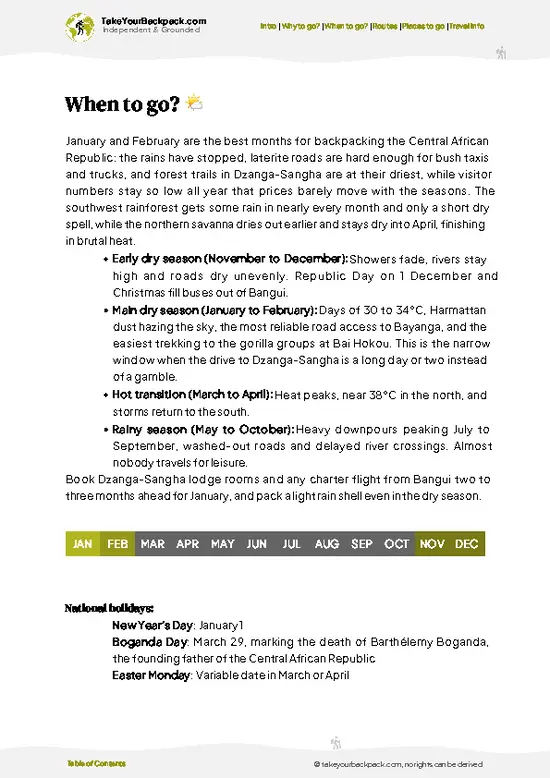
  • Topic: Weather – Nola’s climate swings between a wet season from May to October and a dry season from November to April. The wet months bring heavy, humid rains that can turn trails into mud traps and slow travel to a crawl. The dry season offers clearer skies and easier trekking conditions, but the heat can spike to 35°C (95°F), making midday hikes tough.

  • Topic: Temperature – Expect daytime highs around 30-35°C (86-95°F) in the dry season, cooling to 20-25°C (68-77°F) at night. The wet season is slightly cooler but stickier, with highs around 28°C (82°F) and nights rarely dropping below 22°C (72°F). Pack light, breathable layers for the heat and a rain jacket for sudden downpours.

  • Topic: Daylight Hours – Near the equator, Nola enjoys roughly 12 hours of daylight year-round, with sunrise
read more 👉

  • Topic: Weather – Nola’s climate swings between a wet season from May to October and a dry season from November to April. The wet months bring heavy, humid rains that can turn trails into mud traps and slow travel to a crawl. The dry season offers clearer skies and easier trekking conditions, but the heat can spike to 35°C (95°F), making midday hikes tough.

  • Topic: Temperature – Expect daytime highs around 30-35°C (86-95°F) in the dry season, cooling to 20-25°C (68-77°F) at night. The wet season is slightly cooler but stickier, with highs around 28°C (82°F) and nights rarely dropping below 22°C (72°F). Pack light, breathable layers for the heat and a rain jacket for sudden downpours.

  • Topic: Daylight Hours – Near the equator, Nola enjoys roughly 12 hours of daylight year-round, with sunrise around 6:00 AM and sunset near 6:00 PM. This steady rhythm means you can plan hikes and activities without worrying about drastic seasonal shifts in light.

  • Topic: Crowds – The dry season draws more visitors, especially from December to February, when the weather is most manageable. This means local guesthouses fill up faster and prices rise. The wet season sees fewer travelers, offering solitude but at the cost of accessibility and comfort.

  • Topic: Seasonal Activities – Wildlife spotting peaks in the dry months when animals gather around shrinking water sources, making safaris more rewarding. The wet season transforms the landscape into lush green, ideal for birdwatching and photography but less for long treks.

  • Topic: Price Fluctuations – Expect higher prices for accommodation and guides during the dry season’s peak months due to demand. The wet season offers better deals but factor in potential costs for waterproof gear and possible delays.


Pro-tip: Aim for the shoulder months of November or April—less rain than the wet season, fewer crowds than peak dry months, and a balance of comfort and cost that lets you savor Nola’s wild heart without the extremes.


source: climatestotravel.comJANJanuary: excellent for travelingFEBFebruary: excellent for travelingMARMarch: highly recommended for travelingAPRApril: highly recommended for travelingMAYMay: fair for travelingJUNJune: fair for travelingJULJuly: fair for travelingAUGAugust: fair for travelingSEPSeptember: fair for travelingOCTOctober: fair for travelingNOVNovember: highly recommended for travelingDECDecember: excellent for traveling
when-to-go

✈️ The backpacker research shortcutCentral African Republic Travel Guide

An offline-friendly backpacking guide with optimized travel routes, ranked highlights, transport advice, and the best areas to stay.
example page 0 from our offline Travel Guide for Central African Republic
example page 1 from our offline Travel Guide for Central African Republic
example page 2 from our offline Travel Guide for Central African Republic
example page 3 from our offline Travel Guide for Central African Republic
example page 4 from our offline Travel Guide for Central African Republic
example page 5 from our offline Travel Guide for Central African Republic
example page 6 from our offline Travel Guide for Central African Republic
example page 7 from our offline Travel Guide for Central African Republic
The digital guide (229 pages) contains:
51 highlights, ranked by travel appeal
Optimized 5, 10 & 15-day travel routes
Cities, national parks, landmarks, beaches
How to get around
Offline-friendly for travel without Wi-Fi
👉 Click to see all 30+ guide features

📅 Plan smarter in minutes, not weeks
Month by month travel advice
Festivals & national holidays
Budget expectations

🗺️ Go to the right places, skip the overrated ones
Honest pros & cons of destinations
Top hikes, parks & viewpoints
Lesser-known places most travelers miss
Clear “worth it vs skip it” guidance

🛏️ Travel smoothly without rookie mistakes
Best areas to stay
Transport systems explained simply
Common scams & safety advice
SIM cards, money & practical tips

🌍 Understand the country, not just visit it
Culture & traditions
52 Essential phrases & customs
Festivals worth planning around
Traveler-friendly historical context
Insights that make places more meaningful

📱 Built for real travel conditions
Fully downloadable PDF
Works completely offline
Optimized for phone use
Useful in remote areas & buses
Everything in one place
Save weeks of stressful planning
Get instant access to your full guide. 30‑day money-back guarantee.
+ Add another guide for just JP¥1170

By proceeding you agree to our terms.
Sent to your inbox immediately after payment • 100% Secure Checkout
Best Backpacking Travel Advisor 2025 tourism awardBest Backpacking
Travel Advisor
2025
What others say about Take Your Backpack Guides:
⭐⭐⭐⭐⭐
Fantastic, amazing amount of information!
⭐⭐⭐⭐⭐
My goodness this is amazing, it's what I've been looking for hats off too you!
⭐⭐⭐⭐⭐
I think this is absolutely BRILLIANT
⭐⭐⭐⭐
Very complete and informative. It's still missing places, but I gotta to commend you
⭐⭐⭐⭐⭐
This is truly amazing, thank you, can't wait to explore it with my kids!
⭐⭐⭐⭐⭐
Awesome resource, thank you!
⭐⭐⭐⭐⭐
This is amazing! Can't wait to explore the ones I haven't seen
⭐⭐⭐⭐
I love this! Well done, great idea.
⭐⭐⭐⭐⭐
Thanks for taking the time to make this gem!
⭐⭐⭐⭐⭐
This might be the best website I've ever seen.
⭐⭐⭐⭐⭐
Congratulations, and thank you so much for your work; it's incredibly valuable.
⭐⭐⭐⭐
In all seriousness I think you did a great job pointing out the important spots
⭐⭐⭐⭐⭐
10/10 very good
⭐⭐⭐⭐⭐
As someone who's only just starting to visit regularly this is awesome, thank you.
⭐⭐⭐⭐
Thank you very much! I'm going to visit my dad, it's going to be very useful!
⭐⭐⭐⭐⭐
This is really cool! We'll be travelling for the first time and this definitely come in handy.
⭐⭐⭐⭐⭐
You are now our minister of culture, congratulations 👨‍💼
⭐⭐⭐⭐⭐
Just wanted to tell you that this is a pearl! Going to follow your recommendations.
⭐⭐⭐⭐⭐
This is so cool. I'll definitely be using the resource for my travels soon.
⭐⭐⭐⭐⭐
This is very impressive! Good work.
⭐⭐⭐⭐⭐
This is an amazing and informative site. Very well done!

🛏️ Where to stay?Where staying makes the most sense

In Nola, the best spot for backpackers is the town center, where the pulse of daily life hums steadily. This area balances safety with social energy, making it a natural magnet for solo travelers and budget adventurers. Streets here are lined with small markets and local eateries, where the scent of grilled fish and fresh cassava drifts through the air, inviting you to linger and connect. The light in the late afternoon softens the rough edges of the town, casting a warm glow that makes wandering feel effortless.

Hostel options are limited but tend to cluster near the main square, which acts … read more 👉
In Nola, the best spot for backpackers is the town center, where the pulse of daily life hums steadily. This area balances safety with social energy, making it a natural magnet for solo travelers and budget adventurers. Streets here are lined with small markets and local eateries, where the scent of grilled fish and fresh cassava drifts through the air, inviting you to linger and connect. The light in the late afternoon softens the rough edges of the town, casting a warm glow that makes wandering feel effortless.

Hostel options are limited but tend to cluster near the main square, which acts as a hub for meeting other travelers and locals alike. Staying here means you’re never far from the informal gatherings that spring up around shared meals or impromptu music sessions. Compared to the quieter, more residential outskirts, the center offers a richer, more immediate experience of Nola’s character without sacrificing a sense of security.

Avoid the more isolated neighborhoods where infrastructure thins and the atmosphere tightens. In the center, you get the best mix: a place to rest, recharge, and dive into the town’s rhythm with confidence.

🚌 Getting aroundGetting around like a local

New Orleans moves to a rhythm all its own. The city’s pulse isn’t dictated by strict timetables but by the ebb and flow of jazz spilling from open doors, the scent of roasting coffee beans mingling with the Mississippi breeze, and the slow shuffle of locals and tourists weaving through French Quarter streets. It’s a place where time feels elastic—sometimes languid, sometimes urgent—so your transit choices should match that vibe: flexible, affordable, and tuned to the city’s unique beat.


  • Walking: The heart of New Orleans beats strongest on foot. The French Quarter and nearby neighborhoods are compact enough to explore by strolling, letting you soak in the cracked sidewalks, wrought-iron balconies, and the occasional waft of Cajun spices. Walking costs nothing, offers the richest sensory
read more 👉
New Orleans moves to a rhythm all its own. The city’s pulse isn’t dictated by strict timetables but by the ebb and flow of jazz spilling from open doors, the scent of roasting coffee beans mingling with the Mississippi breeze, and the slow shuffle of locals and tourists weaving through French Quarter streets. It’s a place where time feels elastic—sometimes languid, sometimes urgent—so your transit choices should match that vibe: flexible, affordable, and tuned to the city’s unique beat.


  • Walking: The heart of New Orleans beats strongest on foot. The French Quarter and nearby neighborhoods are compact enough to explore by strolling, letting you soak in the cracked sidewalks, wrought-iron balconies, and the occasional waft of Cajun spices. Walking costs nothing, offers the richest sensory experience, and is often faster than waiting for transit in the dense, narrow streets.


  • Streetcar (St. Charles Line): This historic ride is more than transit—it’s a moving postcard. Runs roughly from 6 a.m. to midnight, with a $1.25 fare per ride or $3 for an all-day Jazzy Pass. The pace is unhurried, perfect for watching live oaks and antebellum mansions drift by. It’s slower than a bus but far more atmospheric, and it’s a budget-friendly way to cover longer distances without losing the city’s soul.


  • RTA Bus: The Regional Transit Authority buses cover the city extensively, running from about 5 a.m. to 1 a.m. Tickets are $1.25 per ride, with transfers available. Buses are practical for reaching neighborhoods beyond the French Quarter and Uptown, but expect variable wait times and occasional crowding during peak hours. They’re your go-to for budget travel when you need to cover ground quickly without the streetcar’s scenic detours.


  • Ferries: The Algiers Point Ferry crosses the Mississippi River, connecting the West Bank to downtown. It runs every 30 minutes from early morning until late evening, costing $2 per ride. The ferry offers a refreshing break from city streets, with open-air views of the river and skyline—perfect for a budget traveler wanting a unique transit experience that doubles as a mini sightseeing tour.


  • Biking: New Orleans is surprisingly bike-friendly, especially in flat areas like the French Quarter and Marigny. Bike rentals start around $15 a day, and the city’s bike lanes and trails make this a flexible, fast, and affordable way to navigate. You’ll catch the city’s scents and sounds more vividly than in a vehicle, and it’s a smart choice when you want to cover more ground than walking but stay immersed in the street-level vibe.

👛 Costs (as of 3 September 2026)What things cost and how to budget

Backpacking in Nola, Central African Republic, demands a clear-eyed approach to daily expenses, where every dollar counts and the local rhythm shapes your spending.
  • Dorm Accommodation: Options are extremely limited and basic, often in guesthouses rather than formal hostels. Expect to pay around $5 to $10 per night for a simple bed, usually with shared facilities and minimal amenities. Cleanliness and comfort can vary widely, so lower prices often mean rougher conditions.
  • Meals: Food is straightforward and locally sourced. Street food and small eateries serve staples like rice, cassava, and grilled fish or chicken. Meals typically cost between $2 and $5. Western-style or imported foods are rare and expensive, so sticking to local fare is both economical and authentic.
  • Local Transport: Transport
read more 👉
Backpacking in Nola, Central African Republic, demands a clear-eyed approach to daily expenses, where every dollar counts and the local rhythm shapes your spending.
  • Dorm Accommodation: Options are extremely limited and basic, often in guesthouses rather than formal hostels. Expect to pay around $5 to $10 per night for a simple bed, usually with shared facilities and minimal amenities. Cleanliness and comfort can vary widely, so lower prices often mean rougher conditions.
  • Meals: Food is straightforward and locally sourced. Street food and small eateries serve staples like rice, cassava, and grilled fish or chicken. Meals typically cost between $2 and $5. Western-style or imported foods are rare and expensive, so sticking to local fare is both economical and authentic.
  • Local Transport: Transport options are sparse and informal. Motorbike taxis are the main mode, costing about $1 to $3 for short trips within town. Walking is often the best way to get around, given the town’s small size and rough roads.
  • Basic Activities/Entry Fees: Tourist infrastructure is minimal, so entry fees to any local sites or parks are low or nonexistent, generally under $2. Organized tours are rare and usually arranged through NGOs or local contacts, which can be pricier and less predictable.
  • Miscellaneous Expenses: Budget for essentials like bottled water ($0.50), phone credit, and occasional supplies. These small costs add up to around $1 to $3 daily. Internet access is patchy and expensive, so plan accordingly.

A realistic daily budget for backpacking in Nola falls between $10 and $20. This range reflects the bare-bones nature of travel here—where simplicity and adaptability unlock the experience, and every dollar stretches to meet the town’s rugged pace.
⚠️ Prices can change and everyone travels differently, so take this as a rough guide. Hope it helps you plan your adventure!

🚌 Day tripsExploring the surroundings

Nola, in the Central African Republic, serves as a vibrant launchpad for unforgettable day trips that blend adventure with cultural immersion. Here are some standout options.

Bamingui-Bangoran National Park
This park is a wild, sprawling expanse where the sounds of nature envelop you. The journey takes about two hours by 4x4, and the road can be rough, but the payoff is worth it. Expect to pay around $20 for park entry and transport. Here, you can spot elephants, buffalo, and a range of bird species. The best time to visit is during the dry season, from November to April, when wildlife is more active. A common mistake? Underestimating the need for a guide; they’ll enhance your experience with local knowledge and ensure you don’t miss the best spots.
👉 Explore Bamingui-Bangoran National read more 👉
Nola, in the Central African Republic, serves as a vibrant launchpad for unforgettable day trips that blend adventure with cultural immersion. Here are some standout options.

Bamingui-Bangoran National Park
This park is a wild, sprawling expanse where the sounds of nature envelop you. The journey takes about two hours by 4x4, and the road can be rough, but the payoff is worth it. Expect to pay around $20 for park entry and transport. Here, you can spot elephants, buffalo, and a range of bird species. The best time to visit is during the dry season, from November to April, when wildlife is more active. A common mistake? Underestimating the need for a guide; they’ll enhance your experience with local knowledge and ensure you don’t miss the best spots.
👉 Explore Bamingui-Bangoran National Park

Boda Village
Just a short drive from Nola, Boda Village offers a glimpse into local life. The trip takes about an hour, and you can easily manage it for under $10. Engage with artisans crafting traditional goods and savor local dishes. The vibrant market is a sensory delight, filled with the scent of spices and the chatter of locals. Visit on a Saturday for the full experience, but don’t forget to bring small gifts for the children; it’s a great way to connect.


Bambari
Roughly three hours from Nola, Bambari is a cultural hub that showcases the rich heritage of the region. The journey costs around $15, and you’ll find yourself immersed in lively street markets and local music. The best time to visit is during the dry season, when the atmosphere is buzzing with activity. A common rookie error is not trying the street food; it’s safe and delicious, offering a taste of authentic Central African flavors.
👉 Explore Bambari

Mongoumba
A two-hour trip from Nola, Mongoumba is known for its stunning river views and friendly locals. The round trip can be done for about $12. Spend your day hiking along the riverbanks, soaking in the natural beauty, and chatting with fishermen about their daily catch. The ideal time to go is early morning, when the light dances on the water. Many first-timers miss the chance to swim; just be cautious of currents and enjoy the refreshing dip.
👉 Explore Mongoumba
Want to know what more Central African Republic offers?
The Central African Republic Travel Guide describes 51 highlights, from cities to national parks, from beaches to hikes

Get the Travel Guide -

🛡️ SafetyStaying Safe: What Travelers Should Know

Nola, in the Central African Republic, generally feels safe, but a few practical tips can enhance your experience. Stay aware in crowded markets; pickpockets can be a nuisance. Keep your valuables close, ideally in a money belt under your clothes.

If you’re wandering solo at night, stick to well-lit areas and avoid empty streets. The atmosphere can shift after dark, so trust your instincts.

Scams are rare, but some locals might try to overcharge for goods or services. Always negotiate prices upfront, especially for taxis or souvenirs. A friendly smile and a firm but polite demeanor go a long way.

Embrace the local culture, but stay alert. Your awareness will not only keep you safe but also deepen your connection to this vibrant town.

FAQFrequently asked questions about Nola

Nola is primarily a stopover rather than a destination for extended visits. It serves as a transit point for travelers heading to nearby natural reserves or border crossings. The town itself has limited tourist infrastructure and attractions.
One day is generally sufficient to stay in Nola. This allows time to rest, resupply, and prepare for onward travel. There are few activities or sights that require a longer stay.
Yes, Nola can be visited as a day trip from Berbérati, which is about 130 kilometers away. The journey by road takes approximately 3 to 4 hours each way, so a day trip is feasible but involves a long travel day.
⚠️ Things can change over time, so always validate details locally before you go.

Other Central African towns near Nola

Explore more nearby:

  • Bayanga—Dzanga-Sangha rainforest, wildlife tracking, BaAka communities| 73 km away
  • Mokolo—remote location, border proximity, river crossing| 157 km away
  • Carnot—diamond mining, colonial-era buildings, forest edge| 159 km away

💡 Not sure where to go next?
Create a personalized itinerary for Central African Republic including Nola and the places that fit your trip.

Generate my itinerary

👉 Discover all towns

Or checkout all Central African Republic has to offer (think cities, towns, villages, national parks, hikes, beaches, festivals)
Country photo of Central African Republic

We 💚 feedbackIs it worth it?

Nola has a raw, electric vibe that pulses through its streets. The scent of wood smoke mingles with the chatter of locals, creating an atmosphere that feels alive. Don’t miss the market; it’s a sensory overload in the best way. You’ll find vibrant fabrics and fresh produce, but be ready to haggle. A heads-up: the roads can be rough, so pack patience. Embrace the chaos; it’s part of the charm. You’ll leave with stories worth sharing.

✍️ Help improve this page!
The information on this page is based on in-depth research, insights shared by experienced travelers, and feedback from the local travel community in Central African Republic. While every effort is made to keep the information accurate and current, conditions can change — so if you spot anything incorrect or outdated, please get in touch.


🙋‍♂️ Give feedback

👋 Meet the founderWho’s Behind Take Your Backpack?

Johan, backpacker and founder of TakeYourBackpackHi, I’m Johan (Netherlands 🇳🇱), the creator of TakeYourBackpack. Over the past decade, I’ve backpacked through 80+ countries across six continents, gaining extensive experience with independent travel, long-term trips, and overland routes.

This site is built on a combination of firsthand travel experience and carefully curated insights from other backpackers. Many guides are based on places I’ve personally visited, while others bring together tips, observations, and practical advice shared by trusted travelers I’ve met along the way.

The goal is to provide realistic, experience-driven guidance — not generic itineraries — so you can explore destinations with better context, clearer expectations, and more confidence.

Get full country guide •
Instant download • 51 highlights • Full Offline guide