v2.webp)
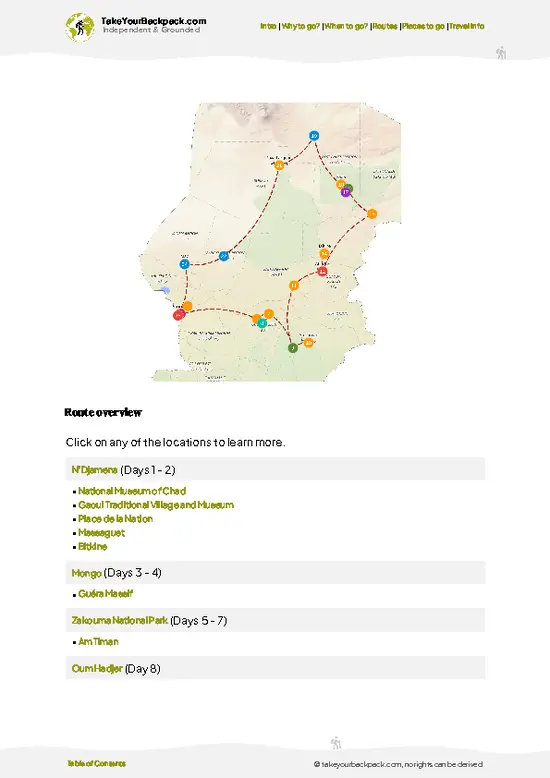
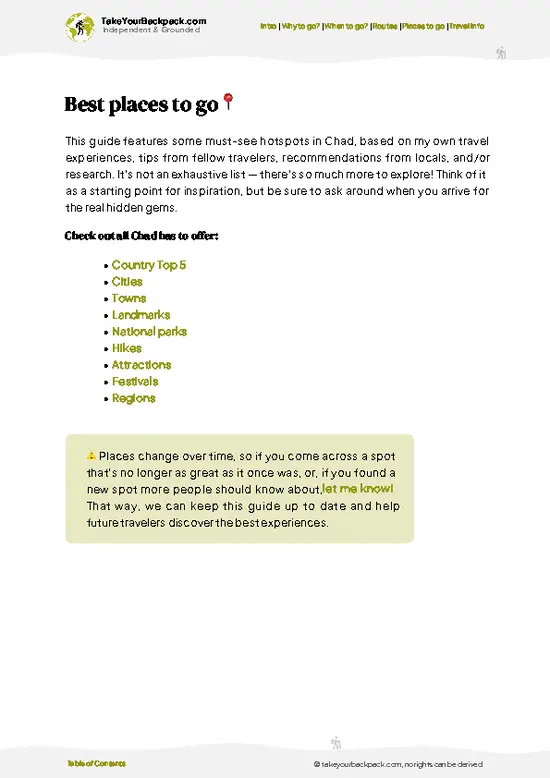
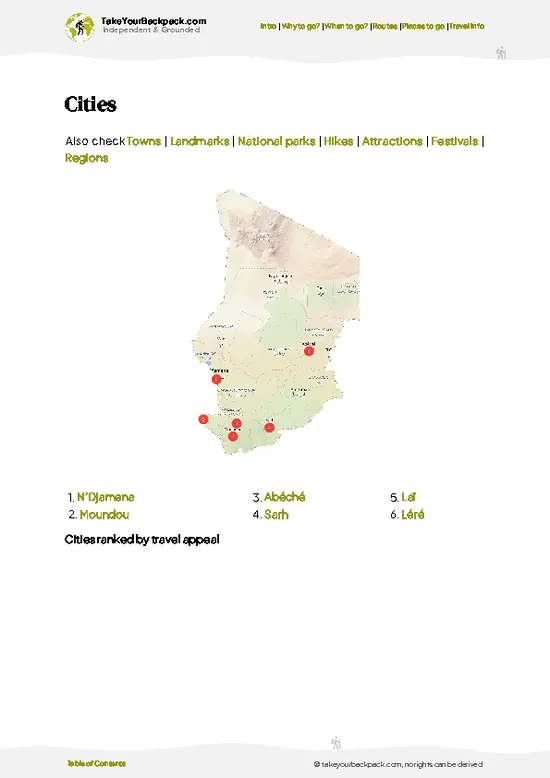
- Marché Central (the Central Market) — The busiest corner of town: vendors selling dates, spices, simple tools, and second-hand goods. Great for people-watching, grabbing cheap snacks, and seeing daily life up close.
- The Oasis and Palm Groves — Faya-Largeau sits on an oasis; the palm groves and irrigation furrows are the reason the town exists. Walking among the palms at dawn gives a real sense of how people make a living in the Sahara.
- Fort Faya-Largeau (colonial fort remains) — The old French fortifications and ruins around the town are low-key but tangible reminders of the colonial era and the town’s strategic role in the desert. Good for a short historical stroll and photo stops.
- La Grande Mosquée — The main mosque is an active place of worship and a social hub. Observing prayer times
- Marché Central (the Central Market) — The busiest corner of town: vendors selling dates, spices, simple tools, and second-hand goods. Great for people-watching, grabbing cheap snacks, and seeing daily life up close.
- The Oasis and Palm Groves — Faya-Largeau sits on an oasis; the palm groves and irrigation furrows are the reason the town exists. Walking among the palms at dawn gives a real sense of how people make a living in the Sahara.
- Fort Faya-Largeau (colonial fort remains) — The old French fortifications and ruins around the town are low-key but tangible reminders of the colonial era and the town’s strategic role in the desert. Good for a short historical stroll and photo stops.
- La Grande Mosquée — The main mosque is an active place of worship and a social hub. Observing prayer times (respectfully, from the outside if you’re not Muslim) and the building’s simple Sahelian architecture is culturally instructive.
- Prefecture / Governor’s Building and Public Square — The administrative heart of town where local politics and ceremonies happen. The square in front is where people meet, small demonstrations or official events are held, and life briefly pauses in the heat of the afternoon.
- Artisan Workshops near the Market — Small leatherworkers, metal smiths, and carpenters who repair daily-use items. It’s lowbrow but fascinating—watching a maker patch a saddle or hammer a tool is a direct way to see local skills.
- Local Cemetery (colonial and local graves) — Quiet, respectful, and often overlooked; the cemetery tells local stories across generations. Gravestones and inscriptions give insight into the town’s past conflicts and communities.
- Toubou Quarter (traditional neighborhood) — A neighborhood where Toubou families live and run daily businesses. Walking here (with permission and respect) shows traditional building styles, hospitality, and a different tempo of town life.
- Main Square / Market Street Scene — The town’s pulse: street vendors, kids playing, and impromptu football matches in the late afternoon. Not a monument, but where you feel Faya-Largeau’s character.
- Airfield perimeter and former military sites (viewable from public areas) — Faya-Largeau’s airstrip and nearby military remnants tell the story of the region’s strategic importance. You can’t wander into operational bases, but the exterior viewpoints and signage are interesting for modern history buffs.
Spotted a mistake or missing something? Contact us.

 Best Backpacking
.jpg) Hi, I’m Johan (Netherlands 🇳🇱), the creator of TakeYourBackpack. Over the past 3 decades, I’ve backpacked through 90+ countries across six continents, gaining extensive experience with independent travel, long-term trips, and overland routes.
Hi, I’m Johan (Netherlands 🇳🇱), the creator of TakeYourBackpack. Over the past 3 decades, I’ve backpacked through 90+ countries across six continents, gaining extensive experience with independent travel, long-term trips, and overland routes.