×

Chile🇨🇱 | attractionsCentral Market of Santiagoseafood stalls, ironwork architecture, local eateries | things to do and best time to go

Explore Museum of Contemporary ArtExplore Vega Central Market

Backpacking in Central Market of Santiago
👍 Recommendedattraction ranked #10
By Johan Kruseman 🇳🇱 | Updated September 4, 2026

You’ve heard that Santiago’s Central Market is a seafood paradise, but here’s the curveball: most locals actually buy their fish elsewhere. The market’s heart beats for tourists, not Chilean grandmothers. Smack in downtown Santiago, a stone’s throw from the Mapocho River, this iron-clad hall is more spectacle than secret. Yes, the architecture is a knockout—think Victorian ironwork with a side of fishmonger chaos—and the energy is contagious, especially if you like your lunch with a side of shouting and the occasional pelican. But let’s not kid ourselves: prices here are padded for out-of-towners, and the “authentic” experience is often a waiter hustling you into a table with English menus. Still, there’s a raw thrill in the sensory overload—clattering knives, briny air, the flash of a knife through a sea urchin. Compared to Patagonia’s wilds or Valparaíso’s street art, Central Market is less soul-stirring, more urban theater. Worth a visit? For the spectacle, yes. For a cheap, local meal? Not a chance.

Discover everything you want to know in the 📖 Chile Travel Guide.


Get your Chile guide
114 ranked highlights, routes & tips, works offline (449 pages)
Loading the map 🌍
CLICK TO FILTER
cities
towns
villages
landmarks
national parks
hikes
beaches
attractions
festivals
regions
SHOW COUNTRY’S BESTSHOW ALL

✨ Why go?
Ranked #10 attraction in Chile
Why visitors keep coming back

The Central Market of Santiago is not some Instagram-perfect postcard where every corner is polished and crowd-free. It’s loud, chaotic, and packed with locals and tourists elbowing for space. Yes, the crowds can be intense, and prices sometimes creep up because of the tourist traffic. But here’s the kicker: this market is the beating heart of Chile’s culinary and cultural identity. It’s where you get a raw, unfiltered taste of Santiago’s soul—fresh seafood pulled straight from the Pacific, street vendors shouting their specials, and the scent of smoky grilled meats mingling with ocean salt.

This place isn’t just a pit stop; it’s a milestone on any serious Chile route. You’re not just buying food; you’re stepping into a living museum of Chilean history and daily life. The market’s roots … read more 👉
The Central Market of Santiago is not some Instagram-perfect postcard where every corner is polished and crowd-free. It’s loud, chaotic, and packed with locals and tourists elbowing for space. Yes, the crowds can be intense, and prices sometimes creep up because of the tourist traffic. But here’s the kicker: this market is the beating heart of Chile’s culinary and cultural identity. It’s where you get a raw, unfiltered taste of Santiago’s soul—fresh seafood pulled straight from the Pacific, street vendors shouting their specials, and the scent of smoky grilled meats mingling with ocean salt.

This place isn’t just a pit stop; it’s a milestone on any serious Chile route. You’re not just buying food; you’re stepping into a living museum of Chilean history and daily life. The market’s roots stretch back over a century, surviving earthquakes and political upheaval, making it a symbol of resilience and tradition. For backpackers, it’s a crash course in local flavors and social rhythms that no guidebook can replicate. The effort to navigate the crowds and sensory overload pays off with a genuine connection to Chile’s culture—raw, real, and utterly unforgettable.
Want to include Central Market of Santiago in your Chile route?
Create a personalized Chile itinerary that includes Central Market of Santiago and the places that fit your trip — based on your travel style, budget, and available time. Get your route in seconds.

Generate my trip

💡 HighlightsPlaces and moments you shouldn't skip

1. The Seafood Circus: Mercado’s Raw, Rowdy Heart
Let’s cut through the Instagram haze: Central Market is not a dainty, photogenic food hall. It’s a full-volume, fish-scented spectacle. The main hall is a living, breathing theater of Chilean seafood—giant king crabs stacked like armored tanks, razor clams glistening on ice, and fishmongers who could out-shout a football stadium. You’ll see locals haggling for the catch of the day, chefs in stained aprons, and the occasional pelican eyeing the scraps. This is the real show. If you’re squeamish about smells or crowds, brace yourself. But if you want to feel the pulse of Santiago, this is where it thumps.


2. Sit-Down Seafood: The “Tourist Trap” That’s Actually Worth It
Yes, the restaurants inside the market are aggressively touristy. Yes, you’ll … read more 👉
1. The Seafood Circus: Mercado’s Raw, Rowdy Heart
Let’s cut through the Instagram haze: Central Market is not a dainty, photogenic food hall. It’s a full-volume, fish-scented spectacle. The main hall is a living, breathing theater of Chilean seafood—giant king crabs stacked like armored tanks, razor clams glistening on ice, and fishmongers who could out-shout a football stadium. You’ll see locals haggling for the catch of the day, chefs in stained aprons, and the occasional pelican eyeing the scraps. This is the real show. If you’re squeamish about smells or crowds, brace yourself. But if you want to feel the pulse of Santiago, this is where it thumps.


2. Sit-Down Seafood: The “Tourist Trap” That’s Actually Worth It
Yes, the restaurants inside the market are aggressively touristy. Yes, you’ll be hustled by waiters with laminated menus in five languages. Here’s the twist: the food is actually good—if you know what to order. Go for the chupe de mariscos (a creamy, bubbling seafood casserole) or a plate of machas a la parmesana (razor clams baked with cheese). The prices are higher than outside, but you’re paying for the atmosphere: wrought-iron arches, the clang of dishes, and the sense that you’re eating in a place that’s been feeding Santiago for over a century. Skip the overpriced wine and order a local beer.


3. The Architecture: Victorian Ironwork Meets Chilean Chaos
Look up. The market’s iron skeleton was designed in England, shipped across the Atlantic, and assembled in 1872. It’s a wild mash-up: Victorian engineering, South American energy, and a patina of fish scales and history. The central dome, with its intricate iron filigree, is a reminder that this place was built to impress—before Instagram, before Lonely Planet, before anyone cared about “aesthetic.” It’s a rare case where the bones of the building are as fascinating as what’s for sale.


4. The Outer Ring: Where the Locals Actually Shop
Step outside the main hall and you’ll find the real market—no English menus, no selfie sticks. Here, Santiago’s cooks and grandmothers buy their fish, spices, and vegetables. The prices drop, the pace quickens, and the Spanish gets rapid-fire. This is where you’ll see the everyday magic: a fishmonger filleting a congrio with surgical precision, a grandmother arguing over the price of cilantro, a kid sneaking a taste of sea urchin. If you want to feel invisible and just watch life happen, this is the spot.


5. The Smell Test: Embrace the Funk
Let’s be honest: Central Market smells like fish. Not the sanitized, lemon-scented version, but the real, briny, slightly funky aroma of the Pacific. It’s a sensory gut-punch, and it’s what keeps the Instagram crowd from lingering. But if you can get past it, you’ll realize it’s the smell of a city that still eats what it catches. It’s honest, unfiltered, and—if you let it—kind of exhilarating. This is my personal favorite, because it’s the one thing you can’t fake or filter.


6. The People-Watching: Santiago Unscripted
Forget the food for a second. The market is a parade of characters: old men in battered hats, street musicians squeezing out a tune, kids darting between stalls, and vendors who could sell ice to a penguin. It’s loud, it’s messy, and it’s real. Grab a bench, order a coffee, and just watch. You’ll see more of Santiago’s soul in an hour here than in a week of city tours.
Spotted a mistake or missing something? Contact us.

Things to do around Central Market of Santiago

Ratings based on Tripadvisor reviews. When you book through this link, you support our work at no extra cost to you.

🌤️ When to go?When to go for the best experience


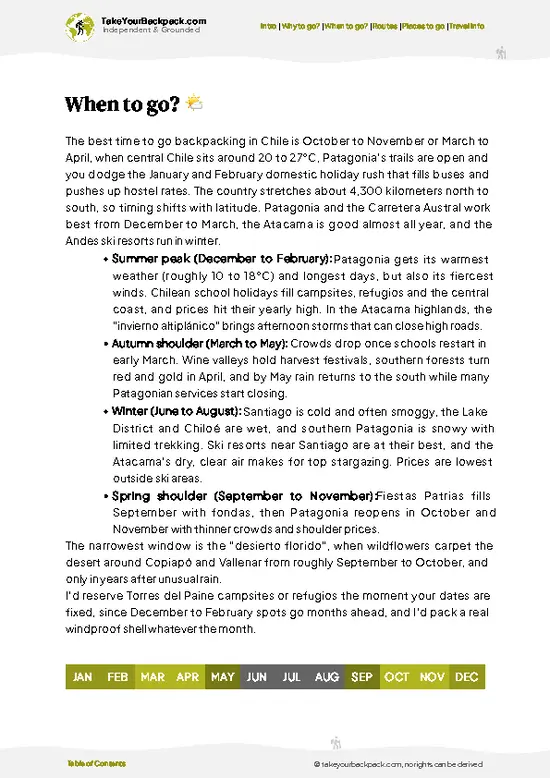
  • Weather: Santiago’s Central Market is best tackled in spring (September to November) or fall (March to May). Summers (December to February) can scorch you with highs around 30-35°C (86-95°F), making wandering the market a sweaty slog. Winters (June to August) are mild but can be damp and chilly, hovering around 7-15°C (45-59°F).

  • Temperature: Spring and fall offer the sweet spot—comfortable 15-25°C (59-77°F) days that let you savor the market’s chaos without melting or shivering.

  • Daylight Hours: Longer days in spring and summer mean more time to explore. By November, you get daylight stretching past 8 PM, perfect for late market snacks and people-watching.

  • Crowds: The market buzzes year-round, but weekends and holidays pack it tight. Visiting on a weekday morning in spring or fall
read more 👉

  • Weather: Santiago’s Central Market is best tackled in spring (September to November) or fall (March to May). Summers (December to February) can scorch you with highs around 30-35°C (86-95°F), making wandering the market a sweaty slog. Winters (June to August) are mild but can be damp and chilly, hovering around 7-15°C (45-59°F).

  • Temperature: Spring and fall offer the sweet spot—comfortable 15-25°C (59-77°F) days that let you savor the market’s chaos without melting or shivering.

  • Daylight Hours: Longer days in spring and summer mean more time to explore. By November, you get daylight stretching past 8 PM, perfect for late market snacks and people-watching.

  • Crowds: The market buzzes year-round, but weekends and holidays pack it tight. Visiting on a weekday morning in spring or fall lets you dodge the worst crush and chat with vendors without shouting.

  • Seasonal Activities: Spring brings fresh produce and seafood in full swing, while fall offers harvest flavors like grapes and apples. Summer’s abundance can overwhelm, and winter’s selection thins out.

  • Price Fluctuations: Prices spike during peak tourist seasons (December and January) and around Chilean holidays. Shoulder seasons (spring and fall) often deliver better deals and fresher goods.


Pro-tip: Aim for a weekday morning in October or April—cool temps, manageable crowds, and the freshest bites without the tourist premium.


source: climatestotravel.comJANJanuary: fair for travelingFEBFebruary: fair for travelingMARMarch: highly recommended for travelingAPRApril: excellent for travelingMAYMay: highly recommended for travelingJUNJune: good for travelingJULJuly: good for travelingAUGAugust: good for travelingSEPSeptember: excellent for travelingOCTOctober: excellent for travelingNOVNovember: highly recommended for travelingDECDecember: fair for traveling
when-to-go

✈️ The backpacker research shortcutChile Travel Guide

An offline-friendly backpacking guide with optimized travel routes, ranked highlights, transport advice, and the best areas to stay.
example page 0 from our offline Travel Guide for Chile
example page 1 from our offline Travel Guide for Chile
example page 2 from our offline Travel Guide for Chile
example page 3 from our offline Travel Guide for Chile
example page 4 from our offline Travel Guide for Chile
example page 5 from our offline Travel Guide for Chile
example page 6 from our offline Travel Guide for Chile
example page 7 from our offline Travel Guide for Chile
The digital guide (449 pages) contains:
114 highlights, ranked by travel appeal
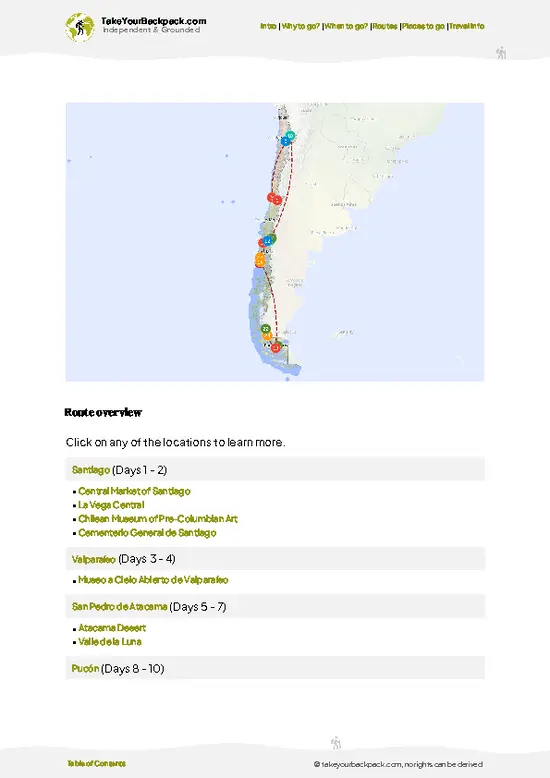
Optimized 7, 14 & 21-day travel routes
Cities, national parks, landmarks, beaches
How to get around
Offline-friendly for travel without Wi-Fi
👉 Click to see all 30+ guide features

📅 Plan smarter in minutes, not weeks
Month by month travel advice
Festivals & national holidays
Budget expectations

🗺️ Go to the right places, skip the overrated ones
Honest pros & cons of destinations
Top hikes, parks & viewpoints
Lesser-known places most travelers miss
Clear “worth it vs skip it” guidance

🛏️ Travel smoothly without rookie mistakes
Best areas to stay
Transport systems explained simply
Common scams & safety advice
SIM cards, money & practical tips

🌍 Understand the country, not just visit it
Culture & traditions
52 Essential phrases & customs
Festivals worth planning around
Traveler-friendly historical context
Insights that make places more meaningful

📱 Built for real travel conditions
Fully downloadable PDF
Works completely offline
Optimized for phone use
Useful in remote areas & buses
Everything in one place
Save weeks of stressful planning
Get instant access to your full guide. 30‑day money-back guarantee.
+ Add another guide for just US$7.80

By proceeding you agree to our terms.
Sent to your inbox immediately after payment • 100% Secure Checkout
Best Backpacking Travel Advisor 2025 tourism awardBest Backpacking
Travel Advisor
2025
What others say about Take Your Backpack Guides:
⭐⭐⭐⭐⭐
Fantastic, amazing amount of information!
⭐⭐⭐⭐⭐
My goodness this is amazing, it's what I've been looking for hats off too you!
⭐⭐⭐⭐⭐
I think this is absolutely BRILLIANT
⭐⭐⭐⭐
Very complete and informative. It's still missing places, but I gotta to commend you
⭐⭐⭐⭐⭐
This is truly amazing, thank you, can't wait to explore it with my kids!
⭐⭐⭐⭐⭐
Awesome resource, thank you!
⭐⭐⭐⭐⭐
This is amazing! Can't wait to explore the ones I haven't seen
⭐⭐⭐⭐
I love this! Well done, great idea.
⭐⭐⭐⭐⭐
Thanks for taking the time to make this gem!
⭐⭐⭐⭐⭐
This might be the best website I've ever seen.
⭐⭐⭐⭐⭐
Congratulations, and thank you so much for your work; it's incredibly valuable.
⭐⭐⭐⭐
In all seriousness I think you did a great job pointing out the important spots
⭐⭐⭐⭐⭐
10/10 very good
⭐⭐⭐⭐⭐
As someone who's only just starting to visit regularly this is awesome, thank you.
⭐⭐⭐⭐
Thank you very much! I'm going to visit my dad, it's going to be very useful!
⭐⭐⭐⭐⭐
This is really cool! We'll be travelling for the first time and this definitely come in handy.
⭐⭐⭐⭐⭐
You are now our minister of culture, congratulations 👨‍💼
⭐⭐⭐⭐⭐
Just wanted to tell you that this is a pearl! Going to follow your recommendations.
⭐⭐⭐⭐⭐
This is so cool. I'll definitely be using the resource for my travels soon.
⭐⭐⭐⭐⭐
This is very impressive! Good work.
⭐⭐⭐⭐⭐
This is an amazing and informative site. Very well done!

🛏️ Where to stay?Choosing the right base

If you’re aiming to crash near Santiago’s Central Market, forget the postcard-perfect image of a quiet, quaint plaza. The reality? It’s a bustling, noisy hub packed with locals and tourists alike, especially during meal times. The best spots for backpackers are not right on top of the market but in the neighborhoods that surround it—specifically, Barrio Yungay and the edges of Santiago Centro. These areas strike a solid balance: safe enough to wander after dark, loaded with cheap eats, and buzzing with fellow travelers and locals who actually live in the city, not just passing through.

Barrio … read more 👉
If you’re aiming to crash near Santiago’s Central Market, forget the postcard-perfect image of a quiet, quaint plaza. The reality? It’s a bustling, noisy hub packed with locals and tourists alike, especially during meal times. The best spots for backpackers are not right on top of the market but in the neighborhoods that surround it—specifically, Barrio Yungay and the edges of Santiago Centro. These areas strike a solid balance: safe enough to wander after dark, loaded with cheap eats, and buzzing with fellow travelers and locals who actually live in the city, not just passing through.

Barrio Yungay has that gritty, authentic vibe with street art and small cafés where you can swap stories with other backpackers. Santiago Centro, meanwhile, offers easy access to the market and other landmarks, plus a network of hostels and budget spots that are social without being party zones. Both areas keep you close to the market’s raw energy without the tourist trap feel or sketchy corners. This is where you get the real Santiago—no filters, no fluff.

👛 Costs (as of 4 September 2026)What things cost and how to budget

Entry to Santiago's Central Market is free. While there are no entrance fees, visitors often spend between €10 and €20 per person on meals and purchases inside the market. Additionally, guided tours of the market are available, typically ranging from €40 to €85 per person, depending on the duration and inclusions. ([machupicchu.org](https://www.machupicchu.org/santiago-budget-guide-2026-complete-cost-breakdown.htm?utm_source=openai))

source: machupicchu.org
⚠️ Prices can change and everyone travels differently, so take this as a rough guide. Hope it helps you plan your adventure!

FAQCommon questions from travelers

1 to 2 hours is sufficient to explore the Central Market of Santiago. This allows time to browse the seafood stalls, sample local dishes, and enjoy the vibrant atmosphere without rushing.
Yes, the Central Market of Santiago is worth the entrance fee as it offers an authentic experience of Chilean culture and cuisine. The market is known for fresh seafood and traditional foods, making it a valuable stop for food lovers and cultural enthusiasts.
You can get to the Central Market of Santiago by taking the metro to the Puente Cal y Canto station, which is about a 5-minute walk from the market. Alternatively, many buses and taxis serve the area, located in the downtown district near the Mapocho River.
⚠️ Things can change over time, so always validate details locally before you go.

Other Chilean attractions near Central Market of Santiago

Explore more nearby:


💡 Not sure where to go next?
Create a personalized itinerary for Chile including Central Market of Santiago and the places that fit your trip.

Generate my itinerary

👉 Discover all attractions

Or checkout all Chile has to offer (think cities, towns, villages, national parks, hikes, beaches, festivals)
Country photo of Chile

We 💚 feedbackSumming up the experience

The Central Market of Santiago can feel like a chaotic crush, especially when the lunch rush hits—expect crowds and noise that test your patience. But here’s the kicker: this place is a raw, unfiltered dive into Chilean life, where the seafood is shockingly fresh and the vendors’ banter is part of the show. If you want polished charm, skip it. But if you crave real, gritty flavor—both on your plate and in the atmosphere—this market delivers.

✈️ When did I visit Chile?
I have visited Chile, together with Argentina, in September 2012.

✍️ Help improve this page!
The information on this page is based on my own backpacking experience in Chile, supplemented with up-to-date research and feedback from other travelers. Travel details can change, so if you notice anything outdated or incomplete, feel free to let me know.


🙋‍♂️ Give feedback

👋 Meet the founderWho’s Behind Take Your Backpack?

Johan, backpacker and founder of TakeYourBackpackHi, I’m Johan (Netherlands 🇳🇱), the creator of TakeYourBackpack. Over the past decade, I’ve backpacked through 80+ countries across six continents, gaining extensive experience with independent travel, long-term trips, and overland routes.

This site is built on a combination of firsthand travel experience and carefully curated insights from other backpackers. Many guides are based on places I’ve personally visited, while others bring together tips, observations, and practical advice shared by trusted travelers I’ve met along the way.

The goal is to provide realistic, experience-driven guidance — not generic itineraries — so you can explore destinations with better context, clearer expectations, and more confidence.

Get full Chile guide •
Instant download • 114 highlights • Full Offline guide