×

Chile🇨🇱 | best attractionsYour Guide to the 10 Best attractions in Chile

Chile’s attractions unfold across a strikingly diverse landscape, from the arid Atacama Desert in the north to the glacial fjords of Patagonia in the south. Understanding this geographic spread is key for backpackers aiming to tailor their journey. The northern regions offer dry, high-altitude adventures best tackled in the cooler months, while the south demands summer visits to avoid harsh weather and maximize accessibility. Central Chile, with its vineyards and cultural hubs like Santiago and Valparaíso, provides a different rhythm—more urban, yet still deeply connected to local traditions. Choosing the right attraction here directly influences your travel style: remote natural wonders require more logistical planning and a higher budget for transport, but reward with solitude and raw landscapes; urban and coastal sites offer easier access, safer infrastructure, and richer opportunities for cultural immersion. Recognizing these patterns lets independent travelers optimize for vibe, seasonality, and cost, turning Chile’s vast options into a strategic, rewarding backpacking experience.

By Johan Kruseman 🇳🇱 | Updated July 23, 2026
Explore the best festivals in Chile

Why go?Understanding Their Importance

Chile’s attractions matter because they unfold along a uniquely narrow and elongated geography that compresses an extraordinary range of climates and landscapes into a single country. This shape creates a system where travelers can experience the driest desert on Earth, towering glaciers, and temperate rainforests within a few hours of flight or a day’s drive. The trade-off here is between travel time and depth of exploration: covering Chile’s full spectrum demands either a willingness to hop between distant regions or a commitment to slow travel focused on one zone. This is not a place for casual, surface-level visits if you want to grasp its full complexity.

The country’s geographic extremes also shape its cultural and historical layers. Indigenous heritage, colonial legacies, and modern … read more 👉
Chile’s attractions matter because they unfold along a uniquely narrow and elongated geography that compresses an extraordinary range of climates and landscapes into a single country. This shape creates a system where travelers can experience the driest desert on Earth, towering glaciers, and temperate rainforests within a few hours of flight or a day’s drive. The trade-off here is between travel time and depth of exploration: covering Chile’s full spectrum demands either a willingness to hop between distant regions or a commitment to slow travel focused on one zone. This is not a place for casual, surface-level visits if you want to grasp its full complexity.

The country’s geographic extremes also shape its cultural and historical layers. Indigenous heritage, colonial legacies, and modern urban development coexist but are often regionally distinct. This means that understanding Chile’s attractions requires more than ticking off landmarks; it involves recognizing how isolation and environment have forged diverse local identities. The infrastructural reality—with major hubs connected by reliable flights but rural areas accessible only by long drives or rugged trails—forces travelers to choose between convenience and immersion. Opting for quick access to popular sites often means missing out on the quieter, more authentic experiences found off the beaten path.

Chile’s climatic variability further complicates timing. The southern regions demand seasonal planning to avoid harsh winters, while the north’s desert can be unforgivingly hot and dry. This climatic patchwork means that the best time to visit one attraction might be off-season for another, requiring strategic prioritization. The country’s relative remoteness from other South American centers also means that trips here tend to be longer and more deliberate, favoring travelers who value depth over breadth.

In essence, Chile’s attractions matter because they challenge visitors to engage with a country where scale, diversity, and access are intertwined. Success lies in understanding these trade-offs and designing an itinerary that respects the country’s natural rhythms and infrastructural limits, turning logistical complexity into a rewarding exploration strategy.
Our Approach to Ranking
The list of best attractions in Chile is created based on cultural significance or entertainment value. If you feel a attraction is missing in this list, please let us know.

When to go?Optimal Periods for Travel

Seasonal Patterns Shape the Chilean Experience

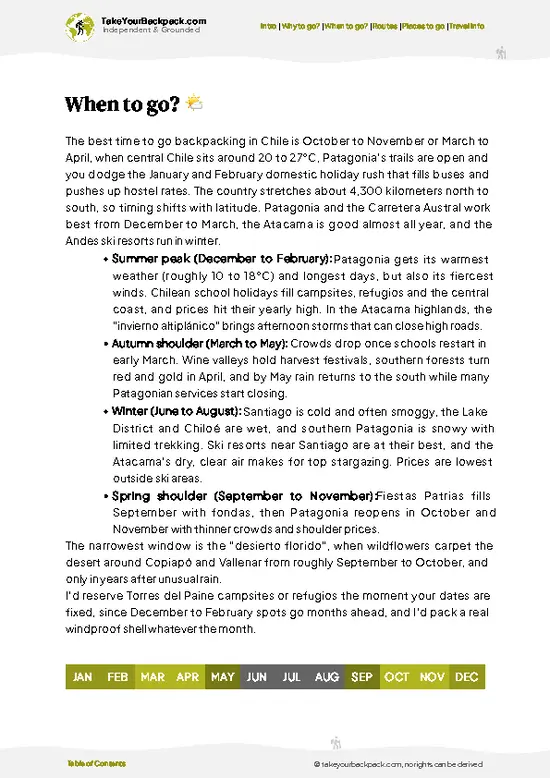
Chile’s geography stretches from the arid north to the icy south, but the country’s seasonal rhythm follows a clear pattern that governs when attractions come alive or slow down. The southern hemisphere seasons flip the familiar northern calendar, so summer runs from December through February, bringing warmth and longer daylight hours. This is the prime window for outdoor activities across the board, from trekking to exploring natural parks, because the weather is generally stable and accessible. However, this peak period also means higher prices and more visitors, which can dilute the sense of solitude many seek in Chile’s vast landscapes.

Winter Brings Both Limits and Opportunities

Winter months, roughly June to August, introduce cold temperatures … read more 👉

Seasonal Patterns Shape the Chilean Experience

Chile’s geography stretches from the arid north to the icy south, but the country’s seasonal rhythm follows a clear pattern that governs when attractions come alive or slow down. The southern hemisphere seasons flip the familiar northern calendar, so summer runs from December through February, bringing warmth and longer daylight hours. This is the prime window for outdoor activities across the board, from trekking to exploring natural parks, because the weather is generally stable and accessible. However, this peak period also means higher prices and more visitors, which can dilute the sense of solitude many seek in Chile’s vast landscapes.

Winter Brings Both Limits and Opportunities

Winter months, roughly June to August, introduce cold temperatures and snow in the south and mountainous regions, closing off some hiking routes and remote areas. Yet, this season is a magnet for winter sports enthusiasts, turning ski resorts into hubs of activity. The north remains relatively dry and mild, but shorter daylight and cooler nights can affect travel plans. The winter shoulder months on either side of this period offer a compromise: fewer crowds and lower costs, but with the risk of unpredictable weather and limited access to some attractions.

Shoulder Seasons: The Strategic Choice

Spring and autumn act as transitional phases where the weather is less predictable but often pleasant enough to enjoy many attractions without the summer crowds. These shoulder seasons are the sweet spot for travelers who prioritize a balance between accessibility, cost, and experience quality. However, the trade-off is that some services and accommodations may operate on reduced schedules, and certain high-altitude or southern routes might still be partially closed or challenging.

Understanding the Trade-Offs

The key to mastering Chile’s timing lies in weighing what matters most: uninterrupted access and vibrant conditions versus quieter, more economical travel with some logistical compromises. The country’s long north-south axis means that even within a single trip, microclimates and seasonal effects can vary dramatically. Planning with this system in mind transforms the timing of a visit from a simple date choice into a strategic move that maximizes both enjoyment and efficiency.

attraction hoppingOptimizing Your Multi-Stop Itinerary

Regional Clusters and Direction of Travel

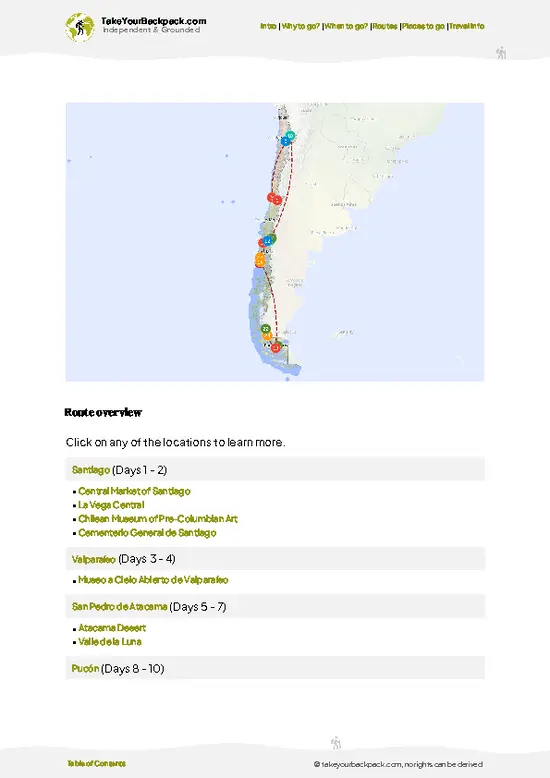
Chile’s geography is a long, narrow strip stretching over 4,300 km from north to south, which naturally divides the country into distinct regions. Efficient routing hinges on grouping attractions within these clusters rather than zigzagging across the country. Start by focusing on one region—whether it’s the arid north, the central valleys, or the southern fjords—and plan your stops sequentially within that zone. Moving from north to south or vice versa is the most logical flow, minimizing backtracking and maximizing time spent exploring rather than commuting.

Time Allocation and Pacing

Each category of attraction demands a different time investment. Urban centers with cultural sites and markets typically require 2-3 days to absorb without rushing. … read more 👉

Regional Clusters and Direction of Travel

Chile’s geography is a long, narrow strip stretching over 4,300 km from north to south, which naturally divides the country into distinct regions. Efficient routing hinges on grouping attractions within these clusters rather than zigzagging across the country. Start by focusing on one region—whether it’s the arid north, the central valleys, or the southern fjords—and plan your stops sequentially within that zone. Moving from north to south or vice versa is the most logical flow, minimizing backtracking and maximizing time spent exploring rather than commuting.

Time Allocation and Pacing

Each category of attraction demands a different time investment. Urban centers with cultural sites and markets typically require 2-3 days to absorb without rushing. Natural parks and trekking areas, especially in Patagonia or the Lake District, need at least 3-4 days to appreciate the landscape and avoid a frantic pace. Trying to squeeze multiple long hikes or remote destinations into a single day often leads to burnout and missed experiences. Realistic pacing means accepting that covering Chile’s highlights in one trip involves prioritizing depth over breadth.

Common Planning Pitfalls

A frequent mistake is underestimating travel times and overloading the itinerary. Distances may look short on a map, but mountainous terrain and limited transport options can double transit times. Another trap is mixing incompatible activities—like pairing a demanding trek with a city tour on the same day—leading to fatigue and diminished enjoyment. Avoid the temptation to cram every “must-see” into one trip; instead, build in buffer days for rest or unexpected delays.

Trade-offs and Constraints

Balancing speed and depth is the core challenge. Faster travel means more destinations but less immersion. Budget constraints often push travelers toward buses and hostels, which require more time but offer authentic local interaction. Conversely, flying between regions saves time but increases costs. Comfort versus effort also plays a role: remote areas demand physical stamina and flexible schedules, while urban hubs offer convenience but less raw nature. Strategic planning involves aligning your priorities—whether it’s ticking off landmarks or savoring landscapes—with these trade-offs to craft a trip that feels both manageable and rewarding.

The ListThe Best attractions of Chile

1 Valle de la Luna Viewpoints and Lookouts

desert landscapes, salt formations, sunset panoramas

Watch shifting colors illuminate otherworldly terrain from vantage points scattered across the Atacama’s most iconic valley.

2 Valparaíso Street Art and Open-Air Museum

murals, hillside alleys, creative collectives

Wander steep streets lined with large-scale artworks, where neighborhood walls serve as canvases for evolving visual expression.

3 Chiloe Churches Route

wooden churches, UNESCO heritage, island landscapes

Travel between remote villages to see distinctive wooden churches, each reflecting local craftsmanship and the region’s maritime environment.

chile-attraction-chiloe-churches-route
© Google |

4 Museum of Memory and Human Rights

dictatorship history, testimonies, interactive exhibits

Reflect on Chile’s recent past through personal stories and multimedia displays documenting the struggle for justice and remembrance.

Chile - Museum of Memory and Human Rights

5 Chilean Museum of Pre-Columbian Art

ancient textiles, indigenous ceramics, Andean artifacts

Encounter centuries of indigenous creativity through meticulously preserved objects that reveal the diversity of pre-Hispanic cultures.

chile-attraction-chilean-museum-of-pre-columbian-art v1
© Google |

6 La Chascona (Pablo Neruda House Museum

eccentric design, poet’s memorabilia, hillside setting

Step inside Neruda’s Santiago home to see eclectic collections and personal touches that reflect his literary and artistic life.

chile-attraction-la-chascona-pablo-neruda-house-museum
© Google |

7 La Sebastiana (Pablo Neruda House Museum

panoramic views, nautical decor, poet’s legacy

Climb through Neruda’s Valparaíso residence, where layered rooms and maritime motifs overlook the city’s colorful hills.

chile-attraction-la-sebastiana-pablo-neruda-house-museum
© Google |

8 National Museum of Fine Arts

neoclassical building, permanent collection, sculpture halls

Browse a diverse array of paintings and sculptures housed in an architecturally significant space at the heart of Santiago.

chile-attraction-national-museum-of-fine-arts
© Google |

9 Concha y Toro Winery

vineyards, historic cellars, wine tasting

Walk through manicured grounds and storied cellars while learning about Chilean winemaking traditions and sampling local varietals.

chile-attraction-concha-y-toro-winery v1
© Google |

10 Central Market of Santiago

seafood stalls, ironwork architecture, local eateries

Sample fresh catches and regional specialties in a bustling market hall where daily commerce and tradition intersect.

11 Vega Central Market

produce stalls, local flavors, urban bustle

Navigate a maze of vendors offering seasonal fruits, vegetables, and prepared foods in one of Santiago’s busiest food markets.

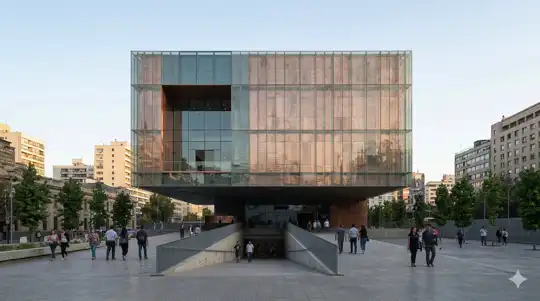
12 Gabriela Mistral Cultural Center

modern architecture, performance spaces, public art

Attend exhibitions or performances in a contemporary venue designed to foster creative exchange and urban gathering.

13 Colchagua Museum

paleontology, colonial relics, regional history

Survey a wide-ranging collection from fossils to early industry, offering insight into the area’s geological and cultural past.

14 Museum of Contemporary Art

rotating exhibitions, Chilean artists, modern installations

Engage with evolving artistic trends through temporary shows and experimental works by local and international creators.

15 Cementerio General de Santiago

ornate mausoleums, political history, local rituals

Trace Chile’s social and political evolution among elaborate tombs, memorials, and everyday scenes in this sprawling urban cemetery.

16 Fonck Museum

Easter Island artifacts, natural history, Moai statue

View a rare Moai and explore exhibits that connect Rapa Nui culture with Chilean biodiversity and archaeological finds.

Think you know Chile?

Prove you’re a true local — uncover 6 lesser-known attractions in Chile that locals tend to keep to themselves.
Loading the map 🌍

Expert viewWhat You Should Know

Expert Commentary


Chile’s geography is a masterclass in extremes, and understanding its layout is the key to unlocking a trip that feels both rich and manageable. The country stretches like a narrow ribbon along the Pacific, spanning a dizzying range of climates and landscapes. This means your list of “must-see” attractions can quickly balloon if you chase every highlight. The practical wisdom here is to aim for a handful—three to five major attractions—scattered across distinct regions to avoid burnout and excessive transit time. Trying to cram more than that risks turning your adventure into a logistical headache rather than a rewarding exploration.

The first system to grasp is the regional diversity. Northern Chile offers arid deserts and salt flats, central Chile is a mix of Mediterranean … read more 👉

Expert Commentary


Chile’s geography is a masterclass in extremes, and understanding its layout is the key to unlocking a trip that feels both rich and manageable. The country stretches like a narrow ribbon along the Pacific, spanning a dizzying range of climates and landscapes. This means your list of “must-see” attractions can quickly balloon if you chase every highlight. The practical wisdom here is to aim for a handful—three to five major attractions—scattered across distinct regions to avoid burnout and excessive transit time. Trying to cram more than that risks turning your adventure into a logistical headache rather than a rewarding exploration.

The first system to grasp is the regional diversity. Northern Chile offers arid deserts and salt flats, central Chile is a mix of Mediterranean climates and vineyards, while the south plunges into fjords, glaciers, and dense forests. Each zone demands a different pace and preparation. For example, the north’s high-altitude desert landscapes require acclimatization and sun protection, while the south’s unpredictable weather calls for flexible scheduling and layered clothing. This regional variation also affects travel infrastructure. Roads and public transport are more developed in the central region, making self-guided trips easier there. In contrast, southern and northern extremes often require guided tours or private transfers, which add to the budget and planning complexity.

Budgeting for Chile’s attractions is a balancing act between ambition and reality. Entrance fees to national parks and reserves are generally modest, but the cost of getting there can be significant. Flights between regions are common and sometimes unavoidable, especially if you want to experience both the Atacama Desert and Patagonia. Ground transport, whether rental cars or buses, varies widely in quality and availability. The trade-off is clear: you can save money by focusing on one region and using buses, but you’ll miss the full spectrum of Chile’s landscapes. Alternatively, splurging on internal flights and guided excursions opens up more ground but demands a higher budget and more precise scheduling.

Time is another currency you’ll spend fast in Chile. The distances are deceptive; a few hundred kilometers can mean several hours on winding mountain roads or slow buses. This is why the “more is better” mindset backfires. Instead, prioritize depth over breadth. Spend longer at fewer sites to absorb the atmosphere and avoid the exhaustion of constant travel. This approach also allows for spontaneous detours or rest days, which are essential in a country where weather can disrupt plans, especially in the south. Flexibility is your ally, and building buffer days into your itinerary is a sign of savvy planning, not wasted time.

Safety and cultural awareness are often overlooked but crucial layers in the system. Chile is generally safe for travelers, but petty theft can occur in crowded areas, so vigilance is necessary. More importantly, understanding local customs and environmental respect is part of the experience. Many attractions are on indigenous lands or protected areas where regulations are strict. Following guidelines isn’t just about compliance; it’s about preserving the very qualities that make these places special. For instance, some trails have limited daily access to prevent erosion and overcrowding. Booking permits early and respecting these limits is both a logistical necessity and a way to engage responsibly with the environment.

The cultural rhythm of Chile also influences how you experience attractions. Locals tend to move at a relaxed pace, especially outside major cities. This means services like restaurants, shops, and transport may close earlier or operate on different schedules than you expect. Planning your days around these rhythms avoids frustration and opens opportunities to connect with local life on its own terms. For example, arriving at a small village market just before closing might seem like a miss, but it often leads to more genuine interactions as vendors wind down and share stories.

One of the less obvious but powerful systems at play is the seasonal variation. Chile’s long north-south axis means seasons hit different regions at different times. Summer in the south can be perfect for trekking, but the north might be unbearably hot. Winter opens up skiing in the Andes but shuts down some remote roads and trails. Understanding this staggered seasonality lets you tailor your trip to the kind of experience you want, whether it’s hiking, wildlife spotting, or cultural festivals. It also helps avoid the crowds that flock to the same spots during peak months, giving you a more authentic and relaxed visit.

Finally, the interplay between infrastructure and remoteness defines the character of Chile’s attractions. Some of the most breathtaking sites are also the hardest to reach, requiring multi-leg journeys by plane, bus, and boat. This is where your planning muscles get tested. Accepting that some places demand effort and expense is part of the game. But that effort pays off in a sense of discovery and exclusivity. On the flip side, well-connected attractions offer convenience and comfort but can feel crowded or commercialized. Balancing these extremes depends on your priorities: are you chasing raw adventure or a polished experience? Either way, knowing the trade-offs ahead of time lets you make choices that feel intentional rather than reactive.

In sum, mastering Chile’s attraction landscape is about seeing the country as a system of interconnected variables: geography, climate, culture, infrastructure, and time. Each decision you make—how many places to visit, when to go, how to get around—ripples through your entire trip. The smartest travelers don’t just collect highlights; they decode the patterns that govern access and experience. This mindset transforms Chile from a daunting stretch of land into a playground where you control the pace, depth, and flavor of your adventure.

✈️ The backpacker research shortcutChile Travel Guide

An offline-friendly backpacking guide with optimized travel routes, ranked highlights, transport advice, and the best areas to stay.
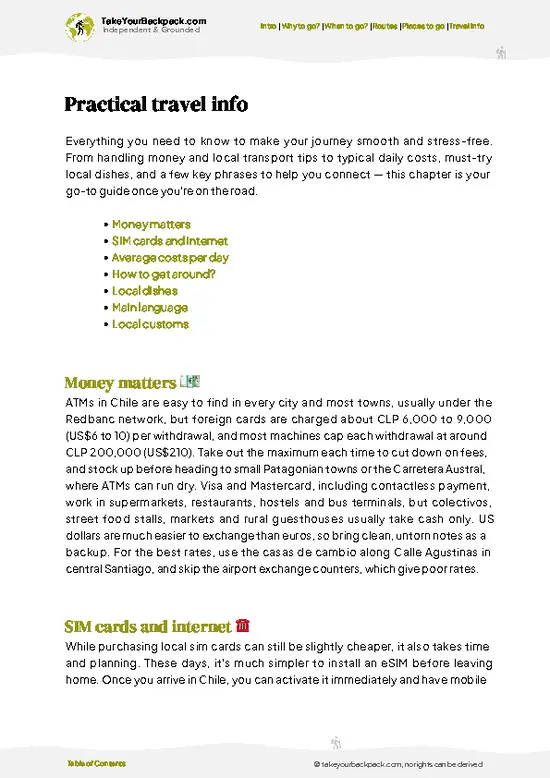
example page 0 from our offline Travel Guide for Chile
example page 1 from our offline Travel Guide for Chile
example page 2 from our offline Travel Guide for Chile
example page 3 from our offline Travel Guide for Chile
example page 4 from our offline Travel Guide for Chile
example page 5 from our offline Travel Guide for Chile
example page 6 from our offline Travel Guide for Chile
example page 7 from our offline Travel Guide for Chile
The digital guide (449 pages) contains:
114 highlights, ranked by travel appeal
Optimized 7, 14 & 21-day travel routes
Cities, national parks, landmarks, beaches
How to get around
Offline-friendly for travel without Wi-Fi
👉 Click to see all 30+ guide features

📅 Plan smarter in minutes, not weeks
Month by month travel advice
Festivals & national holidays
Budget expectations

🗺️ Go to the right places, skip the overrated ones
Honest pros & cons of destinations
Top hikes, parks & viewpoints
Lesser-known places most travelers miss
Clear “worth it vs skip it” guidance

🛏️ Travel smoothly without rookie mistakes
Best areas to stay
Transport systems explained simply
Common scams & safety advice
SIM cards, money & practical tips

🌍 Understand the country, not just visit it
Culture & traditions
52 Essential phrases & customs
Festivals worth planning around
Traveler-friendly historical context
Insights that make places more meaningful

📱 Built for real travel conditions
Fully downloadable PDF
Works completely offline
Optimized for phone use
Useful in remote areas & buses
Everything in one place
Save weeks of stressful planning
Get instant access to your full guide. 30‑day money-back guarantee.


By proceeding you agree to our terms.
Sent to your inbox immediately after payment • 100% Secure Checkout
Best Backpacking Travel Advisor 2025 tourism awardBest Backpacking
Travel Advisor
2025
What others say about Take Your Backpack Guides:
⭐⭐⭐⭐⭐
Fantastic, amazing amount of information!
⭐⭐⭐⭐⭐
My goodness this is amazing, it's what I've been looking for hats off too you!
⭐⭐⭐⭐⭐
I think this is absolutely BRILLIANT
⭐⭐⭐⭐
Very complete and informative. It's still missing places, but I gotta to commend you
⭐⭐⭐⭐⭐
This is truly amazing, thank you, can't wait to explore it with my kids!
⭐⭐⭐⭐⭐
Awesome resource, thank you!
⭐⭐⭐⭐⭐
This is amazing! Can't wait to explore the ones I haven't seen
⭐⭐⭐⭐
I love this! Well done, great idea.
⭐⭐⭐⭐⭐
Thanks for taking the time to make this gem!
⭐⭐⭐⭐⭐
This might be the best website I've ever seen.
⭐⭐⭐⭐⭐
Congratulations, and thank you so much for your work; it's incredibly valuable.
⭐⭐⭐⭐
In all seriousness I think you did a great job pointing out the important spots
⭐⭐⭐⭐⭐
10/10 very good
⭐⭐⭐⭐⭐
As someone who's only just starting to visit regularly this is awesome, thank you.
⭐⭐⭐⭐
Thank you very much! I'm going to visit my dad, it's going to be very useful!
⭐⭐⭐⭐⭐
This is really cool! We'll be travelling for the first time and this definitely come in handy.
⭐⭐⭐⭐⭐
You are now our minister of culture, congratulations 👨‍💼
⭐⭐⭐⭐⭐
Just wanted to tell you that this is a pearl! Going to follow your recommendations.
⭐⭐⭐⭐⭐
This is so cool. I'll definitely be using the resource for my travels soon.
⭐⭐⭐⭐⭐
This is very impressive! Good work.
⭐⭐⭐⭐⭐
This is an amazing and informative site. Very well done!

🛏️ Where to stay?Where to Stay: Chile Edition

Yes — hostels and budget lodging are common across Chile from Santiago to Patagonia, with the densest choices in Santiago (Bellavista, Lastarria, Providencia), coastal Valparaíso (Cerro Alegre, Cerro Concepción) and Viña del Mar, and in tourist towns San Pedro de Atacama, Pucón, Puerto Varas and Puerto Natales.

Bellavista/Lastarria put you in nightlife and walkable city highlights but carry a higher petty‑theft risk; Providencia is calmer and safer but slightly pricier; Valparaíso’s cerros are characterful and steep with lively bars yet noisy and uneven; Viña del Mar is beachy and family‑oriented with quieter nights; San Pedro is essential for Atacama tours but high, dry and basic; Pucón and … read more 👉
Yes — hostels and budget lodging are common across Chile from Santiago to Patagonia, with the densest choices in Santiago (Bellavista, Lastarria, Providencia), coastal Valparaíso (Cerro Alegre, Cerro Concepción) and Viña del Mar, and in tourist towns San Pedro de Atacama, Pucón, Puerto Varas and Puerto Natales.

Bellavista/Lastarria put you in nightlife and walkable city highlights but carry a higher petty‑theft risk; Providencia is calmer and safer but slightly pricier; Valparaíso’s cerros are characterful and steep with lively bars yet noisy and uneven; Viña del Mar is beachy and family‑oriented with quieter nights; San Pedro is essential for Atacama tours but high, dry and basic; Pucón and Puerto Varas offer lakeside outdoor options with seasonal crowds and peak prices; Puerto Natales is the practical gateway to Torres del Paine with limited services outside peak season.

Book ahead for summer and holiday windows, expect dorm rooms and shared kitchens in many hostels, stow valuables securely in nightlife areas, and factor transport time to remote highlights when picking a neighborhood.

If you enjoy meeting fellow travelers, consider choosing hostels with high ratings for atmosphere. On the other hand, if you prefer having your own space, a hotel might be a better option.

ChileExplore Beyond This Category

👋 Meet the founderWho’s Behind Take Your Backpack?

Johan, backpacker and founder of TakeYourBackpackHi, I’m Johan (Netherlands 🇳🇱), the creator of TakeYourBackpack. Over the past decade, I’ve backpacked through 80+ countries across six continents, gaining extensive experience with independent travel, long-term trips, and overland routes.

This site is built on a combination of firsthand travel experience and carefully curated insights from other backpackers. Many guides are based on places I’ve personally visited, while others bring together tips, observations, and practical advice shared by trusted travelers I’ve met along the way.

The goal is to provide realistic, experience-driven guidance — not generic itineraries — so you can explore destinations with better context, clearer expectations, and more confidence.

Get full Chile guide •
Instant download • 114 highlights • Full Offline guide