×

Chile🇨🇱 | regionsEaster IslandMoai quarry, birdman ruins, volcanic craters, Pacific isolation | things to do and best time to go

Explore Valle del ElquiExplore Pucón

Backpacking in Easter Island
🌟 Highlightregion ranked #3
By Johan Kruseman 🇳🇱 | Updated October 19, 2026

The moai have full torsos, and many are buried to the shoulders by centuries of hillside sediment. Easter Island (Rapa Nui) sits in the Pacific as a territory of Chile, and the long flight from Santiago is the biggest cost, which is why a full week beats a long weekend. On the ground, a rental car or scooter gives a backpacker the most: guided tours are comfortable but fix your hours, and walking covers very little. I expected the quarry at Rano Raraku to be a tidy exhibit. Instead, hundreds of unfinished moai lie tilted across the slope, half-carved, as if the carvers had stepped out. The scenery is superb and the archaeology dense, but nightlife is thin and accommodation is limited. Unlike Tahiti, there are almost no lagoons or long beaches here; this is an island for ruins and craters.

Discover everything you want to know in the 📖 Chile Travel Guide.


example page 0 from our offline Travel Guide for Chile
example page 1 from our offline Travel Guide for Chile
example page 2 from our offline Travel Guide for Chile
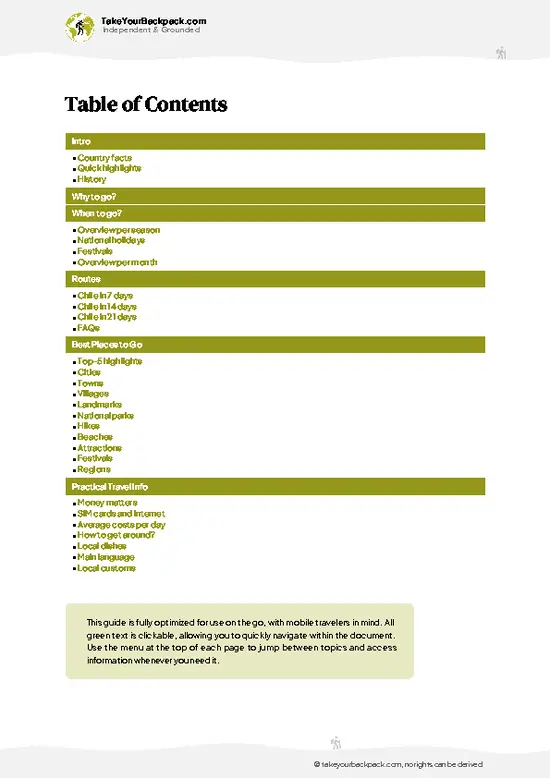
example page 3 from our offline Travel Guide for Chile
example page 4 from our offline Travel Guide for Chile
example page 5 from our offline Travel Guide for Chile
example page 6 from our offline Travel Guide for Chile
example page 7 from our offline Travel Guide for Chile
Loading the map 🌍
CLICK TO FILTER
cities
towns
villages
landmarks
national parks
hikes
beaches
attractions
festivals
regions
SHOW COUNTRY’S BESTSHOW ALL

✨ Why go?
Ranked #3 region in Chile
Why Easter Island should be on your travel list

Easter Island rewards backpackers because everything worth seeing sits on one small triangle of volcanic rock, so you can stay in a single guesthouse in Hanga Roa and cover the whole island without repacking. Each day can have a different character. One morning means the quarry slopes of Rano Raraku, where moai in every stage of carving face the grass. Another means the fifteen restored statues of Ahu Tongariki lined up against open ocean. An afternoon might be spent on the white sand and palms of Anakena, the only real beach crowd you will meet.
The island also suits slow travel. Sites are quiet outside the middle of the day, so you can rest through the heat and return when the light is low and the tour groups have left. Moai, caves, crater lakes, snorkeling and diving all fit into one stay. … read more 👉
Easter Island rewards backpackers because everything worth seeing sits on one small triangle of volcanic rock, so you can stay in a single guesthouse in Hanga Roa and cover the whole island without repacking. Each day can have a different character. One morning means the quarry slopes of Rano Raraku, where moai in every stage of carving face the grass. Another means the fifteen restored statues of Ahu Tongariki lined up against open ocean. An afternoon might be spent on the white sand and palms of Anakena, the only real beach crowd you will meet.
The island also suits slow travel. Sites are quiet outside the middle of the day, so you can rest through the heat and return when the light is low and the tour groups have left. Moai, caves, crater lakes, snorkeling and diving all fit into one stay. The variety comes from the layers of history underfoot, not from a long list of towns.

💡 HighlightsWhat this place is best known for

  1. Rano Raraku: the quarry where nearly every moai was carved, with hundreds of statues left in the slope and a crater lake inside the volcano. A national park ticket (about US$80 for foreigners) is needed.
  2. Ahu Tongariki: the largest platform on the island, with fifteen restored moai facing the sea. It is superb at dawn.
  3. Anakena Beach: white sand and palms beside Ahu Nau Nau, whose moai still show their carved details. It is also the island’s best swimming spot.
  4. Orongo and Rano Kau: a ceremonial village on the rim of a huge crater lake, with stone houses and petroglyphs of the birdman cult.
  5. Ahu Tahai: a short walk from Hanga Roa, with several restored moai, and a favorite place to watch the sun go down.
  6. Ahu Akivi: seven moai standing inland and facing the ocean, unlike nearly all the others. It is
… read more 👉
  1. Rano Raraku: the quarry where nearly every moai was carved, with hundreds of statues left in the slope and a crater lake inside the volcano. A national park ticket (about US$80 for foreigners) is needed.
  2. Ahu Tongariki: the largest platform on the island, with fifteen restored moai facing the sea. It is superb at dawn.
  3. Anakena Beach: white sand and palms beside Ahu Nau Nau, whose moai still show their carved details. It is also the island’s best swimming spot.
  4. Orongo and Rano Kau: a ceremonial village on the rim of a huge crater lake, with stone houses and petroglyphs of the birdman cult.
  5. Ahu Tahai: a short walk from Hanga Roa, with several restored moai, and a favorite place to watch the sun go down.
  6. Ahu Akivi: seven moai standing inland and facing the ocean, unlike nearly all the others. It is peaceful and usually uncrowded.
  7. Ana Kai Tangata: a sea cave on the coast near the airport, with faded bird paintings on its ceiling and waves crashing below.
  8. Vinapu: platform walls of tightly fitted stone blocks, with fallen moai lying in the grass. It rarely gets a crowd.
  9. Puna Pau: the small crater where the red scoria topknots (pukao) were carved, with several lying where they were left.
  10. Ana Te Pahu: lava tubes in the island’s interior, once used as shelters, with banana and taro growing in the cave mouths.
Ana Te Pahu is the one most people drive past, yet its cool, dripping lava tubes are one of the few places on the island that feel like a different world.
Spotted a mistake or missing something? Contact us.

Things to do around Easter Island

Ratings based on Tripadvisor reviews. When you book through this link, you support our work at no extra cost to you.

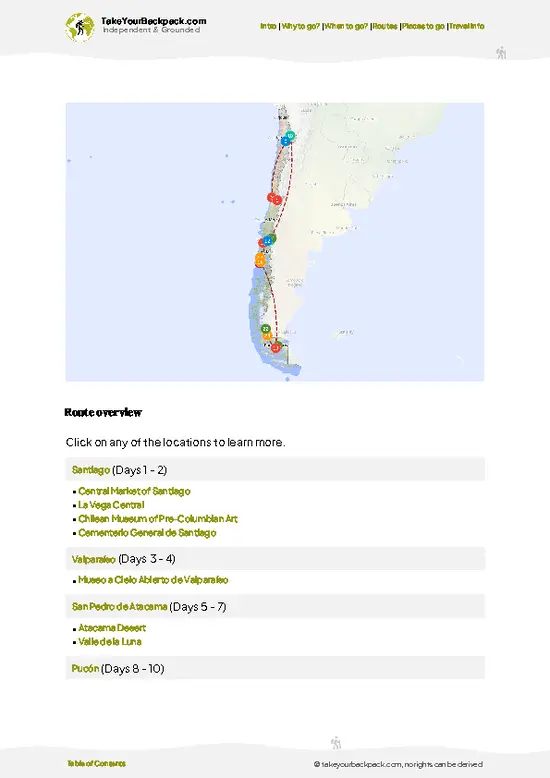
⌛️ 5 days5-day itinerary for Easter Island

Distances are short and roads are paved or decent dirt, so you can get around on foot in Hanga Roa and by rental car or scooter beyond it. Rest through the hot midday and start early and finish late, when the light is soft and tour buses have gone.
Day 1: Hanga Roa: Use the first day to get oriented. Walk to Ahu Tahai in the afternoon, book your rental, and pick up your national park ticket. The town is where you will sleep and eat, so settling in first saves time later.
Day 2: Rano Raraku: Take the east coast loop. Begin at the quarry before the groups arrive, then continue to Ahu Tongariki. Bring lunch, because facilities are few, and plan to rest in the shade at the middle of the day.
Day 3: Anakena: Spend the morning on the north coast at Anakena for a swim and a look at Ahu Nau Nau. On the … read more 👉
Distances are short and roads are paved or decent dirt, so you can get around on foot in Hanga Roa and by rental car or scooter beyond it. Rest through the hot midday and start early and finish late, when the light is soft and tour buses have gone.
Day 1: Hanga Roa: Use the first day to get oriented. Walk to Ahu Tahai in the afternoon, book your rental, and pick up your national park ticket. The town is where you will sleep and eat, so settling in first saves time later.
Day 2: Rano Raraku: Take the east coast loop. Begin at the quarry before the groups arrive, then continue to Ahu Tongariki. Bring lunch, because facilities are few, and plan to rest in the shade at the middle of the day.
Day 3: Anakena: Spend the morning on the north coast at Anakena for a swim and a look at Ahu Nau Nau. On the way back, stop at Ahu Akivi, which sits inland and is quiet.
Day 4: Ana Te Pahu: This is the detour: drive up through the farmland to the lava tubes, then continue to Puna Pau on the return. It adds depth without leaving the loop.
Day 5: Orongo: Finish with the crater rim at Rano Kau and the birdman village of Orongo, then stop at Vinapu and Ana Kai Tangata on the way down.
If I could keep only one day, it would be Day 2. Seeing the quarry and then the fifteen moai of Tongariki standing against the open Pacific explains the whole island.

🌤️ When to go?When to go for the best experience

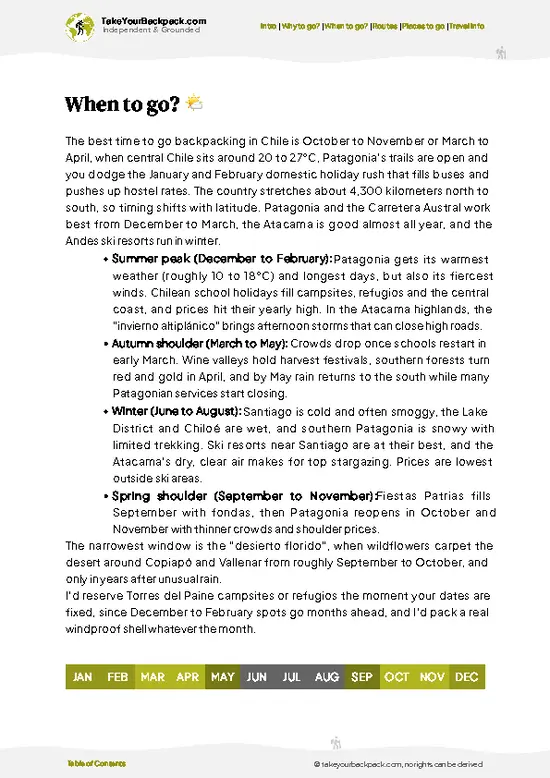
Easter Island is mildest from December to March in terms of sun and swimming, and quietest in May to September when you can have Ahu Tongariki nearly to yourself.
  • Summer (December to March): Highs of 26 to 29°C (79 to 84°F), lows around 20°C (68°F), and about 13 hours of daylight. Ocean swimming at Anakena is at its best. Flights and rooms fill early and cost the most.
  • Tapati Festival (late January to mid-February): Two weeks of canoe races, body painting and the banana-trunk sled race down Maunga Pu’i. Book flights and beds many months ahead, as prices jump sharply.
  • Autumn (April to May): Highs of 23 to 25°C (73 to 77°F), calmer crowds, and easier bargains on lodging.
  • Winter (June to September): Highs of 20 to 22°C (68 to 72°F), lows near 15°C (59°F), and about 10.5 hours of daylight. Showers
… read more 👉
Easter Island is mildest from December to March in terms of sun and swimming, and quietest in May to September when you can have Ahu Tongariki nearly to yourself.
  • Summer (December to March): Highs of 26 to 29°C (79 to 84°F), lows around 20°C (68°F), and about 13 hours of daylight. Ocean swimming at Anakena is at its best. Flights and rooms fill early and cost the most.
  • Tapati Festival (late January to mid-February): Two weeks of canoe races, body painting and the banana-trunk sled race down Maunga Pu’i. Book flights and beds many months ahead, as prices jump sharply.
  • Autumn (April to May): Highs of 23 to 25°C (73 to 77°F), calmer crowds, and easier bargains on lodging.
  • Winter (June to September): Highs of 20 to 22°C (68 to 72°F), lows near 15°C (59°F), and about 10.5 hours of daylight. Showers pass quickly, and the wind can chill the coast. Rates are the lowest of the year.
  • Spring (October to November): Highs of 22 to 25°C (72 to 77°F), green hills and thinning crowds.
Book your rental and the Rano Raraku entry window for your first morning, since the island rain can arrive any month.


source: climatestotravel.comJANJanuary: highly recommended for travelingFEBFebruary: good for travelingMARMarch: highly recommended for travelingAPRApril: excellent for travelingMAYMay: highly recommended for travelingJUNJune: highly recommended for travelingJULJuly: highly recommended for travelingAUGAugust: highly recommended for travelingSEPSeptember: highly recommended for travelingOCTOctober: excellent for travelingNOVNovember: highly recommended for travelingDECDecember: highly recommended for traveling
when-to-go

✈️ The backpacker research shortcutChile Travel Guide

An offline-friendly backpacking guide with optimized travel routes, ranked highlights, transport advice, and the best areas to stay.
example page 0 from our offline Travel Guide for Chile
example page 1 from our offline Travel Guide for Chile
example page 2 from our offline Travel Guide for Chile
example page 3 from our offline Travel Guide for Chile
example page 4 from our offline Travel Guide for Chile
example page 5 from our offline Travel Guide for Chile
example page 6 from our offline Travel Guide for Chile
example page 7 from our offline Travel Guide for Chile
The digital guide (333 pages) contains:
✅ 107 highlights, ranked by travel appeal
✅ Optimized 7, 14 & 21-day travel routes
✅ Cities, national parks, landmarks, beaches
✅ How to get around
✅ Offline-friendly for travel without Wi-Fi
👉 Click to see all 30+ guide features

📅 Plan smarter in minutes, not weeks
✅ Month by month travel advice
✅ Festivals & national holidays
✅ Budget expectations

🗺️ Go to the right places, skip the overrated ones
✅ Honest pros & cons of destinations
✅ Top hikes, parks & viewpoints
✅ Lesser-known places most travelers miss
✅ Clear “worth it vs skip it” guidance

🛏️ Travel smoothly without rookie mistakes
✅ Best areas to stay
✅ Transport systems explained simply
✅ Common scams & safety advice
✅ SIM cards, money & practical tips

🌍 Understand the country, not just visit it
✅ Culture & traditions
✅ 52 Essential phrases & customs
✅ Festivals worth planning around
✅ Traveler-friendly historical context
✅ Insights that make places more meaningful

📱 Built for real travel conditions
✅ Fully downloadable PDF
✅ Works completely offline
✅ Optimized for phone use
✅ Useful in remote areas & buses
✅ Everything in one place
Stop searching, start planning
Get instant access to your full guide. 30‑day money-back guarantee.
+ Add another guide for just

By proceeding you agree to our terms.
Sent to your inbox immediately after payment • 100% Secure Checkout
Best Backpacking Travel Advisor 2025 tourism awardBest Backpacking
Travel Advisor
2025
What others say about Take Your Backpack Guides:
⭐⭐⭐⭐⭐
Fantastic, amazing amount of information!
⭐⭐⭐⭐⭐
My goodness this is amazing, it's what I've been looking for hats off too you!
⭐⭐⭐⭐⭐
I think this is absolutely BRILLIANT
⭐⭐⭐⭐
Very complete and informative. It's still missing places, but I gotta to commend you
⭐⭐⭐⭐⭐
This is truly amazing, thank you, can't wait to explore it with my kids!
⭐⭐⭐⭐⭐
Awesome resource, thank you!
⭐⭐⭐⭐⭐
This is amazing! Can't wait to explore the ones I haven't seen
⭐⭐⭐⭐
I love this! Well done, great idea.
⭐⭐⭐⭐⭐
Thanks for taking the time to make this gem!
⭐⭐⭐⭐⭐
This might be the best website I've ever seen.
⭐⭐⭐⭐⭐
Congratulations, and thank you so much for your work; it's incredibly valuable.
⭐⭐⭐⭐
In all seriousness I think you did a great job pointing out the important spots
⭐⭐⭐⭐⭐
10/10 very good
⭐⭐⭐⭐⭐
As someone who's only just starting to visit regularly this is awesome, thank you.
⭐⭐⭐⭐
Thank you very much! I'm going to visit my dad, it's going to be very useful!
⭐⭐⭐⭐⭐
This is really cool! We'll be travelling for the first time and this definitely come in handy.
⭐⭐⭐⭐⭐
You are now our minister of culture, congratulations 👨‍💼
⭐⭐⭐⭐⭐
Just wanted to tell you that this is a pearl! Going to follow your recommendations.
⭐⭐⭐⭐⭐
This is so cool. I'll definitely be using the resource for my travels soon.
⭐⭐⭐⭐⭐
This is very impressive! Good work.
⭐⭐⭐⭐⭐
This is an amazing and informative site. Very well done!

🛏️ Where to stay?Choosing the right base

Hanga Roa is the only town on Easter Island and the only sensible place to stay, with almost every bed, restaurant and rental office within a short walk of the harbor. Dorm beds run about US$30 to 50 a night, and private rooms or small guesthouses US$60 to 120, which is high by Chilean standards because everything arrives by plane or ship.

The area around the main street, Atamu Tekena, is the most social, with the cafés, tour desks and bars a few steps apart and plenty of other solo travelers to join for a ride. Staying near the harbor of Hanga Piko puts you beside the fishing boats and the Tahai … read more 👉
Hanga Roa is the only town on Easter Island and the only sensible place to stay, with almost every bed, restaurant and rental office within a short walk of the harbor. Dorm beds run about US$30 to 50 a night, and private rooms or small guesthouses US$60 to 120, which is high by Chilean standards because everything arrives by plane or ship.

The area around the main street, Atamu Tekena, is the most social, with the cafés, tour desks and bars a few steps apart and plenty of other solo travelers to join for a ride. Staying near the harbor of Hanga Piko puts you beside the fishing boats and the Tahai coast, where the sunset gatherings begin. It is a quiet walk to the ceremonial platform, and you can wander back in the dark with a flashlight.

Further inland near the cemetery, family-run residenciales offer the lowest prices and a taste of local life, with homemade breakfast and tips from hosts. Camping is possible at a few designated spots and costs about US$15 to 25 per person. Hanga Roa feels safe and relaxed, even late at night. Book ahead for January and February, when beds sell out months before the Tapati Festival.

🚌 Getting aroundTransportation options and practical tips

Renting a scooter, ATV or small car is the easiest way for a backpacker to cover Easter Island, because the main sights are spread along roughly 60 kilometers (37 miles) of coastal road, and no public bus network exists. Walking works inside Hanga Roa only. Taxis and tours fill the gaps, but the cost adds up quickly. The island is small enough that you can see nearly everything in three or four days of driving, and the roads are quiet and well signed.
  • Rental car or jeep: About US$60 to 100 a day. It is the most comfortable choice in rain and wind, and it works best split among two to four people, which brings the cost per person to about the price of a scooter. Gravel tracks around Rano Raraku and Anakena are manageable with care.
  • Scooter or ATV: About US$40 to 70 a day. This is the cheapest
… read more 👉
Renting a scooter, ATV or small car is the easiest way for a backpacker to cover Easter Island, because the main sights are spread along roughly 60 kilometers (37 miles) of coastal road, and no public bus network exists. Walking works inside Hanga Roa only. Taxis and tours fill the gaps, but the cost adds up quickly. The island is small enough that you can see nearly everything in three or four days of driving, and the roads are quiet and well signed.
  • Rental car or jeep: About US$60 to 100 a day. It is the most comfortable choice in rain and wind, and it works best split among two to four people, which brings the cost per person to about the price of a scooter. Gravel tracks around Rano Raraku and Anakena are manageable with care.
  • Scooter or ATV: About US$40 to 70 a day. This is the cheapest way for a solo traveler to go independently, and the open air is lovely in sun. Wind and showers make the long ride to Anakena tiring, and gravel demands slow riding.
  • Mountain bike: About US$15 to 25 a day. The island has hills and strong headwinds, so it suits short trips like Ana Kakenga or Tahai at sunset, and it saves money. A full loop of the south coast to Tongariki is demanding.
  • Guided tour: About US$40 to 80 per person for a half or full day. A guide adds the history and meaning behind each moai, so for your first day the money is well spent. Then switch to your own wheels.
  • Taxi: About US$5 to 10 for rides within Hanga Roa and more to Anakena. This is useful for the airport and for late dinners, but costly for sightseeing.
Hire a guide for day one and rent your own vehicle for days two and three, so you understand the sites before you roam. Fill the tank in Hanga Roa, since stations are only there.

🍲 FoodLocal Cuisine & Drinks

Easter Island eats from the Pacific, so start with tuna, grilled or served as a bright, lime-cured ceviche with a clean, salty snap. Po’e, a sweet pudding of banana, pumpkin and flour, comes warm and dense, with a soft caramel finish. The island’s earth oven, the umu, steams chicken, sweet potato and fish in banana leaves until it smells of smoke and sweetness, and it is often prepared for groups on special days.

Backpackers eat well at the harbor in Hanga Roa, where small seafood spots serve a fish plate for about US$15 to 25. The bakeries sell warm empanadas stuffed with tuna and cheese for US$3 to 5, ideal for a long day on the road. The Feria market and the small supermarkets help you self-cater, but prices run about double those of the mainland because nearly everything comes by air … read more 👉
Easter Island eats from the Pacific, so start with tuna, grilled or served as a bright, lime-cured ceviche with a clean, salty snap. Po’e, a sweet pudding of banana, pumpkin and flour, comes warm and dense, with a soft caramel finish. The island’s earth oven, the umu, steams chicken, sweet potato and fish in banana leaves until it smells of smoke and sweetness, and it is often prepared for groups on special days.

Backpackers eat well at the harbor in Hanga Roa, where small seafood spots serve a fish plate for about US$15 to 25. The bakeries sell warm empanadas stuffed with tuna and cheese for US$3 to 5, ideal for a long day on the road. The Feria market and the small supermarkets help you self-cater, but prices run about double those of the mainland because nearly everything comes by air or sea.

For a drink, order a pisco sour or a local Mahina beer at a sunset bar facing the water. Fresh juices of guava and passion fruit are a good, cold treat.

Tipping of about 10 percent is usually added to the bill, and you can pay in Chilean pesos or US dollars at many places. Meals can be slow, so order, relax and watch the surf.

FAQCommon questions from travelers

Three to four days is enough for Easter Island if you want the main sites, and five suit those who also hike and swim. Day one covers Hanga Roa and Tahai, day two the south coast with Ahu Tongariki and Rano Raraku, and day three Anakena and Ana Kakenga. Flights from Santiago take about five and a half hours.
Easter Island has no public bus system, so most travelers rent a scooter, ATV or car for about US$40 to 100 a day. Taxis cost US$5 to 10 inside Hanga Roa, and bikes rent for US$15 to 25 a day. Guided tours at US$40 to 80 per person cover the highlights if you prefer not to drive.
Easter Island is known for the roughly 900 moai, the giant stone figures carved by the Rapa Nui people between about the 1400s and 1600s. Rano Raraku quarry, where hundreds of moai stand half-finished, and Ahu Tongariki, with its 15 moai, are the top sights. The island is also known for the Tapati Festival in February and for its remoteness, about 3,500 kilometers (2,200 miles) from the Chilean coast. A national park ticket costs about US$80 for foreigners.
⚠️ Things can change over time, so always validate details locally before you go.

Other Chilean regions near Easter Island

Explore more nearby:

  • Chiloé Island—Shingled churches, stilt houses, curanto, rain| 3623 km away
  • Lake District—Smoking volcano, araucaria forest, hot springs, whitewater| 3661 km away
  • Fjords of southern Chile—Ferry crossings, hanging glacier, marble caves, boardwalk villages| 3761 km away

💡 Not sure where to go next?
Create a personalized itinerary for Chile including Easter Island and the places that fit your trip.

Generate my itinerary

👉 Discover all regions

Or checkout all Chile has to offer (think cities, towns, villages, national parks, hikes, beaches, festivals)
Country photo of Chile

We 💚 feedbackFinal thoughts on visiting Easter Island

Easter Island works best as the far end of a bigger Chile trip, not a standalone dash. I would pair it with the Atacama Desert or the Lake District, since Santiago is the flight hub for both. Skip a rush: book five or six nights, rent a car on day one, and save the dawn start for Tongariki.

✈️ When did I visit Chile?
I have visited Chile, together with Argentina, in September 2012.

✍️ Help improve this page!
The information on this page is based on my own backpacking experience in Chile, supplemented with up-to-date research and feedback from other travelers. Travel details can change, so if you notice anything outdated or incomplete, feel free to let me know.


🙋‍♂️ Give feedback

👋 Meet the founderWho’s Behind Take Your Backpack?

Johan, backpacker and founder of TakeYourBackpackHi, I’m Johan (Netherlands 🇳🇱), the creator of TakeYourBackpack. Over the past 3 decades, I’ve backpacked through 90+ countries across six continents, gaining extensive experience with independent travel, long-term trips, and overland routes.

This site is built on a combination of firsthand travel experience and carefully curated insights from other backpackers. Many guides are based on places I’ve personally visited, while others bring together tips, observations, and practical advice shared by trusted travelers I’ve met along the way.

The goal is to provide realistic, experience-driven guidance — not generic itineraries — so you can explore destinations with better context, clearer expectations, and more confidence.