×

Chile🇨🇱 | townsPucónVillarrica summit climb, lakeside black sand, adventure outfitters, Mapuche crafts | things to do and best time to go

Explore Easter IslandExplore Puerto Varas

Backpacking in Pucón
🏆 Top picktown ranked #2
By Johan Kruseman 🇳🇱 | Updated October 19, 2026

Villarrica Volcano rises about 16 km south of town. Pucón is in the Araucanía region in the south of Chile, on the southeastern shore of Lake Villarrica. The street grid is small enough to cross on foot in minutes, which means hostels, outfitters, bakeries and the black-sand beach all sit close together, and you meet other travelers easily over breakfast or at a tour agency counter. The trade-off is tourism: the center is built around selling adventures, and January and February get crowded. Pucón works best as a base for volcano climbs, hot springs and lakeside parks, with roads from Villarrica and Temuco making it simple to reach. Ask your hostel host each morning whether the summit is open, since wind and ash conditions decide the climb and locals read them well. A first day could mean a walk along the beach, a lookout hill, and a dinner plan built around tomorrow’s forecast.

Discover everything you want to know in the 📖 Chile Travel Guide.


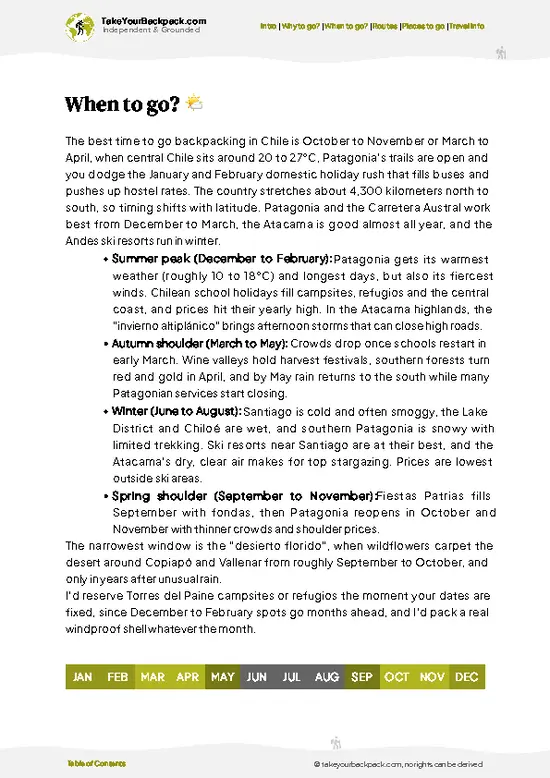
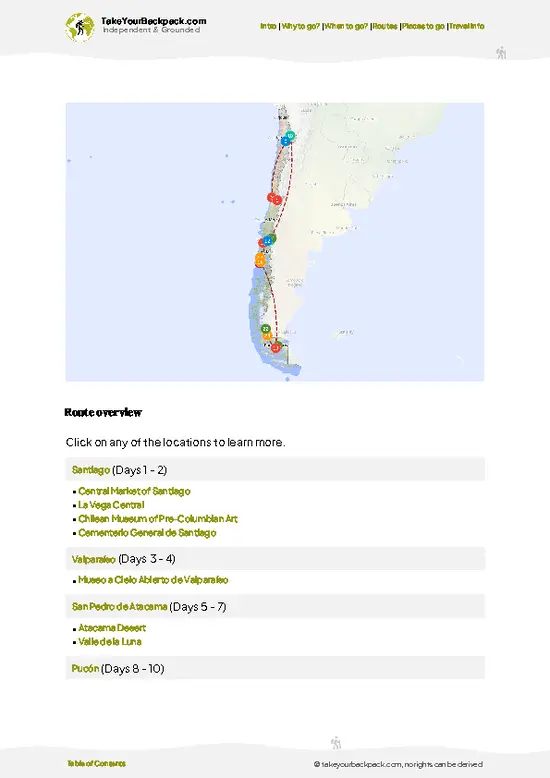
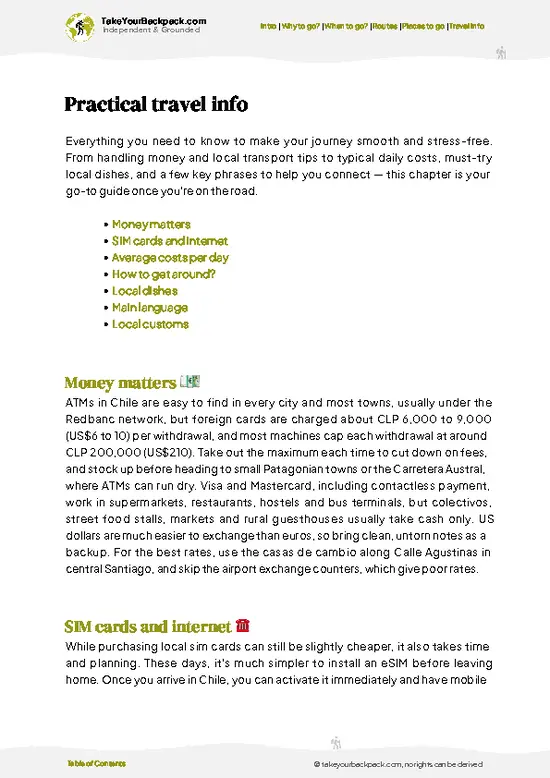
example page 0 from our offline Travel Guide for Chile
example page 1 from our offline Travel Guide for Chile
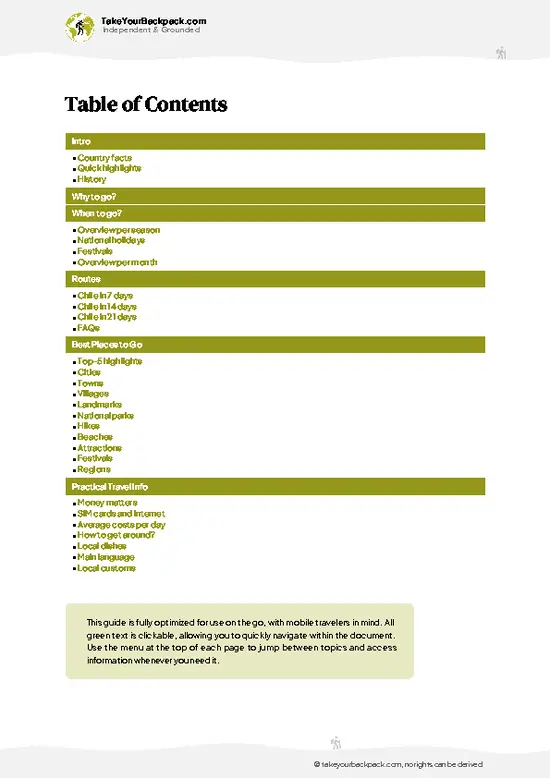
example page 2 from our offline Travel Guide for Chile
example page 3 from our offline Travel Guide for Chile
example page 4 from our offline Travel Guide for Chile
example page 5 from our offline Travel Guide for Chile
example page 6 from our offline Travel Guide for Chile
example page 7 from our offline Travel Guide for Chile
Loading the map 🌍
CLICK TO FILTER
cities
towns
villages
landmarks
national parks
hikes
beaches
attractions
festivals
regions
SHOW COUNTRY’S BESTSHOW ALL

✨ Why go?
Ranked #2 town in Chile
The unique appeal for travelers

Pucón is the most practical place in southern Chile to line up several big outdoor days without moving your pack. Agencies, rental shops and trailhead shuttles all cluster within a few blocks, so a weather change simply means swapping one activity for another. The main draw is the Villarrica Volcano, an active cone you can climb with a guide, but the surrounding lakes, forests and thermal pools give you backup options when the summit is closed. Most travelers stay three to five days, and many stretch that longer because every morning brings a new choice. The mood is social without being rowdy. Small hostels and guesthouses, plus café tables full of people comparing trip plans, make it easy for solo travelers to find a hiking partner. Evenings revolve around pubs along Calle O’Higgins, mostly … read more 👉
Pucón is the most practical place in southern Chile to line up several big outdoor days without moving your pack. Agencies, rental shops and trailhead shuttles all cluster within a few blocks, so a weather change simply means swapping one activity for another. The main draw is the Villarrica Volcano, an active cone you can climb with a guide, but the surrounding lakes, forests and thermal pools give you backup options when the summit is closed. Most travelers stay three to five days, and many stretch that longer because every morning brings a new choice. The mood is social without being rowdy. Small hostels and guesthouses, plus café tables full of people comparing trip plans, make it easy for solo travelers to find a hiking partner. Evenings revolve around pubs along Calle O’Higgins, mostly craft beer and live acoustic music rather than clubs. Hikers, paddlers and slow travelers who like a reliable base will enjoy it most. If you want quiet villages with no tour infrastructure, treat Pucón as a two-night stop and head for the smaller lakes nearby, such as Caburgua.

💡 HighlightsMust-see experiences and standout moments

  1. Villarrica Volcano climb: The sight Pucón is known for. Guided groups leave from town agencies, ride up to the ski area, then climb the snow and ash to the crater rim, where on a clear day you look into a glowing lava lake. Go on a calm, clear morning in the dry months. Expect roughly US$130 to 160 with gear, and 9 to 11 hours in all. Trips are canceled in poor conditions, so book early in your stay.
  2. Playa Grande: A broad beach of dark volcanic sand along the lake, with the volcano as a backdrop. Summer afternoons are best for swimming and people-watching, while mornings are calm and empty. It is free, and an hour or two is enough. Rent a kayak or paddleboard if you want to see the shoreline from the water.
  3. Mirador El Cristo: A short, steep walk past the cemetery above town to a lookout over
… read more 👉
  1. Villarrica Volcano climb: The sight Pucón is known for. Guided groups leave from town agencies, ride up to the ski area, then climb the snow and ash to the crater rim, where on a clear day you look into a glowing lava lake. Go on a calm, clear morning in the dry months. Expect roughly US$130 to 160 with gear, and 9 to 11 hours in all. Trips are canceled in poor conditions, so book early in your stay.
  2. Playa Grande: A broad beach of dark volcanic sand along the lake, with the volcano as a backdrop. Summer afternoons are best for swimming and people-watching, while mornings are calm and empty. It is free, and an hour or two is enough. Rent a kayak or paddleboard if you want to see the shoreline from the water.
  3. Mirador El Cristo: A short, steep walk past the cemetery above town to a lookout over the lake, the town’s grid of streets and the volcano. Late afternoon gives the softest view. Allow about an hour round trip, plus time at the top. Bring water and decent shoes, as the path can be loose.
  4. Feria Artesanal de Pucón: A crafts market near the center where you can see Mapuche-inspired weaving, wood carving and woolens. Come in the daytime during the warm months, when most stalls are open. Browsing is free, small items start around US$3 to 5, and an hour is plenty. It is a good place to buy a gift without paying souvenir-shop markups.
  5. La Poza: A small sheltered cove at the western end of the waterfront, where boats tie up and locals fish and stroll. It is quieter than the main beach and good at the end of the day when the light softens. It is free and takes 30 to 45 minutes. Walk the shoreline path between here and the center for the best views.
Beyond town, Huerquehue National Park, Ojos del Caburgua, Lake Caburgua and the hot springs along the Liucura valley make easy day trips. Do Mirador El Cristo in the late afternoon and finish at Playa Grande for the evening glow on the volcano.
Spotted a mistake or missing something? Contact us.

Things to do around Pucón

Ratings based on Tripadvisor reviews. When you book through this link, you support our work at no extra cost to you.

🏘️ NeighborhoodsWhere things are and how it's laid out

Pucón is small enough to cover on foot, and each zone works differently because the town sits on a flat grid between Lake Villarrica and the volcano.
  • Centro and Avenida O’Higgins: The main strip is lined with tour agencies, burrito counters, craft beer pubs and gear shops, and it stays busy until 2 or 3 a.m. in summer. Everything clusters within about ten blocks, so you can compare volcano and rafting offers in one walk and eat a late empanada at the end of it.
  • La Playa Grande: The black volcanic sand beach at the foot of Avenida Caupolicán is a five-minute walk from the center. Wind kicks up in the afternoon, which is why kitesurfers and paddleboarders gather here, and you get the best view of Volcán Villarrica smoking over the water at sunset.
  • Península Pucón: A quiet residential spur with
… read more 👉
Pucón is small enough to cover on foot, and each zone works differently because the town sits on a flat grid between Lake Villarrica and the volcano.
  • Centro and Avenida O’Higgins: The main strip is lined with tour agencies, burrito counters, craft beer pubs and gear shops, and it stays busy until 2 or 3 a.m. in summer. Everything clusters within about ten blocks, so you can compare volcano and rafting offers in one walk and eat a late empanada at the end of it.
  • La Playa Grande: The black volcanic sand beach at the foot of Avenida Caupolicán is a five-minute walk from the center. Wind kicks up in the afternoon, which is why kitesurfers and paddleboarders gather here, and you get the best view of Volcán Villarrica smoking over the water at sunset.
  • Península Pucón: A quiet residential spur with lakefront paths and a golf club. It is a 25-minute stroll from town, so it feels calm, and you get a walk with the lake on both sides and few crowds.
  • Camino a Caburgua and Camino a Villarrica: Beyond the grid, roads stretch out with cabins, farm stands, cafés and hot springs access. Distances grow here, so you need a bus or a bike, and the payoff is orchard-lined quiet and a proper sit-down lunch of grilled trout.
  • Barrio Bellavista area: Uphill, residential blocks hold local bakeries and cheap lunch counters. Prices drop as you leave the strip, and a menú del día with soup and a main feels like the local standard.

⌛️ 1 dayWhat you can realistically do in a day

A volcano-view day on foot, with nothing booked and nothing rushed.

8:00 AM, Calle O’Higgins bakery stop: Start with coffee and a fresh pastry from one of the bakeries on the main street. The volcano is usually clearest before the day’s wind picks up, so check it from the corner before you sit down.

9:30 AM, Mirador El Cristo: Walk uphill to the lookout while the air is still cool. The climb is short but steep, and the view over rooftops, lake and volcano makes a good orientation to the area.

11:30 AM, Feria Artesanal: Wander back down to the crafts market. Look for wool pieces and carved wood, and chat with sellers about how they are made.

1:00 PM, Lunch in the center: Choose a small restaurant in the side streets rather than on the main drag. Look for a plate of fresh trout or a hearty local … read more 👉
A volcano-view day on foot, with nothing booked and nothing rushed.

8:00 AM, Calle O’Higgins bakery stop: Start with coffee and a fresh pastry from one of the bakeries on the main street. The volcano is usually clearest before the day’s wind picks up, so check it from the corner before you sit down.

9:30 AM, Mirador El Cristo: Walk uphill to the lookout while the air is still cool. The climb is short but steep, and the view over rooftops, lake and volcano makes a good orientation to the area.

11:30 AM, Feria Artesanal: Wander back down to the crafts market. Look for wool pieces and carved wood, and chat with sellers about how they are made.

1:00 PM, Lunch in the center: Choose a small restaurant in the side streets rather than on the main drag. Look for a plate of fresh trout or a hearty local stew.

3:00 PM, Playa Grande: Walk to the beach for a swim, a nap on dark sand or a paddleboard rental. Keep going east past the last cluster of umbrellas to the quieter stretch, where you will find fewer people and a long, clear volcano view.

6:00 PM, La Poza: Stroll west along the waterfront to the cove, where small boats rest and locals fish as the light softens. It is an easy place to sit, watch and plan tomorrow.

8:00 PM, Pub dinner: Finish with a craft beer and dinner at one of the pubs on O’Higgins, where it is easy to start conversations with other travelers.

🌤️ When to go?Best time to visit Pucón

January and February are the peak months, with daytime highs of 22 to 27°C (72 to 81°F) and almost 15 hours of daylight.
  • Summer (December to February): Lake swimming, rafting and volcano climbs run at full capacity. Beds and tours cost the most, and weekends bring Chilean families, so book ahead for January.
  • Autumn (March to May): Highs fall from 20°C (68°F) to about 12°C (54°F). Forests in Huerquehue turn red and gold, crowds thin, and prices drop, though rain becomes more frequent by May.
  • Winter (June to August): Highs of 8 to 11°C (46 to 52°F), lows near 1°C (34°F), and daylight of about 9.5 hours. Skiing on Villarrica is the draw, and many lakeside businesses shorten their hours. Rain falls on many days.
  • Spring (September to November): Temperatures climb from 12 to 19°C (54 to 66°F). Waterfalls
… read more 👉
January and February are the peak months, with daytime highs of 22 to 27°C (72 to 81°F) and almost 15 hours of daylight.
  • Summer (December to February): Lake swimming, rafting and volcano climbs run at full capacity. Beds and tours cost the most, and weekends bring Chilean families, so book ahead for January.
  • Autumn (March to May): Highs fall from 20°C (68°F) to about 12°C (54°F). Forests in Huerquehue turn red and gold, crowds thin, and prices drop, though rain becomes more frequent by May.
  • Winter (June to August): Highs of 8 to 11°C (46 to 52°F), lows near 1°C (34°F), and daylight of about 9.5 hours. Skiing on Villarrica is the draw, and many lakeside businesses shorten their hours. Rain falls on many days.
  • Spring (September to November): Temperatures climb from 12 to 19°C (54 to 66°F). Waterfalls run full and rates stay moderate, but wind and showers can cancel summit attempts.
March gives the best balance of stable weather, open tours and lower prices.


source: climatestotravel.comJANJanuary: excellent for travelingFEBFebruary: excellent for travelingMARMarch: highly recommended for travelingAPRApril: highly recommended for travelingMAYMay: good for travelingJUNJune: fair for travelingJULJuly: fair for travelingAUGAugust: fair for travelingSEPSeptember: good for travelingOCTOctober: highly recommended for travelingNOVNovember: highly recommended for travelingDECDecember: excellent for traveling
chile-city-pucon
© Google | Yanpiero González

✈️ The backpacker research shortcutChile Travel Guide

An offline-friendly backpacking guide with optimized travel routes, ranked highlights, transport advice, and the best areas to stay.
example page 0 from our offline Travel Guide for Chile
example page 1 from our offline Travel Guide for Chile
example page 2 from our offline Travel Guide for Chile
example page 3 from our offline Travel Guide for Chile
example page 4 from our offline Travel Guide for Chile
example page 5 from our offline Travel Guide for Chile
example page 6 from our offline Travel Guide for Chile
example page 7 from our offline Travel Guide for Chile
The digital guide (333 pages) contains:
✅ 107 highlights, ranked by travel appeal
✅ Optimized 7, 14 & 21-day travel routes
✅ Cities, national parks, landmarks, beaches
✅ How to get around
✅ Offline-friendly for travel without Wi-Fi
👉 Click to see all 30+ guide features

📅 Plan smarter in minutes, not weeks
✅ Month by month travel advice
✅ Festivals & national holidays
✅ Budget expectations

🗺️ Go to the right places, skip the overrated ones
✅ Honest pros & cons of destinations
✅ Top hikes, parks & viewpoints
✅ Lesser-known places most travelers miss
✅ Clear “worth it vs skip it” guidance

🛏️ Travel smoothly without rookie mistakes
✅ Best areas to stay
✅ Transport systems explained simply
✅ Common scams & safety advice
✅ SIM cards, money & practical tips

🌍 Understand the country, not just visit it
✅ Culture & traditions
✅ 52 Essential phrases & customs
✅ Festivals worth planning around
✅ Traveler-friendly historical context
✅ Insights that make places more meaningful

📱 Built for real travel conditions
✅ Fully downloadable PDF
✅ Works completely offline
✅ Optimized for phone use
✅ Useful in remote areas & buses
✅ Everything in one place
Stop searching, start planning
Get instant access to your full guide. 30‑day money-back guarantee.
+ Add another guide for just

By proceeding you agree to our terms.
Sent to your inbox immediately after payment • 100% Secure Checkout
Best Backpacking Travel Advisor 2025 tourism awardBest Backpacking
Travel Advisor
2025
What others say about Take Your Backpack Guides:
⭐⭐⭐⭐⭐
Fantastic, amazing amount of information!
⭐⭐⭐⭐⭐
My goodness this is amazing, it's what I've been looking for hats off too you!
⭐⭐⭐⭐⭐
I think this is absolutely BRILLIANT
⭐⭐⭐⭐
Very complete and informative. It's still missing places, but I gotta to commend you
⭐⭐⭐⭐⭐
This is truly amazing, thank you, can't wait to explore it with my kids!
⭐⭐⭐⭐⭐
Awesome resource, thank you!
⭐⭐⭐⭐⭐
This is amazing! Can't wait to explore the ones I haven't seen
⭐⭐⭐⭐
I love this! Well done, great idea.
⭐⭐⭐⭐⭐
Thanks for taking the time to make this gem!
⭐⭐⭐⭐⭐
This might be the best website I've ever seen.
⭐⭐⭐⭐⭐
Congratulations, and thank you so much for your work; it's incredibly valuable.
⭐⭐⭐⭐
In all seriousness I think you did a great job pointing out the important spots
⭐⭐⭐⭐⭐
10/10 very good
⭐⭐⭐⭐⭐
As someone who's only just starting to visit regularly this is awesome, thank you.
⭐⭐⭐⭐
Thank you very much! I'm going to visit my dad, it's going to be very useful!
⭐⭐⭐⭐⭐
This is really cool! We'll be travelling for the first time and this definitely come in handy.
⭐⭐⭐⭐⭐
You are now our minister of culture, congratulations 👨‍💼
⭐⭐⭐⭐⭐
Just wanted to tell you that this is a pearl! Going to follow your recommendations.
⭐⭐⭐⭐⭐
This is so cool. I'll definitely be using the resource for my travels soon.
⭐⭐⭐⭐⭐
This is very impressive! Good work.
⭐⭐⭐⭐⭐
This is an amazing and informative site. Very well done!

🛏️ Where to stay?Best areas to stay in Chile

The center, within about six blocks of Avenida O’Higgins, is the best area for a budget bed in Pucón. Most hostels and guesthouses are concentrated here, with dorms in summer typically running US$15 to 25, and the supply drops sharply outside the grid. Staying central means you can walk to bus offices, supermarkets, tour agencies and restaurants and skip taxis entirely. Noise is the cost: streets near the main strip hold bars that stay open into the early hours in January and February, so ask for a room at the back or choose a place a couple of blocks away.
The second option is the quieter streets … read more 👉
The center, within about six blocks of Avenida O’Higgins, is the best area for a budget bed in Pucón. Most hostels and guesthouses are concentrated here, with dorms in summer typically running US$15 to 25, and the supply drops sharply outside the grid. Staying central means you can walk to bus offices, supermarkets, tour agencies and restaurants and skip taxis entirely. Noise is the cost: streets near the main strip hold bars that stay open into the early hours in January and February, so ask for a room at the back or choose a place a couple of blocks away.
The second option is the quieter streets toward Playa Grande and the lakefront, a 5 to 10 minute walk from the center. Here guesthouses and smaller hostels offer calmer nights and lake views, and it feels safe for walking home after dinner, with decent lighting along the main roads. Prices are similar to the center, and the extra distance helps you sleep before a 6 a.m. volcano pickup.
For a cheaper stay, look toward the residential blocks near the bus terminal and uphill streets, where private rooms and kitchens suit longer visits. Book ahead from late December through February, because dorms fill quickly, and expect many places to be quieter and cheaper in winter.

🚌 Getting aroundGetting around like a local

Walking is the easiest way around Pucón, because the grid of flat streets between the lake and the main avenue measures only about 1.5 by 1 kilometers. Traffic is slow in summer and the sidewalks are good, while buses and shared taxis handle everything beyond town and run reliably, if less often on Sundays.
  • Walking: Free, and it takes about 15 minutes from the bus terminal to the beach. You pass the agencies, bakeries and the lakefront, so you can stop for a sopaipilla on the way.
  • Local buses and minibuses: Services to Villarrica run every 10 to 15 minutes from the terminal, take around 40 minutes and cost US$1.50 to 2. Buses to Caburgua, Huife and Ojos del Caburgua leave less often, about US$2 to 3, and the last departures are usually late afternoon, so check the return time at the stop.
  • Colectivos
… read more 👉
Walking is the easiest way around Pucón, because the grid of flat streets between the lake and the main avenue measures only about 1.5 by 1 kilometers. Traffic is slow in summer and the sidewalks are good, while buses and shared taxis handle everything beyond town and run reliably, if less often on Sundays.
  • Walking: Free, and it takes about 15 minutes from the bus terminal to the beach. You pass the agencies, bakeries and the lakefront, so you can stop for a sopaipilla on the way.
  • Local buses and minibuses: Services to Villarrica run every 10 to 15 minutes from the terminal, take around 40 minutes and cost US$1.50 to 2. Buses to Caburgua, Huife and Ojos del Caburgua leave less often, about US$2 to 3, and the last departures are usually late afternoon, so check the return time at the stop.
  • Colectivos and taxis: Shared taxis run set routes on the main roads for roughly US$1 to 2 within the area. Regular taxis cost US$3 to 4 for a town hop and US$25 to 40 to trailheads, which is worth splitting among four people.
  • Bike rental: Bikes cost about US$10 to 18 a day and give you access to the lakeside road toward Playa Grande and the Peninsula. Gravel roads are dusty and hills toward Caburgua are steady, but you stop at beaches whenever you like.
  • Long-distance buses: Services to Santiago take 10 to 11 hours at US$30 to 65 depending on seat type, with overnight departures. Temuco is 1.5 to 2 hours away for about US$5 to 8, the common connection point.

👛 Costs (as of 19 October 2026)Typical daily expenses

Expect to spend about US$85 a day in Pucón in high season, with dorm beds at US$15 to 25. Costs rise with volcano tours and summer demand, and Chile’s peso is the currency you pay in.
CategoryBudget RangeLocal Reality
Dorm accommodationUS$15 to 25 (high season), US$10 to 16 (low season)Dorms are mostly concentrated near the center and fill quickly in January; many include breakfast.
MealsUS$15 to 25A set lunch costs about US$6 to 9, supermarket groceries keep dinners cheap, and a restaurant dinner runs US$12 to 18.
Local transportUS$2 to 6Colectivos and buses cost US$1 to 3 per ride, and most of the center is walkable.
Basic activities/entry feesUS$8 to 30Park entries cost US$8 to 12, while hot springs cost US$20 to 50 and the volcano climb about US$130 to 160, which is not in this daily average.
… read more 👉
Expect to spend about US$85 a day in Pucón in high season, with dorm beds at US$15 to 25. Costs rise with volcano tours and summer demand, and Chile’s peso is the currency you pay in.
CategoryBudget RangeLocal Reality
Dorm accommodationUS$15 to 25 (high season), US$10 to 16 (low season)Dorms are mostly concentrated near the center and fill quickly in January; many include breakfast.
MealsUS$15 to 25A set lunch costs about US$6 to 9, supermarket groceries keep dinners cheap, and a restaurant dinner runs US$12 to 18.
Local transportUS$2 to 6Colectivos and buses cost US$1 to 3 per ride, and most of the center is walkable.
Basic activities/entry feesUS$8 to 30Park entries cost US$8 to 12, while hot springs cost US$20 to 50 and the volcano climb about US$130 to 160, which is not in this daily average.
Miscellaneous expensesUS$5 to 15Craft beer, snacks, laundry and the occasional taxi.
Total Daily BudgetUS$45 to 100About US$85 in high season, counting the dorm at US$25, meals US$25, transport US$6, activities US$24 and extras US$5.
Cooking in a hostel kitchen and shopping at the supermarket can cut food costs by half.


source: chile.travel
⚠️ Prices can change and everyone travels differently, so take this as a rough guide. Hope it helps you plan your adventure!

🚌 Day tripsWhere to go beyond the main area

Pucón works very well as a base, because the main sights sit within 30 to 90 minutes and tours or local buses leave daily.
Volcán Villarrica Climb:
The 4 to 5 hour ascent to the 2,847 meter crater, with sulfur fumes and views across lakes, is the area’s top draw. Guided trips cost about US$130 to 160 including gear, and the national park entry fee is extra. Clear days from December to March give the best odds, and first-timers often forget that agencies cancel for wind, so keep a spare day in your schedule.

Parque Nacional Huerquehue:
A 45 to 60 minute bus ride on the road to Paillaco leads to a trail past three lakes and waterfalls under araucaria trees. The loop takes 4 to 6 hours, entry runs about US$8 to 12, and a round trip bus costs around US$5. Go in the morning, since the last bus … read more 👉
Pucón works very well as a base, because the main sights sit within 30 to 90 minutes and tours or local buses leave daily.
Volcán Villarrica Climb:
The 4 to 5 hour ascent to the 2,847 meter crater, with sulfur fumes and views across lakes, is the area’s top draw. Guided trips cost about US$130 to 160 including gear, and the national park entry fee is extra. Clear days from December to March give the best odds, and first-timers often forget that agencies cancel for wind, so keep a spare day in your schedule.

Parque Nacional Huerquehue:
A 45 to 60 minute bus ride on the road to Paillaco leads to a trail past three lakes and waterfalls under araucaria trees. The loop takes 4 to 6 hours, entry runs about US$8 to 12, and a round trip bus costs around US$5. Go in the morning, since the last bus back leaves mid afternoon.
👉 Explore Huerquehue National Park
Lago Caburgua and Ojos del Caburgua:
Only 25 to 40 minutes away, the turquoise water pools at Ojos del Caburgua sit at the end of a short path with a small entry fee, and nearby beaches have white sand. Budget about US$6 to 12 total with a bus. Summer afternoons are best for swimming, though the lake stays cold.

Termas Geométricas:
Since its operator left on 30 September 2026, the site is set to continue under the landowners as Termas Martini. Its hot spring pools sit in a red-walled forest ravine about 1.5 hours by road toward Coñaripe, linked by wooden walkways. Entry is around US$40 to 50, and a taxi or tour van is needed, so splitting with others cuts the cost. Winter visits are memorable with steam rising in the cold.

🛡️ SafetyStaying Safe: What Travelers Should Know

Pucón is among the safer towns in Chile, and most problems are petty and avoidable. Bag snatching and opportunistic theft from parked cars happen at trailheads and beaches, so keep valuables out of sight and never leave gear in a rental car. On crowded summer nights near the bars on the main avenue, keep your phone in a front pocket and watch your drink. Solo travelers, including women, usually walk home from the center without trouble, but stick to lit streets near the lake after about 2 a.m. and avoid the dark beach.
The real risk is the mountain. Weather turns fast on Villarrica, so use a licensed guide and accept cancellations. Strong afternoon winds can make the lake dangerous for swimming and kayaking, so check conditions before heading out. Lower-priced tour operators sometimes cut safety … read more 👉
Pucón is among the safer towns in Chile, and most problems are petty and avoidable. Bag snatching and opportunistic theft from parked cars happen at trailheads and beaches, so keep valuables out of sight and never leave gear in a rental car. On crowded summer nights near the bars on the main avenue, keep your phone in a front pocket and watch your drink. Solo travelers, including women, usually walk home from the center without trouble, but stick to lit streets near the lake after about 2 a.m. and avoid the dark beach.
The real risk is the mountain. Weather turns fast on Villarrica, so use a licensed guide and accept cancellations. Strong afternoon winds can make the lake dangerous for swimming and kayaking, so check conditions before heading out. Lower-priced tour operators sometimes cut safety gear, so ask what equipment is included before paying. Sellers on the beach may overcharge, so confirm prices first.

FAQCommon questions from travelers

Pucón is well worth visiting as a destination, not a stopover, thanks to its mix of volcano, lakes, hot springs and forest. You can climb Volcán Villarrica (about US$130 to 160 with a guide), hike Huerquehue National Park, and soak in hot springs within an hour or two of town. It is also easier to reach than most Patagonian spots, about 10 to 11 hours by bus from Santiago.
Pucón needs 3 to 5 days for a satisfying visit. One day goes to the volcano climb, one to Huerquehue or the Caburgua lakes, and another to hot springs in the Liucura valley, with spare time for weather delays. Adventure fans who add rafting on the Trancura River or a ski day in winter often extend to a week.
Pucón can be reached from Temuco in 1.5 to 2 hours by bus (about US$5 to 8), but a day trip is too short to do much. Villarrica is only 40 minutes away, yet the main attractions are early morning volcano tours and park hikes that begin before 7 a.m. Staying at least one night is the realistic minimum for any climb or hike.
⚠️ Things can change over time, so always validate details locally before you go.

Other Chilean towns near Pucón

Explore more nearby:

  • Villarrica—Lake promenade, Mapuche museum, volcano gateway| 22 km away
  • Licán Ray—Black-sand beach, fish grills, Calafquén kayaking, Villarrica lookout| 29 km away
  • Frutillar—Lakeside concert hall, German settler park, kuchen teahouses, volcano views| 224 km away

💡 Not sure where to go next?
Create a personalized itinerary for Chile including Pucón and the places that fit your trip.

Generate my itinerary

👉 Discover all towns

Or checkout all Chile has to offer (think cities, towns, villages, national parks, hikes, beaches, festivals)
Country photo of Chile

We 💚 feedbackFinal thoughts on visiting Pucón

Pucón is at its best in the early morning, when the volcano is sharpest and the beach is empty, and in March, when summer crowds have thinned but the lake is still warm enough to swim. I would arrive without a rigid plan, book the volcano only once the forecast looks clear, and keep a spare day in reserve.

✈️ When did I visit Chile?
I have visited Chile, together with Argentina, in September 2012.

✍️ Help improve this page!
The information on this page is based on my own backpacking experience in Chile, supplemented with up-to-date research and feedback from other travelers. Travel details can change, so if you notice anything outdated or incomplete, feel free to let me know.


🙋‍♂️ Give feedback

👋 Meet the founderWho’s Behind Take Your Backpack?

Johan, backpacker and founder of TakeYourBackpackHi, I’m Johan (Netherlands 🇳🇱), the creator of TakeYourBackpack. Over the past 3 decades, I’ve backpacked through 90+ countries across six continents, gaining extensive experience with independent travel, long-term trips, and overland routes.

This site is built on a combination of firsthand travel experience and carefully curated insights from other backpackers. Many guides are based on places I’ve personally visited, while others bring together tips, observations, and practical advice shared by trusted travelers I’ve met along the way.

The goal is to provide realistic, experience-driven guidance — not generic itineraries — so you can explore destinations with better context, clearer expectations, and more confidence.