×

Chile🇨🇱 | attractionsGabriela Mistral Cultural CenterCorten steel lattice, rooftop terraces, free galleries, concert hall | things to do and best time to go

Explore La SebastianaExplore Chilean Museum of Pre-Columbian Art

Backpacking in Gabriela Mistral Cultural Center
👌 Worth visitingattraction ranked #12
By Johan Kruseman 🇳🇱 | Updated October 19, 2026

Entry to the plaza, the library and most exhibition halls at Gabriela Mistral Cultural Center is free, which makes it one of the cheapest serious culture stops in Santiago. It sits in Chile’s capital, on the Alameda beside the Santiago-Centro and Lastarria area. The building began as a 1972 conference hall, built in record time for a UN trade summit. I walked in off the Alameda, and the long concrete hall opened up with skateboards clacking across the plaza and a ceiling of rust-colored steel. Spend your time on the exhibitions and the rooftop-style terraces. Skip the gift shop. Check the daily program online before you go, since galleries close on Mondays.

Discover everything you want to know in the 📖 Chile Travel Guide.


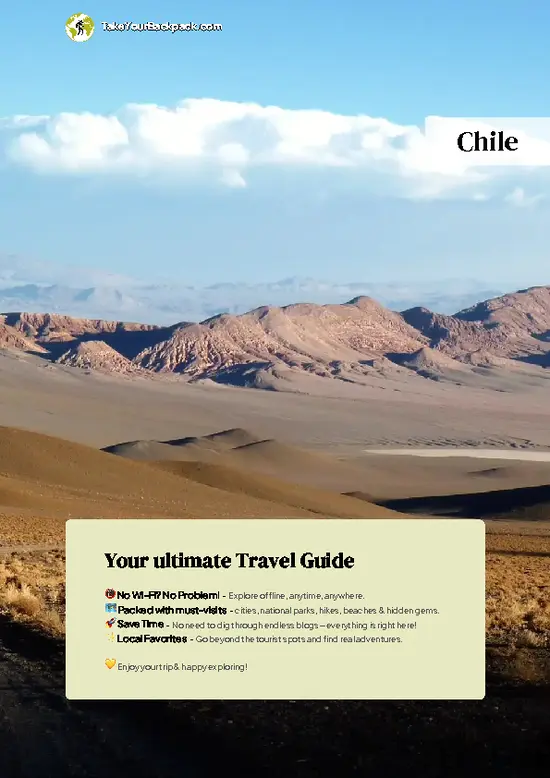
example page 0 from our offline Travel Guide for Chile
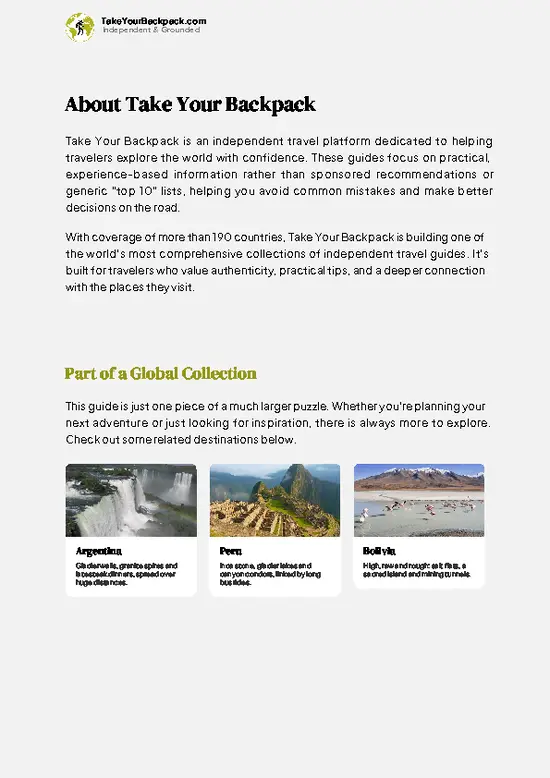
example page 1 from our offline Travel Guide for Chile
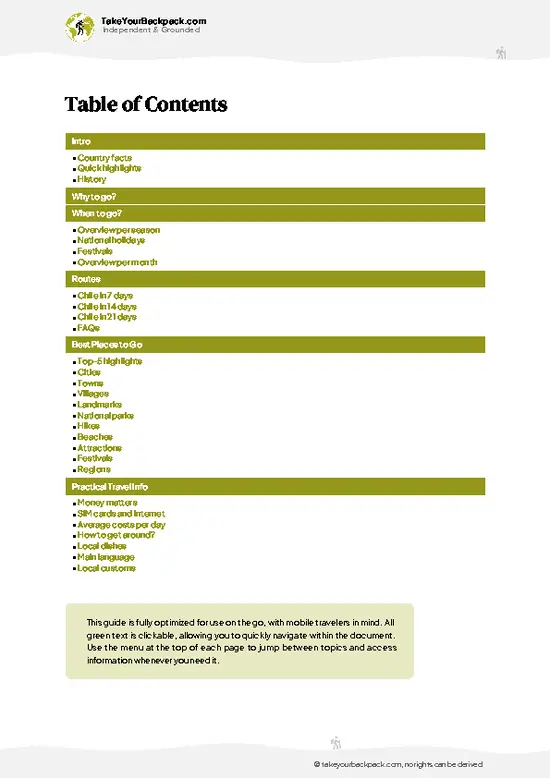
example page 2 from our offline Travel Guide for Chile
example page 3 from our offline Travel Guide for Chile
example page 4 from our offline Travel Guide for Chile
example page 5 from our offline Travel Guide for Chile
example page 6 from our offline Travel Guide for Chile
example page 7 from our offline Travel Guide for Chile
Loading the map 🌍
CLICK TO FILTER
cities
towns
villages
landmarks
national parks
hikes
beaches
attractions
festivals
regions
SHOW COUNTRY’S BESTSHOW ALL

✨ Why go?
Ranked #12 attraction in Chile
Why visitors keep coming back

Gabriela Mistral Cultural Center is the easiest place in Santiago to see how the city reinvented itself after dictatorship. The complex began as a symbol of Salvador Allende’s government, was later repurposed under military rule, and burned in 2006 before reopening in 2010. That arc gives it more political weight than a typical arts venue. It also works as a practical hub. The free plaza and terraces cost nothing, its halls run contemporary dance, theater and music, and the spot sits a short walk from Lastarria’s cafés and the Cerro Santa Lucía hill. Pair it with the nearby metro stop and you can fold a culture hit into any city day without planning around opening hours.

💡 HighlightsMust-see experiences and standout moments

  1. The Main Façade and Plaza: A huge lattice of rust-colored Corten steel wraps the building, and the open plaza below doubles as a hangout for skaters and street performers.
  2. Rooftop Terraces: Walkways on upper levels give wide views across the Alameda toward Cerro Santa Lucía and the Andes on clear days.
  3. Main Concert Hall: The largest hall hosts symphonic, contemporary and world music, with strong acoustics and tickets often modest compared with Europe.
  4. Free Exhibition Galleries: Rotating shows of Chilean and Latin American artists fill the lower galleries, many with no entry fee.
  5. Sala N1 and Theater Spaces: Experimental dance and theater run here, a good bet if you want something local rather than touristy.
  6. Mistral Collection: Displays tied to the poet’s life and work recall her 1945 Nobel Prize
… read more 👉
  1. The Main Façade and Plaza: A huge lattice of rust-colored Corten steel wraps the building, and the open plaza below doubles as a hangout for skaters and street performers.
  2. Rooftop Terraces: Walkways on upper levels give wide views across the Alameda toward Cerro Santa Lucía and the Andes on clear days.
  3. Main Concert Hall: The largest hall hosts symphonic, contemporary and world music, with strong acoustics and tickets often modest compared with Europe.
  4. Free Exhibition Galleries: Rotating shows of Chilean and Latin American artists fill the lower galleries, many with no entry fee.
  5. Sala N1 and Theater Spaces: Experimental dance and theater run here, a good bet if you want something local rather than touristy.
  6. Mistral Collection: Displays tied to the poet’s life and work recall her 1945 Nobel Prize in Literature.
  7. Cafés and Craft Shop: Casual spots in the complex sell coffee and Chilean design objects, handy for a break between exhibits.
Spotted a mistake or missing something? Contact us.

Things to do around Gabriela Mistral Cultural Center

Ratings based on Tripadvisor reviews. When you book through this link, you support our work at no extra cost to you.

🌤️ When to go?Best time to visit Gabriela Mistral Cultural Center

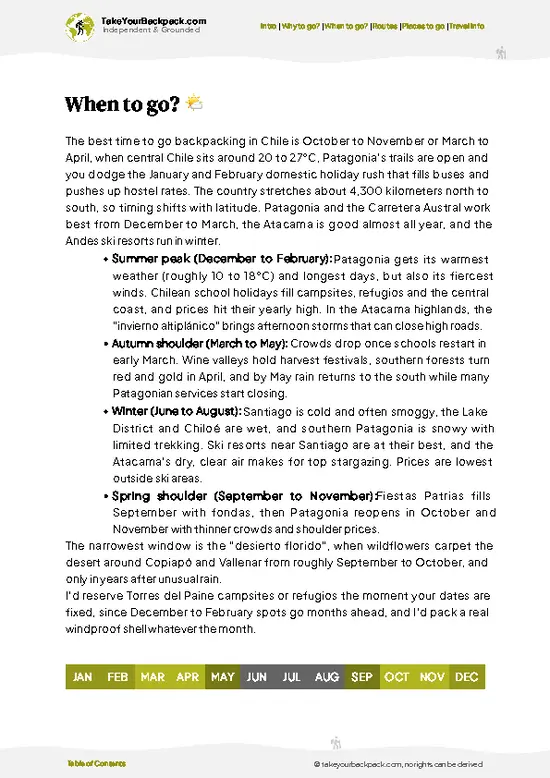
  • Summer (December to February): Santiago runs hot and dry, with highs of 28 to 32°C (82 to 90°F), and daylight lasts past 9 p.m. The center’s plazas and terraces fill with evening crowds, and many locals leave town in January, so the streets thin out.
  • Autumn (March to May): Highs of 17 to 25°C (63 to 77°F), clear skies and golden light on the Alameda. Exhibitions and concerts run at full tilt.
  • Winter (June to August): Cool days of 12 to 16°C (54 to 61°F), nights near 3°C (37°F), and some rain. Indoor galleries and the center’s halls are comfortable, and smog can settle on still days.
  • Spring (September to November): Mild 18 to 26°C (64 to 79°F), longer days, and dry weather returning.
Go on a weekday morning for the quietest galleries, since the center is free to enter and stays busy on weekends.

source: climatestotravel.comJANJanuary: fair for travelingFEBFebruary: fair for travelingMARMarch: highly recommended for travelingAPRApril: highly recommended for travelingMAYMay: highly recommended for travelingJUNJune: fair for travelingJULJuly: fair for travelingAUGAugust: fair for travelingSEPSeptember: excellent for travelingOCTOctober: excellent for travelingNOVNovember: excellent for travelingDECDecember: fair for traveling
when-to-go

✈️ The backpacker research shortcutChile Travel Guide

An offline-friendly backpacking guide with optimized travel routes, ranked highlights, transport advice, and the best areas to stay.
example page 0 from our offline Travel Guide for Chile
example page 1 from our offline Travel Guide for Chile
example page 2 from our offline Travel Guide for Chile
example page 3 from our offline Travel Guide for Chile
example page 4 from our offline Travel Guide for Chile
example page 5 from our offline Travel Guide for Chile
example page 6 from our offline Travel Guide for Chile
example page 7 from our offline Travel Guide for Chile
The digital guide (333 pages) contains:
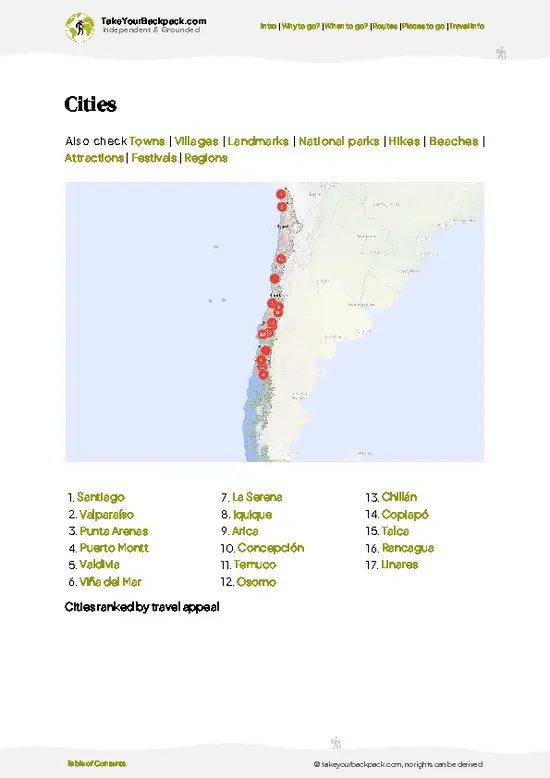
✅ 107 highlights, ranked by travel appeal
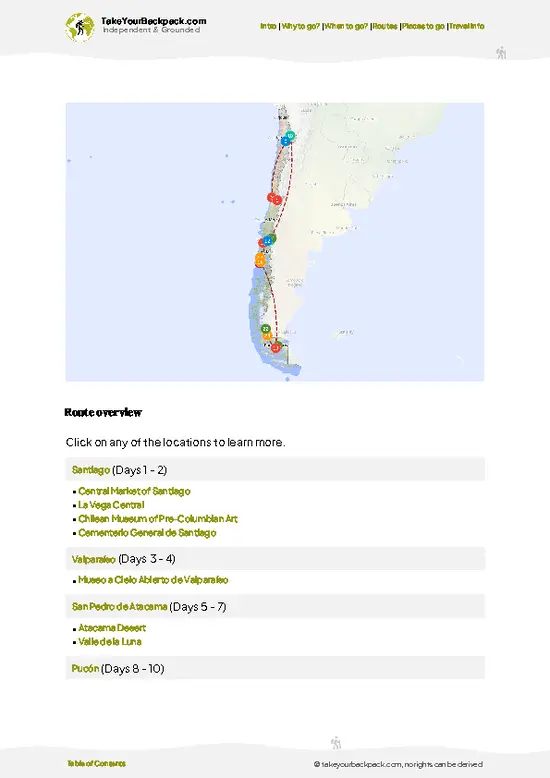
✅ Optimized 7, 14 & 21-day travel routes
✅ Cities, national parks, landmarks, beaches
✅ How to get around
✅ Offline-friendly for travel without Wi-Fi
👉 Click to see all 30+ guide features

📅 Plan smarter in minutes, not weeks
✅ Month by month travel advice
✅ Festivals & national holidays
✅ Budget expectations

🗺️ Go to the right places, skip the overrated ones
✅ Honest pros & cons of destinations
✅ Top hikes, parks & viewpoints
✅ Lesser-known places most travelers miss
✅ Clear “worth it vs skip it” guidance

🛏️ Travel smoothly without rookie mistakes
✅ Best areas to stay
✅ Transport systems explained simply
✅ Common scams & safety advice
✅ SIM cards, money & practical tips

🌍 Understand the country, not just visit it
✅ Culture & traditions
✅ 52 Essential phrases & customs
✅ Festivals worth planning around
✅ Traveler-friendly historical context
✅ Insights that make places more meaningful

📱 Built for real travel conditions
✅ Fully downloadable PDF
✅ Works completely offline
✅ Optimized for phone use
✅ Useful in remote areas & buses
✅ Everything in one place
Stop searching, start planning
Get instant access to your full guide. 30‑day money-back guarantee.
+ Add another guide for just

By proceeding you agree to our terms.
Sent to your inbox immediately after payment • 100% Secure Checkout
Best Backpacking Travel Advisor 2025 tourism awardBest Backpacking
Travel Advisor
2025
What others say about Take Your Backpack Guides:
⭐⭐⭐⭐⭐
Fantastic, amazing amount of information!
⭐⭐⭐⭐⭐
My goodness this is amazing, it's what I've been looking for hats off too you!
⭐⭐⭐⭐⭐
I think this is absolutely BRILLIANT
⭐⭐⭐⭐
Very complete and informative. It's still missing places, but I gotta to commend you
⭐⭐⭐⭐⭐
This is truly amazing, thank you, can't wait to explore it with my kids!
⭐⭐⭐⭐⭐
Awesome resource, thank you!
⭐⭐⭐⭐⭐
This is amazing! Can't wait to explore the ones I haven't seen
⭐⭐⭐⭐
I love this! Well done, great idea.
⭐⭐⭐⭐⭐
Thanks for taking the time to make this gem!
⭐⭐⭐⭐⭐
This might be the best website I've ever seen.
⭐⭐⭐⭐⭐
Congratulations, and thank you so much for your work; it's incredibly valuable.
⭐⭐⭐⭐
In all seriousness I think you did a great job pointing out the important spots
⭐⭐⭐⭐⭐
10/10 very good
⭐⭐⭐⭐⭐
As someone who's only just starting to visit regularly this is awesome, thank you.
⭐⭐⭐⭐
Thank you very much! I'm going to visit my dad, it's going to be very useful!
⭐⭐⭐⭐⭐
This is really cool! We'll be travelling for the first time and this definitely come in handy.
⭐⭐⭐⭐⭐
You are now our minister of culture, congratulations 👨‍💼
⭐⭐⭐⭐⭐
Just wanted to tell you that this is a pearl! Going to follow your recommendations.
⭐⭐⭐⭐⭐
This is so cool. I'll definitely be using the resource for my travels soon.
⭐⭐⭐⭐⭐
This is very impressive! Good work.
⭐⭐⭐⭐⭐
This is an amazing and informative site. Very well done!

🛏️ Where to stay?Where staying makes the most sense

Barrio Lastarria and Barrio Bellas Artes are the best bases, both a 5 to 10 minute walk from the center along the Alameda. Lastarria has the densest cluster of hostels, cafés, bars and cinemas, so it is where solo travelers meet others easily, and its pedestrian streets feel safe in the evening. Bellas Artes sits beside it, quieter and a little cheaper, with the Parque Forestal for morning runs. Barrio Brasil and Barrio Yungay, to the west, are grittier but full of character, with cheaper beds and local eateries. They are fine by day, but take a taxi or rideshare late at night. Metro Universidad … read more 👉
Barrio Lastarria and Barrio Bellas Artes are the best bases, both a 5 to 10 minute walk from the center along the Alameda. Lastarria has the densest cluster of hostels, cafés, bars and cinemas, so it is where solo travelers meet others easily, and its pedestrian streets feel safe in the evening. Bellas Artes sits beside it, quieter and a little cheaper, with the Parque Forestal for morning runs. Barrio Brasil and Barrio Yungay, to the west, are grittier but full of character, with cheaper beds and local eateries. They are fine by day, but take a taxi or rideshare late at night. Metro Universidad Católica and Baquedano are both close, so airport buses and day trips to Valparaíso are easy from any of these areas. Dorm beds in the center run roughly US$12 to 25.

👛 Costs (as of 19 October 2026)Money, prices, and spending tips

Expect to spend about US$48 a day around the Gabriela Mistral Cultural Center, since entry to the building and many of its exhibitions costs nothing.
CategoryBudget RangeLocal Reality
EntranceUS$0The building and most galleries are free to enter.
Concerts and theaterUS$0 to 20Many events are free; ticketed shows vary by program.
Accommodation (high season)US$14 to 28Dorm beds in Lastarria or Bellas Artes; private rooms cost more.
FoodUS$8 to 15Set lunch menus cost US$5 to 8; cafés nearby cost more.
Local transportUS$1 to 3Metro fares are about US$1 to 1.20 using a Bip! card; the center is walkable from Lastarria.
Total Daily BudgetUS$48Based on a dorm bed, modest meals, and metro rides.
⚠️ Prices can change and everyone travels differently, so take this as a rough guide. Hope it helps you plan your adventure!

FAQFrequently asked questions about Gabriela Mistral Cultural Center

Plan one to two hours at Gabriela Mistral Cultural Center if you only want to see the main galleries and the building itself. Add another hour or two if you catch a concert, play or exhibition in the evening. It is open most days, so pair it with Cerro Santa Lucía and Barrio Lastarria, both a short walk away, for a half-day outing.
Yes, Gabriela Mistral Cultural Center is worth a visit because entry to the building and many exhibitions is free. Ticketed concerts and theater typically cost around US$0 to 20, which is modest for a major Santiago venue. You also get the architecture, murals and rooftop views for no charge.
Take the Santiago Metro to Universidad Católica on Line 1, which is a 2 minute walk from Gabriela Mistral Cultural Center on the Alameda. From Barrio Lastarria it is a 5 to 10 minute walk. From Santiago airport, buses to Los Héroes or Universidad de Chile cost about US$3 to 4, and a rideshare to the center takes 25 to 40 minutes.
⚠️ Things can change over time, so always validate details locally before you go.

Other Chilean attractions near Gabriela Mistral Cultural Center

Explore more nearby:


💡 Not sure where to go next?
Create a personalized itinerary for Chile including Gabriela Mistral Cultural Center and the places that fit your trip.

Generate my itinerary

👉 Discover all attractions

Or checkout all Chile has to offer (think cities, towns, villages, national parks, hikes, beaches, festivals)
Country photo of Chile

We 💚 feedbackWhat to keep in mind

Look up when you reach the plaza. The steel louvers and the high, exposed ceilings are the building’s real character, and most visitors walk straight to the galleries. I would stay for the free late-afternoon concert if one is posted, and bring a light layer because the halls run cool.

✈️ When did I visit Chile?
I have visited Chile, together with Argentina, in September 2012.

✍️ Help improve this page!
The information on this page is based on my own backpacking experience in Chile, supplemented with up-to-date research and feedback from other travelers. Travel details can change, so if you notice anything outdated or incomplete, feel free to let me know.


🙋‍♂️ Give feedback

👋 Meet the founderWho’s Behind Take Your Backpack?

Johan, backpacker and founder of TakeYourBackpackHi, I’m Johan (Netherlands 🇳🇱), the creator of TakeYourBackpack. Over the past 3 decades, I’ve backpacked through 90+ countries across six continents, gaining extensive experience with independent travel, long-term trips, and overland routes.

This site is built on a combination of firsthand travel experience and carefully curated insights from other backpackers. Many guides are based on places I’ve personally visited, while others bring together tips, observations, and practical advice shared by trusted travelers I’ve met along the way.

The goal is to provide realistic, experience-driven guidance — not generic itineraries — so you can explore destinations with better context, clearer expectations, and more confidence.