×

Chile🇨🇱 | citiesLa SerenaDiaguita ceramics, Japanese garden, La Recova, long beachfront | things to do and best time to go

Explore Punta de LobosExplore Rancagua

Backpacking in La Serena
🌟 Highlightcity ranked #8
By Johan Kruseman 🇳🇱 | Updated October 19, 2026

The Cruz del Tercer Milenio, an 83-meter concrete cross, towers over neighboring Coquimbo, but La Serena itself is best known for its long beaches and colonial-style center. The city sits on the coast in the north of Chile, about 470 km north of Santiago. I walked the Parque Japonés, Jardín del Corazón, on a weekday, and paid the small entry fee at the gate to see its koi ponds, which is a calm hour well spent. Skip the strip of beachfront high-rises, since they offer little beyond sand. The old center rewards your time because its churches and craft market sit within a few blocks. Unlike nearby Coquimbo, which is a gritty working port with steep hills, La Serena is orderly, flat and easy to walk.

Discover everything you want to know in the 📖 Chile Travel Guide.


example page 0 from our offline Travel Guide for Chile
example page 1 from our offline Travel Guide for Chile
example page 2 from our offline Travel Guide for Chile
example page 3 from our offline Travel Guide for Chile
example page 4 from our offline Travel Guide for Chile
example page 5 from our offline Travel Guide for Chile
example page 6 from our offline Travel Guide for Chile
example page 7 from our offline Travel Guide for Chile
Loading the map 🌍
CLICK TO FILTER
cities
towns
villages
landmarks
national parks
hikes
beaches
attractions
festivals
regions
SHOW COUNTRY’S BESTSHOW ALL

✨ Why go?
Ranked #8 city in Chile
Reasons people choose to visit here

La Serena works because it combines a long, flat, walkable center with a 17 km run of beaches along Avenida del Mar, so you can sleep near the sand and still reach churches and markets on foot. Most backpackers use it as a base for the Elqui Valley and its pisco towns and dark skies, since the valley has few beds and La Serena has the hostels, supermarkets and bus terminal that make logistics easy. It also sits on the Ruta 5 corridor, so it splits the long haul between Santiago and San Pedro de Atacama nicely. Food is strong on seafood, and the Recova market is good for cheap lunches and dried fruit. Nightlife is modest and centers on Cuatro Esquinas and the beach strip, so it suits a slow two or three days rather than a party week.

💡 HighlightsKey sights and experiences for travelers

  1. Plaza de Armas and Catedral: the colonial heart, with a stone cathedral from the 1840s and shaded benches where locals gather. Go in the morning, free, 30 to 45 minutes.
  2. Iglesia de San Francisco: a sturdy 17th-century church with thick walls and a small religious art museum attached. Mornings are quiet. Entry costs about US$1 to 2, 30 minutes.
  3. Museo Arqueológico de La Serena: the best place to see the Diaguita ceramics, with their zigzag patterns, and a moai from Easter Island. Entry is free and it takes an hour. Closed Sundays and Mondays.
  4. Jardín Japonés (Jardín del Corazón): a ponds-and-bridges garden inside Parque Pedro de Valdivia, calm and well kept. Go midday on a weekday. About US$2 to 4, 45 minutes.
  5. Mercado La Recova: two floors of produce, papaya sweets, dried fruit, crafts and cheap
… read more 👉
  1. Plaza de Armas and Catedral: the colonial heart, with a stone cathedral from the 1840s and shaded benches where locals gather. Go in the morning, free, 30 to 45 minutes.
  2. Iglesia de San Francisco: a sturdy 17th-century church with thick walls and a small religious art museum attached. Mornings are quiet. Entry costs about US$1 to 2, 30 minutes.
  3. Museo Arqueológico de La Serena: the best place to see the Diaguita ceramics, with their zigzag patterns, and a moai from Easter Island. Entry is free and it takes an hour. Closed Sundays and Mondays.
  4. Jardín Japonés (Jardín del Corazón): a ponds-and-bridges garden inside Parque Pedro de Valdivia, calm and well kept. Go midday on a weekday. About US$2 to 4, 45 minutes.
  5. Mercado La Recova: two floors of produce, papaya sweets, dried fruit, crafts and cheap lunch counters. Go before 1 p.m. Free to enter, 1 hour.
  6. Faro Monumental: the lighthouse-style landmark at the start of the beachfront, a good meeting point and sunset viewpoint. Free, 20 minutes.
  7. Avenida del Mar beachfront: walk or cycle the promenade, with sand on one side and cafés on the other. Summer afternoons are busiest, mornings calmest. Free, 1 to 2 hours.
  8. Cuatro Esquinas: the beach sector where Avenida Cuatro Esquinas meets the Avenida del Mar, with pubs and restaurants. Go after 9 p.m. Free to wander, 1 to 2 hours.
Close by, Valle del Elqui with Vicuña and Pisco Elqui, the Pingüino de Humboldt reserve and the Valle del Encanto make easy day trips. If time is short, skip Cuatro Esquinas, since the beach and market give you more of the city.
Spotted a mistake or missing something? Contact us.

Things to do in La Serena

Ratings based on Tripadvisor reviews. When you book through this link, you support our work at no extra cost to you.

🏘️ NeighborhoodsNeighborhood guide to La Serena

La Serena is compact, and its areas differ mostly by what time of day and which budget they suit. Here is where I would spend hours and where I would not.
  • Centro: The grid around Plaza de Armas is the reason to come. Stone churches, the Mercado La Recova (dried fruit, papaya sweets, cheese empanadas) and the Archaeological Museum with its moai sit within a ten-minute walk of each other. Fully walkable, and quiet after about 9 pm.
  • Avenida Francisco de Aguirre: This tree-lined alameda has a central promenade with marble statues, added during the Plan Serena as an open-air museum. It makes a pleasant walk between the center and the beach.
  • Avenida del Mar: This beachfront strip is the seaside district, with wide sand, a promenade, a lighthouse and rows of restaurants and clubs. Worth an afternoon
… read more 👉
La Serena is compact, and its areas differ mostly by what time of day and which budget they suit. Here is where I would spend hours and where I would not.
  • Centro: The grid around Plaza de Armas is the reason to come. Stone churches, the Mercado La Recova (dried fruit, papaya sweets, cheese empanadas) and the Archaeological Museum with its moai sit within a ten-minute walk of each other. Fully walkable, and quiet after about 9 pm.
  • Avenida Francisco de Aguirre: This tree-lined alameda has a central promenade with marble statues, added during the Plan Serena as an open-air museum. It makes a pleasant walk between the center and the beach.
  • Avenida del Mar: This beachfront strip is the seaside district, with wide sand, a promenade, a lighthouse and rows of restaurants and clubs. Worth an afternoon and a sunset. Cold water, so it is for strolling more than swimming. The walk from Centro takes 40 to 50 minutes, so most people ride.
  • Peñuelas: Beaches and a lagoon on the way to Coquimbo. Good for a calm evening walk, thin on character and cafes, and not worth a special trip.
  • La Pampa: A residential edge with markets and local eateries. Skip it unless you need a laundromat or a hardware store.

⌛️ 1 daySeeing the highlights in 24 hours

A slow walking day, built around the old center and the coast.
8:30 AM: Plaza de Armas
Start at the main square with the cathedral and shaded benches. Grab a coffee nearby and walk the arcade before shops open, when the plaza is quiet.
10:00 AM: Museo Histórico Gabriel González Videla
This small museum, a few steps from the plaza, covers regional history and the president from La Serena. It takes about 45 minutes and gives context for the colonial streets you walk next.
11:15 AM: Churches of the center
Walk the blocks around Calle Cordovez and look into San Francisco and Santo Domingo, whose stone facades differ from the usual Chilean adobe. Most are within five minutes of each other on foot.
1:00 PM: Recova market
Eat lunch here. Stalls sell papayas, dried fruit and goat cheese, and upstairs counters … read more 👉
A slow walking day, built around the old center and the coast.
8:30 AM: Plaza de Armas
Start at the main square with the cathedral and shaded benches. Grab a coffee nearby and walk the arcade before shops open, when the plaza is quiet.
10:00 AM: Museo Histórico Gabriel González Videla
This small museum, a few steps from the plaza, covers regional history and the president from La Serena. It takes about 45 minutes and gives context for the colonial streets you walk next.
11:15 AM: Churches of the center
Walk the blocks around Calle Cordovez and look into San Francisco and Santo Domingo, whose stone facades differ from the usual Chilean adobe. Most are within five minutes of each other on foot.
1:00 PM: Recova market
Eat lunch here. Stalls sell papayas, dried fruit and goat cheese, and upstairs counters serve fresh fish plates. Browse the craft stands afterward for lapis lazuli and wool.
3:30 PM: Jardín del Corazón, Parque Japonés
Head east on foot or by taxi to this walled Japanese garden with ponds and bridges. It is far less visited than the beach, and its calm suits an afternoon pause.
6:00 PM: Faro Monumental and Avenida del Mar
Take a taxi or colectivo to the lighthouse on the shore, then stroll the beachfront as the Pacific darkens. Finish with dinner at a seafood spot along the promenade.

🌤️ When to go?Seasonal considerations and timing

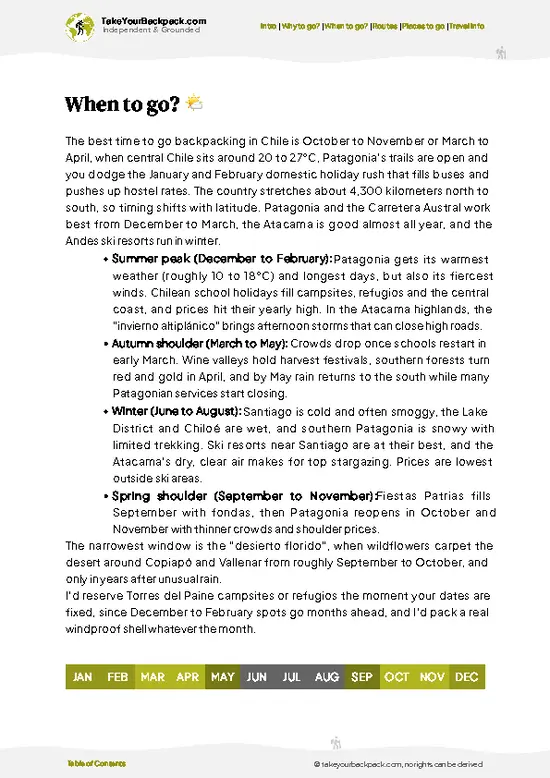
La Serena is best from November to March if you want beach weather, and it is sunny nearly all year because rain is scarce.
  • Summer (Dec to Feb): Highs of 21 to 24°C (70 to 75°F), long light evenings and the biggest crowds, with beds and rooms costing the most, especially in January.
  • Autumn (Mar to May): Highs of 19 to 22°C (66 to 72°F), thinning crowds and clear skies that suit the Elqui Valley observatories.
  • Winter (Jun to Aug): Highs of 15 to 18°C (59 to 64°F), lows near 8°C (46°F), the only rain, and morning coastal fog. Prices drop sharply.
  • Spring (Sep to Nov): Highs of 17 to 20°C (63 to 68°F). Rare desert flowers may bloom inland after wet winters.
Book January weeks well ahead, or come in March for the same sun at lower prices.

source: climatestotravel.comJANJanuary: highly recommended for travelingFEBFebruary: highly recommended for travelingMARMarch: good for travelingAPRApril: highly recommended for travelingMAYMay: good for travelingJUNJune: fair for travelingJULJuly: fair for travelingAUGAugust: fair for travelingSEPSeptember: highly recommended for travelingOCTOctober: highly recommended for travelingNOVNovember: highly recommended for travelingDECDecember: highly recommended for traveling
chile-city-la-serena
© Google | Guillermo Sansana

✈️ The backpacker research shortcutChile Travel Guide

An offline-friendly backpacking guide with optimized travel routes, ranked highlights, transport advice, and the best areas to stay.
example page 0 from our offline Travel Guide for Chile
example page 1 from our offline Travel Guide for Chile
example page 2 from our offline Travel Guide for Chile
example page 3 from our offline Travel Guide for Chile
example page 4 from our offline Travel Guide for Chile
example page 5 from our offline Travel Guide for Chile
example page 6 from our offline Travel Guide for Chile
example page 7 from our offline Travel Guide for Chile
The digital guide (333 pages) contains:
✅ 107 highlights, ranked by travel appeal
✅ Optimized 7, 14 & 21-day travel routes
✅ Cities, national parks, landmarks, beaches
✅ How to get around
✅ Offline-friendly for travel without Wi-Fi
👉 Click to see all 30+ guide features

📅 Plan smarter in minutes, not weeks
✅ Month by month travel advice
✅ Festivals & national holidays
✅ Budget expectations

🗺️ Go to the right places, skip the overrated ones
✅ Honest pros & cons of destinations
✅ Top hikes, parks & viewpoints
✅ Lesser-known places most travelers miss
✅ Clear “worth it vs skip it” guidance

🛏️ Travel smoothly without rookie mistakes
✅ Best areas to stay
✅ Transport systems explained simply
✅ Common scams & safety advice
✅ SIM cards, money & practical tips

🌍 Understand the country, not just visit it
✅ Culture & traditions
✅ 52 Essential phrases & customs
✅ Festivals worth planning around
✅ Traveler-friendly historical context
✅ Insights that make places more meaningful

📱 Built for real travel conditions
✅ Fully downloadable PDF
✅ Works completely offline
✅ Optimized for phone use
✅ Useful in remote areas & buses
✅ Everything in one place
Stop searching, start planning
Get instant access to your full guide. 30‑day money-back guarantee.
+ Add another guide for just

By proceeding you agree to our terms.
Sent to your inbox immediately after payment • 100% Secure Checkout
Best Backpacking Travel Advisor 2025 tourism awardBest Backpacking
Travel Advisor
2025
What others say about Take Your Backpack Guides:
⭐⭐⭐⭐⭐
Fantastic, amazing amount of information!
⭐⭐⭐⭐⭐
My goodness this is amazing, it's what I've been looking for hats off too you!
⭐⭐⭐⭐⭐
I think this is absolutely BRILLIANT
⭐⭐⭐⭐
Very complete and informative. It's still missing places, but I gotta to commend you
⭐⭐⭐⭐⭐
This is truly amazing, thank you, can't wait to explore it with my kids!
⭐⭐⭐⭐⭐
Awesome resource, thank you!
⭐⭐⭐⭐⭐
This is amazing! Can't wait to explore the ones I haven't seen
⭐⭐⭐⭐
I love this! Well done, great idea.
⭐⭐⭐⭐⭐
Thanks for taking the time to make this gem!
⭐⭐⭐⭐⭐
This might be the best website I've ever seen.
⭐⭐⭐⭐⭐
Congratulations, and thank you so much for your work; it's incredibly valuable.
⭐⭐⭐⭐
In all seriousness I think you did a great job pointing out the important spots
⭐⭐⭐⭐⭐
10/10 very good
⭐⭐⭐⭐⭐
As someone who's only just starting to visit regularly this is awesome, thank you.
⭐⭐⭐⭐
Thank you very much! I'm going to visit my dad, it's going to be very useful!
⭐⭐⭐⭐⭐
This is really cool! We'll be travelling for the first time and this definitely come in handy.
⭐⭐⭐⭐⭐
You are now our minister of culture, congratulations 👨‍💼
⭐⭐⭐⭐⭐
Just wanted to tell you that this is a pearl! Going to follow your recommendations.
⭐⭐⭐⭐⭐
This is so cool. I'll definitely be using the resource for my travels soon.
⭐⭐⭐⭐⭐
This is very impressive! Good work.
⭐⭐⭐⭐⭐
This is an amazing and informative site. Very well done!

🛏️ Where to stay?Where staying makes the most sense

Centro is the best place for a budget bed, since most hostels and guesthouses cluster within a few blocks of the Plaza de Armas. You can walk to the markets, the bus terminal and cheap lunch spots, and colectivos run past most corners. Dorm beds cost roughly US$12 to 25 a night. The streets are well lit and fairly safe after dark, though some blocks near the main avenue get noisy on Friday and Saturday nights, so earplugs help.
Avenida del Mar is the alternative if you want sand outside the door in summer. Beds here are fewer and pricier, with more apartments than dorms, and it gets quiet and windy … read more 👉
Centro is the best place for a budget bed, since most hostels and guesthouses cluster within a few blocks of the Plaza de Armas. You can walk to the markets, the bus terminal and cheap lunch spots, and colectivos run past most corners. Dorm beds cost roughly US$12 to 25 a night. The streets are well lit and fairly safe after dark, though some blocks near the main avenue get noisy on Friday and Saturday nights, so earplugs help.
Avenida del Mar is the alternative if you want sand outside the door in summer. Beds here are fewer and pricier, with more apartments than dorms, and it gets quiet and windy out of season. Transport to Centro is 10 to 15 minutes by colectivo or micro, running until late evening. At night, the walk along the promenade is fine in groups, but a taxi back is wiser than the dark stretches. For most backpackers, Centro wins on price and convenience.

🚌 Getting aroundTransportation options and practical tips

The center of La Serena is flat, laid out on a grid, and easy on foot: the Plaza de Armas, the churches, the Mercado La Recova and the Avenida Francisco de Aguirre pedestrian stretch all sit within about 15 minutes of each other. Walking stops making sense at the coast, roughly 3 kilometers west, and at the Coquimbo waterfront, which is a different town. Traffic is moderate, and buses and shared taxis are frequent and cheap, but the system is not intuitive until you see how the routes work.
  • Walking: Free, and the best way to see the colonial center, the Japanese garden (Jardín del Corazón, entry around US$2 to 3) and the Recova market. Streets are safe and level, so skip any vehicle for distances under 1.5 kilometers.
  • Colectivos: Shared taxis with fixed routes and a number on the roof sign.
… read more 👉
The center of La Serena is flat, laid out on a grid, and easy on foot: the Plaza de Armas, the churches, the Mercado La Recova and the Avenida Francisco de Aguirre pedestrian stretch all sit within about 15 minutes of each other. Walking stops making sense at the coast, roughly 3 kilometers west, and at the Coquimbo waterfront, which is a different town. Traffic is moderate, and buses and shared taxis are frequent and cheap, but the system is not intuitive until you see how the routes work.
  • Walking: Free, and the best way to see the colonial center, the Japanese garden (Jardín del Corazón, entry around US$2 to 3) and the Recova market. Streets are safe and level, so skip any vehicle for distances under 1.5 kilometers.
  • Colectivos: Shared taxis with fixed routes and a number on the roof sign. Fares run about US$1 to 1.50 within the city, and they are faster than buses because they leave as soon as they fill. They run until roughly 10 or 11 pm, and they are the best value for getting between the center, the beach strip and Coquimbo.
  • Micros (city buses): The cheapest option, around US$0.80 to 1.20 a ride, running from about 6 am to 10 pm. Pay the driver in cash. Lines to Avenida del Mar and Coquimbo are frequent, but buses get crowded at rush hour and can be slow, so expect 20 to 30 minutes to the beach.
  • Taxis and ride apps: A short city trip costs about US$3 to 6, and the fare to the beach zone is US$4 to 7. Use them late at night or when you carry a full pack. Uber and Cabify operate here, though availability thins out after midnight, and street taxis are metered but easy to hail near the plaza.
  • Intercity buses: The terminal, about 1.5 kilometers south of the plaza, serves Vicuña, Ovalle and Santiago (roughly 6 to 7 hours, US$15 to 30). Take a colectivo or taxi for the short hop, because the walk with luggage is dull and sun-exposed.

👛 Costs (as of 19 October 2026)Travel costs and budget guide for La Serena

A backpacker in La Serena spends about US$50 to 55 a day, including a dorm bed in high season.
CategoryBudget RangeLocal Reality
Dorm (high season)US$15 to 25Jan and Feb fill up fast, so book ahead.
Dorm (off-season)US$11 to 18Easier to bargain and often includes breakfast.
MealsUS$15 to 22A menú del día at lunch is US$6 to 10, with market snacks and a simple dinner.
Local transportUS$2 to 4Colectivos and micros cost US$1 to 1.50 a ride.
City transport passUS$0 to 3No pass needed. Paying per ride is simpler for most visitors.
Activities and entry feesUS$5 to 12Museum entry is a few dollars. Day trips and tours run extra at US$20 to 70.
MiscellaneousUS$3 to 8Sunscreen, laundry, a pisco sour or beer.
Total Daily BudgetUS$55Based on high-season dorm, midrange of each row.
Eat your main meal at lunch from … read more 👉
A backpacker in La Serena spends about US$50 to 55 a day, including a dorm bed in high season.
CategoryBudget RangeLocal Reality
Dorm (high season)US$15 to 25Jan and Feb fill up fast, so book ahead.
Dorm (off-season)US$11 to 18Easier to bargain and often includes breakfast.
MealsUS$15 to 22A menú del día at lunch is US$6 to 10, with market snacks and a simple dinner.
Local transportUS$2 to 4Colectivos and micros cost US$1 to 1.50 a ride.
City transport passUS$0 to 3No pass needed. Paying per ride is simpler for most visitors.
Activities and entry feesUS$5 to 12Museum entry is a few dollars. Day trips and tours run extra at US$20 to 70.
MiscellaneousUS$3 to 8Sunscreen, laundry, a pisco sour or beer.
Total Daily BudgetUS$55Based on high-season dorm, midrange of each row.
Eat your main meal at lunch from the set menu, then keep dinner light with market fruit and bread to save about US$5 a day.


source: chile.travel
⚠️ Prices can change and everyone travels differently, so take this as a rough guide. Hope it helps you plan your adventure!

🚌 Day tripsEasy escapes and nearby places

La Serena is one of the easiest bases in northern Chile, with frequent buses leaving for the valley and coastal reserves.
Valle del Elqui (Vicuña): Pisco distilleries, vineyards and the Gabriela Mistral museum fill a long day. Buses take about 1 to 1.5 hours and cost US$3 to 5 each way; tours run US$25 to 50. Go early because the last bus back leaves late afternoon, and first-timers often underestimate the distance between villages.

Isla Damas and Pingüino de Humboldt: Boats from Punta de Choros let you see Humboldt penguins, sea lions and sometimes dolphins. It takes about 1.5 to 2 hours by road, so most people join a tour for US$40 to 70 including a boat. Book ahead in summer and wear layers.

Coquimbo: A short ride from La Serena, this port has a hillside of painted houses, a giant cross … read more 👉
La Serena is one of the easiest bases in northern Chile, with frequent buses leaving for the valley and coastal reserves.
Valle del Elqui (Vicuña): Pisco distilleries, vineyards and the Gabriela Mistral museum fill a long day. Buses take about 1 to 1.5 hours and cost US$3 to 5 each way; tours run US$25 to 50. Go early because the last bus back leaves late afternoon, and first-timers often underestimate the distance between villages.

Isla Damas and Pingüino de Humboldt: Boats from Punta de Choros let you see Humboldt penguins, sea lions and sometimes dolphins. It takes about 1.5 to 2 hours by road, so most people join a tour for US$40 to 70 including a boat. Book ahead in summer and wear layers.

Coquimbo: A short ride from La Serena, this port has a hillside of painted houses, a giant cross and a fish market for cheap seafood. Colectivos cost about US$1 to 1.50 and take 20 to 30 minutes. Go on a weekday to avoid crowds.

Observatorio Mamalluca: The night sky near Vicuña is among the clearest in the world. Tours cost about US$20 to 30 and often include transfers from La Serena. Book ahead, as moon phases affect viewing and the evening is cold even in summer.

🍲 FoodLocal Cuisine & Drinks

La Serena sits on the coast beside the Elqui Valley, so seafood and valley produce define the table. Order ceviche or fresh locos, machas a la parmesana (razor clams baked with cheese) and grilled catch of the day. At La Recova market, look for papayas al jugo, dried fruits, goat cheese and honey, plus cheap empanadas. Papaya, chirimoya and avocado come from nearby orchards. On the drinks side, pisco is the pride of the Elqui Valley: try a pisco sour or a piscola (pisco and cola), and look for Elqui craft beer too. A set-lunch menú del día at casual restaurants in the center costs roughly US$6 to 10 and is the best value. Avenida del Mar has pricier seafood spots with sea views, so lunch there instead of dinner for lower prices.

🛡️ SafetyScams, Hazards, and Annoyances

La Serena is relaxed and one of the safer cities for backpackers in Chile. The main nuisance is petty theft in busy places like La Recova, the pedestrian boulevard and beaches, where bags left on sand or café chairs vanish quickly. Keep your phone in a front pocket, and never leave belongings unattended in the sun. Solo travelers, women included, walk the center comfortably in the evening, but the quieter streets away from the Plaza de Armas and the dark stretch of the beach after midnight are better covered by taxi. Scams are rare. Check taxi fares in advance and use ride apps or marked cars. Carry a copy of your passport, and bring warm clothing and sun protection, since both sun and sea can catch you out.

FAQFrequently asked questions about La Serena

Two to three days is enough for La Serena itself. One day covers the Plaza de Armas, La Recova and the Avenida del Mar beach, while a second day suits a trip to Vicuña in the Elqui Valley (1 to 1.5 hours by bus, US$3 to 5). Add a third for Isla Damas penguins or a stargazing night at an observatory.
Yes, La Serena is considered one of the calmer and safer cities in Chile for solo backpackers. The main risk is petty theft at La Recova market, on the pedestrian streets and on the beach, so keep your phone and bag close. Centro is comfortable in the evening, but take a taxi (US$3 to 7) after midnight or to the dark parts of the beachfront.
La Serena is known for its colonial-style center with some 29 churches, its long beaches on Avenida del Mar and its role as gateway to the Elqui Valley. The valley produces pisco, and the clear night skies host major observatories like Mamalluca, with tours around US$20 to 30. The city also has La Recova market for dried fruit and papaya sweets.
⚠️ Things can change over time, so always validate details locally before you go.

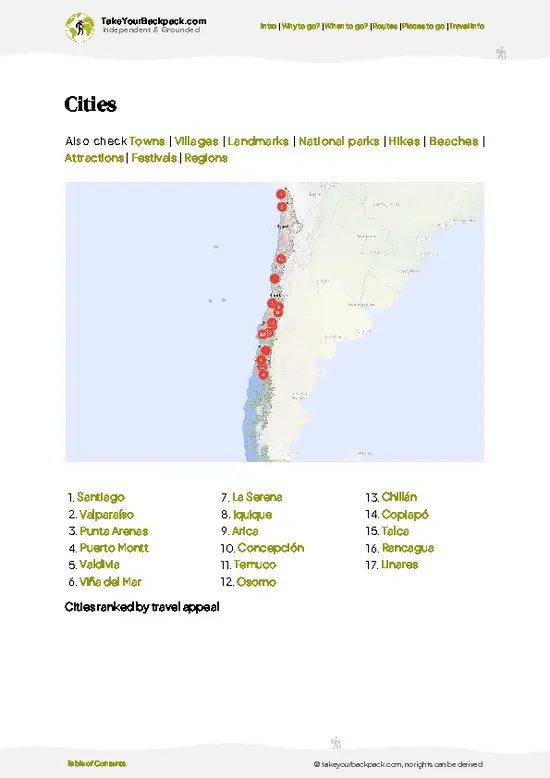
Other Chilean cities near La Serena

Explore more nearby:

  • Copiapó—Silver boom, mineral museums, pepper-tree plaza, supply stop| 296 km away
  • Viña del Mar—Floral clock, moai museum, Castillo Wulff, palm-lined grid| 347 km away
  • Valparaíso—Hillside funiculars, street-art lanes, Neruda’s La Sebastiana, harbor boats| 351 km away

💡 Not sure where to go next?
Create a personalized itinerary for Chile including La Serena and the places that fit your trip.

Generate my itinerary

👉 Discover all cities

Or checkout all Chile has to offer (think cities, towns, villages, national parks, hikes, beaches, festivals)
Country photo of Chile

We 💚 feedbackFinal thoughts on visiting La Serena

Many travelers treat La Serena as a one-night stop on the way north and miss how easy it is to pair the old center with Elqui. I would give it two nights, spend one day in town and one in the valley, and book the observatory or stargazing tour a few days ahead.

✈️ When did I visit Chile?
I have visited Chile, together with Argentina, in September 2012.

✍️ Help improve this page!
The information on this page is based on my own backpacking experience in Chile, supplemented with up-to-date research and feedback from other travelers. Travel details can change, so if you notice anything outdated or incomplete, feel free to let me know.


🙋‍♂️ Give feedback

👋 Meet the founderWho’s Behind Take Your Backpack?

Johan, backpacker and founder of TakeYourBackpackHi, I’m Johan (Netherlands 🇳🇱), the creator of TakeYourBackpack. Over the past 3 decades, I’ve backpacked through 90+ countries across six continents, gaining extensive experience with independent travel, long-term trips, and overland routes.

This site is built on a combination of firsthand travel experience and carefully curated insights from other backpackers. Many guides are based on places I’ve personally visited, while others bring together tips, observations, and practical advice shared by trusted travelers I’ve met along the way.

The goal is to provide realistic, experience-driven guidance — not generic itineraries — so you can explore destinations with better context, clearer expectations, and more confidence.