×

Chile🇨🇱 | citiesPunta Arenaswindy straits, penguin colonies, southern gateway | things to do and best time to go

Explore IquiqueExplore Chillán

Backpacking in Punta Arenas
🏆 Top pickcity ranked #4
By Johan Kruseman 🇳🇱 | Updated September 4, 2026

Most people realize too late that Punta Arenas is the one place in Patagonia where you can actually reset your logistics—cheap gear, big supermarkets, pharmacies, banks, and buses and flights fanning out in every direction. It sits on the Strait of Magellan at the far southern tip of Chile, basically the last proper city before you fall off the map. For backpackers, it’s practical more than pretty: windswept streets, a few handsome historic buildings around Plaza Muñoz Gamero, the cemetery that’s oddly atmospheric, and solid museums like Nao Victoria if you care about exploration history. It’s cheaper and more “real life” than Puerto Natales or Ushuaia, with fewer hostels but enough to meet other travelers heading to Torres del Paine or Antarctica. Nights can feel quiet, safety is generally good, and the vibe is workaday port town with a side of end‑of‑the‑world romance.

Discover everything you want to know in the 📖 Chile Travel Guide.


Get your Chile guide
114 ranked highlights, routes & tips, works offline (449 pages)
Loading the map 🌍
CLICK TO FILTER
cities
towns
villages
landmarks
national parks
hikes
beaches
attractions
festivals
regions
SHOW COUNTRY’S BESTSHOW ALL

✨ Why go?
Ranked #4 city in Chile
Why Punta Arenas should be on your travel list

Punta Arenas is a strategic hub for backpackers, offering a blend of affordability and accessibility that makes it a smart stop on your Chilean adventure. The hostels here are not just budget-friendly; they foster a community vibe, perfect for meeting fellow travelers. You’ll find a variety of food options, from hearty local fare to international cuisine, all at reasonable prices.

The city’s walkability allows you to explore its charming streets without the hassle of public transport. Plus, the nightlife has a laid-back energy, with cozy bars where you can unwind after a day of exploration.

What really sets Punta Arenas apart is its role as a basecamp for day trips to stunning natural wonders. Whether you’re heading to Torres del Paine or the nearby penguin colonies, the logistics are … read more 👉
Punta Arenas is a strategic hub for backpackers, offering a blend of affordability and accessibility that makes it a smart stop on your Chilean adventure. The hostels here are not just budget-friendly; they foster a community vibe, perfect for meeting fellow travelers. You’ll find a variety of food options, from hearty local fare to international cuisine, all at reasonable prices.

The city’s walkability allows you to explore its charming streets without the hassle of public transport. Plus, the nightlife has a laid-back energy, with cozy bars where you can unwind after a day of exploration.

What really sets Punta Arenas apart is its role as a basecamp for day trips to stunning natural wonders. Whether you’re heading to Torres del Paine or the nearby penguin colonies, the logistics are straightforward. This city isn’t just a stopover; it’s a place where you can recharge and plan your next adventure, making it a valuable piece of your backpacking puzzle.
Want to include Punta Arenas in your Chile route?
Create a personalized Chile itinerary that includes Punta Arenas and the places that fit your trip — based on your travel style, budget, and available time. Get your route in seconds.

Generate my trip

💡 HighlightsThe experiences that define the visit

  1. Plaza Muñoz Gamero (Plaza de Armas) — The beating heart of Punta Arenas: wide open square, old cannons, and stately 19th-century buildings around it. Great for people-watching, spotting the city’s monuments, and getting your bearings before poking into nearby museums and cafés.
  2. Catedral de Punta Arenas — The city’s main church with an elegant façade and a peaceful interior. It’s compact but full of local religious history and often hosts community events; a quiet stop that shows a different, everyday face of the town.
  3. Palacio Sara Braun — A lavish mansion built by one of the wealthy sheep-ranching families. Even if you only admire it from the outside, the carved stone, wrought iron and grand scale tell the story of the region’s boom years better than any brochure.
  4. Museo Regional de Magallanes
read more 👉
  1. Plaza Muñoz Gamero (Plaza de Armas) — The beating heart of Punta Arenas: wide open square, old cannons, and stately 19th-century buildings around it. Great for people-watching, spotting the city’s monuments, and getting your bearings before poking into nearby museums and cafés.
  2. Catedral de Punta Arenas — The city’s main church with an elegant façade and a peaceful interior. It’s compact but full of local religious history and often hosts community events; a quiet stop that shows a different, everyday face of the town.
  3. Palacio Sara Braun — A lavish mansion built by one of the wealthy sheep-ranching families. Even if you only admire it from the outside, the carved stone, wrought iron and grand scale tell the story of the region’s boom years better than any brochure.
  4. Museo Regional de Magallanes — The best single place to understand Magallanes: indigenous artifacts, European settlement, commerce, and Antarctic ties. It’s compact, well-curated and saves you hours of guessing what shaped this remote corner of Chile.
  5. Museo del Presidio (Old Penitentiary Museum) — Tour a real former prison and see how law, punishment and everyday life unfolded here. The cells, photos and objects give a gritty, human perspective on the city’s past that you won’t get from the mansions.
  6. Cementerio Municipal de Punta Arenas — One of Chile’s most atmospheric cemeteries: ornate mausoleums, family crypts for the region’s European settlers (Croatian, English, Scottish), and sculptural monuments. It’s like an open-book social history carved in marble.
  7. Mirador Cerro de la Cruz — A short uphill walk or quick drive gives you the classic postcard view of the city spilling down to the Strait of Magellan. Low effort, huge reward — timing it for sunset is worth it if the wind behaves.
  8. Costanera del Estrecho — The waterfront promenade along the Strait of Magellan. Stroll, watch container ships and small boats, check out memorials and public art, and feel how the sea frames the city’s identity as a gateway between oceans.
  9. Monumento al Ovejero — The shepherd (ovejero) statue is an odd, affectionate local icon that honors the sheep-farming backbone of Patagonia. It’s a handy photo stop and a simple reminder of how livestock shaped the landscape and wealth here.
  10. Museo Salesiano Maggiorino Borgatello — A small but rich museum with missionary archives, indigenous material, and Antarctic exploration history. It’s quieter than the big museums, which makes it one of those places where you actually learn things from the objects on display.
A few great day trips from Punta Arenas: Isla Magdalena (Magellanic penguin colony), the reconstructed Fuerte Bulnes, and the Seno Otway penguin reserve — my personal favorite for sheer charm is Isla Magdalena.
Spotted a mistake or missing something? Contact us.

Things to do in Punta Arenas

Ratings based on Tripadvisor reviews. When you book through this link, you support our work at no extra cost to you.

🏘️ NeighborhoodsUnderstanding the local layout

Punta Arenas is a gateway to Patagonia, blending rich history with a rugged charm. Here’s how to navigate its neighborhoods for maximum value.

Centro: This is the heart of Punta Arenas. You’ll find affordable hostels and local eateries. The vibe is lively, especially around Plaza Muñoz Gamero. Walkability is high; everything is within a few blocks. Great for short stays, but if you linger, the noise might wear on you.

Costanera: Stretching along the waterfront, this area offers stunning views of the Strait of Magellan. It’s quieter, perfect for morning strolls or evening sunsets. Accommodations here can be pricier, but the ambiance is worth it. Ideal for longer stays if you prefer a more relaxed pace.

Puerto Prat: A bit off the main tourist path, this neighborhood has a local feel. It’s … read more 👉
Punta Arenas is a gateway to Patagonia, blending rich history with a rugged charm. Here’s how to navigate its neighborhoods for maximum value.

Centro: This is the heart of Punta Arenas. You’ll find affordable hostels and local eateries. The vibe is lively, especially around Plaza Muñoz Gamero. Walkability is high; everything is within a few blocks. Great for short stays, but if you linger, the noise might wear on you.

Costanera: Stretching along the waterfront, this area offers stunning views of the Strait of Magellan. It’s quieter, perfect for morning strolls or evening sunsets. Accommodations here can be pricier, but the ambiance is worth it. Ideal for longer stays if you prefer a more relaxed pace.

Puerto Prat: A bit off the main tourist path, this neighborhood has a local feel. It’s budget-friendly, with small markets and cafes. Walkability is decent, but you might need to hop on a bus for some attractions. Best for backpackers looking to immerse themselves in everyday life.

Zona Franca: Known for its duty-free shopping, this area is less about culture and more about deals. It’s a bit far from the main attractions, so transport is essential. Suitable for those who want to save money but may sacrifice local charm.

⌛️ 1 day1-day itinerary for Punta Arenas

Punta Arenas, the southernmost city in Chile, is a gateway to the wild beauty of Patagonia. Its rich history as a port town and its vibrant culture make it a fascinating stop. You’ll find colorful houses, a bustling waterfront, and a unique blend of Chilean and Patagonian influences.

Start your morning at the Plaza Muñoz Gamero, where you can sip a strong coffee at Café de la Plaza. The square is surrounded by charming architecture and the iconic monument to Ferdinand Magellan. After your caffeine fix, stroll down Avenida Colón, where you’ll encounter the Museo Regional de Magallanes. This museum, housed in a former mansion, offers a glimpse into the region’s past, showcasing everything from indigenous artifacts to tales of early explorers.

As the afternoon rolls in, head to the historic … read more 👉
Punta Arenas, the southernmost city in Chile, is a gateway to the wild beauty of Patagonia. Its rich history as a port town and its vibrant culture make it a fascinating stop. You’ll find colorful houses, a bustling waterfront, and a unique blend of Chilean and Patagonian influences.

Start your morning at the Plaza Muñoz Gamero, where you can sip a strong coffee at Café de la Plaza. The square is surrounded by charming architecture and the iconic monument to Ferdinand Magellan. After your caffeine fix, stroll down Avenida Colón, where you’ll encounter the Museo Regional de Magallanes. This museum, housed in a former mansion, offers a glimpse into the region’s past, showcasing everything from indigenous artifacts to tales of early explorers.

As the afternoon rolls in, head to the historic Barrio Prat. This neighborhood is less frequented by tourists but brimming with character. Explore the local shops and grab lunch at a small eatery like La Marmita, known for its hearty Patagonian dishes. Afterward, take a leisurely walk along the coastal path at Costanera del Estrecho, where the views of the Strait of Magellan are breathtaking.

As evening approaches, make your way to the Mirador Cerro de la Cruz. The hike is short but steep, rewarding you with panoramic views of the city and the surrounding landscape. It’s a perfect spot to catch the sunset. For dinner, indulge at Restaurante La Luna, where you can savor fresh seafood while enjoying the local ambiance.

This day in Punta Arenas is a blend of history, culture, and stunning scenery, all while keeping a relaxed pace. You’ll leave feeling connected to the spirit of Patagonia, having experienced both the well-trodden paths and the hidden corners of this captivating city.
Turn your Punta Arenas visit into an Chile adventure
Build a complete Chile route with Punta Arenas, hidden gems, must-see destinations, and realistic travel times included.

Generate my trip

🌤️ When to go?Choosing the right time of year


  • Weather: Punta Arenas experiences cold, windy conditions year-round, but summer (December to February) offers the mildest weather, with temperatures ranging from 8°C to 14°C (46°F to 57°F). Winter months can plunge near freezing, making outdoor activities tougher.

  • Temperature: Summer days hover comfortably between 46°F and 57°F, perfect for hiking and exploring. Shoulder seasons (spring and fall) are chillier, around 2°C to 10°C (36°F to 50°F), demanding layered clothing and readiness for sudden weather shifts.

  • Daylight Hours: Summer brings long daylight—up to 17 hours—maximizing your exploration window. Winter cuts daylight to as little as 7 hours, limiting outdoor time and making early nights a norm.

  • Crowds: Peak summer draws the most tourists, especially in January, which means
read more 👉

  • Weather: Punta Arenas experiences cold, windy conditions year-round, but summer (December to February) offers the mildest weather, with temperatures ranging from 8°C to 14°C (46°F to 57°F). Winter months can plunge near freezing, making outdoor activities tougher.

  • Temperature: Summer days hover comfortably between 46°F and 57°F, perfect for hiking and exploring. Shoulder seasons (spring and fall) are chillier, around 2°C to 10°C (36°F to 50°F), demanding layered clothing and readiness for sudden weather shifts.

  • Daylight Hours: Summer brings long daylight—up to 17 hours—maximizing your exploration window. Winter cuts daylight to as little as 7 hours, limiting outdoor time and making early nights a norm.

  • Crowds: Peak summer draws the most tourists, especially in January, which means busier trails and higher accommodation demand. Off-season offers solitude but at the cost of harsher weather and fewer open services.

  • Seasonal Activities: Summer unlocks wildlife watching, boat tours to Magdalena Island, and trekking in Torres del Paine. Winter limits these options but offers a raw, quiet experience for those prepared for cold.

  • Price Fluctuations: Expect peak-season prices to spike on lodging and tours. Booking early can mitigate this. Off-season travel slashes costs but requires flexibility and acceptance of limited amenities.


Pro-tip: Aim for late November or early March to balance decent weather, fewer crowds, and better prices—your sweet spot for smart, comfortable exploration.


source: climatestotravel.comJANJanuary: highly recommended for travelingFEBFebruary: highly recommended for travelingMARMarch: highly recommended for travelingAPRApril: good for travelingMAYMay: fair for travelingJUNJune: below average for travelingJULJuly: below average for travelingAUGAugust: fair for travelingSEPSeptember: good for travelingOCTOctober: good for travelingNOVNovember: highly recommended for travelingDECDecember: highly recommended for traveling
when-to-go

✈️ The backpacker research shortcutChile Travel Guide

An offline-friendly backpacking guide with optimized travel routes, ranked highlights, transport advice, and the best areas to stay.
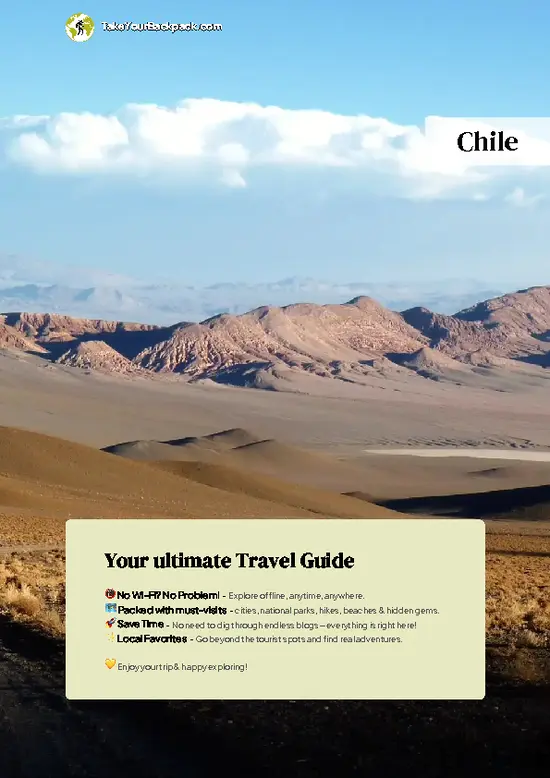
example page 0 from our offline Travel Guide for Chile
example page 1 from our offline Travel Guide for Chile
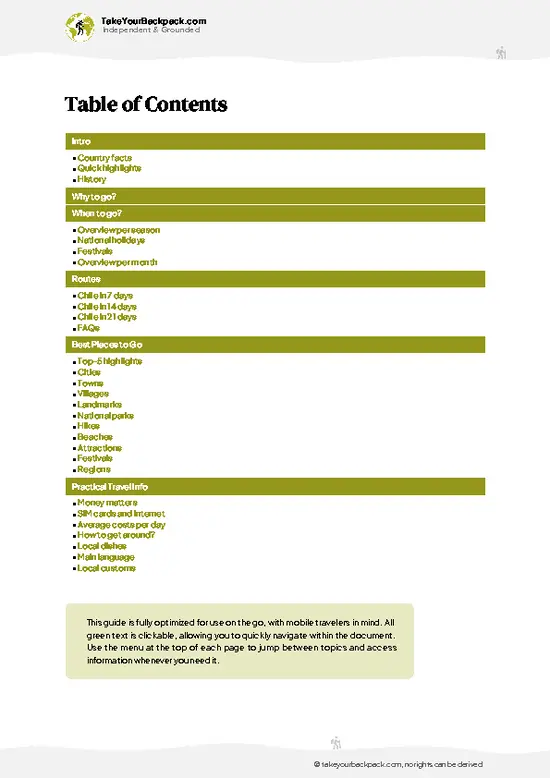
example page 2 from our offline Travel Guide for Chile
example page 3 from our offline Travel Guide for Chile
example page 4 from our offline Travel Guide for Chile
example page 5 from our offline Travel Guide for Chile
example page 6 from our offline Travel Guide for Chile
example page 7 from our offline Travel Guide for Chile
The digital guide (449 pages) contains:
114 highlights, ranked by travel appeal
Optimized 7, 14 & 21-day travel routes
Cities, national parks, landmarks, beaches
How to get around
Offline-friendly for travel without Wi-Fi
👉 Click to see all 30+ guide features

📅 Plan smarter in minutes, not weeks
Month by month travel advice
Festivals & national holidays
Budget expectations

🗺️ Go to the right places, skip the overrated ones
Honest pros & cons of destinations
Top hikes, parks & viewpoints
Lesser-known places most travelers miss
Clear “worth it vs skip it” guidance

🛏️ Travel smoothly without rookie mistakes
Best areas to stay
Transport systems explained simply
Common scams & safety advice
SIM cards, money & practical tips

🌍 Understand the country, not just visit it
Culture & traditions
52 Essential phrases & customs
Festivals worth planning around
Traveler-friendly historical context
Insights that make places more meaningful

📱 Built for real travel conditions
Fully downloadable PDF
Works completely offline
Optimized for phone use
Useful in remote areas & buses
Everything in one place
Save weeks of stressful planning
Get instant access to your full guide. 30‑day money-back guarantee.
+ Add another guide for just US$7.80

By proceeding you agree to our terms.
Sent to your inbox immediately after payment • 100% Secure Checkout
Best Backpacking Travel Advisor 2025 tourism awardBest Backpacking
Travel Advisor
2025
What others say about Take Your Backpack Guides:
⭐⭐⭐⭐⭐
Fantastic, amazing amount of information!
⭐⭐⭐⭐⭐
My goodness this is amazing, it's what I've been looking for hats off too you!
⭐⭐⭐⭐⭐
I think this is absolutely BRILLIANT
⭐⭐⭐⭐
Very complete and informative. It's still missing places, but I gotta to commend you
⭐⭐⭐⭐⭐
This is truly amazing, thank you, can't wait to explore it with my kids!
⭐⭐⭐⭐⭐
Awesome resource, thank you!
⭐⭐⭐⭐⭐
This is amazing! Can't wait to explore the ones I haven't seen
⭐⭐⭐⭐
I love this! Well done, great idea.
⭐⭐⭐⭐⭐
Thanks for taking the time to make this gem!
⭐⭐⭐⭐⭐
This might be the best website I've ever seen.
⭐⭐⭐⭐⭐
Congratulations, and thank you so much for your work; it's incredibly valuable.
⭐⭐⭐⭐
In all seriousness I think you did a great job pointing out the important spots
⭐⭐⭐⭐⭐
10/10 very good
⭐⭐⭐⭐⭐
As someone who's only just starting to visit regularly this is awesome, thank you.
⭐⭐⭐⭐
Thank you very much! I'm going to visit my dad, it's going to be very useful!
⭐⭐⭐⭐⭐
This is really cool! We'll be travelling for the first time and this definitely come in handy.
⭐⭐⭐⭐⭐
You are now our minister of culture, congratulations 👨‍💼
⭐⭐⭐⭐⭐
Just wanted to tell you that this is a pearl! Going to follow your recommendations.
⭐⭐⭐⭐⭐
This is so cool. I'll definitely be using the resource for my travels soon.
⭐⭐⭐⭐⭐
This is very impressive! Good work.
⭐⭐⭐⭐⭐
This is an amazing and informative site. Very well done!

🛏️ Where to stay?Best areas to stay in Chile

In Punta Arenas, the real backpacker sweet spot is the downtown core, especially around Avenida España and the adjacent streets. This area nails the balance between safety, social buzz, and budget options. You’re close enough to the waterfront to catch the wind and the views without paying a premium for a fancy hotel. Hostels cluster here, making it easy to meet other travelers, swap stories, and plan excursions to Patagonia or Tierra del Fuego without long commutes.

Compared to the quieter residential neighborhoods on the outskirts, downtown offers more than just a place to crash—it’s where … read more 👉
In Punta Arenas, the real backpacker sweet spot is the downtown core, especially around Avenida España and the adjacent streets. This area nails the balance between safety, social buzz, and budget options. You’re close enough to the waterfront to catch the wind and the views without paying a premium for a fancy hotel. Hostels cluster here, making it easy to meet other travelers, swap stories, and plan excursions to Patagonia or Tierra del Fuego without long commutes.

Compared to the quieter residential neighborhoods on the outskirts, downtown offers more than just a place to crash—it’s where the city’s pulse is. Cafés, small markets, and local eateries spill onto the sidewalks, creating a lively atmosphere that’s both welcoming and practical for solo backpackers. You won’t find the same energy or convenience in the industrial zones or the more upscale, spread-out neighborhoods, which tend to be pricier and less walkable.

Choosing downtown means trading a bit of quiet for connection and convenience. But for a backpacker, that’s a win. You’re plugged into the city’s rhythm, with easy access to transport and the essential services that keep your trip smooth and your wallet intact. It’s the smartest base camp for exploring the wild south without losing your social edge.

🚌 Getting aroundHow to get from A to B

Punta Arenas moves at its own rhythm—a blend of purposeful calm and rugged spontaneity. This southern Chilean city, perched on the edge of Patagonia, doesn’t rush you with frantic schedules, but it won’t wait forever either. The flow here is a dance between the clock and the unpredictable winds off the Strait of Magellan. You’ll find that time is a flexible companion, not a strict master. Understanding this balance is your key to mastering transit choices that respect your budget without sacrificing the experience.


  • Walking: The heart of Punta Arenas beats strongest on foot. The city’s compact layout means you can cover major sights within 20-30 minutes. Walking costs nothing, offers unmatched freedom, and lets you soak in the salty air and colorful street art at your own pace. It’s the
read more 👉
Punta Arenas moves at its own rhythm—a blend of purposeful calm and rugged spontaneity. This southern Chilean city, perched on the edge of Patagonia, doesn’t rush you with frantic schedules, but it won’t wait forever either. The flow here is a dance between the clock and the unpredictable winds off the Strait of Magellan. You’ll find that time is a flexible companion, not a strict master. Understanding this balance is your key to mastering transit choices that respect your budget without sacrificing the experience.


  • Walking: The heart of Punta Arenas beats strongest on foot. The city’s compact layout means you can cover major sights within 20-30 minutes. Walking costs nothing, offers unmatched freedom, and lets you soak in the salty air and colorful street art at your own pace. It’s the baseline for any budget traveler aiming to feel the city’s pulse without spending a peso.


  • Public Buses: The backbone of local transit, buses run from roughly 6:00 AM to 10:00 PM. Tickets cost around 500 CLP (~$0.60 USD), making them the cheapest motorized option. They’re reliable but not always punctual—expect some waiting and occasional crowding during peak hours. Routes cover most neighborhoods and key spots like the ferry terminal and bus station, but don’t expect luxury; these are functional rides with basic comfort.


  • Shared Taxis (Colectivos): These are a step up in speed and flexibility compared to buses. Shared taxis operate on fixed routes but leave once full, which can mean unpredictable wait times. Fares hover around 800-1000 CLP (~$1-1.30 USD). They’re faster and more comfortable than buses, with fewer stops, but you trade off some schedule certainty for that speed.


  • Regular Taxis: If you’re short on time or traveling in a group, regular taxis offer door-to-door service. Expect to pay about 3000-5000 CLP (~$4-6.50 USD) for typical city rides. They’re the most comfortable and fastest option but come at a premium that can quickly eat into a tight budget. Use them strategically—like catching a late-night ride or hauling heavy gear.


  • Bicycle Rentals: For the adventurous and budget-conscious, renting a bike is a smart middle ground. Daily rentals run about 7000-9000 CLP (~$9-12 USD). It’s faster than walking, gives you freedom beyond bus routes, and adds a layer of physical engagement with the city’s terrain. Just be ready for some wind and occasional hills.


In Punta Arenas, every transit choice is a trade-off between time, money, and comfort. Walking maximizes savings and immersion but costs you time and energy. Public buses stretch your budget but demand patience. Shared taxis speed things up with a bit more expense and unpredictability. Regular taxis buy you comfort and speed at a price. Bikes offer a unique blend but require physical effort and a bit of local savvy. Knowing these trade-offs lets you craft a travel strategy that feels less like a compromise and more like a win.

👛 Costs (as of 4 September 2026)How expensive it really is

Backpacking in Punta Arenas, Chile, demands a clear-eyed view of your spending so you can balance time, money, and comfort like a pro.
  • Dorm Accommodation (High Season): Expect to pay around $15-$25 USD per night. High season, mainly summer months, pushes prices up due to demand from tourists heading to Patagonia.
  • Dorm Accommodation (Off-Season): Drop to about $10-$18 USD per night. The quieter months offer better deals but fewer options, so booking ahead can be a smart move.
  • Meals: Budget around $8-$15 USD daily if you stick to local markets, street food, and casual eateries. Punta Arenas has solid empanadas and seafood that won’t break the bank if you avoid tourist traps.
  • Local Transport: Single bus rides cost about $0.80-$1.20 USD. Walking is often the best way to save time and money
read more 👉
Backpacking in Punta Arenas, Chile, demands a clear-eyed view of your spending so you can balance time, money, and comfort like a pro.
  • Dorm Accommodation (High Season): Expect to pay around $15-$25 USD per night. High season, mainly summer months, pushes prices up due to demand from tourists heading to Patagonia.
  • Dorm Accommodation (Off-Season): Drop to about $10-$18 USD per night. The quieter months offer better deals but fewer options, so booking ahead can be a smart move.
  • Meals: Budget around $8-$15 USD daily if you stick to local markets, street food, and casual eateries. Punta Arenas has solid empanadas and seafood that won’t break the bank if you avoid tourist traps.
  • Local Transport: Single bus rides cost about $0.80-$1.20 USD. Walking is often the best way to save time and money in the compact city center.
  • City Transport Pass: A multi-ride card or daily pass can run $3-$5 USD, worth it if you plan multiple trips across town.
  • Basic Activities/Entry Fees: Museums and local attractions typically charge $3-$7 USD. Some natural parks nearby might have higher fees, but most city-based activities stay affordable.
  • Miscellaneous Expenses: Budget $3-$7 USD for essentials like water, snacks, or occasional coffee. Keep a small buffer for unexpected costs like laundry or minor gear repairs.

Total daily costs for a backpacker in Punta Arenas usually fall between $30 and $55 USD. This range gives you a solid grip on what you’re trading off: spending more for comfort or saving by embracing local rhythms and simpler choices. Knowing this lets you decide if you want to stretch your budget for a cozy hostel or save for a day trip to the nearby wilderness.


source: chile.travel
⚠️ Prices can change and everyone travels differently, so take this as a rough guide. Hope it helps you plan your adventure!

🚌 Day tripsEasy escapes and nearby places

Punta Arenas is a fantastic launchpad for day trips that showcase the wild beauty of Patagonia. With a little planning, you can dive into some truly memorable experiences without breaking the bank.

Torres del Paine National Park
Just a few hours from Punta Arenas, this iconic park is a must-visit. The dramatic peaks and turquoise lakes are a feast for the eyes. You can tackle a day hike like the Base of the Towers, which takes about 8 hours round trip. Expect to spend around $30 on transportation and park fees. The best time to go is during the summer months (December to March) when the weather is milder. A common mistake? Underestimating the wind—bring layers and a sturdy jacket.
👉 Explore Torres del Paine National Park

Isla Magdalena
Hop on a boat for a quick trip to Isla Magdalena, … read more 👉
Punta Arenas is a fantastic launchpad for day trips that showcase the wild beauty of Patagonia. With a little planning, you can dive into some truly memorable experiences without breaking the bank.

Torres del Paine National Park
Just a few hours from Punta Arenas, this iconic park is a must-visit. The dramatic peaks and turquoise lakes are a feast for the eyes. You can tackle a day hike like the Base of the Towers, which takes about 8 hours round trip. Expect to spend around $30 on transportation and park fees. The best time to go is during the summer months (December to March) when the weather is milder. A common mistake? Underestimating the wind—bring layers and a sturdy jacket.
👉 Explore Torres del Paine National Park

Isla Magdalena
Hop on a boat for a quick trip to Isla Magdalena, home to a massive colony of Magellanic penguins. The journey takes about 2.5 hours each way, and you’ll spend around $60 for the round trip. Late spring to early summer (October to February) is prime time for penguin sightings. Don’t forget your camera! A rookie error is not checking the boat schedule; they can fill up fast, especially on weekends.


Cerro de la Cruz
For a quick escape, hike up to Cerro de la Cruz. It’s a steep but short trek, taking about an hour to reach the viewpoint. The panoramic views of the city and the Strait of Magellan are worth every step. This trip is free, making it perfect for budget travelers. Anytime is good, but early morning offers the best light for photos. Many first-timers miss the trailhead—look for the signs near the cemetery.


Punta Arenas City Tour
If you want a taste of local culture, spend a day exploring Punta Arenas itself. Visit the historic cemetery, the Magellan Strait viewpoint, and sample some local cuisine. You can easily walk everywhere or take a local bus for a few dollars. This trip is best in spring or fall when the crowds are thinner. A common mistake is skipping the local food scene—try the king crab!


These trips offer a blend of adventure, culture, and stunning landscapes, all while keeping your budget intact.
Want to know what more Chile offers?
The Chile Travel Guide describes 114 highlights, from cities to national parks, from beaches to hikes

Get the Travel Guide -

🍲 FoodLocal Cuisine & Drinks

In Punta Arenas, the food scene is a delightful mix of local flavors and hearty fare. You can’t miss trying cordero al palo, a succulent lamb roasted on a spit, often served with a side of patagonian potatoes. The smoky aroma wafts through the air, drawing you in. Pair it with a glass of Carmenère, a rich red wine that embodies the region’s spirit.

For a casual bite, head to the local markets. Here, vendors serve up empanadas stuffed with everything from seafood to cheese. The flaky pastry and savory fillings are a backpacker’s dream. Street food stalls are also a treasure trove; grab a completos, Chile’s take on hot dogs, topped with avocado and mayonnaise.

When it comes to drinks, don’t overlook the pisco sour, a tangy cocktail that packs a punch. It’s a social drink, often enjoyed in … read more 👉
In Punta Arenas, the food scene is a delightful mix of local flavors and hearty fare. You can’t miss trying cordero al palo, a succulent lamb roasted on a spit, often served with a side of patagonian potatoes. The smoky aroma wafts through the air, drawing you in. Pair it with a glass of Carmenère, a rich red wine that embodies the region’s spirit.

For a casual bite, head to the local markets. Here, vendors serve up empanadas stuffed with everything from seafood to cheese. The flaky pastry and savory fillings are a backpacker’s dream. Street food stalls are also a treasure trove; grab a completos, Chile’s take on hot dogs, topped with avocado and mayonnaise.

When it comes to drinks, don’t overlook the pisco sour, a tangy cocktail that packs a punch. It’s a social drink, often enjoyed in lively bars where locals gather to unwind. Remember, sharing food is a sign of friendship here, so don’t hesitate to dive into communal platters. Embrace the vibrant atmosphere, and let the flavors of Punta Arenas enrich your journey.

🛡️ SafetySafety Tips and Common Scams in Punta Arenas

Punta Arenas is generally safe, but like any city, it has its quirks. Stay alert in crowded areas, especially near the waterfront and markets. Pickpocketing can happen, so keep your valuables close—think a money belt or a secure backpack.

If you’re solo, be mindful at night. The main streets are usually well-lit and populated, but stray into darker alleys, and you might feel uneasy. Trust your instincts; if something feels off, it probably is.

Scams are rare, but watch for overly friendly locals offering unsolicited help. Politely decline and keep moving. Everyday annoyances include the occasional aggressive stray dog; just give them space and walk on.

Overall, carry yourself confidently, stay aware, and you’ll navigate Punta Arenas like a pro.

FAQFrequently asked questions about Punta Arenas

3 to 4 days are sufficient to explore Punta Arenas and its surroundings, including the city center, museums, and nearby natural attractions like the Magdalena Island penguin colony. This allows time for day trips without rushing.
Yes, Punta Arenas is generally safe for solo backpackers, especially during daylight hours and in well-populated areas. Usual travel precautions apply, such as avoiding isolated places at night and securing valuables.
Punta Arenas is known for being the southernmost city on the South American mainland and a gateway to Antarctica. It is famous for its historical significance in Patagonian exploration and its proximity to wildlife like Magellanic penguins.
⚠️ Things can change over time, so always validate details locally before you go.

Other Chilean cities near Punta Arenas

Explore more nearby:

  • Puerto Montt—fishing port, fjord access, seafood markets| 1309 km away
  • Osorno—cattle ranches, volcanic views, German bakeries| 1409 km away
  • Valdivia—riverfront, craft breweries, German influence| 1495 km away

💡 Not sure where to go next?
Create a personalized itinerary for Chile including Punta Arenas and the places that fit your trip.

Generate my itinerary

👉 Discover all cities

Or checkout all Chile has to offer (think cities, towns, villages, national parks, hikes, beaches, festivals)
Country photo of Chile

We 💚 feedbackIs it worth it?

Punta Arenas is a gateway to the wild beauty of Patagonia. You can hop on a boat to see glaciers or explore the rugged landscapes of Torres del Paine. But here’s the catch: it can be pricey. Accommodations and tours add up quickly, so budget wisely. Still, if you’re after raw nature and adventure, the investment is worth every peso. Just be ready for the wind—it’s relentless!

✈️ When did I visit Chile?
I have visited Chile, together with Argentina, in September 2012.

✍️ Help improve this page!
The information on this page is based on my own backpacking experience in Chile, supplemented with up-to-date research and feedback from other travelers. Travel details can change, so if you notice anything outdated or incomplete, feel free to let me know.


🙋‍♂️ Give feedback

👋 Meet the founderWho’s Behind Take Your Backpack?

Johan, backpacker and founder of TakeYourBackpackHi, I’m Johan (Netherlands 🇳🇱), the creator of TakeYourBackpack. Over the past decade, I’ve backpacked through 80+ countries across six continents, gaining extensive experience with independent travel, long-term trips, and overland routes.

This site is built on a combination of firsthand travel experience and carefully curated insights from other backpackers. Many guides are based on places I’ve personally visited, while others bring together tips, observations, and practical advice shared by trusted travelers I’ve met along the way.

The goal is to provide realistic, experience-driven guidance — not generic itineraries — so you can explore destinations with better context, clearer expectations, and more confidence.

Get full Chile guide •
Instant download • 114 highlights • Full Offline guide