×

Chile🇨🇱 | villagesPunta de ChorosPenguin boat trips, fishermen’s dock, pale-sand coves, quiet desert coast | things to do and best time to go

Explore Ojos del SaladoExplore Puyuhuapi

Backpacking in Punta de Choros
👍 Recommendedvillage ranked #6
By Johan Kruseman 🇳🇱 | Updated October 19, 2026

Punta de Choros is a separate fishing cove from the Isla Damas landing, and the penguins and dolphins live offshore, so you see them only from a boat, not from the beach. The village sits on the coast of Chile’s Coquimbo Region, a paved detour off the Panamerican Highway, north of La Serena. That detour is why it stays quiet: only two buses a day run in, so most people arrive by tour or rental car. I got a ride in the back of a fisherman’s pickup after the last colectivo dropped me at the junction, and a fox trotted across the track ahead of us. Evenings are early and calm, with a few hostels and cabins, so meeting travelers means joining a boat group. Wind and long drives are the costs. Birders and wildlife lovers will like it most; anyone wanting nightlife or easy transit won’t.

Discover everything you want to know in the 📖 Chile Travel Guide.


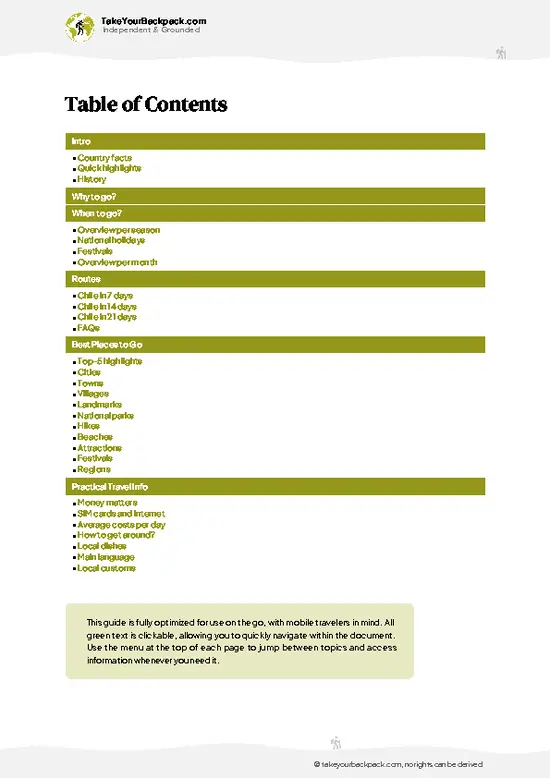
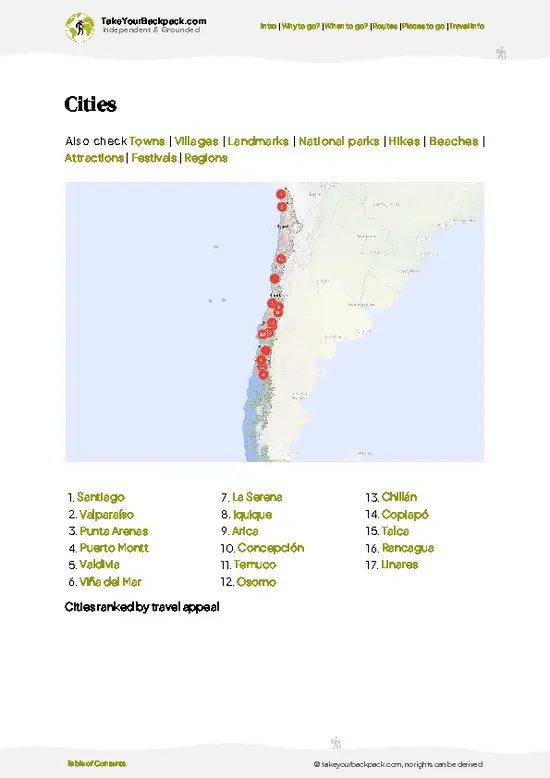
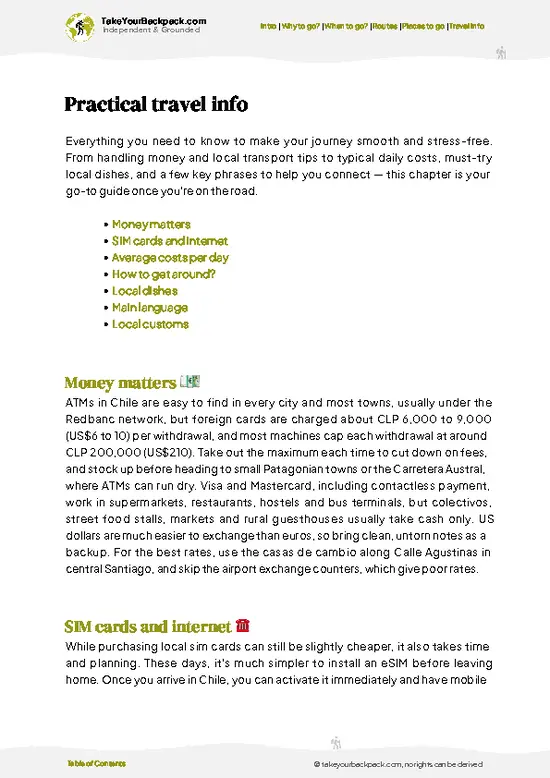
example page 0 from our offline Travel Guide for Chile
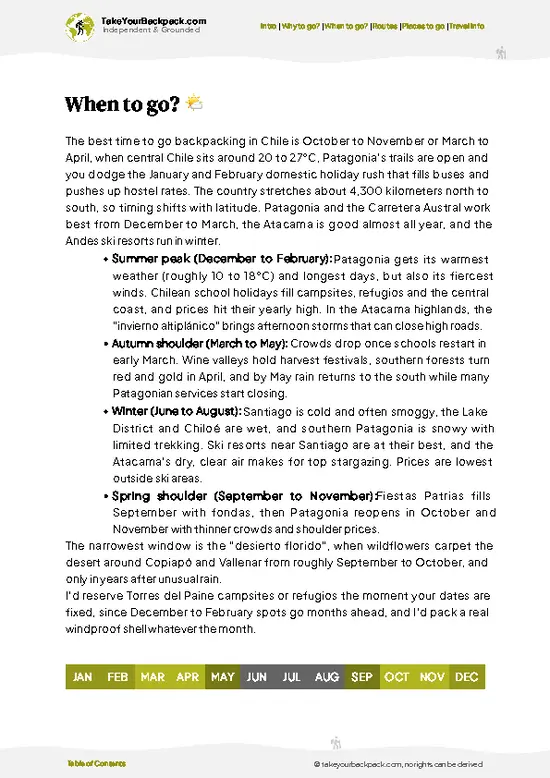
example page 1 from our offline Travel Guide for Chile
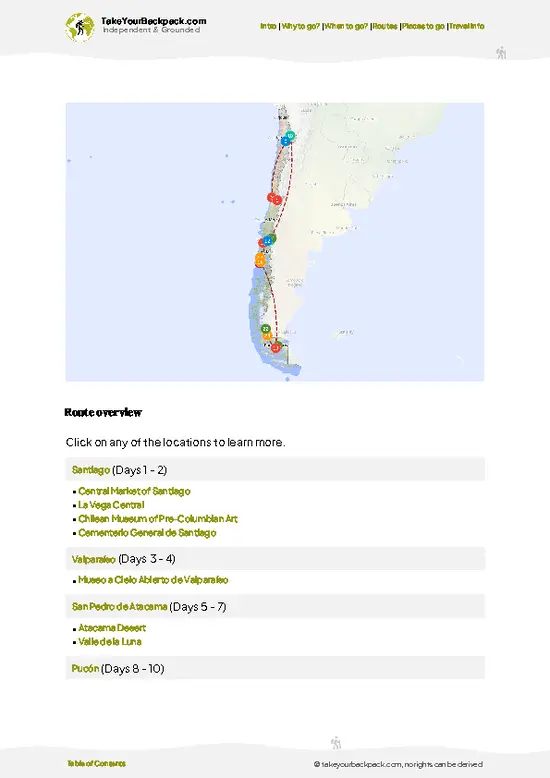
example page 2 from our offline Travel Guide for Chile
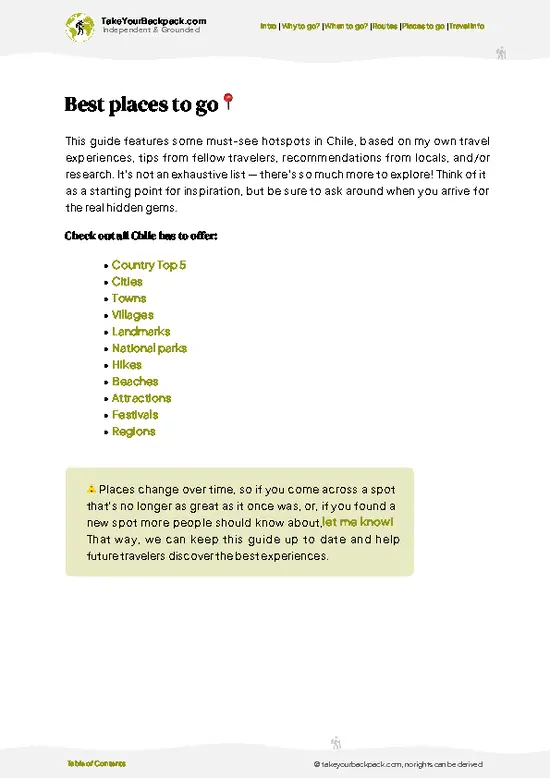
example page 3 from our offline Travel Guide for Chile
example page 4 from our offline Travel Guide for Chile
example page 5 from our offline Travel Guide for Chile
example page 6 from our offline Travel Guide for Chile
example page 7 from our offline Travel Guide for Chile
Loading the map 🌍
CLICK TO FILTER
cities
towns
villages
landmarks
national parks
hikes
beaches
attractions
festivals
regions
SHOW COUNTRY’S BESTSHOW ALL

✨ Why go?
Ranked #6 village in Chile
What sets this place apart

Punta de Choros earns its stop because it is the departure point for boats to the Damas, Choros and Gaviota islands, part of the Humboldt Penguin National Reserve, where Humboldt penguins, sea otters (chungungos) and sea lions share the rocks. Bottlenose dolphins often escort the boats, and in season you may spot whales. The village itself is a handful of dirt lanes, a fishermen’s cooperative and seafood shacks, so the draw is the water, not the streets. Most travelers stay one night, long enough for a morning boat and an afternoon on the beaches nearby. Linger a second day if you like beachcombing, birdwatching or stargazing under very dark skies. It suits wildlife lovers, photographers and slow travelers with a car or tour. It works as a pause on the Santiago to Atacama route, but not if you need a social scene.

💡 HighlightsKey sights and experiences for travelers

  1. Boat trip to the Humboldt Penguin Reserve islands: Fishermen’s cooperative boats leave from the Punta de Choros dock and loop around Choros and Damas islands, passing penguin colonies, sea lions, sea otters and often dolphins. Trips run about 1.5 to 2 hours and cost roughly US$15 to 25 per person, plus a small reserve fee. Go in the morning, when the sea is calmer. Many boats also offer a landing on Isla Damas for an extra US$5 to 10 and about 1 hour.
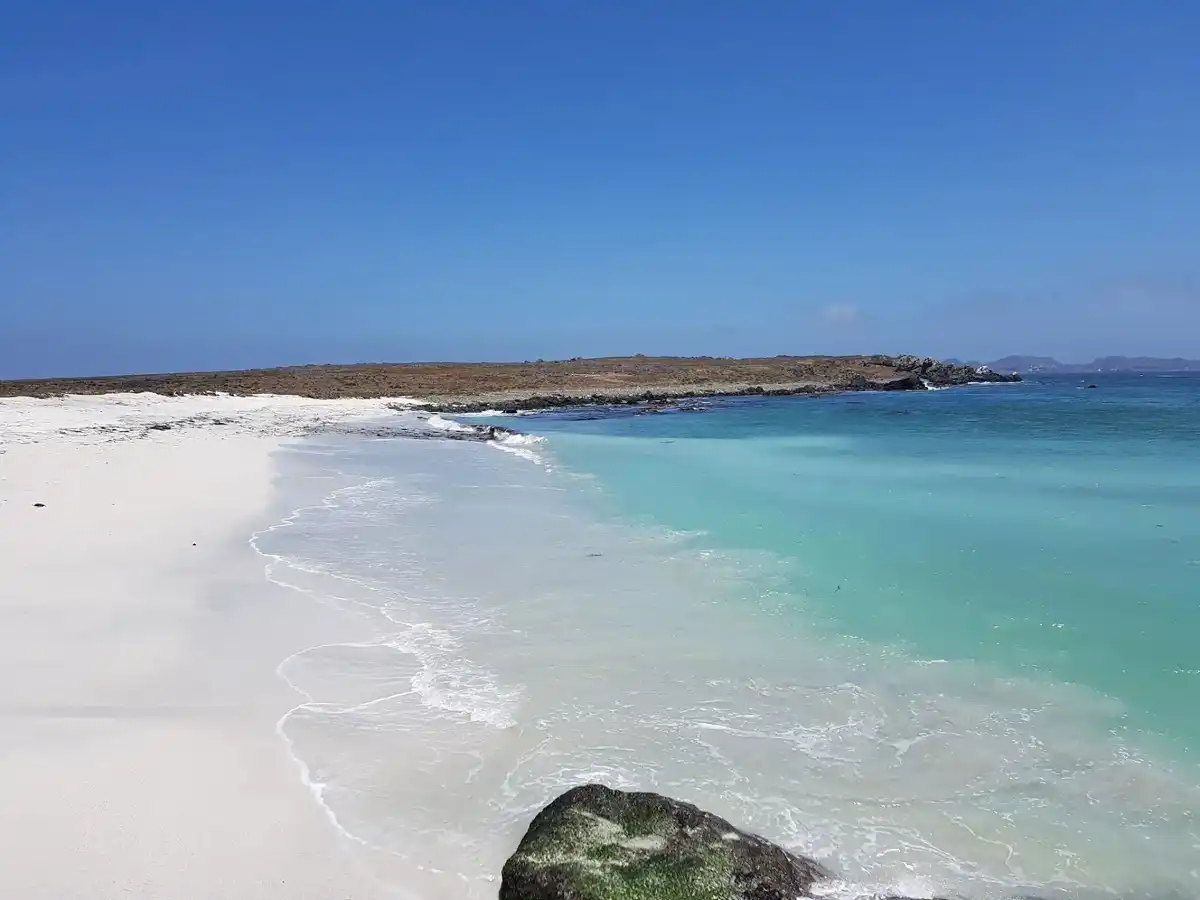
  2. Playa Las Tijeras on Isla Damas: Pale sand and turquoise, shallow water make this the best beach in the area, reached on the boat trip’s landing. The Pacific is cold, but the scenery is superb, and landings last about 1 hour. Late morning, before the afternoon wind builds, is best.
  3. Punta de Choros fishermen’s dock and cove: Watch boats come in,
… read more 👉
  1. Boat trip to the Humboldt Penguin Reserve islands: Fishermen’s cooperative boats leave from the Punta de Choros dock and loop around Choros and Damas islands, passing penguin colonies, sea lions, sea otters and often dolphins. Trips run about 1.5 to 2 hours and cost roughly US$15 to 25 per person, plus a small reserve fee. Go in the morning, when the sea is calmer. Many boats also offer a landing on Isla Damas for an extra US$5 to 10 and about 1 hour.
  2. Playa Las Tijeras on Isla Damas: Pale sand and turquoise, shallow water make this the best beach in the area, reached on the boat trip’s landing. The Pacific is cold, but the scenery is superb, and landings last about 1 hour. Late morning, before the afternoon wind builds, is best.
  3. Punta de Choros fishermen’s dock and cove: Watch boats come in, pelicans waiting for scraps and locals unloading the catch, then eat fresh ceviche or grilled fish at a seafood shack for about US$8 to 15. Allow 1 hour. Afternoon is when the catch arrives.
The boat trip and the dock lunch combine well in one morning, since the boats return around midday when the seafood shacks are filling.
Spotted a mistake or missing something? Contact us.

Things to do near Punta de Choros

Ratings based on Tripadvisor reviews. When you book through this link, you support our work at no extra cost to you.

🌤️ When to go?When to go for the best experience

  • Summer (December to March): Dry, sunny days run 20 to 26°C (68 to 79°F), with cold Pacific water around 14 to 16°C (57 to 61°F). Daylight lasts about 14 hours. Crowds and prices peak in January and February, and boat tours sell out on weekends.
  • Autumn (April to May): Days of 18 to 22°C (64 to 72°F), fewer people, and lower rates. Sea mist often clears by late morning.
  • Winter (June to August): Cool at 12 to 18°C (54 to 64°F), with nights near 6 to 8°C (43 to 46°F). Days are short, around 10 hours of light. Rain is rare, and the village is nearly empty. Some tours run less often.
  • Spring (September to November): Mild at 16 to 21°C (61 to 70°F). In dry years the desert can flower, and the first whales arrive ahead of the December to March peak.
Book a boat tour on a weekday in January or February, … read more 👉
  • Summer (December to March): Dry, sunny days run 20 to 26°C (68 to 79°F), with cold Pacific water around 14 to 16°C (57 to 61°F). Daylight lasts about 14 hours. Crowds and prices peak in January and February, and boat tours sell out on weekends.
  • Autumn (April to May): Days of 18 to 22°C (64 to 72°F), fewer people, and lower rates. Sea mist often clears by late morning.
  • Winter (June to August): Cool at 12 to 18°C (54 to 64°F), with nights near 6 to 8°C (43 to 46°F). Days are short, around 10 hours of light. Rain is rare, and the village is nearly empty. Some tours run less often.
  • Spring (September to November): Mild at 16 to 21°C (61 to 70°F). In dry years the desert can flower, and the first whales arrive ahead of the December to March peak.
Book a boat tour on a weekday in January or February, or visit in early December for whales before the holiday crowds.


source: climatestotravel.comJANJanuary: excellent for travelingFEBFebruary: excellent for travelingMARMarch: excellent for travelingAPRApril: highly recommended for travelingMAYMay: fair for travelingJUNJune: below average for travelingJULJuly: below average for travelingAUGAugust: below average for travelingSEPSeptember: fair for travelingOCTOctober: good for travelingNOVNovember: highly recommended for travelingDECDecember: excellent for traveling

✈️ The backpacker research shortcutChile Travel Guide

An offline-friendly backpacking guide with optimized travel routes, ranked highlights, transport advice, and the best areas to stay.
example page 0 from our offline Travel Guide for Chile
example page 1 from our offline Travel Guide for Chile
example page 2 from our offline Travel Guide for Chile
example page 3 from our offline Travel Guide for Chile
example page 4 from our offline Travel Guide for Chile
example page 5 from our offline Travel Guide for Chile
example page 6 from our offline Travel Guide for Chile
example page 7 from our offline Travel Guide for Chile
The digital guide (333 pages) contains:
✅ 107 highlights, ranked by travel appeal
✅ Optimized 7, 14 & 21-day travel routes
✅ Cities, national parks, landmarks, beaches
✅ How to get around
✅ Offline-friendly for travel without Wi-Fi
👉 Click to see all 30+ guide features

📅 Plan smarter in minutes, not weeks
✅ Month by month travel advice
✅ Festivals & national holidays
✅ Budget expectations

🗺️ Go to the right places, skip the overrated ones
✅ Honest pros & cons of destinations
✅ Top hikes, parks & viewpoints
✅ Lesser-known places most travelers miss
✅ Clear “worth it vs skip it” guidance

🛏️ Travel smoothly without rookie mistakes
✅ Best areas to stay
✅ Transport systems explained simply
✅ Common scams & safety advice
✅ SIM cards, money & practical tips

🌍 Understand the country, not just visit it
✅ Culture & traditions
✅ 52 Essential phrases & customs
✅ Festivals worth planning around
✅ Traveler-friendly historical context
✅ Insights that make places more meaningful

📱 Built for real travel conditions
✅ Fully downloadable PDF
✅ Works completely offline
✅ Optimized for phone use
✅ Useful in remote areas & buses
✅ Everything in one place
Stop searching, start planning
Get instant access to your full guide. 30‑day money-back guarantee.
+ Add another guide for just

By proceeding you agree to our terms.
Sent to your inbox immediately after payment • 100% Secure Checkout
Best Backpacking Travel Advisor 2025 tourism awardBest Backpacking
Travel Advisor
2025
What others say about Take Your Backpack Guides:
⭐⭐⭐⭐⭐
Fantastic, amazing amount of information!
⭐⭐⭐⭐⭐
My goodness this is amazing, it's what I've been looking for hats off too you!
⭐⭐⭐⭐⭐
I think this is absolutely BRILLIANT
⭐⭐⭐⭐
Very complete and informative. It's still missing places, but I gotta to commend you
⭐⭐⭐⭐⭐
This is truly amazing, thank you, can't wait to explore it with my kids!
⭐⭐⭐⭐⭐
Awesome resource, thank you!
⭐⭐⭐⭐⭐
This is amazing! Can't wait to explore the ones I haven't seen
⭐⭐⭐⭐
I love this! Well done, great idea.
⭐⭐⭐⭐⭐
Thanks for taking the time to make this gem!
⭐⭐⭐⭐⭐
This might be the best website I've ever seen.
⭐⭐⭐⭐⭐
Congratulations, and thank you so much for your work; it's incredibly valuable.
⭐⭐⭐⭐
In all seriousness I think you did a great job pointing out the important spots
⭐⭐⭐⭐⭐
10/10 very good
⭐⭐⭐⭐⭐
As someone who's only just starting to visit regularly this is awesome, thank you.
⭐⭐⭐⭐
Thank you very much! I'm going to visit my dad, it's going to be very useful!
⭐⭐⭐⭐⭐
This is really cool! We'll be travelling for the first time and this definitely come in handy.
⭐⭐⭐⭐⭐
You are now our minister of culture, congratulations 👨‍💼
⭐⭐⭐⭐⭐
Just wanted to tell you that this is a pearl! Going to follow your recommendations.
⭐⭐⭐⭐⭐
This is so cool. I'll definitely be using the resource for my travels soon.
⭐⭐⭐⭐⭐
This is very impressive! Good work.
⭐⭐⭐⭐⭐
This is an amazing and informative site. Very well done!

🛏️ Where to stay?Choosing the right base

Budget beds in Punta de Choros are mostly simple cabañas and campsites, so book ahead in January and February. The village is tiny and has no hostel scene, which suits travelers who want quiet nights and a huge starry sky.
Camping is the cheapest choice. Sites near the beach and the boat dock run about US$8 to 15 per person, usually with shared bathrooms and showers. Bring a warm sleeping bag, since desert nights get cold and windy.
Cabañas are the main option for groups. Expect US$45 to 90 a night for a unit sleeping four to six, which works out cheap when split. Many have a small kitchen, which … read more 👉
Budget beds in Punta de Choros are mostly simple cabañas and campsites, so book ahead in January and February. The village is tiny and has no hostel scene, which suits travelers who want quiet nights and a huge starry sky.
Camping is the cheapest choice. Sites near the beach and the boat dock run about US$8 to 15 per person, usually with shared bathrooms and showers. Bring a warm sleeping bag, since desert nights get cold and windy.
Cabañas are the main option for groups. Expect US$45 to 90 a night for a unit sleeping four to six, which works out cheap when split. Many have a small kitchen, which helps because food choices in the village are limited to a few seafood restaurants near the dock.
A few small guesthouses offer private rooms for roughly US$40 to 70 a night.
Stock up on groceries and cash in La Serena or Vallenar before arriving, as shops are sparse and card machines unreliable. The nearby village of Chañaral de Aceituno is a quieter alternative with a handful of basic lodgings.

🚌 Day tripsBest day trips from Punta de Choros

Punta de Choros works well as a base for day trips, but only a few real options exist, and all of them start with a dirt or paved road and a boat or a long drive.
Damas Island and Choros Island Boat Tour:
This is the reason to come. Local fishermen run small boats from the Punta de Choros dock, about 2 hours round trip, with sea lions, Humboldt penguins and often bottlenose dolphins along the way. Expect US$20 to 30 per person, plus a small landing fee on Damas Island (roughly US$5) where you can swim in turquoise water. Go between December and March for warmer water, and book at the dock in the morning, since boats fill and calm seas matter. First-timers often forget a windbreaker, and the open boat gets cold even in summer.

Chañaral Island Reserve:
Chañaral is the largest island of the reserve … read more 👉
Punta de Choros works well as a base for day trips, but only a few real options exist, and all of them start with a dirt or paved road and a boat or a long drive.
Damas Island and Choros Island Boat Tour:
This is the reason to come. Local fishermen run small boats from the Punta de Choros dock, about 2 hours round trip, with sea lions, Humboldt penguins and often bottlenose dolphins along the way. Expect US$20 to 30 per person, plus a small landing fee on Damas Island (roughly US$5) where you can swim in turquoise water. Go between December and March for warmer water, and book at the dock in the morning, since boats fill and calm seas matter. First-timers often forget a windbreaker, and the open boat gets cold even in summer.

Chañaral Island Reserve:
Chañaral is the largest island of the reserve and the best for wildlife, with a bigger colony of penguins and a good chance of seeing whales from December to March (peak: January to March). Tours leave from Caleta Chañaral de Aceituno, about an hour north by road, and spend 2 to 3 hours at sea, typically US$30 to 45 per person. Landing on the island is not allowed, so you watch from the boat. Many first-timers expect a beach stop and are surprised when there isn't one.

La Serena Return Day:
La Serena is about 2 hours south by road, with colectivos and buses from the Ruta 5 junction at Los Choros, and the trip works as a long day from the village if you have a vehicle. Budget US$15 to 25 for transport, and leave before 3 pm so you are not stranded when buses thin out.
👉 Explore La Serena

🛡️ SafetyTraveler Safety Guide

Punta de Choros beach is a laid-back spot where the ocean greets you with a friendly wave, not a menacing roar. Swimming here is generally safe, but keep an eye on the currents, especially if you venture out too far. Locals tend to stick to the shallows, where the water is calmer.

As for marine life, you might spot rays gliding gracefully beneath the surface, but sharks are more of a myth than a menace here. Just be mindful of the occasional jellyfish; they’re not common, but they can surprise you.

Weather-wise, the sun can be relentless, so slather on that sunscreen and take breaks in the shade. Mornings are usually quieter, making it a perfect time for a dip. Just remember to keep your belongings close; beach theft can happen, even in paradise. Enjoy the surf, but stay savvy!

FAQTraveler FAQ

Reaching Punta de Choros takes about 1.5 to 2 hours from La Serena by car, roughly 115 km north via Ruta 5 and a paved turnoff at Los Choros. Buses run from La Serena to Punta de Choros only twice a day, so most backpackers rent a car (from about US$40 a day) or join a tour for US$40 to 70. Go in the morning, since public transport options end early and taxis from Vallenar cost much more.
Punta de Choros is worth it if you want wildlife and empty coastline. Humboldt penguins, sea lions, bottlenose dolphins and, between roughly December and March, humpback whales are all seen on a boat trip costing US$15 to 30. Two nights lets you do Damas Island, the dolphin loop and the nearby desert reserve at a relaxed pace. Skip it if you want nightlife, as the village has only a few restaurants and cabañas.
Punta de Choros can be done as a long day trip from La Serena, but a night there makes the journey far less tiring. The drive takes about 1.5 to 2 hours each way, which leaves roughly 4 hours on site for a boat tour at US$15 to 30. Organized day tours from La Serena run about US$40 to 70 and usually include the Damas Island stop. Camping from US$8 per person is cheap and lets you catch the quiet morning boats.
⚠️ Things can change over time, so always validate details locally before you go.

More places to explore across Chile

Punta de Choros isn’t the only highlight in Chile. Explore all what Chile has to offer.
Country photo of Chile

We 💚 feedbackWhat to keep in mind

Travelers often arrive at Punta de Choros midday expecting to hop on a boat, only to find the sea closed or the lines long. Get here the evening before and book the first morning departure, when the water is calmest. I’d bring cash, a windbreaker and a full tank of fuel.

✈️ When did I visit Chile?
I have visited Chile, together with Argentina, in September 2012.

✍️ Help improve this page!
The information on this page is based on my own backpacking experience in Chile, supplemented with up-to-date research and feedback from other travelers. Travel details can change, so if you notice anything outdated or incomplete, feel free to let me know.


🙋‍♂️ Give feedback

👋 Meet the founderWho’s Behind Take Your Backpack?

Johan, backpacker and founder of TakeYourBackpackHi, I’m Johan (Netherlands 🇳🇱), the creator of TakeYourBackpack. Over the past 3 decades, I’ve backpacked through 90+ countries across six continents, gaining extensive experience with independent travel, long-term trips, and overland routes.

This site is built on a combination of firsthand travel experience and carefully curated insights from other backpackers. Many guides are based on places I’ve personally visited, while others bring together tips, observations, and practical advice shared by trusted travelers I’ve met along the way.

The goal is to provide realistic, experience-driven guidance — not generic itineraries — so you can explore destinations with better context, clearer expectations, and more confidence.