×

Chile🇨🇱 | townsVillarricaLake promenade, Mapuche museum, volcano gateway | things to do and best time to go

Explore PichilemuExplore Licán Ray

Backpacking in Villarrica
🌟 Highlighttown ranked #7
By Johan Kruseman 🇳🇱 | Updated October 19, 2026

The bus drops you a few blocks from the lake, and the first thing you notice is a perfect white cone of Volcán Villarrica standing over the end of the street, steaming faintly. Villarrica sits in the Araucanía region in the south of Chile, on the western shore of Lago Villarrica. The town itself is low-key: a grid of shops, bakeries and a lakefront with black volcanic sand. Its real value is access, because rafting, hiking, hot springs and Pucón are all close. Buses are frequent, hostels are small and calm, and evenings are quieter than in Pucón, so meeting people happens over shared tours and kitchen tables. A first day could mean coffee on the costanera, a stroll to the craft market, and a lake sunset.

Discover everything you want to know in the 📖 Chile Travel Guide.


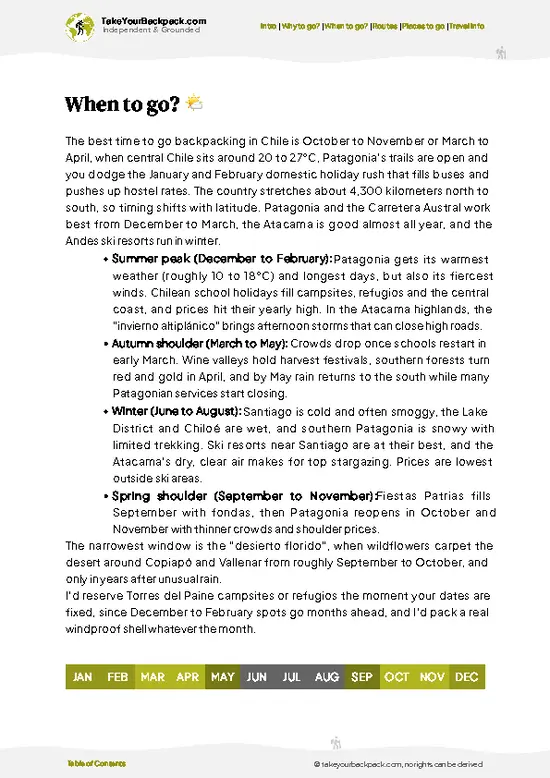
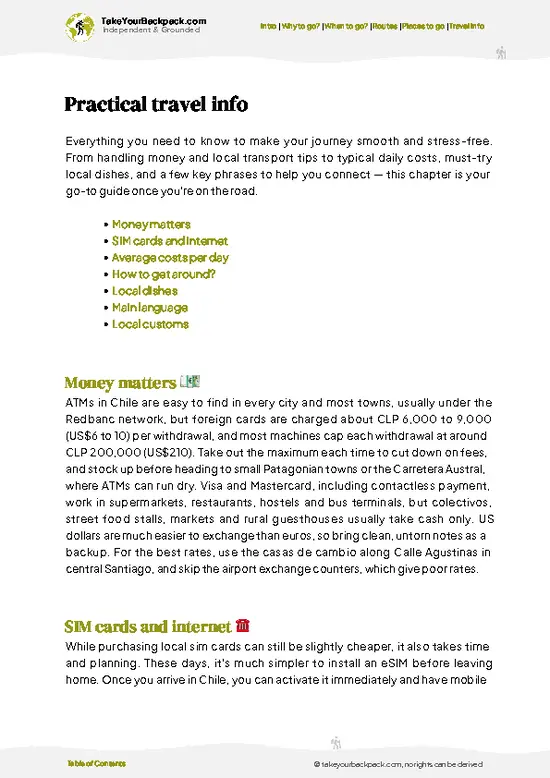
example page 0 from our offline Travel Guide for Chile
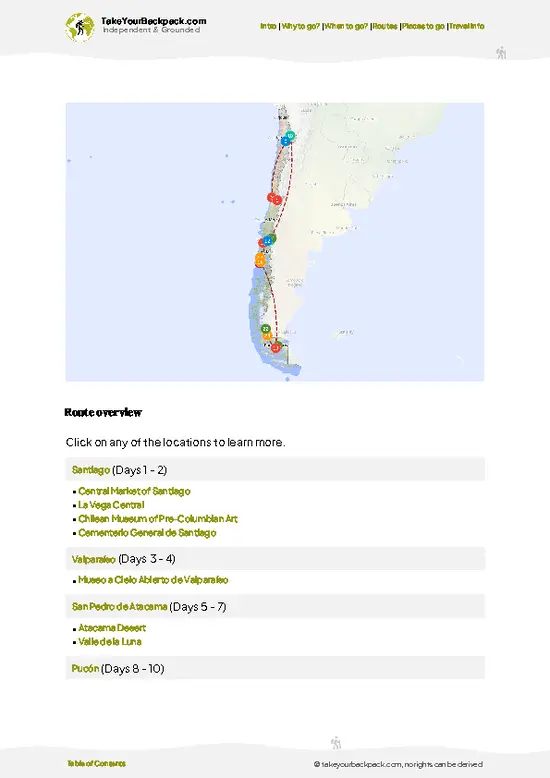
example page 1 from our offline Travel Guide for Chile
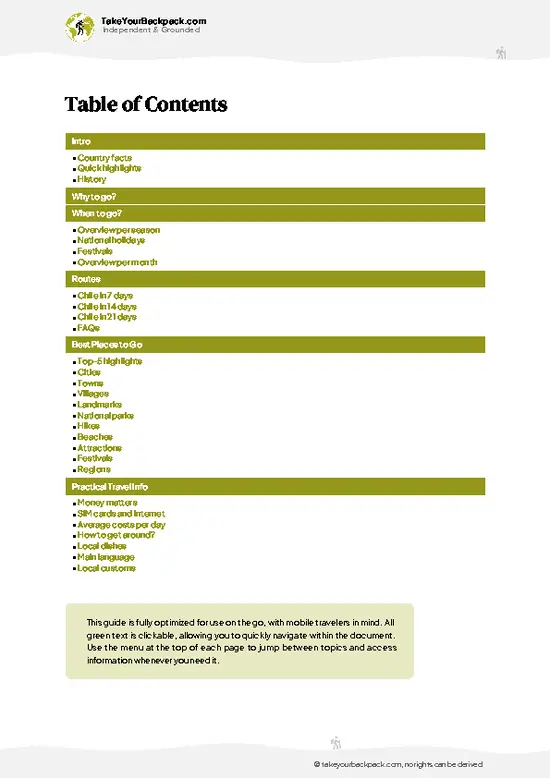
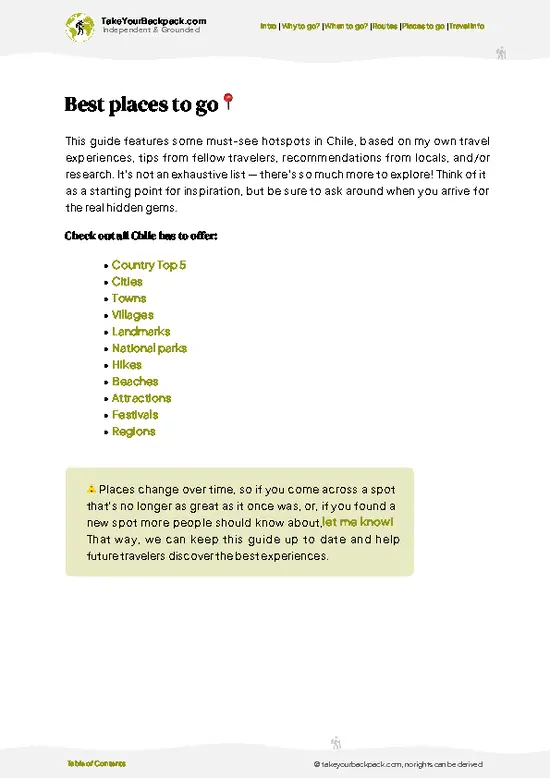
example page 2 from our offline Travel Guide for Chile
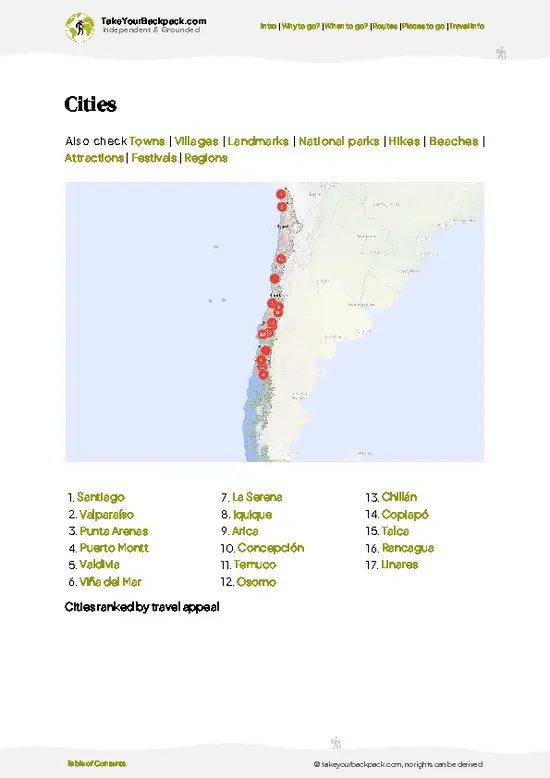
example page 3 from our offline Travel Guide for Chile
example page 4 from our offline Travel Guide for Chile
example page 5 from our offline Travel Guide for Chile
example page 6 from our offline Travel Guide for Chile
example page 7 from our offline Travel Guide for Chile
Loading the map 🌍
CLICK TO FILTER
cities
towns
villages
landmarks
national parks
hikes
beaches
attractions
festivals
regions
SHOW COUNTRY’S BESTSHOW ALL

✨ Why go?
Ranked #7 town in Chile
What makes this town worth visiting

Villarrica works as the calm alternative to its livelier neighbor, and that is the whole point. You get the same volcano views and the same lake, but beds are easier to find and the streets feel like a real working town rather than a tour office strip. Most backpackers stay two or three nights, using it to reach hikes, hot springs and river trips, then move on. The Feria Artesanal and the lakefront give you something to do between outings without needing a plan. It suits slow travelers, solo travelers who like small guesthouses, and anyone who prefers cooking in a hostel kitchen to chasing nightlife. Social life exists but stays modest, mostly around shared dinners and group excursions. If you want a big party scene, look elsewhere; if you want a quiet base beside Lago Villarrica, this fits.

💡 HighlightsPlaces and moments you shouldn't skip

  1. Costanera and Playa Pucará: The lakefront promenade and black volcanic sand beach are where the town gathers, with the volcano framing the water. Swimming is best in summer. Free, 1 to 2 hours, and late afternoon is nicest.
  2. Feria Artesanal Municipal: A cluster of stalls selling Mapuche-inspired weaving, woodwork, silver and local preserves. Prices are modest and bargaining is mild. Free to enter, 45 minutes, mornings and early afternoon.
  3. Museo Histórico y Arqueológico de Villarrica: Small museum on Mapuche culture, with ceramics, textiles, silverwork and a ruka replica. Entry is roughly US$2 to 3, and you need about an hour. Good for a rainy day.
  4. Puerto and Muelle area: The pier and small boat docks give a quiet spot to watch the light shift on the water, with cafés nearby for kuchen. Free, about
… read more 👉
  1. Costanera and Playa Pucará: The lakefront promenade and black volcanic sand beach are where the town gathers, with the volcano framing the water. Swimming is best in summer. Free, 1 to 2 hours, and late afternoon is nicest.
  2. Feria Artesanal Municipal: A cluster of stalls selling Mapuche-inspired weaving, woodwork, silver and local preserves. Prices are modest and bargaining is mild. Free to enter, 45 minutes, mornings and early afternoon.
  3. Museo Histórico y Arqueológico de Villarrica: Small museum on Mapuche culture, with ceramics, textiles, silverwork and a ruka replica. Entry is roughly US$2 to 3, and you need about an hour. Good for a rainy day.
  4. Puerto and Muelle area: The pier and small boat docks give a quiet spot to watch the light shift on the water, with cafés nearby for kuchen. Free, about an hour, and sunset is best.
Day trips from Villarrica include the hot springs near Pucón, Parque Nacional Villarrica for volcano hikes, and Lago Calafquén with its lakeside villages. For a first visit, the costanera is the best choice because it gives you the lake, beach and volcano in one easy walk.
Spotted a mistake or missing something? Contact us.

Things to do near Villarrica

Ratings based on Tripadvisor reviews. When you book through this link, you support our work at no extra cost to you.

🏘️ NeighborhoodsWhere things are and how it's laid out

Villarrica sits on the southwest shore of Lake Villarrica with the volcano filling the skyline, and the compact grid means you can cover every area below on foot or with a short bus hop.
  • Centro: The grid around Plaza de Armas and Calle Pedro de Valdivia holds the bakeries, ATMs, tour agencies and cheap set-lunch (almuerzo) spots. Streets are flat and walkable, and the Feria Municipal near the bus terminal sells smoked fish, cheese and fruit, so you can assemble a picnic in ten minutes.
  • Costanera and Playa Pucará: The lakeside avenue runs along dark volcanic sand and a pier, with craft stalls and ice cream stands. It is a 10 to 15 minute walk from the plaza, quiet by day outside summer, and busy in the evening in January and February. You get the best view of the cone at dusk.
  • Pedro de Valdivia
… read more 👉
Villarrica sits on the southwest shore of Lake Villarrica with the volcano filling the skyline, and the compact grid means you can cover every area below on foot or with a short bus hop.
  • Centro: The grid around Plaza de Armas and Calle Pedro de Valdivia holds the bakeries, ATMs, tour agencies and cheap set-lunch (almuerzo) spots. Streets are flat and walkable, and the Feria Municipal near the bus terminal sells smoked fish, cheese and fruit, so you can assemble a picnic in ten minutes.
  • Costanera and Playa Pucará: The lakeside avenue runs along dark volcanic sand and a pier, with craft stalls and ice cream stands. It is a 10 to 15 minute walk from the plaza, quiet by day outside summer, and busy in the evening in January and February. You get the best view of the cone at dusk.
  • Pedro de Valdivia strip: The blocks near the lake hold pubs, craft beer bars and pizza places. It is the only real nightlife, and it closes early outside the summer months, so plan on a relaxed evening rather than a late one.
  • Barrio Bellavista and the hillside: Residential streets climb slightly above the center. Few sights, but quiet lanes and wider views over the lake, a decent 20 minute loop on foot.

⌛️ 1 day1-day itinerary for Villarrica

8:30 AM, Panadería on Calle Pedro de Valdivia: Start with fresh bread or kuchen here, because the town wakes slowly and bakeries are the best fuel before walking. Then stroll toward the lake.
9:30 AM, Costanera and Playa Pucará: Walk the lakefront while the light is clear and the volcano is often free of cloud. Take photos and dip your feet on the black sand.
11:00 AM, Feria Artesanal Municipal: Browse weaving, wood carvings and jams. Buy small items directly from the makers, then head up into town.
12:30 PM, Museo Histórico y Arqueológico: Spend an hour learning about Mapuche culture, which gives the rest of the region context.
2:00 PM, Lunch at a local comedor: Choose a set menu away from the lakefront, where locals eat. Expect soup and a main dish.
6:00 PM, Muelle and pier: Finish with sunset … read more 👉
8:30 AM, Panadería on Calle Pedro de Valdivia: Start with fresh bread or kuchen here, because the town wakes slowly and bakeries are the best fuel before walking. Then stroll toward the lake.
9:30 AM, Costanera and Playa Pucará: Walk the lakefront while the light is clear and the volcano is often free of cloud. Take photos and dip your feet on the black sand.
11:00 AM, Feria Artesanal Municipal: Browse weaving, wood carvings and jams. Buy small items directly from the makers, then head up into town.
12:30 PM, Museo Histórico y Arqueológico: Spend an hour learning about Mapuche culture, which gives the rest of the region context.
2:00 PM, Lunch at a local comedor: Choose a set menu away from the lakefront, where locals eat. Expect soup and a main dish.
6:00 PM, Muelle and pier: Finish with sunset by the docks, then find a café for onces, the Chilean evening tea with sandwiches and cake.

🌤️ When to go?When to go for the best experience

January and February are the warmest, most crowded months, while March and April bring calm weather and fewer people.
  • Summer (Dec to Feb): Highs reach 22 to 27°C (72 to 81°F), with long evenings of about 15 hours of daylight. Beaches fill, rafting and volcano climbs run daily, and prices peak.
  • Autumn (Mar to May): Highs of 14 to 21°C (57 to 70°F), turning foliage and quieter trails. Rain increases through May.
  • Winter (Jun to Aug): Highs of 8 to 12°C (46 to 54°F), lows near freezing, and heavy rain. Ski days on the volcano are the draw, and beds are cheaper.
  • Spring (Sep to Nov): Highs of 12 to 19°C (54 to 66°F), changeable skies and rising river levels for rafting.
Book summer beds and volcano tours weeks ahead, and keep a flexible day for the weather, since the summit closes in high wind.

source: climatestotravel.comJANJanuary: excellent for travelingFEBFebruary: excellent for travelingMARMarch: highly recommended for travelingAPRApril: highly recommended for travelingMAYMay: good for travelingJUNJune: fair for travelingJULJuly: fair for travelingAUGAugust: fair for travelingSEPSeptember: good for travelingOCTOctober: highly recommended for travelingNOVNovember: highly recommended for travelingDECDecember: excellent for traveling
when-to-go

✈️ The backpacker research shortcutChile Travel Guide

An offline-friendly backpacking guide with optimized travel routes, ranked highlights, transport advice, and the best areas to stay.
example page 0 from our offline Travel Guide for Chile
example page 1 from our offline Travel Guide for Chile
example page 2 from our offline Travel Guide for Chile
example page 3 from our offline Travel Guide for Chile
example page 4 from our offline Travel Guide for Chile
example page 5 from our offline Travel Guide for Chile
example page 6 from our offline Travel Guide for Chile
example page 7 from our offline Travel Guide for Chile
The digital guide (333 pages) contains:
✅ 107 highlights, ranked by travel appeal
✅ Optimized 7, 14 & 21-day travel routes
✅ Cities, national parks, landmarks, beaches
✅ How to get around
✅ Offline-friendly for travel without Wi-Fi
👉 Click to see all 30+ guide features

📅 Plan smarter in minutes, not weeks
✅ Month by month travel advice
✅ Festivals & national holidays
✅ Budget expectations

🗺️ Go to the right places, skip the overrated ones
✅ Honest pros & cons of destinations
✅ Top hikes, parks & viewpoints
✅ Lesser-known places most travelers miss
✅ Clear “worth it vs skip it” guidance

🛏️ Travel smoothly without rookie mistakes
✅ Best areas to stay
✅ Transport systems explained simply
✅ Common scams & safety advice
✅ SIM cards, money & practical tips

🌍 Understand the country, not just visit it
✅ Culture & traditions
✅ 52 Essential phrases & customs
✅ Festivals worth planning around
✅ Traveler-friendly historical context
✅ Insights that make places more meaningful

📱 Built for real travel conditions
✅ Fully downloadable PDF
✅ Works completely offline
✅ Optimized for phone use
✅ Useful in remote areas & buses
✅ Everything in one place
Stop searching, start planning
Get instant access to your full guide. 30‑day money-back guarantee.
+ Add another guide for just

By proceeding you agree to our terms.
Sent to your inbox immediately after payment • 100% Secure Checkout
Best Backpacking Travel Advisor 2025 tourism awardBest Backpacking
Travel Advisor
2025
What others say about Take Your Backpack Guides:
⭐⭐⭐⭐⭐
Fantastic, amazing amount of information!
⭐⭐⭐⭐⭐
My goodness this is amazing, it's what I've been looking for hats off too you!
⭐⭐⭐⭐⭐
I think this is absolutely BRILLIANT
⭐⭐⭐⭐
Very complete and informative. It's still missing places, but I gotta to commend you
⭐⭐⭐⭐⭐
This is truly amazing, thank you, can't wait to explore it with my kids!
⭐⭐⭐⭐⭐
Awesome resource, thank you!
⭐⭐⭐⭐⭐
This is amazing! Can't wait to explore the ones I haven't seen
⭐⭐⭐⭐
I love this! Well done, great idea.
⭐⭐⭐⭐⭐
Thanks for taking the time to make this gem!
⭐⭐⭐⭐⭐
This might be the best website I've ever seen.
⭐⭐⭐⭐⭐
Congratulations, and thank you so much for your work; it's incredibly valuable.
⭐⭐⭐⭐
In all seriousness I think you did a great job pointing out the important spots
⭐⭐⭐⭐⭐
10/10 very good
⭐⭐⭐⭐⭐
As someone who's only just starting to visit regularly this is awesome, thank you.
⭐⭐⭐⭐
Thank you very much! I'm going to visit my dad, it's going to be very useful!
⭐⭐⭐⭐⭐
This is really cool! We'll be travelling for the first time and this definitely come in handy.
⭐⭐⭐⭐⭐
You are now our minister of culture, congratulations 👨‍💼
⭐⭐⭐⭐⭐
Just wanted to tell you that this is a pearl! Going to follow your recommendations.
⭐⭐⭐⭐⭐
This is so cool. I'll definitely be using the resource for my travels soon.
⭐⭐⭐⭐⭐
This is very impressive! Good work.
⭐⭐⭐⭐⭐
This is an amazing and informative site. Very well done!

🛏️ Where to stay?Where staying makes the most sense

The best budget base is the central grid within five blocks of Plaza de Armas, where hostels, family guesthouses (hospedajes) and basic residenciales cluster and dorm beds cost roughly US$12 to 20. Everything you need is on foot: the bus terminal, the market, supermarkets, ATMs and tour agencies. Streets are well lit and busy until late, so walking back at night feels comfortable. Noise is modest, though rooms facing the pub blocks on summer weekends can be loud, so ask for a back room.
The second option is the lakeside area toward the costanera, a short walk from the center. It is quieter and … read more 👉
The best budget base is the central grid within five blocks of Plaza de Armas, where hostels, family guesthouses (hospedajes) and basic residenciales cluster and dorm beds cost roughly US$12 to 20. Everything you need is on foot: the bus terminal, the market, supermarkets, ATMs and tour agencies. Streets are well lit and busy until late, so walking back at night feels comfortable. Noise is modest, though rooms facing the pub blocks on summer weekends can be loud, so ask for a back room.
The second option is the lakeside area toward the costanera, a short walk from the center. It is quieter and calmer, with guesthouses and small cabins that suit longer stays or couples, and prices run slightly higher, around US$15 to 25 for a bed in summer. Transport links are weaker here, but a colectivo or a 15 minute walk gets you back to the bus terminal.
In January and February, book ahead. Winter prices drop and many places offer kitchen access and heating.

🚌 Getting aroundMoving around without the hassle

Walking covers nearly everything in Villarrica, because the central grid is flat and the lake is only about 10 to 15 minutes from the plaza. Traffic is light except on summer evenings, when the costanera clogs. Buses and shared taxis link the town to surrounding villages, and they run reliably but thin out after dark.
  • Walking: Free, and the best way to reach the lakefront, the market and the pubs. Pavements are uneven in places, but you get views of the volcano at nearly every cross street.
  • Colectivos: Shared taxis on fixed routes cost about US$0.80 to 1.20 per ride within town and run roughly 7am to 9pm. They are quick and you meet locals.
  • Regional buses: Local buses from the terminal reach Pucón (about 25 to 35 minutes, US$1.50 to 2.50), Lican Ray and Panguipulli. Departures are frequent until
… read more 👉
Walking covers nearly everything in Villarrica, because the central grid is flat and the lake is only about 10 to 15 minutes from the plaza. Traffic is light except on summer evenings, when the costanera clogs. Buses and shared taxis link the town to surrounding villages, and they run reliably but thin out after dark.
  • Walking: Free, and the best way to reach the lakefront, the market and the pubs. Pavements are uneven in places, but you get views of the volcano at nearly every cross street.
  • Colectivos: Shared taxis on fixed routes cost about US$0.80 to 1.20 per ride within town and run roughly 7am to 9pm. They are quick and you meet locals.
  • Regional buses: Local buses from the terminal reach Pucón (about 25 to 35 minutes, US$1.50 to 2.50), Lican Ray and Panguipulli. Departures are frequent until about 9pm, and you can flag them on the main road.
  • Taxis: A ride across town costs US$3 to 5. Useful late at night or with a heavy pack, and cheaper to share.
  • Bike rental: About US$10 to 15 a day. The lakeside roads are gentle, and you reach quiet beaches that buses skip.

👛 Costs (as of 19 October 2026)Travel costs and budget guide for Villarrica

A backpacker in Villarrica spends about US$37 to 66 a day, with the dorm bed and meals taking most of it.
CategoryBudget RangeLocal Reality
Dorm accommodationUS$12 to 20Higher in January and February, cheaper in winter, and many hostels include breakfast.
MealsUS$12 to 20Set lunch (menú del día) costs US$6 to 9, and supermarket groceries cut costs if you cook.
Local transportUS$2 to 5Colectivos and buses to Pucón are cheap, and taxis cost US$3 to 5.
Basic activities/entry feesUS$8 to 15National park entries run US$8 to 12, while volcano climbs and hot springs cost more.
Miscellaneous expensesUS$3 to 6Coffee, snacks, laundry and a beer at the pubs.
Total Daily BudgetUS$37 to 66About US$58 using a high-season bed at US$20 with mid-range items.
Buy lunch at the almuerzo counters and fruit at the Feria … read more 👉
A backpacker in Villarrica spends about US$37 to 66 a day, with the dorm bed and meals taking most of it.
CategoryBudget RangeLocal Reality
Dorm accommodationUS$12 to 20Higher in January and February, cheaper in winter, and many hostels include breakfast.
MealsUS$12 to 20Set lunch (menú del día) costs US$6 to 9, and supermarket groceries cut costs if you cook.
Local transportUS$2 to 5Colectivos and buses to Pucón are cheap, and taxis cost US$3 to 5.
Basic activities/entry feesUS$8 to 15National park entries run US$8 to 12, while volcano climbs and hot springs cost more.
Miscellaneous expensesUS$3 to 6Coffee, snacks, laundry and a beer at the pubs.
Total Daily BudgetUS$37 to 66About US$58 using a high-season bed at US$20 with mid-range items.
Buy lunch at the almuerzo counters and fruit at the Feria Municipal, then cook dinner at the hostel to keep daily spending near the low end.


source: chile.travel
⚠️ Prices can change and everyone travels differently, so take this as a rough guide. Hope it helps you plan your adventure!

🚌 Day tripsShort trips worth adding

Villarrica works well as a base, because buses to the surrounding lakes, hot springs and parks leave frequently and most trips return the same day.
Pucón and Volcán Villarrica: Pucón is 25 to 35 minutes by bus (US$1.50 to 2.50), and it is the hub for the volcano climb, which costs around US$100 to 150 with a guide and gear. Go in summer, start before dawn, and do not book without checking the wind forecast, since many first-timers lose their deposit by insisting on a bad day.
👉 Explore Pucón
Lican Ray: This lakeside village about 30 km south has a calmer beach and craft stalls, reached by bus in roughly 45 minutes for US$2 to 3. Visit in January or February for warm water, and walk to the viewpoint for the lake panorama.

Termas Geométricas: Fourteen wooden-walkway hot pools in a ravine, about … read more 👉
Villarrica works well as a base, because buses to the surrounding lakes, hot springs and parks leave frequently and most trips return the same day.
Pucón and Volcán Villarrica: Pucón is 25 to 35 minutes by bus (US$1.50 to 2.50), and it is the hub for the volcano climb, which costs around US$100 to 150 with a guide and gear. Go in summer, start before dawn, and do not book without checking the wind forecast, since many first-timers lose their deposit by insisting on a bad day.
👉 Explore Pucón
Lican Ray: This lakeside village about 30 km south has a calmer beach and craft stalls, reached by bus in roughly 45 minutes for US$2 to 3. Visit in January or February for warm water, and walk to the viewpoint for the lake panorama.

Termas Geométricas: Fourteen wooden-walkway hot pools in a ravine, about 1.5 hours by bus and shared transfer from Villarrica. Entry runs about US$35 to 45 with transport extra, and the pools are best in cool, rainy months when the steam hangs thick. Arrive early to avoid crowds.

Huerquehue National Park: Roughly 1.5 hours away via Pucón, with trails to alpine lakes and araucaria forest. Entry is around US$8 to 12, and the Lago Tinquilco loop takes 4 to 6 hours. Go from November to April, and bring layers, because weather shifts fast.

🛡️ SafetyScams, Hazards, and Annoyances

Villarrica is calm and relaxed, and the problems you meet are mostly petty theft rather than violence. Watch bags on the beach in summer and on crowded buses, and do not leave belongings visible in parked cars at trailheads or lakeside lots. Walking at night in the center and along the costanera is normally fine for solo travelers, including women, though stay on lit streets after the pubs close and use a taxi if you are heading to the edges of town. Tour touts are polite, but compare prices at several agencies before paying a deposit for volcano climbs or rafting, and confirm what gear is included. Volcano conditions can change fast, so follow guide and park ranger instructions. Carry some cash, since smaller shops and some tours prefer it.

FAQTraveler FAQ

Villarrica is worth a real stay, not a quick stopover. The town sits on the shore of Lake Villarrica with the snow-capped Villarrica Volcano rising behind it, and the volcano climb (roughly US$130 to 170 with a guide, 8 to 10 hours) is the main draw. Add black-sand beaches, hot springs near Pucón and Huerquehue National Park, and you have a base that holds travelers for several days.
Three to four days works well for Villarrica. One day covers the lakefront, the Mapuche craft market and the small Museo Histórico y Arqueológico, and the remaining days go to the volcano climb (weather permitting), a hot springs soak at US$15 to 35 and a hike in Huerquehue or Cañi. Add a spare day if the volcano is closed by wind or cloud, which happens often.
Villarrica can be done as a day trip from Temuco, about 1.5 to 2 hours by bus for roughly US$4 to 7 each way, though you will see little more than the lakefront and market. From Pucón it is only 25 to 30 minutes by bus or shared taxi at US$1.50 to 3, so many travelers visit from there. Staying at least one night lets you catch the sunset over the lake and avoid rushing the last return buses.
⚠️ Things can change over time, so always validate details locally before you go.

Other Chilean towns near Villarrica

Explore more nearby:

  • Pucón—Villarrica summit climb, lakeside black sand, adventure outfitters, Mapuche crafts| 22 km away
  • Licán Ray—Black-sand beach, fish grills, Calafquén kayaking, Villarrica lookout| 23 km away
  • Frutillar—Lakeside concert hall, German settler park, kuchen teahouses, volcano views| 215 km away

💡 Not sure where to go next?
Create a personalized itinerary for Chile including Villarrica and the places that fit your trip.

Generate my itinerary

👉 Discover all towns

Or checkout all Chile has to offer (think cities, towns, villages, national parks, hikes, beaches, festivals)
Country photo of Chile

We 💚 feedbackKey takeaways before you go

Give Villarrica two nights if you want a calm base, three if you plan a volcano hike or river trip. One night is too short for the lake’s pace. I would book a hostel with a kitchen, then spend the second day outside town.

✈️ When did I visit Chile?
I have visited Chile, together with Argentina, in September 2012.

✍️ Help improve this page!
The information on this page is based on my own backpacking experience in Chile, supplemented with up-to-date research and feedback from other travelers. Travel details can change, so if you notice anything outdated or incomplete, feel free to let me know.


🙋‍♂️ Give feedback

👋 Meet the founderWho’s Behind Take Your Backpack?

Johan, backpacker and founder of TakeYourBackpackHi, I’m Johan (Netherlands 🇳🇱), the creator of TakeYourBackpack. Over the past 3 decades, I’ve backpacked through 90+ countries across six continents, gaining extensive experience with independent travel, long-term trips, and overland routes.

This site is built on a combination of firsthand travel experience and carefully curated insights from other backpackers. Many guides are based on places I’ve personally visited, while others bring together tips, observations, and practical advice shared by trusted travelers I’ve met along the way.

The goal is to provide realistic, experience-driven guidance — not generic itineraries — so you can explore destinations with better context, clearer expectations, and more confidence.