×

China🇨🇳 | landmarksGrand CanalAncient waterway, stone bridges, riverside towns | things to do and best time to go

Explore Fujian TulouExplore Great Wall of China

Backpacking in Grand Canal
UNESCO World Heritage site
👌 Worth visitingunique site ranked #15
By Johan Kruseman 🇳🇱 | Updated October 15, 2026

Most people think the Grand Canal is a one-and-done photo stop, but for backpackers it’s actually a 1,700-km spine of cheap, local transport and gritty canal towns stretching from Beijing down through Hangzhou in eastern China. It’s not a single “wow” viewpoint; it’s slow-burn history. Parts are dull, industrial, and absolutely not Instagram-pretty, and some restored sections feel over-curated and pricey. But ride a creaky boat at dusk, watch old men fishing beside thousand-year-old stone bridges, and you feel China’s past breathing. Crowds cluster in famous bits; wander two blocks away and it’s just you and real life.

Discover everything you want to know in the 📖 China Travel Guide.


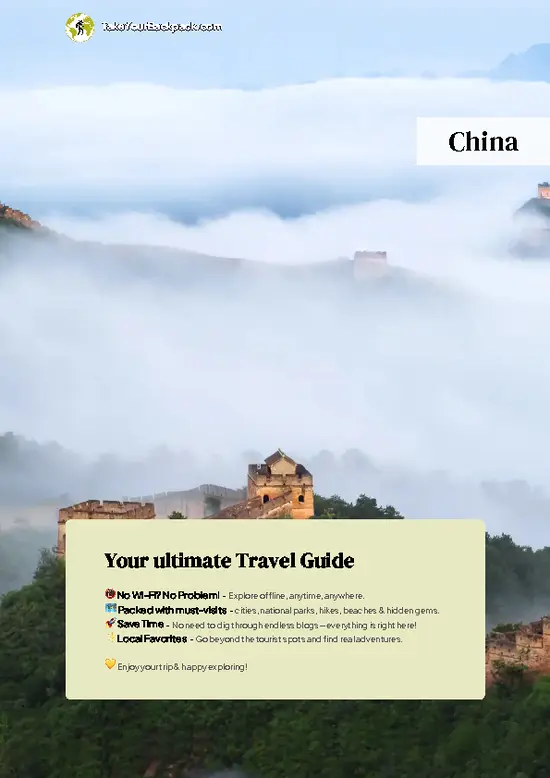
example page 0 from our offline Travel Guide for China
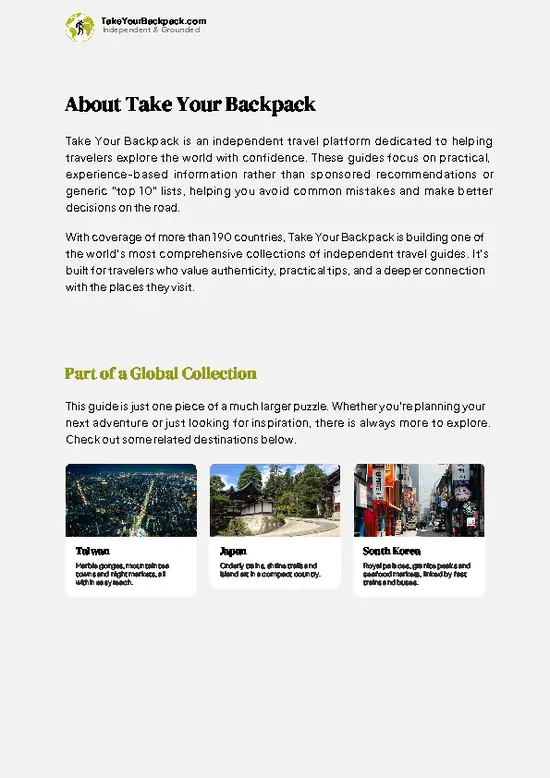
example page 1 from our offline Travel Guide for China
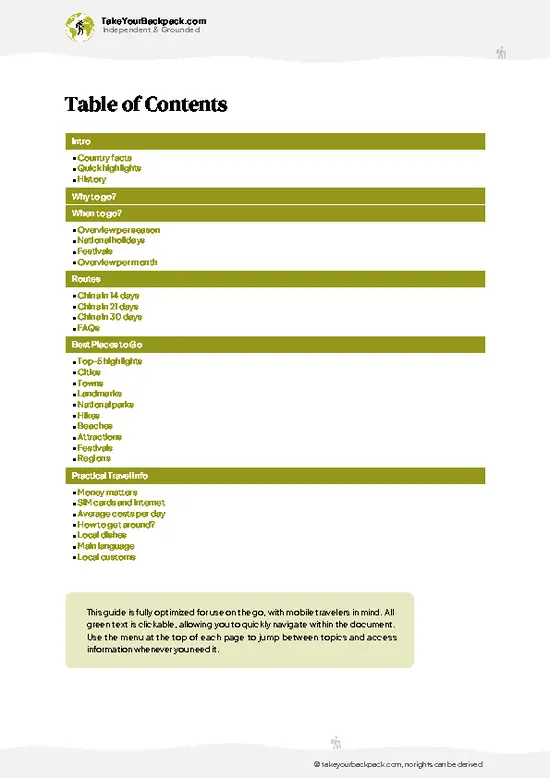
example page 2 from our offline Travel Guide for China
example page 3 from our offline Travel Guide for China
example page 4 from our offline Travel Guide for China
example page 5 from our offline Travel Guide for China
example page 6 from our offline Travel Guide for China
example page 7 from our offline Travel Guide for China
Loading the map 🌍
CLICK TO FILTER
cities
towns
landmarks
national parks
hikes
beaches
attractions
festivals
regions
SHOW COUNTRY’S BESTSHOW ALL

✨ Why go?
Ranked #15 unique site in China
What makes it a must-see unique site

The Grand Canal in China isn’t just another tourist stop; it’s a living history lesson. Yes, it can get crowded, especially near the popular sections, but that’s part of the experience. You’re walking where ancient traders once thrived. The cost? Minimal. You can explore charming towns along the way without breaking the bank.

What makes it truly special is its uniqueness—you won’t find anything like this in the world. It fits perfectly into a broader route, connecting you to cities like Hangzhou and Beijing. So, while others are snapping selfies, you’ll be soaking in the real magic of China’s past.

💡 HighlightsThe experiences that define the visit

  • Boat ride along the canal — Seeing the Grand Canal from the water is different from walking its banks: you watch daily life—fishermen, laundry, cargo barges—slide by. Cheap shared sampans and local ferries are common; pick an early-morning or golden-hour trip for light that makes the old bridges and brick facades glow. (Personal favorite — cheap, immersive, and great for photos.)
  • Historic water towns (Zhouzhuang, Tongli, Suzhou) — These small canal towns preserve Ming-Qing streets, low stone bridges and wooden houses built right on the water. They’re compact and walkable: wander alleys, peek into teahouses, and watch evening lanterns reflected in the canal.
  • Nanwang waterworks and hydraulic engineering sites — This stretch shows the Grand Canal’s brainy side: sophisticated locks, sluices
… read more 👉
  • Boat ride along the canal — Seeing the Grand Canal from the water is different from walking its banks: you watch daily life—fishermen, laundry, cargo barges—slide by. Cheap shared sampans and local ferries are common; pick an early-morning or golden-hour trip for light that makes the old bridges and brick facades glow. (Personal favorite — cheap, immersive, and great for photos.)
  • Historic water towns (Zhouzhuang, Tongli, Suzhou) — These small canal towns preserve Ming-Qing streets, low stone bridges and wooden houses built right on the water. They’re compact and walkable: wander alleys, peek into teahouses, and watch evening lanterns reflected in the canal.
  • Nanwang waterworks and hydraulic engineering sites — This stretch shows the Grand Canal’s brainy side: sophisticated locks, sluices and ancient engineering used to regulate water across changing elevations. It’s a reminder that the canal isn’t just pretty—it’s a massive historic transport and civil-engineering project.
  • Yangzhou’s canal district and merchant architecture — Yangzhou grew rich on canal trade; here you’ll find merchant mansions, narrow lanes, and gardens with quietly elegant bridges. Cultural layers are strong: food stalls, teahouses and museums all tell the trade-and-wealth story.
  • Canal museums and interpretation centers — Spread along the route are local museums and exhibits that lay out how the canal was built, how it moved grain and people, and how it shaped cities. Good for a rainy day or when you want context before exploring on foot.
  • Ancient bridges and canal-side streetscapes — The canal is a rolling gallery of stone arch bridges, carved railings and merchant storefronts. Stop to study inscriptions, feel the worn steps, and enjoy the micro-architecture that changes from city to city.
  • Markets, street food and festival life on the banks — The canal fuels local markets: river fish dishes, dumplings, regional snacks (try local variations of fried rice or freshwater fish) and seasonal festivals like dragon-boat events. Eating street-side is cheap and ties you to the everyday rhythm of the route.
Spotted a mistake or missing something? Contact us.

Things to do near Grand Canal

Ratings based on Tripadvisor reviews. When you book through this link, you support our work at no extra cost to you.

🌤️ When to go?Choosing the right time of year

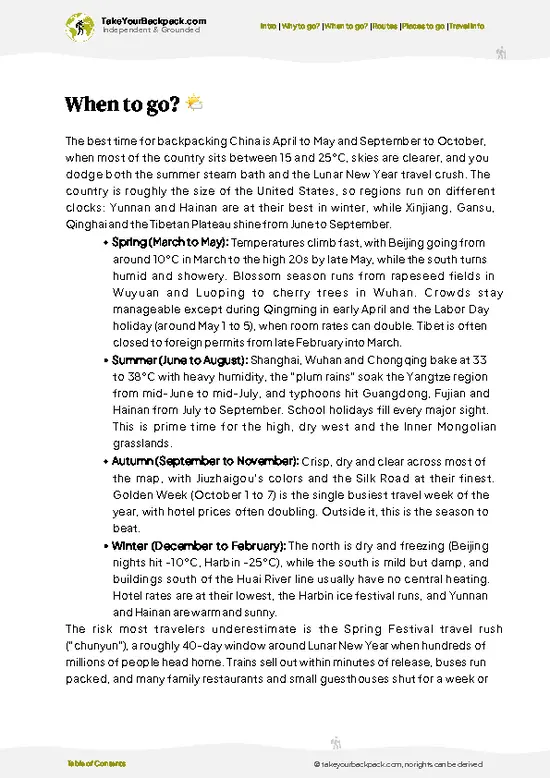
  • Weather: Spring (March to May) and autumn (September to November) offer mild, comfortable weather. Expect 15-25°C (59-77°F), perfect for long walks without sweating buckets or freezing your toes off.
  • Daylight Hours: Longer days in spring and autumn give you more time to explore the winding waterways and ancient alleys before dusk sets in.
  • Crowds: Summer and Chinese holidays pack the Grand Canal with tourists, turning serene boat rides into sardine cans. Off-peak seasons mean fewer selfie sticks and more breathing room.
  • Seasonal Activities: Spring brings blooming flowers along the banks, while autumn’s crisp air enhances the canal’s historic charm. Winter is quiet but can be chilly and less scenic.
  • Price Fluctuations: Accommodation and tours spike during peak tourist seasons and national
… read more 👉
  • Weather: Spring (March to May) and autumn (September to November) offer mild, comfortable weather. Expect 15-25°C (59-77°F), perfect for long walks without sweating buckets or freezing your toes off.
  • Daylight Hours: Longer days in spring and autumn give you more time to explore the winding waterways and ancient alleys before dusk sets in.
  • Crowds: Summer and Chinese holidays pack the Grand Canal with tourists, turning serene boat rides into sardine cans. Off-peak seasons mean fewer selfie sticks and more breathing room.
  • Seasonal Activities: Spring brings blooming flowers along the banks, while autumn’s crisp air enhances the canal’s historic charm. Winter is quiet but can be chilly and less scenic.
  • Price Fluctuations: Accommodation and tours spike during peak tourist seasons and national holidays. Visiting in shoulder seasons nets better deals and a more authentic vibe.
Pro-tip: Aim for late April or early October—weather’s solid, crowds thin, and prices stay reasonable. You’ll see the Grand Canal’s soul, not just its Instagram highlight reel.


source: climatestotravel.comJANJanuary: fair for travelingFEBFebruary: fair for travelingMARMarch: highly recommended for travelingAPRApril: excellent for travelingMAYMay: highly recommended for travelingJUNJune: fair for travelingJULJuly: below average for travelingAUGAugust: below average for travelingSEPSeptember: highly recommended for travelingOCTOctober: excellent for travelingNOVNovember: highly recommended for travelingDECDecember: fair for traveling
when-to-go

✈️ The backpacker research shortcutChina Travel Guide

An offline-friendly backpacking guide with optimized travel routes, ranked highlights, transport advice, and the best areas to stay.
example page 0 from our offline Travel Guide for China
example page 1 from our offline Travel Guide for China
example page 2 from our offline Travel Guide for China
example page 3 from our offline Travel Guide for China
example page 4 from our offline Travel Guide for China
example page 5 from our offline Travel Guide for China
example page 6 from our offline Travel Guide for China
example page 7 from our offline Travel Guide for China
The digital guide (436 pages) contains:
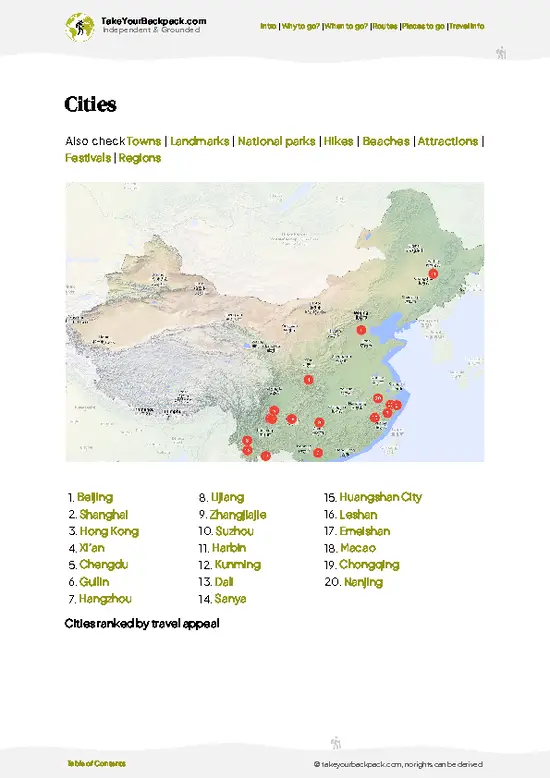
✅ 121 highlights, ranked by travel appeal
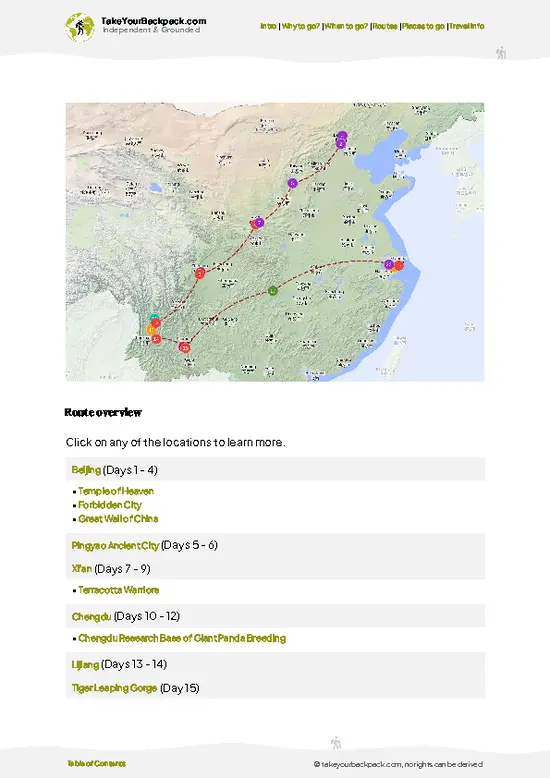
✅ Optimized 14, 21 & 30-day travel routes
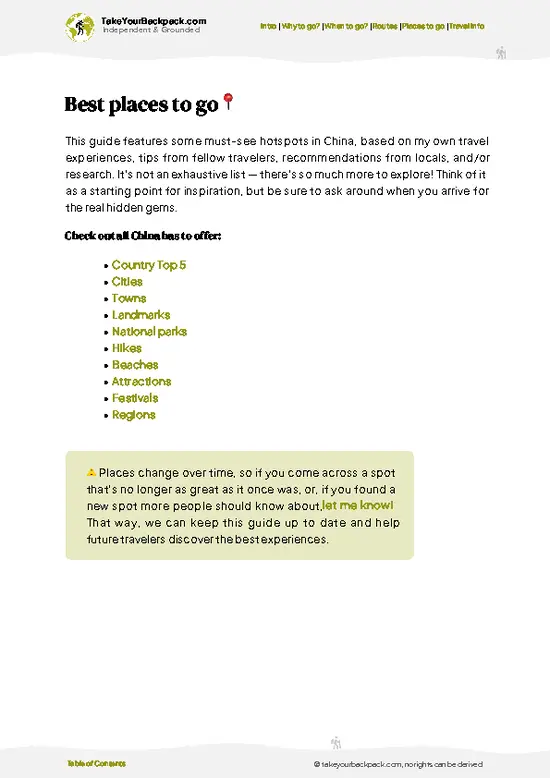
✅ Cities, national parks, landmarks, beaches
✅ How to get around
✅ Offline-friendly for travel without Wi-Fi
👉 Click to see all 30+ guide features

📅 Plan smarter in minutes, not weeks
✅ Month by month travel advice
✅ Festivals & national holidays
✅ Budget expectations

🗺️ Go to the right places, skip the overrated ones
✅ Honest pros & cons of destinations
✅ Top hikes, parks & viewpoints
✅ Lesser-known places most travelers miss
✅ Clear “worth it vs skip it” guidance

🛏️ Travel smoothly without rookie mistakes
✅ Best areas to stay
✅ Transport systems explained simply
✅ Common scams & safety advice
✅ SIM cards, money & practical tips

🌍 Understand the country, not just visit it
✅ Culture & traditions
✅ 52 Essential phrases & customs
✅ Festivals worth planning around
✅ Traveler-friendly historical context
✅ Insights that make places more meaningful

📱 Built for real travel conditions
✅ Fully downloadable PDF
✅ Works completely offline
✅ Optimized for phone use
✅ Useful in remote areas & buses
✅ Everything in one place
Stop searching, start planning
Get instant access to your full guide. 30‑day money-back guarantee.
+ Add another guide for just

By proceeding you agree to our terms.
Sent to your inbox immediately after payment • 100% Secure Checkout
Best Backpacking Travel Advisor 2025 tourism awardBest Backpacking
Travel Advisor
2025
What others say about Take Your Backpack Guides:
⭐⭐⭐⭐⭐
Fantastic, amazing amount of information!
⭐⭐⭐⭐⭐
My goodness this is amazing, it's what I've been looking for hats off too you!
⭐⭐⭐⭐⭐
I think this is absolutely BRILLIANT
⭐⭐⭐⭐
Very complete and informative. It's still missing places, but I gotta to commend you
⭐⭐⭐⭐⭐
This is truly amazing, thank you, can't wait to explore it with my kids!
⭐⭐⭐⭐⭐
Awesome resource, thank you!
⭐⭐⭐⭐⭐
This is amazing! Can't wait to explore the ones I haven't seen
⭐⭐⭐⭐
I love this! Well done, great idea.
⭐⭐⭐⭐⭐
Thanks for taking the time to make this gem!
⭐⭐⭐⭐⭐
This might be the best website I've ever seen.
⭐⭐⭐⭐⭐
Congratulations, and thank you so much for your work; it's incredibly valuable.
⭐⭐⭐⭐
In all seriousness I think you did a great job pointing out the important spots
⭐⭐⭐⭐⭐
10/10 very good
⭐⭐⭐⭐⭐
As someone who's only just starting to visit regularly this is awesome, thank you.
⭐⭐⭐⭐
Thank you very much! I'm going to visit my dad, it's going to be very useful!
⭐⭐⭐⭐⭐
This is really cool! We'll be travelling for the first time and this definitely come in handy.
⭐⭐⭐⭐⭐
You are now our minister of culture, congratulations 👨‍💼
⭐⭐⭐⭐⭐
Just wanted to tell you that this is a pearl! Going to follow your recommendations.
⭐⭐⭐⭐⭐
This is so cool. I'll definitely be using the resource for my travels soon.
⭐⭐⭐⭐⭐
This is very impressive! Good work.
⭐⭐⭐⭐⭐
This is an amazing and informative site. Very well done!

🛏️ Where to stay?How to pick the right area

Staying near the Grand Canal in China? Focus on the neighborhoods of Gucheng and Pingjiang Road. Gucheng is buzzing with energy, filled with hostels that cater to backpackers. You’ll find a mix of locals and travelers, perfect for striking up conversations.

Pingjiang Road, with its ancient charm, offers a more laid-back vibe. The narrow lanes are lined with tea houses and small eateries, ideal for soaking in the local culture.

Both areas are safe and walkable, making it easy to explore the canal’s beauty without breaking the bank. Forget the tourist traps; these neighborhoods give you the real taste of life along the Grand Canal.

👛 Costs (as of 15 October 2026)Typical daily expenses

Visiting the Grand Canal in China isn’t just about the picturesque views; it’s also about navigating the costs that come with it. Here’s a breakdown of what you can expect to spend:
  • Transportation: Getting to the Grand Canal can vary widely. A train ticket from Beijing to Hangzhou might set you back around €50-€100 ($55-$110). Local transport, like buses or taxis, can add another €5-€20 ($6-$22) depending on your distance and mode.
  • Accommodation: Options range from budget hostels at about €10-€30 ($11-$33) per night to mid-range hotels costing €50-€150 ($55-$165). If you want a touch of luxury, expect to pay €200 ($220) or more for upscale hotels.
  • Food: Street food is a steal, with meals costing around €2-€5 ($2-$6). Dining in a local restaurant will run you about €10-€30 ($11-$33) per meal.
… read more 👉
Visiting the Grand Canal in China isn’t just about the picturesque views; it’s also about navigating the costs that come with it. Here’s a breakdown of what you can expect to spend:
  • Transportation: Getting to the Grand Canal can vary widely. A train ticket from Beijing to Hangzhou might set you back around €50-€100 ($55-$110). Local transport, like buses or taxis, can add another €5-€20 ($6-$22) depending on your distance and mode.
  • Accommodation: Options range from budget hostels at about €10-€30 ($11-$33) per night to mid-range hotels costing €50-€150 ($55-$165). If you want a touch of luxury, expect to pay €200 ($220) or more for upscale hotels.
  • Food: Street food is a steal, with meals costing around €2-€5 ($2-$6). Dining in a local restaurant will run you about €10-€30 ($11-$33) per meal. Fine dining can push that to €50 ($55) or more, especially if you’re indulging in local specialties.
  • Activities: Many attractions along the Grand Canal are free or have a nominal entry fee of €2-€10 ($2-$11). Boat rides can range from €15-€50 ($16-$55), depending on the duration and type of experience you choose.
  • Miscellaneous: Budget for souvenirs and other small expenses. A reasonable estimate is around €10-€30 ($11-$33) for trinkets or local crafts.

Understanding these costs helps you plan better. The Grand Canal is more than just a pretty picture; it’s a living piece of history that deserves your attention and investment.
⚠️ Prices can change and everyone travels differently, so take this as a rough guide. Hope it helps you plan your adventure!

FAQTraveler FAQ

The Grand Canal is the longest and oldest artificial waterway in the world, stretching over 1,700 kilometers from Beijing to Hangzhou. It was built to facilitate trade and transportation between northern and southern China and is a UNESCO World Heritage site.
Visiting the Grand Canal typically requires 1 to 2 days to explore key sections, especially in cities like Suzhou or Hangzhou where the canal is most scenic. A full experience includes boat rides, walking tours, and visits to historic towns along the canal.
You can reach the Grand Canal by train or bus to major cities along its route, such as Beijing, Suzhou, or Hangzhou. From these cities, local transport or guided tours provide access to the canal areas; high-speed trains connect these cities efficiently.
⚠️ Things can change over time, so always validate details locally before you go.

Other Chinese landmarks near Grand Canal

Explore more nearby:


💡 Not sure where to go next?
Create a personalized itinerary for China including Grand Canal and the places that fit your trip.

Generate my itinerary

👉 Discover all landmarks

Or checkout all China has to offer (think cities, towns, villages, national parks, hikes, beaches, festivals)
Country photo of China

We 💚 feedbackWhat to keep in mind

The Grand Canal is a living history lesson, where you can feel the pulse of ancient trade routes. But brace yourself for the crowds—especially in peak season. If you can navigate the hustle, the authentic local life and food are worth every elbow bump.

✈️ When did I visit China?
As part of my 1.5 year travel around the world trip, I visited China in August 2015, coming from Mongolia by the TransMongolia Express.

✍️ Help improve this page!
The information on this page is based on my own backpacking experience in China, supplemented with up-to-date research and feedback from other travelers. Travel details can change, so if you notice anything outdated or incomplete, feel free to let me know.


🙋‍♂️ Give feedback

👋 Meet the founderWho’s Behind Take Your Backpack?

Johan, backpacker and founder of TakeYourBackpackHi, I’m Johan (Netherlands 🇳🇱), the creator of TakeYourBackpack. Over the past 3 decades, I’ve backpacked through 90+ countries across six continents, gaining extensive experience with independent travel, long-term trips, and overland routes.

This site is built on a combination of firsthand travel experience and carefully curated insights from other backpackers. Many guides are based on places I’ve personally visited, while others bring together tips, observations, and practical advice shared by trusted travelers I’ve met along the way.

The goal is to provide realistic, experience-driven guidance — not generic itineraries — so you can explore destinations with better context, clearer expectations, and more confidence.