×

China🇨🇳 | landmarksTemple of HeavenCircular altar, blue-tiled roofs, ritual parklands | things to do and best time to go

Explore Temple of Confucius in QufuExplore Terracotta Warriors

Backpacking in Temple of Heaven
UNESCO World Heritage site
👌 Worth visitingunique site ranked #14
By Johan Kruseman 🇳🇱 | Updated October 15, 2026

Everyone thinks the Temple of Heaven is just “another Beijing temple” you tick off after the Forbidden City. Wrong. It’s a full-blown ritual landscape in the city’s south, in Dongcheng District, and it feels more like a living park than a museum piece. As a backpacker, you get a cheap ticket, easy metro access, and a heavy hit of imperial history without the claustrophobia of the Great Wall. Yes, tour groups swarm the main hall and photo spots are competitive, but step into the cypress groves and you’ll find locals singing, playing cards, and turning a world-famous monument into their everyday backyard.

Discover everything you want to know in the 📖 China Travel Guide.


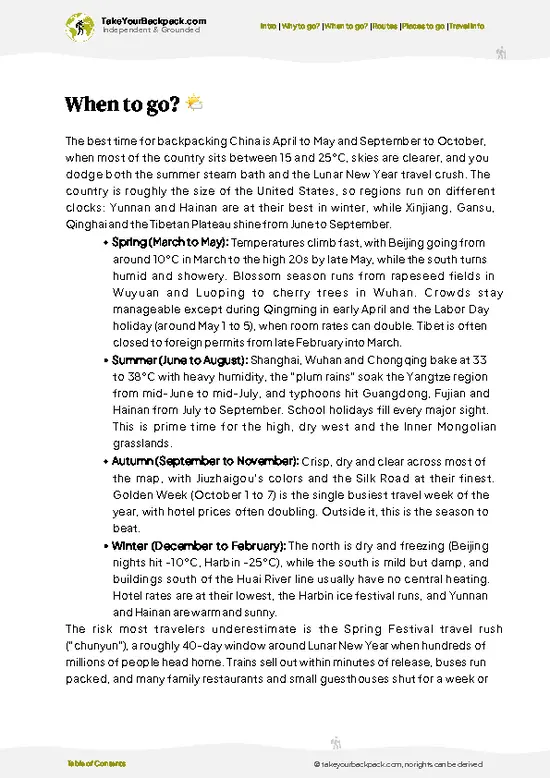
example page 0 from our offline Travel Guide for China
example page 1 from our offline Travel Guide for China
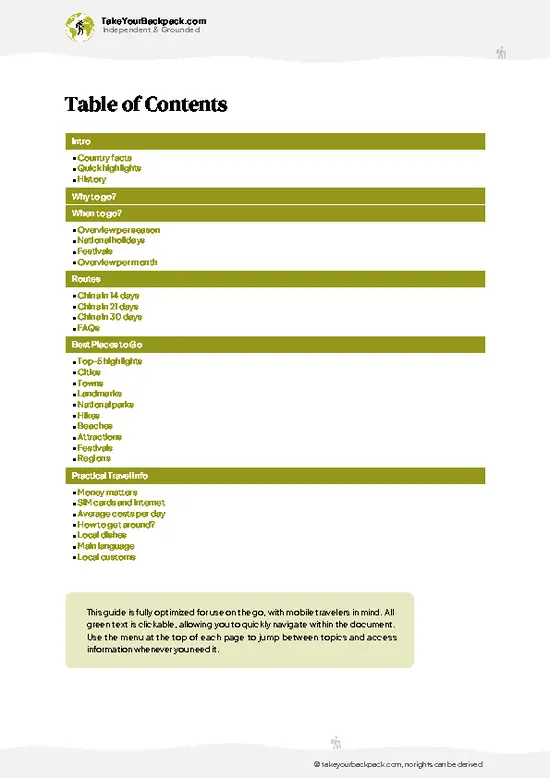
example page 2 from our offline Travel Guide for China
example page 3 from our offline Travel Guide for China
example page 4 from our offline Travel Guide for China
example page 5 from our offline Travel Guide for China
example page 6 from our offline Travel Guide for China
example page 7 from our offline Travel Guide for China
Loading the map 🌍
CLICK TO FILTER
cities
towns
landmarks
national parks
hikes
beaches
attractions
festivals
regions
SHOW COUNTRY’S BESTSHOW ALL

✨ Why go?
Ranked #14 unique site in China
Why visitors keep coming back

The Temple of Heaven in Beijing is often overshadowed by the Great Wall hype, but it’s a must-see for backpackers. Sure, it gets crowded, especially during peak tourist season, but that’s part of the experience. You’ll witness locals practicing tai chi, playing cards, and enjoying life in a way that’s refreshingly authentic.

The entry fee is low, making it a budget-friendly stop. Plus, it’s conveniently located near other attractions like the Forbidden City, so you can easily fit it into your route. The architecture is stunning, with its vibrant colors and intricate details, but what really sets it apart is the spiritual vibe. You can almost feel the history whispering through the trees.

Take the time to wander the expansive grounds; it’s where the real magic happens.

💡 HighlightsThe experiences that define the visit

  • Hall of Prayer for Good Harvests — The iconic triple-eaved, blue-tiled wooden hall on a three-tiered marble terrace. Built with traditional joinery (no nails), it’s a stunning example of Ming/Qing carpentry and the place emperors formally prayed for a good harvest. Picture stop: yes, everyone takes that shot.
  • Circular Mound Altar (Yuanqiutan) — An open concentric marble platform where the emperor performed summer-solstice rites. The geometry is striking and the sound effects are real: stand on the center stone and the place feels almost designed to amplify your presence—great for a quiet, slightly spooky moment.
  • Imperial Vault of Heaven and the Echo Wall — A smaller, beautifully decorated circular building surrounded by a low wall with freaky acoustic properties. Whisper at one point on
… read more 👉
  • Hall of Prayer for Good Harvests — The iconic triple-eaved, blue-tiled wooden hall on a three-tiered marble terrace. Built with traditional joinery (no nails), it’s a stunning example of Ming/Qing carpentry and the place emperors formally prayed for a good harvest. Picture stop: yes, everyone takes that shot.
  • Circular Mound Altar (Yuanqiutan) — An open concentric marble platform where the emperor performed summer-solstice rites. The geometry is striking and the sound effects are real: stand on the center stone and the place feels almost designed to amplify your presence—great for a quiet, slightly spooky moment.
  • Imperial Vault of Heaven and the Echo Wall — A smaller, beautifully decorated circular building surrounded by a low wall with freaky acoustic properties. Whisper at one point on the wall and someone on the opposite side can hear you clearly. Kids (and adults) love testing this — bring a partner to try it out.
  • Ancient cypresses and the park’s green space — The Temple sits inside a huge public park dotted with very old cypress trees planted centuries ago. It’s peaceful, shaded, and perfect for people-watching or escaping the city heat between sites.
  • Local morning life: tai chi, dancing, music, and opera (personal favorite) — The real highlight for me. Get there early and you’ll find groups doing tai chi, falun gong, ballroom dancing, amateur opera and small ensembles. It’s free, authentic, and a living slice of Beijing culture. Go early for the best scenes and softer light.
  • Symbolism in the layout and decoration — Circle = heaven, square = earth; lots of blue tiles, phoenixes, dragons and numerology (9s and multiples). The whole complex reads like a cosmology lesson in stone and paint — once you notice the patterns, the place is endlessly clever.
  • Great photo angles and panorama from the terraces — Climb the marble tiers around the Hall of Prayer for different perspectives: details of the roof, wide shots of the circular forms, and clean lines against the sky. Early morning or late afternoon gives the nicest light and fewer crowds.
Spotted a mistake or missing something? Contact us.

Things to do around Temple of Heaven

Ratings based on Tripadvisor reviews. When you book through this link, you support our work at no extra cost to you.

🌤️ When to go?When to go for the best experience

  • Weather: Spring (April-May) and autumn (September-October) offer the most comfortable weather, with temperatures ranging from 15-25°C (59-77°F). Summers scorch above 30°C (86°F) with sticky humidity, while winters dip below freezing, making the park less inviting.
  • Daylight Hours: Longer days in spring and autumn mean more time to explore the sprawling grounds. Winter’s short days limit your window, and summer’s heat can sap your energy by midday.
  • Crowds: Weekdays outside of Chinese public holidays are best. The Temple of Heaven is a magnet for locals practicing tai chi and tourists alike, so expect heavy crowds during weekends and national holidays, especially in spring and autumn.
  • Seasonal Activities: Early mornings in spring and autumn reveal locals dancing, singing, and playing traditional
… read more 👉
  • Weather: Spring (April-May) and autumn (September-October) offer the most comfortable weather, with temperatures ranging from 15-25°C (59-77°F). Summers scorch above 30°C (86°F) with sticky humidity, while winters dip below freezing, making the park less inviting.
  • Daylight Hours: Longer days in spring and autumn mean more time to explore the sprawling grounds. Winter’s short days limit your window, and summer’s heat can sap your energy by midday.
  • Crowds: Weekdays outside of Chinese public holidays are best. The Temple of Heaven is a magnet for locals practicing tai chi and tourists alike, so expect heavy crowds during weekends and national holidays, especially in spring and autumn.
  • Seasonal Activities: Early mornings in spring and autumn reveal locals dancing, singing, and playing traditional instruments—an authentic cultural show you won’t find in guidebooks.
  • Price Fluctuations: Entrance fees stay steady year-round, but nearby accommodation and transport costs spike during peak tourist seasons and national holidays.
Pro-tip: Arrive at dawn on a weekday in spring or autumn to catch the real heartbeat of the Temple of Heaven before the crowds and heat roll in.


source: climatestotravel.comJANJanuary: fair for travelingFEBFebruary: fair for travelingMARMarch: good for travelingAPRApril: excellent for travelingMAYMay: excellent for travelingJUNJune: good for travelingJULJuly: fair for travelingAUGAugust: fair for travelingSEPSeptember: excellent for travelingOCTOctober: excellent for travelingNOVNovember: good for travelingDECDecember: fair for traveling
when-to-go

✈️ The backpacker research shortcutChina Travel Guide

An offline-friendly backpacking guide with optimized travel routes, ranked highlights, transport advice, and the best areas to stay.
example page 0 from our offline Travel Guide for China
example page 1 from our offline Travel Guide for China
example page 2 from our offline Travel Guide for China
example page 3 from our offline Travel Guide for China
example page 4 from our offline Travel Guide for China
example page 5 from our offline Travel Guide for China
example page 6 from our offline Travel Guide for China
example page 7 from our offline Travel Guide for China
The digital guide (436 pages) contains:
✅ 121 highlights, ranked by travel appeal
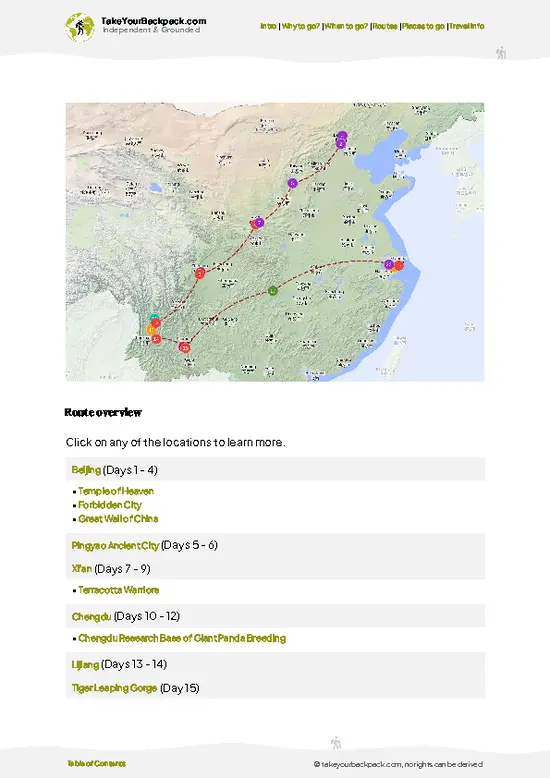
✅ Optimized 14, 21 & 30-day travel routes
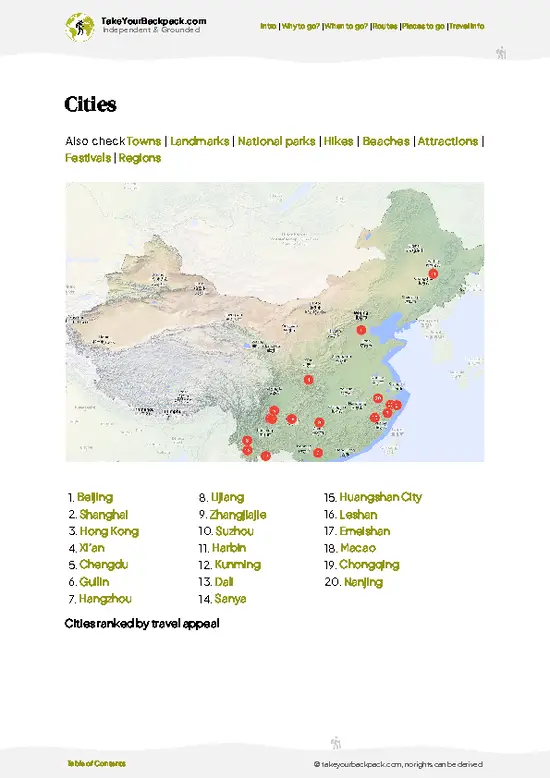
✅ Cities, national parks, landmarks, beaches
✅ How to get around
✅ Offline-friendly for travel without Wi-Fi
👉 Click to see all 30+ guide features

📅 Plan smarter in minutes, not weeks
✅ Month by month travel advice
✅ Festivals & national holidays
✅ Budget expectations

🗺️ Go to the right places, skip the overrated ones
✅ Honest pros & cons of destinations
✅ Top hikes, parks & viewpoints
✅ Lesser-known places most travelers miss
✅ Clear “worth it vs skip it” guidance

🛏️ Travel smoothly without rookie mistakes
✅ Best areas to stay
✅ Transport systems explained simply
✅ Common scams & safety advice
✅ SIM cards, money & practical tips

🌍 Understand the country, not just visit it
✅ Culture & traditions
✅ 52 Essential phrases & customs
✅ Festivals worth planning around
✅ Traveler-friendly historical context
✅ Insights that make places more meaningful

📱 Built for real travel conditions
✅ Fully downloadable PDF
✅ Works completely offline
✅ Optimized for phone use
✅ Useful in remote areas & buses
✅ Everything in one place
Stop searching, start planning
Get instant access to your full guide. 30‑day money-back guarantee.
+ Add another guide for just

By proceeding you agree to our terms.
Sent to your inbox immediately after payment • 100% Secure Checkout
Best Backpacking Travel Advisor 2025 tourism awardBest Backpacking
Travel Advisor
2025
What others say about Take Your Backpack Guides:
⭐⭐⭐⭐⭐
Fantastic, amazing amount of information!
⭐⭐⭐⭐⭐
My goodness this is amazing, it's what I've been looking for hats off too you!
⭐⭐⭐⭐⭐
I think this is absolutely BRILLIANT
⭐⭐⭐⭐
Very complete and informative. It's still missing places, but I gotta to commend you
⭐⭐⭐⭐⭐
This is truly amazing, thank you, can't wait to explore it with my kids!
⭐⭐⭐⭐⭐
Awesome resource, thank you!
⭐⭐⭐⭐⭐
This is amazing! Can't wait to explore the ones I haven't seen
⭐⭐⭐⭐
I love this! Well done, great idea.
⭐⭐⭐⭐⭐
Thanks for taking the time to make this gem!
⭐⭐⭐⭐⭐
This might be the best website I've ever seen.
⭐⭐⭐⭐⭐
Congratulations, and thank you so much for your work; it's incredibly valuable.
⭐⭐⭐⭐
In all seriousness I think you did a great job pointing out the important spots
⭐⭐⭐⭐⭐
10/10 very good
⭐⭐⭐⭐⭐
As someone who's only just starting to visit regularly this is awesome, thank you.
⭐⭐⭐⭐
Thank you very much! I'm going to visit my dad, it's going to be very useful!
⭐⭐⭐⭐⭐
This is really cool! We'll be travelling for the first time and this definitely come in handy.
⭐⭐⭐⭐⭐
You are now our minister of culture, congratulations 👨‍💼
⭐⭐⭐⭐⭐
Just wanted to tell you that this is a pearl! Going to follow your recommendations.
⭐⭐⭐⭐⭐
This is so cool. I'll definitely be using the resource for my travels soon.
⭐⭐⭐⭐⭐
This is very impressive! Good work.
⭐⭐⭐⭐⭐
This is an amazing and informative site. Very well done!

🛏️ Where to stay?Best areas to stay in China

Staying near the Temple of Heaven? You’ve got options that balance safety, social vibes, and budget-friendliness.

First up, the Dongcheng District. It’s buzzing with energy, filled with cafes and street food stalls. You’ll find fellow backpackers here, making it easy to strike up conversations. Plus, it’s a quick walk to the temple, so you can beat the crowds at sunrise.

Then there’s the Qianmen area. This spot has a mix of history and modernity. You can explore traditional hutongs while enjoying a craft beer at a local bar. The atmosphere is laid-back, perfect for solo travelers looking to … read more 👉
Staying near the Temple of Heaven? You’ve got options that balance safety, social vibes, and budget-friendliness.

First up, the Dongcheng District. It’s buzzing with energy, filled with cafes and street food stalls. You’ll find fellow backpackers here, making it easy to strike up conversations. Plus, it’s a quick walk to the temple, so you can beat the crowds at sunrise.

Then there’s the Qianmen area. This spot has a mix of history and modernity. You can explore traditional hutongs while enjoying a craft beer at a local bar. The atmosphere is laid-back, perfect for solo travelers looking to connect.

Finally, consider the Xicheng District. It’s quieter but still close enough to the action. You’ll find cozy guesthouses where you can unwind after a day of exploring.

Each area offers a unique slice of Beijing life, making your stay memorable beyond the tourist traps.

👛 Costs (as of 15 October 2026)What things cost and how to budget

Visiting the Temple of Heaven in Beijing isn’t just about snapping a photo; it’s about experiencing a piece of history and culture. Here’s the real deal on what you’ll spend.
  • Entrance Fee: Expect to pay around 35-40 CNY (about $5-6 USD). This gets you into the main park and the iconic Hall of Prayer for Good Harvests. It’s a small price for a big slice of history.
  • Guided Tours: If you want a deeper understanding, guided tours range from $20 to $50 USD. This usually includes a knowledgeable guide who can share stories that bring the site to life. Worth it if you’re keen on context.
  • Transportation: Getting there can vary. A subway ride costs about 3 CNY (less than $1 USD). Taxis are more convenient but will set you back around 30-50 CNY ($5-8 USD) depending on traffic. Budget for a bit more if
… read more 👉
Visiting the Temple of Heaven in Beijing isn’t just about snapping a photo; it’s about experiencing a piece of history and culture. Here’s the real deal on what you’ll spend.
  • Entrance Fee: Expect to pay around 35-40 CNY (about $5-6 USD). This gets you into the main park and the iconic Hall of Prayer for Good Harvests. It’s a small price for a big slice of history.
  • Guided Tours: If you want a deeper understanding, guided tours range from $20 to $50 USD. This usually includes a knowledgeable guide who can share stories that bring the site to life. Worth it if you’re keen on context.
  • Transportation: Getting there can vary. A subway ride costs about 3 CNY (less than $1 USD). Taxis are more convenient but will set you back around 30-50 CNY ($5-8 USD) depending on traffic. Budget for a bit more if you’re coming from further away.
  • Food and Drinks: There are vendors around, but if you want a meal, expect to spend around 50-100 CNY ($8-15 USD) for a decent meal nearby. Street food is cheaper and can be a fun way to fuel up.
  • Souvenirs: If you’re looking to take a piece of the experience home, budget around 50-200 CNY ($8-30 USD) for trinkets or local crafts. Just remember to haggle a bit; it’s part of the fun!

The Temple of Heaven is a must-see, but be prepared for crowds, especially on weekends. The experience is richer when you dive into the culture rather than just skimming the surface.


source: travelchinaguide.com
⚠️ Prices can change and everyone travels differently, so take this as a rough guide. Hope it helps you plan your adventure!

FAQFrequently asked questions about Temple of Heaven

Temple of Heaven is a historic complex of religious buildings used by emperors of the Ming and Qing dynasties for annual ceremonies of prayer to Heaven for good harvests. It covers 2.73 square kilometers and is a UNESCO World Heritage Site since 1998.
You need about 2 to 3 hours to visit Temple of Heaven to explore the main structures like the Hall of Prayer for Good Harvests, the Circular Mound Altar, and the surrounding park. More time may be needed if you want to enjoy the park's activities or photography.
To get to Temple of Heaven, take Beijing Subway Line 5 to Tiantan East Gate Station or Tiantan West Gate Station. Both stations are within a 5 to 10-minute walk to the temple entrance.
⚠️ Things can change over time, so always validate details locally before you go.

Other Chinese landmarks near Temple of Heaven

Explore more nearby:

  • Forbidden City—Imperial halls, golden roofs, ceremonial courtyards| 4 km away
  • Summer Palace—Lakeside pavilions, painted corridors, imperial gardens| 17 km away
  • Great Wall of China—Watchtowers, mountain ridges, stone ramparts| 63 km away

💡 Not sure where to go next?
Create a personalized itinerary for China including Temple of Heaven and the places that fit your trip.

Generate my itinerary

👉 Discover all landmarks

Or checkout all China has to offer (think cities, towns, villages, national parks, hikes, beaches, festivals)
Country photo of China

We 💚 feedbackIs it worth it?

The Temple of Heaven is a must-see for its breathtaking architecture and serene gardens, where locals practice tai chi at dawn. But brace yourself for the crowds; it can feel like a tourist stampede. Still, if you can find a quiet moment among the chaos, the spiritual vibe is genuinely transformative. Just be ready to share the space with a lot of eager visitors.

✈️ When did I visit China?
As part of my 1.5 year travel around the world trip, I visited China in August 2015, coming from Mongolia by the TransMongolia Express.

✍️ Help improve this page!
The information on this page is based on my own backpacking experience in China, supplemented with up-to-date research and feedback from other travelers. Travel details can change, so if you notice anything outdated or incomplete, feel free to let me know.


🙋‍♂️ Give feedback

👋 Meet the founderWho’s Behind Take Your Backpack?

Johan, backpacker and founder of TakeYourBackpackHi, I’m Johan (Netherlands 🇳🇱), the creator of TakeYourBackpack. Over the past 3 decades, I’ve backpacked through 90+ countries across six continents, gaining extensive experience with independent travel, long-term trips, and overland routes.

This site is built on a combination of firsthand travel experience and carefully curated insights from other backpackers. Many guides are based on places I’ve personally visited, while others bring together tips, observations, and practical advice shared by trusted travelers I’ve met along the way.

The goal is to provide realistic, experience-driven guidance — not generic itineraries — so you can explore destinations with better context, clearer expectations, and more confidence.