×

China🇨🇳 | citiesHarbinice festival, Russian influence, Orthodox churches | things to do and best time to go

Explore ZhangjiajieExplore Nanjing

Backpacking in Harbin
🌟 Highlightcity ranked #10
By Johan Kruseman 🇳🇱 | Updated June 7, 2026

Everyone talks about Harbin for the Ice and Snow Festival, but the real decision point isn’t “go in winter or not” — it’s how much cold, cost, and crowd stress you’re willing to trade for a very specific spectacle versus a slower, cheaper, more local city. Harbin sits in China’s far northeast, closer to Russia than to Beijing, and it feels like it: onion-domed churches on Zhongyang Street, hearty food, long winters, and a slightly rougher edge. For backpackers, it’s cheap, safe, and easy enough to navigate, but not a social hub like Beijing or Dalian; hostels can feel quiet outside peak season. The payoff is character: Russian-Chinese architecture, the Songhua River, big parks, and a sense you’re actually in “real” northeast China, not a polished theme park.

Discover everything you want to know in the 📖 China Travel Guide.


Get your China guide
139 ranked highlights, routes & tips, works offline (496 pages)
Loading the map 🌍
CLICK TO FILTER
cities
towns
landmarks
national parks
hikes
beaches
attractions
festivals
regions
SHOW COUNTRY’S BESTSHOW ALL

✨ Why go?
Ranked #10 city in China
What sets this place apart

Harbin is a strategic stop for backpackers weaving through China. It offers a unique blend of highlights and activities that cater to diverse interests, making it more than just a pit stop. The city serves as an excellent basecamp for day trips, allowing you to explore the surrounding regions without the hassle of constant packing.

Accommodations are plentiful, with hostels that foster a social vibe, perfect for meeting fellow travelers. The food scene is a delightful mix of local flavors, from street snacks to cozy eateries, ensuring you fuel up for your adventures. Plus, Harbin is walkable, making it easy to navigate its charming streets. When the sun sets, the nightlife buzzes, offering a taste of local culture. With easy onward travel options, Harbin fits seamlessly into your backpacking … read more 👉
Harbin is a strategic stop for backpackers weaving through China. It offers a unique blend of highlights and activities that cater to diverse interests, making it more than just a pit stop. The city serves as an excellent basecamp for day trips, allowing you to explore the surrounding regions without the hassle of constant packing.

Accommodations are plentiful, with hostels that foster a social vibe, perfect for meeting fellow travelers. The food scene is a delightful mix of local flavors, from street snacks to cozy eateries, ensuring you fuel up for your adventures. Plus, Harbin is walkable, making it easy to navigate its charming streets. When the sun sets, the nightlife buzzes, offering a taste of local culture. With easy onward travel options, Harbin fits seamlessly into your backpacking route, whether you linger or just pass through.
Want to include Harbin in your China route?
Create a personalized China itinerary that includes Harbin and the places that fit your trip — based on your travel style, budget, and available time. Get your route in seconds.

Generate my trip

💡 HighlightsTop highlights of Harbin

  1. Saint Sophia Cathedral — Massive, onion-domed Russian Orthodox church turned architectural museum; the exterior is postcard Harbin and the interior gives a quick, tangible sense of the city’s Russian past.
  2. Central (Zhongyang) Street — A long stone-paved pedestrian road lined with preserved European-style buildings, bakeries, Russian restaurants and street vendors; great for people-watching, snacks (try the local bread) and architecture hunting.
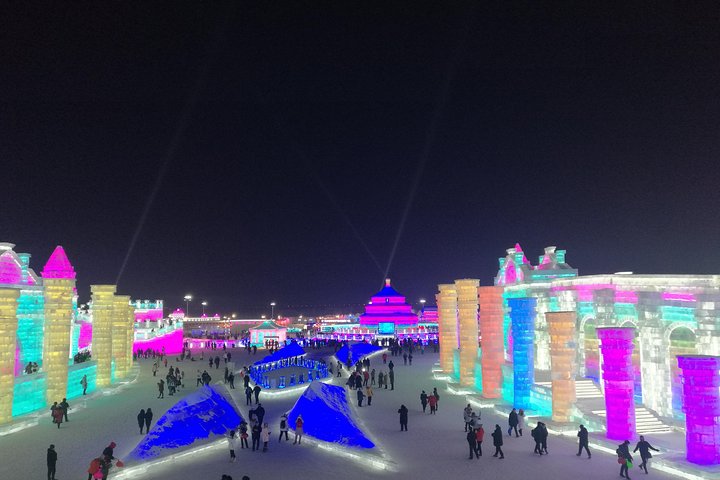
  3. Harbin Ice and Snow World — The city’s epic winter spectacle of massive illuminated ice sculptures and themed zones; seasonal (late Dec-Feb) but unforgettable in person for scale, colors and night displays.
  4. Sun Island Scenic Area & Snow Sculpture Art Expo — Park island on the Songhua River that hosts huge snow sculptures in winter and relaxed riverside
read more 👉
  1. Saint Sophia Cathedral — Massive, onion-domed Russian Orthodox church turned architectural museum; the exterior is postcard Harbin and the interior gives a quick, tangible sense of the city’s Russian past.
  2. Central (Zhongyang) Street — A long stone-paved pedestrian road lined with preserved European-style buildings, bakeries, Russian restaurants and street vendors; great for people-watching, snacks (try the local bread) and architecture hunting.
  3. Harbin Ice and Snow World — The city’s epic winter spectacle of massive illuminated ice sculptures and themed zones; seasonal (late Dec-Feb) but unforgettable in person for scale, colors and night displays.
  4. Sun Island Scenic Area & Snow Sculpture Art Expo — Park island on the Songhua River that hosts huge snow sculptures in winter and relaxed riverside trails and gardens in summer — a different vibe from the city streets and ideal for photos.
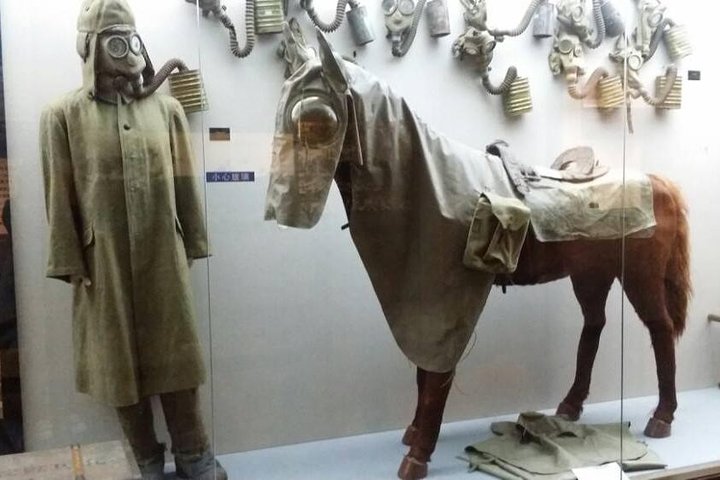
  5. Unit 731 Museum (Pingfang) — A sobering, well-documented museum on the site of the WWII-era biological warfare unit; difficult subject matter but essential for understanding 20th-century history in the region.
  6. Heilongjiang Provincial Museum — Clean, informative displays on local history, Manchu culture, archaeology and natural history; good if you want context about the people and environment behind Harbin’s story.
  7. Harbin Grand Theatre (Opera House) — A striking modern landmark of flowing white architecture on the Songhua’s north bank; wander around outside for great river views and go inside if there’s an affordable performance or exhibition.
  8. Siberian Tiger Park — A large conservation/park facility where you can see Amur tigers up close (safely) and learn about regional wildlife conservation; a bit touristy but unique and visitable in a few hours.
  9. Jile (Ji Le) Temple — One of the city’s main Buddhist temples with classic wooden architecture, prayer halls and a calm courtyard — a peaceful counterpoint to Harbin’s busy central areas.
  10. Zhaolin Park (Ice Lanterns) — Small city park that becomes the intimate heart of Harbin’s ice-lantern tradition in winter; the handcrafted lantern displays are more human-scale and charming compared with the massive festival sculptures.
Nearby day-trip highlights include Yabuli Ski Resort, Jingpo Lake and the Wudalianchi volcanic lakes — my personal favorite for a quick escape is Yabuli (great slopes and mountain scenery).
Spotted a mistake or missing something? Contact us.

Things to do in Harbin

Ratings based on Tripadvisor reviews. When you book through this link, you support our work at no extra cost to you.

🏘️ NeighborhoodsWhere things are and how it's laid out

Harbin offers a unique blend of history, culture, and modernity, making it a fascinating stop for backpackers. Here’s how to navigate its neighborhoods:

Central Street (Zhongyang Dajie)
This pedestrian-friendly area is the heart of Harbin. With its European-style architecture, it’s perfect for leisurely strolls. Expect mid-range prices for food and souvenirs. The nightlife is lively but not overwhelming, making it suitable for both short and longer stays. Transport options are abundant, with easy access to buses and taxis.

Daoli District
Home to many historical sites, Daoli is rich in culture. It’s walkable, with plenty of cafes and shops. Prices are generally reasonable, catering to budget travelers. The vibe is relaxed, ideal for those looking to soak in the local atmosphere. It’s … read more 👉
Harbin offers a unique blend of history, culture, and modernity, making it a fascinating stop for backpackers. Here’s how to navigate its neighborhoods:

Central Street (Zhongyang Dajie)
This pedestrian-friendly area is the heart of Harbin. With its European-style architecture, it’s perfect for leisurely strolls. Expect mid-range prices for food and souvenirs. The nightlife is lively but not overwhelming, making it suitable for both short and longer stays. Transport options are abundant, with easy access to buses and taxis.

Daoli District
Home to many historical sites, Daoli is rich in culture. It’s walkable, with plenty of cafes and shops. Prices are generally reasonable, catering to budget travelers. The vibe is relaxed, ideal for those looking to soak in the local atmosphere. It’s a great base for longer stays, with good transport links to other parts of the city.

Songbei District
This area is modern and upscale, featuring shopping malls and high-end dining. It’s less walkable, so expect to rely on public transport or taxis. Prices can be higher here, but the experience is worth it for those seeking a taste of contemporary Harbin. Nightlife is quieter, making it suitable for a more laid-back visit.

⌛️ 1 dayHow to make the most of one day

Harbin, a city where Russian architecture meets Chinese culture, is a fascinating blend of history and modernity. Known for its Ice Festival, it offers a unique charm year-round. Start your day in the bustling Daoli District, where you can grab a hearty breakfast at a local dumpling shop. The steamed buns here are a must-try; they’ll fuel you for the adventures ahead.

After breakfast, stroll over to St. Sophia Cathedral. This iconic structure, with its onion domes and intricate mosaics, tells tales of Harbin’s Russian past. Spend some time soaking in the architecture and snapping photos. From there, wander through the nearby Central Street, a pedestrian-friendly area lined with shops and cafes. It’s a great spot to pick up a souvenir or two.

In the afternoon, head to the lesser-known but … read more 👉
Harbin, a city where Russian architecture meets Chinese culture, is a fascinating blend of history and modernity. Known for its Ice Festival, it offers a unique charm year-round. Start your day in the bustling Daoli District, where you can grab a hearty breakfast at a local dumpling shop. The steamed buns here are a must-try; they’ll fuel you for the adventures ahead.

After breakfast, stroll over to St. Sophia Cathedral. This iconic structure, with its onion domes and intricate mosaics, tells tales of Harbin’s Russian past. Spend some time soaking in the architecture and snapping photos. From there, wander through the nearby Central Street, a pedestrian-friendly area lined with shops and cafes. It’s a great spot to pick up a souvenir or two.

In the afternoon, head to the lesser-known but equally captivating Harbin Jewish New Synagogue. This hidden gem offers a glimpse into the city’s diverse history and is often overlooked by tourists. The exhibits are insightful and provide a deeper understanding of Harbin’s multicultural fabric.

As evening approaches, make your way to the Songhua River. The riverside promenade is perfect for a leisurely walk. Grab a local snack from a street vendor—try the spicy grilled corn. Finally, end your day with a visit to the Harbin Ice Lantern Art Expo if it’s winter, or enjoy a cozy dinner in the vibrant Nan’gang District, where you can savor local specialties. This day in Harbin will leave you with stories to tell and memories to cherish.
Turn your Harbin visit into an China adventure
Build a complete China route with Harbin, hidden gems, must-see destinations, and realistic travel times included.

Generate my trip

🌤️ When to go?Choosing the right time of year


  • Topic: Weather and Temperature – Harbin’s winters are brutally cold, often plunging below -20°C (-4°F), which is perfect if you’re chasing the Ice Festival but a nightmare for casual backpacking. Summers are mild and comfortable, averaging 20-25°C (68-77°F), ideal for exploring without freezing or sweating buckets.

  • Topic: Daylight Hours – Winter days are short, with roughly 7-8 hours of daylight, limiting sightseeing time. Summer stretches daylight to about 15 hours, giving you more time to roam and soak in the city’s vibe.

  • Topic: Crowds – The Ice Festival (January-February) draws a flood of tourists, hiking prices and crowd density. Shoulder seasons like late spring and early autumn offer fewer tourists, letting you experience Harbin’s charm without elbowing through crowds.

  • Topic:
read more 👉

  • Topic: Weather and Temperature – Harbin’s winters are brutally cold, often plunging below -20°C (-4°F), which is perfect if you’re chasing the Ice Festival but a nightmare for casual backpacking. Summers are mild and comfortable, averaging 20-25°C (68-77°F), ideal for exploring without freezing or sweating buckets.

  • Topic: Daylight Hours – Winter days are short, with roughly 7-8 hours of daylight, limiting sightseeing time. Summer stretches daylight to about 15 hours, giving you more time to roam and soak in the city’s vibe.

  • Topic: Crowds – The Ice Festival (January-February) draws a flood of tourists, hiking prices and crowd density. Shoulder seasons like late spring and early autumn offer fewer tourists, letting you experience Harbin’s charm without elbowing through crowds.

  • Topic: Seasonal Activities – Winter is all about ice sculptures and snow sports, a unique spectacle but niche. Summer and autumn bring cultural festivals, river walks, and local markets, offering a more diverse, grounded experience.

  • Topic: Price Fluctuations – Peak winter festival season spikes accommodation and transport costs. Off-peak months, especially late spring and autumn, see significant drops in prices, making your budget stretch further.


Pro-tip: If you want the iconic ice art without the tourist crush or frostbite, aim for late January on a weekday—early enough for the festival, late enough to dodge the weekend rush.


source: climatestotravel.comJANJanuary: highly recommended for travelingFEBFebruary: good for travelingMARMarch: fair for travelingAPRApril: good for travelingMAYMay: highly recommended for travelingJUNJune: highly recommended for travelingJULJuly: highly recommended for travelingAUGAugust: highly recommended for travelingSEPSeptember: highly recommended for travelingOCTOctober: highly recommended for travelingNOVNovember: fair for travelingDECDecember: good for traveling
when-to-go

✈️ The backpacker research shortcutChina Travel Guide

An offline-friendly backpacking guide with optimized travel routes, ranked highlights, transport advice, and the best areas to stay.
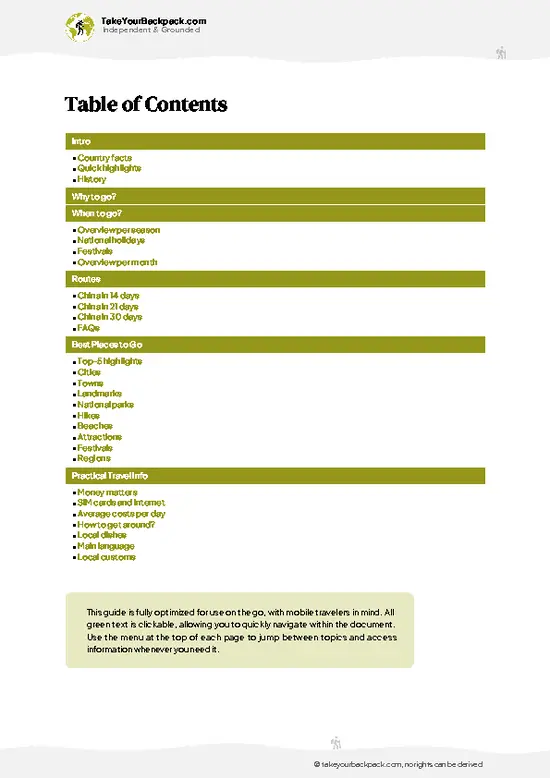
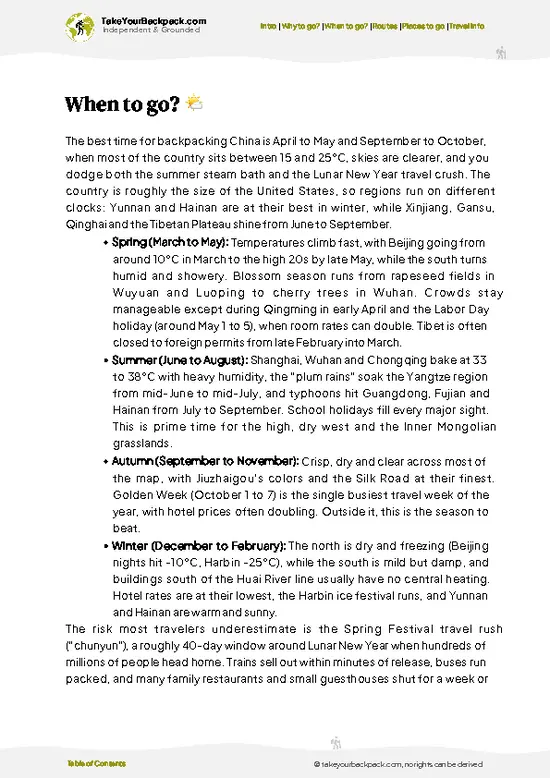
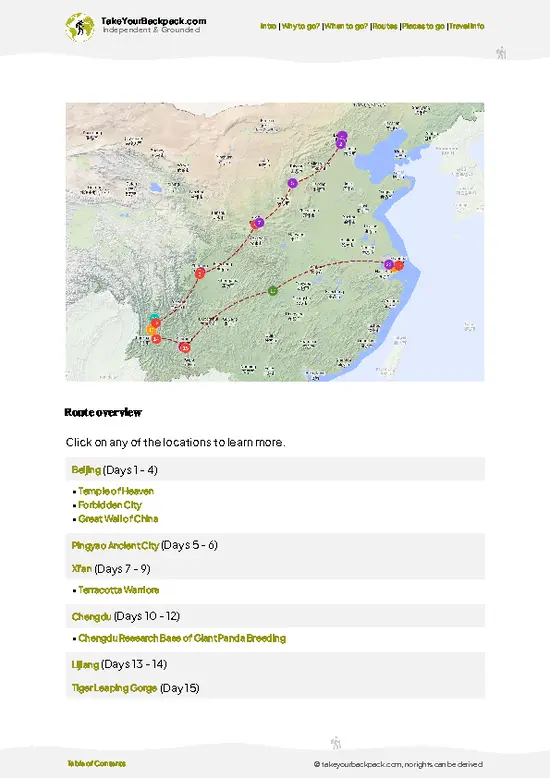
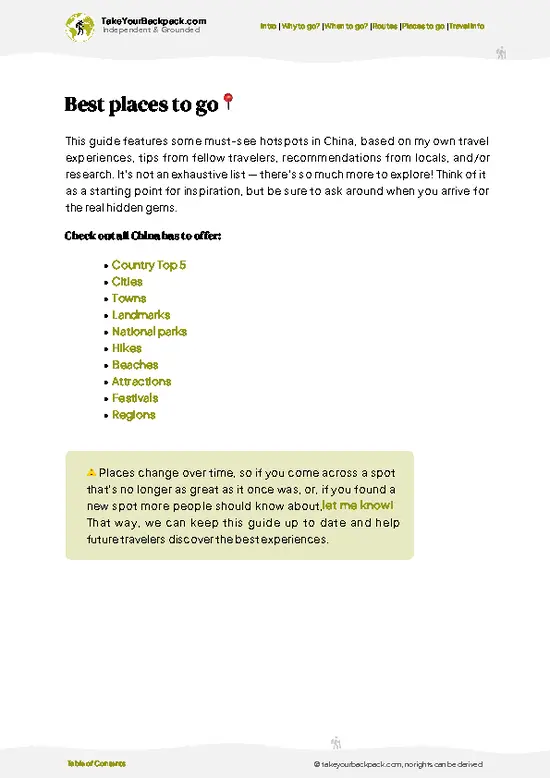
example page 0 from our offline Travel Guide for Chinaexample page 1 from our offline Travel Guide for Chinaexample page 2 from our offline Travel Guide for Chinaexample page 3 from our offline Travel Guide for Chinaexample page 4 from our offline Travel Guide for Chinaexample page 5 from our offline Travel Guide for Chinaexample page 6 from our offline Travel Guide for Chinaexample page 7 from our offline Travel Guide for China
The digital guide (496 pages) contains:
139 highlights, ranked by travel appeal
Optimized 14, 21 & 30-day travel routes
Cities, national parks, landmarks, beaches
How to get around
Offline-friendly for travel without Wi-Fi
👉 Click to see all 30+ guide features

📅 Plan smarter in minutes, not weeks
Month by month travel advice
Festivals & national holidays
Budget expectations

🗺️ Go to the right places, skip the overrated ones
Honest pros & cons of destinations
Top hikes, parks & viewpoints
Lesser-known places most travelers miss
Clear “worth it vs skip it” guidance

🛏️ Travel smoothly without rookie mistakes
Best areas to stay
Transport systems explained simply
Common scams & safety advice
SIM cards, money & practical tips

🌍 Understand the country, not just visit it
Culture & traditions
52 Essential phrases & customs
Festivals worth planning around
Traveler-friendly historical context
Insights that make places more meaningful

📱 Built for real travel conditions
Fully downloadable PDF
Works completely offline
Optimized for phone use
Useful in remote areas & buses
Everything in one place
Save weeks of stressful planning
Get instant access to your full guide. 30‑day money-back guarantee.


Sent to your inbox immediately after payment • 100% Secure Checkout
Best Backpacking Travel Advisor 2025 tourism awardBest Backpacking
Travel Advisor
2025
What others say about Take Your Backpack Guides:
⭐⭐⭐⭐⭐
Fantastic, amazing amount of information!
⭐⭐⭐⭐⭐
My goodness this is amazing, it's what I've been looking for hats off too you!
⭐⭐⭐⭐⭐
I think this is absolutely BRILLIANT
⭐⭐⭐⭐
Very complete and informative. It's still missing places, but I gotta to commend you
⭐⭐⭐⭐⭐
This is truly amazing, thank you, can't wait to explore it with my kids!
⭐⭐⭐⭐⭐
Awesome resource, thank you!
⭐⭐⭐⭐⭐
This is amazing! Can't wait to explore the ones I haven't seen
⭐⭐⭐⭐
I love this! Well done, great idea.
⭐⭐⭐⭐⭐
Thanks for taking the time to make this gem!
⭐⭐⭐⭐⭐
This might be the best website I've ever seen.
⭐⭐⭐⭐⭐
Congratulations, and thank you so much for your work; it's incredibly valuable.
⭐⭐⭐⭐
In all seriousness I think you did a great job pointing out the important spots
⭐⭐⭐⭐⭐
10/10 very good
⭐⭐⭐⭐⭐
As someone who's only just starting to visit regularly this is awesome, thank you.
⭐⭐⭐⭐
Thank you very much! I'm going to visit my dad, it's going to be very useful!
⭐⭐⭐⭐⭐
This is really cool! We'll be travelling for the first time and this definitely come in handy.
⭐⭐⭐⭐⭐
You are now our minister of culture, congratulations 👨‍💼
⭐⭐⭐⭐⭐
Just wanted to tell you that this is a pearl! Going to follow your recommendations.
⭐⭐⭐⭐⭐
This is so cool. I'll definitely be using the resource for my travels soon.
⭐⭐⭐⭐⭐
This is very impressive! Good work.
⭐⭐⭐⭐⭐
This is an amazing and informative site. Very well done!

🛏️ Where to stay?Best areas to stay in China

Daoli District is the clear winner for backpackers in Harbin. It’s the city’s beating heart, where you’ll find the best mix of safety, social buzz, and budget options. This area hosts the famous Central Street, lined with affordable eateries, quirky cafes, and plenty of hostels that cater to solo travelers and groups alike. The vibe here is lively without being overwhelming—perfect for meeting fellow backpackers while still having quiet corners to recharge.

Compared to other districts, Daoli offers a compact, walkable layout that saves you time and transport costs, which is a huge win when juggling … read more 👉
Daoli District is the clear winner for backpackers in Harbin. It’s the city’s beating heart, where you’ll find the best mix of safety, social buzz, and budget options. This area hosts the famous Central Street, lined with affordable eateries, quirky cafes, and plenty of hostels that cater to solo travelers and groups alike. The vibe here is lively without being overwhelming—perfect for meeting fellow backpackers while still having quiet corners to recharge.

Compared to other districts, Daoli offers a compact, walkable layout that saves you time and transport costs, which is a huge win when juggling your budget and schedule. It’s also close to major attractions like the Ice and Snow World in winter, so you’re not sacrificing convenience for price.

Other neighborhoods might offer cheaper digs, but they often lack the social scene or feel less secure after dark. Daoli strikes the best balance between comfort, cost, and connection—making it the smart choice for savvy backpackers who want to maximize their experience without unnecessary trade-offs.

🚌 Getting aroundGetting around like a local

Harbin moves at a pace that’s a curious mix of old-school order and spontaneous bursts of energy. The city’s rhythm isn’t dictated by strict timetables alone; it’s a dance between the clock and the crowd’s pulse. You’ll find moments where buses and trams run like clockwork, but just as often, locals navigate the streets with a kind of intuitive flow that defies rigid schedules. For a budget traveler, understanding this balance is your secret weapon—knowing when to lean into the system and when to improvise turns transit from a chore into a strategic game.


  • Walking: Harbin’s city center is surprisingly walkable, especially around the famous Central Street and the Songhua River banks. Walking costs nothing, offers unmatched street-level immersion, and lets you control your pace completely—perfect
read more 👉
Harbin moves at a pace that’s a curious mix of old-school order and spontaneous bursts of energy. The city’s rhythm isn’t dictated by strict timetables alone; it’s a dance between the clock and the crowd’s pulse. You’ll find moments where buses and trams run like clockwork, but just as often, locals navigate the streets with a kind of intuitive flow that defies rigid schedules. For a budget traveler, understanding this balance is your secret weapon—knowing when to lean into the system and when to improvise turns transit from a chore into a strategic game.


  • Walking: Harbin’s city center is surprisingly walkable, especially around the famous Central Street and the Songhua River banks. Walking costs nothing, offers unmatched street-level immersion, and lets you control your pace completely—perfect for spontaneous detours and photo stops.


  • City Bus: The backbone of budget transit, buses run roughly from 6:00 AM to 10:00 PM. Fares hover around 1-2 RMB, making them incredibly cheap. Buses are slow during rush hours but offer a direct, no-frills route through most neighborhoods. Comfort is basic—expect crowded conditions and occasional delays, but the network is extensive.


  • Tram: Harbin’s tram system is a relic with a pulse of its own, running from about 6:00 AM to 9:30 PM. Tickets cost about 2 RMB. Trams are slower than buses but provide a smoother ride and a nostalgic vibe. They’re less crowded, which means a bit more breathing room and a chance to watch the city glide by at a relaxed pace.


  • Taxi: Starting fare is around 8 RMB, with roughly 2 RMB per kilometer after. Taxis offer the fastest and most comfortable way to get around, especially late at night when buses and trams stop running. However, traffic jams can eat into your time and wallet, so use taxis strategically rather than as a default.


  • Bike Sharing: Dockless bikes are everywhere and cost about 1 RMB per 30 minutes. This option blends speed and flexibility, letting you cover medium distances faster than walking without the expense of taxis. It’s ideal for clear weather and when you want to explore neighborhoods off the main transit lines.

👛 Costs (as of 31 January 2025)What things cost and how to budget

Backpacking in Harbin, China, offers a fascinating blend of affordability and cultural richness, but knowing where your money goes helps you play the travel game smartly. Here’s the breakdown of what you can expect to spend daily:
  • Dorm Accommodation (High Season): Around $10-$15 USD per night. Harbin’s winter festival season drives prices up, so expect a slight premium for basic dorm beds in hostels.
  • Dorm Accommodation (Off-Season): Drops to about $6-$10 USD. Outside the icy peak months, you can snag a bed for less, especially if you book in advance or stay a few nights.
  • Meals: $5-$10 USD daily. Street food and local eateries serve hearty portions of dumplings, noodles, and grilled skewers. Splurge occasionally on a hot pot meal for around $8-$12.
  • Local Transport: Single bus or tram rides
read more 👉
Backpacking in Harbin, China, offers a fascinating blend of affordability and cultural richness, but knowing where your money goes helps you play the travel game smartly. Here’s the breakdown of what you can expect to spend daily:
  • Dorm Accommodation (High Season): Around $10-$15 USD per night. Harbin’s winter festival season drives prices up, so expect a slight premium for basic dorm beds in hostels.
  • Dorm Accommodation (Off-Season): Drops to about $6-$10 USD. Outside the icy peak months, you can snag a bed for less, especially if you book in advance or stay a few nights.
  • Meals: $5-$10 USD daily. Street food and local eateries serve hearty portions of dumplings, noodles, and grilled skewers. Splurge occasionally on a hot pot meal for around $8-$12.
  • Local Transport: Single bus or tram rides cost roughly $0.30-$0.50 USD. Harbin’s public transport is extensive and cheap, perfect for hopping between neighborhoods.
  • City Transport Pass: A day pass runs about $1.50-$2 USD, ideal if you plan multiple trips. It’s a small upfront cost that saves hassle and coins.
  • Basic Activities/Entry Fees: $3-$8 USD. Visiting spots like the Ice and Snow World or Siberian Tiger Park comes with modest entry fees. Budget on the higher side during festival times.
  • Miscellaneous Expenses: Around $2-$5 USD. This covers essentials like bottled water, snacks, or a quick phone top-up. Always good to have a buffer for small, unexpected costs.

All told, a savvy backpacker in Harbin can expect to spend between $25 and $40 USD per day. This range balances comfort and immersion without blowing the budget. Knowing these trade-offs means you can decide when to splurge on a warm meal or save by taking public transit, turning your trip into a strategic win rather than a guessing game.
⚠️ Prices can change and everyone travels differently, so take this as a rough guide. Hope it helps you plan your adventure!

🚌 Day tripsBest day trips from Harbin

Harbin is a fantastic launchpad for day trips that reveal the rich tapestry of northeastern China. Each adventure offers a unique slice of culture, nature, or history, all while keeping your budget in check.

Yabuli International Ski Resort
Just a couple of hours from Harbin, Yabuli is a winter wonderland for snow enthusiasts. Whether you’re a seasoned skier or a newbie, the slopes cater to all levels. The lift tickets are reasonable, especially if you snag a weekday pass. If you’re visiting in winter, don’t miss the chance to glide down the slopes and enjoy the après-ski scene. Just remember, first-timers often underestimate the cold; dress in layers to stay warm!


Snow Sculpture Art Expo
If you’re in Harbin during the Ice and Snow Festival, a quick trip to the Snow Sculpture Art Expo … read more 👉
Harbin is a fantastic launchpad for day trips that reveal the rich tapestry of northeastern China. Each adventure offers a unique slice of culture, nature, or history, all while keeping your budget in check.

Yabuli International Ski Resort
Just a couple of hours from Harbin, Yabuli is a winter wonderland for snow enthusiasts. Whether you’re a seasoned skier or a newbie, the slopes cater to all levels. The lift tickets are reasonable, especially if you snag a weekday pass. If you’re visiting in winter, don’t miss the chance to glide down the slopes and enjoy the après-ski scene. Just remember, first-timers often underestimate the cold; dress in layers to stay warm!


Snow Sculpture Art Expo
If you’re in Harbin during the Ice and Snow Festival, a quick trip to the Snow Sculpture Art Expo is a must. Located just outside the city, this outdoor gallery showcases massive, intricate sculptures made entirely of snow. It’s a photographer’s dream and a great way to immerse yourself in local artistry. The entrance fee is minimal, and you can easily spend a few hours wandering through the icy creations. Just be sure to check the festival dates; timing is everything!


St. Sophia Cathedral
A short bus ride takes you to this stunning piece of architecture. The cathedral, with its onion domes and intricate mosaics, tells the story of Harbin’s Russian influence. Entry is cheap, and you can explore the surrounding area, which is filled with charming cafes and shops. Many first-timers miss the nearby park, which offers a peaceful spot for a quick rest. Visit in the morning to avoid crowds and soak in the atmosphere.


Harbin Polarland
For a unique experience, head to Harbin Polarland, where you can see polar bears, seals, and other Arctic wildlife. It’s about a 30-minute ride from the city center. The ticket price is reasonable, and the shows are entertaining and educational. A common mistake is to rush through; take your time to enjoy the exhibits and the beautiful surroundings. The best time to visit is during the warmer months when the animals are more active.
Want to know what more China offers?
The China Travel Guide describes 139 highlights, from cities to national parks, from beaches to hikes

Get the Travel Guide -

🍲 FoodWhat to Eat & Drink

In Harbin, the food scene is a delightful blend of Russian and Northeast Chinese influences. You can’t miss the Harbin sausage—smoky, savory, and often grilled right on the street. Pair it with a cup of local beer, which is surprisingly refreshing after a day of exploring.

Street food is where the magic happens. Stroll through bustling markets and sample dumplings bursting with flavor or potato cakes that are crispy on the outside and soft within. The aroma of grilled skewers fills the air, drawing you in like a moth to a flame.

Dining here is a communal affair. Expect to share dishes, so don’t be shy about passing around the spicy hot pot. It’s a social experience, often accompanied by toasts of Baijiu, a potent local spirit. Just remember to raise your glass and make eye contact—it’s all … read more 👉
In Harbin, the food scene is a delightful blend of Russian and Northeast Chinese influences. You can’t miss the Harbin sausage—smoky, savory, and often grilled right on the street. Pair it with a cup of local beer, which is surprisingly refreshing after a day of exploring.

Street food is where the magic happens. Stroll through bustling markets and sample dumplings bursting with flavor or potato cakes that are crispy on the outside and soft within. The aroma of grilled skewers fills the air, drawing you in like a moth to a flame.

Dining here is a communal affair. Expect to share dishes, so don’t be shy about passing around the spicy hot pot. It’s a social experience, often accompanied by toasts of Baijiu, a potent local spirit. Just remember to raise your glass and make eye contact—it’s all about connection. Embrace the quirks, and you’ll find that every bite tells a story.

🛡️ SafetySafety Tips and Common Scams in Harbin

Harbin is generally safe for backpackers, but a few areas deserve your attention. The bustling streets around Central Street can get crowded, so keep your belongings close. Solo travelers should be mindful at night; stick to well-lit areas and avoid empty streets.

Scams are rare, but be cautious of overly friendly locals who might offer unsolicited help, especially around tourist spots. They may expect a tip or try to lead you to shops with inflated prices.

Everyday annoyances include language barriers; downloading a translation app can smooth interactions. Carry yourself confidently, and don’t hesitate to ask locals for directions. They’re often eager to help.

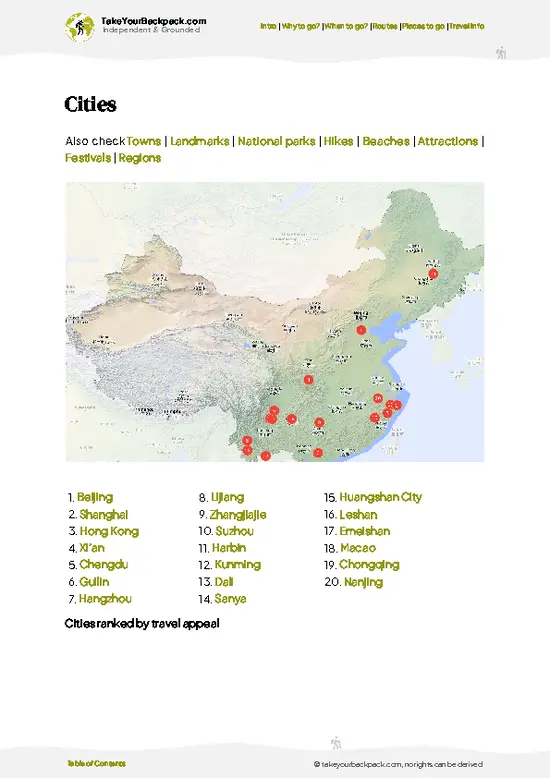
Other Chinese cities near Harbin

Explore more nearby:

  • Changchun—automotive industry, puppet palace, city parks| 240 km away
  • Fushun—open-pit mines, war sites, river valleys| 482 km away
  • Shenyang—Manchu palace, war memorials, industrial legacy| 509 km away

💡 Not sure where to go next?
Create a personalized itinerary for China including Harbin and the places that fit your trip.

Generate my itinerary

👉 Discover all cities

Or checkout all China has to offer (think cities, towns, villages, national parks, hikes, beaches, festivals)
Country photo of China

We 💚 feedbackFinal thoughts on visiting Harbin

Harbin’s Ice Festival is a jaw-dropper. The sheer scale of those ice sculptures is something you won’t see anywhere else. But brace yourself for the cold; it bites. If you’re not ready for subzero temps, you might find yourself shivering more than marveling. Pack wisely, and you’ll unlock a winter wonderland that’s worth every frosty moment.

✈️ When did I visit China?
As part of my 1.5 year travel around the world trip, I visited China in August 2015, coming from Mongolia by the TransMongolia Express.

✍️ Help improve this page!
The information on this page is based on my own backpacking experience in China, supplemented with up-to-date research and feedback from other travelers. Travel details can change, so if you notice anything outdated or incomplete, feel free to let me know.


🙋‍♂️ Give feedback

👋 Meet the founderWho’s Behind Take Your Backpack?

Johan, backpacker and founder of TakeYourBackpackHi, I’m Johan (Netherlands 🇳🇱), the creator of TakeYourBackpack. Over the past decade, I’ve backpacked through 80+ countries across six continents, gaining extensive experience with independent travel, long-term trips, and overland routes.

This site is built on a combination of firsthand travel experience and carefully curated insights from other backpackers. Many guides are based on places I’ve personally visited, while others bring together tips, observations, and practical advice shared by trusted travelers I’ve met along the way.

The goal is to provide realistic, experience-driven guidance — not generic itineraries — so you can explore destinations with better context, clearer expectations, and more confidence.

Get full China guide •
Instant download • 139 highlights • Full Offline guide