×

China🇨🇳 | citiesZhangjiajiesandstone pillars, national park, glass bridge | things to do and best time to go

Explore KunmingExplore Harbin

Backpacking in Zhangjiajie
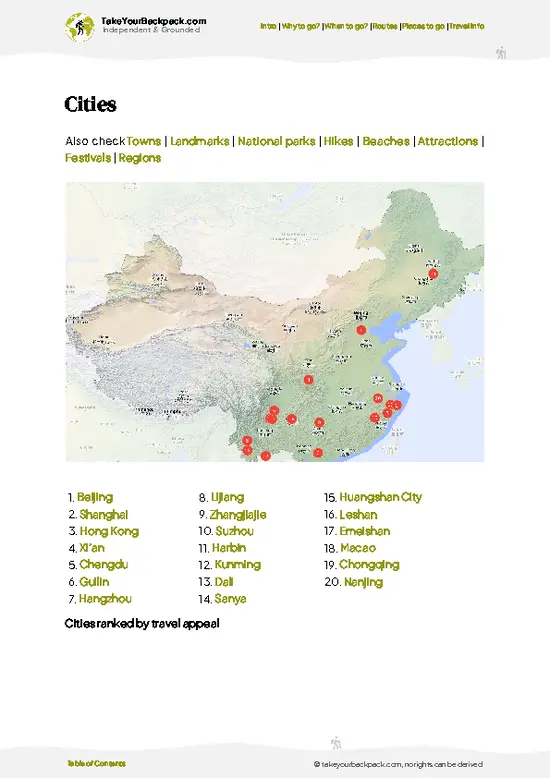
🌟 Highlightcity ranked #9
By Johan Kruseman 🇳🇱 | Updated June 8, 2026

Most people only realize on the way out that Zhangjiajie quietly saves you days of transit: once you’re here, the core sights are tightly clustered, so you trade long hauls for actual trail time. The city sits in northwestern Hunan province, inland, a night-train or short flight from Changsha. As a backpacker base it’s practical more than pretty: a bit gritty, low-rise, and built around feeding people into the sandstone forests. Pros: cheap local food, straightforward buses to the national park and Tianmen Mountain, generally safe streets, and enough hostels that you’ll meet other travelers in common rooms even if the town itself feels sleepy. Compared with glossier Chinese cities, nightlife is thin and culture-lite, but the landscapes absolutely justify the detour.

Discover everything you want to know in the 📖 China Travel Guide.


Get your China guide
139 ranked highlights, routes & tips, works offline (496 pages)
Loading the map 🌍
CLICK TO FILTER
cities
towns
landmarks
national parks
hikes
beaches
attractions
festivals
regions
SHOW COUNTRY’S BESTSHOW ALL

✨ Why go?
Ranked #9 city in China
Why Zhangjiajie should be on your travel list

Zhangjiajie is a strategic basecamp for backpackers, offering a blend of affordability and accessibility. The city is walkable, making it easy to navigate between hostels and local eateries. You’ll find a range of budget-friendly accommodations, from lively hostels to cozy guesthouses, perfect for meeting fellow travelers. The food scene is diverse, with street vendors serving up local delights that won’t break the bank.

What sets Zhangjiajie apart is its proximity to stunning natural wonders, making it a launchpad for day trips into the surrounding landscapes. The nightlife is low-key but enjoyable, with bars and cafes that cater to a backpacker vibe. Plus, onward travel is straightforward, connecting you to other destinations in China. If you’re after a mix of adventure and community, … read more 👉
Zhangjiajie is a strategic basecamp for backpackers, offering a blend of affordability and accessibility. The city is walkable, making it easy to navigate between hostels and local eateries. You’ll find a range of budget-friendly accommodations, from lively hostels to cozy guesthouses, perfect for meeting fellow travelers. The food scene is diverse, with street vendors serving up local delights that won’t break the bank.

What sets Zhangjiajie apart is its proximity to stunning natural wonders, making it a launchpad for day trips into the surrounding landscapes. The nightlife is low-key but enjoyable, with bars and cafes that cater to a backpacker vibe. Plus, onward travel is straightforward, connecting you to other destinations in China. If you’re after a mix of adventure and community, Zhangjiajie fits the bill; if you’re seeking a quick stop, it still delivers value without feeling rushed.
Want to include Zhangjiajie in your China route?
Create a personalized China itinerary that includes Zhangjiajie and the places that fit your trip — based on your travel style, budget, and available time. Get your route in seconds.

Generate my trip

💡 HighlightsTop highlights of Zhangjiajie

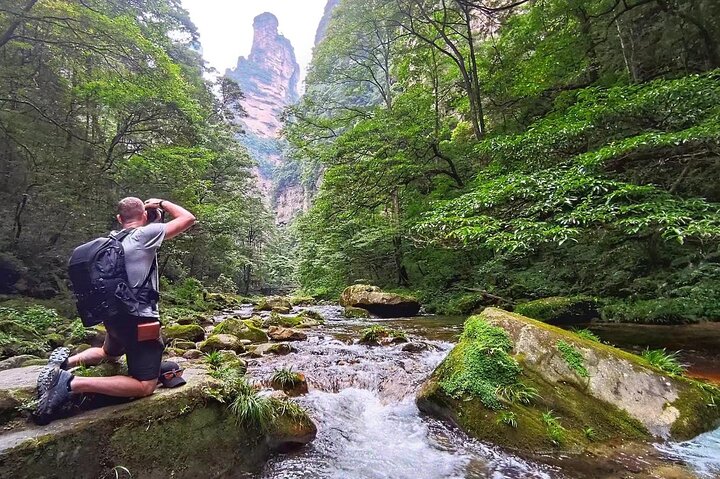
  1. Zhangjiajie National Forest Park (Wulingyuan) — The pillar forest that put Zhangjiajie on the map: towering quartz-sandstone columns, misty valleys and hiking routes that let you walk among landscapes unlike anywhere else. It’s UNESCO-listed and actually best experienced on foot rather than from postcards.
  2. Yuanjiajie (Southern Sky Column / “Avatar Hallelujah”) — The single most Instagrammed pillar that inspired the movie name-drop. Visit early or late for the light and you’ll see why the slippery, surreal sandstone towers feel otherworldly in person.
  3. Tianzi Mountain Nature Reserve — A different mood from Yuanjiajie: broad panoramic ridgelines, sea-of-clouds viewpoints and Tujia/Miao cultural history tucked into the peaks. The viewpoints are dramatic at sunrise and the walking feels more
read more 👉
  1. Zhangjiajie National Forest Park (Wulingyuan) — The pillar forest that put Zhangjiajie on the map: towering quartz-sandstone columns, misty valleys and hiking routes that let you walk among landscapes unlike anywhere else. It’s UNESCO-listed and actually best experienced on foot rather than from postcards.
  2. Yuanjiajie (Southern Sky Column / “Avatar Hallelujah”) — The single most Instagrammed pillar that inspired the movie name-drop. Visit early or late for the light and you’ll see why the slippery, surreal sandstone towers feel otherworldly in person.
  3. Tianzi Mountain Nature Reserve — A different mood from Yuanjiajie: broad panoramic ridgelines, sea-of-clouds viewpoints and Tujia/Miao cultural history tucked into the peaks. The viewpoints are dramatic at sunrise and the walking feels more expansive than cramped.
  4. Golden Whip Stream (Jinbian Stream) — A peaceful, well-maintained boardwalk along a clear mountain stream under cliffs and pillars. It’s the best place for easy, long-distance walking, wildlife-spotting and escaping the busier clifftop lookouts for a few quiet hours.
  5. Bailong Elevator — A glass-sided cliff elevator that rockets you up the face of a pillar for spectacular views in 1-2 minutes. It’s ingeniously placed for those who don’t want a day-long hike but still want the cloud-top panorama—expect queues in high season.
  6. Tianmen Mountain (Tianmen Cave, cable car & glass skywalk) — Close to the city center and theatrical: a 7.5 km cable car, a natural “Heaven’s Gate” arch (Tianmen Cave) and a vertigo-inducing glass walkway clinging to the cliff. It’s a showy, very visitable mountain experience with easy access.
  7. Zhangjiajie Grand Canyon & Glass Bridge — A dramatic canyon walk and the world-famous glass bridge spanning it. If you want raw canyon scenery plus the thrill of walking over a transparent bridge hundreds of metres up, this is the place—book tickets for the bridge in advance.
  8. Huanglong Cave (Yellow Dragon Cave) — One of China’s largest karst cave systems with illuminated caverns, stalactites and an underground river you can boat along. It’s a great contrast to the pillar scenery above ground and very visitor-friendly.
  9. Baofeng Lake Scenic Area — A quieter boat-trip spot surrounded by sheer cliffs and small peaks; locals run short, atmospheric boat rides and sometimes traditional music performances. Good for relaxed photography and a cool-time-out after hiking.
  10. Tujia Folk Customs Park (土家风情园) — A compact cultural park near the city that showcases Tujia architecture, crafts and live performances. It’s tourist-oriented but useful for understanding local minority culture, handcrafts and traditional costumes without trekking into remote villages.
A few real, visitable highlights just outside Zhangjiajie that make excellent day trips are Fenghuang (Phoenix) Ancient Town, Furong Ancient Town, and the Dehang Miao-Dong Scenic Area — my personal favorite is Furong Ancient Town for its quieter, cliffside feel and authentic waterfalls.
Spotted a mistake or missing something? Contact us.

Things to do in Zhangjiajie

Ratings based on Tripadvisor reviews. When you book through this link, you support our work at no extra cost to you.

🏘️ NeighborhoodsWhere things are and how it's laid out

Zhangjiajie offers a unique blend of natural beauty and urban charm, making it a fascinating stop for backpackers. Here’s how the neighborhoods stack up:

Wulingyuan: This area is your gateway to Zhangjiajie National Forest Park. It’s all about nature here, with easy access to hiking trails and stunning views. Expect a laid-back vibe, perfect for longer stays. Accommodations range from budget hostels to mid-range hotels. Walkability is excellent, but nightlife is minimal—focus on the outdoors instead.

Zhangjiajie City Center: The heart of the city buzzes with energy. Here, you’ll find a mix of local eateries and shops. It’s more urban, with a lively atmosphere, making it ideal for short stays. Transport options are abundant, including buses and taxis. While it’s not a party hub, you’ll find … read more 👉
Zhangjiajie offers a unique blend of natural beauty and urban charm, making it a fascinating stop for backpackers. Here’s how the neighborhoods stack up:

Wulingyuan: This area is your gateway to Zhangjiajie National Forest Park. It’s all about nature here, with easy access to hiking trails and stunning views. Expect a laid-back vibe, perfect for longer stays. Accommodations range from budget hostels to mid-range hotels. Walkability is excellent, but nightlife is minimal—focus on the outdoors instead.

Zhangjiajie City Center: The heart of the city buzzes with energy. Here, you’ll find a mix of local eateries and shops. It’s more urban, with a lively atmosphere, making it ideal for short stays. Transport options are abundant, including buses and taxis. While it’s not a party hub, you’ll find some bars for a casual night out.

Yuanjiajie: A bit more remote, this area is closer to the iconic Avatar Mountains. It’s quieter, catering to those who want to escape the hustle. Accommodations are limited but cozy. Perfect for a peaceful retreat, it’s best suited for longer stays focused on exploration. Transport can be tricky, so plan ahead.

⌛️ 1 dayWhat you can realistically do in a day

Zhangjiajie is a city that feels like a portal to another world, where towering sandstone pillars rise dramatically from lush valleys. It’s the inspiration for the floating mountains in ”Avatar,” but it’s not just about the views; it’s about the experience.

Start your morning at the Zhangjiajie National Forest Park. Arrive early to beat the crowds and take the scenic cable car up to Tianmen Mountain. The ride offers breathtaking views, and once at the top, you can walk along the glass skywalk. It’s a heart-pounding thrill that gives you a unique perspective of the landscape below.

After soaking in the views, head down to the city center for lunch in the bustling Wulingyuan District. Try some local specialties like spicy tofu or the famous Zhangjiajie rice noodles at a small eatery. The … read more 👉
Zhangjiajie is a city that feels like a portal to another world, where towering sandstone pillars rise dramatically from lush valleys. It’s the inspiration for the floating mountains in ”Avatar,” but it’s not just about the views; it’s about the experience.

Start your morning at the Zhangjiajie National Forest Park. Arrive early to beat the crowds and take the scenic cable car up to Tianmen Mountain. The ride offers breathtaking views, and once at the top, you can walk along the glass skywalk. It’s a heart-pounding thrill that gives you a unique perspective of the landscape below.

After soaking in the views, head down to the city center for lunch in the bustling Wulingyuan District. Try some local specialties like spicy tofu or the famous Zhangjiajie rice noodles at a small eatery. The atmosphere is lively, and you’ll get a taste of daily life here.

In the afternoon, explore the lesser-known Huangshi Village. It’s a bit off the beaten path but offers stunning views without the tourist hustle. The hike is moderate, and you’ll find yourself surrounded by nature, with fewer people to distract from the serenity.

As evening approaches, return to the city and stroll through the vibrant streets of the Old Town. Grab a local beer and enjoy the street performances. The energy is infectious, and it’s a perfect way to wrap up your day.

Zhangjiajie isn’t just a destination; it’s an adventure waiting to unfold.
Turn your Zhangjiajie visit into an China adventure
Build a complete China route with Zhangjiajie, hidden gems, must-see destinations, and realistic travel times included.

Generate my trip

🌤️ When to go?Best time to visit Zhangjiajie


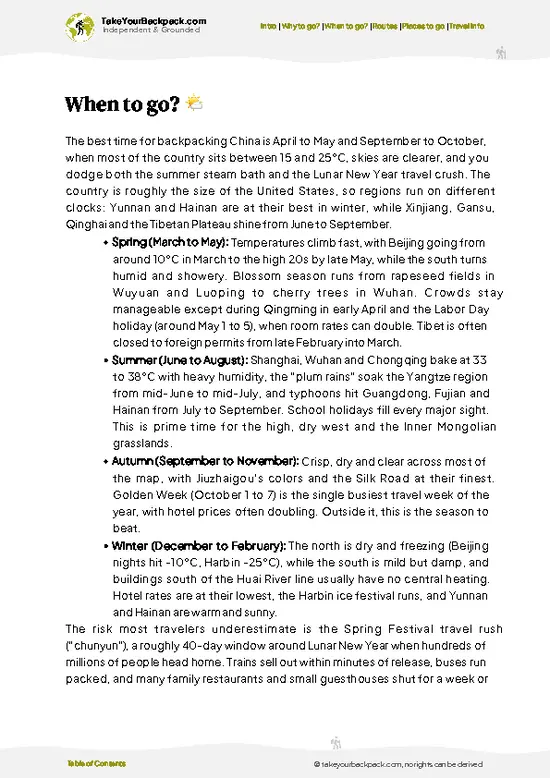
  • Weather: Zhangjiajie’s best weather falls in spring (April-May) and autumn (September-October). These months avoid the heavy summer rains and the chill of winter, offering clear skies and manageable humidity.

  • Temperature: Spring and autumn temperatures hover between 15-25°C (59-77°F), perfect for hiking without overheating or freezing. Summers can spike above 30°C (86°F), while winters dip below 5°C (41°F), making trails slippery and less pleasant.

  • Daylight Hours: Around 12-14 hours of daylight in spring and autumn give you ample time to explore the park’s vast landscapes without rushing.

  • Crowds: Summer and Chinese national holidays pack the trails with tourists, turning serene spots into congested photo ops. Spring and autumn see fewer visitors, letting you savor the scenery.

  • Seasonal
read more 👉

  • Weather: Zhangjiajie’s best weather falls in spring (April-May) and autumn (September-October). These months avoid the heavy summer rains and the chill of winter, offering clear skies and manageable humidity.

  • Temperature: Spring and autumn temperatures hover between 15-25°C (59-77°F), perfect for hiking without overheating or freezing. Summers can spike above 30°C (86°F), while winters dip below 5°C (41°F), making trails slippery and less pleasant.

  • Daylight Hours: Around 12-14 hours of daylight in spring and autumn give you ample time to explore the park’s vast landscapes without rushing.

  • Crowds: Summer and Chinese national holidays pack the trails with tourists, turning serene spots into congested photo ops. Spring and autumn see fewer visitors, letting you savor the scenery.

  • Seasonal Activities: Autumn brings vibrant foliage that transforms the sandstone pillars into a fiery spectacle, a visual treat not to miss. Spring offers blooming wildflowers, adding color to the rugged terrain.

  • Price Fluctuations: Peak season (summer and holidays) drives up accommodation and transport costs significantly. Off-peak months offer better deals but come with trade-offs in weather and daylight.


Pro-tip: Aim for late April or early October—this sweet spot balances weather, crowd size, and cost, letting you play the Zhangjiajie game like a pro.


source: climatestotravel.comJANJanuary: below average for travelingFEBFebruary: fair for travelingMARMarch: good for travelingAPRApril: excellent for travelingMAYMay: excellent for travelingJUNJune: good for travelingJULJuly: fair for travelingAUGAugust: fair for travelingSEPSeptember: excellent for travelingOCTOctober: excellent for travelingNOVNovember: good for travelingDECDecember: below average for traveling
when-to-go

✈️ The backpacker research shortcutChina Travel Guide

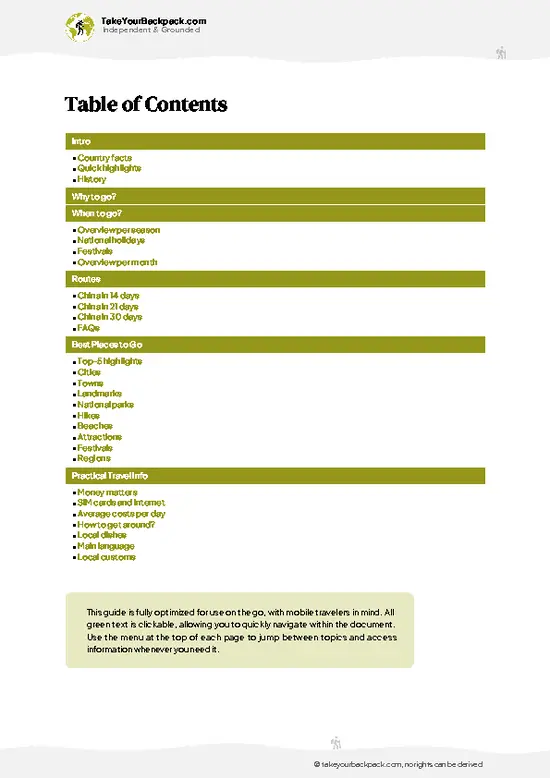
An offline-friendly backpacking guide with optimized travel routes, ranked highlights, transport advice, and the best areas to stay.
example page 0 from our offline Travel Guide for China
example page 1 from our offline Travel Guide for China
example page 2 from our offline Travel Guide for China
example page 3 from our offline Travel Guide for China
example page 4 from our offline Travel Guide for China
example page 5 from our offline Travel Guide for China
example page 6 from our offline Travel Guide for China
example page 7 from our offline Travel Guide for China
The digital guide (496 pages) contains:
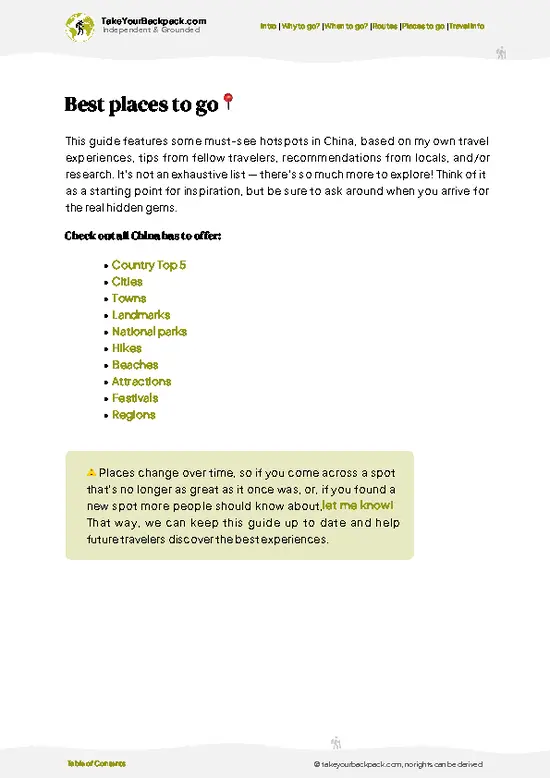
139 highlights, ranked by travel appeal
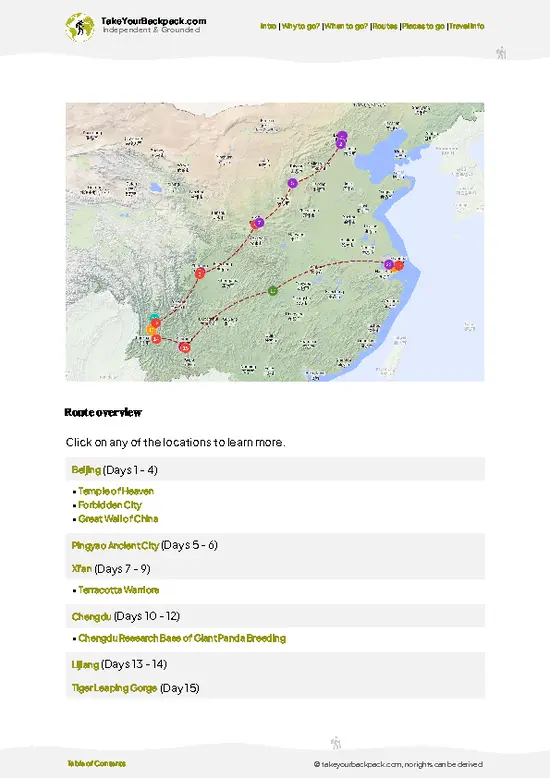
Optimized 14, 21 & 30-day travel routes
Cities, national parks, landmarks, beaches
How to get around
Offline-friendly for travel without Wi-Fi
👉 Click to see all 30+ guide features

📅 Plan smarter in minutes, not weeks
Month by month travel advice
Festivals & national holidays
Budget expectations

🗺️ Go to the right places, skip the overrated ones
Honest pros & cons of destinations
Top hikes, parks & viewpoints
Lesser-known places most travelers miss
Clear “worth it vs skip it” guidance

🛏️ Travel smoothly without rookie mistakes
Best areas to stay
Transport systems explained simply
Common scams & safety advice
SIM cards, money & practical tips

🌍 Understand the country, not just visit it
Culture & traditions
52 Essential phrases & customs
Festivals worth planning around
Traveler-friendly historical context
Insights that make places more meaningful

📱 Built for real travel conditions
Fully downloadable PDF
Works completely offline
Optimized for phone use
Useful in remote areas & buses
Everything in one place
Save weeks of stressful planning
Get instant access to your full guide. 30‑day money-back guarantee.


By proceeding you agree to our terms.
Sent to your inbox immediately after payment • 100% Secure Checkout
Best Backpacking Travel Advisor 2025 tourism awardBest Backpacking
Travel Advisor
2025
What others say about Take Your Backpack Guides:
⭐⭐⭐⭐⭐
Fantastic, amazing amount of information!
⭐⭐⭐⭐⭐
My goodness this is amazing, it's what I've been looking for hats off too you!
⭐⭐⭐⭐⭐
I think this is absolutely BRILLIANT
⭐⭐⭐⭐
Very complete and informative. It's still missing places, but I gotta to commend you
⭐⭐⭐⭐⭐
This is truly amazing, thank you, can't wait to explore it with my kids!
⭐⭐⭐⭐⭐
Awesome resource, thank you!
⭐⭐⭐⭐⭐
This is amazing! Can't wait to explore the ones I haven't seen
⭐⭐⭐⭐
I love this! Well done, great idea.
⭐⭐⭐⭐⭐
Thanks for taking the time to make this gem!
⭐⭐⭐⭐⭐
This might be the best website I've ever seen.
⭐⭐⭐⭐⭐
Congratulations, and thank you so much for your work; it's incredibly valuable.
⭐⭐⭐⭐
In all seriousness I think you did a great job pointing out the important spots
⭐⭐⭐⭐⭐
10/10 very good
⭐⭐⭐⭐⭐
As someone who's only just starting to visit regularly this is awesome, thank you.
⭐⭐⭐⭐
Thank you very much! I'm going to visit my dad, it's going to be very useful!
⭐⭐⭐⭐⭐
This is really cool! We'll be travelling for the first time and this definitely come in handy.
⭐⭐⭐⭐⭐
You are now our minister of culture, congratulations 👨‍💼
⭐⭐⭐⭐⭐
Just wanted to tell you that this is a pearl! Going to follow your recommendations.
⭐⭐⭐⭐⭐
This is so cool. I'll definitely be using the resource for my travels soon.
⭐⭐⭐⭐⭐
This is very impressive! Good work.
⭐⭐⭐⭐⭐
This is an amazing and informative site. Very well done!

🛏️ Where to stay?Where staying makes the most sense

Zhangjiajie’s backpacker sweet spot is the area around Wulingyuan District. This neighborhood is the logical base camp for anyone aiming to explore the famous national park without wasting time or money on long transfers. It’s safe, straightforward, and packed with budget-friendly hostels that cater to solo travelers and small groups alike. The vibe here is low-key but social—think communal dining tables, shared shuttle info, and fellow adventurers swapping trail tips over instant noodles.

Compared to the city center, which is more commercial and spread out, Wulingyuan cuts the fluff. You’re … read more 👉
Zhangjiajie’s backpacker sweet spot is the area around Wulingyuan District. This neighborhood is the logical base camp for anyone aiming to explore the famous national park without wasting time or money on long transfers. It’s safe, straightforward, and packed with budget-friendly hostels that cater to solo travelers and small groups alike. The vibe here is low-key but social—think communal dining tables, shared shuttle info, and fellow adventurers swapping trail tips over instant noodles.

Compared to the city center, which is more commercial and spread out, Wulingyuan cuts the fluff. You’re closer to the park entrances, which means less time on buses and more time on the trails. Plus, the area’s compactness makes it easy to navigate on foot, a big win when you want to conserve energy and cash. Other parts of Zhangjiajie can feel disconnected or too touristy, forcing you into pricey taxis or long waits. Stick to Wulingyuan for a smart balance of comfort, community, and cost-efficiency—this is where your backpacker instincts pay off.

🚌 Getting aroundHow to get around Zhangjiajie

Zhangjiajie moves at its own rhythm—a blend of methodical precision and bursts of spontaneous energy. The city’s pulse is dictated by its role as a gateway to jaw-dropping natural wonders, so you’ll find a mix of strict schedules for shuttles and buses, designed to herd tourists efficiently, alongside moments where you’ll have to rely on quick decisions and local intuition, especially when hopping between villages or catching a last-minute ride. Understanding this flow is your secret weapon: it’s not just about getting from A to B, but about choosing when to save time, when to save money, and when to invest in comfort to recharge for the next adventure.


  • Walking: The ultimate budget mode for exploring Zhangjiajie’s compact urban areas and nearby scenic spots. Free, obviously, but expect
read more 👉
Zhangjiajie moves at its own rhythm—a blend of methodical precision and bursts of spontaneous energy. The city’s pulse is dictated by its role as a gateway to jaw-dropping natural wonders, so you’ll find a mix of strict schedules for shuttles and buses, designed to herd tourists efficiently, alongside moments where you’ll have to rely on quick decisions and local intuition, especially when hopping between villages or catching a last-minute ride. Understanding this flow is your secret weapon: it’s not just about getting from A to B, but about choosing when to save time, when to save money, and when to invest in comfort to recharge for the next adventure.


  • Walking: The ultimate budget mode for exploring Zhangjiajie’s compact urban areas and nearby scenic spots. Free, obviously, but expect uneven sidewalks and occasional crowds. Walking lets you soak in local life at your own pace, though it’s slow—plan for 20-30 minutes between major points downtown.


  • City Bus: Runs from early morning (around 6:30 AM) until about 9 PM. Fares hover around 2-3 RMB, making it the cheapest way to cover longer distances within the city. Buses are reliable but can get packed during peak tourist hours, so comfort dips when the crowd surges. Expect a moderate pace—don’t count on express service.


  • Tourist Shuttle Buses: These are your lifeline to the Zhangjiajie National Forest Park and surrounding scenic areas. They operate on fixed schedules, typically from 7 AM to 6 PM, with fares around 30-40 RMB per trip. Faster and more comfortable than city buses, but less flexible. Missing one means waiting for the next or scrambling for alternatives.


  • Taxi: Readily available but pricier, with fares starting around 10 RMB plus 2-3 RMB per kilometer. Ideal when time is tight or you’re traveling in a group to split costs. Comfort is high, and you control the schedule, but beware of traffic jams near popular sites during peak hours.


  • Electric Scooters and Bike Rentals: A middle ground between walking and motorized transport. Rentals cost about 50-80 RMB per day. Great for short trips to less accessible spots where buses don’t reach. You gain speed and flexibility but sacrifice some comfort and safety, especially on hilly or busy roads.

👛 Costs (as of 26 January 2025)Typical daily expenses

Zhangjiajie offers a fascinating mix of natural wonders and budget-friendly options, but knowing where your money goes is key to mastering your trip’s value.
  • Dorm Accommodation (High Season): Expect to pay around $12-$18 per night. High season, typically spring and autumn, pushes prices up due to demand near the national park entrances.
  • Dorm Accommodation (Off-Season): Drop to about $7-$12 per night when fewer tourists are around, especially in winter. Hostels remain basic but clean, with fewer crowds.
  • Meals: Local street food and small eateries serve filling meals for $3-$6. Western-style or tourist-targeted restaurants can push $8-$12 per meal, so mix it up to keep costs down without sacrificing taste.
  • Local Transport: Buses and shared vans between town and park entrances cost roughly
read more 👉
Zhangjiajie offers a fascinating mix of natural wonders and budget-friendly options, but knowing where your money goes is key to mastering your trip’s value.
  • Dorm Accommodation (High Season): Expect to pay around $12-$18 per night. High season, typically spring and autumn, pushes prices up due to demand near the national park entrances.
  • Dorm Accommodation (Off-Season): Drop to about $7-$12 per night when fewer tourists are around, especially in winter. Hostels remain basic but clean, with fewer crowds.
  • Meals: Local street food and small eateries serve filling meals for $3-$6. Western-style or tourist-targeted restaurants can push $8-$12 per meal, so mix it up to keep costs down without sacrificing taste.
  • Local Transport: Buses and shared vans between town and park entrances cost roughly $1-$3 per trip. They run frequently but can be crowded, so timing matters.
  • City Transport Pass: Zhangjiajie doesn’t have a city-wide transport pass system like bigger cities. Budget around $1-$2 per ride for taxis or local buses within town.
  • Basic Activities/Entry Fees: The national park entrance fee is steep, around $30-$35 per day during peak season, including shuttle buses inside the park. Off-season rates can be slightly lower, but the park’s main draw is the natural scenery, so this is a non-negotiable expense.
  • Miscellaneous Expenses: Bottled water, snacks, and small souvenirs typically add $2-$5 daily. Internet cafes or SIM cards are cheap, around $5 for a basic data package.

Total daily costs for backpacking in Zhangjiajie generally fall between $25 and $55, depending on season and your comfort choices. The biggest trade-off is between splurging on park access and saving on accommodation or food. Knowing this lets you decide if you want to stretch your budget for more time in the park or balance it with cheaper meals and stays.


source: zjj.gov.cn
⚠️ Prices can change and everyone travels differently, so take this as a rough guide. Hope it helps you plan your adventure!

🚌 Day tripsShort trips worth adding

Zhangjiajie is a fantastic launchpad for day trips that pack a punch without draining your wallet or time. Here are some standout options that will elevate your experience.

Tianmen Mountain
Just a short bus ride from Zhangjiajie, Tianmen Mountain offers a thrilling mix of nature and adrenaline. The cable car ride is one of the longest in the world, whisking you up to breathtaking views. Once at the top, the glass skywalk will have your heart racing as you walk over the edge. Expect to spend around 100 RMB for the cable car and entrance fee. The best time to visit is during the fall when the foliage adds a splash of color. A common mistake? Underestimating the weather; it can be chilly up there, so layer up!


Zhangjiajie National Forest Park
This is the crown jewel of the area and a … read more 👉
Zhangjiajie is a fantastic launchpad for day trips that pack a punch without draining your wallet or time. Here are some standout options that will elevate your experience.

Tianmen Mountain
Just a short bus ride from Zhangjiajie, Tianmen Mountain offers a thrilling mix of nature and adrenaline. The cable car ride is one of the longest in the world, whisking you up to breathtaking views. Once at the top, the glass skywalk will have your heart racing as you walk over the edge. Expect to spend around 100 RMB for the cable car and entrance fee. The best time to visit is during the fall when the foliage adds a splash of color. A common mistake? Underestimating the weather; it can be chilly up there, so layer up!


Zhangjiajie National Forest Park
This is the crown jewel of the area and a must-see. You can easily spend a day exploring its otherworldly rock formations. The park is accessible via a short bus ride, and entrance fees are about 100 RMB. Aim for early morning to beat the crowds and catch the mist rising over the peaks. Many first-timers miss the lesser-known trails, which offer a more intimate experience with nature.
👉 Explore Zhangjiajie National Forest Park

Baofeng Lake
A serene escape, Baofeng Lake is about an hour from Zhangjiajie. You can take a boat ride surrounded by towering cliffs, which feels like stepping into a painting. The total cost, including the boat ride, is around 80 RMB. Spring and early summer are ideal for lush scenery. Don’t forget your camera, but be mindful of the time; it’s easy to lose track while soaking in the tranquility.


Yellow Dragon Cave
This cave system is a hidden wonder, just a 30-minute drive from the city. The entrance fee is around 60 RMB, and the guided tour reveals stunning stalactites and underground rivers. Visit in the late afternoon for fewer crowds and cooler temperatures. A common rookie error is not wearing proper footwear; the paths can be slippery.
Want to know what more China offers?
The China Travel Guide describes 139 highlights, from cities to national parks, from beaches to hikes

Get the Travel Guide -

🍲 FoodLocal Cuisine & Drinks

In Zhangjiajie, the food scene is a vibrant tapestry of flavors that beckons you to dive in. Start with the signature dish, Tujia sour fish, a tangy delight that balances the freshness of river fish with a punch of local spices. Pair it with some spicy tofu that packs a flavorful kick, and you’ll understand why locals rave about it.

Street food stalls are your best bet for an authentic experience. The night markets buzz with energy, offering everything from grilled skewers to sticky rice cakes. Grab a seat on a plastic stool, and don’t be shy about sharing tables with locals; it’s part of the charm.

When it comes to drinks, try the local rice wine—it’s potent and often homemade. Just remember, it’s customary to toast before sipping, so raise your glass and join in the camaraderie. Eating … read more 👉
In Zhangjiajie, the food scene is a vibrant tapestry of flavors that beckons you to dive in. Start with the signature dish, Tujia sour fish, a tangy delight that balances the freshness of river fish with a punch of local spices. Pair it with some spicy tofu that packs a flavorful kick, and you’ll understand why locals rave about it.

Street food stalls are your best bet for an authentic experience. The night markets buzz with energy, offering everything from grilled skewers to sticky rice cakes. Grab a seat on a plastic stool, and don’t be shy about sharing tables with locals; it’s part of the charm.

When it comes to drinks, try the local rice wine—it’s potent and often homemade. Just remember, it’s customary to toast before sipping, so raise your glass and join in the camaraderie. Eating here isn’t just about the food; it’s a social affair that invites you to savor every bite and sip.

🛡️ SafetyScams, Hazards, and Annoyances

Zhangjiajie is generally safe for backpackers, but a few situational awareness tips can enhance your experience. Stick to well-lit areas at night, especially if you’re solo. The main tourist spots are lively, but side streets can feel deserted after dark.

Watch for common scams, like overly friendly locals offering to guide you for a fee. Politely decline and stick to official tour services. Street vendors can be persistent, but a firm “no” usually does the trick.

Keep your belongings secure, especially in crowded areas like the entrance to Zhangjiajie National Forest Park. A crossbody bag or a money belt can be your best friends. With a little mindfulness, you can navigate the city confidently and enjoy its breathtaking landscapes.

Other Chinese cities near Zhangjiajie

Explore more nearby:

  • Fenghuang Ancient Town—Stilt houses, Tuojiang River, Miao culture| 156 km away
  • Guilin—karst peaks, Li River, rural villages| 428 km away
  • Xi’an—Terracotta Army, city ramparts, Muslim Quarter| 590 km away

💡 Not sure where to go next?
Create a personalized itinerary for China including Zhangjiajie and the places that fit your trip.

Generate my itinerary

👉 Discover all cities

Or checkout all China has to offer (think cities, towns, villages, national parks, hikes, beaches, festivals)
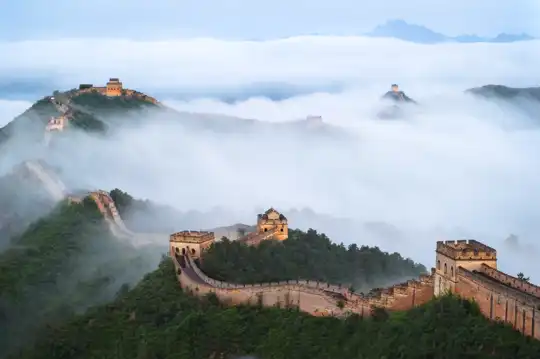
Country photo of China

We 💚 feedbackWhat to keep in mind

Zhangjiajie’s otherworldly landscapes are a jaw-dropper. Those towering pillars? They’ll make you feel like you’ve stepped into a sci-fi movie. But here’s the catch: the crowds can be overwhelming, especially during peak season. If you’re after solitude, plan your visit for the off-peak months. Embrace the chaos, and you’ll find magic in the midst of it all. It’s a balancing act, but worth every moment.

✈️ When did I visit China?
As part of my 1.5 year travel around the world trip, I visited China in August 2015, coming from Mongolia by the TransMongolia Express.

✍️ Help improve this page!
The information on this page is based on my own backpacking experience in China, supplemented with up-to-date research and feedback from other travelers. Travel details can change, so if you notice anything outdated or incomplete, feel free to let me know.


🙋‍♂️ Give feedback

👋 Meet the founderWho’s Behind Take Your Backpack?

Johan, backpacker and founder of TakeYourBackpackHi, I’m Johan (Netherlands 🇳🇱), the creator of TakeYourBackpack. Over the past decade, I’ve backpacked through 80+ countries across six continents, gaining extensive experience with independent travel, long-term trips, and overland routes.

This site is built on a combination of firsthand travel experience and carefully curated insights from other backpackers. Many guides are based on places I’ve personally visited, while others bring together tips, observations, and practical advice shared by trusted travelers I’ve met along the way.

The goal is to provide realistic, experience-driven guidance — not generic itineraries — so you can explore destinations with better context, clearer expectations, and more confidence.

Get full China guide •
Instant download • 139 highlights • Full Offline guide