×

China🇨🇳 | national parksMount Tai National Parkancient temples, stone carvings, pine forests | things to do and best time to go

Explore Yulong Snow Mountain Scenic AreaExplore Mount Wutai National Park

Backpacking in Mount Tai
👌 Worth visitingnational park ranked #16
By Johan Kruseman 🇳🇱 | Updated May 28, 2026

Most people only realize after they leave that Mount Tai is one of the easiest big “sacred” peaks in China to do on a tight schedule: you can night-hike, summit for sunrise, and be back in a city bed the same day. Mount Tai National Park sits in central Shandong, near Tai’an, on the Beijing–Shanghai rail line. Trails are steep stone stairways more than wild paths, with heavy crowds, limited wildlife, and strict no-camping rules, but cheap guesthouses, frequent buses, and clear signage keep it far more accessible than wilder parks like Laoshan or Huangshan.

Discover everything you want to know in the 📖 China Travel Guide.


Get your China guide
139 ranked highlights, routes & tips, works offline (496 pages)
Loading the map 🌍
CLICK TO FILTER
cities
towns
landmarks
national parks
hikes
beaches
attractions
festivals
regions
SHOW COUNTRY’S BESTSHOW ALL

✨ Why go?
Ranked #16 national park in China
What makes this national park worth exploring

Mount Tai National Park attracts backpackers for several solid reasons. First, independent exploration is a major draw; the park offers well-marked trails that allow you to roam freely without the constraints of guided tours. This autonomy enhances the experience, letting you soak in the stunning vistas at your own pace.

Budget-conscious travelers appreciate the camping options and nearby hostels, which keep costs low while providing a chance to connect with fellow adventurers. The variety of trails caters to all skill levels, from leisurely walks to challenging climbs, ensuring everyone finds their fit.

For those who prefer a self-guided experience, Mount Tai is ideal. You can dive into the park’s rich history and natural beauty without feeling rushed, making it a perfect spot for those … read more 👉
Mount Tai National Park attracts backpackers for several solid reasons. First, independent exploration is a major draw; the park offers well-marked trails that allow you to roam freely without the constraints of guided tours. This autonomy enhances the experience, letting you soak in the stunning vistas at your own pace.

Budget-conscious travelers appreciate the camping options and nearby hostels, which keep costs low while providing a chance to connect with fellow adventurers. The variety of trails caters to all skill levels, from leisurely walks to challenging climbs, ensuring everyone finds their fit.

For those who prefer a self-guided experience, Mount Tai is ideal. You can dive into the park’s rich history and natural beauty without feeling rushed, making it a perfect spot for those who value authentic experiences over packaged tours.
Want to include Mount Tai National Park in your China route?
Create a personalized China itinerary that includes Mount Tai National Park and the places that fit your trip — based on your travel style, budget, and available time. Get your route in seconds.

Generate my trip

💡 HighlightsDon't-miss highlights and experiences

  • Dai Temple (岱庙) — The grand temple complex at the foot of the mountain where emperors once came to pay respects. Big, atmospheric courtyards, old timber architecture and a real sense of history that frames the whole Taishan experience before you even start climbing.
  • South Heavenly Gate (南天门) — A dramatic stone gateway high on the ascent that feels like a threshold between ordinary life and the summit world. Great spot for photos and a breather; the views open up here and the place buzzes with pilgrim energy.
  • Jade Emperor Peak / Yuhuangding (玉皇顶) — The highest point of Mount Tai with wide, exposed panoramas and plenty of carved tablets. You get real summit vibes here: wind, sky and a ring of distant peaks — perfect for soaking in how big this place is.
  • Sunrise & Sea-of-Clouds Viewpoints
read more 👉
  • Dai Temple (岱庙) — The grand temple complex at the foot of the mountain where emperors once came to pay respects. Big, atmospheric courtyards, old timber architecture and a real sense of history that frames the whole Taishan experience before you even start climbing.
  • South Heavenly Gate (南天门) — A dramatic stone gateway high on the ascent that feels like a threshold between ordinary life and the summit world. Great spot for photos and a breather; the views open up here and the place buzzes with pilgrim energy.
  • Jade Emperor Peak / Yuhuangding (玉皇顶) — The highest point of Mount Tai with wide, exposed panoramas and plenty of carved tablets. You get real summit vibes here: wind, sky and a ring of distant peaks — perfect for soaking in how big this place is.
  • Sunrise & Sea-of-Clouds Viewpoints — Mount Tai is famous for its dawns. Hike or take the cable car up and watch the sun burn through a cloud ocean — atmospheric, slightly otherworldly, and totally worth the early wake-up. (Personal favorite — nothing beats that first orange light on the rocks.)
  • Millennia of Stone Inscriptions — Cliffs and stairways studded with calligraphy and imperial decrees. These carved stones give the mountain a cultural texture — you’re not just on a trail, you’re reading centuries of visitors who left their mark.
  • Ancient Cypresses and Mountain Forests — Scattered, twisted old cypress trees and mixed forest that cool the path and attract birds and butterflies. The trees themselves are photogenic and give the upper trails a surprisingly wild, sculpted feel.
  • Stair Routes & Cable Car Options — From long stone stairways that test your legs to quieter switchback trails and a practical cable car, the variety of ways up makes the mountain accessible whether you’re into serious hiking or a more relaxed climb. Plan routes by how much time and energy you’ve got.
Spotted a mistake or missing something? Contact us.

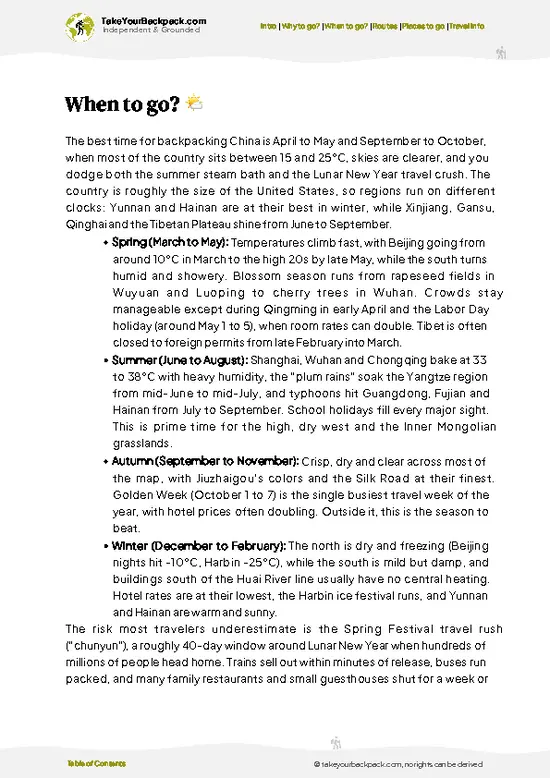
🌤️ When to go?Choosing the right time of year


  • Weather: Spring (April to June) and autumn (September to November) offer mild, stable weather. Avoid summer’s heavy rains and winter’s biting cold, which can drop below -5°C (23°F) at night.

  • Temperature: Daytime highs range from 15-25°C (59-77°F) in spring and autumn, perfect for hiking without overheating or freezing.

  • Daylight Hours: Spring and autumn provide about 10-12 hours of daylight, enough for full-day treks without rushing.

  • Crowds: Peak tourist season hits during Chinese holidays and May, making trails crowded and accommodations pricier.

  • Seasonal Activities: Spring blooms and autumn foliage add natural color, enhancing the experience beyond just the climb.

  • Price Fluctuations: Expect higher prices during Golden Week (early October) and Labor Day (early May); off-peak months
read more 👉

  • Weather: Spring (April to June) and autumn (September to November) offer mild, stable weather. Avoid summer’s heavy rains and winter’s biting cold, which can drop below -5°C (23°F) at night.

  • Temperature: Daytime highs range from 15-25°C (59-77°F) in spring and autumn, perfect for hiking without overheating or freezing.

  • Daylight Hours: Spring and autumn provide about 10-12 hours of daylight, enough for full-day treks without rushing.

  • Crowds: Peak tourist season hits during Chinese holidays and May, making trails crowded and accommodations pricier.

  • Seasonal Activities: Spring blooms and autumn foliage add natural color, enhancing the experience beyond just the climb.

  • Price Fluctuations: Expect higher prices during Golden Week (early October) and Labor Day (early May); off-peak months offer better deals on lodging and transport.


Pro-tip: Aim for late April or mid-October to dodge crowds and enjoy crisp air, saving your energy and wallet for the summit views that truly count.


source: climatestotravel.comJANJanuary: below average for travelingFEBFebruary: below average for travelingMARMarch: good for travelingAPRApril: highly recommended for travelingMAYMay: good for travelingJUNJune: highly recommended for travelingJULJuly: fair for travelingAUGAugust: fair for travelingSEPSeptember: highly recommended for travelingOCTOctober: highly recommended for travelingNOVNovember: highly recommended for travelingDECDecember: below average for traveling
when-to-go

✈️ The backpacker research shortcutChina Travel Guide

An offline-friendly backpacking guide with optimized travel routes, ranked highlights, transport advice, and the best areas to stay.
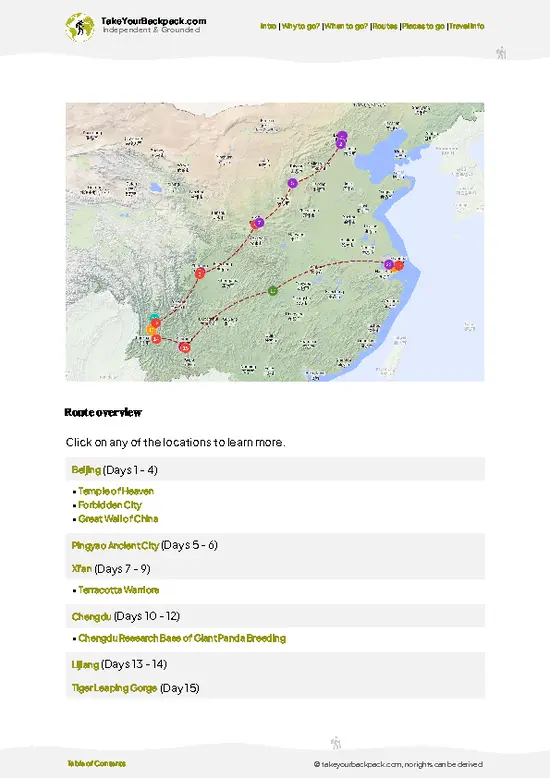
example page 0 from our offline Travel Guide for China
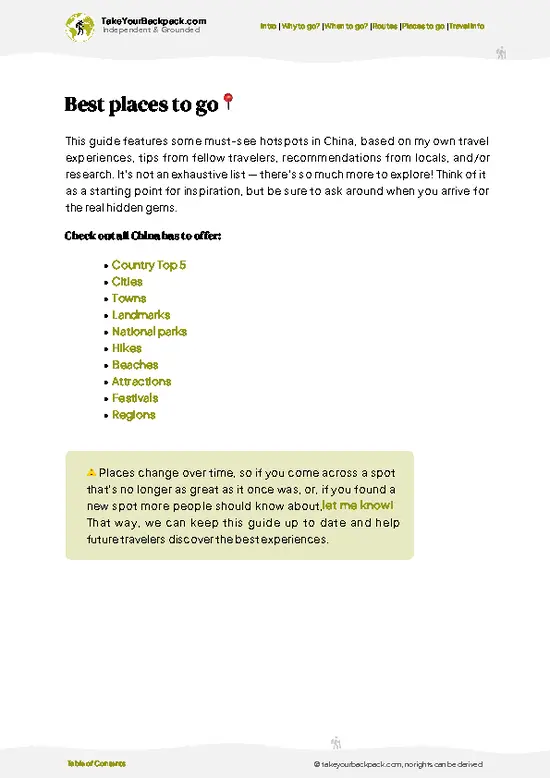
example page 1 from our offline Travel Guide for China
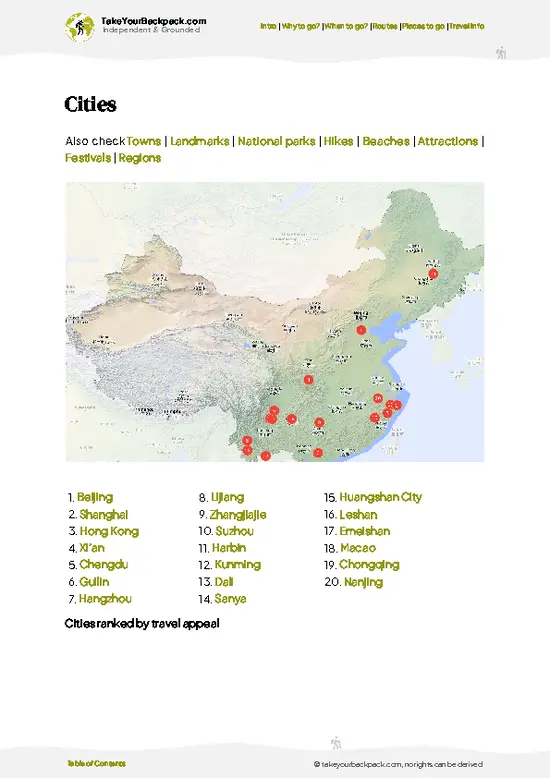
example page 2 from our offline Travel Guide for China
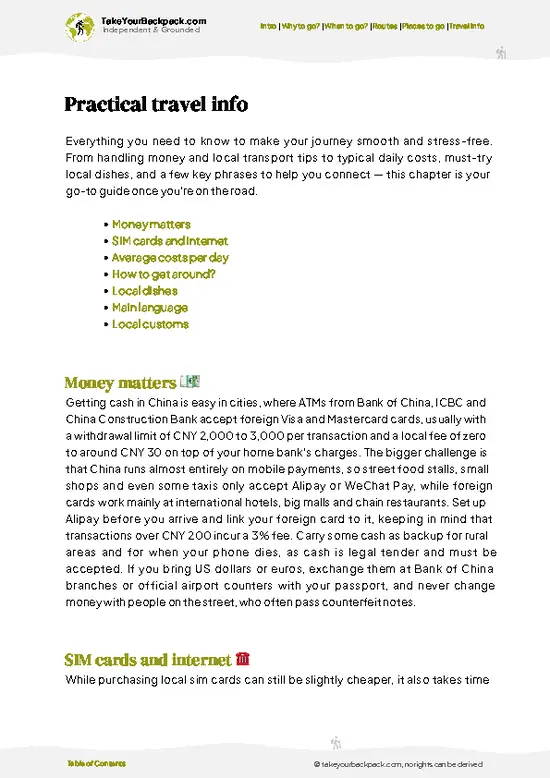
example page 3 from our offline Travel Guide for China
example page 4 from our offline Travel Guide for China
example page 5 from our offline Travel Guide for China
example page 6 from our offline Travel Guide for China
example page 7 from our offline Travel Guide for China
The digital guide (496 pages) contains:
139 highlights, ranked by travel appeal
Optimized 14, 21 & 30-day travel routes
Cities, national parks, landmarks, beaches
How to get around
Offline-friendly for travel without Wi-Fi
👉 Click to see all 30+ guide features

📅 Plan smarter in minutes, not weeks
Month by month travel advice
Festivals & national holidays
Budget expectations

🗺️ Go to the right places, skip the overrated ones
Honest pros & cons of destinations
Top hikes, parks & viewpoints
Lesser-known places most travelers miss
Clear “worth it vs skip it” guidance

🛏️ Travel smoothly without rookie mistakes
Best areas to stay
Transport systems explained simply
Common scams & safety advice
SIM cards, money & practical tips

🌍 Understand the country, not just visit it
Culture & traditions
52 Essential phrases & customs
Festivals worth planning around
Traveler-friendly historical context
Insights that make places more meaningful

📱 Built for real travel conditions
Fully downloadable PDF
Works completely offline
Optimized for phone use
Useful in remote areas & buses
Everything in one place
Save weeks of stressful planning
Get instant access to your full guide. 30‑day money-back guarantee.


By proceeding you agree to our terms.
Sent to your inbox immediately after payment • 100% Secure Checkout
Best Backpacking Travel Advisor 2025 tourism awardBest Backpacking
Travel Advisor
2025
What others say about Take Your Backpack Guides:
⭐⭐⭐⭐⭐
Fantastic, amazing amount of information!
⭐⭐⭐⭐⭐
My goodness this is amazing, it's what I've been looking for hats off too you!
⭐⭐⭐⭐⭐
I think this is absolutely BRILLIANT
⭐⭐⭐⭐
Very complete and informative. It's still missing places, but I gotta to commend you
⭐⭐⭐⭐⭐
This is truly amazing, thank you, can't wait to explore it with my kids!
⭐⭐⭐⭐⭐
Awesome resource, thank you!
⭐⭐⭐⭐⭐
This is amazing! Can't wait to explore the ones I haven't seen
⭐⭐⭐⭐
I love this! Well done, great idea.
⭐⭐⭐⭐⭐
Thanks for taking the time to make this gem!
⭐⭐⭐⭐⭐
This might be the best website I've ever seen.
⭐⭐⭐⭐⭐
Congratulations, and thank you so much for your work; it's incredibly valuable.
⭐⭐⭐⭐
In all seriousness I think you did a great job pointing out the important spots
⭐⭐⭐⭐⭐
10/10 very good
⭐⭐⭐⭐⭐
As someone who's only just starting to visit regularly this is awesome, thank you.
⭐⭐⭐⭐
Thank you very much! I'm going to visit my dad, it's going to be very useful!
⭐⭐⭐⭐⭐
This is really cool! We'll be travelling for the first time and this definitely come in handy.
⭐⭐⭐⭐⭐
You are now our minister of culture, congratulations 👨‍💼
⭐⭐⭐⭐⭐
Just wanted to tell you that this is a pearl! Going to follow your recommendations.
⭐⭐⭐⭐⭐
This is so cool. I'll definitely be using the resource for my travels soon.
⭐⭐⭐⭐⭐
This is very impressive! Good work.
⭐⭐⭐⭐⭐
This is an amazing and informative site. Very well done!

🛏️ Where to stay?Best areas to stay in China

Mount Tai National Park offers a few solid options for backpackers. Inside the park, the Mount Tai Hotel provides basic accommodations with easy access to trails. It’s not luxurious, but it’s convenient for early morning hikes.

If you prefer a bit more character, head to Tai’an, the nearest city. It’s just a short bus ride from the park entrance. Here, you’ll find budget hostels like GreenTree Inn and 7 Days Inn, both offering clean rooms and a local vibe.

Be mindful of hidden costs. Entrance fees can add up, especially if you plan to use the cable car. Bring cash; many places don’t accept … read more 👉
Mount Tai National Park offers a few solid options for backpackers. Inside the park, the Mount Tai Hotel provides basic accommodations with easy access to trails. It’s not luxurious, but it’s convenient for early morning hikes.

If you prefer a bit more character, head to Tai’an, the nearest city. It’s just a short bus ride from the park entrance. Here, you’ll find budget hostels like GreenTree Inn and 7 Days Inn, both offering clean rooms and a local vibe.

Be mindful of hidden costs. Entrance fees can add up, especially if you plan to use the cable car. Bring cash; many places don’t accept cards. Staying in Tai’an gives you flexibility for meals and supplies, which can save you energy for the climb. Prioritize comfort and convenience to make the most of your adventure.

👛 Costs (as of 14 January 2025)Typical daily expenses

Visiting Mount Tai National Park in China can be a rewarding experience, but it’s essential to be aware of the costs involved to avoid any surprises.

Entrance fees typically range from €20 to €30 (about $22 to $33). This fee grants you access to the park, but it’s worth noting that additional costs can add up quickly. If you plan to take the cable car, expect to pay around €15 to €25 ($16 to $27) each way. Hiking is free, but the trails can be steep and challenging, so be prepared for a workout.

Food options inside the park can be limited and pricier than outside. Budget around €5 to €10 ($6 to $11) for a basic meal. If you want to save money, consider packing snacks or a lunch from a nearby town.

Accommodation varies widely. If you’re looking to stay in a hotel near the park, prices can … read more 👉
Visiting Mount Tai National Park in China can be a rewarding experience, but it’s essential to be aware of the costs involved to avoid any surprises.

Entrance fees typically range from €20 to €30 (about $22 to $33). This fee grants you access to the park, but it’s worth noting that additional costs can add up quickly. If you plan to take the cable car, expect to pay around €15 to €25 ($16 to $27) each way. Hiking is free, but the trails can be steep and challenging, so be prepared for a workout.

Food options inside the park can be limited and pricier than outside. Budget around €5 to €10 ($6 to $11) for a basic meal. If you want to save money, consider packing snacks or a lunch from a nearby town.

Accommodation varies widely. If you’re looking to stay in a hotel near the park, prices can range from €30 to €100 ($33 to $110) per night, depending on the level of comfort you desire. Booking in advance can help secure better rates.

Transportation to the park is another factor. If you’re coming from nearby cities like Tai’an, a bus ticket will cost around €2 to €5 ($2.20 to $5.50). Taxis or ride-sharing services will be more expensive, so factor that into your budget.

In summary, while the entrance fee is reasonable, keep an eye on the additional costs for transportation, food, and accommodation. Planning ahead will help you enjoy the park without breaking the bank.


source: chinadiscovery.com
⚠️ Prices can change and everyone travels differently, so take this as a rough guide. Hope it helps you plan your adventure!

🥾 TrailsBest hikes in Mount Tai national park

Mount Tai National Park is a gem for hikers looking to soak in stunning landscapes and rich cultural history. The park is known for its steep ascents and breathtaking views, especially from the summit, which is often shrouded in mist, adding a mystical vibe to your trek. The terrain varies from well-maintained stone steps to rugged paths, so you’ll get a real workout while enjoying the scenery. Wildlife is present, too; keep an eye out for monkeys and various bird species that call this area home.

One of the main trails is the Tianzhu Peak Trail. Here are the details:
  • Length: 7 km
  • Estimated Duration:
read more 👉
Mount Tai National Park is a gem for hikers looking to soak in stunning landscapes and rich cultural history. The park is known for its steep ascents and breathtaking views, especially from the summit, which is often shrouded in mist, adding a mystical vibe to your trek. The terrain varies from well-maintained stone steps to rugged paths, so you’ll get a real workout while enjoying the scenery. Wildlife is present, too; keep an eye out for monkeys and various bird species that call this area home.

One of the main trails is the Tianzhu Peak Trail. Here are the details:
  • Length: 7 km
  • Estimated Duration: 3-4 hours
  • Difficulty Level: Moderate to Challenging
  • Key Features: Stunning panoramic views, ancient temples, and the famous stone inscriptions
  • Terrain: Steep stone steps, rocky paths, and some sections with loose gravel

Getting to Mount Tai is pretty straightforward. You can catch a train or a bus to Tai’an, which is the nearest city, and from there, local buses or taxis can take you to the park entrance. Just a heads up, it can get crowded, especially during weekends and holidays, so try to go on a weekday if you can. As for the entrance fee, there is one, but it’s relatively low, making it a budget-friendly option for travelers. Just remember to bring plenty of water and snacks, as options on the trail can be limited!
⚠️ Hiking info can sometimes be outdated or inaccurate. Before you hit the trail, check the latest conditions with locals. If you do spot anything that's off, I'd love to hear from you, so I can update it for fellow travelers.

🛡️ SafetyScams, Hazards, and Annoyances

Mount Tai National Park offers a well-maintained trail system, but don’t underestimate the terrain. Steep sections can challenge your footing, especially when wet. Weather can shift quickly; be prepared for sudden rain or temperature drops, particularly in spring and autumn.

Altitude isn’t extreme, but if you’re sensitive, take it slow. Wildlife is generally shy, but keep your distance from any animals you encounter. Respect their space and avoid feeding them.

Pack layers, sturdy shoes, and plenty of water. Timing your hike for early morning or late afternoon can help you avoid crowds and enjoy the tranquility. Stay aware of your surroundings, and you’ll have a rewarding experience.

Other Chinese national parks near Mount Tai

Explore more nearby:


💡 Not sure where to go next?
Create a personalized itinerary for China including Mount Tai and the places that fit your trip.

Generate my itinerary

👉 Discover all national parks

Or checkout all China has to offer (think cities, towns, villages, national parks, hikes, beaches, festivals)
Country photo of China

We 💚 feedbackSumming up the experience

Mount Tai National Park is a spiritual haven, where ancient temples and breathtaking views collide. You’ll feel the weight of history with every step. But be ready for the crowds—especially during peak seasons. They can drain your energy and patience. Plan your visit wisely, and you’ll savor the moments that truly matter.

✈️ When did I visit China?
As part of my 1.5 year travel around the world trip, I visited China in August 2015, coming from Mongolia by the TransMongolia Express.

✍️ Help improve this page!
The information on this page is based on my own backpacking experience in China, supplemented with up-to-date research and feedback from other travelers. Travel details can change, so if you notice anything outdated or incomplete, feel free to let me know.


🙋‍♂️ Give feedback

👋 Meet the founderWho’s Behind Take Your Backpack?

Johan, backpacker and founder of TakeYourBackpackHi, I’m Johan (Netherlands 🇳🇱), the creator of TakeYourBackpack. Over the past decade, I’ve backpacked through 80+ countries across six continents, gaining extensive experience with independent travel, long-term trips, and overland routes.

This site is built on a combination of firsthand travel experience and carefully curated insights from other backpackers. Many guides are based on places I’ve personally visited, while others bring together tips, observations, and practical advice shared by trusted travelers I’ve met along the way.

The goal is to provide realistic, experience-driven guidance — not generic itineraries — so you can explore destinations with better context, clearer expectations, and more confidence.

Get full China guide •
Instant download • 139 highlights • Full Offline guide