×

China🇨🇳 | citiesRuiliborder town, jade markets, cross-border trade | things to do and best time to go

Explore JinghongExplore Manzhouli

Backpacking in Ruili
👀 For curious travelerscity ranked #39
By Johan Kruseman 🇳🇱 | Updated June 11, 2026

Most people assume Ruili is just a dusty border crossing for traders and smugglers; it’s actually a small, chaotic frontier city with more texture than its reputation. Sitting in southwest Yunnan on the Myanmar border, it feels closer to Mandalay than Beijing. For backpackers, it’s cheap, safe enough if you stay street-smart, and fascinating for markets, jade trade, and Dai/Jingpo culture, but nightlife is seedy, English is rare, and it’s far less polished than Dali or Kunming—great if you like edges, frustrating if you crave comfort.

Discover everything you want to know in the 📖 China Travel Guide.


Get your China guide
139 ranked highlights, routes & tips, works offline (496 pages)
Loading the map 🌍
CLICK TO FILTER
cities
towns
landmarks
national parks
hikes
beaches
attractions
festivals
regions
SHOW COUNTRY’S BESTSHOW ALL

✨ Why go?
Ranked #39 city in China
The unique appeal for travelers

Ruili is a strategic stop for backpackers weaving through Yunnan. It offers a unique blend of affordable hostels and delicious local food, making it easy to recharge without breaking the bank. The city is walkable, allowing you to explore its vibrant streets and markets at your own pace. Plus, it serves as a basecamp for day trips to nearby attractions, maximizing your adventure without the hassle of constant packing. The nightlife is laid-back yet lively, perfect for unwinding after a day of exploration. If you’re looking for a place that balances comfort and value, Ruili fits the bill.
Want to include Ruili in your China route?
Create a personalized China itinerary that includes Ruili and the places that fit your trip — based on your travel style, budget, and available time. Get your route in seconds.

Generate my trip

💡 HighlightsEssential experiences to have while visiting Ruili

Quick check before I start: do you want the places named with their Chinese names (帮忙确认地名更准确), and is it okay to include Jiegao and Wanding (the border-market areas) which are technically inside Ruili’s administrative area?
Spotted a mistake or missing something? Contact us.

🏘️ NeighborhoodsNeighborhood guide to Ruili

Ruili is a vibrant crossroads where cultures collide, making it a fascinating stop for backpackers. Here’s how the neighborhoods stack up:

City Center: The heartbeat of Ruili. Bustling markets and street food tempt you at every corner. Affordable guesthouses abound, making it ideal for short stays. Walkable and lively, it’s perfect for night owls who enjoy local bars.

Jiegao: A quieter area with a more laid-back vibe. It’s close to the border, offering unique cultural exchanges. Ideal for longer stays, you’ll find cozy accommodations and easy access to transport. Less nightlife, more local charm.

Shuanglong: A blend of nature and urban life. Parks and green spaces provide a refreshing escape. It’s a bit further from the action, but perfect for those seeking tranquility while still being connected.

⌛️ 1 dayHow to make the most of one day

Ruili, a vibrant border town in Yunnan, China, is a fascinating blend of cultures, where Chinese and Burmese influences collide. Start your day in the bustling streets of the Ruili Old Town. Grab a bowl of local rice noodles at a street stall; the flavors will wake you up better than any coffee.

After breakfast, stroll through the lively market, where you can find everything from fresh produce to intricate handicrafts. Don’t miss the Ruili Jade Market; even if you’re not buying, the atmosphere is electric.

In the afternoon, head to the less-visited but captivating Jiegao Border Crossing. It’s a unique spot to witness the daily hustle of cross-border trade. You’ll feel the pulse of the region here.

As evening approaches, find a cozy spot in the Yunnan Restaurant District. Enjoy a plate … read more 👉
Ruili, a vibrant border town in Yunnan, China, is a fascinating blend of cultures, where Chinese and Burmese influences collide. Start your day in the bustling streets of the Ruili Old Town. Grab a bowl of local rice noodles at a street stall; the flavors will wake you up better than any coffee.

After breakfast, stroll through the lively market, where you can find everything from fresh produce to intricate handicrafts. Don’t miss the Ruili Jade Market; even if you’re not buying, the atmosphere is electric.

In the afternoon, head to the less-visited but captivating Jiegao Border Crossing. It’s a unique spot to witness the daily hustle of cross-border trade. You’ll feel the pulse of the region here.

As evening approaches, find a cozy spot in the Yunnan Restaurant District. Enjoy a plate of grilled fish while soaking in the local vibe. The day wraps up perfectly with a walk along the river, where the sunset casts a warm glow over the city.
Turn your Ruili visit into an China adventure
Build a complete China route with Ruili, hidden gems, must-see destinations, and realistic travel times included.

Generate my trip

🌤️ When to go?Weather, crowds, and seasonal trade-offs


  • Weather: Ruili’s climate swings between a hot, humid summer and a mild winter. The rainy season peaks from May to September, often turning trails into mudslides and flooding streets, so avoid these months if you want dry hiking and exploring.

  • Temperature: Winters are pleasantly cool, averaging 10-15°C (50-59°F), perfect for trekking without overheating. Summers can hit 30-35°C (86-95°F), which might sap your energy fast.

  • Daylight Hours: Daylight is fairly consistent year-round, around 11-13 hours, giving you plenty of time to roam without rushing.

  • Crowds: Tourist traffic spikes during Chinese national holidays and the dry season, so expect more noise and higher prices then. Off-peak months offer solitude and better deals.

  • Seasonal Activities: Spring and autumn bring vibrant local festivals
read more 👉

  • Weather: Ruili’s climate swings between a hot, humid summer and a mild winter. The rainy season peaks from May to September, often turning trails into mudslides and flooding streets, so avoid these months if you want dry hiking and exploring.

  • Temperature: Winters are pleasantly cool, averaging 10-15°C (50-59°F), perfect for trekking without overheating. Summers can hit 30-35°C (86-95°F), which might sap your energy fast.

  • Daylight Hours: Daylight is fairly consistent year-round, around 11-13 hours, giving you plenty of time to roam without rushing.

  • Crowds: Tourist traffic spikes during Chinese national holidays and the dry season, so expect more noise and higher prices then. Off-peak months offer solitude and better deals.

  • Seasonal Activities: Spring and autumn bring vibrant local festivals and markets, adding cultural layers to your trip that summer’s heat and rain often wash out.

  • Price Fluctuations: Accommodation and transport costs rise sharply in peak season (October to December). Booking off-season can save you a solid 20-30%.


Pro-tip: Aim for late autumn—October to early November—for a sweet spot of cool weather, fewer crowds, and cultural buzz without the premium prices.


source: climatestotravel.comJANJanuary: highly recommended for travelingFEBFebruary: highly recommended for travelingMARMarch: highly recommended for travelingAPRApril: highly recommended for travelingMAYMay: fair for travelingJUNJune: fair for travelingJULJuly: fair for travelingAUGAugust: fair for travelingSEPSeptember: fair for travelingOCTOctober: excellent for travelingNOVNovember: excellent for travelingDECDecember: good for traveling
when-to-go

✈️ The backpacker research shortcutChina Travel Guide

An offline-friendly backpacking guide with optimized travel routes, ranked highlights, transport advice, and the best areas to stay.
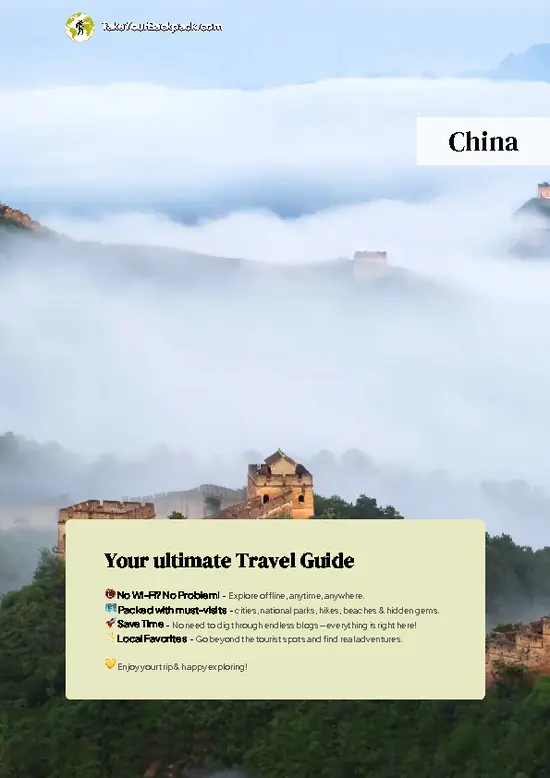
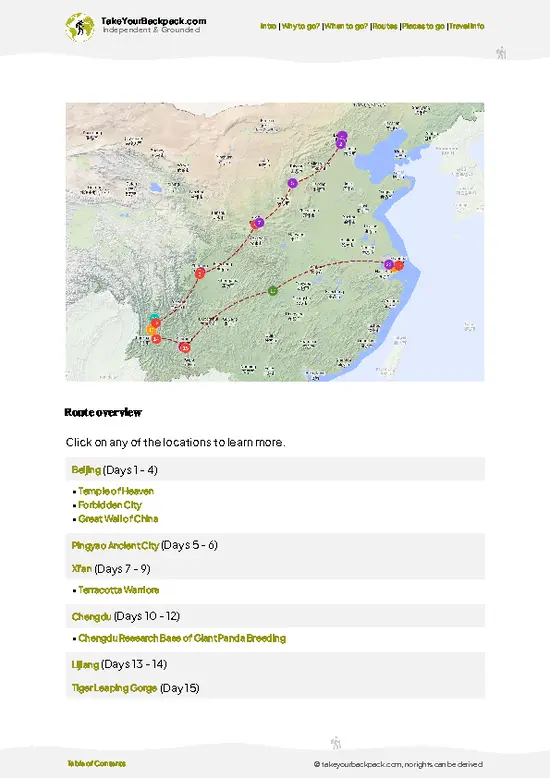
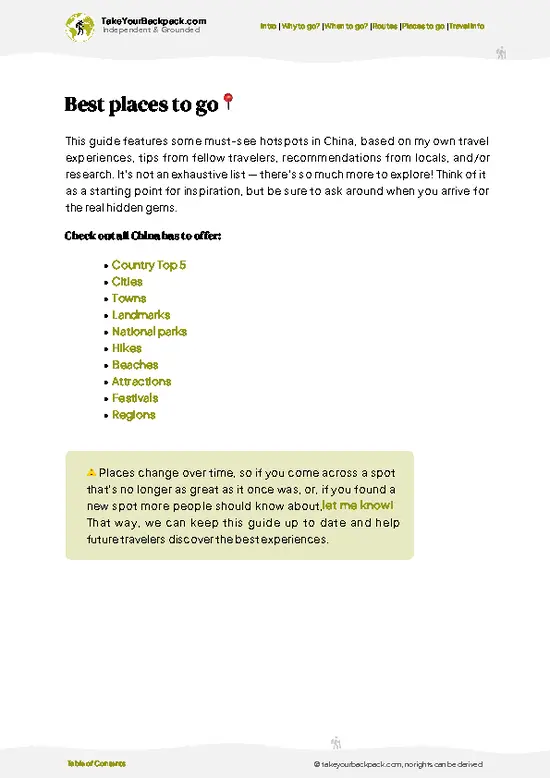
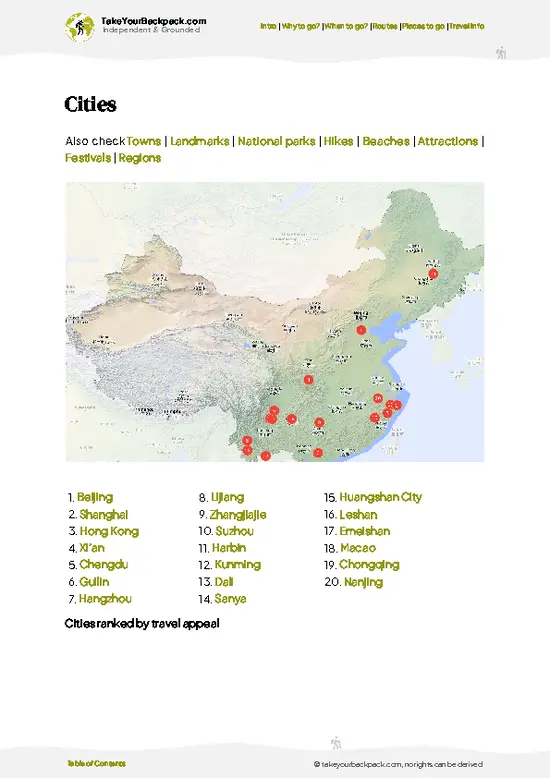
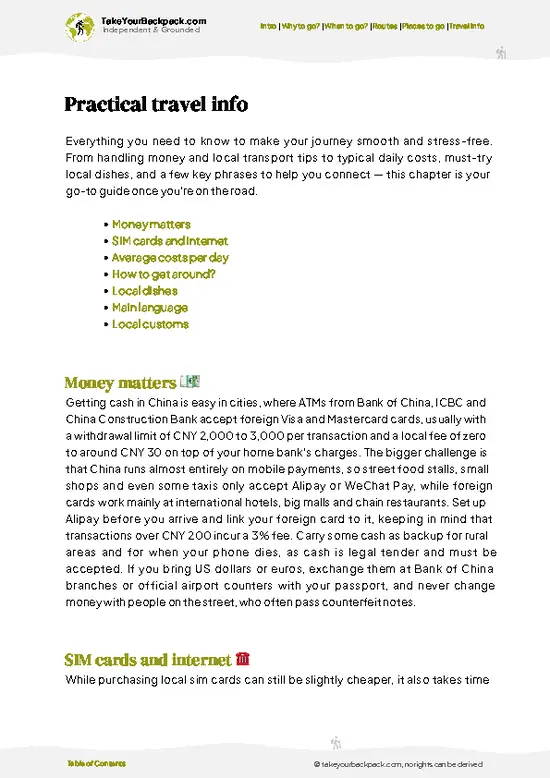
example page 0 from our offline Travel Guide for China
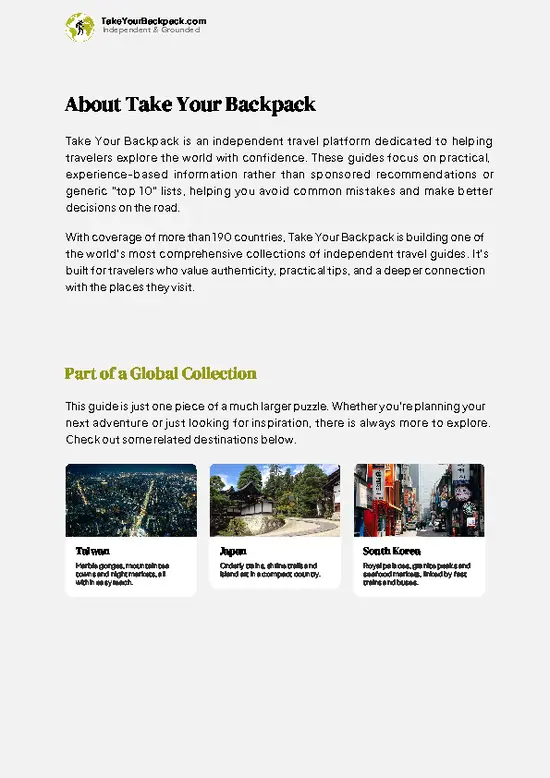
example page 1 from our offline Travel Guide for China
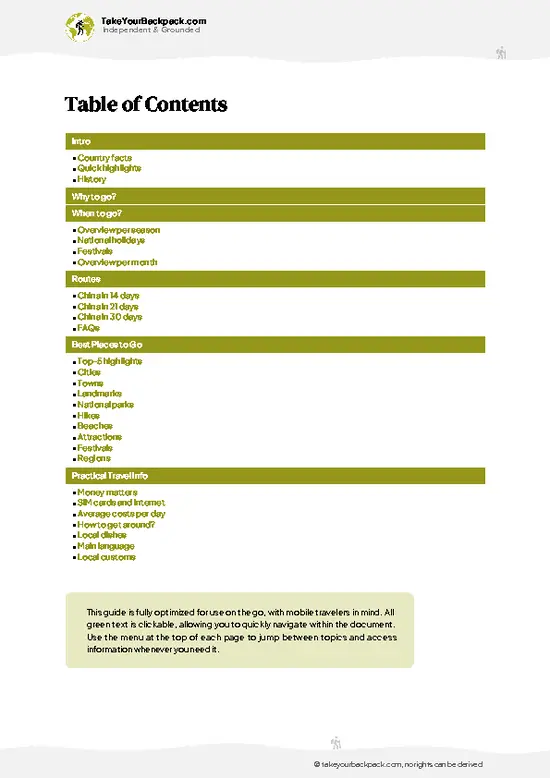
example page 2 from our offline Travel Guide for China
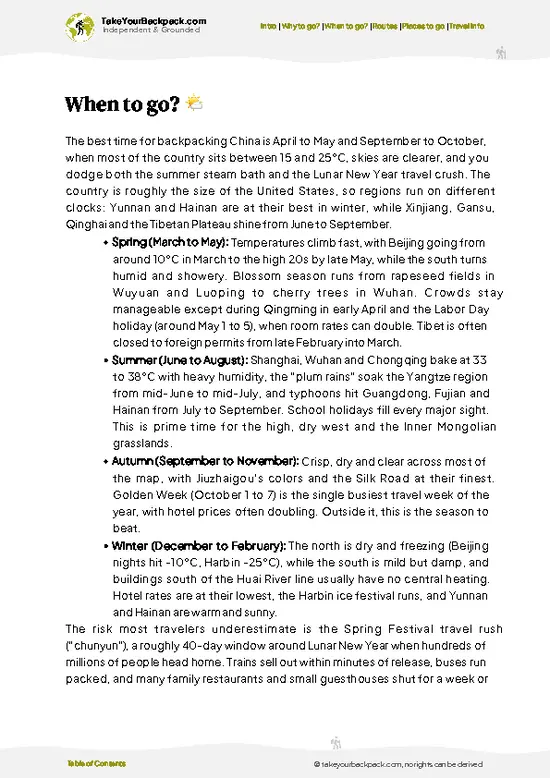
example page 3 from our offline Travel Guide for China
example page 4 from our offline Travel Guide for China
example page 5 from our offline Travel Guide for China
example page 6 from our offline Travel Guide for China
example page 7 from our offline Travel Guide for China
The digital guide (496 pages) contains:
139 highlights, ranked by travel appeal
Optimized 14, 21 & 30-day travel routes
Cities, national parks, landmarks, beaches
How to get around
Offline-friendly for travel without Wi-Fi
👉 Click to see all 30+ guide features

📅 Plan smarter in minutes, not weeks
Month by month travel advice
Festivals & national holidays
Budget expectations

🗺️ Go to the right places, skip the overrated ones
Honest pros & cons of destinations
Top hikes, parks & viewpoints
Lesser-known places most travelers miss
Clear “worth it vs skip it” guidance

🛏️ Travel smoothly without rookie mistakes
Best areas to stay
Transport systems explained simply
Common scams & safety advice
SIM cards, money & practical tips

🌍 Understand the country, not just visit it
Culture & traditions
52 Essential phrases & customs
Festivals worth planning around
Traveler-friendly historical context
Insights that make places more meaningful

📱 Built for real travel conditions
Fully downloadable PDF
Works completely offline
Optimized for phone use
Useful in remote areas & buses
Everything in one place
Save weeks of stressful planning
Get instant access to your full guide. 30‑day money-back guarantee.


By proceeding you agree to our terms.
Sent to your inbox immediately after payment • 100% Secure Checkout
Best Backpacking Travel Advisor 2025 tourism awardBest Backpacking
Travel Advisor
2025
What others say about Take Your Backpack Guides:
⭐⭐⭐⭐⭐
Fantastic, amazing amount of information!
⭐⭐⭐⭐⭐
My goodness this is amazing, it's what I've been looking for hats off too you!
⭐⭐⭐⭐⭐
I think this is absolutely BRILLIANT
⭐⭐⭐⭐
Very complete and informative. It's still missing places, but I gotta to commend you
⭐⭐⭐⭐⭐
This is truly amazing, thank you, can't wait to explore it with my kids!
⭐⭐⭐⭐⭐
Awesome resource, thank you!
⭐⭐⭐⭐⭐
This is amazing! Can't wait to explore the ones I haven't seen
⭐⭐⭐⭐
I love this! Well done, great idea.
⭐⭐⭐⭐⭐
Thanks for taking the time to make this gem!
⭐⭐⭐⭐⭐
This might be the best website I've ever seen.
⭐⭐⭐⭐⭐
Congratulations, and thank you so much for your work; it's incredibly valuable.
⭐⭐⭐⭐
In all seriousness I think you did a great job pointing out the important spots
⭐⭐⭐⭐⭐
10/10 very good
⭐⭐⭐⭐⭐
As someone who's only just starting to visit regularly this is awesome, thank you.
⭐⭐⭐⭐
Thank you very much! I'm going to visit my dad, it's going to be very useful!
⭐⭐⭐⭐⭐
This is really cool! We'll be travelling for the first time and this definitely come in handy.
⭐⭐⭐⭐⭐
You are now our minister of culture, congratulations 👨‍💼
⭐⭐⭐⭐⭐
Just wanted to tell you that this is a pearl! Going to follow your recommendations.
⭐⭐⭐⭐⭐
This is so cool. I'll definitely be using the resource for my travels soon.
⭐⭐⭐⭐⭐
This is very impressive! Good work.
⭐⭐⭐⭐⭐
This is an amazing and informative site. Very well done!

🛏️ Where to stay?Best areas to stay in China

In Ruili, the best spot for backpackers is the area around the city center near the border market. It’s where you’ll find a cluster of budget hostels catering to solo travelers and small groups, making it easy to meet others without sacrificing safety. This neighborhood hums with local commerce and street food stalls, offering a raw, authentic vibe that’s both lively and approachable. Compared to the quieter, more residential outskirts, staying here means trading a bit of peace for convenience and social energy—perfect if you want to dive into the city’s pulse without breaking the bank or feeling isolated.

🚌 Getting aroundHow to get from A to B

Ruili moves at the pace of a border town caught between two worlds—there’s a pulse of urgency, but it’s wrapped in a layer of improvisation. Schedules exist, but they’re more like guidelines than ironclad rules. You’ll find that timing here is a dance between waiting and seizing the moment, where the flow is less about strict order and more about reading the crowd and the mood of the day. This is a place where your choice of transit isn’t just about getting from A to B; it’s about how much time, money, and comfort you’re willing to trade off to keep your trip moving smoothly.


  • Walking: The cheapest and most flexible option—free, obviously, and perfect for exploring the bustling market streets and border checkpoints at your own pace. Expect to cover 3-5 km comfortably in an hour, but be
read more 👉
Ruili moves at the pace of a border town caught between two worlds—there’s a pulse of urgency, but it’s wrapped in a layer of improvisation. Schedules exist, but they’re more like guidelines than ironclad rules. You’ll find that timing here is a dance between waiting and seizing the moment, where the flow is less about strict order and more about reading the crowd and the mood of the day. This is a place where your choice of transit isn’t just about getting from A to B; it’s about how much time, money, and comfort you’re willing to trade off to keep your trip moving smoothly.


  • Walking: The cheapest and most flexible option—free, obviously, and perfect for exploring the bustling market streets and border checkpoints at your own pace. Expect to cover 3-5 km comfortably in an hour, but be ready for uneven sidewalks and crowds.

  • Local Buses: Runs roughly from 6:30 AM to 8:30 PM, fares hover around 1-2 RMB. Slow and often packed, but a solid budget choice if you’re not in a rush and want to blend in with locals.

  • Shared Taxis: Depart when full, so timing is unpredictable but usually frequent during the day. Costs about 10-15 RMB for short trips around town. Faster than buses, more comfortable, but you sacrifice schedule certainty.

  • Motorbike Taxis: Available 24/7, prices vary but start around 10 RMB for short distances. Quick and nimble through traffic, but less safe and no shelter from weather—comfort is minimal, speed is high.

👛 Costs (as of 1 February 2025)How expensive it really is

Backpacking in Ruili, China, offers a fascinating blend of affordability and local flavor, but knowing the real costs helps you play the game smart.
  • Dorm Accommodation (High Season and Off-Season): In high season, expect to pay around $10-$15 per night for a dorm bed in a basic guesthouse or hostel. Off-season, prices drop to about $7-$10. The difference reflects demand spikes during local festivals and border trade activity.
  • Meals: Street food and local eateries dominate here. A filling meal will typically run you $2-$4, with noodle soups, rice dishes, and grilled snacks as staples. If you opt for slightly more tourist-oriented spots, budget $5-$7 per meal. Breakfast can be as low as $1.50 if you stick to local markets.
  • Local Transport: Short tuk-tuk or motorbike taxi rides cost between
read more 👉
Backpacking in Ruili, China, offers a fascinating blend of affordability and local flavor, but knowing the real costs helps you play the game smart.
  • Dorm Accommodation (High Season and Off-Season): In high season, expect to pay around $10-$15 per night for a dorm bed in a basic guesthouse or hostel. Off-season, prices drop to about $7-$10. The difference reflects demand spikes during local festivals and border trade activity.
  • Meals: Street food and local eateries dominate here. A filling meal will typically run you $2-$4, with noodle soups, rice dishes, and grilled snacks as staples. If you opt for slightly more tourist-oriented spots, budget $5-$7 per meal. Breakfast can be as low as $1.50 if you stick to local markets.
  • Local Transport: Short tuk-tuk or motorbike taxi rides cost between $0.50 and $1.50 depending on distance. These are the go-to for quick hops around town. Bargaining is common but keep it fair.
  • City Transport Pass: Ruili doesn’t have a formal city transport pass system like bigger Chinese cities. Most travelers rely on tuk-tuks or shared taxis, so no fixed pass cost applies here.
  • Basic Activities/Entry Fees: Most cultural sites and markets have minimal or no entry fees, usually under $2. If you want to explore border markets or local temples, budget around $1-$3 for entry or small donations.
  • Miscellaneous Expenses: Think bottled water, snacks, phone SIM cards, or occasional laundry. These add up to about $2-$4 daily. SIM cards with data are cheap and essential for navigation and communication, usually around $5 for a basic plan lasting a week.

All told, you’re looking at a daily budget roughly between $15 and $25. This range balances the essentials without skimping on comfort or missing out on local experiences. Ruili’s charm lies in its border-town hustle and authentic street life, so spending smart here means more time soaking it all in rather than stressing over costs.
⚠️ Prices can change and everyone travels differently, so take this as a rough guide. Hope it helps you plan your adventure!

🚌 Day tripsWhere to go beyond the main area

Ruili, China, is a strategic launchpad for day trips that blend culture, nature, and adventure. Here’s how to maximize your experience without breaking the bank.

Menglun Tropical Botanical Garden
Just a two-hour bus ride from Ruili, this garden is a lush paradise showcasing diverse plant species. For around 30 RMB, you can wander through vibrant trails and soak in the tropical atmosphere. The best time to visit is during the dry season, from October to April, when the flora is in full bloom. A common mistake? Rushing through without taking time to enjoy the serene spots perfect for a picnic.


Jiegao Border Market
Only 30 minutes away, this bustling market is a sensory overload. You’ll find everything from local handicrafts to exotic snacks. A budget of about 50 RMB will cover your … read more 👉
Ruili, China, is a strategic launchpad for day trips that blend culture, nature, and adventure. Here’s how to maximize your experience without breaking the bank.

Menglun Tropical Botanical Garden
Just a two-hour bus ride from Ruili, this garden is a lush paradise showcasing diverse plant species. For around 30 RMB, you can wander through vibrant trails and soak in the tropical atmosphere. The best time to visit is during the dry season, from October to April, when the flora is in full bloom. A common mistake? Rushing through without taking time to enjoy the serene spots perfect for a picnic.


Jiegao Border Market
Only 30 minutes away, this bustling market is a sensory overload. You’ll find everything from local handicrafts to exotic snacks. A budget of about 50 RMB will cover your transport and a few tasty treats. Weekends are the liveliest, but be prepared for crowds. First-timers often miss the chance to haggle; it’s part of the fun!


Wuliang Mountain
For a more adventurous day, head to Wuliang Mountain, about an hour’s drive from Ruili. The hiking trails offer stunning views and a chance to connect with nature. Expect to spend around 80 RMB for transport and snacks. The best months are March to May when the weather is mild. Don’t underestimate the hike; wear proper shoes and bring plenty of water!
Want to know what more China offers?
The China Travel Guide describes 139 highlights, from cities to national parks, from beaches to hikes

Get the Travel Guide -

🍲 FoodWhat to Eat & Drink

In Ruili, food is a vibrant tapestry of flavors. Dive into cross-border cuisine that blends Chinese and Burmese influences. Don’t miss the rice noodles—they’re a staple, often served with spicy broth and fresh herbs. Street vendors dish out grilled skewers that sizzle with smoky goodness, while local markets buzz with the aroma of stir-fried vegetables and fragrant spices.

When it comes to drinks, try the local tea—it’s a ritual here, often enjoyed in small, social gatherings. Expect to share cups and stories. Remember, eating with your hands is common, so embrace the mess! This isn’t just a meal; it’s a communal experience.

🛡️ SafetyTraveler Safety Guide

Ruili is generally safe, but a few smart moves can enhance your experience. Stay alert in crowded markets, especially around the border areas where tourists attract attention. If you’re solo, avoid wandering too far at night; stick to well-lit streets and populated areas.

Watch for common scams, like overly friendly locals offering unsolicited help or inflated prices for services. Carry yourself confidently, and don’t hesitate to say no. A calm demeanor goes a long way in navigating any annoyances.

Other Chinese cities near Ruili

Explore more nearby:

  • Lincang—tea mountains, border trade, Dai villages| 228 km away
  • Dali—Bai minority, mountain backdrop, lakeside town| 301 km away
  • Pu’er—ancient tea forests, minority cultures, subtropical hills| 344 km away

💡 Not sure where to go next?
Create a personalized itinerary for China including Ruili and the places that fit your trip.

Generate my itinerary

👉 Discover all cities

Or checkout all China has to offer (think cities, towns, villages, national parks, hikes, beaches, festivals)
Country photo of China

We 💚 feedbackParting advice and final tips

Ruili’s charm lies in its vibrant blend of cultures and the chance to explore the bustling markets filled with unique crafts. But be prepared: language barriers can be tricky, and navigating local customs might require some patience. Embrace the challenge; it’s part of the adventure.

✈️ When did I visit China?
As part of my 1.5 year travel around the world trip, I visited China in August 2015, coming from Mongolia by the TransMongolia Express.

✍️ Help improve this page!
The information on this page is based on my own backpacking experience in China, supplemented with up-to-date research and feedback from other travelers. Travel details can change, so if you notice anything outdated or incomplete, feel free to let me know.


🙋‍♂️ Give feedback

👋 Meet the founderWho’s Behind Take Your Backpack?

Johan, backpacker and founder of TakeYourBackpackHi, I’m Johan (Netherlands 🇳🇱), the creator of TakeYourBackpack. Over the past decade, I’ve backpacked through 80+ countries across six continents, gaining extensive experience with independent travel, long-term trips, and overland routes.

This site is built on a combination of firsthand travel experience and carefully curated insights from other backpackers. Many guides are based on places I’ve personally visited, while others bring together tips, observations, and practical advice shared by trusted travelers I’ve met along the way.

The goal is to provide realistic, experience-driven guidance — not generic itineraries — so you can explore destinations with better context, clearer expectations, and more confidence.

Get full China guide •
Instant download • 139 highlights • Full Offline guide