×

Colombia🇨🇴 | citiesPopayánWhitewashed colonial core, Morro de Tulcán, Cauca students | things to do and best time to go

Explore Santa MartaExplore Pasto

Backpacking in Popayán
🌟 Highlightcity ranked #6
By Johan Kruseman 🇳🇱 | Updated October 19, 2026

Popayán is not a sleepy colonial museum frozen in white paint; it is a working university city of Cauca with live music, loud students and a serious food culture. It sits in the southwest of Colombia, in a valley at about 1,700 meters. I expected silence after dark and found a procession of drummers crossing a plaza at 9 p.m. on an ordinary weeknight. The center is compact, so skip taxis and walk. Skip any long stay too, because two nights covers the old town, and a third night only pays off if you plan a day trip. It suits culture and food people and bores anyone chasing nightlife or adrenaline. Start your first day with a coffee at Parque Caldas, then wander the whitewashed blocks until lunch.

Discover everything you want to know in the 📖 Colombia Travel Guide.


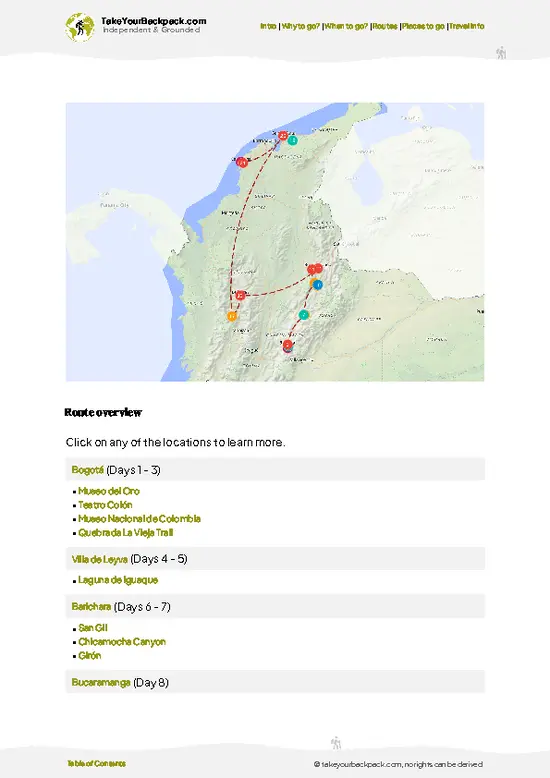
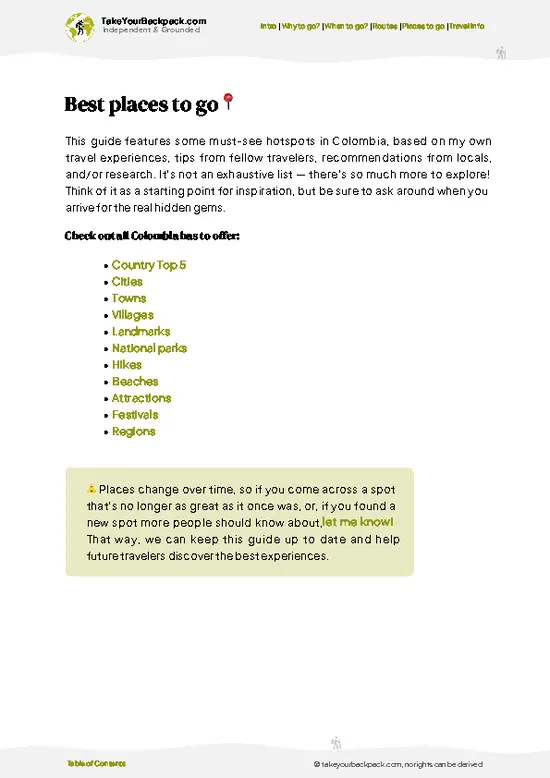
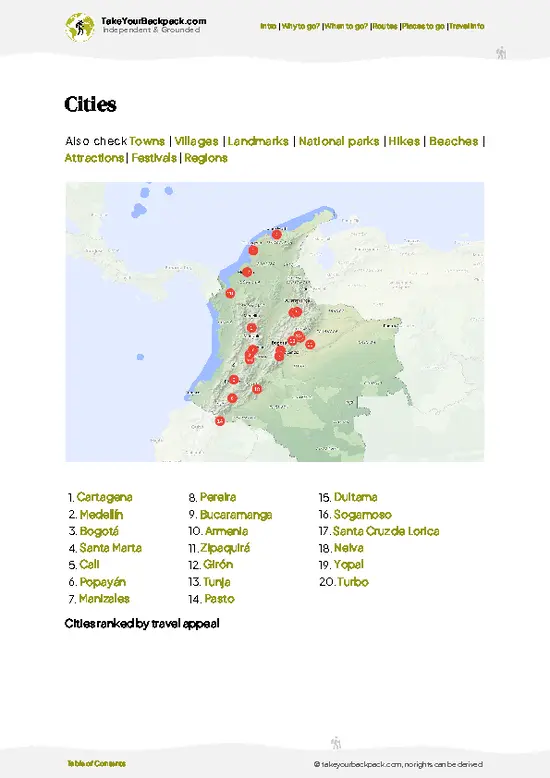
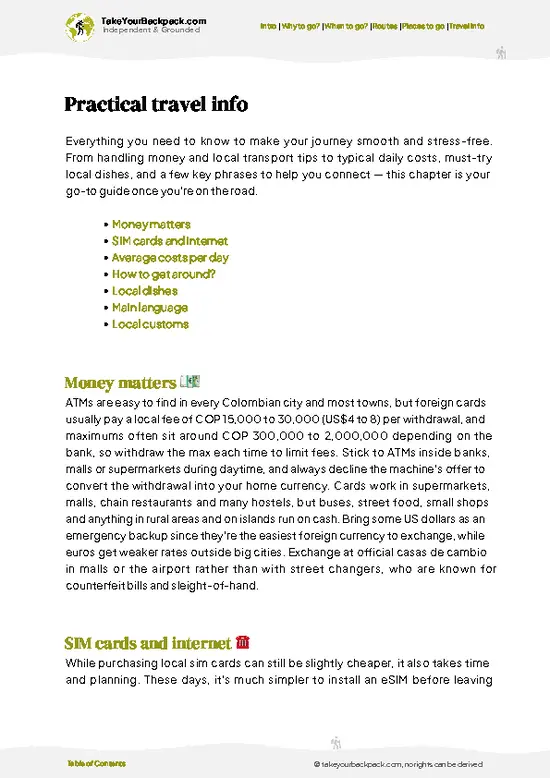
example page 0 from our offline Travel Guide for Colombia
example page 1 from our offline Travel Guide for Colombia
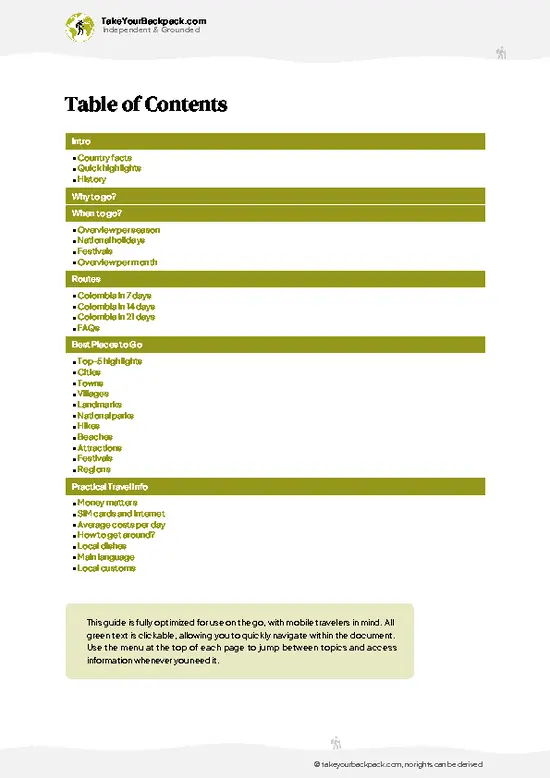
example page 2 from our offline Travel Guide for Colombia
example page 3 from our offline Travel Guide for Colombia
example page 4 from our offline Travel Guide for Colombia
example page 5 from our offline Travel Guide for Colombia
example page 6 from our offline Travel Guide for Colombia
example page 7 from our offline Travel Guide for Colombia
Loading the map 🌍
CLICK TO FILTER
cities
towns
villages
landmarks
national parks
hikes
beaches
attractions
festivals
regions
SHOW COUNTRY’S BESTSHOW ALL

✨ Why go?
Ranked #6 city in Colombia
What makes this city worth visiting

Popayán earns its place on a southern Colombia route because it is the most polished colonial center between Cali and the Andean south, and you can see it all on foot. The whitewashed grid holds so many churches, courtyards and small museums that two relaxed days feel full, with no transport needed. It also works as a staging point: the road onward to San Agustín and the Tierradentro tombs starts here, so it fits neatly into a loop toward Ecuador or the Huila highlands. Food is the other draw. The city holds UNESCO City of Gastronomy status, and local empanadas de pipián and carantanta are cheap and filling. Hostels are small and quiet, which suits sleep more than partying. If you need big nightlife or beaches, treat Popayán as a short stop. If you like slow walking, good meals and a university-town buzz, stay a little longer.

💡 HighlightsTop highlights of Popayán

  1. Centro Histórico (the White City): Whitewashed colonial blocks around Parque Caldas, rebuilt after the 1983 earthquake, are what Popayán is known for. Walk it in the morning or after 5 PM when the light is soft and the streets are cooler. Free, 1.5 to 2 hours.
  2. Puente del Humilladero: A long brick arched bridge from the 19th century that crosses the Molino creek valley at the edge of the center. It is quick and photogenic, and best in late afternoon. Free, 15 to 20 minutes.
  3. Morro de Tulcán: A grassy hill topped by a pre-Hispanic pyramid mound, with the empty pedestal of a Sebastián de Belalcázar statue that Misak protesters toppled in 2020 and a view over the red-tiled roofs. Go in the morning for clearer air. Free, 45 minutes to 1 hour, a 10 to 15 minute climb from the center.
  4. Iglesia de San
… read more 👉
  1. Centro Histórico (the White City): Whitewashed colonial blocks around Parque Caldas, rebuilt after the 1983 earthquake, are what Popayán is known for. Walk it in the morning or after 5 PM when the light is soft and the streets are cooler. Free, 1.5 to 2 hours.
  2. Puente del Humilladero: A long brick arched bridge from the 19th century that crosses the Molino creek valley at the edge of the center. It is quick and photogenic, and best in late afternoon. Free, 15 to 20 minutes.
  3. Morro de Tulcán: A grassy hill topped by a pre-Hispanic pyramid mound, with the empty pedestal of a Sebastián de Belalcázar statue that Misak protesters toppled in 2020 and a view over the red-tiled roofs. Go in the morning for clearer air. Free, 45 minutes to 1 hour, a 10 to 15 minute climb from the center.
  4. Iglesia de San Francisco: One of the city’s grandest colonial churches, two blocks from Parque Caldas, with a tall nave and a gilded altar. Visit between masses when it is quiet. Free, 20 to 30 minutes.
  5. Museo Nacional Guillermo Valencia: The house of the poet Guillermo Valencia, kept with period furniture, books and family portraits, giving you a feel for the city’s old elite. Go on a weekday morning. Around US$1 to 2, 45 minutes.
  6. Museo de Historia Natural (Universidad del Cauca): A university collection of stuffed birds, mammals, insects and some archaeological pieces, a quirky rainy-afternoon option. Entry roughly US$1 to 2, 1 hour.
  7. Mercado de Bolívar: The working market where locals buy produce, cheese and tropical fruit, including varieties you rarely see at home. Arrive before 10 AM for the best selection and to eat a cheap breakfast at the stalls. Free to enter, a plate costs about US$2 to 4, 1 hour.
  8. Ruta de las Iglesias and Semana Santa culture: The old center holds several colonial churches within a few blocks, such as La Ermita, the oldest, with worn colonial frescoes. Early morning is quietest. Free, 1 hour for a loop.
Popayán’s day-trip options include Silvia and its Tuesday indigenous market, Parque Arqueológico de Tierradentro, the Puracé volcano area and the thermal baths at Coconuco. The Mercado de Bolívar gives the clearest taste of everyday Cauca life.
Spotted a mistake or missing something? Contact us.

🏘️ NeighborhoodsHow different areas shape the experience

Popayán’s Centro Histórico is compact enough that you can cover every area on foot, so the only real choice is where to spend your hours.
  • Centro Histórico: The whitewashed colonial grid around Parque Caldas is the reason to come, and it earns most of your time. Churches, the Puente del Humilladero and the Morro de Tulcán viewpoint all sit within a 15-minute walk. Cafés, bakeries and empanada stalls fill every block, and the Holy Week processions here are famous. Spend two full days in this zone.
  • Barrio Bolívar and the north edge: Quieter streets with bars, student-oriented eateries and a few nightlife spots. It costs you little extra walking, and the evening drinks are cheaper than on the main plaza.
  • Morro de Tulcán: A short, steep climb to a pre-Hispanic mound with an empty statue pedestal and
… read more 👉
Popayán’s Centro Histórico is compact enough that you can cover every area on foot, so the only real choice is where to spend your hours.
  • Centro Histórico: The whitewashed colonial grid around Parque Caldas is the reason to come, and it earns most of your time. Churches, the Puente del Humilladero and the Morro de Tulcán viewpoint all sit within a 15-minute walk. Cafés, bakeries and empanada stalls fill every block, and the Holy Week processions here are famous. Spend two full days in this zone.
  • Barrio Bolívar and the north edge: Quieter streets with bars, student-oriented eateries and a few nightlife spots. It costs you little extra walking, and the evening drinks are cheaper than on the main plaza.
  • Morro de Tulcán: A short, steep climb to a pre-Hispanic mound with an empty statue pedestal and a city view. It takes 30 minutes in total. Go late afternoon, in a group, and skip it after dark.
  • Mercado Bolívar area: The main fresh market, loud and cheap, with fruit you won’t see elsewhere. Go for breakfast and a quick look, not a long visit.
  • Outer suburbs and the south: Mostly residential and the city’s modern sprawl. Nothing here justifies a taxi fare, so skip it unless the bus terminal is your goal.

⌛️ 1 daySeeing the highlights in 24 hours

The day is best done entirely on foot, with a long lunch break when the sun is strongest and no taxi needed inside the old town.
8:00 AM, Mercado Bolívar: Start with breakfast among the stalls, trying tamales or fresh fruit. It is where locals shop, and a short walk brings you into the center.
9:30 AM, Parque Caldas and Torre del Reloj: Circle the plaza and look into the cathedral, then walk the surrounding whitewashed streets for their courtyards.
11:00 AM, Iglesia de San Francisco: The baroque interior is worth a quick look before you cross toward the museums.
12:00 PM, Museo Nacional Negret: Modern sculpture in a colonial house, rarely busy, and a cool break from the midday glare.
1:30 PM, Lunch: Try empanadas de pipián or a set meal at a local restaurant near the plaza, then rest.
3:30 PM, Morro … read more 👉
The day is best done entirely on foot, with a long lunch break when the sun is strongest and no taxi needed inside the old town.
8:00 AM, Mercado Bolívar: Start with breakfast among the stalls, trying tamales or fresh fruit. It is where locals shop, and a short walk brings you into the center.
9:30 AM, Parque Caldas and Torre del Reloj: Circle the plaza and look into the cathedral, then walk the surrounding whitewashed streets for their courtyards.
11:00 AM, Iglesia de San Francisco: The baroque interior is worth a quick look before you cross toward the museums.
12:00 PM, Museo Nacional Negret: Modern sculpture in a colonial house, rarely busy, and a cool break from the midday glare.
1:30 PM, Lunch: Try empanadas de pipián or a set meal at a local restaurant near the plaza, then rest.
3:30 PM, Morro de Tulcán: Walk up the mound for views and a close look at the old pre-Hispanic site, then drop down toward the bridge.
5:00 PM, Puente del Humilladero: Cross the long brick bridge as the light softens, then continue to the quiet Teatro Municipal area.
6:30 PM, Cerro de las Tres Cruces or the plaza: Climb for dusk views if your legs allow it, or end with a coffee back at Parque Caldas.

🌤️ When to go?When to go for the best experience

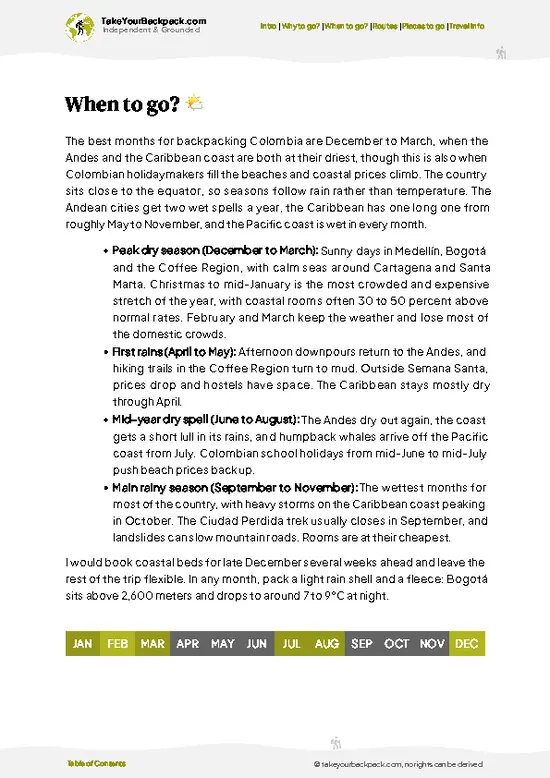
Popayán sits at about 1,740 meters, so it stays mild all year, with daytime highs around 22 to 24°C (72 to 75°F) and nights near 13 to 15°C (55 to 59°F).
  • Dry Season (June to August): Clearest skies and easiest sightseeing, with a short dry spell again in December and January. Expect higher prices and busier lodgings around holidays.
  • Rainy Seasons (March to May, October to November): Afternoon downpours are common, but mornings are often clear. Hostels have space and rates drop.
  • Holy Week (Semana Santa): The big event. Candlelit processions draw large crowds and prices climb sharply, with beds booked weeks ahead.
  • Daylight: Days run about 12 hours all year, with early dusk, so plan outdoor trips for the morning.
Book Semana Santa early or choose the week after for the same architecture with half the crowds.

source: climatestotravel.comJANJanuary: highly recommended for travelingFEBFebruary: highly recommended for travelingMARMarch: good for travelingAPRApril: fair for travelingMAYMay: fair for travelingJUNJune: excellent for travelingJULJuly: excellent for travelingAUGAugust: excellent for travelingSEPSeptember: excellent for travelingOCTOctober: fair for travelingNOVNovember: fair for travelingDECDecember: highly recommended for traveling
when-to-go

✈️ The backpacker research shortcutColombia Travel Guide

An offline-friendly backpacking guide with optimized travel routes, ranked highlights, transport advice, and the best areas to stay.
example page 0 from our offline Travel Guide for Colombia
example page 1 from our offline Travel Guide for Colombia
example page 2 from our offline Travel Guide for Colombia
example page 3 from our offline Travel Guide for Colombia
example page 4 from our offline Travel Guide for Colombia
example page 5 from our offline Travel Guide for Colombia
example page 6 from our offline Travel Guide for Colombia
example page 7 from our offline Travel Guide for Colombia
The digital guide (349 pages) contains:
✅ 115 highlights, ranked by travel appeal
✅ Optimized 7, 14 & 21-day travel routes
✅ Cities, national parks, landmarks, beaches
✅ How to get around
✅ Offline-friendly for travel without Wi-Fi
👉 Click to see all 30+ guide features

📅 Plan smarter in minutes, not weeks
✅ Month by month travel advice
✅ Festivals & national holidays
✅ Budget expectations

🗺️ Go to the right places, skip the overrated ones
✅ Honest pros & cons of destinations
✅ Top hikes, parks & viewpoints
✅ Lesser-known places most travelers miss
✅ Clear “worth it vs skip it” guidance

🛏️ Travel smoothly without rookie mistakes
✅ Best areas to stay
✅ Transport systems explained simply
✅ Common scams & safety advice
✅ SIM cards, money & practical tips

🌍 Understand the country, not just visit it
✅ Culture & traditions
✅ 52 Essential phrases & customs
✅ Festivals worth planning around
✅ Traveler-friendly historical context
✅ Insights that make places more meaningful

📱 Built for real travel conditions
✅ Fully downloadable PDF
✅ Works completely offline
✅ Optimized for phone use
✅ Useful in remote areas & buses
✅ Everything in one place
Stop searching, start planning
Get instant access to your full guide. 30‑day money-back guarantee.
+ Add another guide for just

By proceeding you agree to our terms.
Sent to your inbox immediately after payment • 100% Secure Checkout
Best Backpacking Travel Advisor 2025 tourism awardBest Backpacking
Travel Advisor
2025
What others say about Take Your Backpack Guides:
⭐⭐⭐⭐⭐
Fantastic, amazing amount of information!
⭐⭐⭐⭐⭐
My goodness this is amazing, it's what I've been looking for hats off too you!
⭐⭐⭐⭐⭐
I think this is absolutely BRILLIANT
⭐⭐⭐⭐
Very complete and informative. It's still missing places, but I gotta to commend you
⭐⭐⭐⭐⭐
This is truly amazing, thank you, can't wait to explore it with my kids!
⭐⭐⭐⭐⭐
Awesome resource, thank you!
⭐⭐⭐⭐⭐
This is amazing! Can't wait to explore the ones I haven't seen
⭐⭐⭐⭐
I love this! Well done, great idea.
⭐⭐⭐⭐⭐
Thanks for taking the time to make this gem!
⭐⭐⭐⭐⭐
This might be the best website I've ever seen.
⭐⭐⭐⭐⭐
Congratulations, and thank you so much for your work; it's incredibly valuable.
⭐⭐⭐⭐
In all seriousness I think you did a great job pointing out the important spots
⭐⭐⭐⭐⭐
10/10 very good
⭐⭐⭐⭐⭐
As someone who's only just starting to visit regularly this is awesome, thank you.
⭐⭐⭐⭐
Thank you very much! I'm going to visit my dad, it's going to be very useful!
⭐⭐⭐⭐⭐
This is really cool! We'll be travelling for the first time and this definitely come in handy.
⭐⭐⭐⭐⭐
You are now our minister of culture, congratulations 👨‍💼
⭐⭐⭐⭐⭐
Just wanted to tell you that this is a pearl! Going to follow your recommendations.
⭐⭐⭐⭐⭐
This is so cool. I'll definitely be using the resource for my travels soon.
⭐⭐⭐⭐⭐
This is very impressive! Good work.
⭐⭐⭐⭐⭐
This is an amazing and informative site. Very well done!

🛏️ Where to stay?Best areas to stay in Colombia

The best budget area is the Centro Histórico, where most hostels and cheap guesthouses are within a few blocks of Parque Caldas. You can walk to restaurants, cafés and ATMs, and you will not need transport for most of your stay. Dorm beds are limited in number, though, so book ahead in high season and during Holy Week, when prices rise and rooms vanish.
Streets in the center are well lit and busy until the evening, but some corners empty out late. Choose a place on a main street within a few blocks of the plaza, and leave bars before the roads go quiet. Churches ring bells early and some streets … read more 👉
The best budget area is the Centro Histórico, where most hostels and cheap guesthouses are within a few blocks of Parque Caldas. You can walk to restaurants, cafés and ATMs, and you will not need transport for most of your stay. Dorm beds are limited in number, though, so book ahead in high season and during Holy Week, when prices rise and rooms vanish.
Streets in the center are well lit and busy until the evening, but some corners empty out late. Choose a place on a main street within a few blocks of the plaza, and leave bars before the roads go quiet. Churches ring bells early and some streets host weekend parties, so ask for an interior room if you sleep lightly.
The second option is the area just north of the center around Barrio Bolívar. It is quieter and often cheaper, with local eateries and easy walking to the center in about 10 minutes. Beds are fewer here, and you have less choice of social hostels. Avoid staying near the bus terminal. It saves a short taxi ride but removes everything that makes the city worth visiting.

🚌 Getting aroundTransportation options and practical tips

The colonial center is flat, tight and made for walking, and you rarely need anything else until you reach the terminal, the outer neighborhoods or the surrounding hills. Traffic around the plaza is light, but the main avenues clog at rush hour. Public transport works but is rarely necessary.
  • Walking: Free, quicker than any vehicle inside the center, and the best way to see the white streets. Stop walking when you head to the bus terminal, which is about 2 km out and uphill with a pack.
  • Taxi: Short rides cost about US$1.50 to 2.50, and the terminal or airport runs roughly US$2.50 to 5. This is the best value when you carry luggage or return after dark, so use it instead of walking quiet streets late. Agree the fare or check the meter first.
  • City bus and colectivo: Fares are around US$0.50 to
… read more 👉
The colonial center is flat, tight and made for walking, and you rarely need anything else until you reach the terminal, the outer neighborhoods or the surrounding hills. Traffic around the plaza is light, but the main avenues clog at rush hour. Public transport works but is rarely necessary.
  • Walking: Free, quicker than any vehicle inside the center, and the best way to see the white streets. Stop walking when you head to the bus terminal, which is about 2 km out and uphill with a pack.
  • Taxi: Short rides cost about US$1.50 to 2.50, and the terminal or airport runs roughly US$2.50 to 5. This is the best value when you carry luggage or return after dark, so use it instead of walking quiet streets late. Agree the fare or check the meter first.
  • City bus and colectivo: Fares are around US$0.50 to 0.60. They are slow and routes are confusing, so only bother if you are going to a far suburb and have time to spare.
  • Moto-taxi: Cheap, around US$1 for short hops, but riding without a helmet is risky and not worth the saving over a taxi.
  • Intercity bus and shared vans: From the terminal, buses go to Cali (about 3 to 3.5 hours, US$8 to 12) and vans to nearby towns for US$2 to 6. This is how you reach everything outside the city.

👛 Costs (as of 19 October 2026)How expensive it really is

A backpacker in Popayán needs about US$32 to 45 a day, and the total here is US$38 with a high-season dorm bed.
CategoryBudget RangeLocal Reality
Dorm (high season)US$9 to 13Central hostels fill up at Holy Week and holidays, so book ahead.
Dorm (off-season)US$7 to 10Easy to find a bed with a walk-in.
MealsUS$9 to 14Set lunch US$2.50 to 4, plus street snacks and a modest dinner.
Local transportUS$1 to 3Mostly walking, with a taxi or bus now and then.
City transport passUS$0No pass exists, so you pay per ride.
Basic activities and entry feesUS$3 to 8Churches and museums are often free or cheap, and day trips cost extra.
MiscellaneousUS$3 to 5Coffee, water, laundry, SIM data.
Total Daily BudgetUS$38Based on a high-season dorm and typical spending.
Cook at hostel kitchens and eat the set lunch at the market to save around US$5 a day.

source: colombia.travel
⚠️ Prices can change and everyone travels differently, so take this as a rough guide. Hope it helps you plan your adventure!

🚌 Day tripsBest day trips from Popayán

Popayán works well as a base for day trips, with vans and buses leaving from the terminal and returning the same afternoon.
Silvia and the Guambiano market: Silvia is a highland town about 1.5 hours away by shared van (US$3 to 5 each way). Tuesday is market day, when Misak people arrive in blue and fuchsia traditional dress. Go early. Arriving after noon means the best of it is gone.
👉 Explore Silvia
Puracé National Park: Volcanic landscape, thermal pools and a chance to see Andean condors in the surrounding highlands. Reach the town of Puracé by van in about an hour for US$2 to 4, then add a jeep or guide for the park, bringing the day to US$20 to 40. Bring a warm layer, as altitude makes it cold. Dry months give the clearest views.

Tierradentro: Pre-Hispanic underground tombs painted in red … read more 👉
Popayán works well as a base for day trips, with vans and buses leaving from the terminal and returning the same afternoon.
Silvia and the Guambiano market: Silvia is a highland town about 1.5 hours away by shared van (US$3 to 5 each way). Tuesday is market day, when Misak people arrive in blue and fuchsia traditional dress. Go early. Arriving after noon means the best of it is gone.
👉 Explore Silvia
Puracé National Park: Volcanic landscape, thermal pools and a chance to see Andean condors in the surrounding highlands. Reach the town of Puracé by van in about an hour for US$2 to 4, then add a jeep or guide for the park, bringing the day to US$20 to 40. Bring a warm layer, as altitude makes it cold. Dry months give the clearest views.

Tierradentro: Pre-Hispanic underground tombs painted in red and black, about 4 to 5 hours each way on rough road. That is a long day, so an early start is essential. Budget around US$15 to 25 including transport and the entrance fee. Many first-timers underestimate the road time.

Coconuco hot springs: About 40 minutes from the city, with thermal pools and cool mountain air. Bus and entry total roughly US$8 to 15. Go on a weekday to avoid local crowds.

🍲 FoodEating & Drinking in Popayán

Popayán has its own regional cooking, and the city holds UNESCO Creative City status for gastronomy. Start with empanadas de pipián, small fried pockets filled with pipián, a stew of potato, peanut and achiote, and served with a peanut sauce called ají de maní, sold for about US$0.50 to 1 each. Look for tamales de pipián and carantanta, a crunchy fried corn snack. The sopa de tortilla and pasteles de yuca also appear on local tables.
For breakfast, bakeries around the center sell fresh pandebono with coffee from the Cauca highlands, which grows some of Colombia’s best beans.
Most backpackers eat at the Mercado Bolívar for cheap set lunches (almuerzo corriente, roughly US$2.50 to 4) and at small cafés near Parque Caldas for coffee. In the evening, street carts sell salpicón and fresh fruit drinks. … read more 👉
Popayán has its own regional cooking, and the city holds UNESCO Creative City status for gastronomy. Start with empanadas de pipián, small fried pockets filled with pipián, a stew of potato, peanut and achiote, and served with a peanut sauce called ají de maní, sold for about US$0.50 to 1 each. Look for tamales de pipián and carantanta, a crunchy fried corn snack. The sopa de tortilla and pasteles de yuca also appear on local tables.
For breakfast, bakeries around the center sell fresh pandebono with coffee from the Cauca highlands, which grows some of Colombia’s best beans.
Most backpackers eat at the Mercado Bolívar for cheap set lunches (almuerzo corriente, roughly US$2.50 to 4) and at small cafés near Parque Caldas for coffee. In the evening, street carts sell salpicón and fresh fruit drinks. Local bars near the center serve beer and aguardiente for about US$1.50 to 2.50 a drink. Grab a table by a plaza window, order a coffee, and watch the whitewashed walls change color.

🛡️ SafetyStaying Safe: What Travelers Should Know

Popayán is calm for backpackers, and the main risks are petty theft and a few after-dark habits. Keep phones out of sight near the plaza and the market, and watch your bag on crowded buses. After about 10 pm, take a taxi between bars and your bed instead of walking the quiet side streets, and avoid the Morro de Tulcán after dark. Solo travelers, including women, generally move around comfortably in the center, though catcalling occurs and ignoring it works best. The surrounding department of Cauca has areas with armed-group activity, so check conditions locally before heading to remote rural zones and stick to established routes with licensed operators. Taxi drivers sometimes quote inflated fares to visitors, so ask the price first. Tap water is drinkable in town, but many travelers prefer bottled water.

FAQTraveler FAQ

Two to three days is enough for Popayán itself, with a full day for the colonial center, churches and Morro de Tulcán, and another for the food and cafés. Add one or two days for trips to Silvia (Tuesday market), Puracé National Park or Tierradentro, which is 4 to 5 hours each way. Most people leave after three or four days.
Popayán is considered safe for solo backpackers, especially in the lit, busy colonial center. Use taxis (US$1.50 to 2.50 for short rides) after about 10 pm and keep your phone tucked away near the market. Check local conditions before traveling into rural Cauca, and stick to established routes and operators.
Popayán is known for its whitewashed colonial center, nicknamed the White City, and its dramatic Holy Week processions, which are recognized by UNESCO. It also holds UNESCO Creative City status for gastronomy, with local dishes like empanadas de pipián costing about US$0.50 to 1. Day trips to Puracé volcano, Silvia and Tierradentro make it a popular base in southwest Colombia.
⚠️ Things can change over time, so always validate details locally before you go.

Other Colombian cities near Popayán

Explore more nearby:

  • Cali—Salsa academies, San Antonio hilltop, Galería Alameda| 112 km away
  • Pasto—Andean border city, Galeras volcano, Nariño gold, El Potrerillo| 157 km away
  • Neiva—Magdalena riverfront, lechona, desert gateway| 158 km away

💡 Not sure where to go next?
Create a personalized itinerary for Colombia including Popayán and the places that fit your trip.

Generate my itinerary

👉 Discover all cities

Or checkout all Colombia has to offer (think cities, towns, villages, national parks, hikes, beaches, festivals)
Country photo of Colombia

We 💚 feedbackKey takeaways before you go

Popayán pairs best with Cali on one side and San Agustín or Tierradentro on the other, so make it the calm midpoint of a southern loop rather than a destination of its own. I would give it two nights, eat the pipián empanadas, and save the third night for a day trip into the hills.

✈️ When did I visit Colombia?
Did a good 3-week trip around Colombia in August 2014.

✍️ Help improve this page!
The information on this page is based on my own backpacking experience in Colombia, supplemented with up-to-date research and feedback from other travelers. Travel details can change, so if you notice anything outdated or incomplete, feel free to let me know.


🙋‍♂️ Give feedback

👋 Meet the founderWho’s Behind Take Your Backpack?

Johan, backpacker and founder of TakeYourBackpackHi, I’m Johan (Netherlands 🇳🇱), the creator of TakeYourBackpack. Over the past 3 decades, I’ve backpacked through 90+ countries across six continents, gaining extensive experience with independent travel, long-term trips, and overland routes.

This site is built on a combination of firsthand travel experience and carefully curated insights from other backpackers. Many guides are based on places I’ve personally visited, while others bring together tips, observations, and practical advice shared by trusted travelers I’ve met along the way.

The goal is to provide realistic, experience-driven guidance — not generic itineraries — so you can explore destinations with better context, clearer expectations, and more confidence.