×

Costa Rica🇨🇷 | attractionsRefugio Herpetológico de Costa Ricareptile sanctuary, rescued wildlife, guided encounters | things to do and best time to go

Explore Teatro Nacional de Costa Rica Café Britt Coffee TourExplore Rescate Wildlife Rescue Center

Backpacking in Refugio Herpetológico de Costa Rica
👌 Worth visitingattraction ranked #10
By Johan Kruseman 🇳🇱 | Updated May 10, 2026

Here’s what nobody tells you: Refugio Herpetológico de Costa Rica isn’t some wild, remote jungle trek—it’s a rescue center tucked right off the main road in Santa Ana, just west of San José. Forget the Instagram fantasy of wandering misty rainforests; here, you’re face-to-face with rescued snakes, crocs, and turtles, many of which were confiscated from illegal trade or injured by cars, not plucked from pristine wilderness. The wow-factor isn’t about rare wildlife sightings in the wild, but about seeing the gritty, behind-the-scenes reality of animal rescue in Costa Rica. It’s raw, educational, and unexpectedly intimate. You’ll dodge school groups and the odd tour bus, but the crowds are nothing compared to the chaos at Arenal or Manuel Antonio. Entry isn’t dirt cheap, but your colones actually fund real animal care, not just glossy marketing. If you want a break from the “paradise” narrative and a dose of real conservation work, this place delivers.

Discover everything you want to know in the 📖 Costa Rica Travel Guide.
Loading the map 🌍
CLICK TO FILTER
cities
towns
villages
landmarks
national parks
hikes
beaches
attractions
festivals
regions
SHOW COUNTRY’S BESTSHOW ALL

✨ Why go?
Ranked #10 attraction in Costa Rica
What makes it a must-see attraction

Backpackers often hit up the Refugio Herpetológico de Costa Rica not because it’s a flashy, Instagram-ready hotspot, but because it’s a rare chance to get face-to-face with Costa Rica’s reptile and amphibian scene in a way that’s both educational and genuinely eye-opening. Sure, it’s not a jungle waterfall or a beach party, but this place packs a punch for anyone who’s serious about understanding the country’s incredible biodiversity beyond the usual tourist checklist.

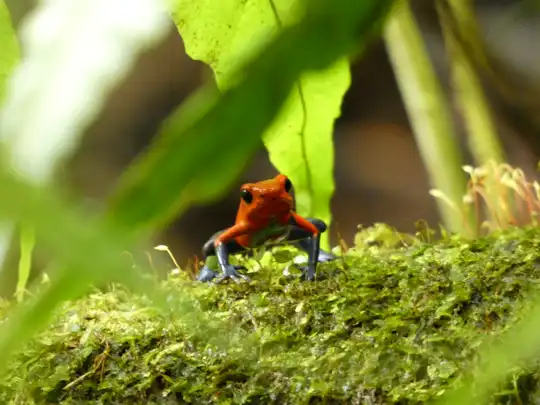
The refuge is a living classroom where you can see species that most travelers only glimpse in textbooks or fleeting jungle encounters—frogs with colors so vivid they seem unreal, snakes that are as fascinating as they are misunderstood, and turtles that tell stories of survival in a rapidly changing environment. It’s not … read more 👉
Backpackers often hit up the Refugio Herpetológico de Costa Rica not because it’s a flashy, Instagram-ready hotspot, but because it’s a rare chance to get face-to-face with Costa Rica’s reptile and amphibian scene in a way that’s both educational and genuinely eye-opening. Sure, it’s not a jungle waterfall or a beach party, but this place packs a punch for anyone who’s serious about understanding the country’s incredible biodiversity beyond the usual tourist checklist.

The refuge is a living classroom where you can see species that most travelers only glimpse in textbooks or fleeting jungle encounters—frogs with colors so vivid they seem unreal, snakes that are as fascinating as they are misunderstood, and turtles that tell stories of survival in a rapidly changing environment. It’s not just about the animals; it’s about the cultural respect Costa Rica has for its wildlife, a value deeply embedded in the country’s identity and conservation efforts.

For backpackers trekking through Costa Rica, the refuge is a milestone—a moment to slow down and absorb the complexity of the ecosystem that supports everything else on the route. The effort to get here pays off with a rewarding mix of adrenaline and insight, making it a must-stop for those who want their journey to mean more than just ticking off sights.
Want to include Refugio Herpetológico de Costa Rica in your Costa Rica route?
Create a personalized Costa Rica itinerary that includes Refugio Herpetológico de Costa Rica and the places that fit your trip — based on your travel style, budget, and available time. Get your route in seconds.

Generate my trip

💡 HighlightsWhat this place is best known for

1. Up-Close Encounters with Costa Rica’s Most Notorious Reptiles
Forget the glassy-eyed, barely-moving snakes you’ve seen in sad city zoos. At Refugio Herpetológico, you’re face-to-face with living, breathing legends: eyelash vipers coiled like jewelry, bushmasters that look like they’ve slithered out of a rainforest fever dream, and boa constrictors with the muscle tone of Olympic athletes. The staff doesn’t just point and recite facts—they’ll tell you how these animals ended up here, often rescued from the illegal pet trade or from people who thought a pit viper would make a quirky housemate. You’ll leave with a new respect for creatures that most people only fear.

2. The Crocodile Feeding Frenzy
This isn’t a sanitized, theme-park spectacle. When the keepers feed the crocs, you feel the raw … read more 👉
1. Up-Close Encounters with Costa Rica’s Most Notorious Reptiles
Forget the glassy-eyed, barely-moving snakes you’ve seen in sad city zoos. At Refugio Herpetológico, you’re face-to-face with living, breathing legends: eyelash vipers coiled like jewelry, bushmasters that look like they’ve slithered out of a rainforest fever dream, and boa constrictors with the muscle tone of Olympic athletes. The staff doesn’t just point and recite facts—they’ll tell you how these animals ended up here, often rescued from the illegal pet trade or from people who thought a pit viper would make a quirky housemate. You’ll leave with a new respect for creatures that most people only fear.

2. The Crocodile Feeding Frenzy
This isn’t a sanitized, theme-park spectacle. When the keepers feed the crocs, you feel the raw power and prehistoric menace of these animals. The splash, the snap, the sudden violence—it’s a reminder that you’re not watching animatronics. The guides don’t sugarcoat the danger, but they do explain the quirks and personalities of each croc, which is weirdly endearing. It’s a rush, and it’s real.

3. The Turtle Rehabilitation Tanks
Here’s where the Instagram crowd thins out. The tanks aren’t pretty, but the stories are. You’ll see turtles missing flippers from fishing nets or with shells patched up after boat strikes. The staff is blunt about the odds—some will never return to the wild. But you’ll witness the slow, stubborn recovery of animals that refuse to give up. It’s not cute, but it’s honest, and it sticks with you long after you leave.

4. The “Touch Table” Experience
This is the one that flips the script on fear. Under supervision, you can handle non-venomous snakes and lizards. The staff is strict about safety, but they’re also passionate about breaking down myths. You’ll feel the cool, dry scales of a snake and realize it’s not slimy or evil—just misunderstood. Kids and adults walk away with a new sense of awe (and maybe a few bragging rights). This is my personal favorite: nothing beats watching someone go from terrified to fascinated in the space of a minute.

5. Keeper-Led “Behind the Scenes” Tours
If you want the real story, skip the self-guided wander and join a keeper tour. These aren’t bored guides phoning it in. You’ll get the unfiltered truth about animal rescue in Costa Rica: the heartbreak, the bureaucracy, the small victories. You’ll see off-exhibit enclosures, meet animals not on public display, and hear stories that don’t make it onto the website. This is where the soul of the place comes through—messy, passionate, and absolutely worth your time.
Spotted a mistake or missing something? Contact us.

🌤️ When to go?Best time to visit Refugio Herpetológico de Costa Rica


  • Weather: The dry season from December to April offers the least rain, making trails easier and the reptiles more active in the sun. The wet season, May to November, brings heavy afternoon showers that can turn paths muddy and slippery, but the forest bursts with life and fewer tourists.

  • Temperature: Expect daytime highs around 25-30°C (77-86°F) year-round. Nights cool down to 18-22°C (64-72°F), so pack layers. The temperature is stable but humidity spikes during the rainy months, making it feel hotter.

  • Daylight Hours: Roughly 11-12 hours of daylight throughout the year, with sunrise around 5:30-6:00 AM and sunset near 5:30-6:00 PM. Early starts are crucial to catch the most wildlife activity and avoid midday heat.

  • Crowds: Peak tourist season coincides with the dry months, especially
read more 👉

  • Weather: The dry season from December to April offers the least rain, making trails easier and the reptiles more active in the sun. The wet season, May to November, brings heavy afternoon showers that can turn paths muddy and slippery, but the forest bursts with life and fewer tourists.

  • Temperature: Expect daytime highs around 25-30°C (77-86°F) year-round. Nights cool down to 18-22°C (64-72°F), so pack layers. The temperature is stable but humidity spikes during the rainy months, making it feel hotter.

  • Daylight Hours: Roughly 11-12 hours of daylight throughout the year, with sunrise around 5:30-6:00 AM and sunset near 5:30-6:00 PM. Early starts are crucial to catch the most wildlife activity and avoid midday heat.

  • Crowds: Peak tourist season coincides with the dry months, especially January and February, leading to busier trails and higher prices. The wet season sees fewer visitors, offering a quieter, more intimate experience with the herpetological life.

  • Seasonal Activities: Dry months favor daytime hikes and spotting sun-loving reptiles. The rainy season is prime for amphibians and nocturnal creatures, but expect more challenging trail conditions.

  • Price Fluctuations: Entrance fees and local guide rates tend to rise during the dry season’s high demand. Booking in the shoulder months of November or May can snag better deals without sacrificing too much on weather.


Pro-tip: Visit in late November or early May to dodge the crowds and catch the best balance of weather and wildlife action—just pack a rain jacket and embrace the wild side.


source: climatestotravel.comJANJanuary: highly recommended for travelingFEBFebruary: highly recommended for travelingMARMarch: excellent for travelingAPRApril: excellent for travelingMAYMay: highly recommended for travelingJUNJune: good for travelingJULJuly: good for travelingAUGAugust: good for travelingSEPSeptember: fair for travelingOCTOctober: fair for travelingNOVNovember: highly recommended for travelingDECDecember: excellent for traveling
costa-rica-attraction-refugio-herpetologico-de-costa-rica
© Google |

✈️ The backpacker research shortcutCosta Rica Travel Guide

An offline-friendly backpacking guide with optimized travel routes, ranked highlights, transport advice, and the best areas to stay.
example page 0 from our offline Travel Guide for Costa Rica
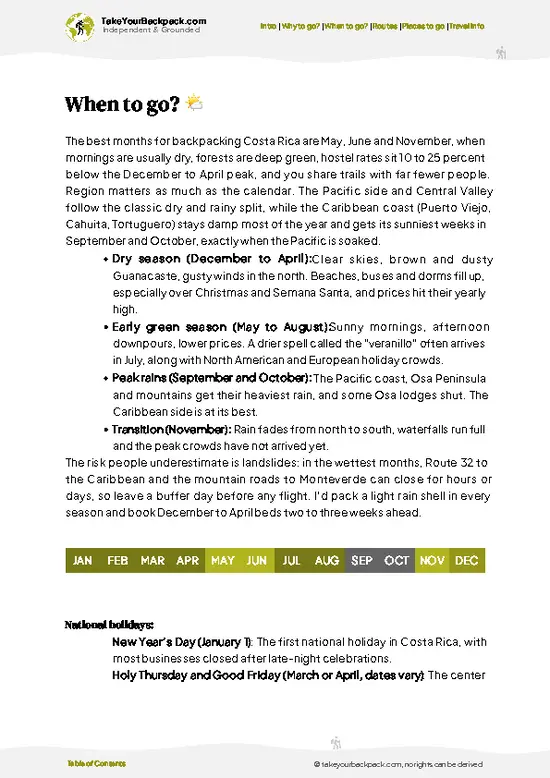
example page 1 from our offline Travel Guide for Costa Rica
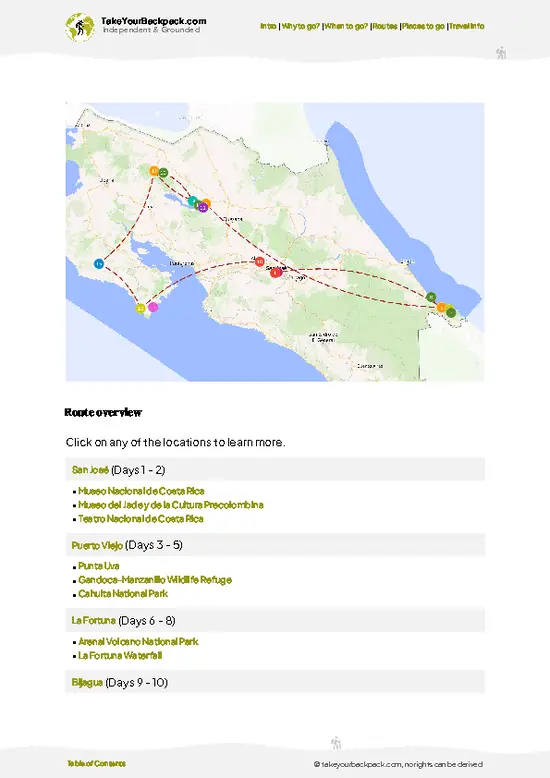
example page 2 from our offline Travel Guide for Costa Rica
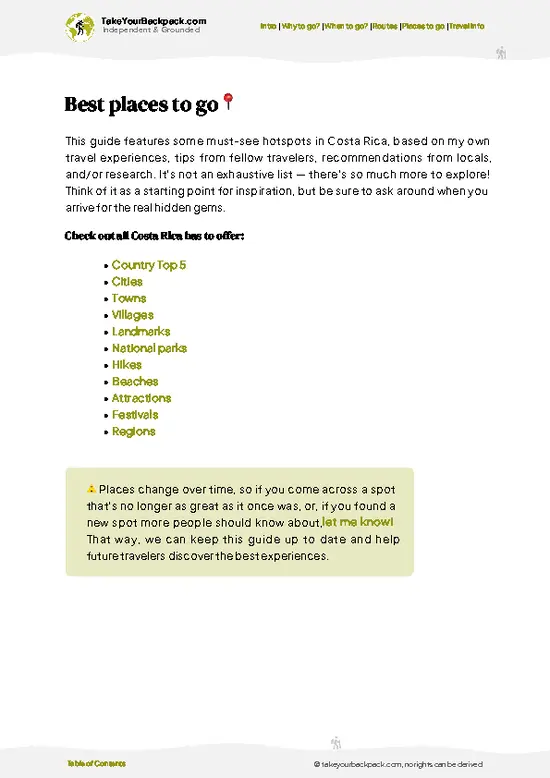
example page 3 from our offline Travel Guide for Costa Rica
example page 4 from our offline Travel Guide for Costa Rica
example page 5 from our offline Travel Guide for Costa Rica
example page 6 from our offline Travel Guide for Costa Rica
example page 7 from our offline Travel Guide for Costa Rica
The digital guide (372 pages) contains:
93 highlights, ranked by travel appeal
Optimized 5, 10 & 15-day travel routes
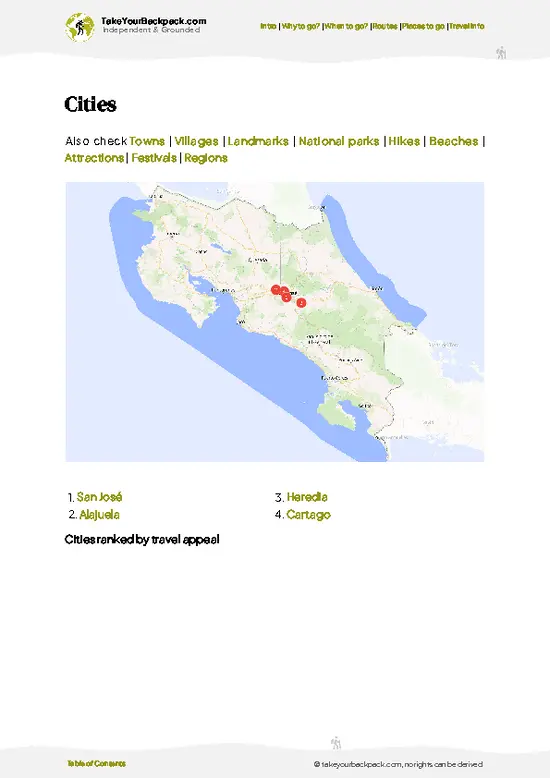
Cities, national parks, landmarks, beaches
How to get around
Offline-friendly for travel without Wi-Fi
👉 Click to see all 30+ guide features

📅 Plan smarter in minutes, not weeks
Month by month travel advice
Festivals & national holidays
Budget expectations

🗺️ Go to the right places, skip the overrated ones
Honest pros & cons of destinations
Top hikes, parks & viewpoints
Lesser-known places most travelers miss
Clear “worth it vs skip it” guidance

🛏️ Travel smoothly without rookie mistakes
Best areas to stay
Transport systems explained simply
Common scams & safety advice
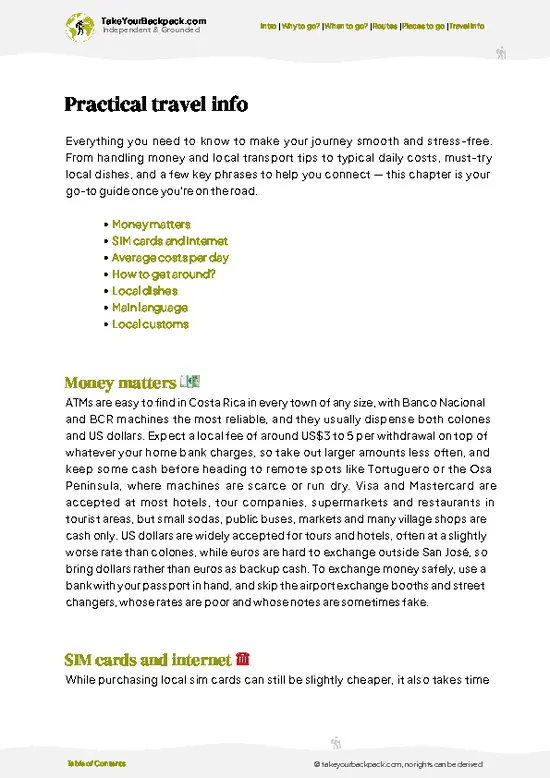
SIM cards, money & practical tips

🌍 Understand the country, not just visit it
Culture & traditions
52 Essential phrases & customs
Festivals worth planning around
Traveler-friendly historical context
Insights that make places more meaningful

📱 Built for real travel conditions
Fully downloadable PDF
Works completely offline
Optimized for phone use
Useful in remote areas & buses
Everything in one place
Save weeks of stressful planning
Get instant access to your full guide. 30‑day money-back guarantee.


By proceeding you agree to our terms.
Sent to your inbox immediately after payment • 100% Secure Checkout
Best Backpacking Travel Advisor 2025 tourism awardBest Backpacking
Travel Advisor
2025
What others say about Take Your Backpack Guides:
⭐⭐⭐⭐⭐
Fantastic, amazing amount of information!
⭐⭐⭐⭐⭐
My goodness this is amazing, it's what I've been looking for hats off too you!
⭐⭐⭐⭐⭐
I think this is absolutely BRILLIANT
⭐⭐⭐⭐
Very complete and informative. It's still missing places, but I gotta to commend you
⭐⭐⭐⭐⭐
This is truly amazing, thank you, can't wait to explore it with my kids!
⭐⭐⭐⭐⭐
Awesome resource, thank you!
⭐⭐⭐⭐⭐
This is amazing! Can't wait to explore the ones I haven't seen
⭐⭐⭐⭐
I love this! Well done, great idea.
⭐⭐⭐⭐⭐
Thanks for taking the time to make this gem!
⭐⭐⭐⭐⭐
This might be the best website I've ever seen.
⭐⭐⭐⭐⭐
Congratulations, and thank you so much for your work; it's incredibly valuable.
⭐⭐⭐⭐
In all seriousness I think you did a great job pointing out the important spots
⭐⭐⭐⭐⭐
10/10 very good
⭐⭐⭐⭐⭐
As someone who's only just starting to visit regularly this is awesome, thank you.
⭐⭐⭐⭐
Thank you very much! I'm going to visit my dad, it's going to be very useful!
⭐⭐⭐⭐⭐
This is really cool! We'll be travelling for the first time and this definitely come in handy.
⭐⭐⭐⭐⭐
You are now our minister of culture, congratulations 👨‍💼
⭐⭐⭐⭐⭐
Just wanted to tell you that this is a pearl! Going to follow your recommendations.
⭐⭐⭐⭐⭐
This is so cool. I'll definitely be using the resource for my travels soon.
⭐⭐⭐⭐⭐
This is very impressive! Good work.
⭐⭐⭐⭐⭐
This is an amazing and informative site. Very well done!

🛏️ Where to stay?How to pick the right area

If you’re hitting up the Refugio Herpetológico de Costa Rica, brace yourself: this isn’t some off-the-beaten-path sanctuary where you’ll have the trails all to yourself. It’s a hotspot for herpetology fans and eco-tourists, which means crowds can swell, especially during peak season. The Instagram shots might make it look like a quiet, mystical jungle hideaway, but the reality is a lively hub with groups, tours, and a steady stream of visitors. That said, the real magic here isn’t just the snakes and frogs—it’s the vibe of the nearby communities where backpackers actually hang out.

Forget trying … read more 👉
If you’re hitting up the Refugio Herpetológico de Costa Rica, brace yourself: this isn’t some off-the-beaten-path sanctuary where you’ll have the trails all to yourself. It’s a hotspot for herpetology fans and eco-tourists, which means crowds can swell, especially during peak season. The Instagram shots might make it look like a quiet, mystical jungle hideaway, but the reality is a lively hub with groups, tours, and a steady stream of visitors. That said, the real magic here isn’t just the snakes and frogs—it’s the vibe of the nearby communities where backpackers actually hang out.

Forget trying to camp right next door or stay in isolated lodges that charge a premium for “authenticity.” Instead, aim for the small towns and villages within a short ride—places like La Virgen or Bajos del Toro. These spots are where you’ll find the pulse of local life, affordable guesthouses, and a social scene that’s surprisingly vibrant for budget travelers. You’ll meet solo backpackers swapping stories over cheap coffee or local brews, and you’ll have access to basic amenities without the tourist markup.

Safety here is solid, thanks to tight-knit communities and a steady flow of travelers, but keep your wits about you—this is still rural Costa Rica, not a resort bubble. Staying in these towns means you get the best of both worlds: easy access to the refuge and a genuine, grounded experience that no polished travel brochure can capture.

👛 Costs (as of 12 September 2025)Typical daily expenses

As of the most recent estimates, the entrance fee for Refugio Herpetológico de Costa Rica is $35 for adults, $18 for children over 3 years old, $28 for seniors, and free for individuals with disabilities. The refuge offers guided tours with an approximate duration of one and a half hours. Additional services, such as renting a mini cart for children at ₡3,000, are available. ([refugioanimalcr.com](https://www.refugioanimalcr.com/nuestro-tour?utm_source=openai))

source: refugioanimalcr.com
⚠️ Prices can change and everyone travels differently, so take this as a rough guide. Hope it helps you plan your adventure!

Other Costa Rican attractions near Refugio Herpetológico de Costa Rica

Explore more nearby:


💡 Not sure where to go next?
Create a personalized itinerary for Costa Rica including Refugio Herpetológico de Costa Rica and the places that fit your trip.

Generate my itinerary

👉 Discover all attractions

Or checkout all Costa Rica has to offer (think cities, towns, villages, national parks, hikes, beaches, festivals)
Country photo of Costa Rica

We 💚 feedbackIs it worth it?

Refugio Herpetológico de Costa Rica isn’t your typical jungle postcard. It’s a hands-on dive into the world of reptiles and amphibians that most tourists breeze past, packed with creatures you won’t see lounging on a beach. But heads up: it can get crowded, especially with school groups, which sometimes means less quiet time with the animals. Still, if you’re curious about Costa Rica’s wild side beyond the usual trails, this place delivers a raw, eye-opening experience that sticks with you.

✈️ When did I visit Costa Rica?
Cost Rica I visited during my half year trip through South and Central America back in 2003

✍️ Help improve this page!
The information on this page is based on my own backpacking experience in Costa Rica, supplemented with up-to-date research and feedback from other travelers. Travel details can change, so if you notice anything outdated or incomplete, feel free to let me know.


🙋‍♂️ Give feedback

👋 Meet the founderWho’s Behind Take Your Backpack?

Johan, backpacker and founder of TakeYourBackpackHi, I’m Johan (Netherlands 🇳🇱), the creator of TakeYourBackpack. Over the past decade, I’ve backpacked through 80+ countries across six continents, gaining extensive experience with independent travel, long-term trips, and overland routes.

This site is built on a combination of firsthand travel experience and carefully curated insights from other backpackers. Many guides are based on places I’ve personally visited, while others bring together tips, observations, and practical advice shared by trusted travelers I’ve met along the way.

The goal is to provide realistic, experience-driven guidance — not generic itineraries — so you can explore destinations with better context, clearer expectations, and more confidence.

Get full Costa Rica guide •
Instant download • 93 highlights • Full Offline guide